




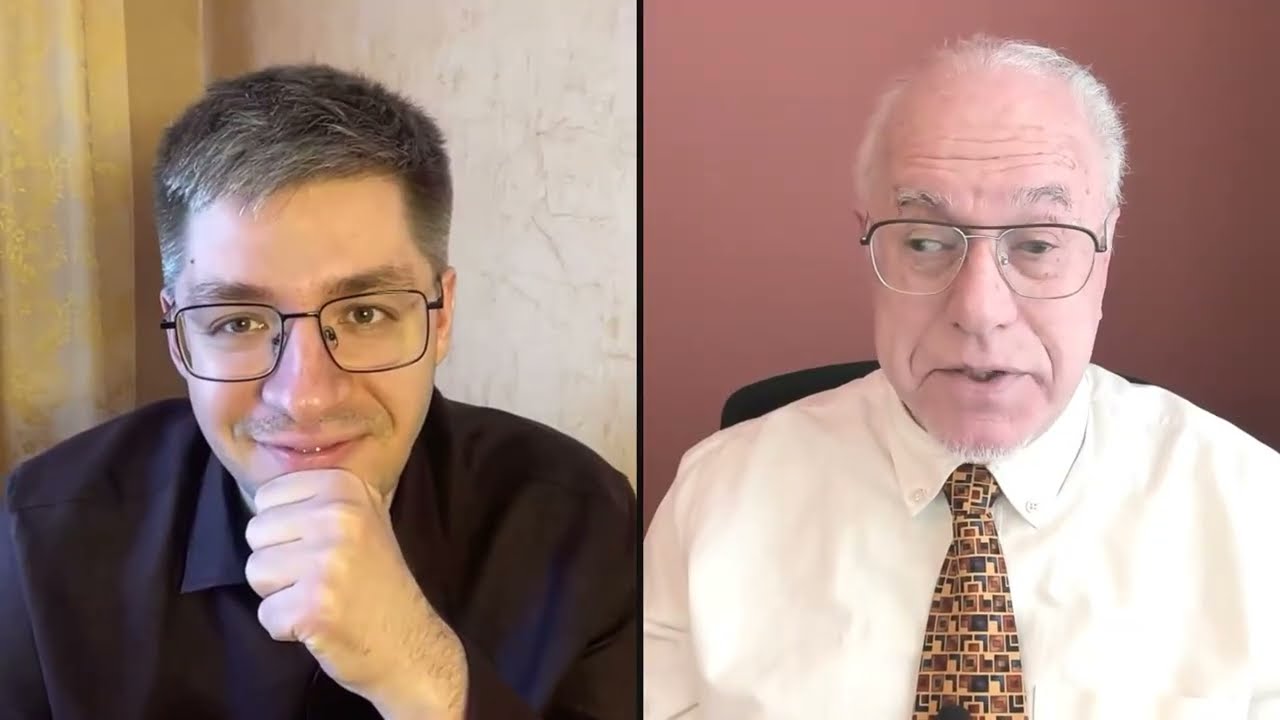


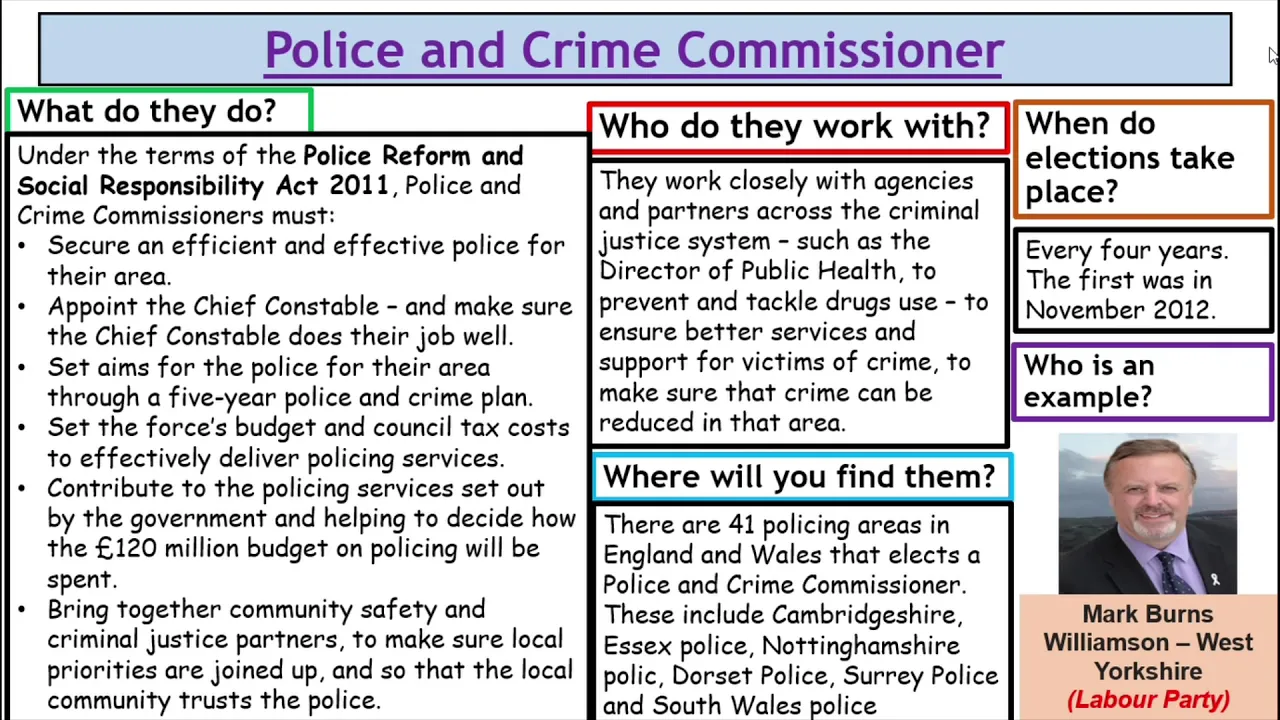










This video discusses how the Metropolitan Police's rush to recruit 20,000 new officers after government austerity cuts led to thousands of recruits bypassing proper vetting procedures, resulting in criminal officers including serial rapists like David Carrick (37 life sentences) and Wayne Couzens (who murdered Sarah Everard) being allowed to wear the uniform. The debate explores how financial pressures and political decisions can compromise institutional safety, with experts arguing that robust vetting is essential for maintaining public trust in law enforcement.
UK Police Vetting Failures Exposed in New Report Analysis
Added:The concept of 'policing by consent' and the foundational principles of the UK policing system.
The definition and standard procedures of 'police vetting', including security clearances, background checks, and integrity screening.
The socio-economic history of UK austerity policies post-2010 and their general impact on public sector budgets and staffing.
The organizational structure of the Metropolitan Police Service (the Met) and its distinct role compared to regional UK constabularies.
Analyzing policy reform strategies in law enforcement, such as continuous vetting models and the integration of advanced psychological profiling.
A comparative study of international police oversight bodies (e.g., the UK's Independent Office for Police Conduct versus global equivalents) and their effectiveness.
The study of institutional betrayal, organizational culture, and the sociology of systemic corruption within public safety institutions.
Evaluating the tension between quantitative recruitment quotas (such as the Police Uplift Programme) and qualitative standards in public sector human resource management.
18.7K views162likes29:20Original Release: 2026-01-08
the Metropolitan Police, and in its rush to recruit more police officers, particularly after uh the Conservative government austerity plan under the Chancellor George Osborne had cut 20,000 police officers plus 20,000 back office staff, of course, the Met was under an urgent plan under that the new part of the Conservative government to get more police officers, and as a result, seems to have just decided not to vet thousands of them. And um as a result, a number of criminal officers got through the vetting procedure. I think this is a huge scandal.
>> Yes. Because the last person you expect to be a lawbreaker, to be a criminal, is a policeman or policewoman.
>> Yeah. So, it's a complete breach of public trust.
And the other thing I remember is that there was a man, uh evil man called Wayne Couzens, who was a a Metropolitan Police officer, and he actually had the highest level of security. He was actually around in and around that the Houses of Parliament uh and Downing Street.
>> Yeah. So, these uh lapses have happened before.
>> He's the one who went on, of course, to murder Sarah Everard.
>> he kidnapped and and and and murdered her in lockdown. He had the highest level of of clearance and had total access uh to the Houses of Parliament and to Downing Street. And so, I think that this is a very, very serious breach. And you've got I think about 131 131 officers who have committed crimes.
>> And as we've said, two of them turned out to be serial rapists.
>> Yes.
>> And they're allowed to wear the uniform.
Um we were saying earlier that this obviously strikes at the heart of trust.
Completely. And I was just looking at some of the messages which you've been sending in on this. Michael has emailed to say this, very interesting. The police deal with some of the most vulnerable people in our society, and their vetting should be robust. When my daughters were little, I'd tell them if they're out and about and worried about something, look for a policeman. I don't know that I would advise them to do that these days. I mean, it it's shocking, and I think that the Met has had a number of problems. I mean, we've talked about Wayne Couzens, there are a number of other people. Yes, David [clears throat] Carrick, one of the UK's worst sex offenders.
>> was sentenced to life, essentially.
>> Cliff Mitchell, who carried out a campaign of rape on two women, that's right, among the police officers who weren't properly checked. Carrick, who was given 37 life sentences That's right.
>> for his crimes, for being a serial rapist, was not properly vetted back in 2017, with checks failing to reveal that there had been an allegation of domestic abuse >> doing this for decades, and the shocking thing about him was that he knew that he was abusing his position. And when he said to his victims, who are they going to believe? Are they going to believe you, or are they going to believe me as a police officer? So, he knew exactly what he was doing. And the fact that there are a number of these people potentially in the police force in London, I think it's terrifying.
>> Well, we have to recognize that there is a very small but potent minority of men who want to join the police in order to abuse the power that it gives them. And that's their motivation for wanting to get into the uniform, and they have to be weeded out. Absolutely. It is It's a shocking story. It proves It's shocking on many levels. Number one, it proves that cuts have consequences. When you're making indiscriminate cuts, you can just give you look at a spreadsheet and just think, cut 20,000 people from here or so. It has massive separate issue. It's a separate issue. It is a feeding issue.
It's a root cause issue. How you recruit the people How you recruit doesn't mean you can't vet. Even if you're cutting and then trying to get more people back in, doesn't mean you can't vet them. But Nel, I think Nel's point is it is a consequence of austerity. It wasn't a necessary consequence of austerity. It's all about this nation. Part of the other issue, too, is that so we as I've read that the biggest reason why people actually fail the vetting process is actually normally financial situations, CCJs, bankruptcies, uh significant debt, things like things that you could potentially be compromised in relation to. So, things that you can So, if if a police officer has swimming in that mean debt, then bingo, a criminal comes a criminal gang comes along, approaches you, it's very easy to manipulate you. So, so that those are things So, those elements are probably the things that they were probably looking at their eye on, but the actual elements of significant criminality, rape, all that sort of stuff, was probably to the other side of things. But it did actually speak to the fact that we were seeing some behavior from police that we never would have thought. For example, when the two when the when the Smallman sisters, Bibaa Smallman and her sister, whose name when they were actually killed and their bodies were found, the police officers actually took pictures of So, that was actually Bibaa and Nicole.
So, that was absolutely shocking. That was actually shocking, but it spoke right there and then that Look, there's always been issues with policing, and the policing has always been open to abuse of power, and it does attract people who want who like people to abuse it, not everybody, but who are meant to want to abuse the power, but some of the behavior we're seeing was significantly unbecoming of any profession.
>> ask you both about this particular detail in the reporting of this?
Cliff Mitchell was allowed to join the force in 2020 after a vetting panel, which this is the reporting line, which partly aimed to improve diversity, overturned a decision to join to reject him from the police, despite a previous accusation of raping a child. Did diversity intervene Well, it may maybe the case. I mean, I don't know I remember I don't remember the details of that case, but that's absolutely wrong.
You can't just say, "Oh, well, in the interest of diversity, we should allow someone who's been accused of raping a child to the into the police force, into the into the into the service." So, you know, there's something gone very, very wrong.
>> Yeah. Yeah. And I think, you know, Mark Rowley, so Mark Rowley, who I respect, is the head of the Metropolitan uh police force.
Um he has questions to answer. Yeah, and that's not just Mark, not just Mr. Mark Rowley, but the actual vetting people.
If you were on a vetting panel that waved through somebody who had been accused of actually raping a child, then you have questions to answer yourself.
You shouldn't be in that in that sort of job. You're not suited, you're not fit and proper. Yeah. Absolutely. Uh the Home Secretary says abandoning vetting checks on officers was a dereliction of the Met's duty to keep London safe.
She's asked the Chief Inspector of Constabulary to now carry out an inspection because she needs to restore trust.
>> what's the shocking thing is that these are these are terrible crimes against uh people. Yeah. You know, they're not I get the debt indebtedness compromise.
But these aren't minor infractions. But this is, you know, and you've got you're a father of of girls, and you you want to trust the police force. I mean, as the [clears throat] man said, how are you going to say, you know, "Look look to a police officer" if they if this is what's happening? Yeah. Agreed. Can we talk about this extraordinary story which we'll be discussing later in the program in more detail. From Manchester, it's a primary school. It's actually two primary schools in Manchester where the teachers were about to go on a rolling set of strike action, not over pay, Yep.
not over conditions, but because they're being kicked and bitten by junior schoolchildren, children aged between 8 and 11. Some of them, apparently, are even bringing knives into school at that age. And the the teachers' response to these attacks, as I say, being bitten and being kicked, is to go on strike.
Mhm. This is the second day of the strike. Sure. Absolutely. Now, we can all think back to our primary school days, and the very notion of any I'm just thinking of my compatriots in those grubby days, attacking a teacher is unthinkable. Okay, it happens, but it seems an extraordinary response by the teachers to go on strike.
>> But what else can they do? Because I mean, we've got we're in a position >> in schools?
>> Well, you know, if you look back in the in the day, there was all sorts of things that would just wouldn't be acceptable now. You get a ruler clip round the ear, all of that sort of thing. The teacher had some degree of sanction. Now, we think that's wrong for lots of reasons, but then what can you say? You can't You've got no sanctions. You can't touch them. You can't really say anything. You can't shout at people. So, so how are you going to That's interesting. So, as a Conservative, you would normally not support strike action by teachers, but in this in this instance, you do. As a Conservative, I I would go back, if we could, to slightly more traditional Bring back the cane. Bring Bring back the cane. No, not the cane, I mean, the cane, whatever, but but the it's got to a point where the teachers feel, and I used to remember this as an MP talking to people in in schools, teachers, that they there's no sanction. They can't do anything to discipline the kids.
>> But isn't it more underlying than that?
It shows a profound lack of respect >> True. So, That's right. We had a mixture, I suppose, of fear, affection, and respect for our teachers in junior school.
Kids don't have any You're right. So, it's forgive me, just just to explain that. There there are two things going on here. Firstly, the teachers don't have, I think, the sanctions to to keep order in the classroom. And secondly, you know, we've got family breakdown, and generally in society, there's less uh deference and respect. It's a more violent, more kind of aggressive society that we have. Do you agree that teachers should be given more powers to discipline children? I think there has to be a depends how we're defining discipline. I don't believe in the whole six of the best or that sort of stuff, bring back the cane. No, that's nightmare stuff, also, and that's open to abuse, similar to abuse people going to abuse people. But I do feel that there there has to be that element of strictness within the classroom. And also, too, I I think it's a partnership.
Education and teaching and parenting is a partnership between two between between grown-ups. If a teacher, when I was little, for example, if a teacher called if my headmistress, who actually did for me on quite a few times, called up my mom, it was a disaster when I got home. And it was a disaster not just for my mom, my uncles would call up, everybody else would call up, and so on, and that would be a disaster That would pretty much be it. It would lead to that. But I must be clear here, too.
I want to express >> would be the consequences for you, Nel?
For me? At home. Unbelievable consequences. Which which >> [laughter] >> would be worse? Well, this I don't want to put my mom in in in any trouble whatsoever, but it yes, there would be So, I come from a traditional British African household, also, which would be all the gory stuff that you're thinking of. My mom was was if it was a biblical So, it was a spare the rod, spoil the child type of parent. Yeah.
So, yes, so that was pretty much it. But but I must be clear here. I want to express gratitude to the teachers for striking and not leaving, because I actually went to one of those schools. I went to my headmistress, one of Pride of Britain's Award, for actually turning the school around. So I went to school called St. Peter's in in Maida Vale, which is now a great area, great school. It's been turned around, but our headmistress actually at the time it was one of the worst schools in the UK. So I went there when I came out of foster care in the late '80s. I was there for about 2 years and it was awful. And the kid the behavior of the kids was generally horrendous. It really was what you were describing there. And what were the sanctions there? But the sanctions there were significant problems. One of the key things that the teachers that that had me our headmistress did at the time, the first thing she did she was only a 24 25 year old. She was one of the few teachers who who stayed. What she did is that she actually transformed the school behaviorally to begin with, made sure brought in a school uniform, the first thing, actually built [clears throat] relationships with actual parents and significantly got rid of some of the bad eggs that were really causing problems.
And but they >> you mean expelled them? Expelled them, yeah. Which is which is a strict thing to do. It's to children. It's to very very young children, but she got rid of people who couldn't really be controlled.
>> to them? I mean that's the problem is They went to other schools. Some of them it didn't work out. We were just exporting the problem to other to other schools. The key the key thing about it was that they didn't she didn't give up on the school and the children. And that's what the great thing she she stuck with it and turned it around. I think that the the teachers have done a good job for the children.
>> a problem, as we know, there is an increase in the number of children with complex special needs.
>> Sure. And if you are a child with complex special needs and you are in a classroom of more than 30, >> Mhm. uh it's going to be very hard for a teacher Mhm. to maintain control.
>> Mhm. You know, there there needs to be more support for those children, doesn't there? It's so interesting. One of the former teachers at Lily Lane Primary School, which is one of the schools where teachers are on their second day of striking, Conor Priestley said there were lots of different ways I experienced violence while I was at the school. This is a primary school, remember.
>> Mhm. 8 to 11 year olds.
>> Yes. I'd been hit, I'd been kicked, I'd been bit. I'd had chairs thrown at me. I was framing a good day as I didn't get hit today.
>> It's but that's terrible.
>> No, no, that is terrible. a breakdown in order. My earlier What should a teacher do? Okay, what should a teacher do then in your considered opinion if an if an 8-year-old comes up and kicks them in the shins, grabs them by the wrist and bites their fingers, what should the teacher do? Uh what you and I would probably do is either try and push them away or put give some sort of physical thing. But you can't do that. It's very difficult to do that. And so that's why I think there's a complete mismatch. But do you think that teachers should be able to do that? Well, yeah, I think people watching would agree. I I think they should. You know, if an 8-year-old comes and bites you on the ankle or kicks you or punches you and you're not allowed to lay a finger on them, what can you do? But we had things called the back in the day we had things called like withdrawal rooms or you'll go stand on the actual wall there will be no there will be no play time. There will be clear sanctions. I I think that the key thing about it is that grown-ups versus children you don't want to be in that situation. There's some some sort of challenge or there's some sort of physical challenge between you because it becomes normalized that level of even if it's subtle what you might call gentle physical activity or so some might call it violence. It becomes normalized to the child and we don't want it to happen.
>> What happened? The key thing about it there has to be a clear mechanism of discipline in the school that's appropriate to our society. Clear demerit system. The point at which the 8-year-old is kicking you in the shins and biting your arm or whatever.
>> they probably need to be suspended.
>> just send them into put them into the back of the class. You've got to do something.
>> of teachers left the profession in the most recent year of analysis. That's more than three times the rates recorded in France and Ireland. Sure. That's in England. I mean it's people are leaving at an alarming rate.
>> I think this imbalance where teachers really cannot do anything.
>> Well, we're getting messages from teachers now as as we're discussing this. Pamela has a WhatsApp to say, "Morning, I'm a teaching assistant in a primary school and I can confirm that behavior is shocking and I am leaving my profession at the end of this academic year." One of the other elements that we're not speaking about here that I want to go back to the parenting teaching partnership is that the demands the the demands upon poorer people the amounts of the so you're all earning a lower wage in order to make ends meet or so you're going to have to work significantly more hours. And that means you're going to have a lot less time for child care and a lot be a lot less involved in your child's life. And in moments like that situations like that or so what tends to happen is that the parents sometimes might actually rely overly too much on the actual school as opposed to actually as opposed to taking parenting responsibility which then leads to the collapse [clears throat] of the child.
>> Let's talk about child poverty because the Chancellor >> Sure. has spoken to this program our uh political correspondent Louisa James about the legislation which being introduced today Kemi to scrap the two-child limit on benefits.
Now, the Chancellor says this is going to lift half a million children out of poverty. It is opposed by Kemi Badenoch and Nigel Farage of Reform has a different policy. But first let's listen to the Chancellor.
Whatever background you come from, however many brothers and sisters you have, you should have the support you need to live a fulfilling life. And I don't want kids going to bed in a cold house. I don't want kids going to school hungry. And that's what getting rid of this pernicious policy is all about.
Right, so that legislation's being introduced today. Kemi Badenoch completely disagrees. She said she spoke to us this on Good Morning Britain on Monday and said this.
We need the two-child benefit cap. The we're talking about a specific type of of child benefit. You already get child benefit for all the children you have.
The two-child benefit cap has meant that some families are getting an extra £14,000 a year when other families that are just managing are getting poorer.
They're just moving money around. It is not fair.
And yesterday Reform's leader Nigel Farage proposed this.
The way this government is doing it, well, looking at some of the stats, it's going to start to benefit huge numbers of foreign-born people. And that goes back to this point. We have to prioritize British-born people whether it's for child benefit or whether it's for social housing. And so I think when it comes, we will vote against it.
Which one would you vote for?
>> So I would I totally agree with Kemi.
I think obviously in an ideal world we'd have enough money to pay for everything. But we don't have it the resources and we've got to restrict resources. And what you're doing and actually Rachel Reeves' position at the beginning of last year was essentially where Kemi was. She was saying to her backbenchers, "We can't afford this." And they only changed because they were under political pressure and their poll ratings are tanking and they've got to shore up their their base. That's why they changed. You know, to be to be very blunt about it.
>> She says they've changed because they found the money. They've got a new betting tax and they've cracked down on tax evasion.
>> increased the tax.
>> "I can now afford it."
>> Yeah, she she said that and but that was to dress up the fact that she was under huge political pressure and essentially gave in to the backbenchers. And that's what happened with the welfare reform.
We were on this program discussing that.
They tried to reduce the the welfare bill. The backbenchers wouldn't let them do that and they had to spend an extra 5 billion. So the the lift of the two cap policy means there's an extra 3 billion that they have to spend. There's 5 billion on the welfare. 8 billion pounds. And and what they've done is essentially increased taxes on working people. Everyone who goes to work is going to be paying more taxes to fund this.
>> Nigel, do you think we will ever see a meaningful reform of of welfare under this government?
Um I think this is a meaningful reform of welfare. I think this is a good thing. I think this is this is I think this is a good thing.
So do you You meant spending you meant spending less. I feel that look cuts cuts So you you take reform to mean spending more.
Yeah, no, no, no, no, well, no, it could be either thing. I think that is a reform center. I think that is a good thing. I feel that what Rachel Reeves has done here is a good thing. Cuts have consequences. Reversing cuts actually have benefits, too. We just speaking literally moments ago the last breath about about children who pretty much are quite clearly living in poverty and it's leading to behavioral leading to behavioral issues. Leading to behavioral issues in within two schools to the point where the teachers are having to take strikes. Having strikes to to try and trigger some sort of grab some attention, trigger some sort of behavioral change. This element here is one of the rougher things that will actually help change things because it's as an in-work benefit or so meaning that a person can actually claim child benefit whilst they are working. Whilst they're working it actually means that there will be less pressure on the parents to to be to be away from their children in order to see It's isn't isn't obviously there's a money and resources, but also I think there's an old-fashioned responsibility issue. You can't expect to have as many children as possible and expect other people to pay for your kids.
>> How the child how the child arrives here the how the child arrives here is not our is not the child's responsibility.
responsibility for the parents to look after their kids. They of course there's if you if you can't feed your baby don't have a baby. It's Michael Jackson you go back to Yeah, but they're but they're not having a baby. We're paying for it.
I'm happy to pay for a child in need. I feel that's important. If a child the child the how the child arrived here is not the child's fault. They shouldn't be blamed or stigmatized. electorally if there was to be a general election next month electorally where do the votes lie out there? In welfare cuts or in maintaining welfare?
>> you say if there was a general election next month. Of course there are elections in May.
>> course. So this all feeds into that.
So where do the votes lie? The party that calls for welfare reform by which I mean cuts or the party that maintains welfare at its name? I think the balance on this on this particular issue is against the government. And the government probably realizes that, but they've got to shore up their base.
They're not speaking to the whole country at the moment. Now they're speaking to the left broadly, the Greens, some of the Liberal Democrats, the nationalists in Scotland and Wales.
That's the the people that they're trying to win over. And that's why they've been dragged to the left with things like a mansion tax, with the lifting of the cap on on on two children in terms of benefits >> Good thing. or not do pursuing the welfare reforms. That's what That's what's happening. And I think politically for them, I think it'll end very badly. It doesn't take long, does it? For television to dramatize real-life events. We see this extraordinary front-page photograph as we were saying earlier on the sun this morning of Martin Clunes as Huw Edwards because Channel 5 are going to be screening a two-part two-episode drama charting his downfall.
For for child sex offenses as we know.
What do we think?
It's going to be a bit We'll have to have to see the We'll have to see the It's a good documentary. We have to see the drama first because there's any sanitizing of the of the crimes as as there's any like painting it in a light that the public might consider it to be distasteful or painting it in a light that might be sympathetic to Huw Edwards, it will place Channel 5 and the production company in significant trouble. There are sometimes when there are dramas about terrible crimes the reason I don't cry about the fact that it has been turned into entertainment.
>> Yes. I'm sure Channel 5 is very, you know, aware of that and braced for that.
So, do you find it something that you would watch and be intrigued by or do you get that sense of all this is a little bit unpleasant?
I'd be intrigued to watch. I mean, you're you're dealing with appalling crime images of children, sexualized images of children.
I wouldn't want to watch that. I don't see that as as entertainment. I mean, the the the human drama of Huw Edwards, I take to understand, but I think, you know, if you look at the crimes and the things that he did, I don't think that should be should be given any [clears throat] airtime.
>> I think I'd be fascinated by hopefully an intelligent explanation for this complete dissonance between the public face of Huw Edwards, the person we all assumed him to be, and the horrible reality. The double life The double The double life he clearly led is fascinating. When you look at the crimes, I don't think they should be given any any ventilation, any airtime.
Well, let us know what you think about that. Um what do you think about the fact that there is now this TV drama on It was an originally a Sun investigation, of course, into uh the BBC newsreader Huw Edwards. I mean, the most famous newsreader in the country announced the the Queen's death, didn't And probably the most respected at the time. Absolutely right. I don't want to read this email from Angela.
What planet is Rachel Reeves and the government on?
Certainly isn't the one if she thinks that getting rid of the two-child allowance will stop child poverty. It's not this one. Parents will continue to buy mobile phones, drink, drugs, and cigarettes rather than buy necessities for their children such as food clothing, and warmth.
Pat McFadden says that's not true. We We have to give these benefits. It's going to lift children out of poverty. Nels Abbey and Kwasi Kwarteng back with us.
>> was was true is that all benefits generally are cash benefits. Rather than vouchers.
So, the point about, you know, what the benefits are used for can be made about every single benefit that's paid. And what's the reason we don't do vouchers in order to lift children out of poverty and not allow parents to buy stuff for themselves?
>> are good because it it it actually focuses, you know, where the benefit where the money is spent. But I just think that there's a feeling that if you give vouchers, it's it's like treating adults as infants, you know, that you should give them the money and then allow the responsible parents >> Yeah, but that means there's nothing to stop them buying hundreds of >> That's true. That's true. But that's But that's the point in that That's the case in any any benefit. That point would be >> talking about children here who are particularly vulnerable. I think there is a case for You're absolutely right. Maybe they should be protected with a voucher Yeah, so that you can actually direct Any But even that could be abused. I mean, you can see ways in which people might >> Yeah, you can just use the voucher. You can sell the voucher. You you you could There are things you could do. I thought what he said about was the weakest thing about what he said was when you challenged him on the fact that it's the Labour backbenchers that are driving this. And and and they withdrew the whip, you know, let's use that technical term. They basically cast seven people out of the party for advocating the exact policy that they've then adopted.
And he dressed it up as the know the King's speech, all of this stuff. That's all nonsense. We can see through that.
It's a technical argument. They've been forced to this position. It was a position that they were arguing against only a few months ago, only about eight months ago. The Chancellor was saying, "We don't have money to lift this cap."
And at the same time, they were trying to get the welfare reforms.
>> you think about what he said about the reforms in welfare that he's describing?
Again, I think they were It was a It was a They were technical issues he was raising. Some of them were true saying terms of getting people support to get back into work. But the big picture is this. The big picture is that taxes went up to the tune of 26 billion last year, and you've got 8 billion of that spent on extra on extra benefits.
>> Nels, this isn't If you ask people, um I'm there's two questions, aren't there?
If you ask people, "Do you want to lift children out of poverty? Do you want children not to be poor anymore?" Of course, 100% of people are going to say, "I don't want child poverty." But if you ask, "Should we increase our benefits and lift the cap on the number of children that we'll pay for?" more people are likely to say, "Hmm, that doesn't seem entirely fair to those people who don't need those benefits and who limit the number of children they can afford to have." I think that we I think as a society in general, we need to almost rethink the stigma that we place on people who are in need in terms of actual benefits, for example. I think that we should start seeing it a lot more for what it really truly is, which is an investment in people who are currently unable to adequately invest in themselves. And it becomes back to us in terms of them living better lives and them becoming better, particularly for children, they're becoming better well-rounded, more confident grownups. Poverty, leaving children in poverty in a first-world country such as ours, a wealthy first-world country such as ours, where some people are driving gold Ferraris or so and other people are driving up can't afford a bowl of cereal or for an adequate bowl of cereal for a number of for some of their children is disgraceful. And I think that poverty actually lives on with people. It's not just something that happens to you now.
It's something that shapes your life, and I think it's a good thing. Rachel Reeves and the government does. I disagree with that. I think people should have responsibility for the kids that they they they bring into the world.
And they should have some individual responsibility. I don't think you can have You should be able to have 10 kids and for expect the taxpayer to pay for them all. I think that's wrong.
>> Well, how times are changing, eh?
We've had so many messages about this this morning. Here's one from Jane. She said, "When I was eight in 1970, I crawled under the table and bit another girl on the knee. She told the teacher, and the teacher crawled under the table and bit me on the knee. Taught me a lesson. Those are the days." So, should teachers have that kind of power? We're joined now by the former Conservative Chancellor Kwasi Kwarteng and author Nels Abbey. Got to say, I could almost hear the cheer out there when people heard that story saying, "Absolutely.
What's wrong with that?" I don't think teachers should be able to bite kids, just to be clear.
But but but but more seriously, there is a point, you know, if if the if the child token nibble the child is actually exhibiting physical violence. In the moment that the the child is biting or punching, the teacher should be able to have some recourse, some ability to push back physically, I would say, against what the child is doing. Any of us would do that. That's a natural instinct.
Obviously, we would be restrained, but I think pushing the child away or doing something has to happen.
At the moment, as I understand things, it's people are very very reluctant.
>> Yeah, but look, that's not going to cut it. If you've got a kid who's launching themself or herself at you, and you just push them back, they're just going to keep coming back, aren't they? No, and also they should have sanctions so that people can get expelled and be disciplined in that way so that they know what the sanctions are. Well, it sounds in that case as if half the classrooms would be empty. Um well, you know, I think it's I still think it's a minority of kids doing this. But the general point is that for too long teachers have been disempowered.
And And we live in a culture for lots of reasons where adult children are protected. But what happens when the child are the ones who are perpetrating the violence? Nels, you admitted earlier that you faced faced sanctions at home if you were badly behaved at school, which meant that you were incentivized to be better behaved at school.
>> Absolutely. But what should teachers do in this situation? I think there's a range of tools that teachers tend to adopt.
First of all, point out kicked, bit, and taking knives into school, there's that's levels of There's levels there. A child who bites a teacher pretty much might be a child who has a bit of comprehension problems. Not comprehension, but They might be some mental health underlying issues there also. So, that might be issue. Kicking But it didn't used to happen though, Nels. It Wait, actually it did.
It actually did. It has been a problem for a lot Violence against teachers has always been a problem, but this seems to be concentrated in two in particular schools. I was at a school in the East End of London for four years, and I never ever saw a teacher being assaulted in any way. It's definitely gone up.
It's definitely increased. You can't say this stuff has been happening all the time forever. No, no, what I want to What I In my school, when I was at the school I went to was which was again actually publicly noticed one of the worst schools in Britain at the time, our headmistress, her name was Helen Riddell, actually won a Pride of Britain award for turning it around.
>> remember. Yeah, so So, I think that there were significant problems there, but children taking knives into school, that's a criminal issue whatsoever. So, that should be taken care of by the state by the police, and the state should step in. I think the key thing here is that the the teaching or educating a child as a parent is a partnership between parents and the school. And there has to be an element in which parent They have to be able to trust each other that if a child is behaving in a particular way, particularly physical violence, and a teacher has to potentially restrain a child. I'm talking about I'm not talking the old school six of the best or anything else. And there's a very very You have to be careful about There's must be a clamp
Up Next
5:16
Obligation to Obey the Law: Grounding Political Authority
@WirelessPhilosophy
70.5K views•2018-11-02
4:27
US Secondary Sanctions Impact on EU Businesses and Blocking Legislation
@Bureauvandijk
1.6K views•2019-03-20
5:27
Forensic Phonetics: Speaker Identification in Legal Cases
@nptel-nociitm9240
539 views•2025-03-19

24:42
Police Interrogation Tactics: False Confessions & Legal Reform
@LastWeekTonight
7M views•2022-04-18
Related Study Plans & Knowledge Roadmaps
Structured learning paths in Law
law
Self-Defense Law: Imminence & Castle Doctrine
01Foundations of Self-Defense Law
02Imminent Threat & Reasonable Belief
03The Principle of Proportionality
+ 3 more learning modules
12h6 modules
Explore Roadmap
law
Defamation Law: First Amendment & Actual Malice
01Introduction to civil torts and the First Amendment
02Elements of Defamation: Libel and Slander
03Public Figures vs. Private Individuals
+ 2 more learning modules
8h5 modules
Explore Roadmap
law
Hearsay Rule: Trial Evidence & Exceptions
01Introduction to Trial Evidence & Courtroom Basics
02Demystifying Hearsay: The Core Definition
03Non-Hearsay: Exclusions Under FRE 801(d)
+ 3 more learning modules
14h6 modules
Explore Roadmap
law
Medical Malpractice: Law, Liability & Care
01Foundations of Tort Law and Civil Liability
02The Four Elements of Medical Malpractice
03Defining and Proving the Standard of Care
+ 2 more learning modules
12h5 modules
Explore Roadmap