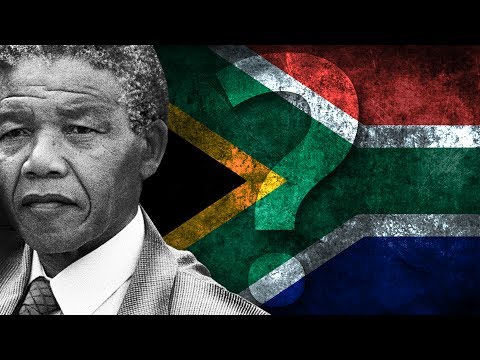

















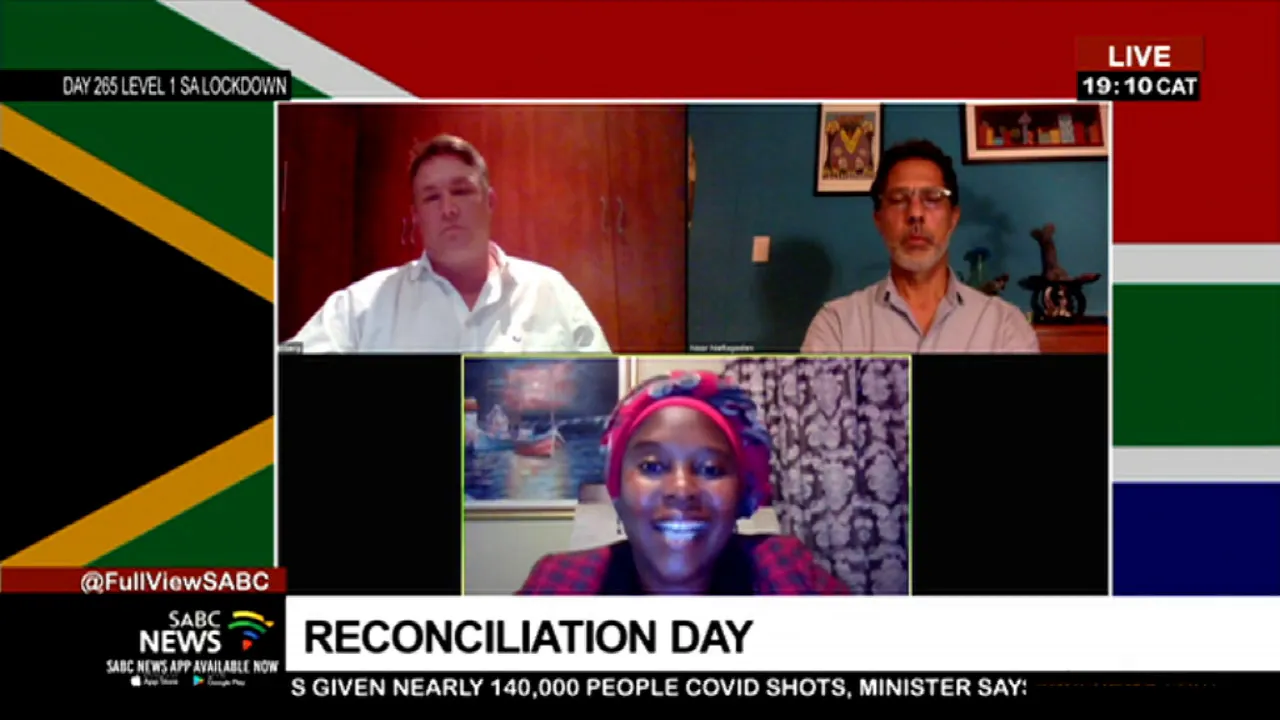

The Truth and Reconciliation Commission (TRC) was a court-like restorative justice body established in South Africa in 1996 under the Promotion of National Unity and Reconciliation Act to investigate human rights violations during apartheid, facilitate truth-telling through public hearings, and offer amnesty to perpetrators who fully disclosed their politically-motivated crimes; while the TRC successfully uncovered historical truths and became a model for international transitional justice, its effectiveness in achieving genuine reconciliation remains debated, with critics arguing it favored perpetrators over victims and failed to deliver justice for many families affected by apartheid-era abuses.
Truth and Reconciliation Commission in South Africa: History & Impact
Added:The historical context of the Apartheid regime in South Africa, including its state-sanctioned racial segregation policies, key legislation, and the oppression of the majority Black population from 1948 to 1994.
The conceptual distinction between retributive justice (punishment-focused) and restorative justice (healing and reconciliation-focused).
The political transition of South Africa in the early 1990s, including the unbanning of the African National Congress (ANC), the release of Nelson Mandela, and the negotiation of the interim constitution.
Fundamental principles of human rights, particularly what constitutes gross human rights violations and crimes against humanity under international law.
Comparative analysis of transitional justice models globally, such as the Gacaca courts in Rwanda, the Nuremberg trials, or truth commissions in Latin America.
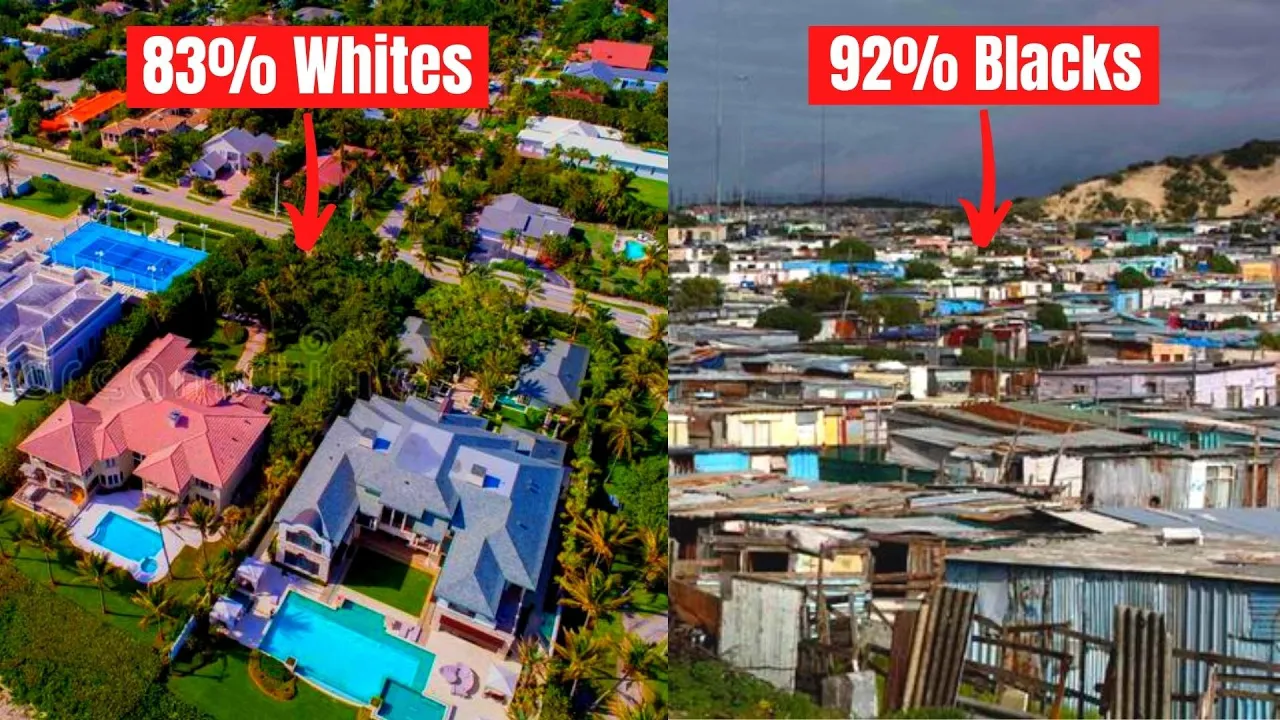
The ongoing socio-economic legacies of Apartheid, specifically focusing on how unresolved wealth inequality and delayed land reform impact modern South Africa.
The philosophical and legal debate surrounding the 'amnesty-for-truth' trade-off, examining whether justice was compromised for political stability.
The study of institutional memory and memorialization in South Africa, including how the country uses museums, public holidays, and education to construct a shared post-Apartheid identity.
14.6K views93likes14:27Original Release: 2015-11-05
The Truth and Reconciliation Commission was a court-like restorative justice body assembled in South Africa after the abolition of apartheid. Witnesses who were identified as victims of gross human rights violations were invited to give statements about their experiences and some were selected for public hearings. Perpetrators of violence could also give testimony and request amnesty from both civil and criminal prosecution. The TRC, the first of the 19 held internationally to stage public hearings, was seen by many as a crucial component of the transition to full and free democracy in South Africa. Despite some flaws, it is generally thought to have been successful. The Institute for Justice and Reconciliation was established in 2000 as the successor organization of the TRC.
Creation and mandate. The TRC was set up in terms of the promotion of national unity and reconciliation act number 34 of 1995 and was based in Cape Town. The hearing started in 1996.
The mandate of the commission was to bear witness to record and in some cases grant amnesty to the perpetrators of crimes relating to human rights violations as well as reparation and rehabilitation.
The TRC had a number of high-profile members including Archbishop Desmond Tutu, Alex Bahrain, Campep, Anan Malin, and Emma Machinini. Committees.
The work of the TRC was accomplished through three committees. The human rights violations committee investigated human rights abuses that occurred between 1960 and 1994.
The reparation and rehabilitation committee was charged with restoring victims dignity and formulating proposals to assist with rehabilitation.
The amnesty committee considered applications from individuals who applied for amnesty in accordance with the provisions of the act. Public hearings of the human rights violations committee and the amnesty committee were held at many venues around South Africa including Cape Town, Johannesburg and Randberg. The commission was empowered to grant amnesty to those who committed abuses during the apartheid era as long as the crimes were politically motivated, proportionate, and there was full disclosure by the person seeking amnesty. To avoid victor's justice, no side was exempt from appearing before the commission. The commission heard reports of human rights violations and considered amnesty applications from all sides from the apartheid state to the liberation forces including the African National Congress. A total of 5,392 amnesty applications were refused granting only 849 out of the 7,112.
impact. The TRC's emphasis on reconciliation is in sharp contrast to the approach taken by the Neuremberg trials and other dasification measures.
Because of the perceived success of the reconciliatory approach in dealing with human rights violations after political change, either from internal or external factors, other countries have instituted similar commissions, though not always with the same scope or the allowance for charging those currently in power. The effectiveness of the restorative justice method employed by the truth and reconciliation commission versus that of the retributive justice method employed during the Neuremberg trials is debated in a survey study by J and Erica Vora.
The effectiveness of the TRC commission was measured on a variety of levels, namely its usefulness in terms of bringing out the truth of what had happened during the apartheid regime, the feelings of reconciliation that could be linked to the commission and the positive effects both domestically and internationally that the commission brought about in a variety of ways from the political environment of South Africa to the economic one. The opinions of three ethnic groups were measured in this study. the British Africans, the Africanas and the Kosa. The effectiveness of the commission in bringing out truth can be viewed in the following statement from an article by Jay and Erica Vora. All participants perceived the TRC to be effective in bringing out the truth, however, in varying degrees. The Africanas perceived the TRC to be less effective in bringing out the truth than the English participants and much less effective than did the Kosa. The differences in opinions about the effectiveness can be attributed to how each group viewed the proceedings. Some viewed them as not entirely accurate as many people would lie in order to keep themselves out of trouble while receiving amnesty for their crimes given that the commission would grant amnesty to some with consideration given to the weight of the crimes committed. The TRC was viewed as much less effective in bringing about reconciliation by each group with the two white groups about PA and the KOA viewing the TRC as less effective than the other two ethnic groups. Some said that the proceedings only helped to remind them of the horrors that had taken place in the past when they had been working to forget such things.
Thus, the TRC's effectiveness in terms of achieving those very things within its title is still debatable. Media coverage. The hearings were initially set to be heard in camera, but the intervention of 23 non-governmental organizations eventually succeeded in gaining media access to the hearings. On April 15th, 1996, the South African National Broadcaster televised the first two hours of the first human rights violation committee hearing, Liv, with funding from the Norwegian government.
Radio continued to broadcast live throughout. Additional high-profile hearings such as Winnie Mandela's testimony were also televised live. The rest of the hearings were presented on television each Sunday from April 1996 to June 1998. An hourong episodes of the Truth Commission special report by Progressive Africana journalist Max Dri, former editor of the Rywick Blood. The producers of the program included Anelise Burgess, Jan Turner, Benedict Motau, Gail Regan, Renee Shee, and Bronnin Nicholson, a production assistant. Various films have been made about the commission, Confronting the Truth by Steve York, 2006 documentary produced in association with the United States Institute of Peace. Facing the Truth by Bill Moyers. Two-part PBS series. Forgiveness directed by Ian Gabriel. A South African feature film starring South Africana Euroborn actor Arnold Vulu is a disgraced ex- cop seeking forgiveness from the family of the activist he killed under the apartheid regime with Quanita Adams and Zay Mi in my country very loosely based on country of my skull an autobiographical text by Angie Crog which dealt with her coverage of the hearings starring Samuel L. Jackson and Juliet Bino. Long Night's Journey into Today by Francis Reed. Documentary.
Red Dust based on the novel of the same title by Jillian Slovo starring Hillary Swank, Jamie Bartlett, and Shy Wittala.
Zulu Love Letter directed by Ramadan Sulman and starring Pamela Nvet. Several plays have been produced about the TRC truth and translation by Parvo Tom Tammy in collaboration with American director Michael Lesk and the company of Colonades Theater Lab South Africa. Bu and the truth commission by Jane Taylor and William Kridge. Nothing but the truth by John Canie. The story I am about to tell created in collaboration with the Kulammani support group. The dead weight by Paul Hettsburg. Some of Ingred Deox's poetry and terrestrial things deals with the TRC criticisms. A 1998 study by South Africa's Center for the Study of Violence and Reconciliation and the Kulammani Support Group, which surveyed several hundred victims of human rights abuse during the apartheid era, found that most felt that the TRC had failed to achieve reconciliation between the black and white communities. Most believed that justice was a prerequisite for reconciliation rather than an alternative to it and that the TRC had been weighted in favor of the perpetrators of abuse. Another dilemma facing the TRC was how to do justice to the testimonials of those witnesses for whom translation was necessary. It was believed that with the great discrepancy between the emotions of the witnesses and those translating them, much of the impact was lost in interingual rendition. A briefly tried solution was to have the translators mimic the witness's emotions, but this proved disastrous and was quickly scrapped.
While former president FW de Clerk appeared before the commission and reiterated his apology for the suffering caused by apartheid, many black South Africans were angered at amnesty being granted for human rights abuses committed by the apartheid government.
The BBC described such criticisms as stemming from a basic misunderstanding about the TRC's mandate, which was to uncover the truth about past abuse, using amnesty as a mechanism rather than to punish past crimes. Among the highest profile of these objections were the criticisms leveled by the family of prominent anti-aparttheide activist Steve Bo, who was killed by the security police and whose story was featured in the film Cry Freedom. BGO's family described the TRC as a vehicle for political expediency which robbed them of their right to justice. The family opposed amnesty for his killers on these grounds and brought a legal action in South Africa's highest court arguing that the TRC was unconstitutional.
On the other side of the spectrum, former apartheid state president PW both defied a subpoena to appear before the commission calling it a circus. His defiance resulted in a fine and suspended sentence, but these were overturned on appeal. Playwright Jane Taylor, responsible for the acclaimed and the truth commission, found fault with the commission's lopsided influence. The TRC is unquestionably a monumental process, the consequences of which will take years to unravel. For all its pervasive weight, however, it infiltrates our culture asymmetrically, unevenly across multiple sectors. Its place in small rural communities, for example, when it establishes itself in a local church hall and absorbs substantial numbers of the population, is very different from its situation in large urban centers where its presence is marginalized by other social and economic activities.
See also Institute for Justice and Reconciliation, Peace Commission, the Civil Cooperation Bureau, an apartheid hit squad much discussed in the final TRC report. Truth Commission references bibliography equals non-fiction equals Terry Bell duma bunbizer and duma buns bizaar 2003 unfinished business south Africa apartheid and truth bane Alex 2001 a country unmasked inside South Africa's truth and reconciliation commission Cole Catherine 2010 10 performing South Africa's truth commission stages of transition doca Eric and Phipe Joseph Salazar truth and reconciliation in South Africa the fundamental documents Cape Town New Africa Books David Phillip 2008 Delin Jillian 2002 truth and lies stories from the truth and reconciliation commission in South Africa go madakila pumla 2006.
A human being died that night. A South African story of forgiveness.
Grunbour Heidi Peter. Memorializing the past. Everyday life in South Africa after the truth and reconciliation commission. Piscateway New Jersey.
Transaction publishers 2011.
Ha, Brazilla. 2010. Unspeakable truths, transitional justice and the challenge of truth commissions. Hris Fred 2003.
Fault lines in South African democracy.
Continuing crisis of inequality and injustice.
Kridge William director's note in Nubu and the truth commission by Jane Taylor BXV.
Cape Town University of Cape Town Press 2007.
Crog and 2000. Country of my skull, guilt, sorrow and the limits of forgiveness in the new South Africa.
Martin 2009 Lamar copyright muare a la pardon le commissions de la copyright retita copyright a de la copyright consiliation. An arma copyright rick lein Paris leatton moon cla 2008 narrating political reconciliation South Africa's truth and reconciliation commission Ross Fiona 2002 bearing witness women and the truth and reconciliation commission in South Africa Tutu Desmond 2000 no future without forgiveness Philencia IO Charles and Wilhelm Bard 2005 looking back reaching forward reflections on the truth and reconciliation commission of South Africa Wilson Richard A. 2001.
The politics of truth and reconciliation in South Africa equals fiction equals Taylor Jane Bu and the Truth Commission.
Cape Town: University of Cape Town Press 2007.
Wakum Zoe 2006.
Playing in the light. External links.
Official website. Traces of truth documents relating to the Truth and Reconciliation Commission.
Up Next
59:41
Dominik Tarczyński on Reforming the EU: Sovereignty vs. Leftist Ideology
@FidiasEU
89.6K views•2025-01-31

24:30
BRICS Pay and de-dollarization: A New Financial Order Emerges? | 55 chars
@DannyHaiphongYT
164.6K views•2024-10-22

7:33
Government Surveillance Methods: 10 Ways You May Be Watched
@BeAmazed
1.6M views•2017-04-09
10:19
Explaining the Saudi-Iranian Proxy Conflict in the Middle East
@Vox
18.2M views•2017-07-17
Related Study Plans & Knowledge Roadmaps
Structured learning paths in Political Science
political-science
Economic Statecraft: Sanctions & Chokepoints
01Foundations of Geoeconomics and Economic Statecraft
02The Mechanics of Weaponized Interdependence
03International Sanctions: Types, Implementation, and Efficacy
+ 2 more learning modules
12h5 modules
Explore Roadmap
political-science
Central Bank Independence: Politics & Policy
01Foundations of Central Banking and Monetary Policy
02The Time Inconsistency Problem & Inflation Bias
03The Delegation Model and Designing Independence
+ 2 more learning modules
12h5 modules
Explore Roadmap
political-science
Consociationalism: Power-Sharing & Stability
01Democratic Dilemmas in Divided Societies
02Introduction to Consociational Democracy
03The Four Pillars of Consociational Design
+ 2 more learning modules
12h5 modules
Explore Roadmap
political-science
Rebel Governance: Legitimacy, Economy & State
01Foundations of Rebel Governance and Statehood
02Establishing Political Legitimacy and the Rebel Social Contract
03Wartime Economies and Rebel Resource Management
+ 2 more learning modules
14h5 modules
Explore Roadmap