









![APUSH Unit 4 REVIEW [Period 4: 1800-1848]—EVERYTHING You NEED to Know](https://i.ytimg.com/vi_webp/kO5cfLxN44Y/maxresdefault.webp)
![McCulloch v. Maryland: The Debate About Enumerated Federal Powers [No. 86]](https://i.ytimg.com/vi_webp/PXG-NmpSBz0/maxresdefault.webp)


![AP Government UNIT 2 REVIEW [Everything You Need to Know!]](https://i.ytimg.com/vi/FepoztzFG4E/maxresdefault.jpg)



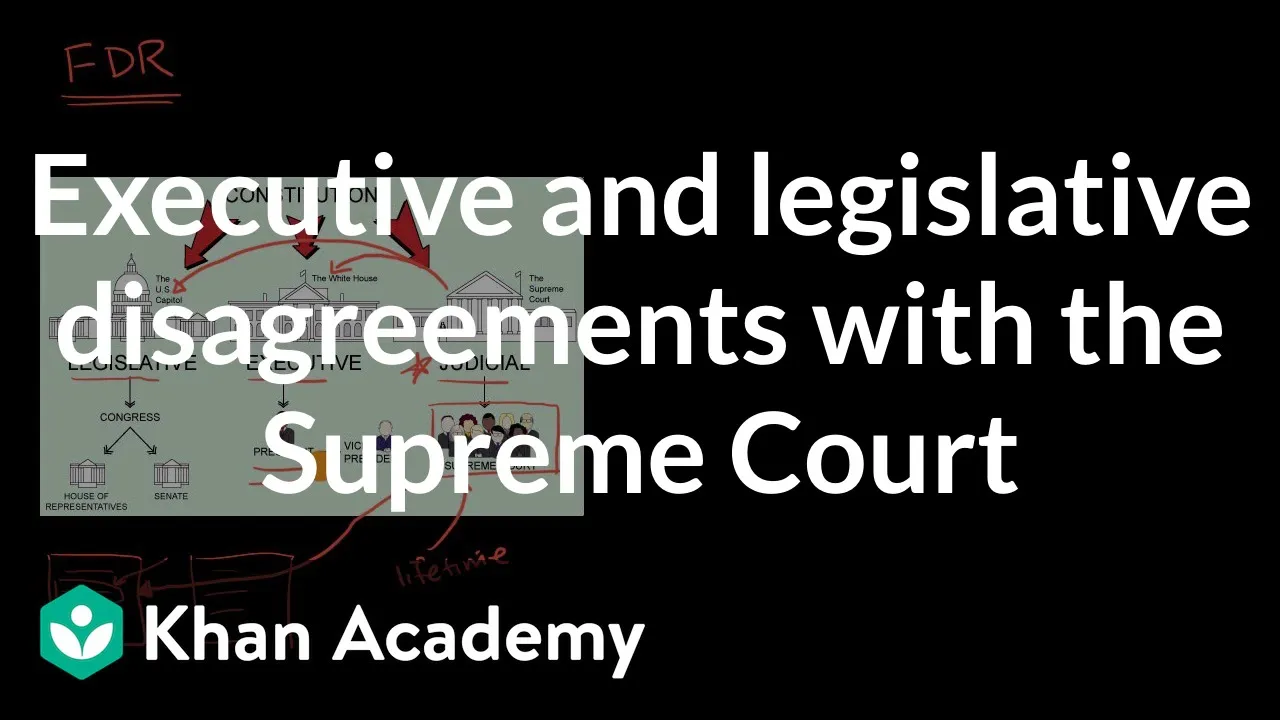


Judicial review is the power of courts to examine and invalidate actions of legislative and executive branches, a power that the U.S. Supreme Court granted itself in Marbury v. Madison (1803), where Chief Justice John Marshall ruled that the Court could declare laws unconstitutional despite this power not being explicitly stated in the Constitution; this power applies to federal and state laws, executive actions, and bureaucratic agency decisions, though courts rarely invalidate laws due to the need for legal predictability and their reliance on implied powers to function effectively.
Judicial Review: Marbury vs. Madison Explained | Supreme Court Powers
Added:The constitutional system of separation of powers and checks and balances among the Legislative, Executive, and Judicial branches.
Article III of the United States Constitution, which establishes the federal judiciary but leaves its specific powers somewhat ambiguous.
The political context of the election of 1800, including the transition of power from John Adams (Federalists) to Thomas Jefferson (Democratic-Republicans) and the creation of 'midnight judges' appointments.
The definition and purpose of the Judiciary Act of 1789 and basic legal terms like 'original jurisdiction' and 'writ of mandamus'.
The evolution of federal power through subsequent landmark Supreme Court cases such as McCulloch v. Maryland and Gibbons v. Ogden.
The philosophical debate between 'Judicial Activism' (actively shaping policy) and 'Judicial Restraint' (deferring to legislative bodies).
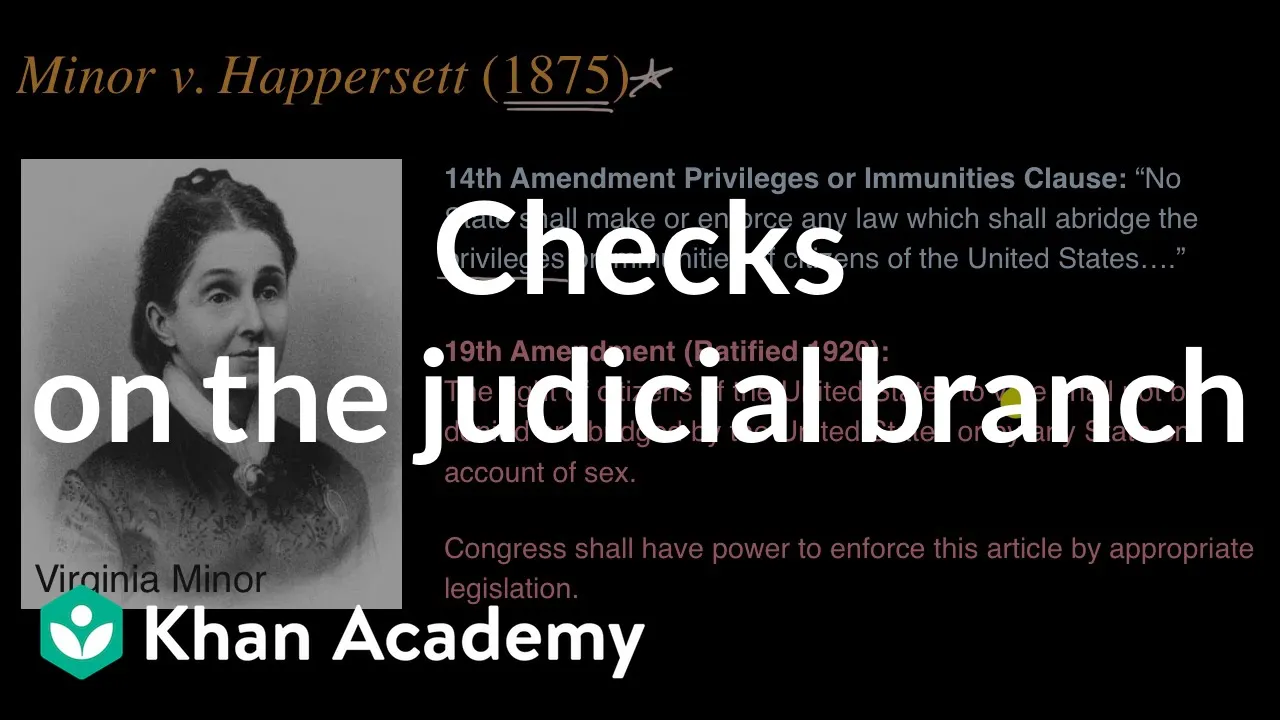
The methods by which the Executive and Legislative branches can check the power of the Supreme Court, including constitutional amendments and judicial nominations.
Modern debates surrounding constitutional interpretation theories, such as Originalism versus the Living Constitution doctrine.
1.6M views12Klikes8:00Original Release: 2015-06-27
Hi. I'm Craig, and this is Crash Course Government and Politics, and today we're going to talk about the most important case the Supreme Court ever decided ever. No, Stan, not Youngstown Sheet and Tube Company vs. Sawyer. Although, that is one of my favorites. Loves me some sheet and tube. And no, it's not Ex parte Quirin. Although I do love me some inept Nazi spies and submarines. And no, it is not Miller v. California. Get your mind out of the gutter Stan. We could play this game all day, but this episode is about judicial review: the most important power of the Supreme Court and where it came from. Don't look so disappointed.
This is cool!
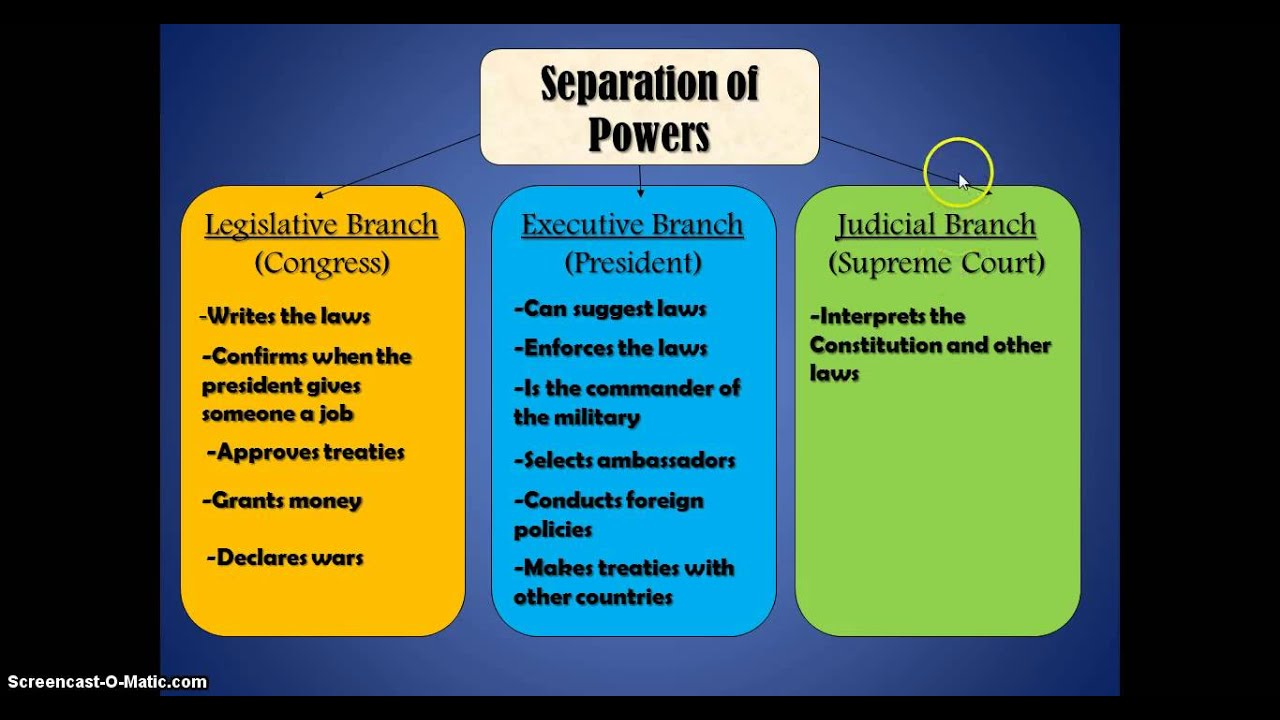
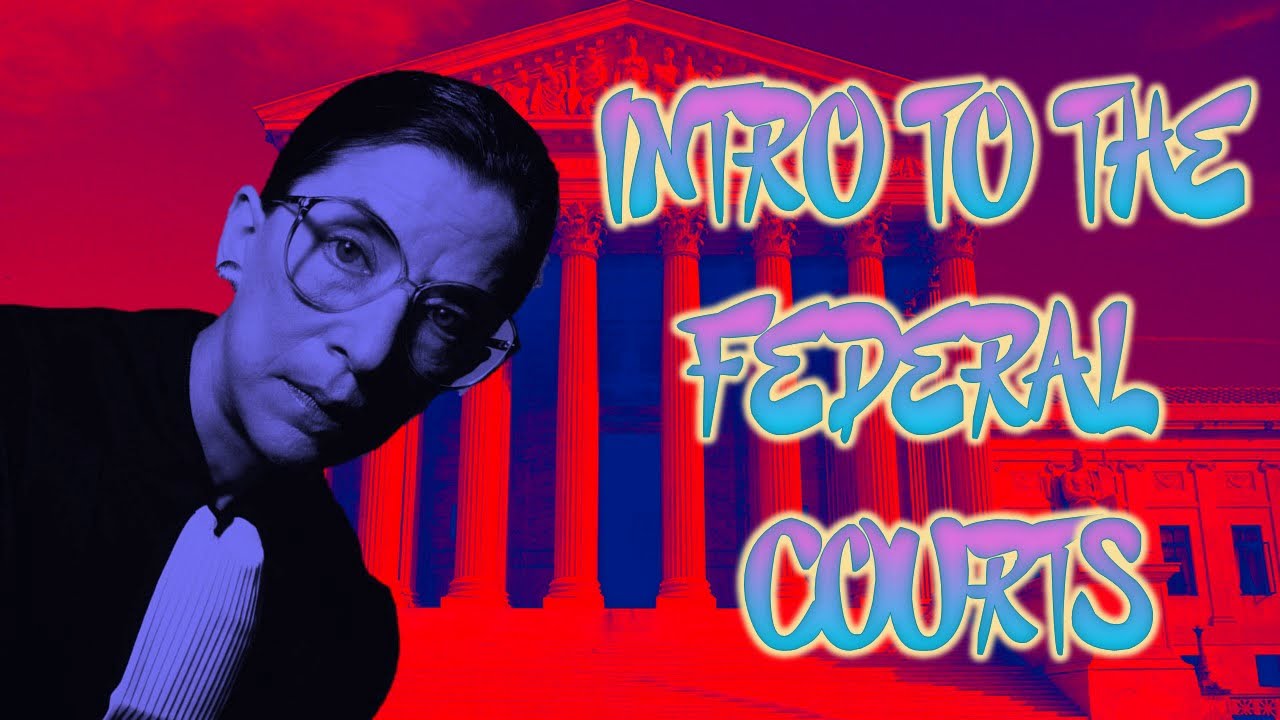
[Theme Music] When you think of the Supreme Court, the first thing you think about, other than those comfy robes, is the power to declare laws unconstitutional. The term for this awesome power, the main check that the court has on both the legislative and executive branches, is judicial review.
Technically, judicial review is the power of the judiciary to examine and invalidate actions undertaken by the legislative and executive branches of both the federal and state governments.
It's not the power to review lower court decisions. That's appellate jurisdiction. Most people think of judicial review as declaring laws unconstitutional, and that definition is okay.
The legal purist will quibble with you since judicial review applies to more than just laws.
Appellate courts, both state and federal, engage in some form of judicial review, but we're concerned here with the federal courts especially the U.S. Supreme Court. The Court has the power to review the following: One, Congressional laws a.k.a. statutes! Statutes.
Since judicial review is a form of appellate activity, it involves upholding or affirming the validity of laws, or denying it, invalidating the law in question. You might think that the Supreme Court does this a lot, but it doesn't and historically it almost never happened before the twentieth century. If the court were always striking down congressional statutes, it would be hard for people to know which laws to follow, and you'll remember that one of the main things that courts do is create expectations and predictability. For instance, you could predict that I would eventually be punching this eagle!
Another reason why they don't invalidate laws often is that if the Court frequently overruled Congress, the Court would seem too political and people would stop trusting its judgment.
If the Court has any power at all, it largely stems from its prestige and reputation for being impartial and above politics. No one has any problems with the Supreme Court decisions, at all.
Two, the Court can also overturn state actions which include the laws passed by state legislatures and the activities of state executive bureaus, usually the police.
The power to review and overturn states comes from the Supremacy Clause in the Constitution.
Most of the time that the Supreme Court extends civil rights, it comes out of a state action.
A good example is Brown vs. Board of Education where the Court struck down the idea of separate accommodations being equal in the context of state public schools.
Three, the Court can review the actions of federal bureaucratic agencies. Although, we usually defer to the bureaucrat's expertise if the action is consistent with the intent of the legislature which the Court usually finds it is. The Court almost never strikes down Congressional delegation of power to the executive. Although, you might think that it should.
The fourth area where the Court exercises judicial review is over Presidential actions.
The Court tends to defer to the President, especially in the area of national security.
The classic example of the Court overturning executive action happened in U.S. vs. Nixon where the Justices denied the President's claim of executive privilege and forced him to turn over his recordings relating to the Watergate scandal. More recently, the Court placed limits on the President's authority to deny habeas corpus to suspected terrorists in Rasul vs. Bush.
So, the Supremacy Clause gives the Court the authority to rule on state laws, but where exactly in the Constitution does the power of judicial review come from? Trick question!
It's not there, go look ahead, look. I'll wait. See, not there. Wow, you went through that whole thing really quickly. Fast reader.
The crazy thing is that the power of judicial review comes from the Court itself.
How? Let's go to the Thought Bubble.
The Supreme Court granted itself the power of judicial review in the case of Marbury vs. Madison. You really should read the decision because it's a brilliant piece of politics.
The upshot of the case was that Chief Justice John Marshall ruled that the Court had the power to review, uphold, and strike down executive actions pursuant to the Judiciary Act of 1789, and in doing this, to strike down part of that federal law. How he got there was pretty cool.
So, Marbury was an official that President John Adams, at the very end of his term, appointed to the position of Justice of the Peace. When Marbury went to get his official commission certifying that he could start his job, James Madison, who was Secretary of State, refused to give it to him. So, Marbury did what any self-respecting petitioner would do, he went to the Supreme Court for a writ of mandamus that would force Madison to give Marbury his job.
This is what he was supposed to do according to the Judiciary Act of 1789.
What Marshall did was brilliant! He ruled that yes, Marbury had a right to the commission but that the Supreme Court could not grant his writ because the law directing them to do so was unconstitutional. This is brilliant for two reasons. First, by the time the time the case came before the Court, Thomas Jefferson was President. Those of you who remember Crash Course U.S. History will recall that that less handsome man told you that Jefferson was a Democratic Republican while Adams, Marbury, and even Marshall were all Federalists.
By ruling against his own party, Marshall made a decision that was favorable to Jefferson and thus, likely to be supported.
The second move was even cooler. Marshall's ruling took the power of writs of mandamus away from the Court, making it look weaker, while at the same time giving the Court the power to declare the law that had granted it the mandamus power in the first place unconstitutional.
So by weakening the Court in this instance, like Daredevil going blind as a kid, Marshall made it much stronger for the future, like Daredevil getting stronger in the future.
Thanks, Thought Bubble!
So that's where judicial review comes from, but that still leaves many questions. A big question is, why has this ruling stuck around and hasn't been overturned by other laws or later court decisions? Another question is, is judicial review a violation of separation of powers?
Some say that it's judges making laws and thus an anti-democratic usurpation of the legislature's power.
Let's talk about this rulings longevity first. Remember when I said last time that the Supreme Court rulings are binding in lower courts? You don't remember do ya? You were sleepin'. Wake up!
Well, in general, Supreme Court precedents are binding on future Supreme Courts too because of the principle of stare decisis, which is Latin for "let the decision stand." This doesn't mean that future Supreme Court's can never overturn the decisions of prior Courts, it's just that they try very hard to not do it.
This idea of precedent is one way that judges can be said to make laws. Appellate decisions are like common law in that they are binding on future courts and constrain their decisions and because they don't have to be grounded in a specific statute.
Other courts have to follow the higher court's interpretation of the law, and this interpretation has the effect of redefining the law without actually rewriting the statute.
On the other hand, appellate decisions are technically not common law in that they are only binding on courts, not executive agencies or legislatures. They are, however, signals to courts and legislatures about how courts will rule in the future. Maybe an example will help. If you watch cop shows, or you get arrested a lot, you probably know something about Miranda vs. Arizona which gave us the Miranda Warning. You have the right to remain silent and all that stuff. Hopefully, you've never heard that in person, though. But hey, we're not here to judge. That's what the courts are for! Bahahahaha. Okay.
In that case, the Supreme Court threw out Miranda's conviction because he hadn't been told he had the right to remain silent. Without knowing that he didn't have to talk, he made a confession that got him convicted. The court didn't rewrite Arizona's law but it sent a signal to Arizona's law enforcement agencies, and those in all the other states, that in the future courts would throw out the convictions of defendants who hadn't been informed of their rights. As a result, police procedures changed in every state, and now the police are supposed to read the Miranda Rights to anyone they arrest.
So those are the very basics of judicial review. We've probably raised as many questions as we've answered, but that's why we're making a bunch of these videos! So we can teach it all! All of it!
Anyway, the big concern for many is that cases like Marbury vs. Madison, which give courts the power to strike down pieces of legislation, overturn the judgment of the elected representatives that made the laws and violate the idea of separation of powers.
Well, that is a thorny issue, but it's one that we don't have time to de-thorn today.
For now, understand that judicial review is how the courts work in practice and not necessarily a defined power granted by the Constitution. Just remember, the executive and legislative branches also operate with a lot of implied powers that aren't explicitly granted to them in the Constitution. That's because the governance of the United States has evolved and changed over time to hopefully, suit the needs of the country as they change over time.
Thanks for watching.
Crash Course Government and Politics is produced in association with PBS Digital Studios. Support for Crash Course U.S. Government comes from Voqal. Voqal supports non-profits that use technology and media to advance social equity. Learn more about their mission and initiatives at voqal.org. Crash Course is made with the help of these nice people who have the right to remain silent.
Thanks for watching. You have the right to stop watching.
Up Next

35:32
Originalism Explained: Amy Coney Barrett & Legal Theory
@PhilosophyTube
1.2M views•2020-10-31

24:30
BRICS Pay and de-dollarization: A New Financial Order Emerges? | 55 chars
@DannyHaiphongYT
164.6K views•2024-10-22
9:14
Federalism Explained: US Government & Politics Crash Course
@crashcourse
3.8M views•2015-02-14
10:19
Explaining the Saudi-Iranian Proxy Conflict in the Middle East
@Vox
18.2M views•2017-07-17
Related Study Plans & Knowledge Roadmaps
Structured learning paths in Political Science
political-science
Economic Statecraft: Sanctions & Chokepoints
01Foundations of Geoeconomics and Economic Statecraft
02The Mechanics of Weaponized Interdependence
03International Sanctions: Types, Implementation, and Efficacy
+ 2 more learning modules
12h5 modules
Explore Roadmap
political-science
Central Bank Independence: Politics & Policy
01Foundations of Central Banking and Monetary Policy
02The Time Inconsistency Problem & Inflation Bias
03The Delegation Model and Designing Independence
+ 2 more learning modules
12h5 modules
Explore Roadmap
political-science
Consociationalism: Power-Sharing & Stability
01Democratic Dilemmas in Divided Societies
02Introduction to Consociational Democracy
03The Four Pillars of Consociational Design
+ 2 more learning modules
12h5 modules
Explore Roadmap
political-science
Rebel Governance: Legitimacy, Economy & State
01Foundations of Rebel Governance and Statehood
02Establishing Political Legitimacy and the Rebel Social Contract
03Wartime Economies and Rebel Resource Management
+ 2 more learning modules
14h5 modules
Explore Roadmap