
![Построение базовой модели M&A-сделки с нуля [ОТКРЫТЫЙ УРОК]](https://i.ytimg.com/vi_webp/-ib3UBGO70c/maxresdefault.webp)

![[EP 334] New HSK 4 Voc 51-53 (Intermediate): 并、不要紧、不在乎 || 新汉语水平3.0中级词汇4 || Join My Daily Live](https://i.ytimg.com/vi/JmfzlV8tWNw/maxresdefault.jpg)
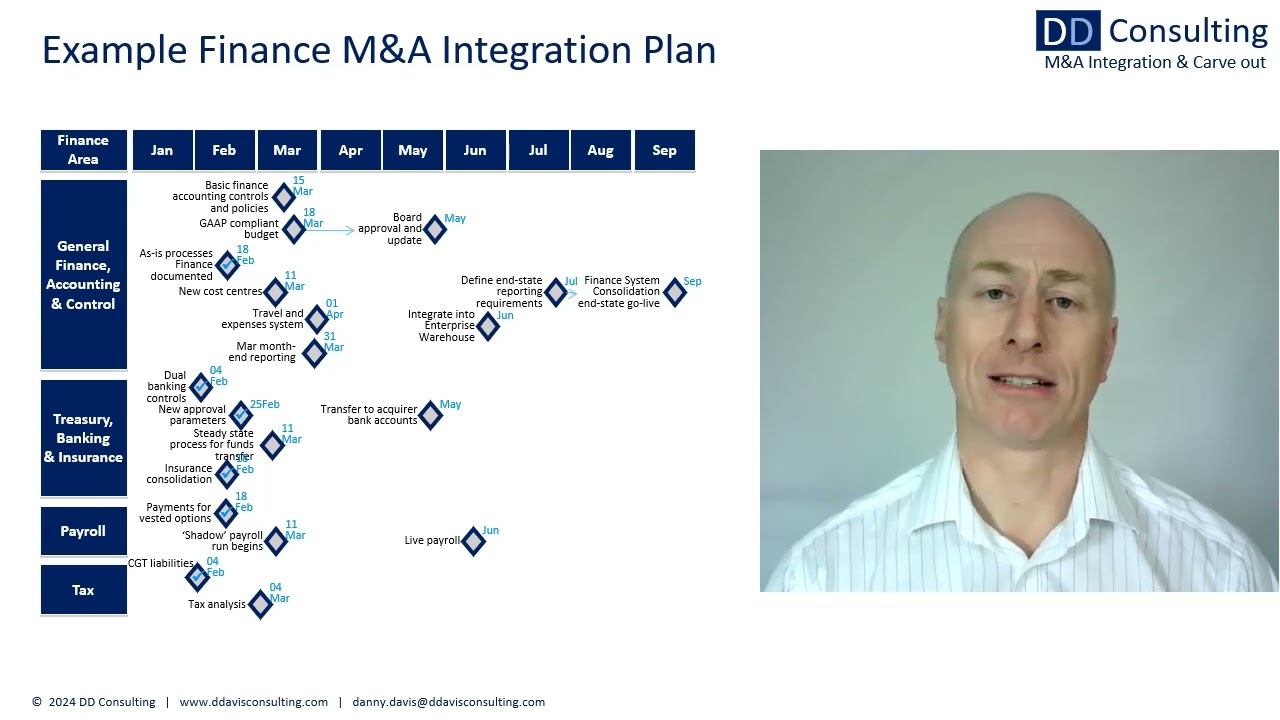














Successful M&A integration requires comprehensive pre-merger planning that addresses strategic objectives, cultural alignment, operational synergy identification, and stakeholder communication, rather than treating integration as an afterthought; this includes conducting SWOT analyses, establishing clear KPIs, forming cross-functional integration teams, and beginning the integration process during due diligence rather than waiting until after closing the deal.
M&A Integration Success: Pre & Post-Merger Best Practices
Added:Fundamental understanding of Mergers & Acquisitions (M&A) terminology, including the differences between mergers, acquisitions, and joint ventures.
The concept of business synergies, specifically how cost and revenue synergies are estimated during the pre-deal valuation phase.
Basic principles of organizational behavior and corporate culture, including how leadership styles and company values influence employee alignment.
Key project management methodologies, such as workstream planning, risk mitigation, and critical path analysis.
Advanced Change Management methodologies (such as Kotter's 8-Step Model or Prosci's ADKAR framework) applied to corporate restructuring.
Strategies for IT and technical integration, focusing on aligning divergent ERP systems, software stacks, and data infrastructures.
Designing post-merger integration (PMI) metrics and KPIs to track and measure long-term synergy realization.
Analysis of real-world M&A case studies, evaluating the specific cultural and operational reasons behind famous successes and failures.
13.5K views240likes1:05:45Original Release: 2020-08-27
hello everyone welcome to today's webinar how to ensure m a integration success this webinar is basically a continuation over turn around and restructure practice webinar we had a few weeks ago so i want you to think about either you're just gone through a turnaround and restructure and you're ready for growth through a merger and acquisition transaction or you're in growth mode and you're looking to go to growth through acquisition or a merger so this uh webinar will focus really on those integration successes and a lot of this is going to be fundamentals common sense but i hope you'll have some aha moments as well as all of this sounds very logical you'll also notice that i will focus much of this presentation on the operational and people side of the house rather than the deal structure legal and financial structure of an integration so a little bit about myself my name is vanessa davison managing partner panorama consulting group my experience has been in a c-suite capacity deployed in many situations as a ceo or ceo to turn around and grow financial firms i get started in the mid-90s with montgomery securities as an analyst my focus was in the financial services practice but later on after turning around many financial companies in the early 2000s i came to panorama consulting group and in this position here i lead our client services practice and we do a lot of different industry sectors that i like to talk about today we focus on manufacturing technology professional services healthcare retail energy ag food and beverage and non-profit our m a integration practice typically works with organizations that are 25 million to 100 million in revenue while our business transformation services is more focused on 100 million to 5 billion so we partner up with a lot of private equity firms in order to help portfolio companies integrate and get the roi out of their liquidity event so as you can see our service offerings expand from our merger and acquisition integration practice turnaround analysis financial and operational restructuring and we go all the way to ocm bpm software selection implementation and what's really hot right now is our expert witness practice so interestingly enough too we're focusing a lot on fintech technology and enabled technology-enabled companies so you might think well what experience does panorama have across the different industry verticals as you can see here very quickly um we've been in business transformation in space for about 15 years we have a breadth of experience in working in a bunch of different industries one thing that we do best is what i tell people is jumping into chaos and making sense of the current state and quickly move to the situation in order so as you can see many of our clients actually have experienced m a events in many shapes and sizes and many of those clients are very diverse with their own unique value proposition and also unique culture you will learn that when you blend two separate cultures and values that can lead to disaster very quickly so i will be talking a lot about melding cultures today as part of our integration success best practices so i'd like to start um by introducing a quote that actually i read many many years ago um you know from the harvard business review and they said 70 to 90 of acquisitions are abysmal failures i kid you not they use the word abysmal which is kind of scary if you think about it that 70 to 90 percent of of the acquisitions fail so our practice is very unique in that we get our clients ready for a merger and acquisition event by starting our framework pre-merger and taking through post-merger in order to maximize transaction value through the creation of integration activities and strategic objectives so and and while we're doing this we're optimizing all kinds of revenue and cost synergies you know the process of post-merger integration that we refer to as pmi um you'll see a lot of the industry if you google pmi you'll get post-merger integration at panorama pmi to us is pre and post merger integration because all this planning has to start pre-merger and you'll see the theme of this presentation is about early planning so typically i like to work with organizations completely upstream in the process when setting forth the strategy of growing through acquisitions because that is when you start to analyze what you're good at and what you need to improve it could be market expansion into another service offering or vertical or more like i say internal perspective and have the best in class marketing team for example furthermore this is not the old school model where a pe drops a managing director and a ceo and expects them to hit that 90-day mark that is very unrealistic and hence that 70 to 90 failure rate the traditional model also adds unnecessary costs with little results in my opinion the most successful model i have done is a team-based approach that includes us and the two respective companies i call it the seal team 5 drops into the pmi office and drive integration with both entities fully involved and that's the theme of this is that both entities have to be fully involved in the pmi uh deployment formation strategy and and implementation so what are typical client concerns during a merger and acquisition you'll see six items here um very very common uh people are always concerned about what is the most effective operating operating structure how can they minimize cost synergies what can be done to maintain trajectory momentum in each business while going through that integration how do they make the mill the culture of each entity to avoid disruption what interim processes can be established to enable cross-selling all your products on day one and how do we know for achieving integration best practice so these are all the common concerns i have heard over the years of doing this from various clients so the operating structure honestly it's about culture and maximizing cost synergies while retaining your customer value currently i'm actually suggesting to these two companies to perhaps date before they get married in the sense that maybe they form a joint venture first to see how the teams integrate and work out their kinks besides the legal aspects of deciding on operating structure this is to think more about operations business process and map out how that works today and how we integrate those core processes quickly you know some companies can spend months process mapping but we look at this as very pragmatic at a high level to begin with and then honestly your functional teams team leaders can actually work out the details during the integration of the businesses sometimes i tell clients hey why don't you guys operate separately until all systems are a go you know which is why establishing a pmi with multiple smes is also very efficient culture is the most important piece i always like to think about whole foods and amazon the amazon acquisition of whole foods as as better stated i think that they did a fantastic job in incorporating whole foods but they hit many roadblocks guess why it was due to the distinct cultures of the two organizations that actually led to a delayed full integration of the acquisition so this should be one of the top five factors to consider when looking at an acquisition partner and i'll spend a lot of time about how how do you identify an acquisition partner and how you go about planning for an integration i've had situations in cases that the company has identified the acquisition partners but the cultures were completely different and the teams could not even work together so we actually had to pull a plug and look for another partner that was that had the shared values that the other uh company had when you set your strategy and you have your acquisition target you should set a series of kpis or milestone that align with the overall merger strategy so that's how you know if you're achieving that integration best practice right so when you do formulate it's like a project it's like formulating a project plan and and putting together a project management team a project sorry a premier uh pre and post merger integration team is just like managing a project um and there's a set of milestones where people really don't do their job is in establishing those key performance indicators for the success of the integration so that's many years of leveraging basically our business transformation practice you know we we're always very focused on the customer and employee experience in designing that merger plan and framework so every merger is different i'm not gonna go through and tell you you have to do this step this step this step i'm just going to tell you what's important in considering how to go about the merger and integration and the reason for that and trust me i've been there i've made the mistakes i know what i'm talking about i've gone through several myself and usually as either an owner or a senior executive in the transaction i'm always way too focused on the deal points of the merger the legal aspect and the financial aspect that once the merger actually is finalized trust me a lot of teams are going oh oh now what now we got to go through integration now we got to think about operations we got to think about our processes our systems our culture our people that's usually an afterthought and what i want to teach you here today it should not and it cannot be an afterthought it needs to be considered way upstream when you're looking to integrate your companies so how do i think about for example integration uh methodology i think of it as first setting the direction you design the pmi to reflect the objectives philosophy and principles of the merger to me that's number one right that's part of knowing what the strategic objectives of the company is what are the values what are the principles what are we trying to achieve right it can't be oh we just want to make more money we want to start acquiring everybody or gobble up our competitors right um you have to be able to think about how are you going to manage the pmi processes like separate from day to day running of the business and this is why you have to pick your team early you have to organize a team that's going to be doing the integration not only your staff but whatever consultants you wish to bring to the table and also you have to insist that leadership is active on day one the other thing we think about is really communication and change management how are we going to communicate this merger or this acquisition to our clients internally to our employees how are we going to change how can i manage that change internally and externally right now i have uh i'm helping two non-profits merging their biggest concern is how are we going to combine the two brands because both brands are very powerful in very different marketplaces so that's that's a consideration that has to be taken when you're setting the direction how are you going to have um how are you going to staff this staff retention so all these things kind of play into your planning of the integration methodology so when we think about core values in integration methodology we really think about strategy and key objectives how are we going to capture the value and a lot of people always focus on the most important thing which is maximizing cost synergies but also planning for revenue synergies trust me that all my bean counters in my life have always said okay how are we gonna remove redundant and achieve cost energies but where we usually fall short and why seeing this with many companies is integrating the sales aspect of a merger acquisition right that's always the toughest thing in a way because you have to have those revenue synergies quickly up and running because you need that cash flow coming into the company you need to have that continuous communication and connection with your customers and that's very very important so you need to define those explicit cost and revenue targets and revisit them continuously throughout the pmi what you're going to see me talking about in the integration plan is setting a business case so what my accountants usually do is build a pro forma and what we expect the merger acquisition will look like from a financial perspective and that truly becomes our business case that will be tested throughout the 90 days to make sure we are setting up the company for that success other things in the strategy and key objectives that i like to think about is clarifying the business model of the combined entities will there be a strategic feat between company and the buyer and is the perception of that fit based on historical business relationship or merely unproven future expectations what i do mean by that is you know sometimes the companies that are merging or being acquired they know each other and they worked with each other in the past so they have a very good um business historical relationship whereas if you're going blind and your transaction firm is looking for a acquisition or merger partner for you you might want to date before uh you get married so to speak and it's very very important i always tell people it's easier to get divorced than to unwind a partnership and it's very very true sometimes the company and i have a friend of mine that's actually growing his business via acquisitions or what he calls it acquire so this is when your company's basically acquiring key people um to to be able to add to the business but not buying anything else um and also of course the client list so that's kind of what i like to look at in core values of the integration methodology when i think about how am i going to build the organization i think about myself as an architecture how i'm going to manage talent how i'm going to look at how i'm going to be able to select and retain and develop the best people for the organization i'm going to design a workable organizational structure for the combined company those are very important things about how you're going to build a business i worked with a big company that actually their whole plan was growing through acquisitions and one of the things that we did was we were buying small little retail outfits to to grow through that acquisition we actually ended up acquiring 7 70 little entities and so in order to do that we actually had to get our house in order first and i will actually go through that how the company that's getting ready to acquire others or getting ready to merge needs to be ready right some of the things i think about and i do first and then i know sometimes it can be very academic and people always say vanessa come on that's like um that's like what you learn in your mba well it might be but it actually works what do i do first is i conduct a swot analysis of both companies or the company that's getting ready to acquire or merge with another one what is a swot analysis is this analysis that analyzes your strengths your weakness your opportunities and your threats it's very very important i know what that is because your acquisition or merger strategy is gonna be able to say okay we have an opportunity in this marketplace let's go find a company that actually has a good footing in that marketplace and all of a sudden that opportunity became a strength what about looking at your weaknesses what don't you do well well some of those things can actually be acquired or merged with another company so it can become a strength and also look at your strength right what are you really good at what do you want to conserve what do you want to what do you want to be able to expand so understanding your current state current organizational structure your current compensation create a skills matrix look at your management team and your leadership roles you have to get clear early about all the executive roles so it's funny um a lot of deals actually blow up because the two emerging companies the ceos they don't want to give up their ceo title i know it seems petty but it actually happens quite a bit so getting those uh those leadership roles straightened out early on is very very very important um and you know identify what those gaps are and ask a lot of questions of each other sometimes people are shy to ask the hard questions of each of the responding companies but you have to do that and that's all about building the organization what are going to be your building blocks for me this is the funnest part of an integration is being able to do what i call the org design from a people process and technology standpoint so we would think about uh merger and acquisition integration the key areas that we really like to just very very important and what we focus on right one thing is setting up a pmi management office right you you staff it with your key leaders in each company in each funk key functional area so you ideally want to have somebody from sales marketing accounting operations from each company and your pmi integrator consultant leads as well to be able to drive that execution we look at the strategic blueprint and integration roadmap so we start this up very very early and you'll hear me talk about what different five phases are this is in the due diligence phase right what is it we start thinking about what that strategic blueprint is gonna look like we don't develop it in the in the due diligence phase but we do start to think about it and we start to think about the risks of an integration how the integration is going to look like another thing we do is a cultural assessment this is more on the change management side how the culture of the two companies measure up and this is also done in the due diligence assessment phase in my methodology because like i said you have to know what the culture of the two companies are even before you think about merging or acquiring each other so we look when we put together the cross-functional interim plan we put it together for the first 90 days or 100 days however you you like to kind of clock it some people do 90 some people do 100.
um we start to do the desired state planning and execution basically in the transition planning phase we we start to see how our desired state is going to look like or the organization so obviously during the due diligence we know what each organization looks from a current state standpoint but then we start to think about the integration of those two current states to build that desired state right uh we looked at systems planning and integration there's always so much redundancy in systems i mean i walked into one company that had over 100 different you know systems and they probably used about 20 of them so there's a lot of actually cost synergies you can actually pick up just from pure systems alone so we do make sure we perform it due diligence during the due diligence phase and the business process assessment and optimization that's during that current state high level mapping that we do uh the customer experience value chain mapping is very very important because we need to understand what your customer value is and what the customer journey is throughout your organization and how each functional area supports that customer journey so that is also done up front um one organization may do that better than another and so adopting uh one process over the other sometimes makes a lot of sense and there's a lot of fighting going on when that happens so that's also a key point that we look at and the other one i talked about briefly was the revenue acceleration and sales effectiveness one thing that is you have to you have to have people focusing on nothing but what is that customer acceleration when you merge or acquire hopefully you're cross-selling products and hopefully you're able to accelerate the sales of those products effectively when you do a merger but it becomes such a chinese fire drill that that is actually an afterthought and it doesn't get the attention it needs so i would highlight that area for you um and like i said the org design and change management aspect of it is is basically your blueprint um for integrating the company and last but not least communications plan and execution you have to communicate often you have to communicate communicate communicate you have to do fun things to integrate the teams trust me there is not too many too much communication when you're talking about a merger and acquisition so don't be shy about telling your staff with what's going on because the more transparency you have the more town hall meetings you have the easier this is going to be because everybody's worried oh my god are they going to cut my job what's going to happen you know i'm not going to be director of this division anymore because there's another director coming in that's going to replace me in the absence of information people think the worst so keep that in mind and your senior leadership needs to drive that communication as well here are the five faces of pre and post merger framework as i was talking before their the due diligence and assessment phase for me is the most important but there's five due diligence and assessment transition planning which is pre-closing integration plan which is post-closed during those first 90 days that i talked about that implementation side of the house and optimization so the problems in m a often cause deals to fail or result in the inability to extract true value because of the failure to implement the integration quickly with this in mind like i said post post-merger integration planning should begin at the early stages of the deal which is why we talk about pre-merger integration planning maximizing the deal value became begins in the earliest stages during the due diligence and planning phase it does not begin after you close a transaction it begins before since smooth post-merger integration impacts the potential value of that m a companies need to get a head start in putting together their due diligence and assessment and merger strategy early do not start post merger planning because guess what you'll end up part of that seventy to ninety percent failure now the due diligence and assessment what do we do we're going to go deep in this but generally speaking it's getting prepared for that acquisition or merger but also to be clear on what benefits an acquisition can bring your current state don't go shopping or putting yourself on the market without incorporating this plan and knowing what your current state looks like if you don't do this you will be in a weaker position when negotiating a transaction this can help the organization in improving its current position and strategy and understand the business drivers and possible synergies better these items that normally need to be prepared as part of your dd and planning phase by the way dd is due diligence so i'm sorry if i do a little bit of abbreviating so dd is a sharp focus on value and post merger integration some of the things that we we do is normal commercial financial legal others we confirm the business case we recalculate expected synergies based on the dd data we confirm what the work stream owners of post-merger integration projects will look like but bear in mind we will look at due diligence tasks a little closer in the following slides so i'm just kind of giving you a rough high level but we'll go deep on this transition planning these are items that need to be reviewed before the actual post merger integration process begins confirm business case and synergies allocate and sign off synergy responsibility to work stream owners confirm work stream owners and allocated teams specified post-merger integration plans those are the simple things about transition planning and then the implementation plan occurs post close which is basically the kickoff this is what i call the post-merger integration kickoff and this is like determining the governance structure in this step a single integration manager is named to oversee the integration planning and implementation process so they're the ones that are responsible for like i like to say border calling all the other functional area um pmi uh executives so the integration manager position is usually filled with the resource who will set a brisk cadence and operate with urgency expedite the transition by pushing for decisions and actions closely track and report progress progress against goals mobilize teams to develop and pursue their charters create key milestones and timelines manage cross-dependencies between work streams set meeting schedules and facilitate reviews and communicate effectively with all levels of the hierarchy so when you're picking your integration manager believe it or not it can't be from either company because there's a lot of politics involved if one manager from one company is leading every the other company right there's hurt feelings there's all kinds of baggage that goes around with that so either hire somebody to handle that or hire a consultant but don't have it be somebody from the one either of the companies because it'll be very political and it'll be very hard um to get everybody on the same boat so looking at the faced approach a little closer from the five phases of the methodology the first phase like i said is assessing the readiness of the organization to undergo an acquisition from a people process and technology perspective you will notice that in my little highlighted tasks list here i did not put i put very little on financial legal compliance um hr and just really really focusing on the core operations of the business units um although we do a lot of that when it comes to the deal planning and so forth most of the time panorama actually partners up with a transaction firm a private equity firm and they handle a lot of the finance the legal and so forth so we're we're basically i would say a very good addition to that team because usually transaction firms do not focus on the operation side of the house and they usually hire pmi companies to do that now if you look at the internal capability analysis you look at the pre-merger readiness i talked about swat and kpis and comparing against industry best practices for example if you are a shoe manufacturer you're going to want to find out what are the industry best practices for shoe manufacturing right what what does it cost them to produce a shoe right how fast can they produce a shoe how much do they sell it what are their margins there are industry best practices out there and you can actually know where you stand against those industry best practices so it's very good to know that i also like to say that you have to create a roadmap for the acquisitions like i was saying um and that's and that's honestly in the internal capability and analysis do we have the internal capability to actually drive and lead a merger and acquisition right can we do we know how to create a roadmap do we know how to optimize our current structure so if you don't have that internal capability and analysis you should look to either hire someone or bring a consulting firm to be able to walk you through that so some of the key kpis um to handle all the let's say to handle all the differences companies need to first establish that consistent set of success factors that guide that post-merger integration efforts such points during the process can define deal success what are some of those common success factors that mark the m a deals these include ensuring stability do we have stability in the organization um maintaining customer focus securing and increasing value integrating cultures emphasizing employee communication well-being retention profitability aligning strategy processes and anything that's a mission critical success right all those kinds of things you have to start thinking about it um you don't have to define them but you have to start to think about it and then during the due diligence base is a dual due diligence phase you're doing due diligence on yourself and you're going to do due diligence on the target company that you're looking to merge with or acquire and that's about evaluating the organization's existing business process capabilities and proficiencies so it's very very important to that when you assess the target's true operational state state that you know where you are operationally right so you can do due diligence on another company but if you don't really know where you're at that due diligence assessment phase is going to be useless because you need to know where you're at you need to evaluate yourself which is in the internal capability analysis and then when you go to do the due diligence you do the due diligence on the targets um business correct so then you're able to melt um the two businesses from an operational people um strategy perspective marketplace product and so forth and you're going to be able to know what you integrate what you don't it's kind of like what you keep what you don't so the successful blending of two companies and the ensuing integration of its teams and departments requires both foresight and detailed follow-through managing a successful business innovation can be one of the most complex and challenging processes so stay focused on the strategic objectives of the deal synergies value drivers and the integration plan as a whole okay so you're talking about that operational alignment and planning that is where the rubber meets the road right you're trying to establish and mobilize integration teams define the value drivers which to measure success during the integration not just the pmi success but also the performance of the organization looking at the strategy and vision congruence design detailed integration plan functional integration assessment you have change readiness assessment stakeholder engagement business process gap analysis and system gap analysis once you have all those things right then you start to think how am i going to put this house together how am i going to build a foundation pour the concrete right put the roof what kinds of shingles am i going to have what kinds of windows am i going to put that's part of that operational alignment and planning phase it's building designing architecting your future state so when you get to post closing and you're implementing that 100-day integration plan then you're starting to not just finishing up the planning detail aspect of it but you're starting the execution as well so you're initiating communication strategy creating new organizational structure you're deploying the new processes initiating training a lot of people don't think that people need to be trained but trust me they do and you will have to do that at some point so it's good to do it here hit the ground running ensure that operational alignment get the team excited right get all the teams excited get your pmi team excited get the other company excited get everybody excited have a kickoff party make sure everybody's basically thinking about the one vision the one company we are in this together and and only then can you actually implement swiftly through this space and then of course you you're still planning that's why i say planning and execute all those medium to long-term initiatives you are going to be planning and re-planning because you're testing and retesting your business case you're going to be tweaking what i hope that at the end of 100 days you're actually operating a fish effectively maybe not efficiently but effectively right so um post the 100 days is when you really um start to optimize those existing capabilities and and identify those ongoing synergies because some synergies hopefully most of them will be flushed out at the beginning but some synergies will actually become apparent post integration so keep an eye for for that integrate all the functional teams determine all the system integration strategy define all the standard high level core processes and then focus on that post implementation support and review so as you can see this is just i would say maybe two percent of all the tasks that you have to do in a integration so this is nothing and compared to all the tasks that you're gonna have to think about but we do think about everything and just to give you an idea about all these all the tasks that actually we look at in assessment and due diligence and not just us our partners that we work with the transaction firms that are helping you um get acquired or go through a merger you know overall strategy and key objectives like i said swot analysis important um corporate due diligence hr human capital management financials tax matters sales marketing what's your competitive landscape who are your customers who are their customers what does operations production look like what is your ip technology what are the material contracts anything to do with regulatory antitrust compliance insurance litigation environmental issues government regulations filings compliance properties right deliver i mean just everything you think about um in being able to just go to market know what you have know what they have where's the due diligence um and what's the assessment and all those areas you know you have to go in and we have to have a tax expert we have to have um people looking at your insurance at their insurance and making sure we cross all our t's and dot all our eyes but the most important thing about here is linking that due diligence to that post-merger integration all that information transfer between the acquisition and integration teams is often incomplete so hopefully having done all this work upstream you know during pre inter pre-merger and during the due diligence phase you will hit the ground running on day one because all this has been taken care of this is like an administrative nightmare of having to go through all this and not only that but you know people are exhausted too i mean and some people are like um i we don't have a strategy and we don't know what our key objectives are so it's almost like you hit the brake on the car you're like okay time out we need to define this because we cannot go and acquire another company when we don't know what our key objectives are you might think that's dumb but actually a lot of mergers occur from an opportunity and it's all of a sudden right all of a sudden you and your competitor are buddy buddies and all of a sudden you guys want to get married and you know things haven't been ironed out internally in both companies but it happens more often than you think and so i like to talk about it then we talk about merger integration due diligence assessment what's what's in that right what do you mean what is that process map that's kind of scary is that two consultants speak for me no well let me tell you when you do during the pre-merger during the internal capabilities analysis when you're looking at current state assessment you have to do a high level mapping and if it's done right by somebody who's more practical and less consultant guess what you're going to get through this very quickly you're going to be able to kill like four birds with one stone because you're going to be able to map out your processes right you're going to know who's doing what what are the redundancies right what pockets of resistance do you have what's working well what's not working well what are your pain points what could be your desired state and guess what what are you missing like where's your what's your gap here you know what are you what are you not doing right and and then you start to think hmm this this uh acquisition partner this merger partner actually has a strength in this wow this is amazing we're gonna get great synergies right so this is very very important it's not academic and it's not consultant t like i like to say it's very practical and it also plays into the organizational design and alignment right being able to interview employees their skill sets what are they doing um for their everyday jobs is there somebody else doing it too and is there redundancies there and looking at the organizational hierarchy to optimize the workflow and like i said you're gonna know what the pockets of resistance are there's always rotten apples and companies trust me you want to you're going to want to get rid of those quickly and you do that by doing that cultural and value assessment you'll know what's going on very very quickly at least we hope and of course we look at the i.t diligence so all this in this current state that you see here you're gonna be able to look at process people and guess what technology all at once very quickly very pragmatic and at high level you'll know what the internal capabilities of the organizations are so what does this pmi office look like what does this pmi strategy and measures look like well this is a very good view at the integration framework pre-merger and post merger what are all the functional areas right what are all the tasks that need to happen within each functional area your pmi office sits in the middle of that circle and it's able to assign hopefully team leads or what i call is functional area leads to each of those squares and they're you're they're going to be driving their areas with the pmi manager office oversight so you look at for example purchasing what are the things that you have to look at do you make do you buy supplier choice prioritization competitive sourcing delivery condition um you know you look at production what's your production strategy you know site choice production layout you know you're combining two companies and there's gonna be some uh warehouses you might have to close down you might have to consolidate the production staff um you know so all that is very very important does one uh production process work better than the other what about marketing and sales so this is actually one of the hardest things in when it comes to branding right when two major brands are merging or one is acquiring the other one everything comes to a halt until they figure out branding i mean you think about united and continental right um that was amazing how they were able to incorporate the logo of one and keep the name of the other right um it is very very tricky because a lot of money is usually spent on branding a company so you know you almost have to put your ego aside and and think about what's better for the organization going forward so branding becomes very very important you look at customer value experience and journey um what's the corporate identity the corporate design what's a sales strategy what is the sales organization looks like right i was actually looking at two separate consulting companies recently and one has their delivery team and sales reports to the delivery team's director and the other one has a whole separate sales organization completely separate than the delivery team and there's a director that sits on top of that with all the account executives so that was a little tough to integrate because you have a whole separate sales organization process and a whole different organizational design because of the way that the two divisions are completely designed different so you just sometimes have to throw out the the bs that's what i like to call it and say okay which one's doing better right which one has the highest close ratio which one has the uh customer loyalty which one has a higher profitability which one functions the best so you you ha and then you adopt the one that does the better and there's no there can't be any politics there can be any hurt feelings it's all logic right you're using performance indicators to be able to understand which design organizational design or sales strategy you adopt and that's throughout the whole organization so you look at supply chain process harmonization and process optimization warehouse storage outsourcing human capital management very very big piece in hr because you're looking at staff structure tasks and responsibilities job policies are going to be changing um i always like to throw the cultural integration under hr just because i want my hr to be involved in putting that together and leading it and then once we're done with the integration of the two companies the hr needs to maintain kind of that that culture within the organization so i like to put it there um for that reason and then of course finance and legal their heads down throughout the whole time just looking at payroll how are you gonna make payroll financial performance performance cash analysis transferring bank accounts you know all the asset management how are we gonna you know sell assets that we no longer need how we're gonna get rid of office space warehouse space that we no longer need uh making sure they're in compliance legally file all the required paperwork and so forth so finance and legal are always heads down they need to be very involved in what everything else is going on because for example right let's say we're going to be getting rid of a warehouse facility right legal has to be able to look at all the contracts to make sure that we can get rid of that facility right and if we can't they need to find a way to negotiate um with the landlord so that we can shed that facility so it's very important that every single department's talking to each other and that's why you have a head pmi office you know some of the things in hr like i said it's a very very big piece because your integration checklist covers compensation retention deferred compensation severance health insurance cobra if you're gonna lay people off right what is gonna be um their their severance packages do you have any do you have to give severance packages so you might be reworking salary grades pay adjustments salary structures how are you going to retain key personnel right you have to identify who's faith and who goes and you're going to have to identify who are the key players here and let me tell you sometimes it's not about it's not a i would say popularity contest it's about you know who's doing the best job and who supports the company's mission and culture as well so it's looking at all that health i would say benefits is very very tough to to be able to make sure you're ready to go with payroll and medical benefits um and your 401k i mean just all that is is uh it's quite a bit of work so i'm only showing you very high level i can tell you that my checklist for hr is literally um 15 pages long and is also by face in the integration phases of it so it might be day one okay day one hr you need to do this this is this day two you need to do this this is day three you need to do this this this right and every day your pmi manager is making sure everybody from hr to finance to bpm to purchasing productions getting their daily task list executed and that is very very important that you hold people accountable for getting their stuff done right you're gonna hit roadblocks you are going to hit roadblocks so um there's going to be places where you have to pause to resolve an issue and that can take time it's not it's not as i would say task oriented as i make it sound sometimes the task becomes a path and has to go through a strategy um with the executive with the executives and the executives have to then decide on the strategy and then it comes back to a task so sometimes it takes time to to flush it all out but this is so you get an idea of what you're looking at the other thing i wanted to point out is how is technology involved in all this a lot of the mergers we're seeing right now are actually technology companies um and then some of the other mergers you're seeing is a lot of manufacturing companies so there's a lot of systems there's a lot of disparate systems there's a lot of systems that are not being used um but yet they're charging the company's maintenance fees so it's being able to to document that current state i.t roadmap looking at those core business systems the stand-alone systems look at what the strategy is what is it that we're going to need from an i.t perspective to support these two entities right um it's very very important and last but not least that data and information integration is very very important for me when i'm running a company i need to have a dashboard that tells me where the company is on a daily basis so that i know where pockets of trouble may be in any given uh any given functional area so having the right data flow through the systems to the executives who are in charge of driving this company and all the other constituents that rely on data need to make sure we need to make sure what that data and information strategy is going to be and how we're going to be able to migrate that data over so in the technology data and information strategy it's very important and can only be done effectively once you've identified the processes associated with how you're going to operate the business because then you're going to use technology to enable an efficient business architecture and then you're going to be able to see who's responsible and accountable for that data flow right so that this has to be done after and i usually i would say usually do it a high level at the due diligence phase to know kind of what my costs are and get a sense of what systems i have to start to think what i can retire to then be able to have the cost energies that i need to have so what are some of the tasks that define a post-merger during the planning and implementation phase like i said we're looking at operational organizational and systems so this is this is like i said you establish and mobilize your integration teams and put the best people please do not put the people that have nothing to do because they don't understand the core businesses and they don't understand how holistically the organization operates so keep ensuring the strategy and vision congruence make sure everybody understands what strategy and vision looks like design those detailed integration plans and compile the integration toolkit conduct those functional integration assessments conduct change readiness assessments conduct business process gap analysis conduct systems gap analysis define the target organizational model establish organizational design principles ensure operational alignment optimize existing capabilities well you get the picture right this is like all systems go every areas go you're looking at this operational organizational and from assistance standpoint your goal is to operate with low risk and by the way you're going to have to have risk mitigation strategies you're going to have to make sure that you have governance and you can hold people accountable that you can function holistically but when you're doing the integration it's by department your pmi office makes sure that you have a holistic approach at the integration aspect of it and now you can kind of start to see why the why the traditional model of dropping one ceo really won't cut it in order to be able to integrate two companies you really need a team and you need teams to focus on the different functional areas and to drive all this operation and change management aspects of it finally we look at high level what a merger and acquisition integration timeline looks at it from a post-close perspective after close you have your 30-day mark you're looking at your first record to report cycle you're sending your post onboard employee survey because you want to know how they feel about all this you may want to send a post-close customer survey complete training begin weekly sales transition calls um the first 30 days are going to be rough um from a from a people perspective but hopefully you can get your first you know payroll done seamlessly your invoicing done your customers know about the merger um all things are are functioning you're getting the kinks out and then you jump into your 60-day milestone mark so this is the second report record to report cycle once again you're doing some of the same things you did on the first 30 days you're checking your business case over and over um silly things that like to point out permanent sign lynch in place if you wanna uh do that but um uh it's very interesting how some of these things uh come up at different various levels of the the milestones and then you have your hundred day cycle right same thing um you're you're reviewing and verifying the business case hopefully your complete data migration uh should in retiring systems should also be in place and then of course you can see it at the end after um the first hundred days of integration you have your ongoing compliance and governance so don't think that after your first 90 days you're kind of done with this integration because the ongoing compliance governance management is really optimizing your synergies together and you're starting to really operate as one and producing financial statements your domain names your license renewal annual reporting tax returns capital contributions and dividends and so forth so i hope that i was able to give you just a little glance of what a pre and post merger integration framework looks like the work it's involved how to do it in faces what to really pay attention to what are the important factors um and i hope that you were able to get some nuggets out of this and you know have some aha moments uh but you know a lot of it sometimes unfortunately is political and so that can become a problem so as we think about ending our webinar today um we like to extend a uh offer to be able to have a one hour free of consulting time with one of our pmi consultants um it could be anything too and you can also email me directly as well you know from the last webinar i got some great questions we have some great questions already today that we're looking at um let's see let me see if i can read a few of them one of the one of the questions is how would you apply this to a nonprofit merger well this is actually a very excellent question because um i'm actually in the task force of a huge non-profit merger right now and all these steps are definitely important even in the non-profit area i think for non-profit um the most important is once again the brand what does the donor base look like how are donations uh coming in are they foundations corporate individual right now some corporate or foundation donations are set aside for specific areas um for example there's a lot of foundations right now focusing on covid so a lot of funds you know are we gonna lose funders are we gonna lose sources of funds by merging so when it comes to a non-profit i think it's very important to look at the donor-based composition and the branding side of the house and how you're going to be able to um to to keep fund a donor base and also increase donor base because if you're going to have a non-profit merger hopefully it's for the purpose of getting access to a bigger donor base and number two you know it's a field services right the two companies the two non-profits that i'm working with right now one of them has a consulting and engineering service offering and the other one is a little bit more field operation so it's perfect synergy from an operational standpoint because they can cross-sell consulting and field services so that's also very very important so i think you know in those cases like i said donors um access to a donor a more diverse donor base is important but every single piece of this methodology would apply in a non-profit merger the other question is how do you apply the pre-merger steps before identifying an acquisition target it's actually also a very good step because i just i actually talked about it briefly at the very beginning but this whole presentation assumes that you already know who your acquisition target is right um but what are the pre-merger steps before uh identifying that acquisition target it's really like i said the internal capability analysis is that that's the part that you do before you do that so when you do the internal capability analysis you're looking at your own strategy sometimes you may not have one so you have to put one together you look at your objectives you're going to know right away if you want to grow through acquisitions or a merger you do your swot your current state um you look at your financials and see kind of where pockets of i would say weaknesses are um in working with one of the companies uh as well we noticed right away that their um cost of goods sold was really really high um and and and so we decided that maybe a good acquisition target would be somebody that actually has that cost very very low because of a special distribution channel or manufacturer they do their own manufacturing or so forth but um that's an area those are different areas that you review so when you think about your swot don't just think about internally or externally also look at your p l as well because there's some stuff that may be hidden in there that may be weaknesses and strengths so it's really looking at your internal capability analysis pull some of those due diligence tasks out of the due diligence phase and do some due diligence on yourself if that makes sense and then um the next question i think that's the last question that i see right now um they said we are already working with a transaction firm but they do not seem to be focusing on any of the items mentioned how would you be able to assist us and work with them and would this be expensive that's a really good question because we typically work with transaction firms you know we typically come we we typically either bring a transaction firm to help or you might be already working with one and we come in to formulate the plan for the pre and post merger implementation so um we do work with them usually transaction firms charge a transaction fee at the end of the transaction um consultants like us we cannot charge transaction fees because we're not really a transaction firm so we charge consulting fees hourly could be time and materials sometimes we do a fixed bid it's sometimes not very expensive believe it or not we did an assessment of a professional services firm that was about 30 million in annual revenue and i believe the assessment was about 25 000 just to give you an idea um and so that was the assessment and the due diligence part of it so it's it's not very expensive i think where it does get it could get a little expensive is when you start to do the integration but even then um it's very important to have that whole team in with you and for this 130 million dollar company they merged with another um 20 million so they became a 50 million dollar company i think it was about 500 employees our run rate um during the implementation was about 50 000. so believe it or not it's not very expensive and it's because we are able to take uh people from your company and the other company to do some of the work and do some of the heavy lifting if you think about it we're mostly coaches um often quarterbacks and when the client wants we're actually going to be um the boots on the ground doing some of this work but i really like to teach show other people how to fish um because it's going to be these people running the company when the integration's done and we're done with with the work so um great questions um if you have any other questions feel free to email us um or feel free to reach out to me i'll be more than happy to to talk to you i love the stuff it's my passion um and it's years of experience uh i got scars to prove it so very happy to talk to you thank you for your time today and hopefully you have a very successful integration thank you
Up Next

34:23
Merger Analysis with Pro-Forma Consolidation in Excel
@EdwardBodmer
858 views•2016-02-16
46:36
Retention Habits of Top DTC Ecommerce Brands Revealed
@SendItPodcast
44K views•2026-03-03

15:23
Decoy Effect: How Pricing Psychology Influences Consumer Spending
@bobinvestsUS
90K views•2026-01-05

17:30
The Planned Obsolescence of Light Bulbs and Tech
@veritasium
25.3M views•2021-03-26
Related Study Plans & Knowledge Roadmaps
Structured learning paths in Business
business
Pop-Up Retail: Strategy, Design & Execution
01Introduction to Pop-Up Retail & Strategic Goal Setting
02Budgeting, Site Selection, and Legal Essentials
03Experiential Retail Design & Visual Merchandising
+ 2 more learning modules
15h5 modules
Explore Roadmap
business
Reg CF: Startup Funding, Marketing & Launch
01Introduction to Equity Crowdfunding & Reg CF
02Platform Selection & Legal Preparation
03Crafting High-Converting Campaign Assets
+ 2 more learning modules
14h5 modules
Explore Roadmap
business
Productized Services: Scaling Solo Freelance
01Foundations of Productized Services
02Packaging and Scope Definition
03Pricing and Subscription Models
+ 2 more learning modules
15h5 modules
Explore Roadmap
business
Gov Procurement: Find, Bid & Win Contracts
01Introduction to Government Procurement & Business Setup
02Small Business Certifications & Set-Asides
03Finding and Analyzing Contract Opportunities
+ 2 more learning modules
14h5 modules
Explore Roadmap