





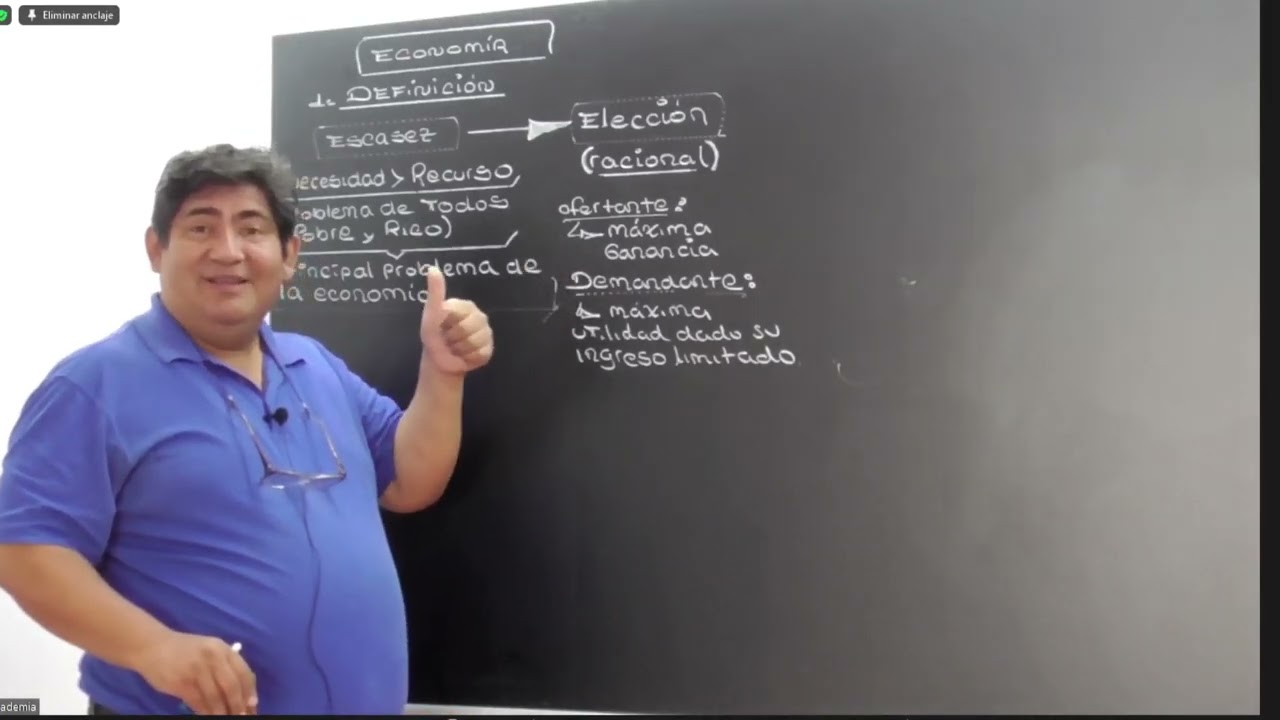













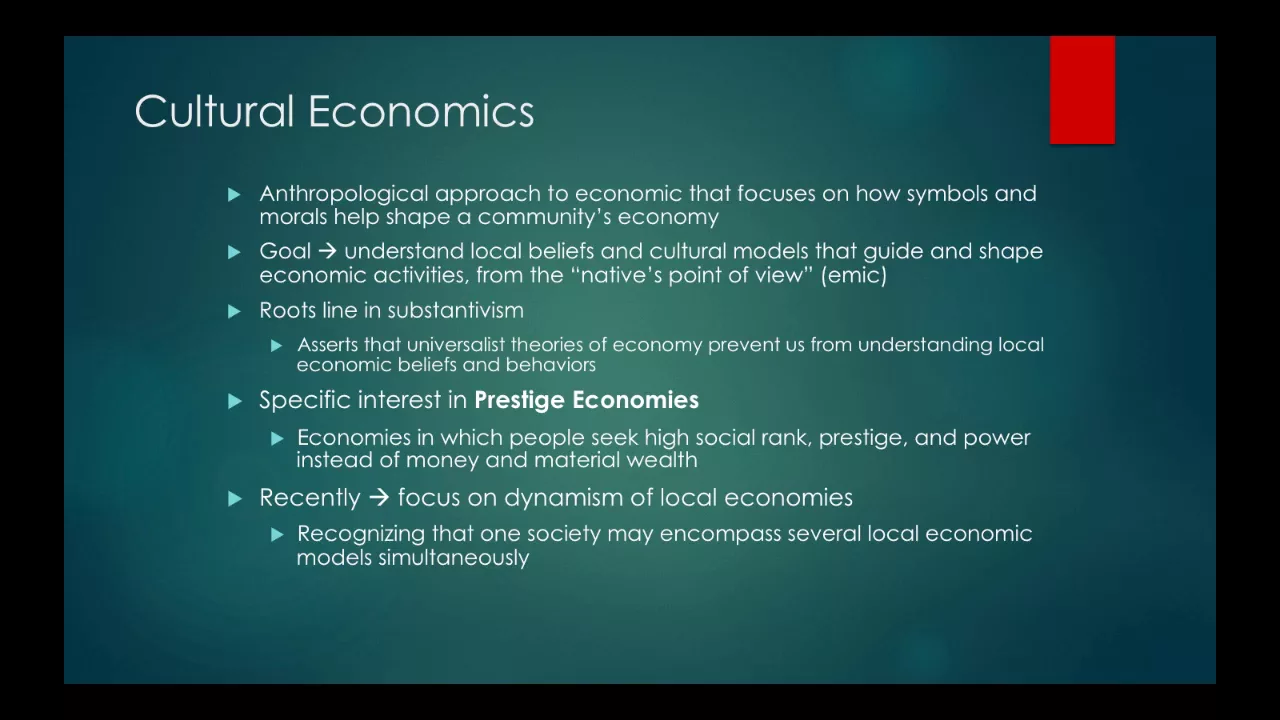







Economic anthropology examines economic behavior as embedded within social and cultural contexts, contrasting with formalist economics which applies universal rational choice theory. The formalist approach views economic decisions as utility-maximizing calculations based on prices and scarcity, applicable primarily to market economies. In contrast, the substantivist perspective argues that economic behavior must be understood within specific cultural frameworks, emphasizing social embeddedness, relational values, and non-monetary motivations. This debate addresses whether economic principles are universally applicable or culturally relative, with substantivists highlighting how factors like social prestige, cultural preferences, and community obligations shape economic decisions beyond simple cost-benefit calculations.
Economic Anthropology: Formalist vs Substantivist Debate | UPSC Anthropology
Added:hi everyone in anthropology lecture series for paper one today we'll be covering topic three part one so let's begin economic anthropology organization it again and after that we'll discuss about uh the debate between uh formalist and substantivist or we'll see some value additions that can be important for the examination perspective again so should look at them but in um the that is one of the major difference that you need to remember need paramount important so that was another one of the [Music] that is how you can understand so denote as a thinker only because anthropologists were there which ethnographers could socialize during the course of the lecture difficulty so if i'm saying sociologist anthropologist the human behavior by which goods are produced allocated distributed and used and consumed economic organization distribution then uh according to him economic organization is a type of social action it involves the combination of various kinds of human services with one another and with good such a way that they serve the [Music] that is the main topic of the chapter again economic anthropology is this is basically the study of the process of production circulation consumption of different shots of object in social settings okay so this is a when you are writing about the introduction of economic anthropology you should write the name nsb grass uh he coined the uh term economic anthropology together so basically he was an economic historian his economic historian about that economic economically under obscene then uh economists actually restrict themselves and try to develop the former abstract mode of economic system while economic anthropology on the other hand usually are concerned with all form of production circulation consumption that is more of an area of an economic anthropology differences that that you can mention or in nutshell economic anthropology take the best of the economy and anthropology create and hybrid that allow for the investigation of economic behavior as it is lived and practiced because of economic anthropology you have a monetary transaction it malik and the malik is kind of in protecting him from things taken perspective like economy is not just concerned with the monetary things there are various because they are asking for the bride uh so they are asking for the bright prize not services sorry they are asking for the bright prize because she is taking care of the cattles or social that economic anthropology analyzes economic life as [Music] life of a sub-system of society subsystem as a part of the sub-system of society society that economic anthropology studies the production of goods and services and their distribution and consumption as these are institutionalized or formalized in the socio-cultural subsystem or platinum definition that it studies the economic behavior or orderly embedded in the social cultural aspects then only you can say that it is the economic anthropology not just economy let's talk about the origin of economic anthropology role politics not like the present-day politics uh money involved with the of course but huh type of leadership exists leadership various methods on political organizations [Music] like you are spending some of your time even though you are not paying for the lectures but you are spending your times i am making the lecture so i am making the lecture even though i am not getting anything out of it but which opportunity cost has right so in return what i am getting i am getting a kind of an satisfaction you may say so it is restricted these are the things uh that is a way of the western generated category of analysis then question of value is paintings have even the modern paintings wow this is such a marvelous piece of art but for somebody it's just nothing why would they spend you know relax on to uh those paintings and purchasing those paintings to a perspective that is not yet known or not yet established you can say then the question of history and connectedness between politics politics or economy they say anthropology of substance system then econo anthropology of economic history primitive economy peasants economy urban economy entrepreneurship business anthropology economicalism and economic development a so there's a kind of an overlapping but one thing that you should remember while uh writing this scope is the name of various thinkers anthropologist sociologist joey mentioned it again they wanted to make money out of it or they wanted to distribute it or they want to resell it anything to your perspective we have to mention um i'm talking about the one who's the smaller one yeah marginal farmer they basically preserve the things for their own family or maybe for the extended family as well they sell it out to the market so especially is basically here that was done by naps and that you can categorize in the peasant economy then anthropology of urban economy sometimes anthropology and then they try to figure it out and give some kind of a [Music] of magic religion and economy um but you may never know then anthropology of economic development so it deals with a variety of strategies designed for increasing the capability of the national economic system to improve human welfare together where the economy is generally related to the welfare of the people dynamic and the uh static both the approaches of the primitive present and the urban societies that economic anthropology has a quite vast scope that has developed in the a security guard who has to work uh for like 12 hours say for an example so he's working for 12 hours during the night so i'm social context you cannot deploy if you are interested in art they do not want to sell their art to anyone for that matter even though they do not want it to share that because they feel like so you [Music] but he might not be interested with various other things that may um point out towards the social cultural aspect of that point of view um isolated economic um economic anthropology and on the other hand the ideas of the worldwide connectedness system of provisioning relation of production uh culture of consumption labor migration etc need to be taken into account uh when you are talking about the economic anthropology quick certain uh ethnic group certain ethnic groups [Music] preferences [Music] there are certain things related to the migration um uh much easier and comprehensible together so basically to concept about the economic anthropology until nineteen twenties that is but embraced much more as a gain in terms of enhanced social prestige your social prestige focus consumption which eventually ensure that the required step is taken to their interest and reject what is not yet formalistic and this permit comparison to be made between radically different cultures universal law of economic especially the idea of economic operationality and different spheres of exchange operate differently in various societies to exchange and work and different concept of values attached to the same good in different societies considered as two different commodity it is mostly applicable only to the advanced societies substantive meaning they are known as substantive same goes with formalist [Music] insufficiency what are the whatever the example that i'm telling you do not write it uh in the examination examination point of view for example i'm just telling you so that you are able uh to recall the things during the exam take care because he could have stayed and that there than use to the means and more than one end order in the sequence and preferences of insufficiency and scarcity and choices uh types of economy that is applicable to the modern complex societies equally and universally applicable to the economic system of all societies and um is applicable to only market economy but not to the empirical economy the need for dividing the economy as substantivist did and why there should be the substantive meaning of the economy at all imperial economy is an instituted process of interacting between man and environment and it in a continuous supply of one satisfying material needs what means the bigger circle or is bigger circle ecology ecology have the social society audience economizing of society then only they will uh create a demand for that word otherwise they will have some alternatives is not an individual activity but a group activity therefore different communities meet at a place for different purposes and one of the purpose being exchange of goods societies so that is why for them trade is real exchange then uh substantivism remember uh anthropologist dalton he was also involved in it in primitive societies there are only marketplaces but not market system and in economic anthropology market means marketplace an actual site where goods change hands by purchase and sales or market systems and primitive economy is restricted to production of material item in such economies there is no price system just based upon the uh requirement and the need fulfillment right we see there is a income another formalism because that trade is directed by price and price are the functions of the market therefore all trade in the market just all money exchanges is independent of the market it is derived from the definite use which is quantifiable object output money is only used in terms of payment standard and exchange that everything is based upon relational choice logic then utility maximization one plus one three milliliters thank you for the best so if he or she does not maximize money then it must be pleasure or some other value like we discuss mental health [Music] distinction between the primitive and the modern economy in substantivism is problematic problematic though because substantiveism can focus on social structure at the expense of analyzing individual adaptation strategy here occurs in all societies and not just the primitive one non-maximization adapter adaptation similarly planter argues that generalization across different societies is still possible meaning that western and non-western economies are not entirely different and in age of globalization there is no pure pre-industrial societies left conditions of resources scarcity exist everywhere in the world scarcity's universal use of that cannot hold true or anthropological field work has demonstrated racial behavior and complex economic choices amongst the peasants substantive point of view easy they do consider it then uh cook observed that there are significant conceptual problem with the substantive theory then here you can see as an aspect of everything that provisions societies but nothing that provision society is defined as economics so that you have a very distinct one but even all you can write that two approaches are of two viewpoints of course viewpoints take and we cannot apply the formative definition to primitive system equally business aims at times to discover the economic rationality in a good deal of western economic behavior then the factors of economic processes in some primitive societies which came in contact with the advanced societies can be successfully studied using the formal economic theory criticized [Music] and finally in any empirical study the synthesis of these two approaches will be of great use in understanding and interpreting the economic life of the primitive and peace and society particularly what is the significance or the importance of these two studies or the concepts together there you can mention it out it's star marker all right and uh with this we have uh completed the debate and the concept i'll be coming up with the next lecture tomorrow and thank you so much
Up Next

Malinowski Off the Verandah: Strangers Abroad Documentary
@yntiteixeiratischler9818
118.6K views•2015-04-23

Astrobiology Through an Anthropological Lens: Field Insights
@georgiatechastrobiology
128 views•2021-04-14
Proxemics Explained: The Study of Personal Space
@Vox
536K views•2016-07-05

Psychology of Internet Trolling and Pranks Explained
@AzzyLand
10.7M views•2017-12-20
Related Study Plans & Knowledge Roadmaps
Structured learning paths in Anthropology