
















James Joyce's 'Ulysses' is celebrated as a literary masterpiece of modernism due to its innovative narrative techniques, including 18 distinct chapter styles that range from plays to stream-of-consciousness prose, and its encyclopedic exploration of Dublin in 1904 through rich historical and cultural references; despite being notoriously difficult to read, the novel rewards patient readers with profound insights into human experience and remains a cornerstone of literary achievement.
Why James Joyce's Ulysses Is a Masterpiece of Modernism
Added:An understanding of the core tenets of Literary Modernism, particularly the early 20th-century shift away from Victorian realism.
Familiarity with Homer's epic poem, 'The Odyssey', which serves as the foundational structural framework for Joyce's novel.
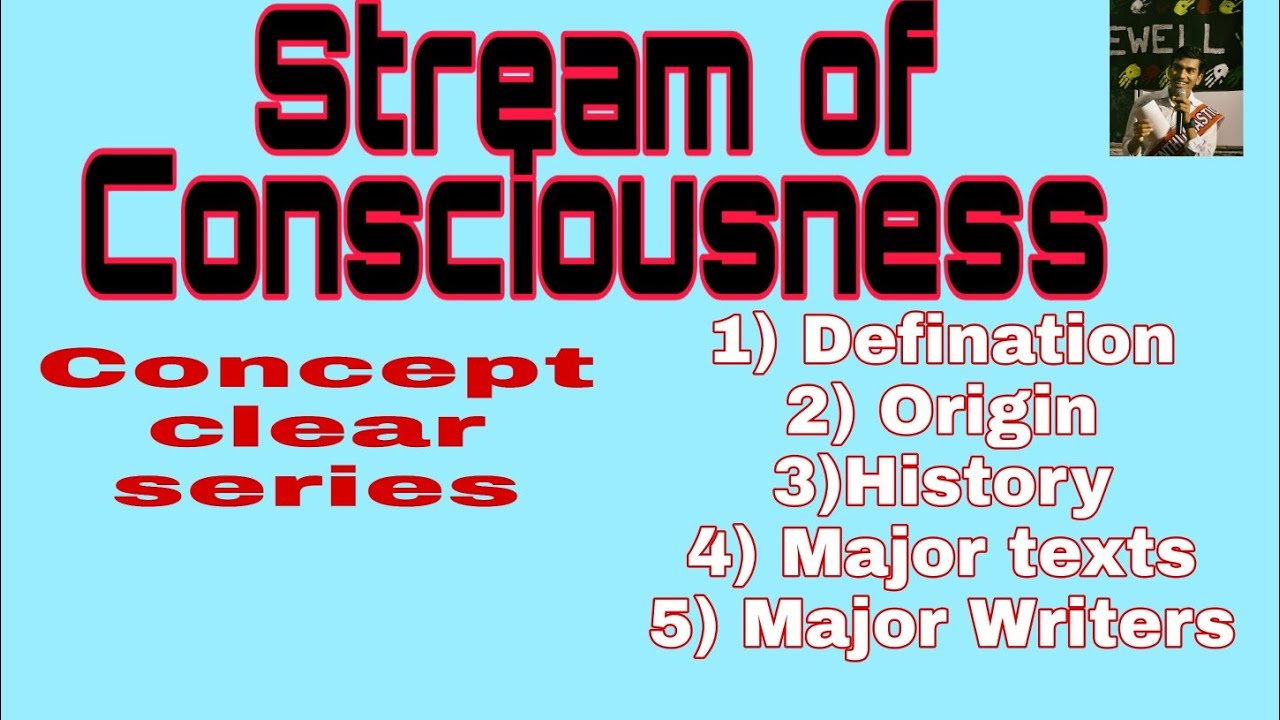
A basic grasp of the 'stream of consciousness' narrative technique and how it attempts to replicate human thought processes.
An awareness of the historical and socio-political context of early 20th-century Dublin and Ireland under British rule.
A comparative study of other seminal Modernist works, such as Virginia Woolf's 'Mrs. Dalloway' or T.S. Eliot's 'The Waste Land'.
An exploration of literary censorship and the landmark legal battles surrounding the publication of 'Ulysses' in the United States and UK.
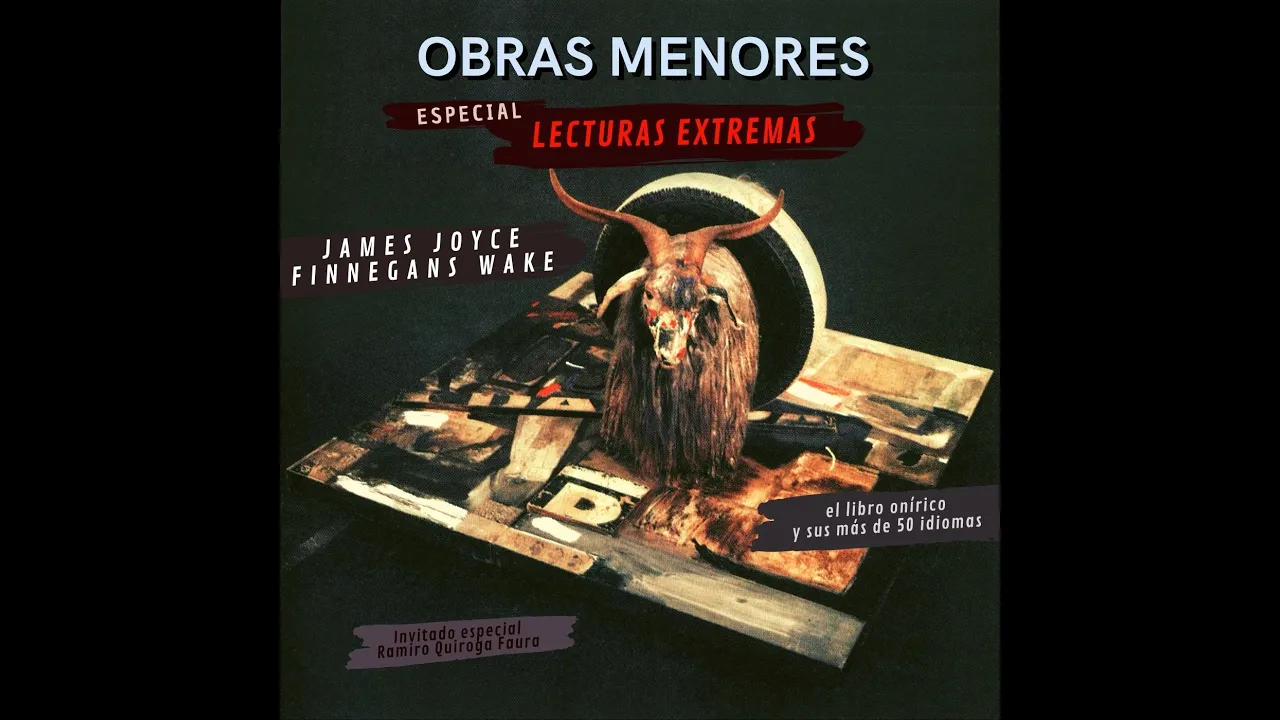
An introduction to James Joyce's final, highly experimental work, 'Finnegans Wake', to examine the extreme limits of his linguistic evolution.
An analysis of Post-Modernist literature to understand how later authors built upon or reacted against the structural innovations of High Modernism.
3.1M views76.2Klikes5:59Original Release: 2017-10-24
James Joyce's "Ulysses" is widely considered to be both a literary masterpiece and one of the hardest works of literature to read.
It inspires such devotion that once a year on a day called Bloomsday, thousands of people all over the world dress up like the characters, take to the streets, and read the book aloud.
And some even make a pilgrimage to Dublin just to visit the places so vividly depicted in Joyce's opus.
So what is it about this famously difficult novel that inspires so many people?
There's no one simple answer to that question, but there are a few remarkable things about the book that keep people coming back.
The plot, which transpires over the course of a single day, is a story of three characters: Stephen Dedalus, reprised from Joyce's earlier novel, "A Portrait of the Artist as a Young Man"; Leopold Bloom, a half-Jewish advertising canvasser for a Dublin newspaper; and Bloom's wife Molly, who is about to embark on an affair.
Stephen is depressed because of his mother's recent death.
Meanwhile, Bloom wanders throughout the city.
He goes to a funeral, his work, a pub, and so on, avoiding going home because Molly is about to begin her affair.
Where it really starts to get interesting, though, is how the story's told.
Each chapter is written in a different style.
15 is a play, 13 is like a cheesy romance novel, 12 is a story with bizarre, exaggerated interruptions, 11 uses techniques, like onomatopoeia, repetitions, and alliteration to imitate music, and 14 reproduces the evolution of English literary prose style, from its beginnings in Anglo-Saxon right up to the 20th century.
That all culminates in the final chapter which follows Molly's stream of consciousness as it spools out in just eight long paragraphs with almost no punctuation.
The range of styles Joyce uses in "Ulysses" is one of the things that makes it so difficult, but it also helps make it enjoyable.
And it's one of the reasons that the book is held up as one of the key texts of literary modernism, a movement characterized by overturning traditional modes of writing.
Joyce fills his narrative gymnastic routines with some of the most imaginative use of language you'll find anywhere.
Take, for instance, "The figure seated on a large boulder at the foot of a round tower was that of a broadshouldered deepchested stronglimbed frankeyed redhaired freelyfreckled shaggybearded widemouthed largenosed longheaded deepvoiced barekneed brawnyhanded hairlegged ruddyfaced sinewyarmed hero."
Here, Joyce exaggerates the description of a mangy old man in a pub to make him seem like an improbably gigantesque hero.
It's true that some sections are impenetrably dense at first glance, but it's up to the reader to let their eyes skim over them or break out a shovel and dig in.
And once you start excavating the text, you'll find the book to be an encyclopedic treasure trove.
It's filled with all manner of references and allusions from medieval philosophy to the symbolism of tattoos, and from Dante to Dublin slang.
As suggested by the title, some of these allusions revolve around Homer's "Odyssey."
Each chapter is named after a character or episode from the "Odyssey," but the literary references are often coy, debatable, sarcastic, or disguised.
For example, Homer's Odysseus, after an epic 20-year-long journey, returns home to Ithaca and reunites with his faithful wife.
In contrast, Joyce's Bloom wanders around Dublin for a day and returns home to his unfaithful wife.
It's a very funny book.
It has highbrow intellectual humor, if you have the patience to track down Joyce's references, and more lowbrow dirty jokes.
Those, and other sexual references, were too much for some.
In the U.S., the book was put on trial, banned, and censored before it had even been completed because it was originally published as a serial novel.
Readers of "Ulysses" aren't just led through a variety of literary styles.
They're also given a rich and shockingly accurate tour of a specific place at a time: Dublin in 1904.
Joyce claimed that if Dublin were to be destroyed, it could be recreated from the pages of this book.
While such a claim is not exactly true, it does show the great care that Joyce took in precisely representing details, both large and small, of his home city.
No small feat considering he wrote the entire novel while living outside of his native Ireland.
It's a testament to Joyce's genius that "Ulysses" is a difficult book.
Some people find it impenetrable without a full book of annotations to help them understand what Joyce is even talking about.
But there's a lot of joy to be found in reading it, more than just unpacking allusions and solving puzzles.
And if it's difficult, or frustrating, or funny, that's because life is all that, and more.
Responding to some criticism of "Ulysses," and there was a lot when it was first published, Joyce said that if "Ulysses" isn't worth reading, then life isn't worth living.
Up Next
3:07
James Joyce's Ulysses: Molly Bloom's Soliloquy Analysis
@MichaelAskill
264.2K views•2012-02-01

13:43
Formalism in Literary Criticism: An Academic Lecture Overview
@mattalberhasky9952
39.1K views•2015-08-05
4:45
Sylvia Plath's Poetry: Why Her Unflinching Voice Still Matters
@TEDEd
2.3M views•2019-03-07

15:25
1984: Orwell's Dystopian World and the Mechanisms of Totalitarianism
@AlternateHistoryHub
7M views•2017-03-04
Related Study Plans & Knowledge Roadmaps
Structured learning paths in Literature
literature
Graphic Memoirs: Visual Art, Trauma & History
01Foundations of Sequential Art and Visual Language
02Autographics and Processing Historical Trauma
03Visualizing Personal Trauma, Grief, and Graphic Medicine
+ 2 more learning modules
14h5 modules
Explore Roadmap
literature
Campus Novels: Evolution, Themes & Critique
01Introduction to the Campus Novel Genre
02Mid-Century Satire and the Post-War Academy
03Dark Academia and the Critique of Privilege
+ 2 more learning modules
14h5 modules
Explore Roadmap
literature
Theater of the Absurd: Philosophy & Plays
01Postwar Existentialism & Historical Roots
02Dismantling Narrative: Esslin & Absurdist Conventions
03Samuel Beckett and Tragicomic Existentialism
+ 2 more learning modules
12h5 modules
Explore Roadmap
literature
Revenge Tragedy: Justice, Madness & State
01Foundations of Early Modern English Theatre
02Anatomy of Revenge: Structural Conventions
03Psychological Complexity: Madness and Melancholy
+ 2 more learning modules
15h5 modules
Explore Roadmap