Molly Bloom's soliloquy represents a revolutionary literary achievement where James Joyce grants women complete narrative agency through unfiltered monologue, allowing Molly's voice to dominate the final section of 'Ulysses' and demonstrating how stream-of-consciousness writing can elevate traditionally marginalized perspectives to central narrative positions.
James Joyce's Ulysses: Molly Bloom's Soliloquy Analysis
Added:Deep Dive
Familiarity with James Joyce's 'Ulysses', its narrative structure, and its parallel connection to Homer's 'Odyssey'.
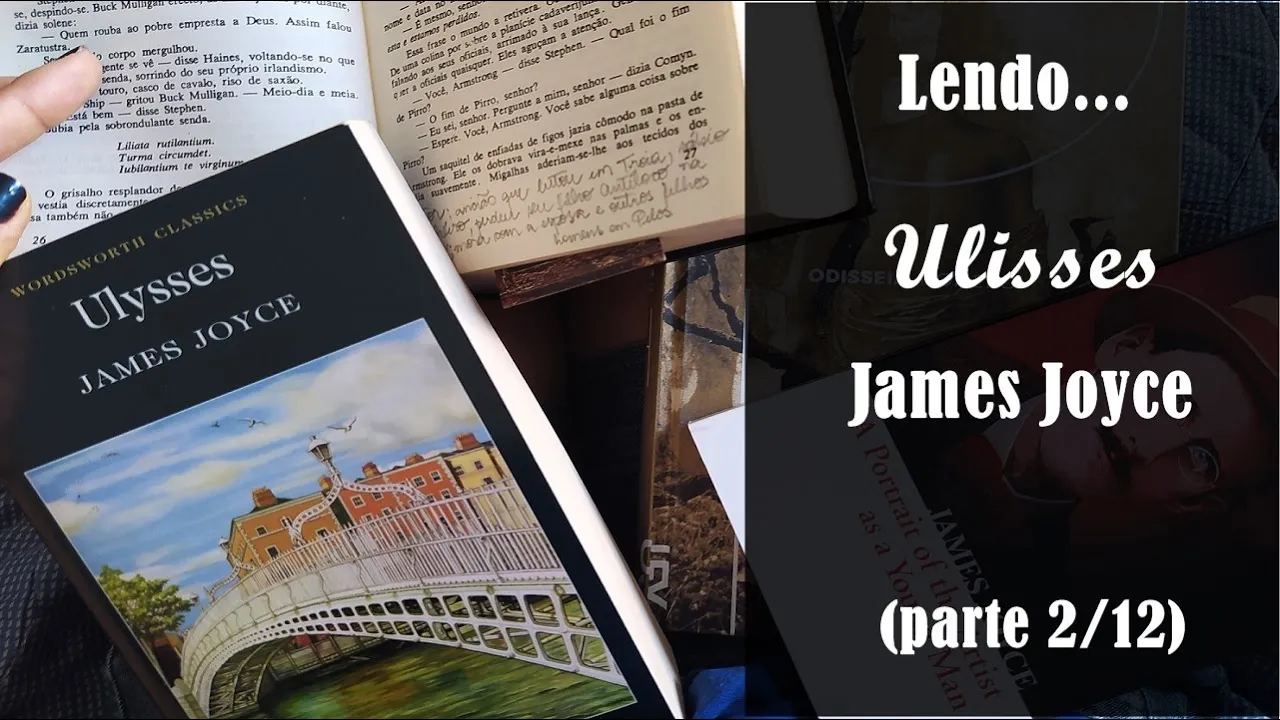
Lendo Ulisses (James Joyce) - p. 2/12 | Carmem Lucia
980
James Joyce's Ulysses employs deliberate structural parallels with Homer's Odyssey, where each chapter corresponds to a specific canto of the epic poem; for example, Chapter 5 (Lotophagi) references the myth of sailors who ate lotus plants and forgot their homeland, while Chapter 6 (Hades/Cemetery) takes place at 11 AM and corresponds to the 11th canto of the Odyssey, representing the underworld in Greek mythology. Joyce also incorporates journalistic techniques in Chapter 7 (Aeolus), using newspaper headline formats to structure the narrative, demonstrating how the novel's innovative form mirrors its mythological content.
Click to watch →

Почему «Улисс» — великий роман | Лекция из курса «Джеймс Джойс и роман „Улисс“». АУДИО
104.2K
James Joyce declared Ulysses as 'the best novel in the world' and 'the novel of all time and all peoples.' Homer's Odyssey served as the foundational paradigm, providing the structure of departure, adventure, and return. Joyce's relationship with Homer evolved from initial dependence to progressive emancipation, with the Odyssey serving as inspiration rather than constraint. Joyce's fundamental artistic principle is systematic inversion of classical models—transforming Homer's faithful Penelope into an adulterous character. Joyce transformed Homer's epic journey into a Dublin odyssey through Bloom, a Jewish advertising agent whose position as a 'snooping and penetrating' observer suited Joyce's narrative needs. The novel achieves remarkable unity through strict constraints: single city, single day, single timeframe.
Click to watch →

Indice Ulises de Joyce - III
14.1K
James Joyce's novel Ulysses (1922) is structured as a modern-day parallel to Homer's Odyssey, with each of its 18 chapters corresponding to specific episodes from the ancient epic, such as the Lotus Eaters, Cyclops, Sirens, and Circe, while following the daily life of Leopold Bloom in Dublin from 8 AM to 2 AM.
Click to watch →
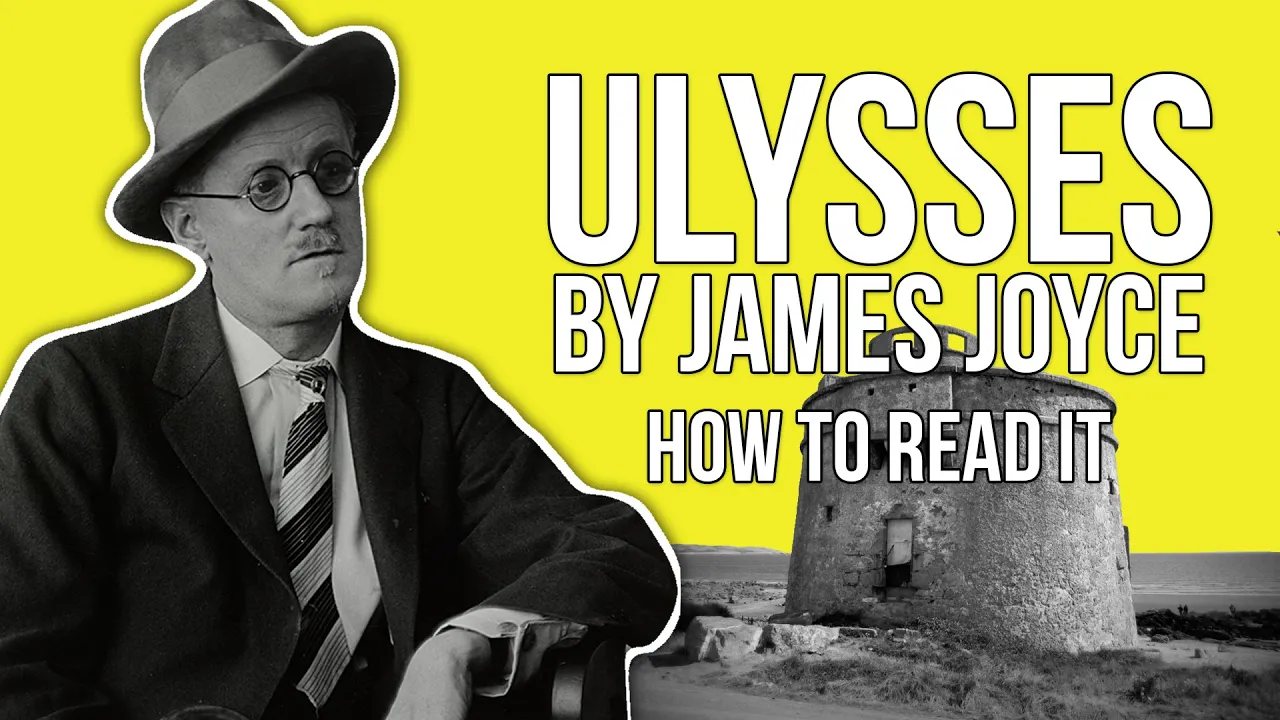
James Joyce's Ulysses | How To Read It
103.6K
James Joyce's Ulysses is a modernist novel that retells Homer's Odyssey through the mundane experiences of Leopold Bloom in Dublin over the course of one day, using experimental literary styles including stream-of-consciousness, dramatic monologues, and various narrative forms to celebrate ordinary lives and challenge traditional notions of heroism; despite its reputation for difficulty, readers can approach it confidently by understanding its structural parallels to the Odyssey, recognizing that stylistic experimentation serves thematic purposes rather than obfuscation, and accepting that not grasping every detail is perfectly normal given Joyce's intentional complexity.
Click to watch →

Homer: Odyssey | Part 1 of the preparation for James Joyce: Ulysses
258
Homer's Odyssey employs a sophisticated three-part narrative structure (Books 1-4: present-day Ithaca; Books 5-16: Odysseus's flashback wanderings; Books 13-24: his disguised return), which James Joyce mirrors in Ulysses by dividing his novel into three distinct parts corresponding to morning, afternoon, and evening on June 16th, 1904. Additionally, the Odyssey contains universal themes including human limitations against fate, the dangers of temptation and escapism, consequences of breaking taboos, the importance of loyalty over social status, and the critique of unchecked power—all of which Joyce reinterprets in modern form throughout Ulysses.
Click to watch →
Deep Dive
Understanding the 'stream of consciousness' narrative technique, particularly its rejection of traditional syntax and punctuation to mimic human thought.

Literary Terms Marathon Class | 2nd Grade Teacher Exam | Dr. Savita Somani
313
Linguistically, stream of consciousness narratives frequently abandon standard textual conventions to mimic real thought patterns. This includes avoiding conventional syntax and linear punctuation, as the technique aims to represent the pre-speech level of consciousness where thoughts are linked by association rather than logical grammar.
Click to watch →

IGNOU BEGC 112 IMPORTANT QUESTIONS WITH ANSWERS | British Literature : Early 20th Century | #begc112
1.9K
Stream of consciousness is a narrative style that captures a character's thought process in a realistic and non-linear way, making readers feel the character's thoughts are within them. Key characteristics include: (1) Free association—using ideas, images, and words to represent the mind's full richness and speed, (2) Repetition—looping repetitions to capture the flow of thoughts, (3) Sensory observation—incorporating sensory details to help readers understand the character's psychological state, (4) Unconventional syntax and punctuation to mimic the character's train of thought, (5) Play with plot structure—writing about something important then backtracking to explain how the character got there. The term was first used by psychologist William James in 1890 in 'The Principles of Psychology,' and James Joyce's work is considered a groundbreaking example.
Click to watch →

English Literature | James Joyce: main works and new narrative techniques
32.2K
Stream of consciousness is a literary technique that follows a character's thoughts without regard for chronological order, plot structure, or spatial organization. It represents the fragmented, multifaceted nature of human consciousness as it actually occurs in daily life. To achieve authentic psychological representation, writers use broken syntax that mirrors the psychological movements, memories, passions, instincts, and emotions of the individual. This technique rejects the well-organized, elegant prose of Romanticism and Victorian literature in favor of a more natural, psychological form of expression that captures the true complexity of human thought processes.
Click to watch →
Curso William Faulkner. Clase 1
16K
Stream of consciousness is a narrative technique that attempts to reproduce the natural flow of thought in a character's mind. Unlike traditional narration with organized ideas, this technique presents thoughts as they actually occur—disordered, with sensations, incomplete ideas, irregular syntax, and grammar. The term originated in psychology in the 19th century to describe how the human mind naturally flows through thoughts, feelings, memories, and observations. This technique allows readers to experience how a character actually thinks rather than hearing an organized summary of their thoughts.
Click to watch →

Copy of English Literature in the 20th Century (Introduction)
267
Stream of consciousness is a narrative technique used by novelists such as Virginia Woolf and James Joyce that attempts to reproduce the random flow pattern of the human mind affected by external stimuli and mental association. This technique tends to ignore conventions of punctuation and mechanics, much as they do not figure in one's thoughts. The narrative style reflects what writers felt as a lack of order and reason in the world, attempting to present the reality of the mind rather than the external world.
Click to watch →
Deep Dive
Basic knowledge of the core characters in 'Ulysses', specifically the complex marital dynamic and mutual infidelities of Leopold and Molly Bloom.
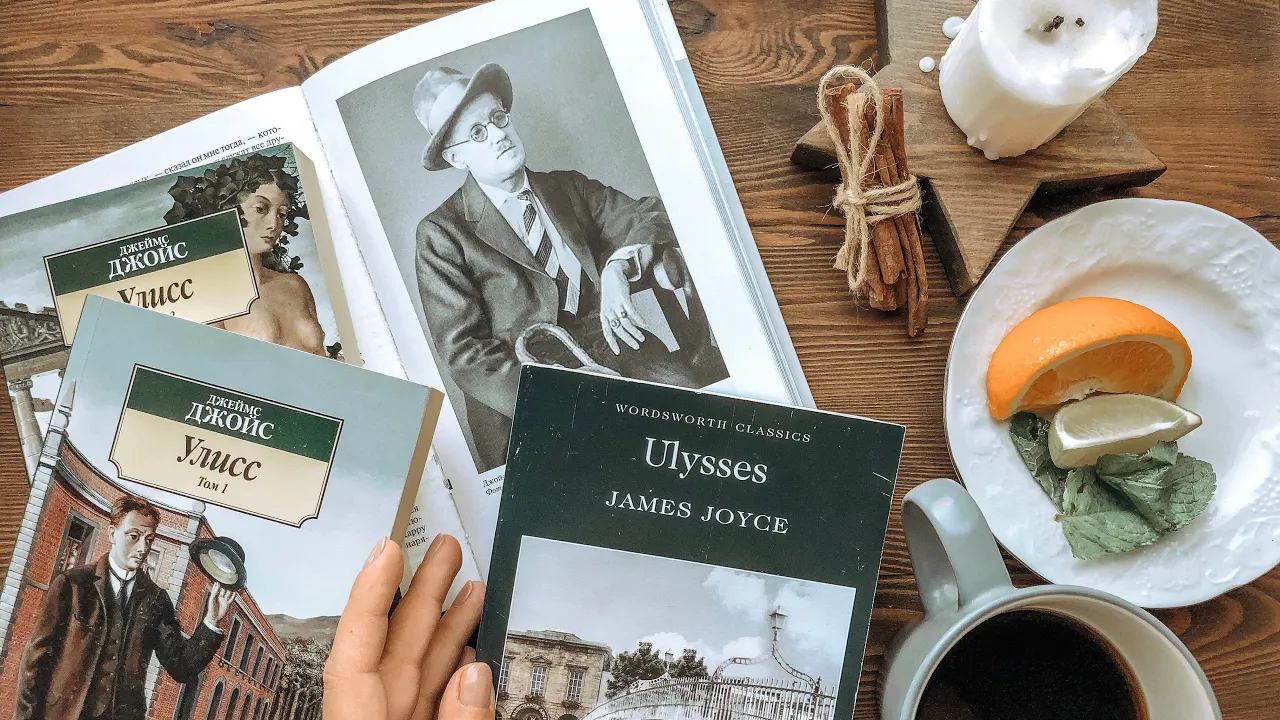
🍻Джеймс Джойс. Улисс. Оно тебе надо? 😱🍀
70.3K
Ulysses centers on three characters: Stephen Dedalus (Joyce's intellectual alter ego, based on Portrait of the Artist), Leopold Bloom (the ordinary Odysseus figure), and Molly Bloom (Penelope). Stephen carries trauma from refusing to kneel for his dying mother's prayer. Bloom represents mundane reality, constantly thinking about physiology. Molly plans infidelity while Bloom is away, with her stream of consciousness representing the 'pitiful future.' Their journey through Dublin on June 16, 1904 transforms the ordinary into the epic.
Click to watch →

How to Read Ulysses by James Joyce (10 Tips)
210K
Leopold Bloom (Poldy) is a 38-year-old Jewish man raised Protestant who changed to Catholicism to marry his wife Molly. He is passive and timid, essentially a tragic hero and anti-hero who is cuckolded by his wife. Working as an advertising canvasser for a Dublin newspaper, he is scorned and essentially an exile at home. Despite misfortunes, he possesses humanity—making him one of literature's most humane characters.
Click to watch →

Robert Seidman on the 50th Anniversary of "Ulysses Annotated"
229
A central question in Ulysses concerns whether Leopold Bloom and Molly Bloom's marriage will survive. They have not had intercourse for over ten years and five months, with Bloom applying Orthodox Jewish attitudes toward sexuality that prevent intimacy. Despite their deep connection and mutual obsession, they avoid the conversation that might resolve their situation. The novel's famous line 'he never done a thing like that asked me to make him breakfast and bed' gains new meaning when understood as referring to morning sex—a term used in 1980s Baltimore. This interpretation suggests Bloom wants reconciliation, leaving readers to wonder if the marriage can be saved.
Click to watch →

Penelope (part 2): James Joyce's Ulysses for Beginners #61
771
In James Joyce's 'Ulysses,' the Penelope episode reveals Molly Bloom's complex psychological state as she reflects on her relationship with Leopold Bloom, demonstrating how modernist literature uses stream-of-consciousness to explore the contradictions and ambiguities of human relationships, particularly through Molly's contradictory memories of her affair with Blazes Boylans versus her enduring connection with Bloom, ultimately suggesting that despite her infidelity and emotional distance, she still has a future with Bloom.
Click to watch →
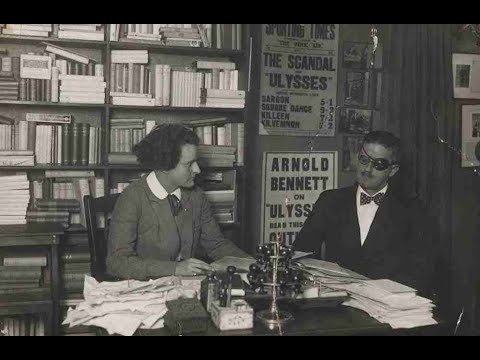
James Joyce’s Ulysses: 100 Years On
1.1K
Ulysses features three main protagonists. Leopold Bloom is a middle-aged, middle-class married man with Jewish heritage who works in advertising; he is described as a 'complete character' who is simultaneously a son, husband, and father, yet remains an outsider in Dublin's social circles. Stephen Dedalus, originally from 'A Portrait of the Artist as a Young Man,' appears disgruntled and working as a supply teacher rather than the optimistic artist who left Dublin in his earlier novel. Molly Bloom, Bloom's wife, delivers the novel's final monologue in the Penelope episode, responding to rumors about her affair with Blazes Boylan. Joyce's decision to give a woman the final words has generated extensive feminist criticism.
Click to watch →
Deep Dive
Historical context of early 20th-century Modernism and its focus on representing internal psychology over external realism.

Conférence de Mgr Tissier (2007) : L’hydre moderniste toujours vivante
195
Edmund Husserl's phenomenology (1859-1938) influenced modernism by focusing on lived experience rather than external reality. The world as it exists has no interest—what matters is the lived, representational experience. The important thing is the conditions of lived experience, regardless of whether what is called 'the divinity of Jesus' is reality, error, or imagination. Modernism holds that it does not matter whether the external reality of what one believes exists—even the existence of God. What matters is that what one believes, through symbols, helps evoke psychological problems and resolve them.
Click to watch →

Civilization #57: How Modernism Ruined Everything
171.1K
Modernism, beginning around the early 20th century, represents a cultural movement obsessed with self-improvement and self-empowerment - what this lecture calls the 'cult of the self.' This movement was based on Freudian and Jungian psychology, fundamentally changing literature, art, and thought toward inward-looking self-exploration rather than traditional community-focused values.
Click to watch →
Ep. 5 – American Modernism (1914–1945) | American Literary Periods Series
454
American modernism reacted against both romanticism and realism. Romanticism (1800s-1860s) emphasized emotion, nature, imagination, and idealism, which modernists rejected in favor of fragmentation, alienation, and disillusionment. Realism (1865-1914) focused on ordinary life and accurate depiction of reality, but modernists found its forms too limited. While realism narrated external reality, modernism explored inner consciousness through stream of consciousness and interior monologue. Influenced by Freudian psychology, modernism chose isolation, subjectivity, and subconsciousness over realism's societal depiction. This created bold experimental art reflecting fragmented, uncertain early 20th-century realities.
Click to watch →
Modernism
538
Modernism (1890-1930) emerged from complex relationships with modernity—celebrating technological progress while expressing ambivalence. Early movements like Impressionism (Turner influencing French artists) and Futurism celebrated machines, while Vorticism expressed extreme fascination with war and fascism. The core philosophy shifted from representational realism to exploring human consciousness through subjectivity and personal impressions. Two branches emerged: psychological realism (Woolf, Joyce, Faulkner) examining fragmented cognition, and counter-realism/absurdism (Beckett, Ionesco) deforming reality to reveal deeper truths. This exploration of the 'dark places of psychology' represented modernism's fundamental mission.
Click to watch →

Analysis: Opening to Virginia Woolf’s Mrs Dalloway
1.4K
Modernism emerged in the early 20th century as a literary movement challenging 19th-century realism. While realism focused on external reality and objective truth about society, modernism shifted focus inward to represent individual consciousness. This shift was partly influenced by World War I, which destabilized people's worldviews and created a need for new literary approaches. The movement sought to represent the individual's inner world truthfully, prioritizing subjective experience over external observation as the primary lens for understanding human existence.
Click to watch →
Prerequisite Knowledge
- Concept 01Familiarity with James Joyce's 'Ulysses', its narrative structure, and its parallel connection to Homer's 'Odyssey'.
- Concept 02Understanding the 'stream of consciousness' narrative technique, particularly its rejection of traditional syntax and punctuation to mimic human thought.
- Concept 03Basic knowledge of the core characters in 'Ulysses', specifically the complex marital dynamic and mutual infidelities of Leopold and Molly Bloom.
- Concept 04Historical context of early 20th-century Modernism and its focus on representing internal psychology over external realism.
Subsequent Learning
- Step 01A deep dive into Feminist literary criticism of Molly Bloom's character, evaluating whether her soliloquy represents authentic female liberation or a male author's projection.
- Step 02Exploration of the censorship and landmark obscenity trials surrounding 'Ulysses' in the United States and United Kingdom, largely sparked by the explicit nature of Molly's monologue.
- Step 03A comparative analysis of Penelope from Homer's 'Odyssey' and Molly Bloom, examining how Joyce subverts the classical archetype of the faithful, waiting wife.
- Step 04Investigation of Joyce's stylistic influence on other major modernist and postmodernist writers who utilized interior monologue, such as Virginia Woolf and William Faulkner.
Nature & God
Yes Consent
Nature & God
0:00Playing Section
- 1
Reflects on nature's beauty as evidence of a creator.
- 2
Rejects atheist learning, asserting a divine maker's existence.
- 3
Compares faith's certainty to the sun's inevitable daily rise.
Feminist Critiques of Molly Bloom as Male Fantasy and Essentialist Archetype
While Molly Bloom’s soliloquy is often celebrated as a groundbreaking depiction of female consciousness, a significant strain of feminist literary criticism offers a sharp counterpoint. Scholars like Elaine Showalter argue that Molly is not a triumph of female representation, but rather a male projection—a phallocentric fantasy of female sexuality constructed by a male author. Critics argue that Joyce’s stream-of-consciousness technique in the 'Penelope' episode reduces female subjectivity to mere biology, passivity, and unmediated bodily impulses. By characterizing Molly as the primordial 'Earth Mother' (or Gaea Tellus), Joyce essentializes womanhood, trapping her in a domestic, highly sexualized sphere devoid of intellectual depth or genuine social agency. Rather than liberating the female voice, this perspective suggests that the soliloquy colonizes it, presenting a male-authored illusion of female interiority that reinforces patriarchal stereotypes about women being fundamentally non-rational and governed by physical desires.
Deep Dive
A deep dive into Feminist literary criticism of Molly Bloom's character, evaluating whether her soliloquy represents authentic female liberation or a male author's projection.

Bloomsday with Dr. Anne Fogarty
136
Early feminist criticism was split about Joyce's treatment of women, with some arguing he aligned with patriarchy while others felt he shed light on its hypocrisy. Joyce's female friends including Nora Barnacle were absolute feminists. Gerty MacDowell was initially seen as trivialized by Joyce, but modern readings recognize her as an adult who knows what she's doing, trapped in difficult circumstances. Joyce inhabits her consciousness as a stylistic experiment. Molly Bloom's voice at the end corrects things said about her throughout the novel, talking back at the text. Joyce captures Irish women as modern figures in difficult circumstances, not just Irish colleens, with energy and independence despite limited opportunities. The novel serves as a looking glass for Irish readers to see themselves in Joyce's work.
Click to watch →
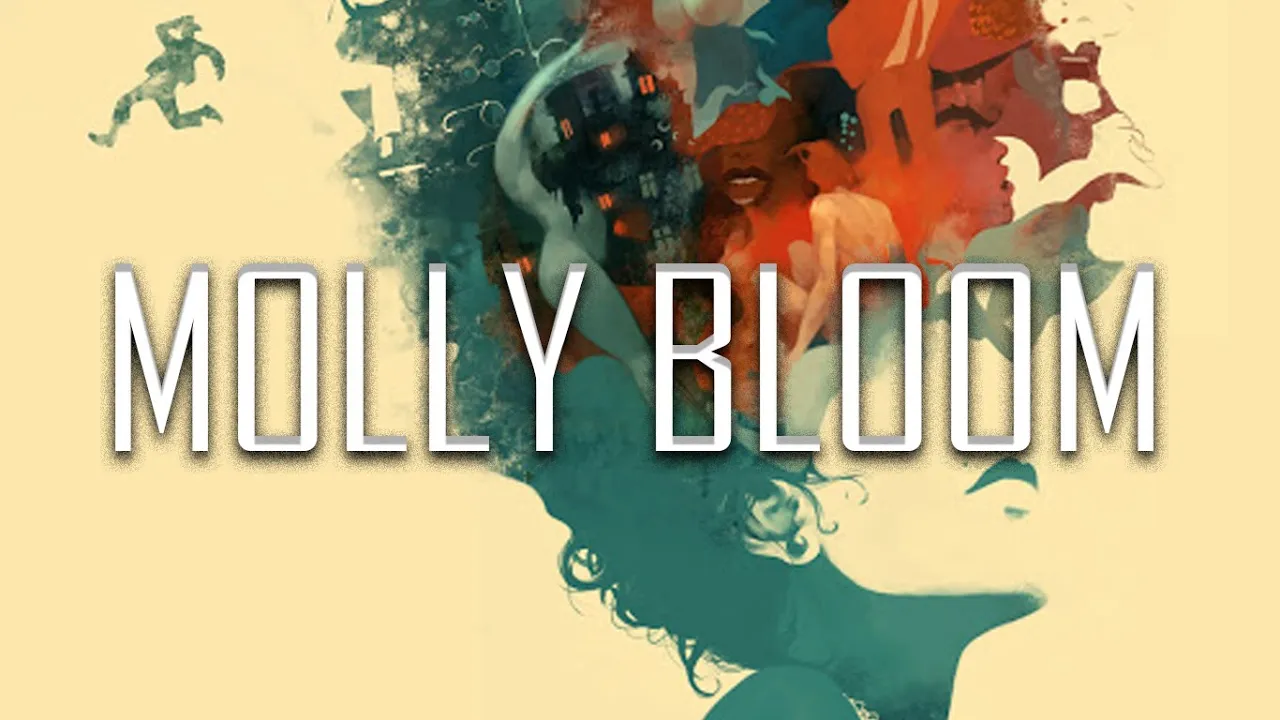
Mujeres por Hombres "Molly Bloom" de ULISES
2.9K
Molly Bloom, the protagonist of James Joyce's Ulysses (1922), represents a revolutionary female character who embodies modern feminist consciousness through her stream-of-consciousness monologue, challenging traditional literary representations of women by presenting authentic female desire, sexuality, and subjectivity without censorship or idealization, effectively inverting the classical Penelope archetype while celebrating female agency and popular wisdom.
Click to watch →

Conversatorio con el escritor Eduardo Lago
158
The final chapter of Ulysses (chapter 18) is a monologue by Molly Bloom, representing one of the greatest contributions to world literature: the creation of a woman's voice who cannot read, an uneducated woman. Joyce created this voice to represent the pure articulation of female thought from childhood through adolescence to maturity, including an episode of infidelity. Joyce's sexuality is described as androgynous, encompassing both masculine and feminine perspectives, allowing him to explore the mind of an ordinary person rather than an academic or sophisticated character. The novel contains eight monologues where the woman recalls different moments of her life, with Joyce writing not a single comma or period, and not dividing paragraphs.
Click to watch →

Aula aberta com Caetano W. Galindo – Ulysses, 100 anos
20.2K
This segment explores Molly Bloom's significance and Joyce's broader literary influence. The final episode is Molly Bloom's monologue, the most famous passage in the novel, where she delivers an 8-paragraph monologue with only one punctuation mark. This episode gives the final word to a female character in a predominantly male-focused novel, representing a triumph of the feminine voice. Molly Bloom is described as exuberant, original, and different from the traditional faithful wife of Homer's Penelope. She is aware of her sexual appeal and uses it strategically, challenging traditional literary representations of women. Joyce had a profound influence on 20th century literature, particularly through his development of stream of consciousness technique. His work challenged comfortable molds of late 19th and early 20th century romance, showing that literature could be more sophisticated and experimental. Ulysses presents an ethical lesson about the power of attention, demonstrating that anyone can find extraordinary qualities in ordinary people when observed with sufficient attention.
Click to watch →
The Women Behind Ulysses
1K
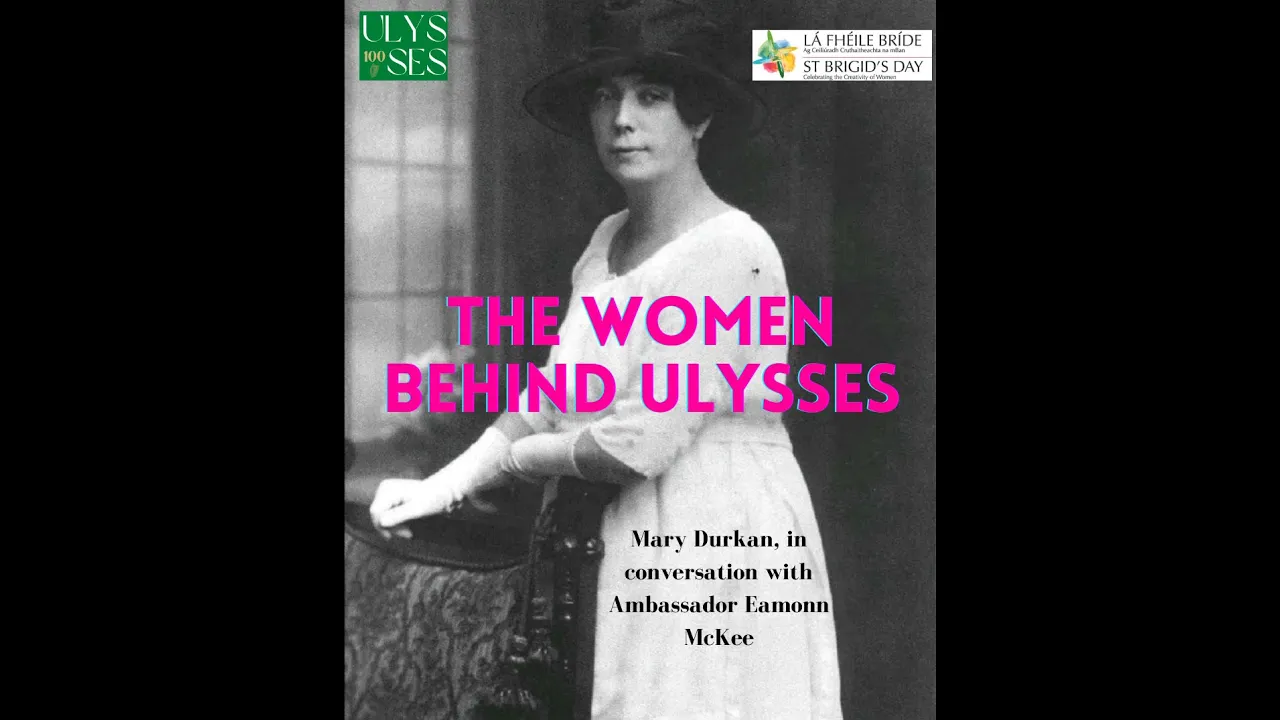
Molly Bloom represents Joyce's synthesis of multiple influences including his wife Nora Barnacle, Irish mythology, and classical literature. The character embodies the ancient Celtic goddess Brigid, associated with fertility, healing, and nature—traditions that persisted longer in western Ireland. Joyce's west of Ireland upbringing exposed him to these pre-Christian Gaelic beliefs, which he wove into Molly's character. The soliloquy reveals Molly's acceptance of her physical body and its natural functions, contrasting with male characters who can ignore bodily demands. This connection to earth and nature represents Joyce's attempt to ground his intellectual work in primal life forces, creating a female character who ultimately affirms existence with a simple 'yes' at the novel's conclusion.
Click to watch →
Deep Dive
Exploration of the censorship and landmark obscenity trials surrounding 'Ulysses' in the United States and United Kingdom, largely sparked by the explicit nature of Molly's monologue.
JAMES JOYCE : Pourquoi ses livres ont-ils été brûlés et interdits ? Du scandale au chef-d’œuvre
3.9K
And there is Molly Bloom. Molly, Bloom's wife, concert singer, sensual and direct woman, who in the last chapter of the novel delivers an interior monologue of several dozen pages totally without punctuation that plunges the reader into the depths of her consciousness, her desires, her memories, her judgments on men, her own sensuality, the raw and magnificent reality of her experience as a woman. This monologue, often called simply 'the Molly soliloquy,' ends on the word 'yes,' repeated, a yes to life, to love, to desire that may be one of the most powerful conclusions in all world literature. How to publish such a book? In Europe in 1920, it was practically impossible. In England, obscenity laws were strict and applied with zeal. In the United States, the situation was even more complicated with federal obscenity laws that gave postal authorities the right to seize and destroy any postal shipment containing material judged indecent. These laws had already caused problems. Since 1918, extracts from Ulysses had appeared in a New York literary magazine called The Little Review, published by Margaret Anderson and Jane Heap. The two women had begun publishing the extracts after Ezra Pound had sent them the manuscripts. Convinced at just title that Ulysses was the most important work Anglophone literature had produced in decades. For two years, the numbers succeeded without major incidents. Following the publication of the Nausicaa chapter, the chapter of the beach scene, the chapter of the masturbation scene. In 1920, complaints were filed with the New York Society for the Suppression of Vice, a private but extremely influential moral organization founded by Anthony Comstock in 1873. The society filed suit in court. Margaret Anderson and Jane Heap were prosecuted for publishing obscenity. The trial took place in February 1921. The two women appeared before the court defended by a lawyer. The judges read the incriminated chapter aloud in public session—a somewhat surreal scene. The two women were found guilty. They were sentenced to a fine and forbidden to publish new extracts. This was the fate of Ulysses in The Little Review.
Click to watch →

Top 20 Books That Were Banned
119.3K
James Joyce's Ulysses, arguably the most important Irish novel ever written, faced so many legal challenges and trials for its obscene content that the entire saga has been dubbed the 'Joyce Wars.' One notable incident was an obscenity trial in the U.S. in 1921 which ruled against Joyce and resulted in years of American authorities burning every copy that made its way across the Atlantic. Joyce spent the next 14 years fighting for its publication in Britain and America. Even today, Ulysses is certainly obscene, but Joyce's refusal to flinch away from all the gross parts of ordinary human life helps make it a classic.
Click to watch →
Answering YOUR Questions to Celebrate 20,000 Subscribers (Thank You)
111.9K
James Joyce's 'Ulysses' faced two major obscenity trials. The first trial with The Little Review argued the book was unintelligible and therefore couldn't corrupt readers. The second trial with Random House argued 'Ulysses' couldn't be obscene because it was a modern classic. The Random House trial was won, with a judge who understood literature legalizing the book. Notably, famous smugglers like Ernest Hemingway and George Orwell were caught smuggling copies of 'Ulysses' across borders, demonstrating its controversial status.
Click to watch →

How To Sue An Inanimate Object
615K
Random House imported James Joyce's banned novel Ulysses from France to challenge its obscenity status in American courts. The case established that context and the entire work as a whole must be considered when deciding whether to censor a work, rather than focusing on isolated passages. The court ruled that Ulysses is not obscene, establishing that censorship judgments should be left to people with average judgment rather than those easily offended. This precedent remains influential in free speech and obscenity law today.
Click to watch →

The 10 Banned Books (and why banned)
304.1K
James Joyce's 'Ulysses' (1922) represents one of the earliest and most famous cases of literary censorship. Upon publication, the novel was immediately banned in the United States after Joyce was found guilty under 1873 obscenity laws. The US postal service and British ports seized and burned copies of the book. Despite these restrictions, 'Ulysses' became a huge success on the black market, demonstrating how censorship can paradoxically increase a work's appeal and circulation. The novel contains sensual passages and explicit self-gratification scenes that were considered scandalous in the 1920s, yet it is now widely recognized as a masterpiece of modernist literature.
Click to watch →
Deep Dive
A comparative analysis of Penelope from Homer's 'Odyssey' and Molly Bloom, examining how Joyce subverts the classical archetype of the faithful, waiting wife.

“ULISES” DE JAMES JOYCE: MOLLY BLOOM, LA ANTI-PENÉLOPEClase de literatura de “La cáscara de nuez”
330
James Joyce's Ulysses (1922) revolutionized literature by employing stream of consciousness techniques, particularly in its final chapter 'Penelope' (also called 'Molly Bloom's Soliloquy'), where the narrative follows Molly Bloom's unstructured, associative thoughts as she lies in bed beside her husband Leopold. Unlike the faithful Penelope from Homer's Odyssey, Molly Bloom serves as an 'anti-Penelope' who has been unfaithful to her husband during his absence, yet the novel concludes with her affirming her love for Stephen Dedalus with the word 'yes.' Joyce developed this technique through his earlier work A Portrait of the Artist as a Young Man, drawing inspiration from Freudian psychology and the concept of 'remember, repeat, reelaborate' to capture the chaotic, non-linear flow of human consciousness.
Click to watch →

ЦЕ ТВІЙ ЗНАК ПОЧАТИ ЧИТАТИ УЛІССА ЗІ МНОЮ
420
Ulysses can be understood as a parody and satire of literary tradition. Three classical works—Odyssey, Pericles, and Hamlet—share a common theme of female fidelity: Penelope waits faithfully for Odysseus for over a decade, Pericles remains loyal to his beloved, and Hamlet criticizes his mother for remarrying too soon. Unlike these works, Bloom's wife Molly is unfaithful, reflecting Joyce's personal experience of his wife's infidelity. Joyce was deeply affected by Charles Stewart Parnell's wife's infidelity, writing his first poem at age nine about this political figure.
Click to watch →

Bloomsday Readings and Songs
8K
The Penelope chapter is written as a series of questions and answers as Bloom ponders his life's biggest concepts. It is 1am, Bloom forgets his keys and has snuck into his house, trying not to wake the sleeping Molly. They drink cocoa before Stephen has sobered up enough to leave. Bloom finally lies down in bed head to tail with Molly, gives her a cheeky little kiss on the bomb, and rests. Bloom's logical conclusion, having weighed the matter and allowing for possible error, is that it was not a heaven tree, not a heaven grot, not a heaven beast, not a heaven man, but a utopia. In one of the most famous soliloquies in all of literature, Joyce called this chapter Penelope after the wife of Ulysses who waited patiently for him. Joyce's own wife Nora stated that 'man knows nothing about women,' and as the archetype for Molly Bloom, many of her musings are said to come straight from Nora. Molly's sleepy dreamlike monologue is made up of eight very long sentences with little or no punctuation, her thoughts meandering like Bloom's did as he wandered through the streets of Dublin. Molly muses on atheism, stating 'I wouldn't give a snap of my two fingers for all their learning. Why don't they go and create something? I often asked him, atheists or whatever they call themselves, go and wash the cobbles of themselves first then they can go howling for the priest and they dying.' She recalls the day Bloom proposed to her, describing how he was 'a flower of the mountain' and how she gave him 'the bit of seed cake out of my mouth and it was leaper like now.' She remembers 'only lost my breath' after the long kiss. She explains 'that was the one true thing he said in all his life' - that she was 'a flower of the mountain.' She also recalls that she 'saw he understood or felt what a woman is and I knew I could always get around him.' This passage demonstrates Joyce's attention to the intimate details of romantic relationships and the complex dynamics of love and desire.
Click to watch →

José Monir Nasser - Homero - Ilíada - parte 1/2
64.7K
Penelope, wife of Odysseus, is the counterpart to Helen in terms of female character archetypes. While Helen represents the unfaithful woman who left her husband, Penelope represents the faithful wife who waited 20 years for her husband's return. During this time, she resisted suitors by weaving a shroud during the day and unraveling it at night, delaying her decision to remarry.
Click to watch →
25th Annual Sir John T. Gilbert Commemorative Lecture: Ulysses and the History of Dublin.
563
Molly Bloom's monologue in the Penelope episode represents an impossible combination of real and mythic attributes. Her queerless and spirited monologue issues from a glacial non-space beyond the temporal scheme of the novel. She uses language of difference and certitude to question other characters' views, dissect female embodiment, and disturb the central premise of the novel—that Dublin is the irrefutable locus. Molly merges Gibraltar (where she spent childhood) with Dublin in her ruminations, cross-connecting lovers Mulligan and Bloom. Her final words rethink a mutual proposal of marriage on the Hill of Howth into an all-embracing promise to the future. As Ann Enright noted, there's nothing we can say about Molly Bloom that does not immediately seem inadequate or dated. She is an indispensable counter-sign—earthly but also extra-planetary and post-human—whose presence forces reconsideration of everything else in the novel.
Click to watch →
Deep Dive
Investigation of Joyce's stylistic influence on other major modernist and postmodernist writers who utilized interior monologue, such as Virginia Woolf and William Faulkner.

Interior Monologue and Stream of Consciousness-Literature Guide
2.9K
Victorian poets Robert Browning and Alfred Lord Tennyson laid foundations for modernist writers, with Browning's 'Soliloquy of the Spanish Cloister' serving as an early interior monologue example. French symbolist poets like Jules Laforgue, Stefan George, Arthur Ambo, and Paul Valéry influenced modernists including Dorothy Richardson, James Joyce, Virginia Woolf, Henry James, and William Faulkner. Dorothy Richardson pioneered stream of consciousness in her autobiographical work 'Pilgrimage,' conveying protagonist Miriam's mental responses through interior monologues. Virginia Woolf employed this technique in 'The Waves,' 'To the Lighthouse,' and 'Mrs Dalloway.' James Joyce used it in 'Ulysses' to record Molly Bloom's impressions. William Faulkner applied interior monologues in 'The Sound and the Fury.' In poetry, Thomas Stearns Eliot, William Butler Yeats, and Ezra Pound utilized interior monologues, with Eliot's 'The Waste Land' recording Old Man Gueranteon's consciousness without traditional narrative continuity.
Click to watch →
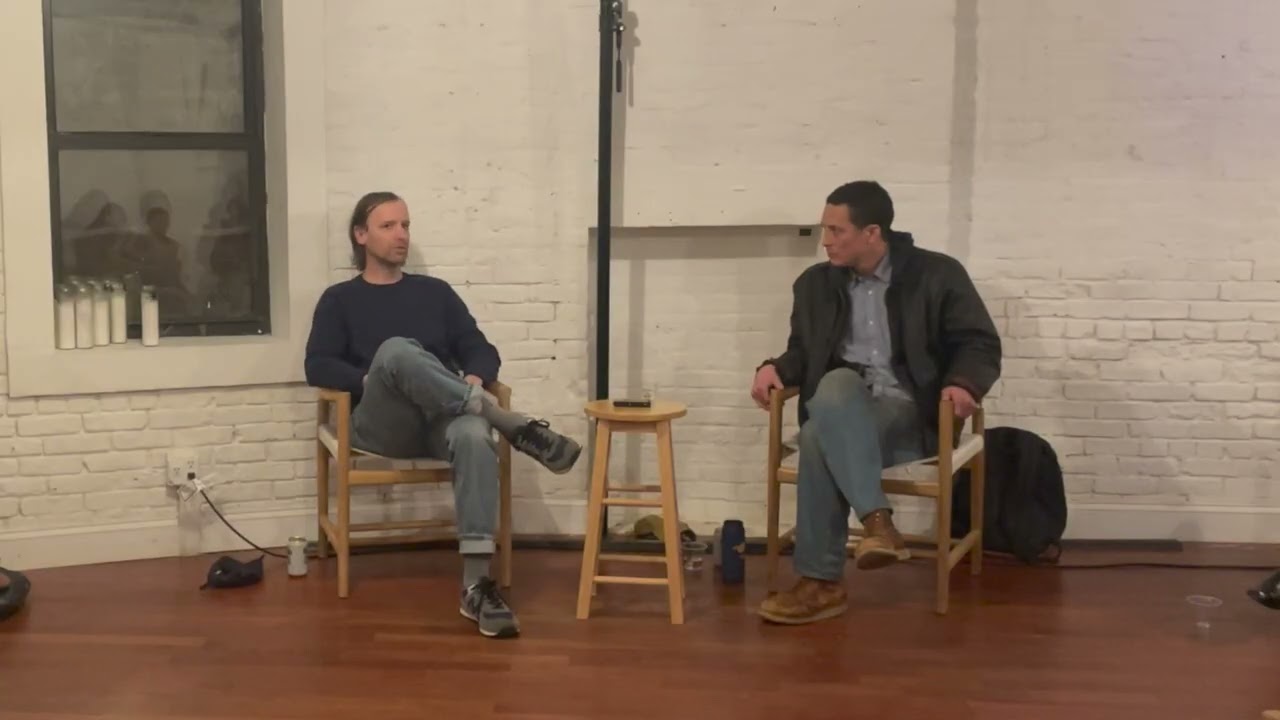
Faulkner Talk with Michael Bible and Sean Thor Conroe | Nonschool | 2.27.25 at 8pm in NYC
1.1K
Faulkner absorbed Joyce's techniques but transformed them into something uniquely his own. While Joyce presented thoughts immediately without explanation, Faulkner developed Benji's section into pure sensory experience—shadows, lights, wetness, dryness—without conventional narrative markers. Faulkner wanted to publish The Sound and the Fury in different colored inks to demarcate different time periods. This demonstrates how great writers internalize influences rather than merely imitating them. Every great story ultimately deals with Adam and Eve—the entanglements of intimacy and love dynamics that remain naturally interesting because they address fundamental human questions.
Click to watch →

El Show de Ignatius Farray | Charlamos con LUNA MIGUEL y ERNESTO CASTRO en el Show de más de 50 h!!!
52.3K
The streamers discuss Joyce's literary legacy, noting that while he is often credited with inventing the monologue interior, this technique had precedents in French literature (particularly in the works of Proust and Maupassant). Joyce's unique contribution was not the invention of the technique but its radical application to the representation of consciousness. The streamers note that Joyce's influence extended to later writers like Samuel Beckett, who acknowledged Joyce's debt to Freudian psychology while developing their own distinctive approaches, demonstrating how literary innovation builds upon and transforms previous traditions.
Click to watch →
Clase Virtual de Literatura
48.3K
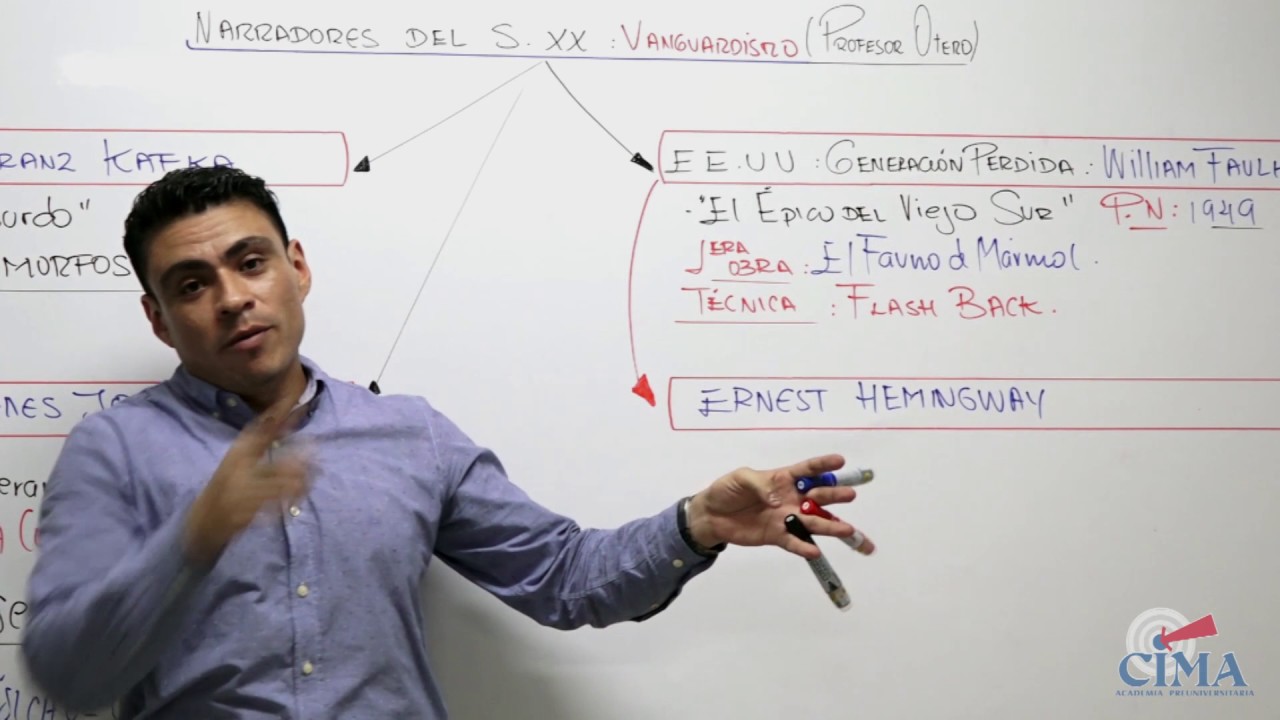
James Joyce, titled 'the literary pontiff,' created the stream of consciousness technique (monologue interior) in Ulysses, eliminating punctuation to mirror natural thought processes. His first published work was Chamber Music. William Faulkner, the first Nobel Prize winner from the vanguard period, created the flashback technique that breaks linear temporal structure in novels like The Sound and the Fury. Both authors revolutionized narrative by abandoning traditional chronological storytelling, with Joyce focusing on psychological interiority and Faulkner on fragmented temporal experience.
Click to watch →

How The Cult of the Self Took Over the World - Prof Jiang Xueqin
328.2K
Modernist literature emerged around the early 20th century as a transformative art movement. James Joyce's 1922 novel Ulysses is considered the first great modernist work, written to imitate and surpass Homer's Odyssey. Joyce employed stream of consciousness writing, capturing the mind as it thinks and works, with musical prose meant to be read aloud. His writing focuses on style over substance, with each sentence containing multiple literary references requiring extensive prior reading to understand. Virginia Woolf's 1927 novel To the Lighthouse responded to Joyce, using stream of consciousness to explore memory, perception, and the unconscious mind. Both authors represent a radical departure from traditional literature's democratic goal of bringing beauty and truth to all people, instead creating elitist, self-referential works accessible only to those with specialized knowledge.
Click to watch →
Nature & God
Yes Consent
Nature & God
0:00- 1
Reflects on nature's beauty as evidence of a creator.
- 2
Rejects atheist learning, asserting a divine maker's existence.
- 3
Compares faith's certainty to the sun's inevitable daily rise.
Feminist Critiques of Molly Bloom as Male Fantasy and Essentialist Archetype
While Molly Bloom’s soliloquy is often celebrated as a groundbreaking depiction of female consciousness, a significant strain of feminist literary criticism offers a sharp counterpoint. Scholars like Elaine Showalter argue that Molly is not a triumph of female representation, but rather a male projection—a phallocentric fantasy of female sexuality constructed by a male author. Critics argue that Joyce’s stream-of-consciousness technique in the 'Penelope' episode reduces female subjectivity to mere biology, passivity, and unmediated bodily impulses. By characterizing Molly as the primordial 'Earth Mother' (or Gaea Tellus), Joyce essentializes womanhood, trapping her in a domestic, highly sexualized sphere devoid of intellectual depth or genuine social agency. Rather than liberating the female voice, this perspective suggests that the soliloquy colonizes it, presenting a male-authored illusion of female interiority that reinforces patriarchal stereotypes about women being fundamentally non-rational and governed by physical desires.
Familiarity with James Joyce's 'Ulysses', its narrative structure, and its parallel connection to Homer's 'Odyssey'.
Understanding the 'stream of consciousness' narrative technique, particularly its rejection of traditional syntax and punctuation to mimic human thought.
Basic knowledge of the core characters in 'Ulysses', specifically the complex marital dynamic and mutual infidelities of Leopold and Molly Bloom.
Historical context of early 20th-century Modernism and its focus on representing internal psychology over external realism.
A deep dive into Feminist literary criticism of Molly Bloom's character, evaluating whether her soliloquy represents authentic female liberation or a male author's projection.
Exploration of the censorship and landmark obscenity trials surrounding 'Ulysses' in the United States and United Kingdom, largely sparked by the explicit nature of Molly's monologue.
A comparative analysis of Penelope from Homer's 'Odyssey' and Molly Bloom, examining how Joyce subverts the classical archetype of the faithful, waiting wife.
Investigation of Joyce's stylistic influence on other major modernist and postmodernist writers who utilized interior monologue, such as Virginia Woolf and William Faulkner.
264.2K views2.1Klikes3:07@MichaelAskillOriginal Release: 2012-02-01
[Music] God Of Heaven there's nothing like nature the wild mountains and then the Sea The Waves rushing and as for them saying that there's no God well I wouldn't give a snap of me two fingers for all they learning who's the first person in the universe before there was anybody that made it all who that they don't know and neither do I so there you are might as well try and stop the Sun from rising tomorrow The Sun Shines for you he said the day we were lying among the roaded endrance on ho head in the gray Tweed suit and his Straw Hat the day I got him to propose to me yes first I gave him the bit of seed cake out of my mouth and it was leap here like now yes 16 years ago my God after that long kiss I near lost my breath yes he said I was a flower of the mountain yes that was one true thing he said in his life and the sun shines for you today yes and that was why I liked him because I saw he understood or felt what a woman is and I knew I could always get around him and I gave him all the pleasure I could would leading him on till he asked me to say yes and I wouldn't answer first only looked out over the sea and the sky and I was thinking of so many things he didn't know of mvi and Mr Stan hope and father and old Captain Groves and the Spanish girls laughing and the Sea The Sea Crim in sometimes like fire and the Glorious sunsets yes and jibral as a young girl where I was a flower of the mountain yes and I thought well as well him as another and then I asked him with my eyes to ask again yes and he asked me would I yes to say yes my mountain flower and first I put my arms around him yes and I drew him down to me so he could feel my breasts all perfume yes and his heart was going like mad and yes I said yes I will yes [Music]
Up Next

5:30
Mrs. Dalloway Time Manipulation | Virginia Woolf | Literary Analysis
@youneekenglish
646 views•2022-01-18

13:43
Formalism in Literary Criticism: An Academic Lecture Overview
@mattalberhasky9952
39.1K views•2015-08-05

6:08
Point of View in Fiction: First Person vs. Third Person
@magicalthriftyteacher
153.8K views•2014-03-31

15:25
1984: Orwell's Dystopian World and the Mechanisms of Totalitarianism
@AlternateHistoryHub
7M views•2017-03-04
Related Study Plans & Knowledge Roadmaps
Structured learning paths in Literature
literature
Graphic Memoirs: Visual Art, Trauma & History
01Foundations of Sequential Art and Visual Language
02Autographics and Processing Historical Trauma
03Visualizing Personal Trauma, Grief, and Graphic Medicine
+ 2 more learning modules
14h5 modules
Explore Roadmap
literature
Campus Novels: Evolution, Themes & Critique
01Introduction to the Campus Novel Genre
02Mid-Century Satire and the Post-War Academy
03Dark Academia and the Critique of Privilege
+ 2 more learning modules
14h5 modules
Explore Roadmap
literature
Theater of the Absurd: Philosophy & Plays
01Postwar Existentialism & Historical Roots
02Dismantling Narrative: Esslin & Absurdist Conventions
03Samuel Beckett and Tragicomic Existentialism
+ 2 more learning modules
12h5 modules
Explore Roadmap
literature
Revenge Tragedy: Justice, Madness & State
01Foundations of Early Modern English Theatre
02Anatomy of Revenge: Structural Conventions
03Psychological Complexity: Madness and Melancholy
+ 2 more learning modules
15h5 modules
Explore Roadmap