









![PHILOSOPHY - Language: Gricean Pragmatics [HD]](https://i.ytimg.com/vi_webp/we6uSVf4qss/maxresdefault.webp)





![LING 324 [5-1] Composition and Syntax of F1](https://i.ytimg.com/vi/unQbhhBYhbM/hqdefault.jpg?sqp=-oaymwEmCOADEOgC8quKqQMa8AEB-AH-CYAC0AWKAgwIABABGGUgZShlMA8=&rs=AOn4CLBtt1yuxGc9l8iXIWyax0b8h6dbwQ)
![SFU LING 324 - [6-1] Truth Conditional Meaning of Sentences](https://i.ytimg.com/vi/GW72RXRo1Bs/hqdefault.jpg?sqp=-oaymwEmCOADEOgC8quKqQMa8AEB-AH-DoACuAiKAgwIABABGGUgWShaMA8=&rs=AOn4CLD61byiN9Ys5pszEM84kYEz1ps4Ig)







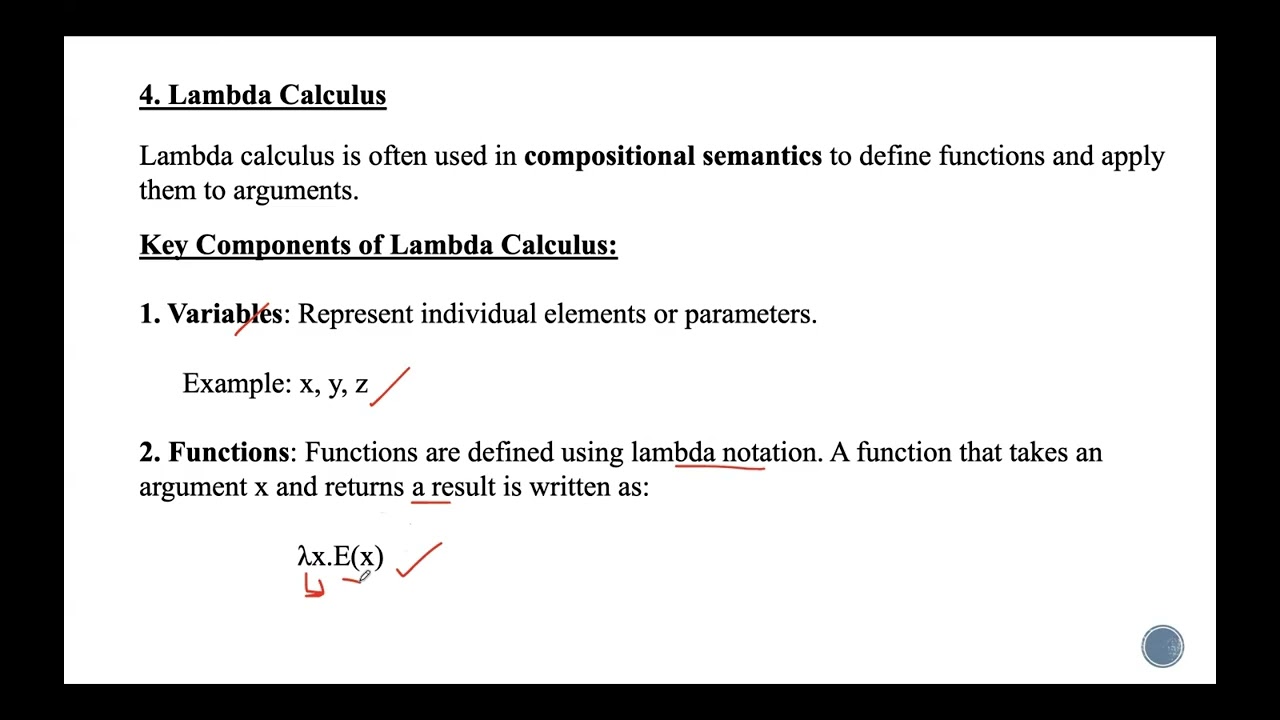
Semantics studies literal, decontextualized, and dictionary meanings of language, including word meanings, grammatical signals, signs, and symbols, while pragmatics examines communicative, contextual, and cultural meanings through speaker-listener interactions, focusing on utterances rather than abstract sentences.
Introduction to Semantics & Pragmatics | Linguistics
Added:Basic understanding of the core subfields of linguistics, particularly syntax (sentence structure) and morphology (word structure).
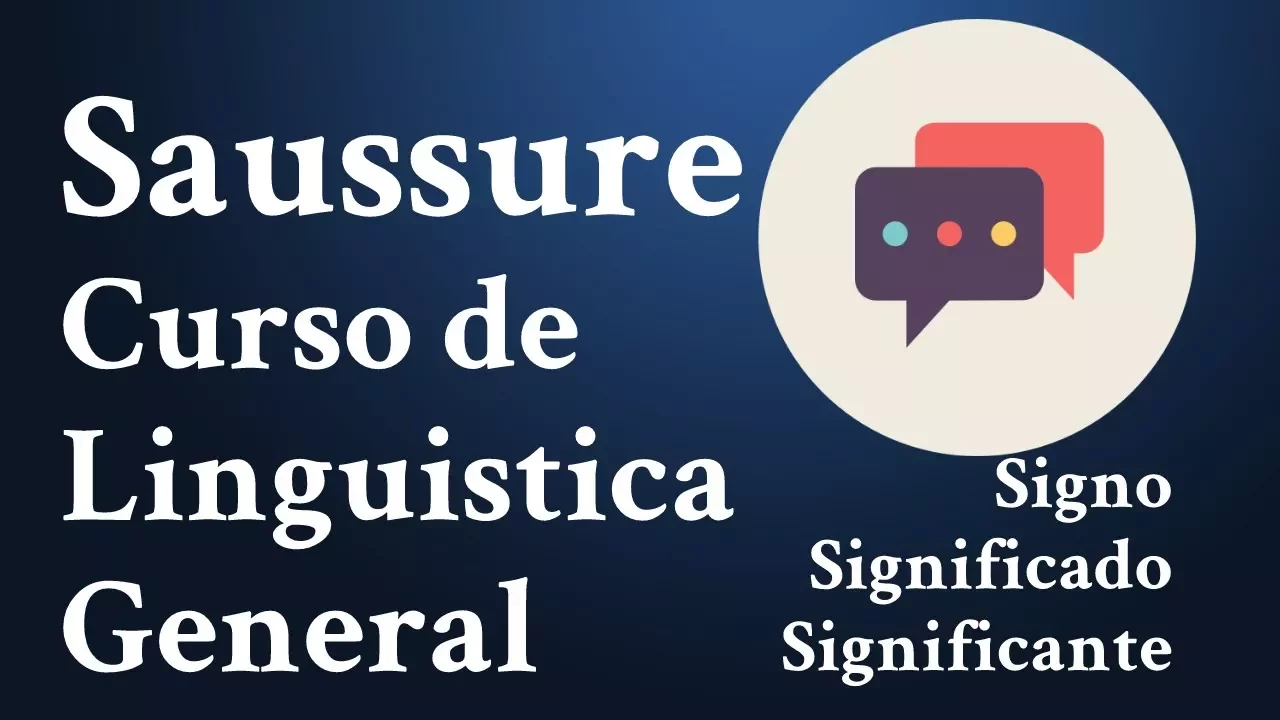
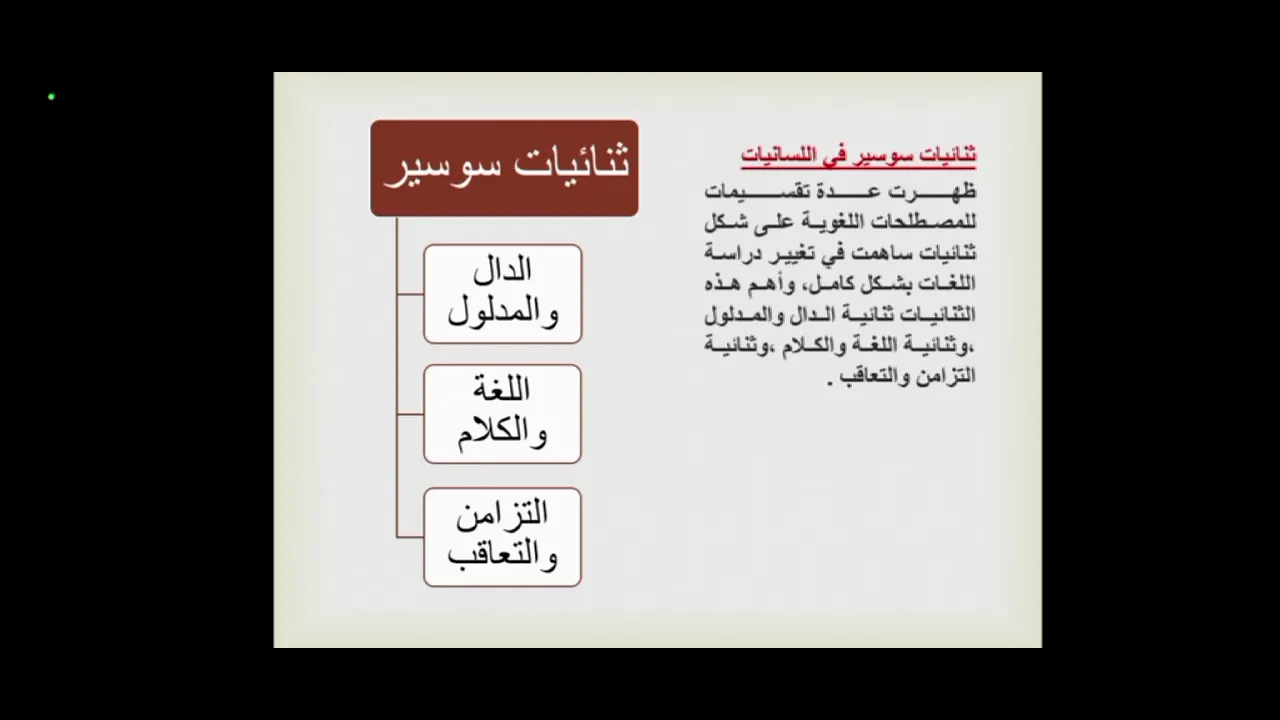
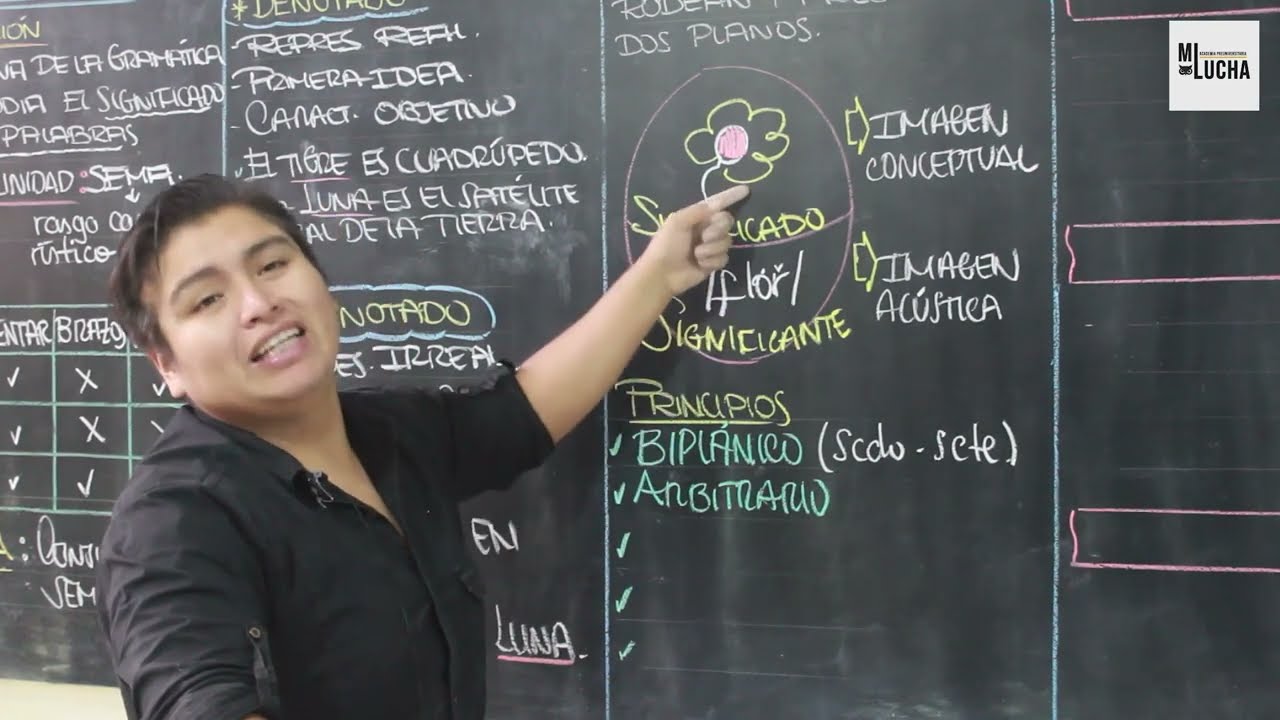
The concept of the linguistic sign, including the relationship between a word (signifier) and its mental concept (signified).
The distinction between linguistic competence (mental grammar) and linguistic performance (actual language use).
An intuitive awareness of the difference between literal dictionary definitions and figurative or contextual usage in everyday conversation.
Grice's Cooperative Principle and Conversational Implicatures, exploring how speakers convey meaning beyond the literal words used.
Speech Act Theory (John Austin and John Searle), analyzing how utterances can be used to perform actions (e.g., promising, declaring).
Formal Semantics and Truth-Conditional Semantics, which apply mathematical logic to model how literal meaning is composed in language.
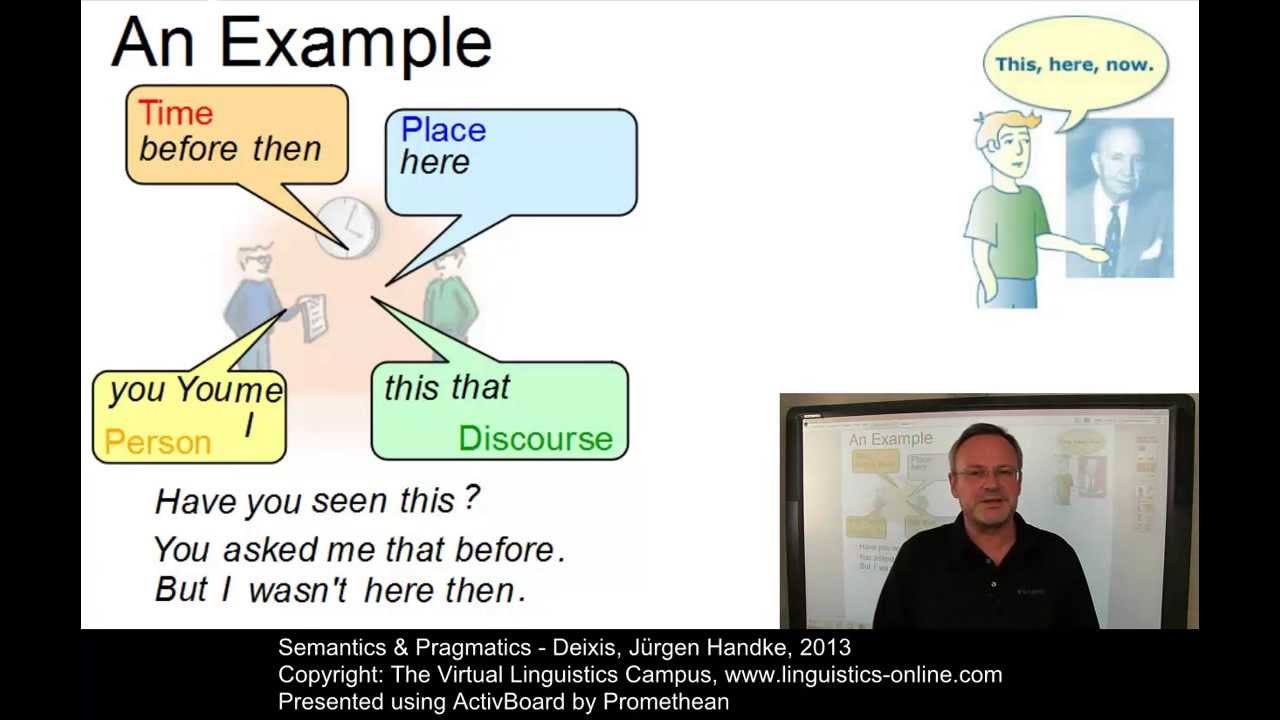
Deixis and Indexicality, studying how linguistic expressions (like 'here', 'now', 'you') derive meaning from their physical or situational context.
Applications of semantics and pragmatics in Natural Language Processing (NLP) and AI to improve machine translation and conversational agents.
421 views9likes13:28Original Release: 2022-02-16
friends hope you all are doing well and enjoying learning linguistics with tia and language and linguistics in this lecture we are going to learn about introduction to semantics and pragmatics this will be an overview but detailed study will be in the next few lectures semantics and pragmatics post study the meaning of language but in different styles semantics deals with dictionary and literal meanings whereas pragmatics concerns with the communicative and contextual meanings of the sentence so let's move to our first slide to learn about these concept to little bit in detail semantics is the part of linguistics that is concerned with the study of literal d decontextualized and grammatical meanings here literal meanings means that semantic is the study of actual meanings of the word are the real meaning they don't use figurative or symbolic language for instance if someone says it was raining outside so i rode by bus instead of bike it literally mean that there must be rain so this person has to travel by bus next we have the contextualized meaning decontextualized meanings are isolating a word from the sentence are interpreting the meaning of a word out of the context next type of meaning in semantic is dictionary meaning that is also the literal meaning and free from the symbolic or figurative language they are the fixed one and usually you can find them in dictionary next we have grammatical meanings grammatical meanings are conveyed in a sentence by word order or you can say whatever the meanings of sentence you perceive when it is in the well-formed are in grammatically correct that is called grammatical meanings and in grammatical meanings we have grammatical signals like prepositions models auxiliary verbs articles and conjunctions we also have sign meanings in semantics sign is a form of language in its own right and it is specifically meant to communicate certain information and signs are usually informative regulatory warning or you can say a sign is a form of language that is descriptive in nature like you usually read while traveling as a road sign like don't enter time or whatever written on the board while traveling on road like don't enter is a type of sign a sign could stand for something and it may be mandatory to be followed next we have symbol symbol is a form of sign that may have deep meaning it represents something that is acceptable by certain subjective areas example of symbol could be a letter like a b c that can stand for a chemical element or a character in musical notation or you can say symbol is a something that represent another thing it can be a picture a letter are a spoken and written word so semantics is the study of literal d contextualize dictionary meaning as well the interpretation of sign and symbol is also the part of semantics linguistic semantics is a study of how languages organize and express meanings for example the word tree is a linguistic sign a linguistic sign is not a link between think and name but between a concept and a sound pattern for example the concept of a tree is leaf size shape color and texture as you can see in this picture and the sound pattern is the frequency and distributional pattern of the phoneme a sound pattern is the listener's psychological impression of a sound and is given to him by the evidence of his senses as sosor says that a linguistic sign is a communication of a concept and a sound image so linguistic signs are the combination of the written form the word like here we have word that is written tree and its orthographic are written form and phonological form is the sound like how we say the word tree and how we perceive are the listeners are perceiving the word of this the sound of the word tree is the phonological form so linguistic semantics is the study of how language organize and express meanings orthography is the study of correct spellings according to established usage it is the study of the system of written language or spelling and phonology studies the speech sound in a language semantic analysis only must explain how the sentences of particular language are understood interpreted and related to states process and objects in the world so semantics is the study of the contribution made to meaning by the meanings of linguistic items and the way they are combined linguistics items are the speech form of the word and the way they are combined linguistic semantics deal with word meanings or you can say the study of how and what the words of a language denote and it usually focuses on the mapping of words to concept lexical semantics is the sub field of linguistics that studies how and what words of language denote and thus involves the meaning of individual words compositional semantic deals with the way the meaning of lexical item combined to give phrase and sentence meaning when sentence meaning is derived from lexical meaning this process is called composition complex expression whose meanings are not stored in the lexicon have compositional meaning and compositional semantics formulating semantic rules that build the meaning of a sentence based on the meanings of the word and how they combine pragmatics is a study of meaning and these meanings are communicated by the speaker and perceive as well as interpreted by the listeners in the definition of pragmatics we have speaker and listeners meaning as well as cultural and contextual meanings these meanings are also invisible in nature and the inference are the meanings of the speaker's communication depends on shared knowledge or you can see the background knowledge between the speaker and the listener so pragmatics and study of invisible meaning or how we recognize what is meant even when it isn't actually said or written this includes background knowledge context people know about each other and the world speaker is a sender who says something to communicate his desire ideas and feelings for example speaker is in a meeting conference or other gathering who is making a speech or giving a talk in contrast listener is the one who is decoding or receiving or listening the speaker and decoding the meaning from the communication of the speaker culture is the entire way of life for a group of people as you can see customary belief social forms material traits of racial religious are social groups and the combination of these things is called culture so pragmatics may vary from culture to culture and the relationship between the linguistic form our speech form and the communicative function is of central interest in pragmatics pragmatics is also study the use of language by keeping in view the context pragmatics we have several types of context like physical context linguistic context and social context semantic studies meanings via sentences and pragmatics studies meaning through a trances sentences are always abstract and they are not usually constructed for encoding our decoding or you can say communicating message for any listener in contrast pragmatics studies context so utterances are the fragments of ideas the communication so they are always context dependent and concrete in nature and they have meanings most obvious distinction between the sentence and utterance is that a trends will have special temporal are you can say physical properties while the sentences doesn't so sentences are abstract linguistic structure and they don't have context they are not produced by speaker are received by the listener so utterance is an instance of the production of sentence or a fragment of a sentence proposition is a complete statement based on truth and untruth condition of the sentence so preposition is studied under the hiding of semantics pragmatics studies implicature and inferred meaning implicature is something the speaker suggests or implies with an utterance or it is not literally expressed inferences are logical conclusion based on observation and prior knowledge they are only indirectly triggered by explicit language structure whatever listeners perceive based on his shared culture and background knowledge as well as keeping in view the context is called utterance that is study under the heading of pragmatics similarly sentences usually donate literary or dictionary meaning but addresses are used for communicative purpose and for communicating in the real world situation they usually share speakers and listeners background knowledge as well as their culture and context so semantics is the study of scientific and philosophical meaning these meanings are usually literal dictionary and d in nature whereas pragmatics is the study of encoded and decoded meaning sent by speaker and perceived by the listener by keeping in view social and cultural context so semantics deals with the out of context and d contextualized sentences in contrast pragmatics is always context dependent and studies meaning of the language via attendances those are the fragments of sentences they are context dependent thank you for watching please like share and subscribe language and linguistics our linguistic way tia soon question answer session will be available on website and you can also find the transcript of this lecture that will be uploaded soon
Up Next

5:59
Speech Acts Explained: Locution, Illocution & Perlocution in Pragmatics
@thisbookistaboo
75.9K views•2021-03-30
36:52
Constraint Interaction in Optimality Theory: Epenthesis & Deletion
@Vidyamitra
180 views•2018-08-20

8:59
Forensic Linguistics: How Language Solves Crimes | PBS
@pbsstoried
1M views•2024-01-25

21:32
Accent Expert Explains U.S. Regional Dialects | Part 1
@WIRED
9.3M views•2021-01-21
Related Study Plans & Knowledge Roadmaps
Structured learning paths in Linguistics
linguistics
Optimality Theory: Tableaux & Constraints
01Phonological Basics: Sounds, Syllables & Rules
02Foundations of Optimality Theory: GEN, CON, and EVAL
03The Constraint Inventory: Markedness vs. Faithfulness
+ 2 more learning modules
15h5 modules
Explore Roadmap
linguistics
Morphosyntactic Alignment: S, A & P Systems
01Foundations of Syntax: Transitivity and Arguments
02The Linguistic Variables: Mapping S, A, and P
03Nominative-Accusative Alignment
+ 3 more learning modules
12h6 modules
Explore Roadmap
linguistics
Analyzing Sign Language: Phonology & Syntax
01Foundations of Sign Language Linguistics
02Phonology: The Five Parameters of a Sign
03Morphology: Word Formation and Classifiers
+ 2 more learning modules
14h5 modules
Explore Roadmap
linguistics
Pragmatics: Speech Acts, Grice & Politeness
01Introduction to Pragmatics: Meaning in Context
02Grice’s Cooperative Principle & Implicature
03Speech Act Theory
+ 2 more learning modules
14h5 modules
Explore Roadmap