






![What are utterances, sentences, statements, and propositions? [How to argue #1.2]](https://i.ytimg.com/vi_webp/VENqKP-Y3ew/maxresdefault.webp)











![PHILOSOPHY - Language: Gricean Pragmatics [HD]](https://i.ytimg.com/vi_webp/we6uSVf4qss/maxresdefault.webp)



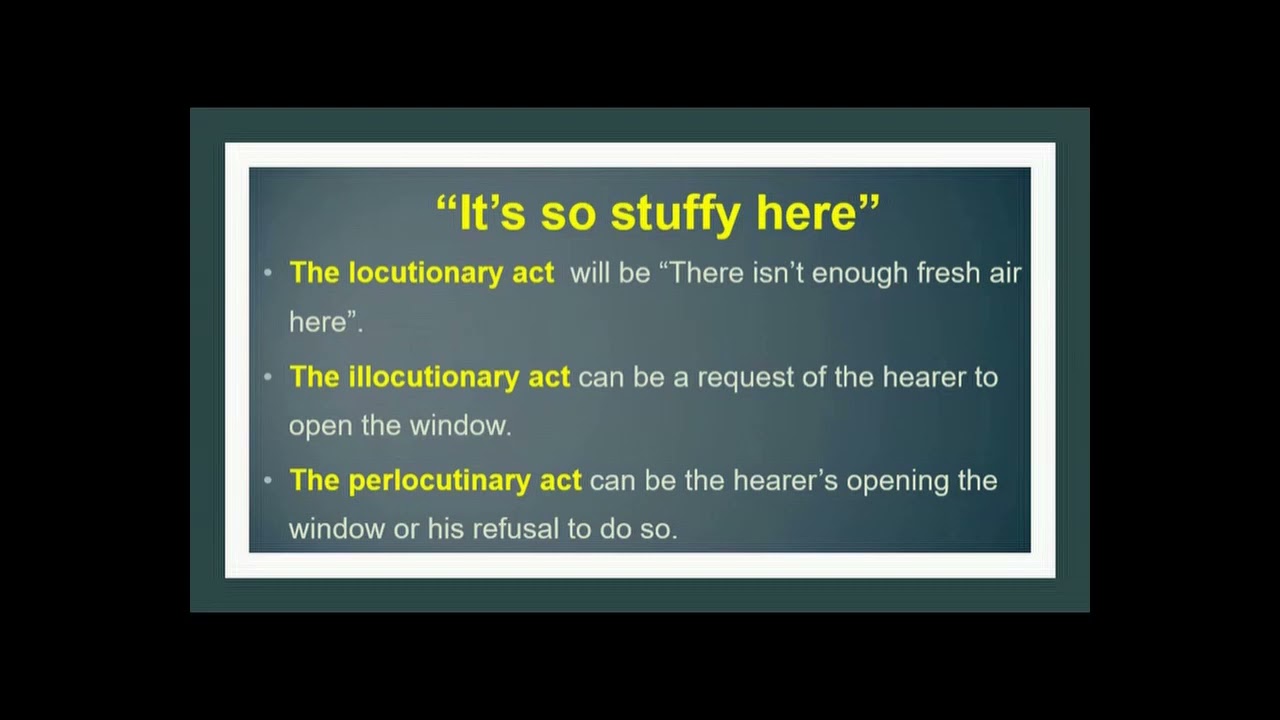
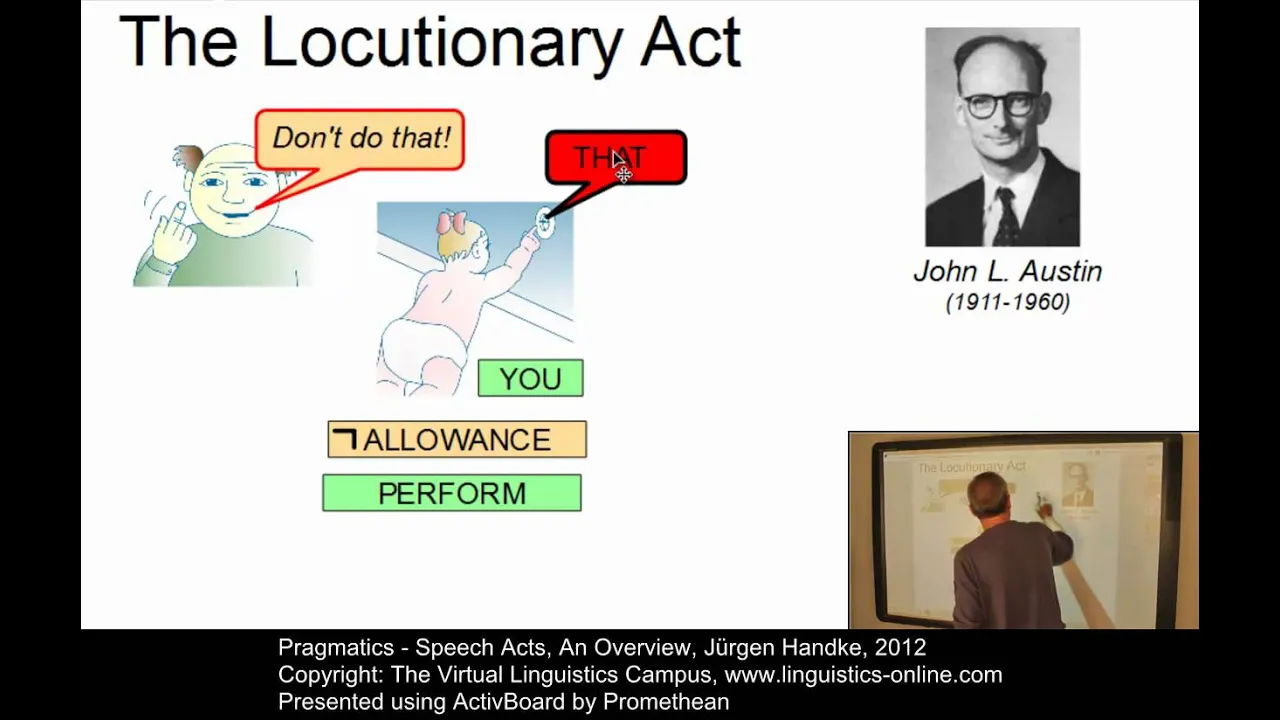
Speech acts consist of three interconnected components: locution (the linguistic form and content of an utterance), illocution (the speaker's intended purpose or action in making the utterance), and perlocution (the effect or consequence the utterance has on the hearer). While speakers have control over their illocutionary intentions, they cannot fully control the perlocutionary effects, which depend on the hearer's interpretation and response.
Speech Acts Explained: Locution, Illocution & Perlocution in Pragmatics
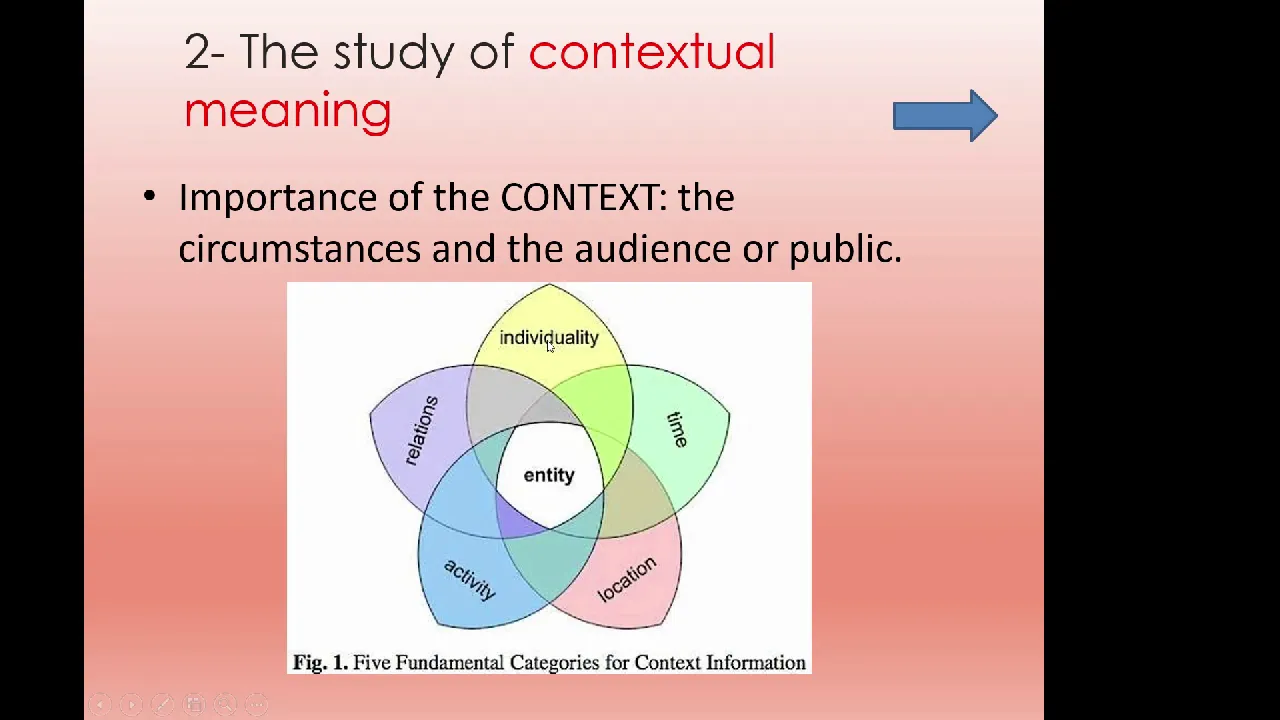
Added:A basic understanding of pragmatics as the branch of linguistics focused on how context influences the meaning of language.
The core distinction between semantics (literal, truth-conditional meaning) and pragmatics (speaker-intended meaning in context).
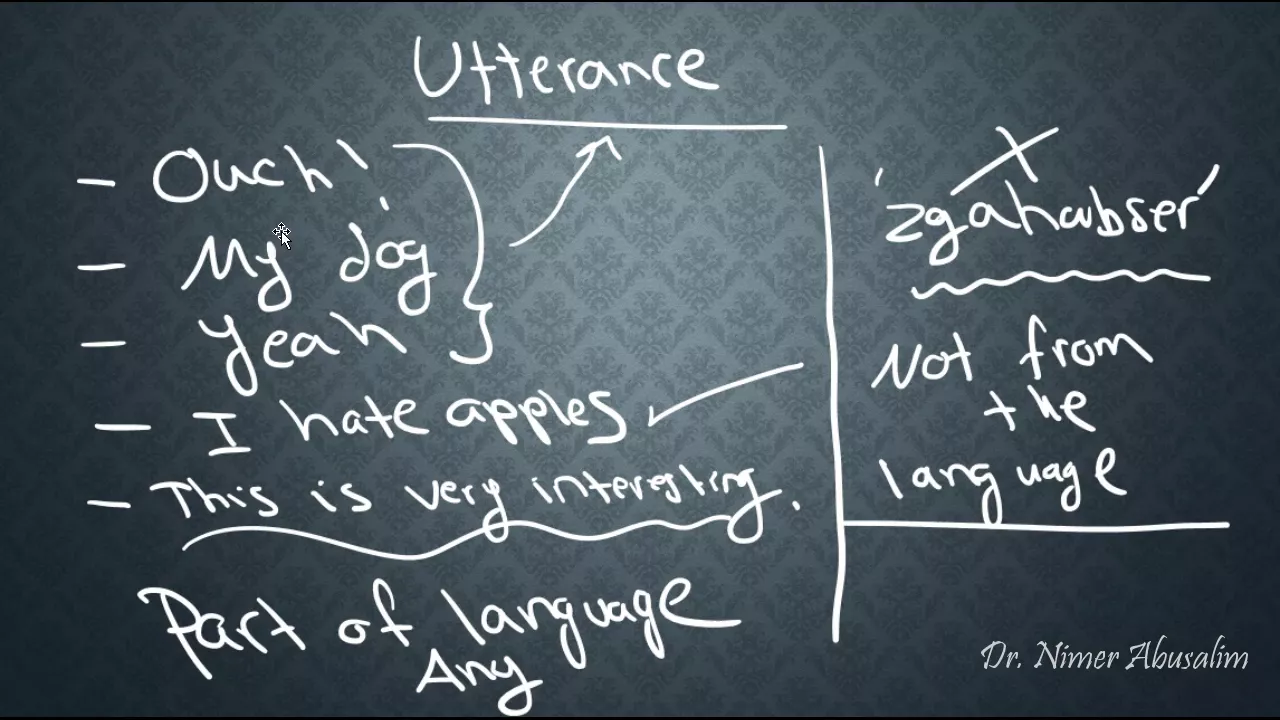
The concept of an 'utterance' as a concrete unit of speech, distinct from an abstract grammatical sentence.
Familiarity with the concept of 'performative language'—the idea that words can be used to perform actions rather than just describe reality.
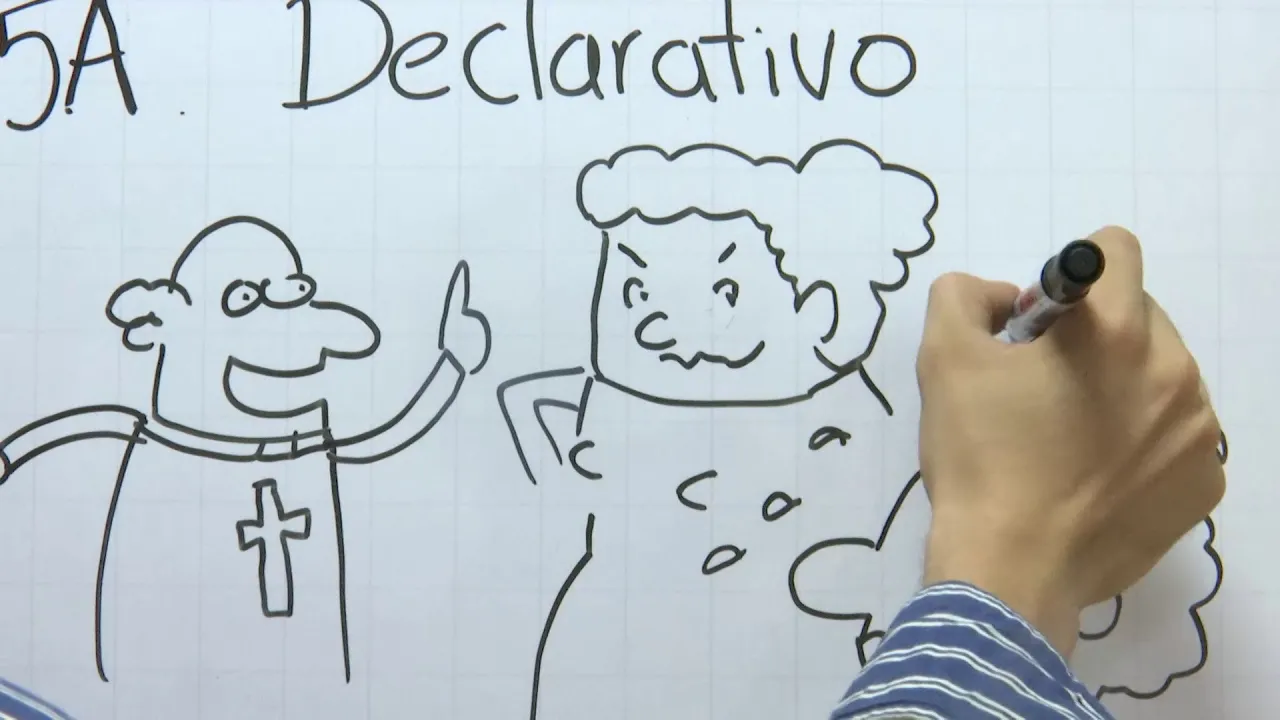
John Searle's taxonomy of speech acts, which categorizes utterances into assertives, directives, commissives, expressives, and declarations.
The concept of 'Indirect Speech Acts' and how speakers use non-literal phrasing to convey requests or commands politely.
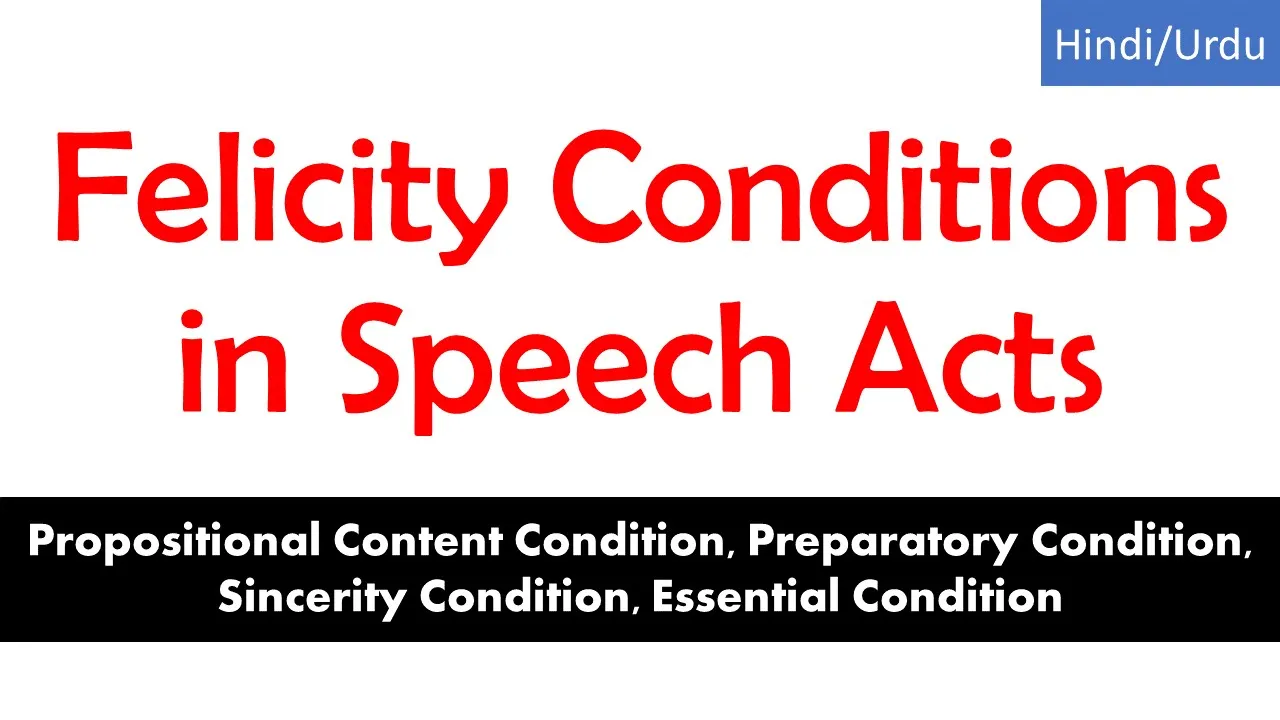
The study of 'Felicity Conditions', which are the specific contextual rules required for a speech act to be successfully and appropriately executed.
Grice's Cooperative Principle and Conversational Implicatures, exploring how listeners deduce implied meanings when speech acts seem to violate conversational norms.
Real-world applications of speech act theory in analyzing human-computer interaction, designing conversational AI, and conducting political discourse analysis.
75.9K views1.7Klikes5:59Original Release: 2021-03-30
hi my name is randy agart and this is a brief introduction to pragmatics speech acts locution elocution per locution when we talk about speech acts it's important that we recognize three aspects for any speech act first of all there's the locution which is the linguistic form of the utterance so that means it's the sounds it's the phonemes the morphemes the words the syntax the semantics all of it that goes into the mental grammar that helps us to produce the actual utterance another way of saying it is the locution is what is said the elocution on the other hand gets more at the intentions of the utterer the speaker it's the intended purpose of the utterance another way of thinking of it is what is produced in saying the locution the per locution on the other hand is looking at the other side of it it's looking at the recipient it's the effect of the utterance it's what's produced by saying the locution those last two i think are sometimes hard to to differentiate so another way of thinking of this is in uttering the locution what was the speaker doing or if we want to look at per locution after hearing the locution what did the hearer do so again there are these three aspects to any speech act there's the locution the linguistic properties of the utterance there's the elocution the manifest intentions of the speaker in making the utterance and i i say manifest because these have to be on the surface there can't be hidden intentions those don't lead to illocutions and then the perlocution is the effect of the utterance on the recipients now notice that the speaker has control over the illocution but not over the per locution they can guide it and they can attempt to produce a particular prolocation but they can't perfectly control what the hearer does i want to use this man gesturing with his hand at something obviously and seeing glass now we can imagine all sorts of different contexts for this i'll give you a few and i'm sure that you can come up with many many more okay now in one situation maybe he's accompanied by somebody who's barefoot and he's gesturing at the ground and pointing at some broken glass saying glass or another one imagine that he is a father and he has told his children to clean up the house and he's now patrolling the house afterwards looking for things that are out of place and sees a glass in the living room and says glass or imagine that this is a english as a second language teacher and he's just teaching new words tree house glass or imagine that he wants somebody to hand him a glass so he holds out his hand and says glass or imagine that he's uh ranting about just how dirty the park is and he's pointing out all the litter you know can glass all sorts of different possibilities now the question is insane glass in each one of these different contexts the man was doing what well in that first example where the person is barefoot he's warning in the second example he is you know where where he's the father and um telling the kids that they messed up he's reprimanding in um the teaching example he's informing in the example where he wants somebody to hand him a glass he is requesting uh in the park example where he's looking at all the litter he's complaining each of those is a type of speech act each of those is a what we can call a metapragmatic descriptor of speech acts on the other hand we could also look at the effect the per locution so after the man said glass the hearer did what well again in that first case where it's a warning the barefoot person probably went around the glass in the reprimand case where the children neglected to clean up a glass they presumably picked up the glass and put it in the sink in the example of the classroom then presumably the students learned in the example of a request that he be handed a glass presumably the hearer handed the glass over and in the case of the complaining maybe the person that's been complained to just simply commiserated in each one of those cases it would those would be the per locutions [Music]
Up Next

6:15
Syntactic Arguments Explained: How Verbs Determine Required Elements
@marylouvercellotti5094
164 views•2024-02-15
36:52
Constraint Interaction in Optimality Theory: Epenthesis & Deletion
@Vidyamitra
180 views•2018-08-20

8:59
Forensic Linguistics: How Language Solves Crimes | PBS
@pbsstoried
1M views•2024-01-25

21:32
Accent Expert Explains U.S. Regional Dialects | Part 1
@WIRED
9.3M views•2021-01-21
Related Study Plans & Knowledge Roadmaps
Structured learning paths in Linguistics
linguistics
Optimality Theory: Tableaux & Constraints
01Phonological Basics: Sounds, Syllables & Rules
02Foundations of Optimality Theory: GEN, CON, and EVAL
03The Constraint Inventory: Markedness vs. Faithfulness
+ 2 more learning modules
15h5 modules
Explore Roadmap
linguistics
Morphosyntactic Alignment: S, A & P Systems
01Foundations of Syntax: Transitivity and Arguments
02The Linguistic Variables: Mapping S, A, and P
03Nominative-Accusative Alignment
+ 3 more learning modules
12h6 modules
Explore Roadmap
linguistics
Analyzing Sign Language: Phonology & Syntax
01Foundations of Sign Language Linguistics
02Phonology: The Five Parameters of a Sign
03Morphology: Word Formation and Classifiers
+ 2 more learning modules
14h5 modules
Explore Roadmap
linguistics
Pragmatics: Speech Acts, Grice & Politeness
01Introduction to Pragmatics: Meaning in Context
02Grice’s Cooperative Principle & Implicature
03Speech Act Theory
+ 2 more learning modules
14h5 modules
Explore Roadmap