


![Repaso UNMSM 2025 I 💖 Lenguaje [FULL DECO]✨](https://i.ytimg.com/vi/6Y9evUXI4zE/maxresdefault.jpg)








![[Introduction to Linguistics] Theta Roles / Thematic Roles](https://i.ytimg.com/vi_webp/FWgWbJlxvds/maxresdefault.webp)





![[Syntax] X-Bar Theory - Practice Sentences](https://i.ytimg.com/vi_webp/CIFOSEvcsT4/maxresdefault.webp)
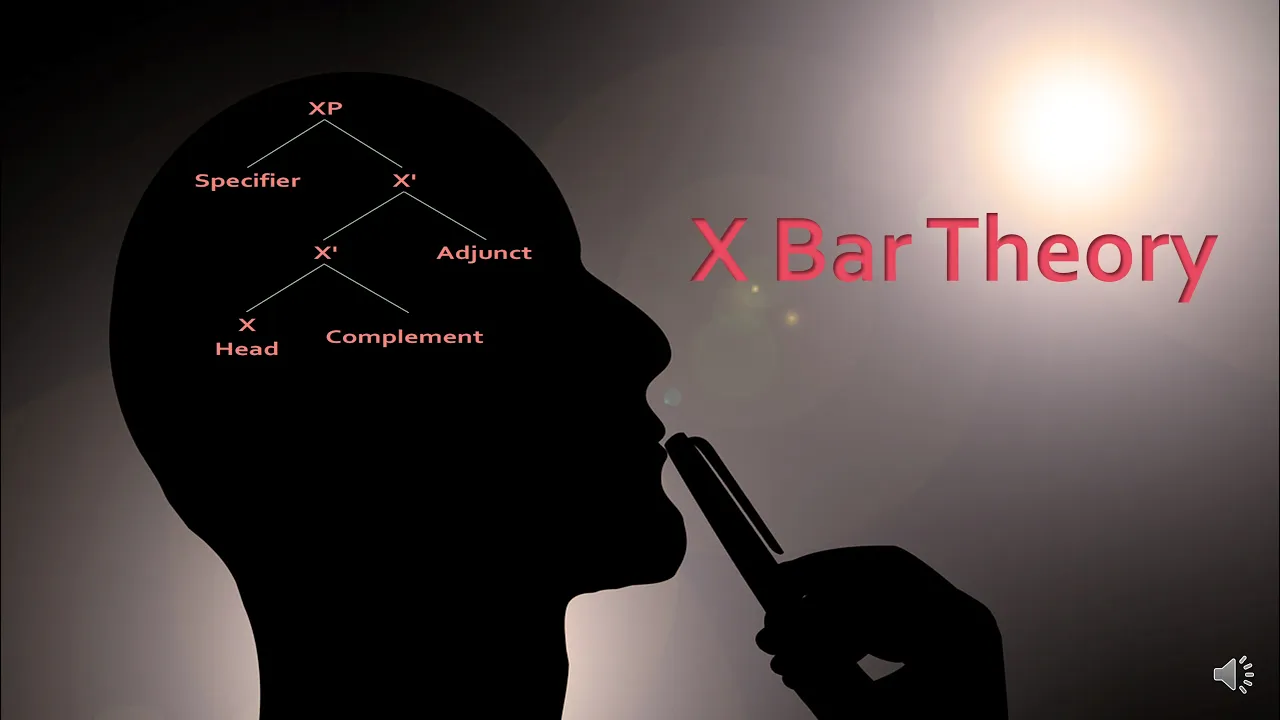

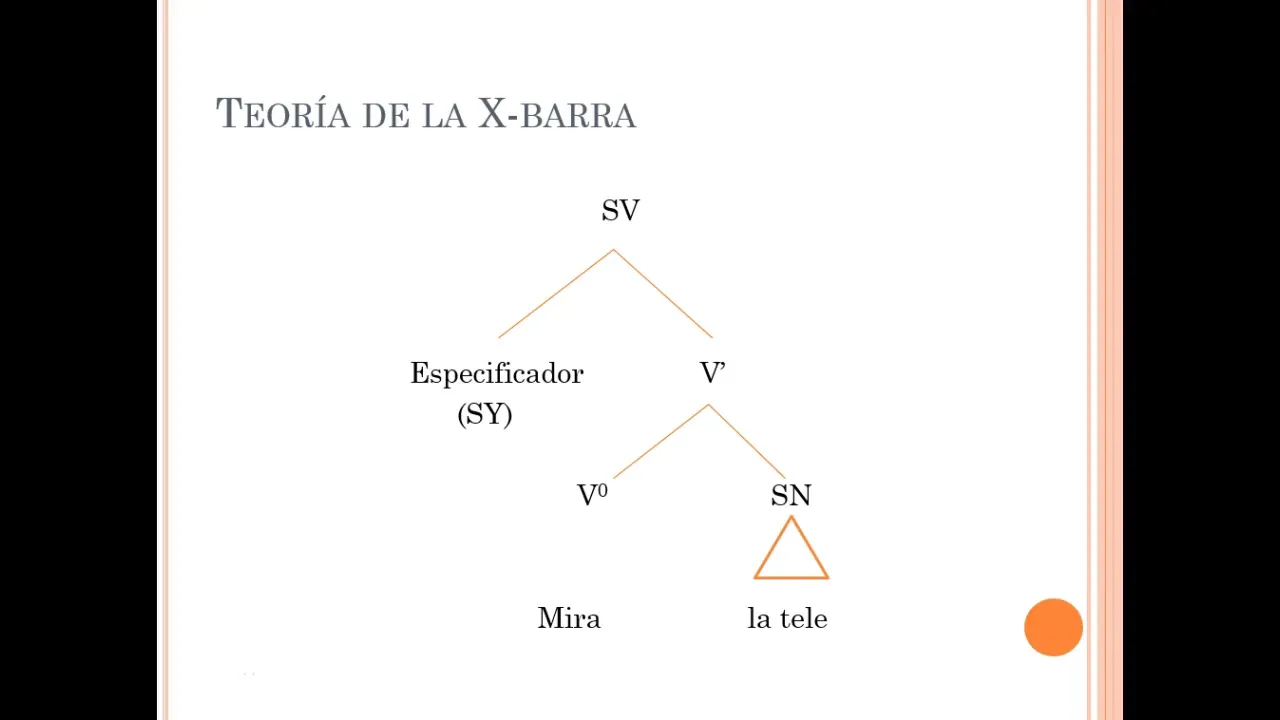
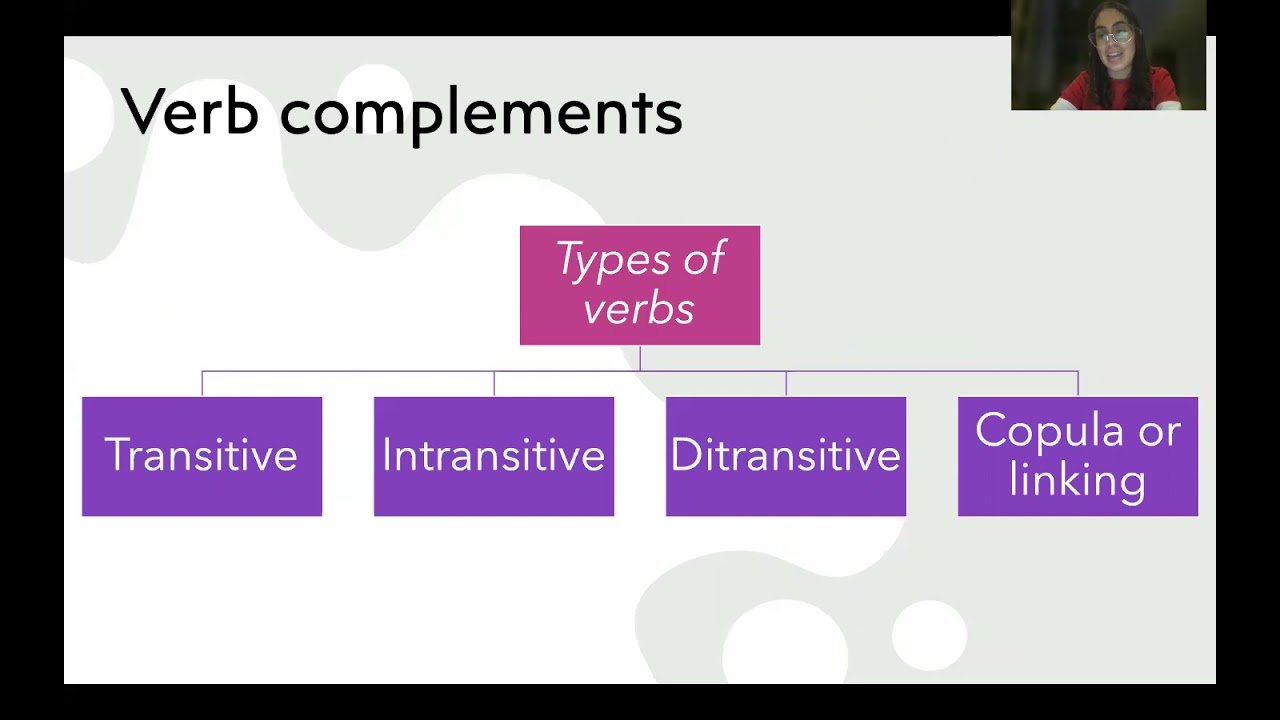
In linguistics, arguments are required elements necessary for grammatical sentences, and the number of arguments required depends on the verb: intransitive verbs like 'sleep' require one argument (the subject), transitive verbs like 'hit' require two arguments (subject and complement), and ditransitive verbs like 'gave' require three arguments (subject plus two complements, such as indirect and direct objects); these required elements are called 'complements' when they appear in non-subject positions within the verb phrase.
Syntactic Arguments Explained: How Verbs Determine Required Elements
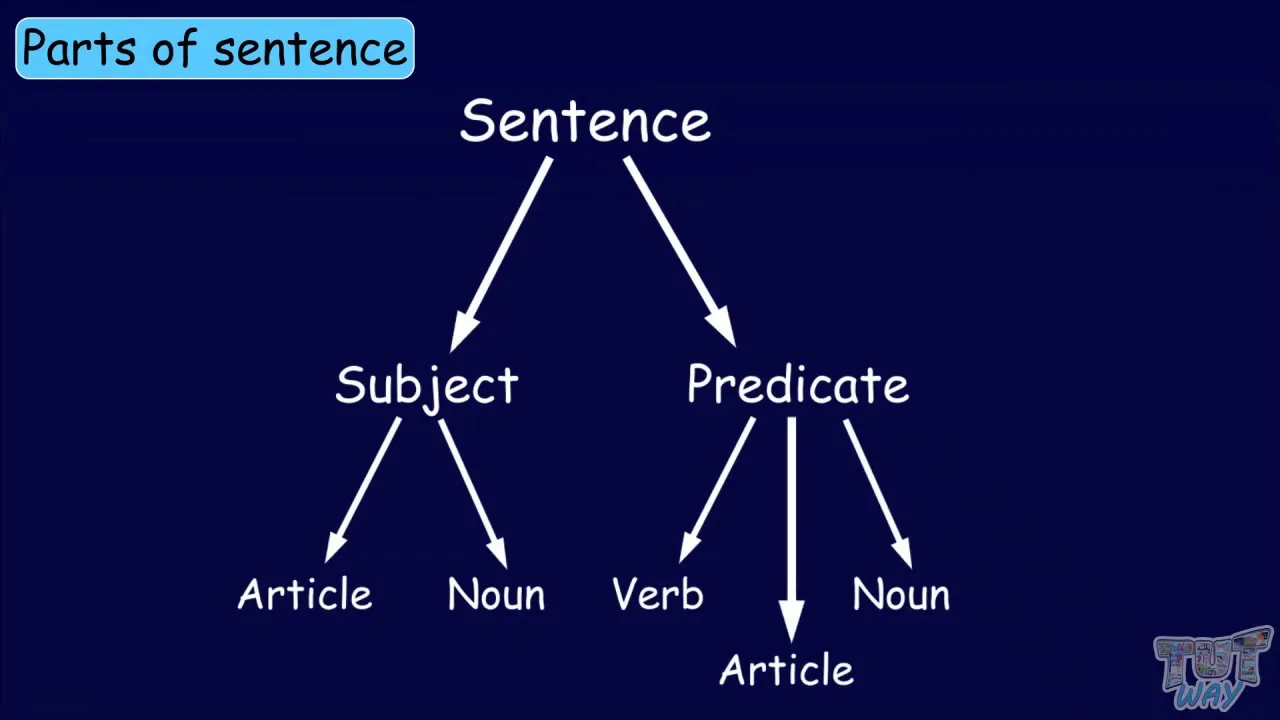
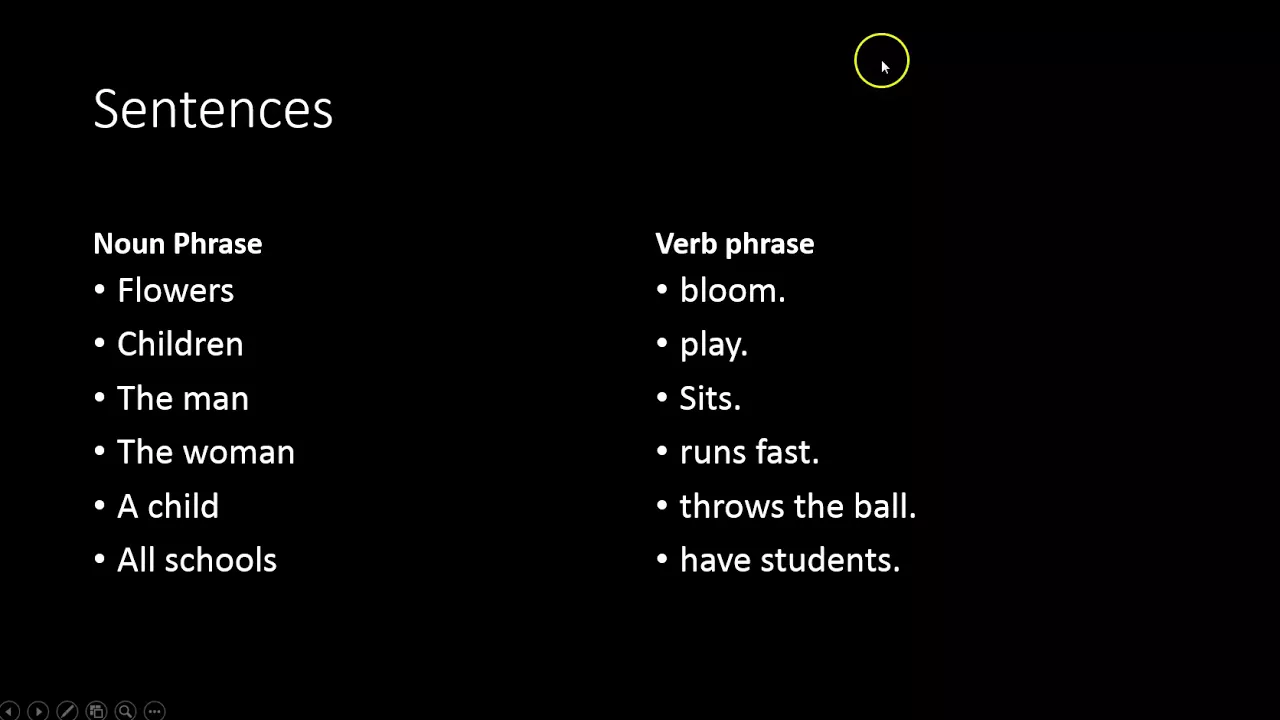
Added:Basic parts of speech, particularly the distinction between nouns (noun phrases) and verbs (verb phrases).
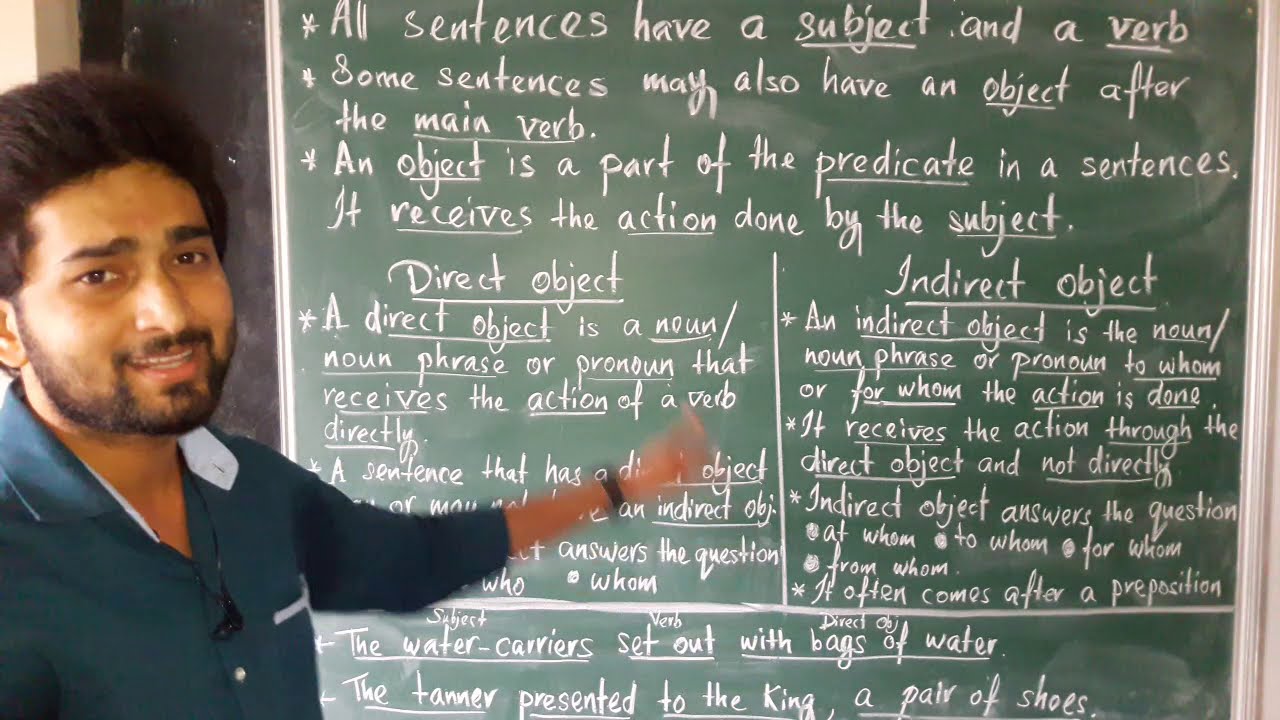
Fundamental grammatical functions such as Subject, Direct Object, and Indirect Object.
An introduction to phrase structure rules and how to read basic syntax trees (constituent analysis).
The conceptual distinction between essential sentence elements (arguments) and optional modifiers (adjuncts).
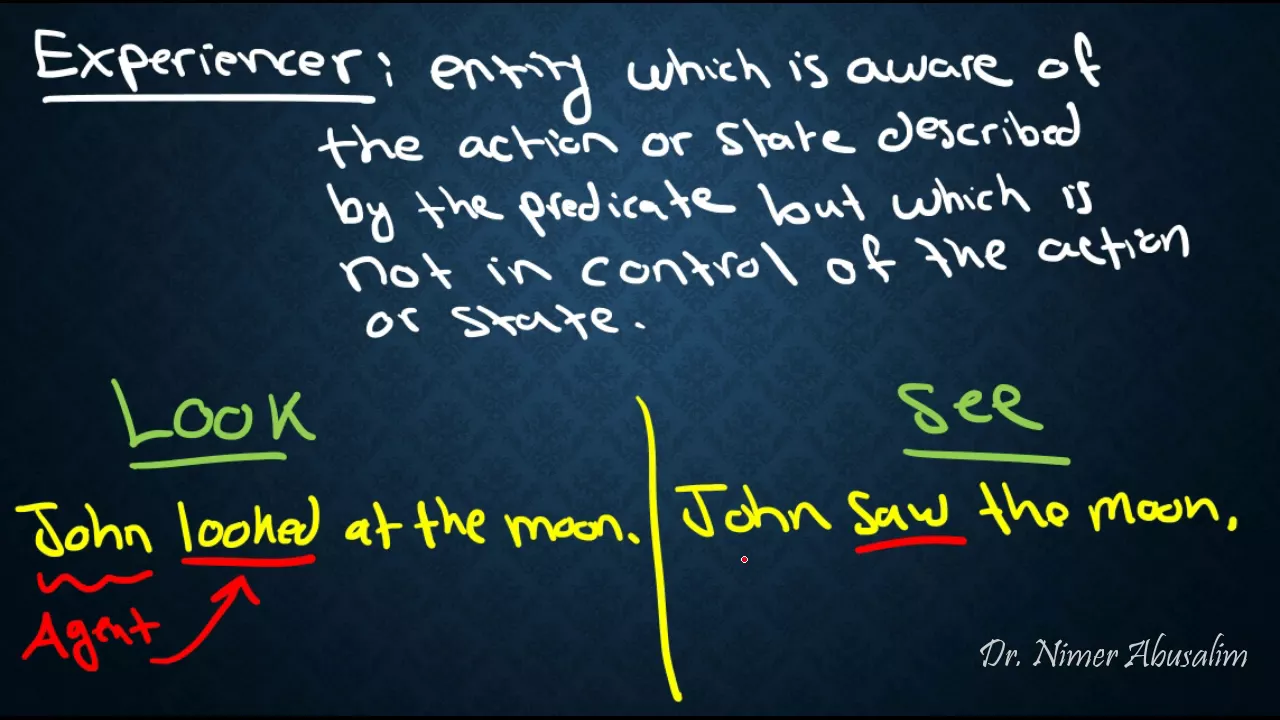
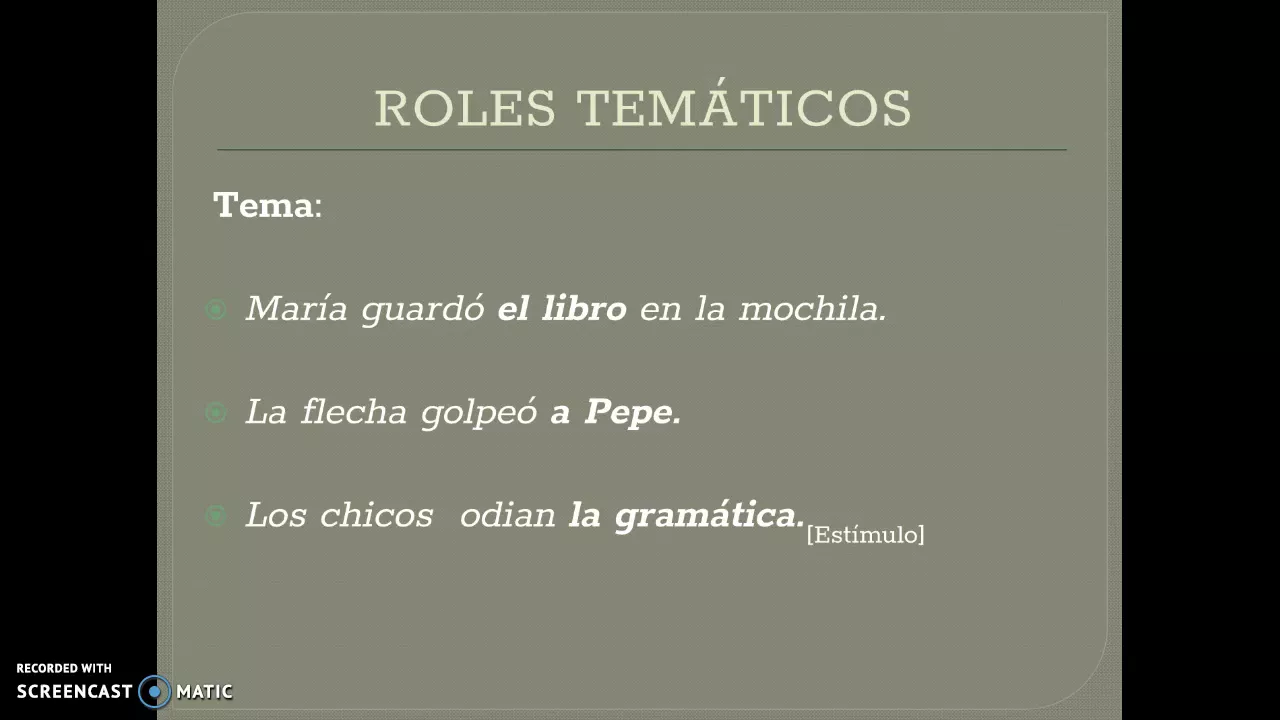
Thematic Roles and Theta Theory (e.g., Agent, Patient, Theme) and how semantic roles map onto syntactic positions.
Lexical Subcategorization, exploring how individual verbs dictate the specific category of their complements in the lexicon.
Valency-changing operations such as passivization, middle voice, and causative constructions.
Advanced syntax frameworks, such as X-bar theory, to understand the precise hierarchical positioning of specifiers, complements, and adjuncts.
164 views5likes6:15Original Release: 2024-02-15
hi Dr versati here in this screencast we're going to review the idea of an argument in linguistics specifically the sub area of syntax arguments are required elements they're required for the grammaticality of the sentence and what's required grammatically is dependent on the verb so if we choose to use the word the verb sleep it requires one argument the person or thing that is sleeping right we could add lots of other details but we the only thing that's absolutely required in order for the event of sleep to happen is a sleeper so let's now think of other verbs um so we know that sleep has one argument but there are some verbs like hit that requires two arguments uh if we're choosing to use the verb hit or we're describing an event of hitting there are two required elements one is the hitter and the other one is what that's what is being hit and then there are verbs like gave that require three arguments it's the giver the receiver and what is given so some verbs require one argument some verbs require two arguments and some verbs require three arguments um let's look at a syntax tree with showing these arguments this sentence is uh Sarah gave Jill a gift we can see that the one of the arguments Sarah The Giver is showing up here in the noun phrase in subject position we see that another now uh required element argument is showing up in the as a noun phrase the receiver as a noun phrase inside the verb phrase and the noun phrase of what was given is also a noun phrase here Sarah gave Jill a gift we have three required arguments one is in subject position and these two are called compliments because they're inside the verb phrase we use the term compliment for any required element that's not the subject okay and because they're required we can see that they're on the same level as the head of the verb phrase so to recap we have um some verbs require one argument um and that argument is probably going to be in subject position some verbs have require two arguments like hit and one of the arguments is going likely to be in subject position and then we're going to have one compliment remember a compliment is is a required element that's not in subject position and then we have some verbs in English that require three arguments and one's going to be in subject position and then the two other required arguments are going to be compliments like we saw in this example um an indirect object compliment and a direct object so that but this is not the only only way we could um Express these three arguments we could also use a sentence like Sarah gave a gift to Jill now here the picture the event that we're picturing is exactly the same regardless of which sentence we use but this is another structure that we can use we have Sarah still in subject position filling one of the arguments and then we're still going to need two compliments well here is the noun phrase a gift what is being given that's still here as the direct object but the receiver could be over here inside the prepositional phrase where Jill is serving as the object of that preposition so even though we have two different structures two different ways we could say that describe that event um we're still going to have three arguments um so to compare we have the same event being described in two different ways but the um idea of the linguistic arguments remain the same because the verb Remains the Same so this is a little recap on the idea of syntactic arguments and with the uh verb gave all three of these noun phrases are required elements they're ad they're arguments so all three of them are are in the sentence there are none of the elements are adjuncts because they're all required Sarah Jill and a gift we just have two different structures in order to express that
Up Next
12:36
How Languages Encode Subjects and Objects: A Typological Overview
@LinguaPhiliax
301 views•2021-01-31
36:52
Constraint Interaction in Optimality Theory: Epenthesis & Deletion
@Vidyamitra
180 views•2018-08-20

8:59
Forensic Linguistics: How Language Solves Crimes | PBS
@pbsstoried
1M views•2024-01-25

21:32
Accent Expert Explains U.S. Regional Dialects | Part 1
@WIRED
9.3M views•2021-01-21
Related Study Plans & Knowledge Roadmaps
Structured learning paths in Linguistics
linguistics
Optimality Theory: Tableaux & Constraints
01Phonological Basics: Sounds, Syllables & Rules
02Foundations of Optimality Theory: GEN, CON, and EVAL
03The Constraint Inventory: Markedness vs. Faithfulness
+ 2 more learning modules
15h5 modules
Explore Roadmap
linguistics
Morphosyntactic Alignment: S, A & P Systems
01Foundations of Syntax: Transitivity and Arguments
02The Linguistic Variables: Mapping S, A, and P
03Nominative-Accusative Alignment
+ 3 more learning modules
12h6 modules
Explore Roadmap
linguistics
Analyzing Sign Language: Phonology & Syntax
01Foundations of Sign Language Linguistics
02Phonology: The Five Parameters of a Sign
03Morphology: Word Formation and Classifiers
+ 2 more learning modules
14h5 modules
Explore Roadmap
linguistics
Pragmatics: Speech Acts, Grice & Politeness
01Introduction to Pragmatics: Meaning in Context
02Grice’s Cooperative Principle & Implicature
03Speech Act Theory
+ 2 more learning modules
14h5 modules
Explore Roadmap