











![Morphosyntactic Alignment [Syntax 3]](https://i.ytimg.com/vi/QSAxXcTsNv4/maxresdefault.jpg)
![[AFLA27] Absolutive movement in Polynesian: Syntactic ergativity and word order - Lauren Clemens](https://i.ytimg.com/vi/i2eXiK_7zxo/maxresdefault.jpg)










Languages distinguish between subjects (agents performing actions) and objects (entities affected by actions) through two primary mechanisms: word order (SVO, SOV, VSO) and grammatical case marking (nominative-accusative or ergative-absolutive alignment), with the choice between these systems varying across the world's approximately 7,000 languages.
How Languages Encode Subjects and Objects: A Typological Overview
Added:Understanding basic grammatical relations, specifically distinguishing between transitives, intransitives, subjects (S/A), and direct objects (O/P).
Familiarity with the concept of morphological case and how noun phrases can change form to indicate their syntactic roles.
Basic knowledge of word order typology, including standard classifications like SVO, SOV, and VSO.
A foundational understanding of linguistic typology as a comparative study of structural features across different world languages.
Investigating split ergativity, where a language shifts between accusative and ergative systems based on tense, aspect, or noun animacy.
Exploring rarer morphosyntactic alignment systems, such as tripartite, active-stative (agentive), and Philippine-type alignment.
Analyzing syntactic ergativity to understand how ergative-absolutive patterns affect complex syntax like coordination and subordination.
Studying Differential Object Marking (DOM) and how semantic factors like definiteness and animacy trigger specific case markers.
Applying typological frameworks to the descriptive grammar of specific non-Indo-European languages (such as Basque, Georgian, or Dyirbal).
301 views23likes12:36Original Release: 2021-01-31
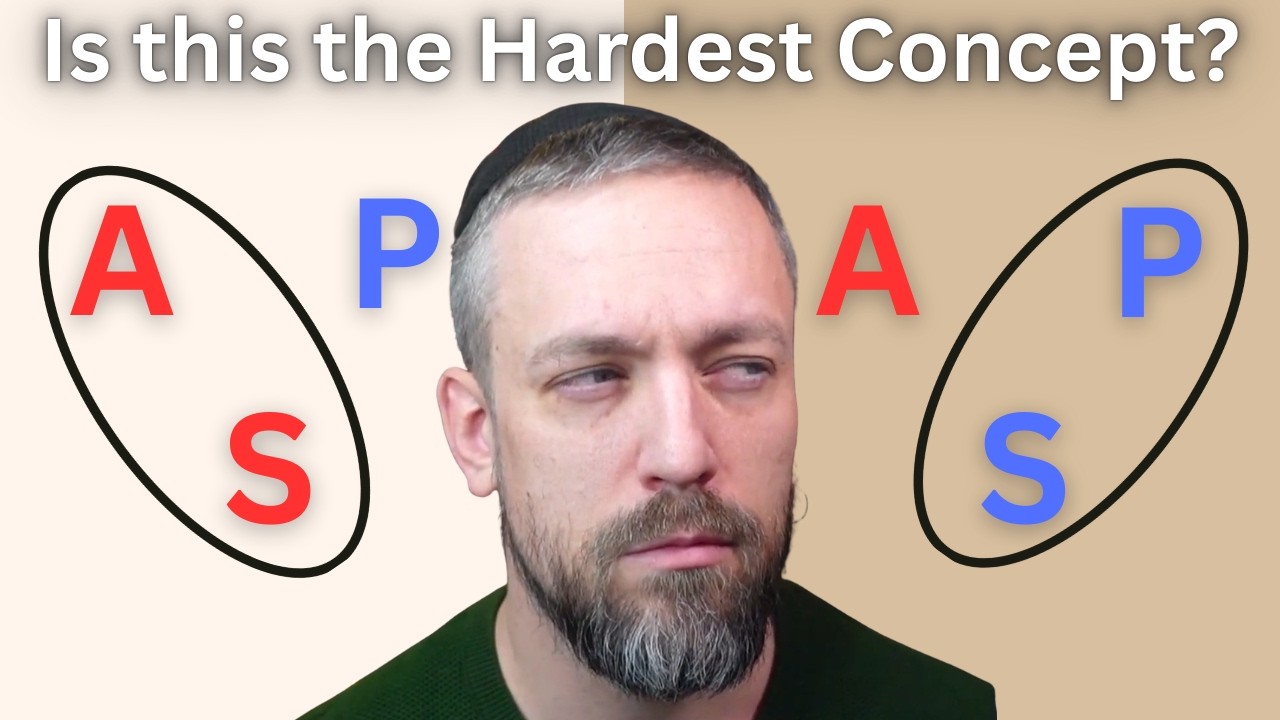
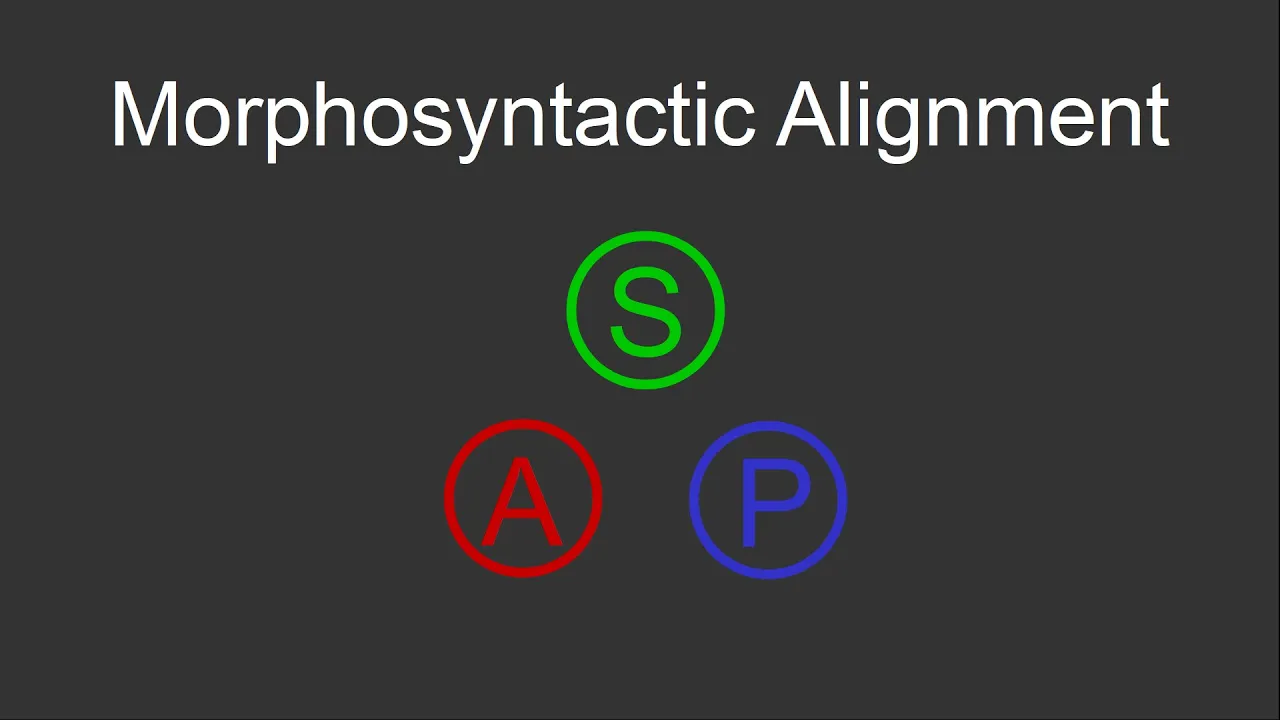
hello everybody i'm lingua philly axe and in order to understand the sentence the dog chased the cat you need to know two things one who or what is doing the chasing and two who or what is being chased i mean obviously you also need to know what a dog is and what a cat is and what chasing looks like but the point is you need to be able to identify which noun phrase is the subject the one performing the action or the object the one affected by the action and while this is hopefully a pretty simple concept to understand different languages have different ways of explaining which one is which and that's why i'll be going over the many common ways they do so in order to help all of you in your language learning journeys and of course if you want more videos like this one that dive into the fundamental interconnectedness of all human languages and how they function don't forget to give this video a like and leave nice comments down below to show your appreciation maybe even share it online to anyone else you think would enjoy this stuff and of course the only way you'll be able to see videos as soon as they're uploaded is by subscribing and ringing that notification bell specifically in that order you can't get notifications if you aren't subscribed to the channel sorry about that i didn't program youtube that way but my channel's survival just depends upon you knowing this but anyway speaking of doing things in the correct order for a lot of languages the distinction between the subject and the object is typically conveyed through the order in which words are placed in the sentence in the case of english the subject is always at the start of the sentence the verb is put directly after the subject and the object if there is one is placed directly after the verb this is known as the subject verb object construction or svo other languages that follow this construction include but are not limited to indonesian mandarin wolof mapuche northern sami and literally too many to mention in one video in fact the world atlas of language structures identifies 488 different languages that follow this word order making up just over 35 percent of all the 1 376 languages listed in other words pretty much every red dosh you see on this map is an svo language but while the svo construction is a very common word order it is actually only the second most commonly used word order in the world the price for the most commonly used word order would have to go to languages that list off the subject and the object together and then place the verb at the end of the sentence the subject object verb construction sov the world atlas of language structures identifies 564 different languages that follow this word order making up almost 41 of all the languages surveyed basically all of the blue dots you see on this map are an sov language these languages include but are not limited to japanese hindi lakota gamalarai kichwa greenlandic and once again literally too many languages to list here i feel i should also mention that the third most common word order for languages has the verb placed at the beginning of the sentence verb subject object vso it is only used by just under seven percent of all the languages but considering those languages include irish arabic maori and tagalog as well as a few others like koleyot and zapotec i feel like it is also an important sentence structure that you should be aware of but anyway you get the idea the order of the words in the sentence is a very common way in which languages distinguish between the subject and the object but those of you looking at this graph might have noticed that there is an extra 14 of languages that do not possess a dominant word order so then you might be asking how do all of these languages distinguish between the subject and the object if they don't do it with syntax well the answer is actually very simple they literally tell you which one is which in hungarian for example one translation of the sentence the dog chased the cat is there subject verb object but it could also be translated as an industry object verb subject this is because all hungarian nouns have this thing called grammatical case which is where the ending of the noun changes depending on its role in the sentence including the subject with the nominative case and the object with the accusative case for both these sentences the word for dog is put in the nominative and the word for cat is in the accusative so no matter what order you put the noun phrases in the meaning of the sentence semantically speaking wouldn't change at all in order to turn the sentence into the cat chase the dog cat would have to be in the nominative and dog the accusative turning the sentence into a match or some variant of that for hungarian and many other languages case marking is something that is latched onto the individual nouns but for other languages like japanese grammatical cases are expressed through tiny particles or clitics that modify the noun phrase just to illustrate the slight difference between the two in the sentence the dog chased the woman and the cat the words woman and cat are both the object of the sentence in hungarian this sentence would be ogotya el destre or nut ejamochat where nu and mucha would both decline for the accusative case and each have their own ending comparing this with the japanese translation of the sentence onna and neko are both still the object but they are instead put together into the same noun phrase which is then modified by war to convey the same information but anyway there are hundreds of different languages all over the world that make use of grammatical case and each language has a different number of cases depending on how many they deem necessary to use amharic has two cases icelandic has four cases niumba has five cases latin had six cases and hungarian has a whopping 18 different cases which each have their own distinct functions regardless as to how many a language has there will most often be at least two different cases that convey the subject or the object or both exactly what those cases are called however depends on what morphosyntactic alignment the language adheres to hey linguaphiliacs what does morphosyntactical mean wow you got that on the first try good on you and i am so glad you asked that question but first you have to know the difference between transitive and intransitive sentences i already know that okay but they mightn't right sorry anyway a transitive sentence is a sentence where the verb takes an object and an intransitive sentence is one where it doesn't for example the dog chased the cat is a transitive sentence with a subject and an object and the dog sits is an intransitive sentence with only a subject and nothing else and now is the moment where i have to confess something slightly i've been lying to you this isn't actually the subject this is the agent well okay it's not really a lie per se it's just that in order to keep track of which subject we're talking about linguists label the subject of transitive sentences as the agent while keeping the subject label the same for intransitive sentences and using the initials s a and o for each of the various roles we can now finally talk about what morphosyntactic alignment actually is so morphosyntactic alignment is the type of case marking systems that a language uses in order to differentiate between the subject agent and object i already explained how the cases in hungarian are called the nominative and the accusative this is because hungarian uses the nominative accusative alignment where the subject and the agent use one case the nominative while the object uses another case the accusative a lot of nominative accusative languages treat the nominative case as the base form of the word with the accusative case being specifically marked just like we see in hungarian but it is also just as likely that our language might mark both the nominative and the accusative individually in which case it is usually treated as an inherent feature of the noun itself it is pretty rare that the accusative case would be treated as the bare form of words though it does pop up occasionally but typically because the subject is the most commonly used grammatical role most languages treat the nominative as the default form of nouns so that's the nominative accusative alignment sorted out but obviously if that were the only type of case marking system out there i wouldn't be bringing it up there are also many languages that mark the agent with its own case known as the ergative and the subject and object with another known as the absolutive and this system surprise surprise is called the ergative absolutive alignment this alignment is not as common as nominative accusative but there are still a substantial amount of languages that do this like imagine a ratio of three to two and those that do use ergative absolutive typically have the ergative case as marked and the absolute case as the bear form as far as i know it's pretty rare for the absolutive case to be marked as well and even more rare for the ergotive case to go without marking but it would not surprise me if there were languages out there that did either of these things it is also possible for a language to use three different cases for each grammatical role creating what is known as tripartite alignment usually for tripartite languages the agent and the object are marked for their own separate cases typically the ergative and the accusative respectively and the subject is treated as the bare form with the absolutive case and it is of course possible for a language to mark all the grammatical roles in exactly the same way in other words they don't have any cases for the subject agent or object at all and they probably just use word order instead although that being said i have been talking about case marking and word order for the majority of this video as if they have been mutually exclusive like if a language has a strict word order then they don't have cases and wikiversa but this is usually far from true more often than not the two actually go hand in hand and a language will rely on both grammatical cases and the order of words to convey the grammatical roles of all the noun phrases in a sentence in fact the english language has cases as well even though the word order is strictly subject verb object it's just that english only uses case marking on its personal pronouns for example i chased the cat the cat chased me i and me both mean the same thing they are first-person singular pronouns they refer to the person who is speaking the sentence and they change forms depending on which grammatical role they fit into but you can't exactly swap the words of these sentences around and say something like the cat chaste eye or me chased the cat that just sounds weird so word order is still an important rule in english despite pronouns having grammatical case all of the animate pronouns in english have a subject object and possessive form and this is why a lot of language purists go grimando on you if you say who when you should be saying whom who saw the dog he saw the dog whom did the dog see the dog saw him by the way the possessive case is another really commonly used case across languages but it doesn't really have anything to do with subjects or objects i just thought it was another interesting thing to mention there did used to be a time when the nouns in english were also inflected for cases but nowadays only pronouns retain their different case inflections this is also another common thing that happens where languages create a split in the declension between nouns and pronouns using different case systems to inflect the different word classes in fact a lot of parmenion languages use a nominative accusative alignment for pronouns but the nominals follow an ergative absolute of alignment just like i mentioned in my gamilari minority language report you know i wonder if i should go back to doing those reports they are pretty informative but i do feel like i end up running out of material to talk about sometimes and end up saying the same things over and over again you know what if any of you watching want to see me do more of those videos don't hesitate in telling me about it in the comments down below and as always if you somewhat enjoyed this video don't forget to give it a like and share it with your friends online and if you really enjoyed it the only way you'll be able to see more is if you subscribe and ring that notification bell remember to do it in that order and i would also just like to take this opportunity to remind you that you can also find all sorts of bonus stuff as well as support me and my channel directly via my patreon page thank you all for listening and we'll speak again next time [Music] you
Up Next
2:45
Morphosyntactic Alignment: Nominative-Accusative vs Ergative-Absolutive (4/4)
@NativLang
13K views•2013-08-23
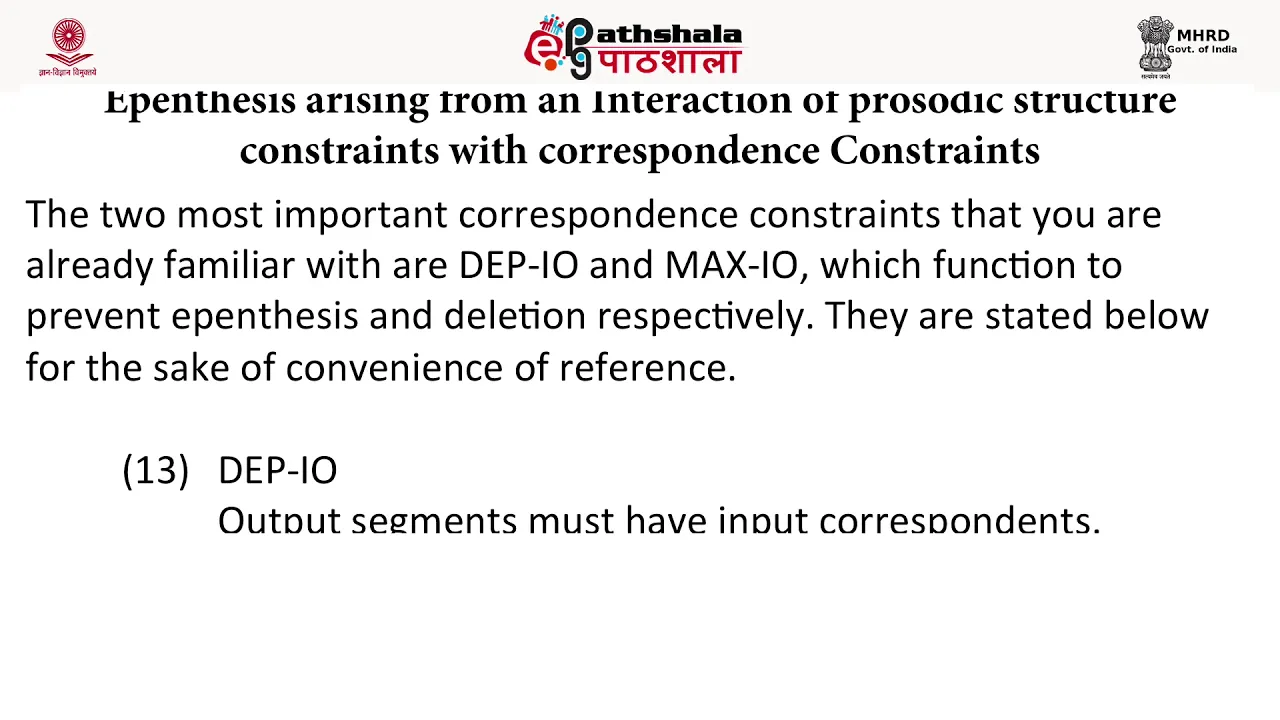
36:52
Constraint Interaction in Optimality Theory: Epenthesis & Deletion
@Vidyamitra
180 views•2018-08-20

8:59
Forensic Linguistics: How Language Solves Crimes | PBS
@pbsstoried
1M views•2024-01-25

21:32
Accent Expert Explains U.S. Regional Dialects | Part 1
@WIRED
9.3M views•2021-01-21
Related Study Plans & Knowledge Roadmaps
Structured learning paths in Linguistics
linguistics
Optimality Theory: Tableaux & Constraints
01Phonological Basics: Sounds, Syllables & Rules
02Foundations of Optimality Theory: GEN, CON, and EVAL
03The Constraint Inventory: Markedness vs. Faithfulness
+ 2 more learning modules
15h5 modules
Explore Roadmap
linguistics
Morphosyntactic Alignment: S, A & P Systems
01Foundations of Syntax: Transitivity and Arguments
02The Linguistic Variables: Mapping S, A, and P
03Nominative-Accusative Alignment
+ 3 more learning modules
12h6 modules
Explore Roadmap
linguistics
Analyzing Sign Language: Phonology & Syntax
01Foundations of Sign Language Linguistics
02Phonology: The Five Parameters of a Sign
03Morphology: Word Formation and Classifiers
+ 2 more learning modules
14h5 modules
Explore Roadmap
linguistics
Pragmatics: Speech Acts, Grice & Politeness
01Introduction to Pragmatics: Meaning in Context
02Grice’s Cooperative Principle & Implicature
03Speech Act Theory
+ 2 more learning modules
14h5 modules
Explore Roadmap