Morphosyntactic alignment refers to how languages mark grammatical relationships between verbs and their arguments; in nominative-accusative languages like Catalan, the agent and experiencer roles share the same case marking while the patient uses a different case, whereas in ergative-absolutive languages like Basque, the agent role is marked with a distinct case from both the patient and experiencer roles, demonstrating that case marking and thematic roles are treated as separate grammatical phenomena.
Morphosyntactic Alignment: Nominative-Accusative vs Ergative-Absolutive (4/4)
Added:Deep Dive
Thematic Roles: Understanding semantic roles such as Agent, Patient, and Experiencer and how they represent participants in an action.
![[Introduction to Linguistics] Theta Roles / Thematic Roles](https://i.ytimg.com/vi_webp/FWgWbJlxvds/maxresdefault.webp)
[Introduction to Linguistics] Theta Roles / Thematic Roles
53.5K
Theta roles (or thematic roles) are semantic roles that describe the relationship between verbs and their arguments in a sentence, including: Agent (the initiator of an action, e.g., 'John eats toast'), Experiencer (someone who perceives an event, e.g., 'Maria saw the fireworks'), Theme (the thing undergoing an action or being perceived, e.g., 'the ball was thrown'), Goal (a location or entity receiving something transferred, e.g., 'I gave a lecture to the class'), Occasion (where an event takes place without transfer, e.g., 'I learned in the park'), and Instrument (the entity used to accomplish an action, e.g., 'Harry scored with his non-dominant leg').
Click to watch →
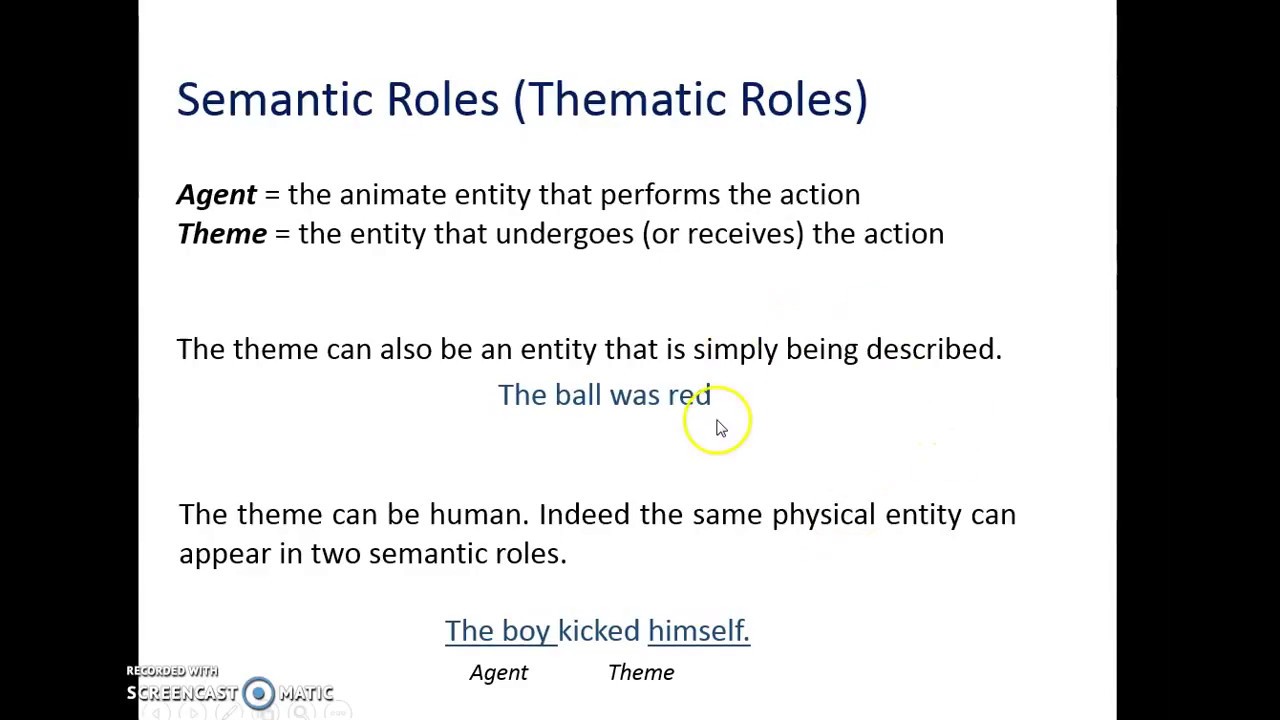
Thematic Roles
24.7K
Thematic roles (semantic roles) describe the functional relationships between nouns and the actions or states they participate in within a sentence, including agent (performer of action), theme/patient (receiver of action), experiencer (one who experiences or senses), instrument (tool used), location (place of action), goal (destination), time (when action occurs), beneficiary (recipient), manner (how action is performed), measure (extent), and result (outcome), with the understanding that these roles can overlap and have no clear boundaries between them.
Click to watch →
2 - 2026 ÖABT Türkçe - Dil Bilimi ve Dil Bilgisi - 11'li Deneme - I - Fatih BEDİR
525
Turkish thematic roles: Agentive (edici rol) - subject performs action consciously; Patient (etkilenen rol) - subject experiences action; Instrumental (araç rolü) - subject is used as a tool. To identify roles, analyze whether the subject performs, experiences, or is used as a tool. For example, in 'Ağaçlar biraz önce dikilmişti', trees are being planted, so they have the patient role, not agentive. Turkish sentences follow: Subject + Direct Object + Indirect Object + Locative Complement.
Click to watch →

Pomni’s circus form and literal vs thematic interpretation of stories #tadc #theamazingdigitalcircus
58K
A character's thematic role in a story does not necessarily represent their personality traits or backstory. Pomni's jester form affects her thematic role as a bridge between the circus and reality, and she does stand up to Kane, but this does not mean her jester form literally represents her past life or personality. The distinction between a character's symbolic function in the narrative and their actual personal history is crucial for proper story analysis.
Click to watch →
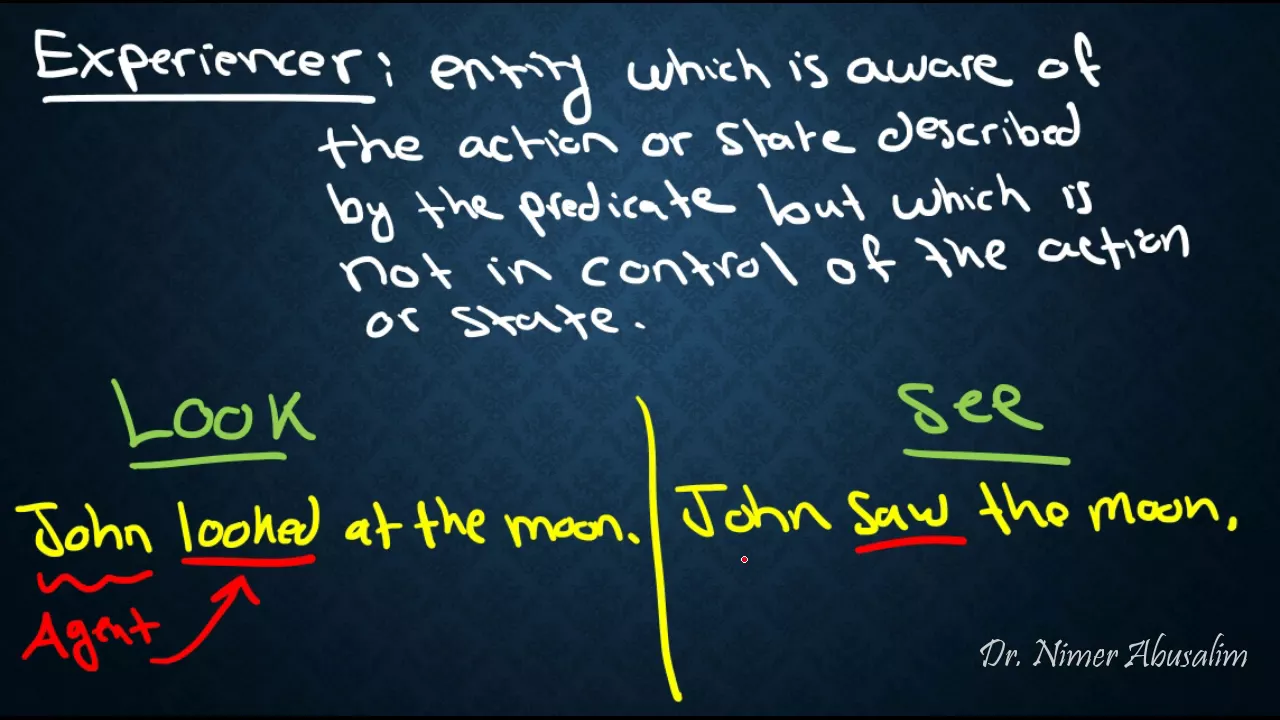
SEMANTICS-20: Thematic Relations
57.7K
Semantic thematic roles (such as agent, patient, theme, experiencer, beneficiary, recipient, goal, location, and source) are stable semantic relationships that constituents play within a sentence, independent of their syntactic positions; these roles help explain how meaning works across different sentence structures, such as when transforming active sentences to passive ones, by identifying who initiates actions (agent), who undergoes effects (patient), what is moved or located (theme), who experiences states (experiencer), who benefits from actions (beneficiary), who receives transferred items (recipient), where something moves toward (goal), where something is situated (location), and from where something originates (source).
Click to watch →
Deep Dive
Core Argument Typology (S, A, P): Distinguishing between the single argument of an intransitive verb (S), the agent of a transitive verb (A), and the patient/object of a transitive verb (P).

Handwerkszeug 5: Argumenttypen
6.9K
Arguments can be classified into six primary types serving as analytical frameworks. Analogy arguments compare similar properties between entities (e.g., pizza and Bürger as fast-food). Disanalogy arguments highlight differences instead. Authority arguments appeal to recognized experts, laws, or institutions, though requiring critical scrutiny. Induction arguments generalize from specific instances to universal rules. Causal arguments establish cause-effect relationships, crucial in policy debates. Whole arguments reason from part to whole or vice versa, often selectively emphasizing favorable aspects. Each type provides a template for understanding and constructing arguments across daily discourse, politics, and academic work.
Click to watch →

PPCE | DISCURSIVA: FORMAS DE ARGUMENTAR | PRFª MARIANA
248
This section covers three fundamental argumentation forms. Argument of authority uses quotes from philosophers or experts, requiring interpretation and explicit connection to the theme. Comparison argumentation uses fictional works (like TV series) to analyze reality, with writers summarizing briefly and drawing conclusions. Counterargument combines comparison with opposition, using connectives like 'entretanto' to contrast situations. A single counterargument can incorporate multiple forms: comparison, explanation (pois), consequence (acarreta), and cause (visto que). Writers must match connectives with appropriate ideas—explanation connectives require explanatory content, opposition connectives require contrasting content. This creates richer, more nuanced arguments.
Click to watch →
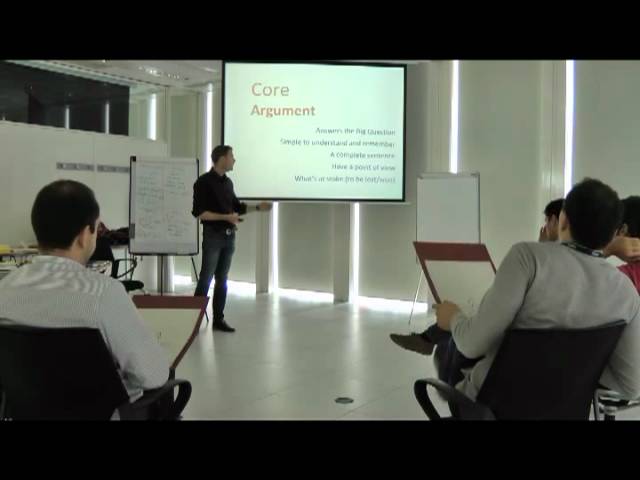
Core Argument
239
A core argument should be simple to understand and remember, designed to stick in the audience's head. It must be a complete sentence containing a subject, object, and verb. It should be arguable, meaning it could be true or false and has a point of view that people might disagree or agree with. The core argument answers the big question and is specific to the audience.
Click to watch →

ASLAN Master Class - The morphosyntactic typology of Subsaharan languages by D. Creissels
563
Sub-Saharan languages exhibit extreme morphosyntactic diversity, making it impossible to identify a single typical organizational pattern for the entire region. While some types of morphosyntactic organization common elsewhere in the world are very rare or unattested in Africa, the reverse is also true—some patterns found in other parts of the world are widely attested in sub-Saharan Africa. Linguistic areas (geographical zones where unrelated languages share typological features due to contact) are well-established in northern sub-Saharan Africa (Northeast area extending from Somalia to Lake Chad, and Sudanik belt), but problematic for central and southern regions dominated by Bantu languages whose homogeneity results from genetic relationship rather than areal convergence. Core argument flagging distinguishes agents, patients, and unique arguments of intransitive verbs through case markers or positional cues. In sub-Saharan Africa, the nominative-accusative pattern (unflagged subjects vs. flagged objects) is widespread, while the absolutive-ergative pattern is extremely marginal (found only in Nilotic languages). The most distinctive African pattern is the 'macht-nominative' type, where patients are unflagged but subjects are flagged in both transitive and intransitive constructions—found in roughly half of sub-Saharan languages with core argument flagging and also in Berber languages of northern Africa.
Click to watch →

#42 || PropBank || Resources || Predicate-Argument Structure || NLP || #nlp #jntuh
6.5K
Arguments in PropBank are characterized into two types: core arguments and adjunctive arguments. Core arguments are essential participants in an action—specifically, the agent (who performs the action) and the theme (what undergoes the action). These are common roles associated with any action. Adjunctive arguments provide additional information about either the action itself or the characters involved, such as location or time details.
Click to watch →
Deep Dive
Grammatical Case Marking: Basic knowledge of how noun endings or particles change to indicate grammatical functions in a sentence.

كورس تأسيس نحو من الصفر | الإعراب هيكون أسهل بكتير
105.7K
Nouns are marked grammatically (I'rab) based on their case: (1) Singular and Broken Plural: raised (مرفوع) by Fatha (ضمه), placed (منصوب) by Fatha (فتحه), and genitive (مجرور) by Kasra (كسره); (2) Dual: raised by Alif (الف), placed by Ya (ياء), and genitive by Ya (ياء); (3) Masculine Sound Plural: raised by Waaw (واو), placed by Ya (ياء), and genitive by Ya (ياء); (4) Feminine Sound Plural: raised by Fatha (ضمه), placed by Kasra (كسره), and genitive by Kasra (كسره).
Click to watch →

Feature Focus - Case-marking
106.1K
Case-marking is a fundamental grammatical strategy used by approximately 60% of languages to specify grammatical roles in phrases. Unlike verb agreement, case-marking appends markers directly to nouns to indicate their role (subject, direct object, indirect object, or adpositional object). Case morphology typically evolves from adpositions, adverbs, or demonstratives that become dedicated affixes. The number of cases varies dramatically, from 2-3 in Persian/Romanian to over a dozen in Finnish/Hungarian. Core case distinctions include nominative (unmarked subject), accusative (direct object), genitive (possession), dative (indirect object/beneficiary), instrumental (means), locative (location), and ablative (movement away). These cases form a hierarchy where languages typically have all higher-ranked cases if they possess lower ones.
Click to watch →
اللغة العربية | الصف الثامن | الممنوع من الصرف #1
113K
Mamanu min al-Sarf is marked according to its grammatical case: (1) In Rafe' (nominative): dammah (ضمة), (2) In Nasb (accusative): fathah (فتح), (3) In Jar (genitive): kasrah (كسره) if definite by alif or idafa, or fathah (فتح) if indefinite and not preceded by alif or idafa. For example, 'مساجد جميلة' is marked with dammah (nominative), 'رايت مساجد' with fathah (accusative), and 'مررت بمساجد' with fathah (genitive, indefinite).
Click to watch →
مهم جدا ...قبل امتحان تقييم المكتسبات في اللغة العربية شرح مبسط + أين يكتب التلميذ و ماذا يصطحب معه
138.4K
Grammatical case marking (اعراب) determines word endings: verbs in the past tense are always built on fathah (فتح), subjects are always marked as marfu' (مرفوع), and objects are always marked as mansub (منصوب). Punctuation rules include: using two dots after speech (قال), using commas at sentence ends, question marks for interrogative sentences, exclamation marks for exclamatory sentences, and periods at the end of paragraphs.
Click to watch →

لغتى الخالدة اول متوسط - درس جمع التكسير
76.5K
Broken plural follows the same I'rab rules as singular nouns: raised (مرفوع) by 'الضمة' (damma), lowered (منصوب) by 'الفتحة' (fatha), and genitive (مجرور) by 'الكسرة' (kasra). This differs from regular masculine sound plural (which raises with 'واو' and 'نون') and feminine sound plural (which raises with 'ضمه'). Examples: In 'المنازل قريبة' (The houses are close), 'المنازل' is raised by 'الضمة' as subject. In 'ساعدتُ التلاميذ' (I helped the students), 'التلاميذ' is lowered by 'الفتحة' as object. In 'تهتم الدولة بنظافة المدن' (The state cares about the cleanliness of the cities), 'المدن' is genitive marked by 'الكسرة' as 'مضاف إليه'.
Click to watch →
Deep Dive
Morphosyntactic Alignment Fundamentals: A basic conceptual understanding of how languages group core grammatical arguments structurally.
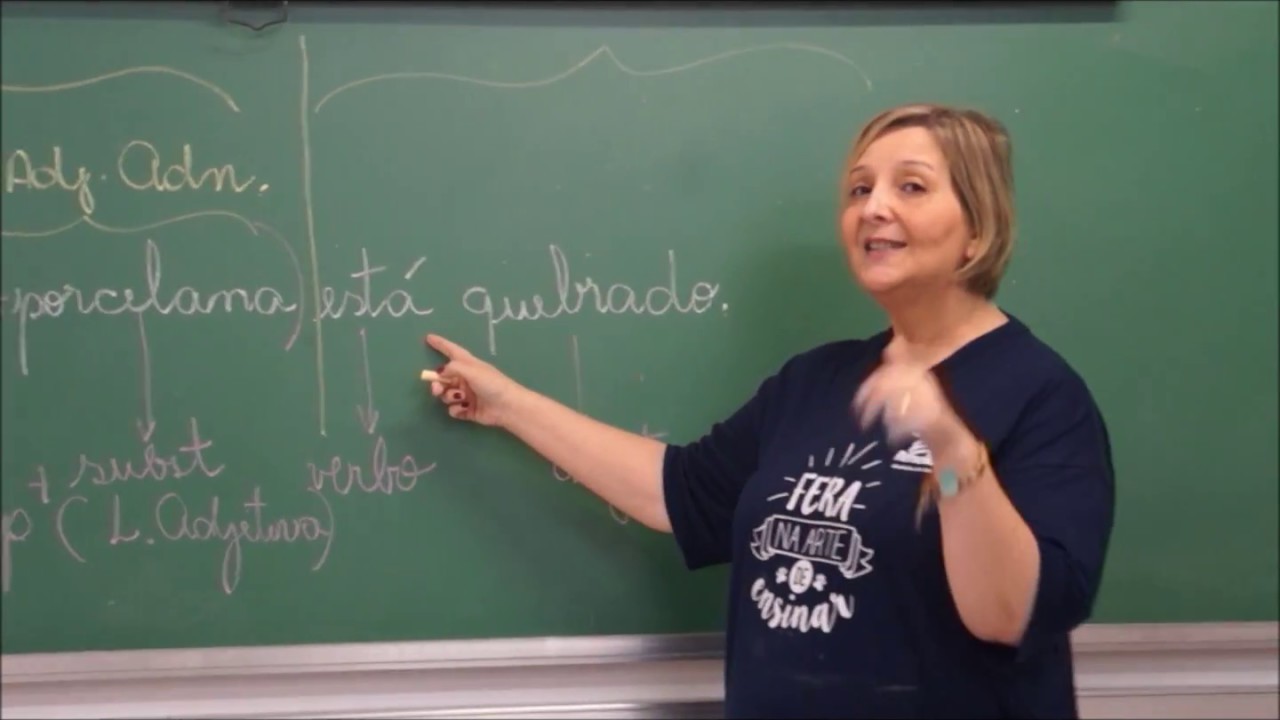
Revisão Análise Morfossintática - Colégio Renovação
82.1K
Morphosyntactic analysis involves two interconnected processes: morphological classification (identifying word classes such as articles, nouns, adjectives, verbs, prepositions, and locutions) and syntactic analysis (identifying sentence components including subject, predicate, objects, and adjuncts). The subject is identified by asking 'who/what is doing the action?' and contains a nucleus (substantive) with possible adjuncts (adnominal or adverbial). The predicate contains the verb nucleus and may include objects (direct or indirect) or predicatives. Verbs are classified as transitives (requiring direct objects), intransitives (standing alone), or linking verbs (connecting subject to characteristics). Adjuncts adnominais qualify nouns, while adjuncts adverbiais qualify verbs, adjectives, or other adverbs. Locutions adjectivas (preposition + substantive) function as adjectives, while locutions adverbiais function as adverbs.
Click to watch →

23.2 - REVISÃO E CORREÇÃO - RELAÇÕES MORFOSSINTÁTICAS - PORTUGUÊS - 2º ANO E.M - AULA 23.2/2026
594
Morphology studies word structure, formation, and classification (e.g., 'gato' as a noun with gender, number, and degree flexion). Syntax studies word class functions within sentences (subject, predicate, adjunct). Morphosyntax combines both to analyze grammatical word functions. Word classes can change based on context: 'certo' can be an adjective (characterizing a noun) or a noun (subject of 'ser'). Basic grammatical relations include substantivo and verbo as core elements, with articles, pronouns, and adjectives connecting to nouns, adverbs connecting to verbs, and prepositions/conjunctions as connecting classes.
Click to watch →
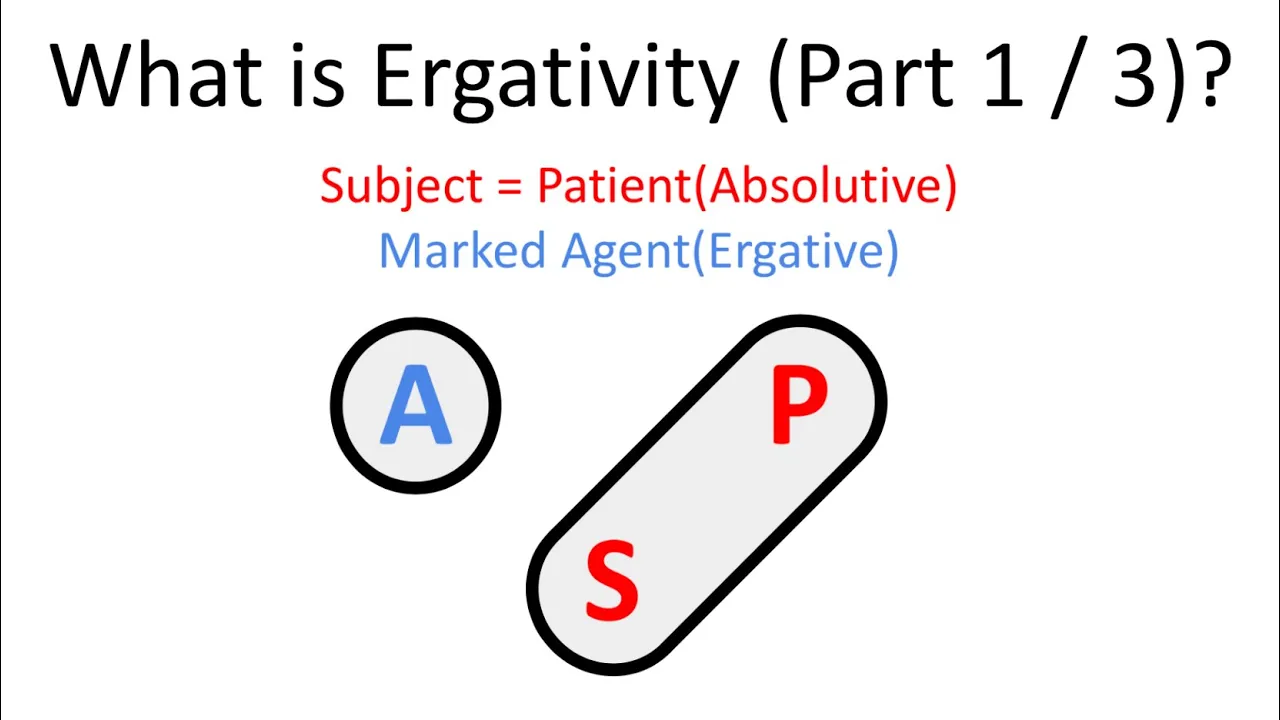
Ergativity & How it Can Evolve in a Conlang (Part 1/3)
4.3K
Morphosyntactic alignment encompasses the rules governing how languages categorize and mark sentence participants. Languages distinguish between intransitive sentences (one argument, the subject) and transitive sentences (two arguments: agent and patient). The subject performs and experiences the action; the agent actively initiates action affecting another; the patient receives the action. Most languages use nominative-accusative alignment, grouping subjects and agents together in the nominative case while marking patients separately in the accusative case. This system is universal across English, Spanish, Russian, Arabic, Japanese, Korean, Tamil, Turkish, Finnish, and German.
Click to watch →
![Morphosyntactic Alignment [Syntax 3]](https://i.ytimg.com/vi/QSAxXcTsNv4/maxresdefault.jpg)
Morphosyntactic Alignment [Syntax 3]
475
Morphosyntactic alignment refers to how languages mark the syntactic roles of sentence participants (subject, agent, object/patient) through word order, case marking, or agreement; the five main alignment types are Nominative-Accusative (treating subject and agent identically, as in English), Ergative-Absolutive (treating subject and object identically, common in languages like Georgian), Tripartite (marking all three roles separately), Active-Stative (where the subject's marking depends on whether it acts as agent or patient), and Split Ergativity (combining different alignments across different grammatical contexts).
Click to watch →
Morphosyntactic Alignment - Ergativity, Austronesian Alignment and More
15.6K
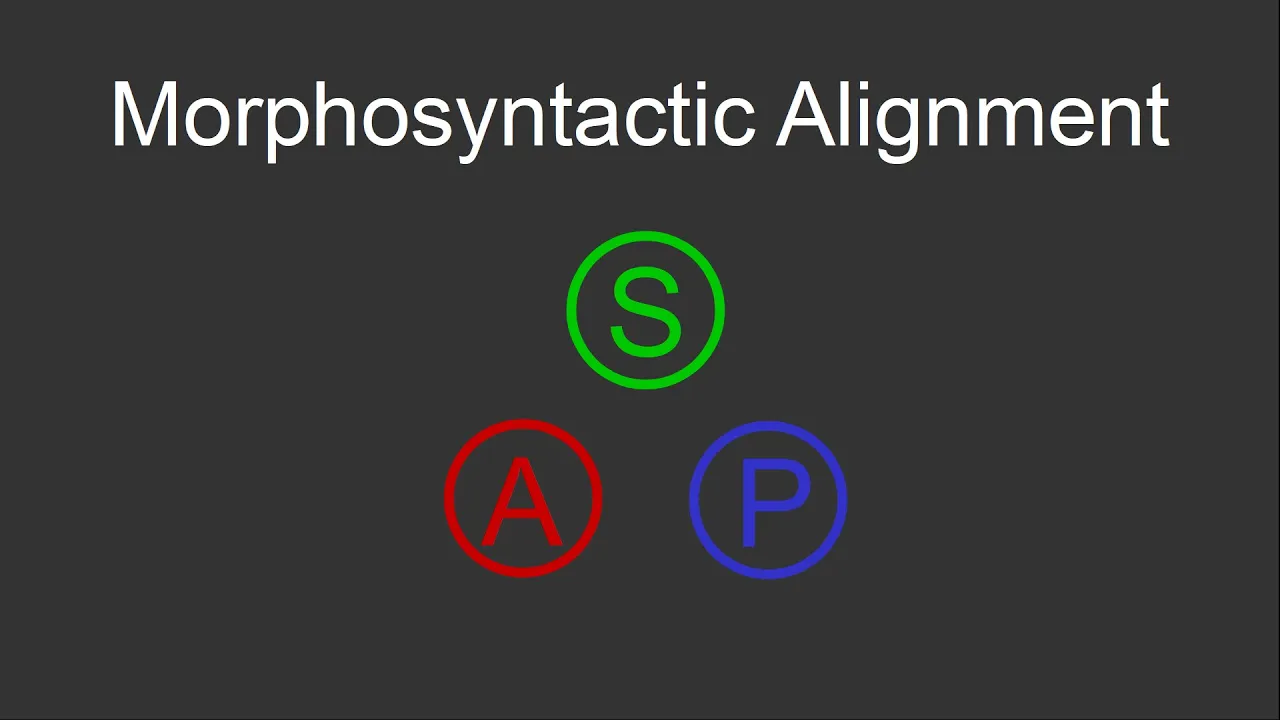
Morphosyntactic alignment refers to how languages grammatically distinguish between the three possible roles nouns can play in a sentence: the subject/patient (absolutive), the agent (ergative), and the subject of intransitive verbs. Languages classify into several alignment types: Nominative-Accusative (treating subject/agent the same, patient differently—used by English), Ergative-Absolutive (treating subject/patient the same, agent differently—as in Basque), Split Ergativity (using different alignments based on tense or animacy hierarchy), Active-Stative/Split Intransitive (treating subjects differently based on whether they act as agents or patients), Tripartite (treating all three roles distinctly—rare), Neutral (making no distinction—rare), Transitive-Intransitive (treating subject separately from agent/patient—very rare), Direct-Inverse (marking based on animacy hierarchy relative positions—as in Navajo), and Austronesian Alignment (marking verbs with prefixes/suffixes to emphasize different elements).
Click to watch →
Prerequisite Knowledge
- Concept 01Thematic Roles: Understanding semantic roles such as Agent, Patient, and Experiencer and how they represent participants in an action.
- Concept 02Core Argument Typology (S, A, P): Distinguishing between the single argument of an intransitive verb (S), the agent of a transitive verb (A), and the patient/object of a transitive verb (P).
- Concept 03Grammatical Case Marking: Basic knowledge of how noun endings or particles change to indicate grammatical functions in a sentence.
- Concept 04Morphosyntactic Alignment Fundamentals: A basic conceptual understanding of how languages group core grammatical arguments structurally.
Subsequent Learning
- Step 01Split Ergativity: Investigating languages (such as Georgian, Hindi, or Dyirbal) that switch between accusative and ergative systems based on tense, aspect, or noun phrase hierarchy.
- Step 02Syntactic vs. Morphological Ergativity: Examining how ergativity affects deeper syntactic processes like coordinate reduction, control, and raising, rather than just surface case marking.
- Step 03Alternative Alignment Systems: Exploring rarer morphosyntactic alignments, such as Tripartite, Active-Stative (Split-S), and Austronesian (Philippine-type) alignments.
- Step 04Diachronic Alignment Shifts: Analyzing how alignment systems evolve over time, such as the historical process of a passive construction reanalyzing into an ergative-absolutive system.
Case vs Role
Case vs Role
0:00Playing Section
- 1
Distinguishes noun cases from thematic roles using examples from Catalan and Basque.
- 2
Shows how transitive and intransitive verbs reveal different case assignments.
- 3
Introduces nominative-accusative and ergative-absolutive alignment systems.
The Construction-Specific Approach and Split Alignment Typology
While the division between Nominative-Accusative and Ergative-Absolutive systems is a foundational concept in linguistics, many typologists argue that classifying entire languages into these binary categories is an oversimplification. Proponents of Radical Construction Grammar and split-alignment theories point out that morphosyntactic alignment is rarely global; instead, it is often construction-specific. Many languages exhibit 'split ergativity,' where alignment patterns shift based on tense, aspect, NP animacy, or pragmatics. For example, a language may behave accusatively in the present tense but ergatively in the past. Furthermore, alternative alignments like active-stative or topic-prominent structures (as seen in Mandarin Chinese) bypass the agent-patient dichotomy entirely. Critics argue that treating languages like Basque or Catalan as monolithic exemplars of rigid alignment types obscures the fluid, multi-dimensional nature of grammatical relations, which are better understood as construction-level phenomena rather than language-wide rules.
Deep Dive
Split Ergativity: Investigating languages (such as Georgian, Hindi, or Dyirbal) that switch between accusative and ergative systems based on tense, aspect, or noun phrase hierarchy.
Fireside Ergativity for Novices, Part 2.1: Split Ergativity
2.7K
Split ergativity occurs when ergative alignment is applied selectively rather than universally, creating splits between ergative-absolutive and other alignments like nominative-accusative. This phenomenon is nearly universal among ergative languages. The fundamental motivation stems from the contrast between agentivity (control over events) and patientivity (being affected by events). In nominative-accusative systems, agents are unmarked while patients are marked; in ergative-absolutive systems, patients are unmarked while agents are marked. Since subjects vary in whether they control events depending on the verb, languages develop split systems to mark arguments appropriately. Split S systems classify intransitive verbs into S=A (subject marked like agent) and S=O (subject marked like object) categories, using verbal agreement affixes with two distinct sets. The semantic basis varies across languages, including volitionality distinctions, hierarchies from cognition/speech to states/existentials, and cultural factors influencing classification.
Click to watch →
Fireside Ergativity for Novices Part 2.2: More Split Ergativity
1.1K
In animacy-based split ergativity, noun phrases are ranked on an animacy hierarchy (first person > second person > third person > demonstratives > proper nouns > humans > animate nouns > inanimate nouns), where noun phrases on the left are more likely to be agents and receive nominative-accusative marking, while those on the right are more likely to be objects and receive ergative-absolutive marking; this creates systems where accusative marking extends from the left and ergative marking extends from the right, potentially meeting at a midpoint, and these systems most commonly manifest through case marking with three case markers (nominative/absolutive usually unmarked, ergative and accusative each having their own markers).
Click to watch →
10 Most Spoken Languages You've Never Heard Of (feat. Language Simp)
154.3K
Marathi has SOV word order and three grammatical genders (masculine, feminine, neuter), with neuter present from Sanskrit but lost in other Indo-Aryan languages. It has two classes of adjectives: declinable ones agreeing with nouns in gender, number, and case, and undeclinable ones that don't change form. Marathi is a split-ergative language: in the past tense and obligatory mood, the object is the default and the subject is marked with the ergative case, unlike typical nominative-accusative languages where the subject is unmarked. This only happens in past tense and obligatory mood; other sentences don't mark the subject as ergative. Marathi also has inclusive/exclusive 'we' and various noun cases with many postpositions.
Click to watch →
Morphosyntactic Alignment [Syntax 3]
475
Most languages don't stick to single root alignments but combine them in split ergativity. Active-Stative alignment distinguishes A and O while letting S vary between them based on whether it's agent-like or patient-like (split-S or fluid-S variants). Symmetrical Voice alignment uses multiple voices associated with semantic roles, marking case primarily on verbs rather than nouns. These systems show how languages develop sophisticated solutions to the fundamental alignment problem through layered complexity.
Click to watch →
Ergativity & How it Can Evolve in a Conlang (Part 1/3)
4.3K
Ergativity is a morphosyntactic alignment system where the subject and patient of a sentence are marked identically (in the absolutive case), while the agent is marked differently (in the ergative case), contrasting with the more common nominative-accusative alignment found in languages like English, Spanish, and Russian where subjects and agents share the nominative case while patients take the accusative case; ergativity typically evolves through passive constructions and nominalization processes, and approximately one-quarter of the world's languages display ergative constructions, though most exhibit split ergativity rather than pure ergativity.
Click to watch →
Deep Dive
Syntactic vs. Morphological Ergativity: Examining how ergativity affects deeper syntactic processes like coordinate reduction, control, and raising, rather than just surface case marking.

#LSA2021 Syntax: Case and Agreement
997
This lecture demonstrates that syntactic ergativity (restrictions on argument extraction) can exist independently of morphological ergativity (case or agreement marking), as shown by the Polynesian language Nukoro, which exhibits syntactic ergativity in relativization without any overt ergative case or agreement, thereby supporting the theoretical distinction between abstract case (syntactically necessary for licensing) and morphological case (surface realization).
Click to watch →
![[AFLA27] Absolutive movement in Polynesian: Syntactic ergativity and word order - Lauren Clemens](https://i.ytimg.com/vi/i2eXiK_7zxo/maxresdefault.jpg)
[AFLA27] Absolutive movement in Polynesian: Syntactic ergativity and word order - Lauren Clemens
117
Both Tongan and Nuan are morphologically ergative, marking subjects differently in intransitive versus transitive clauses. However, only Tongan exhibits syntactic ergativity, where ergative subjects cannot undergo relativization or raising that absolutive arguments can. This difference arises from where absolute case is assigned: in Tongan, absolute case is assigned by T, requiring the object to move past the ergative argument; in Nuan, absolute case is assigned in situ. The Constraint on Crossing Dependencies (CCD) explains why this creates extraction restrictions—extracting the ergative would cross the absolutive's movement path, violating preferences for nested dependencies.
Click to watch →

Thomas McFadden
711
From a syntactic standpoint, there's a reasonably clear distinction between structural and inherent cases in terms of contexts of alternation and ability to undergo movement. The morphological differences are more blended because dependent cases behave syntactically like structural cases but morphologically more like inherent cases. This creates a gradient rather than a clear bifurcation. Agreement can be sensitive to case morphology and correlate with syntactic things like movement. Three options for agreement's location: (1) Agreement is morphological (late in syntax after spell-out); (2) Agreement creation is syntactic but feature transfer happens later in morphology; (3) Agreement is always syntactic, but case discrimination works because you can discriminate between different flavors of KP and DP. The third option makes a clear prediction: case-discriminating agreement should only care about syntactic differences.
Click to watch →
Fireside Ergativity for Novices, Part 2.1: Split Ergativity
2.7K
Split ergative languages employ diverse mechanisms to implement their systems. Most use verbal agreement affixes with two sets—one for agent-like subjects and one for patient-like subjects. However, alternative systems exist: Yahweh uses postpositions for S=A verbs and verbal prefixes for S=O; Tolai uses word order exclusively (AVO for transitives, SO for S=A intransitives, VS for S=O intransitives); Arawak combines word order with verbal agreement. These variations demonstrate that while the underlying motivation is consistent, languages solve the problem through different structural means, ranging from purely morphological to purely syntactic solutions.
Click to watch →
ERGATIVITY
196
Ergativity is a linguistic phenomenon where transitive verb subjects receive different marking than intransitive verb subjects. Transitive verbs have agents (performers of actions) and patients (receivers of actions), while intransitive verbs only have subjects that typically undergo actions. Ergative languages mark agents differently from patients, treating intransitive subjects similarly to transitive objects. Four types exist: full ergativity (universal application), split ergativity (applies only to perfective/past tense), Filipino/Austronesian alignment (Southeast Asian languages), and syntactic ergativity (extremely rare in Australian Aboriginal languages). Globally, most Australian Aboriginal languages, North Indian Sanskrit-origin languages, Iranian languages like Kurdish and Pashto, Tibetan, Amazonian and Mayan languages, and Basque in Europe exhibit ergativity. This distribution challenges universal grammar theories by showing diverse solutions to similar grammatical problems across unrelated language families.
Click to watch →
Deep Dive
Alternative Alignment Systems: Exploring rarer morphosyntactic alignments, such as Tripartite, Active-Stative (Split-S), and Austronesian (Philippine-type) alignments.
Doing Alignment Better
2.8K
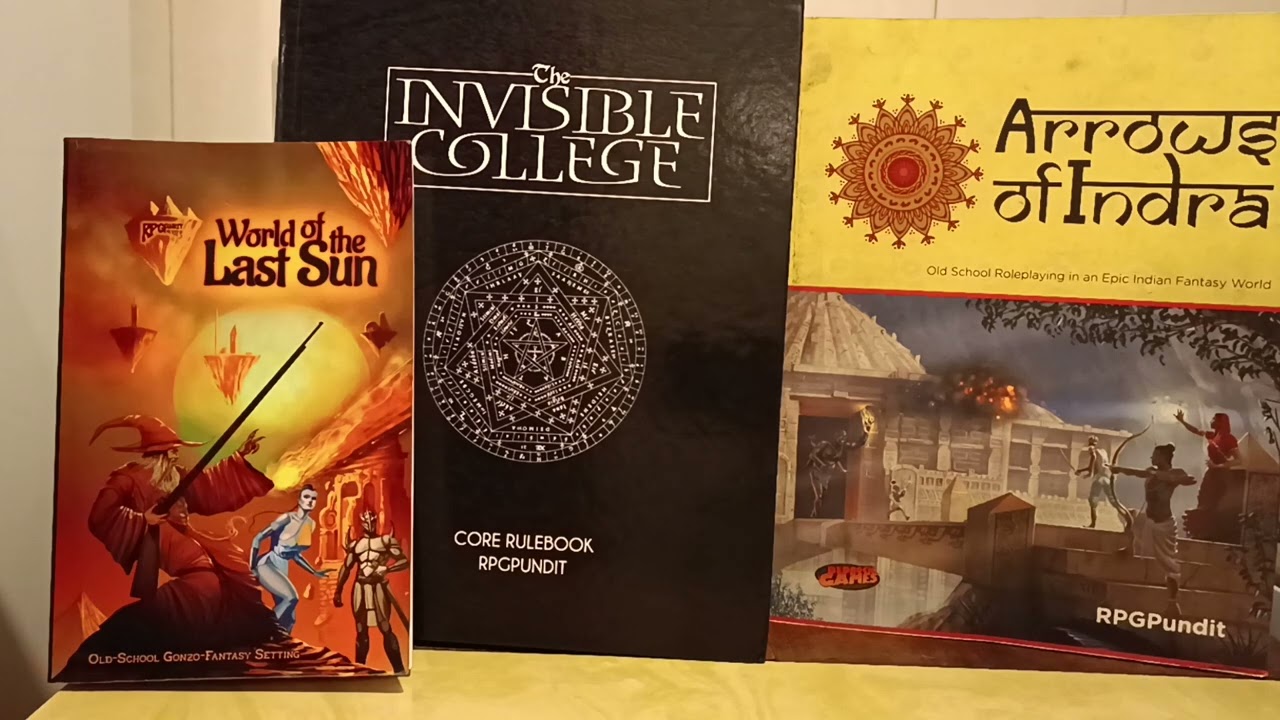
Alignment systems can be redesigned to reflect specific setting themes. In 'Wretched Apocalypse,' a spaghetti western setting where everyone is an anti-hero, players choose one of the seven deadly sins as their character's main interest rather than traditional alignment categories. This approach ties alignment directly to the moral or immoral credos of the world, making it relevant to the setting's unique themes.
Click to watch →
Ezkardanverso 1 - Veo que os falta un mago en el grupo
572
Some role-playing games use alternative alignment systems instead of traditional law/chaos alignments. For example, one system uses pantheons (groups of gods) where characters are guided by the precepts of the god they follow. This system affects characters through positive or negative influences from allies or enemies of that pantheon. The speaker argues that this approach can be more meaningful than traditional alignments because it creates more nuanced character motivations and conflicts.
Click to watch →

D&D Alignment Was Always Wrong—Here's the Fix #dnd #ttrpg
245
Traditional D&D alignment systems (lawful/chaotic and good/evil) can be replaced with alternative frameworks like Magic: The Gathering's five-color system (white, green, red, black, blue), where each color represents distinct moral priorities—white for healing and conventional good, green for nature and growth, red for chaos and destruction, black for death and corruption, and blue for intellect and abstraction—allowing characters to be described by their color correspondences and creating more nuanced ethical frameworks for roleplay.
Click to watch →
⚖️ Je tente de te convaincre que les alignements sont intéressants
109
Cohabiting characters with different alignments in a group can create significant conflicts. In a city fallen to evil deities, a Lawful Good paladin might refuse to hide their alignment despite the group's need for secrecy, potentially leading to tragedy. Even characters with the same moral alignment (good) but different ethical positions (lawful vs chaotic) can create group conflicts. For cooperative and fluid sessions, it is recommended that all characters share the same moral alignment, with the same ethical alignment being even better. Alternative alignment systems exist beyond D&D's nine alignments. The OSR scene often uses simplified versions focusing on the ethical axis. Lady Blackbird uses a 'Key' system where character traits with moral connotations can be activated during conflicts for dice bonuses but only once per session. Keys can be redeemed by fulfilling conditions in the fiction, encouraging character evolution. Some systems use gauges like mental health, honor, glory, or humanity that evolve based on character actions. Others distinguish between internal codes of honor and external reputation, creating opportunities for exploring perception versus reality. The Fire and Forget method allows players to justify drastic moral changes between sessions when group frictions become problematic. The game Paladin is designed for characters with strict codes of honor, making it an excellent training ground for understanding how to implement honor codes and moral challenges in other roleplaying games.
Click to watch →
Why Dungeons and Dragons Needs Alignment | Black Lodge Games Podcast
4.7K
Alignment is a tool of role-playing that should enhance character portrayal. It should not be a straightjacket but rather a guidepost that helps players embody their characters more deeply. When done well, alignment systems can significantly enhance role-playing experiences by providing structure and depth to character development. Alternative systems like The Wretched use seven deadly sins as character selection, incentivizing players to lean into their chosen sin with mechanical bonuses and story consequences. These systems include both boons and banes, enhancing flavor and incentivizing players to actually role-play their character's moral orientation.
Click to watch →
Deep Dive
Diachronic Alignment Shifts: Analyzing how alignment systems evolve over time, such as the historical process of a passive construction reanalyzing into an ergative-absolutive system.

Определения для классификации смысловой близости слов и обнаружения семантических сдвигов
124
An alternative approach to semantic shift detection involves creating word vectors from typical context words for each period, then using orthogonal Procrustes alignment to rotate one set of vectors so they align with another set. Words whose vectors align well after rotation are considered to have maintained their meanings, while misaligned words indicate semantic change. This method, based on distributional semantics, achieved approximately 0.3 correlation with human judgments on the Russian diachronic corpus, though it underperformed compared to the definition-based approach.
Click to watch →

Spike Gildea
853
In diachronic typology of alignment constructions, reanalysis creates innovative constructions with consistent alignment patterns across all grammatical elements (flagging, indexation, word order, control properties), while analogical change modifies individual elements within existing constructions, creating inconsistencies; this distinction is crucial for understanding how different alignment patterns emerge and evolve in language history.
Click to watch →
Jupiter-Uranus Conjunctions in History, with Richard Tarnas
53.2K
Two types of correlations exist in astrological research: synchronic correlations (meaningful coincidences across different fields of human activity happening simultaneously under the same planetary alignment), and diachronic correlations (historical connections between events under preceding conjunctions and oppositions). For example, the women's suffrage movement began under Uranus-Pluto conjunction (1848 Seneca Falls), became mass movement under opposition, and reached new empowerment under subsequent conjunction. This diachronic pattern shows how planetary alignments create progressive waves of social change that build upon previous cycles.
Click to watch →

I studied Protestantism for 20 years. . . I’m not converting. (Reply to @redeemed_zoomer)
232.4K
Diachronic contradictions refer to alleged contradictions across time, such as when critics claim Catholicism contradicts itself by comparing Council of Florence (which taught no salvation outside the church) with Vatican II (which taught salvation is possible for non-Christians). Synchronic contradictions refer to alleged contradictions at the same time, such as when critics claim the Bible contradicts itself by comparing different books written around the same period. Both types of contradictions exist in both Catholic and Protestant traditions.
Click to watch →
Маргиналу плохо от 5 фантазий Драгункина | Skjold Skefsson
318.4K
This section explains the fundamental distinction between synchronic and diachronic analysis in linguistics. The speaker explains that synchronic analysis examines language at a single point in time (e.g., morphological analysis of current words), while diachronic analysis examines language change over time (etymology). The speaker emphasizes that proper etymological analysis requires first understanding synchronic word formation before investigating historical origins. The speaker notes that this distinction is fundamental to scientific linguistics and that pseudo-linguists often confuse these approaches.
Click to watch →
Case vs Role
Case vs Role
0:00- 1
Distinguishes noun cases from thematic roles using examples from Catalan and Basque.
- 2
Shows how transitive and intransitive verbs reveal different case assignments.
- 3
Introduces nominative-accusative and ergative-absolutive alignment systems.
The Construction-Specific Approach and Split Alignment Typology
While the division between Nominative-Accusative and Ergative-Absolutive systems is a foundational concept in linguistics, many typologists argue that classifying entire languages into these binary categories is an oversimplification. Proponents of Radical Construction Grammar and split-alignment theories point out that morphosyntactic alignment is rarely global; instead, it is often construction-specific. Many languages exhibit 'split ergativity,' where alignment patterns shift based on tense, aspect, NP animacy, or pragmatics. For example, a language may behave accusatively in the present tense but ergatively in the past. Furthermore, alternative alignments like active-stative or topic-prominent structures (as seen in Mandarin Chinese) bypass the agent-patient dichotomy entirely. Critics argue that treating languages like Basque or Catalan as monolithic exemplars of rigid alignment types obscures the fluid, multi-dimensional nature of grammatical relations, which are better understood as construction-level phenomena rather than language-wide rules.
Thematic Roles: Understanding semantic roles such as Agent, Patient, and Experiencer and how they represent participants in an action.
Core Argument Typology (S, A, P): Distinguishing between the single argument of an intransitive verb (S), the agent of a transitive verb (A), and the patient/object of a transitive verb (P).
Grammatical Case Marking: Basic knowledge of how noun endings or particles change to indicate grammatical functions in a sentence.
Morphosyntactic Alignment Fundamentals: A basic conceptual understanding of how languages group core grammatical arguments structurally.
Split Ergativity: Investigating languages (such as Georgian, Hindi, or Dyirbal) that switch between accusative and ergative systems based on tense, aspect, or noun phrase hierarchy.
Syntactic vs. Morphological Ergativity: Examining how ergativity affects deeper syntactic processes like coordinate reduction, control, and raising, rather than just surface case marking.
Alternative Alignment Systems: Exploring rarer morphosyntactic alignments, such as Tripartite, Active-Stative (Split-S), and Austronesian (Philippine-type) alignments.
Diachronic Alignment Shifts: Analyzing how alignment systems evolve over time, such as the historical process of a passive construction reanalyzing into an ergative-absolutive system.
13K views294likes2:45@NativLangOriginal Release: 2013-08-23
[Music] in the last lesson I proposed that the nouns cases and the Thematic roles of arguments might be two different things now I'd like to illustrate that distinction with some examples and make this really clear as we move on to considering alignment let's look at some sentences in Catalin a language spoken in eastern Spain and some sentences in Basque which is a completely separate language spoken in Northern Spain in Basque the sentence y means John has seen Peter the sentence means Peter has seen John will translate those sentences into Cataline as anjan and in all of those sentences we can see that the subject and the object object are clearly marked they're distinct this is something we'd expect but something different happens when we look at intransitive verbs in the two languages in Basque let's use the example yita and in Catalin the parallel example andan bakaa both of these sentences mean John fell in English in Catalin the subject of this sentence works exactly like the subject of the transitive sent sentence in Basque it works exactly like the object of the transitive sentence this supports the idea I put forth earlier which is that cases and roles are treated as distinct if we look at the roles of those sentences with the verb C we have an agent and a patient with the verb fell we have an experiencer in Catalin the agent and the experiencer role are treated identically they're filled with a noun in the same case while the patient role is filled with a different case in Basque the agent role is filled with a different case than the patient and the experiencer roles we end up with noun roles filled with nouns from different cases in different languages of course there are names for these two alignments the first gets called nominative accusative and the second is ergative absolutive and these aren't the only ways languages have of handling alignment either I hope you've been able to strengthen your understanding of grammar take the time to review my other Linguistics lessons and subscribe to learn some interesting stuff about language thanks for learning with me [Music]
Up Next
41:03
Conlang Morphology Tutorial: Morphemes, Affixes & Alignment
@LexisLang
2.6K views•2025-08-01
36:52
Constraint Interaction in Optimality Theory: Epenthesis & Deletion
@Vidyamitra
180 views•2018-08-20
4:00
Optimality Theory: Grammar as Ranked Constraints (Linguistics)
@NativLang
48.3K views•2012-10-04

21:32
Accent Expert Explains U.S. Regional Dialects | Part 1
@WIRED
9.3M views•2021-01-21
Related Study Plans & Knowledge Roadmaps
Structured learning paths in Linguistics
linguistics
Optimality Theory: Tableaux & Constraints
01Phonological Basics: Sounds, Syllables & Rules
02Foundations of Optimality Theory: GEN, CON, and EVAL
03The Constraint Inventory: Markedness vs. Faithfulness
+ 2 more learning modules
15h5 modules
Explore Roadmap
linguistics
Morphosyntactic Alignment: S, A & P Systems
01Foundations of Syntax: Transitivity and Arguments
02The Linguistic Variables: Mapping S, A, and P
03Nominative-Accusative Alignment
+ 3 more learning modules
12h6 modules
Explore Roadmap
linguistics
Analyzing Sign Language: Phonology & Syntax
01Foundations of Sign Language Linguistics
02Phonology: The Five Parameters of a Sign
03Morphology: Word Formation and Classifiers
+ 2 more learning modules
14h5 modules
Explore Roadmap
linguistics
Pragmatics: Speech Acts, Grice & Politeness
01Introduction to Pragmatics: Meaning in Context
02Grice’s Cooperative Principle & Implicature
03Speech Act Theory
+ 2 more learning modules
14h5 modules
Explore Roadmap