










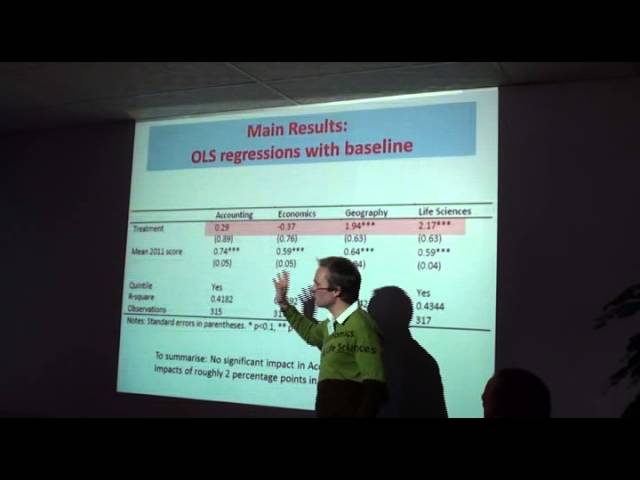
![[Eco Seminar Series] Conducting Randomized Controlled Trials in Developing Countries](https://i.ytimg.com/vi/HTWsrZnMDMw/maxresdefault.jpg)





![[삼행시_넛지_행동경제학] Full Version](https://i.ytimg.com/vi/GigXfbMLbA8/maxresdefault.jpg)
![[알릴레오 북's 16회] 자유의지냐? 운명이냐? / 운명의 과학 - 한나 크리츨로우](https://i.ytimg.com/vi/hTYZF_6xt_M/maxresdefault.jpg)

Field experiments, particularly randomized controlled trials (RCTs), have fundamentally transformed economics by shifting the discipline from purely theoretical modeling to empirically grounded research that tests interventions directly in real-world settings, enabling economists to answer more specific, practical questions about poverty alleviation and human behavior that traditional economic theory often fails to address.
2019 Nobel Economics: Abhijit Banerjee on Field Experiments
Added:The core concept of Randomized Controlled Trials (RCTs), including the division of participants into treatment and control groups.
The critical distinction between correlation and causation, and how observational studies can suffer from selection bias.
Basic principles of development economics, particularly micro-level challenges in education, healthcare, and finance in low-income regions.
Fundamental statistical concepts, such as sample size, statistical significance, and the estimation of treatment effects.
The debate on the limitations of RCTs, specifically regarding external validity (whether results apply to other contexts) and scalability.
Ethical considerations in development economics research, such as the implications of withholding potentially beneficial interventions from control groups.
How organizations like the Abdul Latif Jameel Poverty Action Lab (J-PAL) translate research findings into actionable public policy.
Advanced behavioral economics concepts, such as using 'nudges' to improve the adoption rate of preventive health measures or educational tools.
117.6K views2.4Klikes33:53Original Release: 2019-12-08
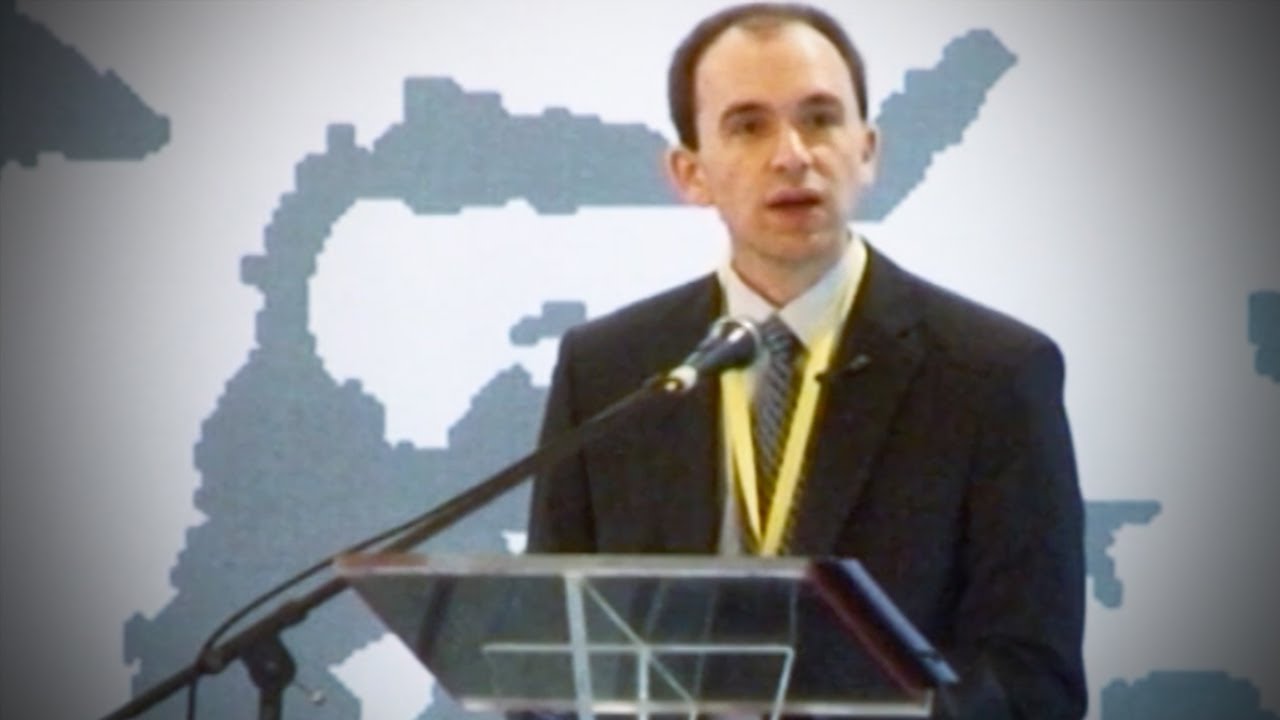
welcome so on this gray afternoon we have gathered here in the beautiful Lula Magna to attend the lectures of another three of the this year's laureates Abhijit Banerjee Esther Duflo and Michael Kramer so in October as you know the Royal Academy of Sciences decided to award them with the 2019 Prize in Economic Sciences for their experimental approach to alleviating global poverty it's my privilege and pleasure to introduce the laureates now first up to the lectern will be Abhijit Banerjee Abhijeet was born in Mumbai but moved to Kolkata where he went to school so with both his parents being professors of economics and India being India he's perhaps not a great surprise that he would study economics at University but after undergraduate and master's degrees in Kolkata and in Delhi Abhijeet went on to pursue PhD studies at Harvard and having held tenure track jobs at Princeton and Harvard in 1993 he was recruited by MIT where he has remained ever since so one remarkable thing about a BG's career is the kind of view turn it has taken in the last 20 years or so so being predominantly an economic theorist he started doing more and more empirical research on poverty and development and this research became more and more based on our city's field experiments so we hope to hear much more about this in a bit it's lecture field experiments and the practice of economics please [Applause] Thank You Justin and thank you very much from all of us all of us the three of us but also the innocence the entire community of sometimes was people call the random Easter's who we represent and whose work in a sense we build on and benefit from from all of them to thee for the to the Nobel Committee and the Nobel foundation for this great honor to our friends and family that have come from all over the world for just we being willing to be with us at this moment and cheering for us and to all of you who have come to listen to me thank you very much I'm going to talk about as Joslyn said about the field experiments and the practice of economics field experiments sometimes I'm going to use the word RCT for them in fact predominantly our city so our or randomized control trials and the idea of them is to be to look at interventions through the comparison of random treatment and control groups people who are randomly chosen to get an intervention and people who are randomly chosen not to get an intervention to compare them to know whether that in what impact that intervention had this this is a very simple idea from from borrowed from the medical sciences but one which has has its own implementations in the social sciences in in just the community of of j-pal which is our organization the Abdul Latif Jameel poverty action lab there's about a thousand of these that and there have now happened and I'm what I'm going to speak about is not just our work but in a sense a little bit of the gleanings from many works of many of those people in that thousand person group and the next talk bias there and even the talk by Michael will in a sense echo very similar teams and we between them hope will give you a sense of where and why the work we've done has been different and possibly important I'm going to make the claim that our cities have our cities as I said where these field experiments have changed economics and I think they've changed economics is two different ways one by changing the day to do a practice of economics what we do when we have to answer a question but also by changing the questions we ask very different questions and in those in a sense maybe the more profound impact has been that we now think in terms of very different questions and even the ways we think of what the answers could be are different and that's maybe the point that is most salient and I'll try to underscore that as I go through this lecture in the process I just to make this conversation with economics a bit more salient I'm going to I'm going to slightly caricature the practice of economics because in some ways it explain it in the most nuanced way would take longer than I have hopefully you'll forgive me for the for the caricature so I think here's and what I'm going to do is I'm going to set it up as a debate between economics and our cities this is not I mean when I when I first started doing our cities people would say mmm that's not uninteresting but is it economics and I always sort of struggle to say what is economics but I think economics is these things that are meant to be claims which may or may not you may or may not always recognize but I think one of the and those claims are posited against what our cities do so I'm going to try to set up that caricature and then maybe respond to that caricature so the first general claim that sometimes made is our cities are about you know you testing the effect of a intervention you're saying weather whether changing a particular way of teaching in a school is good or bad you're not answering generalizable questions you're not telling us generalizable truths and that that's a that's a claim that is often made it comes out of a sense that of course generalizable truths are what we want and of course I mean people who do our cities are not entirely stupid so they also want to have generalizable truths but we go about it slightly differently economics has a specific way of going looking for them which requires so economics starts with an idea that what we're going to try to do is we're going to try to use the data that we have to infer the deep truths about human behavior and from those we will tell you will build a model a model which will be premise on all these all these assumptions about human behavior that we're going to make and from that we're going to then say well you know the people must have been behaving in this way in order to observe what the data we observe once we have that then we can build from that a story of immortal which would then predict what's going to happen in many circumstances so generalizable through the lengths of human behavior we're going to infer fundamentals about human behavior and then from that go to general generalizability that requires often having a pretty specific view of human behavior about you know people wanting mostly money and people and how markets work usually markets will have to work well so all of those kind of premises then add up to a prediction what has it is do is say let's just start from an idea and let's try it in a few places and then work backwards towards seeing whether whether we believe that those that what's the acid is telling us is actually generalizable truth or just something that happens to be happens to have happened in one or two places but and I I want to give you an example of why this these two ways of thinking give you quite different answers and so these these starting from fundamental premises of behavior is in an important and crucial way different from starting from empirical observations and inferring behavior from those so here is a example an example which I'm going to take from a field where we are which gave me my first foothold in economics the field of what is called social learning the idea that people learn from each other and that that has a particular pattern and specificity to it this is a of course very important in many contexts if you want to spread a message you have a serious disease an infection going on and you want to contain it how do you do it you you plant messages about how what to do and what not to do you tell certain people and you need to know how to tell and you know and that and maybe how to tell them as well so the question of who to tell has a specific answer within economic theory kind of activity does answer that question once you have them as I said a model of human behavior you can use it to make a prediction the prediction is typically that you should look for people who are central to a network a people who have who are connected to connected people that's the idea that's typically typically implied by economic models and it's an idea that you could use you could go and find those people and and us tell them you know this is this is this is you know the message please pass it on now those people of course have to be found so you have to know something about the nature of the network that sometimes difficult you need to know who's connected to whom a very much more empiricist way to go about it but inspired by a more maybe a more informal way of theorizing the world is the idea that you could just ask the members of the social network you could say instead of saying you know what is the network and in who and whose central let's go to the people and ask them who do you think would be great in spreading a message so if you ask people that question what is striking is people give you quite often the same answer so when when you ask them they say Abhijeet a visit a visit who is a visitor which is a gossip so the idea of a gossip of course doesn't actually exist in economic theory it's not an idea that we have any any handle on but it's an idea that people know they'll tell you who the gossip is and we could try that we could seed the gossip so you could tell the gossips what the message is and let's see where that goes and if that works we could try it again and we could try to learn about that this is effectively what we did we we did this in two experiments one in the south of India in Karnataka where this was for kind of a trivial application it was for cell phone wrapper raffles we seeded the gossips we seeded random people and we seeded important people and him and neither random people nor important people do particularly well gossips do spectacularly got gossips are three times as good as everybody else in reaching people then people the reaction to that was well maybe cellphone raffles are irrelevant because you know who cares about them so we started we try to do the same thing about vaccination and again we ran a race between in seeding randomly choosing two seed gossips versus randomly choosing two seed trusted people or random people so you know again running a race and it's an experiment we ran in random randomly chosen villages we seed the gossip randomly chosen village every seed seed trusted people and and all random people and when we do that we find that gossips lead to twice as many kids being vaccinated so those are enormous currently consequential results and what but I I think I what I want to emphasize here is not so much a policy point but that economic theory would have only got as part of the way there why because the gossips are indeed in the net network that's part of the reason why they are good spreaders because they are central in the network they were well connected but they're also much happier than everybody else they just conditional on how central they are they're much better it's spreading the message because they are gossips they love talking they go to good people and tell me do you know what I heard and and that that idea is simply very hard to get from here from the economic theory the economic theory emphasizes many things but it doesn't emphasize people's desire to go and share ideas because that's there's no benefit to that other than the benefit of sharing and the soothing word gossip really doesn't arise in economics and if we started from model we would have never got to the idea of a gossip so and in some sense the point I'm making coming back to a generalization what generalizes from this is a word that would not come out of the economic model it so this is the idea of a gossip gossip is what is the primary generalized lesson from this experiment and now we kind of know that gee gossips are useful D in that sense I think one of the ways in life our asset is important is they liberate us from the using the categories that are dictated by the word economics so economics is somehow a way of you know people are motivated by certain specific things in a sense these people were not motivated by those things or at least that was not was important and that this was where our cities helped us the second criticism of our cities is often that our cities are after small interventions economics is about big ideas we get a growth instability capitalism socialism all kinds of big big stuff yeah maybe I mean I I agree that economics could be about these things I am less convinced that economics is very much useful to say it here say about these things other than other than let's say let's not do what Venezuela North Korea does I don't know that we have so much to say about how to stop instability so I am less convinced not about the fact that the question is is important but that that we you know the contrast of saying we are just solving these big problems well maybe I mean and you are doing all the small stuff that seems to me a little bit of a caricature but also let me argue that we actually are after big stuff so here's a question what one of the basic propositions in economics again starting from that model is that making people richer makes them lazier that's because people love to slack and having some press the pressure or you can only pressure off makes them lazy well you know I how many rich and lazy people do you know I'll let you think about that in this but this is critical because it's a big part of the case against being too generous with poor people you shouldn't give them too much easy slack because then they'll become lazy so you should not you know give them money because that makes them lazy so we did actually one of the nice things about our cities is this is work work we did with Reema Hannah and Ben Orkin and Gabriel Kreindler this is this is about looking at you know the there were a bunch of our cities where people were given money and then we looked at what happened to whether they became lazy or not and while you may want to read the what's written in the fine print the main point is that the do colored bars are identical statistically they're not different and people don't become lazier when they when you give them money there's no evidence that they become lazier at least poor people don't become lazy when they get money so that that suggests that we maybe we shouldn't be so mistrustful of the poor maybe we could be a bit more generous to them so here's an intervention we also studied which was where which was asking the question can we be more generous with the poor would that be just make them lazy and give up or would that actually be good for them this is the study of blacks graduation program brac is an NGO in Bangladesh one of the great dangers of the world and they had a program target target to the poorest of the poor the poorest were were given a package of of some assets some training some hand-holding some temporary cash assistance all of those there was our cities if in seven countries and there was a durable impact durable meaning I'll tell you ten years later we find that the incomes of the people who were given the assets are higher so there was no evidence they became richer they want more assets they worked longer not they're not lazier they work longer they earn more they happier healthier after 10 years there were in India where we stole owed them from 10 years the consumption per head is about 30% higher income is 30% higher that was about what it was all along similar results and indeed for income we find that between the third and the seventh year the impact actually grows so they become they actually become rather than falling back towards poverty they become more and more dynamic and move away from the others so that's a sense in which we and this is similar result from Bangladesh this now that made us ask this question why is it that this happens why and that goes to the one of the fundamental questions as going back to this question of big and small questions why ask people to some people so small they're really two theories one is that they born that way lets you know they have they are somehow not able to stay stay rich they spend all the money they're lazy they are irresponsible in that case if you gave them some something it will go away the alternative is that they were poor because they are poor meaning they are the parents were poor they didn't have an opportunity and if they didn't have an opportunity it was there was nothing they could do to get out of there this was an idea that has been studied for many years this the idea of of a poverty trap and it's in fact work that I think got me into being a development economist say one minute 20 seconds of an anecdote about my life I started as Austan said as a theorist I wrote a theory paper about you know poverty traps and they had the word development in it so on the strength of that and having no training and no experience of teaching development I was offered a job of teaching development at Harvard and that then led to our cities and all those other things that I eventually learned mostly from my students and colleagues so that's a way in which my life like the lives of the people I'm describing a small accident as durable effects so this is this is a very nice piece of work understanding what's going on why is it why are these people why do the how do they manage to say durably rich I told you that when you give them the assets they said durably rich how does that happen and this was studied carefully by in this very nice piece of work by clare Balboni Orianna bandera Robin Burgess moisture shock and Anton Hale and in this and the point here was to just look at what happens from year to year among people who have a certain level of wealth today how does their wealth grow and the point for wealth to be if wealth if a little bit more wealth leads to a lot more wealth tomorrow then you could imagine people taking off so a little bit more work today leads to a lot more well tomorrow which leads to even more wealth tomorrow day after etc if you the opposite so that people a little more well tomorrow generally it's only a small amount wealth extra wealth then you'll start that's going to slow down and you'll fall back this is the the first picture represents the case where people basically can't escape they're trapped in poverty because they are there they there there's no escape because essentially if you give me a little more maybe I'll eat half of it tomorrow and half of a day after and it'll be gone the other case is where the relationship between wealth today and well tomorrow looks like this an s-shape and in this case the key idea is that you see that yellow curve suddenly becoming very steep what that's saying is that a small amount of wealth today actually increases wealth you know what dollar today gives you one and a half dollars tomorrow and therefore that gives you 1 2 and 1/4 dollars day after and so on and that becomes self-sustaining and to look at weather which of these curves apply they actually looked at the data from Bangladesh from from this asset transfer experiment and they find that this is what it looks like you can see that the curve looks like an S like the curve I showed you and in a sense what they're demonstrating is that you can actually not only claim that people are are just poor because they're poor if you give them a push they'll keep going but also that you can show that that's in fact the transition so you can look at that and this this means that essentially people who are either people are going to be either sort of just too poor to make it and then they'll become poorer and poorer and you see the pump on the left or you they'll become richer and richer and you see the hump on the life the middle will empty out and that's what this picture shows this is the distribution of productive assets so you do see exactly the pattern you might have expected why is this important first because it offers a possibility of a big dam a small intervention could have big effects on the lives of people that of course is fundamental in a sense that's fundamental and of course it means that your social return on investment the fact that if I give people money that has big consequences people lives is it that's very good news because you could give a little bit and get a lot for it but also I mean what idea is bigger than the idea that poor the poorest of the poor have enough talent to be self-sufficient that if you give them a push they'll stay up what idea is bigger than that in a sense I I mean in the realm of big ideas this is an enormous idea because it gives us faith in humanity what could be bigger than that and reason why we didn't RCT to do this is because we needed to follow people carefully over time to understand what's going on we needed and to do that we would need to know who were the people who got the a certain people who were went the fact that in our city gives you a lot of specificity you can I identify the people who should have got it and the people who didn't and you can follow them over time means that you can collect data to demonstrate something like this weed out in our city we much harder to demonstrate maybe you could do it but we much harder to demonstrate that there was some dynamic pattern like this the our cities give you a very unique kind of data because you know who exactly to follow and that that's that the power of that is what this this exercise shows finally let me talk the third and last claim or caricature I'll adopt his economics cumulatively builds a theory our cities are piecemeal you do one thing here one thing there and I again I want to obviously you know by now my trick which is to controvert this and I'm going to go into this same story I was following and asked the question I already told you this a poverty trap meaning poor people are poor because they're poor why are people poor because they're poor what is the mechanism what is making poor people poor and what would liberate them from their poverty so one possibilities technology maybe they just you know too poor to be able to use good machine and good machines are necessary to increase your income and if you don't get them a good machine you'll never get there the other the alternative is that it's psychology that when I give you a boost in your wealth you just feel liberated from the pressures of life and that makes you perform now if both are entirely plausible and the graduation program D that I told you about the Brax program does both it gives you an asset and they give you some psychological counseling so it gives you both and in a sense both might be working there so how do we know that both are important or if it's are both important well our assets enough so there's multiple are cities where people were given lump sum cash transfers so given cash ins you add a bunch of cash and then you see what happens some cases this had big positive effects some cases it had no effect or no durable effect and the answers will confuse so one of the things that so are these because these are different people with different aspirations maybe they're different alternatives or is it them something more more about the fact that these are really you know if you give people cash that's not enough you need to do something else so one of the things we did in Ghana in work with Dean Karlan hanger Trackman and Christiane you jury is we gave some people we gave the graduation program some people we just gave the assets and when you just give the assets and not the graduate the rest of it not not the hand holding you actually find that there is no durable effect that suggests that the psychology might be important moreover to look deeper into this question is it psychology what we did was we then took a next step in that experiment we some of those people were given there was in the program the in the graduation program there was some temporary cash supports you got before your asset becomes you know paying you got a little bit of extra cash to keep you going till your cow gives milk or you start selling so we we randomized how much that amount was we gave them either a small amount or a bigger amount the idea was the bigger amount maybe it's not that just takes the pressure of them in the short run does that make them more productive and to know whether we're more productive we actually ran a bad factory we produced a hundred and seventeen thousand bags in the process in that bag factory we could see how productive people were and first people who got got this graduation program were more productive even though they had assets and therefore they were busier they were actually more productive as well they were working harder at both jobs the second if you give them high caste support they were producing better bags at a faster speed people just seemed to be much more enthusiastic about what they were doing and as a result they were much more productive so in a sense what this says is that at least part of the effect here is the fact that being poor paralyzes people they feel that they there's too much pressure on them and that pressure makes them less productive and that that's so I want to say that both as a very important insight into why this economic model of that it said that you know if you give people money they'll become lazy well maybe the pressure economic pressures off but they're also more enthusiastic and maybe that's why they're more productive and in a sense this is a long tradition of studying this in economics and not so much finding that you know income makes people lazier and maybe that's there's a the first in our city that we're aware of as a negative income tax tax experiment in New Jersey and this this already was finding that the the people didn't seem to become lazier when the richer so going back to the question ah now what did I learn from this that's general general or big I think first thing our cities are great for from the point of view of actually of building up a theory unlike I think the claim that our cities are more piecemeal or piecemeal I think they're great precisely because they can be tailored to to break up the theory into little pieces so every piece in that and the story I was telling I started by showing you that you know when I give people as they become more productive but then why do they become productive so at each stage we had a more nuanced hypothesis first it was is it the case that you know we do see evidence for a poverty trap do we see that s-shaped curve that's a question we could ask and then following on that we could ask is it and enough to give them money or is it we do do we need to give them psychological counseling and then after we thought maybe psychological counseling is important we asked is it the case that interventions that just make me pull more comfortable make them more productive so all of these steps in a sense were important in getting to we are which we have some confidence in the idea that people feeling better about their own lives is important for the productivity this is a process of the theory being tested piece by piece and built up into a narrative and this is what's nice about in our city is that I can design the RCT to answer the specific piece I want to the intervention I can choose to to exactly test the theory I want to test something in the world we rarely can do because in the world things don't actually vary in the way we control the second we do not have to make to do the tests we don't need to necessarily make a lot of behavioral assumptions we don't need to assume that people want money we can test if people can want money and that or whether they want something else and those the fact that we can test them means a lot of the theory is not tested based on other theories they tested based on simply observation or less Theory let's say and that's that's also a great advantage of of the of the RCT approach finally you can set up a sequence of experiments in the same location to build up the theories you can see if the same people treated in different ways give you different outcomes and that dynamic process gives you a way to test theories bit by bit and build up a story so in other words so I'm I will end by again thanking all of you this is my this is just a short list of of the people whose papers I talk to you about in detail as we went there are hundreds and hundreds of others who have simply can completely transform this area they have taken the idea of our cities in ran wild in different directions creating ideas that I think neither Michael nor Esther nor I ever thought of and that's I think the most wonderful thing that's happening to us and to I think the field field of development economics and I say with you know genuine I think humility that I I think that this is a prize at least as much for all of them as it is for us thank you great
Up Next

86:20
Poverty Traps & Graduation Programs | Development Economics Lecture
@mitocw
27.3K views•2023-04-05
5:07
Impact of Yuan in Indo-Russian Trade Amid Sanctions
@WION
261.9K views•2022-07-01

33:30
2023 Nobel Prize Lecture: Women's Labor Market Outcomes
@NobelPrize
25.4K views•2023-12-08

113:18
The Age of Easy Money: Fed & Inflation | Full Documentary
@frontline
21.2M views•2023-03-15
Related Study Plans & Knowledge Roadmaps
Structured learning paths in Economics
economics
Sovereign Debt: Defaults, IMF & Restructuring
01Introduction to Sovereign Debt & Government Bonds
02Debt Sustainability & Credit Ratings
03Anatomy and History of Debt Crises
+ 2 more learning modules
12h5 modules
Explore Roadmap
economics
Market Design: Matching Theory & Gale-Shapley
01Introduction to Market Design and Price-Free Markets
02Two-Sided Matching & The Gale-Shapley Algorithm
03School Choice Systems and Mechanism Design
+ 2 more learning modules
10h5 modules
Explore Roadmap
economics
Impossible Trinity: Forex, Capital & Policy
01Introduction to Monetary Policy and Central Banking
02Exchange Rates and International Capital Flows
03The Mundell-Fleming Model
+ 2 more learning modules
8h5 modules
Explore Roadmap
economics
Healthcare Economics: Market Failures & Systems
01Introduction to Healthcare Markets and Market Failure
02Asymmetric Information and Adverse Selection
03Moral Hazard and Insurance Design
+ 2 more learning modules
12h5 modules
Explore Roadmap