













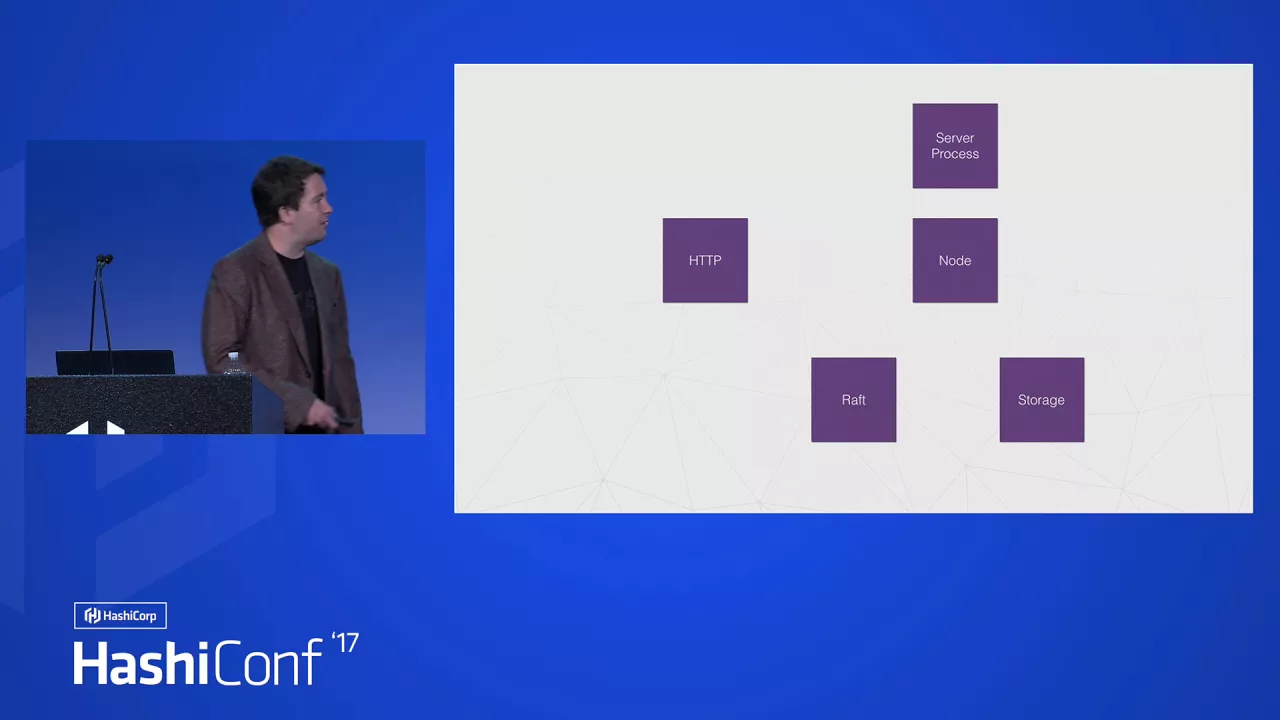





![Consensus algorithms, Paxos and Raft by Yifan Xing [PWL BOS]](https://i.ytimg.com/vi_webp/fcFqFfsAlSQ/maxresdefault.webp)



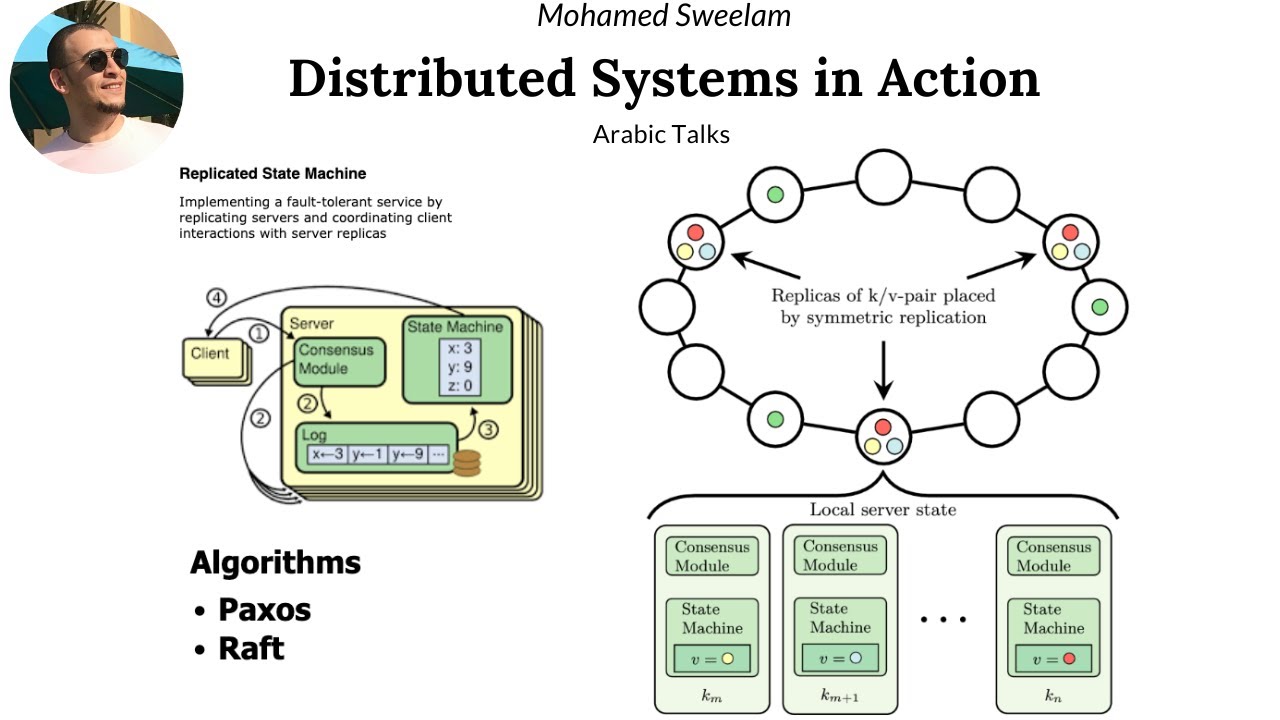
The Raft consensus algorithm is a leader-based approach that replicates a log of entries identically across a collection of servers to create a replicated state machine, ensuring that as long as a majority of servers are operational, the system can make progress and maintain consistency through three server states (leader, follower, candidate), term-based elections, and a two-phase configuration change protocol.
Raft Consensus Algorithm Lecture: A Comprehensive Introduction
Added:Fundamentals of distributed systems, including node communication, network partitions, and the implications of the CAP theorem.
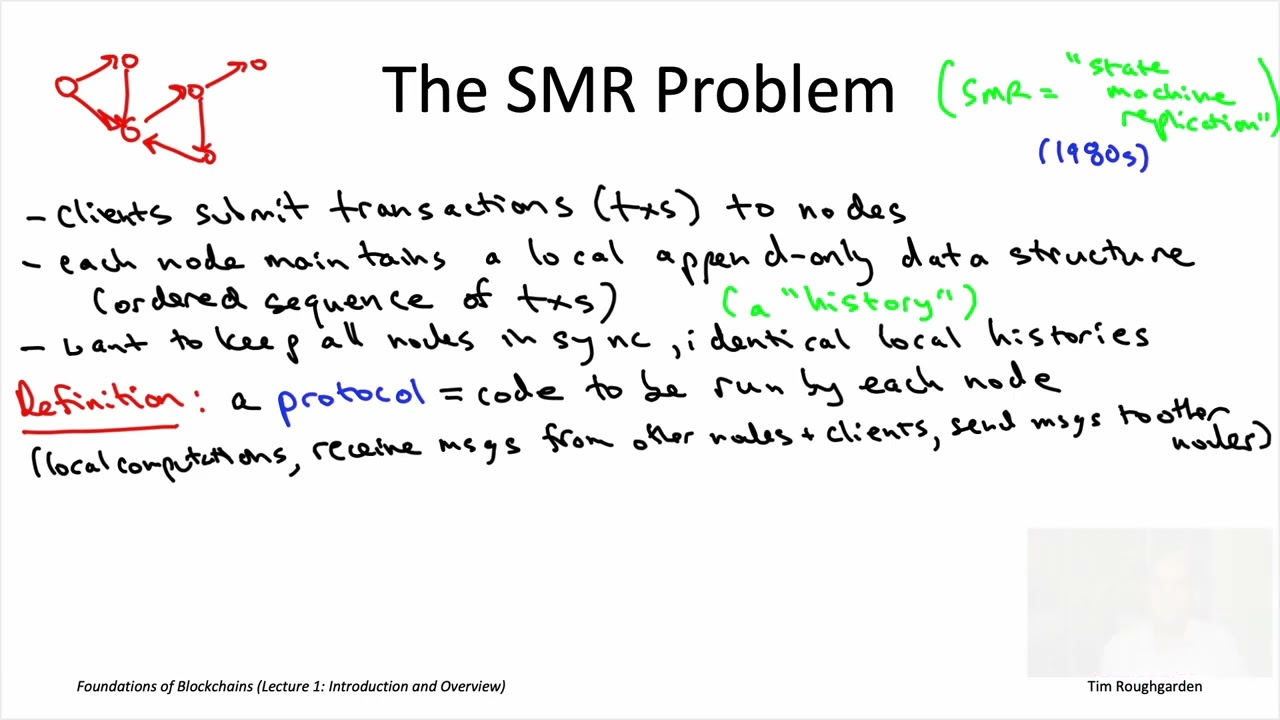
The concept of State Machine Replication (SMR) and how system state is synchronized across independent nodes.
Basic understanding of fault tolerance models, specifically the crash-recovery model versus Byzantine failures.
The fundamental consensus problem in distributed computing—why agreeing on a single state across multiple nodes is challenging.
Advanced Raft mechanisms, such as log compaction (snapshotting) and dynamic cluster membership changes (joint consensus).
Practical study of production-grade Raft implementations in distributed key-value stores like etcd, Consul, or CockroachDB.
A comparative analysis of Raft and the classic Paxos algorithm, focusing on design trade-offs, complexity, and performance differences.
Exploration of Byzantine Fault Tolerant (BFT) consensus algorithms, moving beyond crash-fault tolerance to handle malicious nodes in untrusted environments.
85.2K views0likes58:17Original Release: 2013-08-15
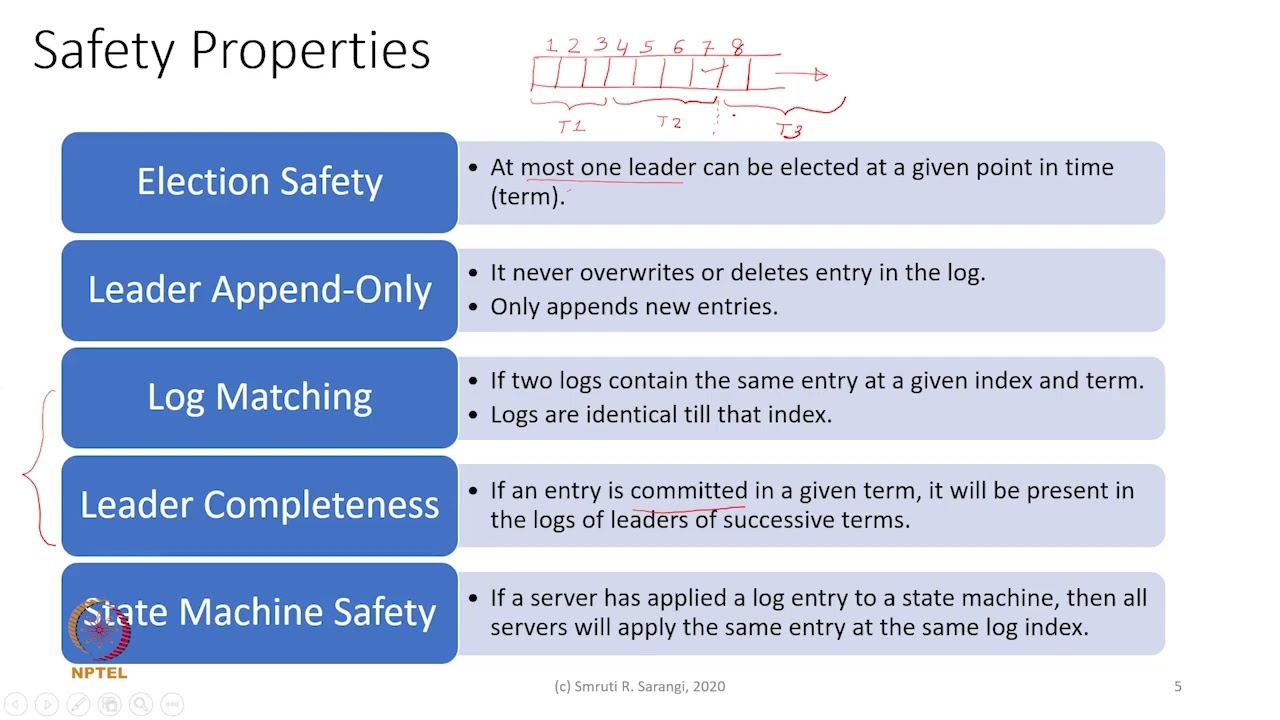
hello I'm John osterhout and in this video I'm going to introduce the raft consensus algorithm the overall goal of raft is to replicate a log of entries identically across a collection of servers and this in turn is used to create what we call a replicated State machine suppose you had a program or an application that you wanted to make reliable one way to do that is to execute that program on a collection of machines and ensure that they all execute in exactly the same way that's the idea have a replicated State machine so when I say State machine I just mean a program or an application that takes inputs and produces outputs now a log can help in order to make sure that those State machines execute exactly the same commands here's how it works if a client of the system wishes to execute a command it passes that to one of those machines that command let's call it X then gets recorded in the log of the local machine and then in addition the command is passed to the other machines and recorded in their logs as well once the command has been safely replicated in the logs then it can be passed to the state machines for execution and when one of the state machines has finished executing the command the result can be returned back to the client program again and you can see that as long as the logs in the machines are all identical and the state machines on the on the different servers execute the the same commands from the log in the same order we know they're all going to produce the same results so it's the job of the consensus module to manage those logs ensure that they're properly replicated and then determine when it's safe to pass the commands to the state machine for execution the reason we call this a consensus-based approach is that we don't require all of the servers to be running at any given time in fact the system has to make progress as long as any majority of the servers are up and can communicate with each other so for example you might have a cluster of three servers this could tolerate one server being down as long as two of the three are up or in a cluster of five servers you could tolerate two servers being down as long as three are up now let me talk briefly about the failures that we expect the system to handle we expect that servers can crash but we expect them to do that in a fail stop way that is they just stop operating or they may pause operating and then resume later but when they're running they're behaving correctly so we don't this protocol does not handle a situation where a server has so-called Byzantine Behavior where it behaves maliciously we also assume that the network communications can be interrupted messages can be lost or delayed they may arrive out of order and it's possible that the network could be partitioned for a while and then the partition could go away later on there are two general approaches that have been used to implement consensus algorithms the first approach is called symmetric or leaderless in this this approach all the servers have the same roles they all have equal power behave roughly the same at any given time they're all they're all very equal a client can contact any server to add a command to the log and get it replicated the second approach is called asymmetric or leader-based the servers are not equal at any given time at any time one of them is the leader it's in charge typically manages all of the operation of the Clusters and the other servers are subservient simply carrying out the wishes of the leader in this sort of a system the clients always communicate with the leader only the leader talks with the other servers now raft uses that second leader-based approach and this decomposes the problem of the consensus algorithm into two different things one is the normal operation when there's a leader that's properly running and then the second part is what do you do when the leader crashes or you have to elect a new leader this approach has the advantage that it makes the normal operation very simple you don't have to worry about different leaders conflicting with each other uh or trying to do things at the same time there's one person in charge and they can do exactly what they want all of the complexity in raft as you'll see comes from leader changes that's particularly true because if a leader crashes it may leave the system in an inconsistent state that the next leader has to clean up in general the leader-based approaches are more efficient than the leaderless approaches uh because you don't have to worry about these conflicts between servers at any given time you only have to deal with those during leader changes I'm going to explain raft in six parts first I will talk about leader election how do we choose out of all of the servers one of them that will be the leader and then when that machine crashes how do we detect that and pick a different leader to replace it second I'll talk about the normal operation of the system where a leader is receiving requests from clients and replicating them that's actually the simplest part of the raft system third I'll talk about leader changes this is probably the trickiest part and the most crucial in terms of guaranteeing the overall behavior of the system I'll first talk about what it means for rfh to be safe how we ensure that and second how leaders resolve login consistencies in order to restore the system back to a consistent State again fourth I'll talk about another issue related to leader changes which is how do we keep an old leader that isn't actually dead from coming back to haunt us fifth I'll give a little bit more information about how clients interact with the system and the key issue here is how do clients deal with server crashes and how do we make sure that we have what are called linearizable semantics where each client operation is executed once and exactly once and then finally I'll talk about how we deal with configuration changes that is how do we add or remove servers to the cluster that is managing the raft system before going into details of those six parts of raft let me first provide some overall information at any given time a server is in one of three states the first state I've already described that's the leader State we need to make sure there's only one of these at a time the second state is follower State we expect most of the servers to be in follower State most of the time these servers are completely passive they issue no remote procedur calls at all all they do is respond to remote procedure calls coming from other servers the third state is called can State this is a state intermediate between follower and leader and is used temporarily during elections to pick a new leader in normal operation of the system there will be exactly one leader and all of the other servers will be followers at the bottom of the slide I've shown a state diagram of these states and the transitions between them I'm not going to go over those now but you may find those useful to refer to as I go through the details of the algorithm in the later slides time is divided into terms each term has a number and these numbers increment and are never reused each term has two parts first a term starts with an election that is this is a a process that picks a leader for the term and then if the election is successful then the chosen leader will serve out for the rest of the term as the leader as you'll see raft guarantees that only one server can be elected leader in a term however there can be some terms where no leader is chosen this happens if the votes are split in a way that no leader can get a majority of the votes when this happens then the system immediately moves to a new term to try again to pick a leader each server in the raft system maintains a value called the current term which is its best guess about what the current term in the system is and by the way that information has to be stored reliably on that server's disc so that it can be recovered when the server crashes and restarts the role that terms serve is a really important one it allows raft to identify information that's out of date for example if a server that currently believes that the term number is two communicates with a server that currently believes the term number is three then we know that the information coming from that first server is out of date we only want to use this the information from the latest term so as we go through the talk you'll see several situations where terms are used to detect and eliminate information that's no longer up to date this slide contains a complete summary of the entire raft protocol I'm not going to go over it in detail now but I just want to point out a few General features you can come back to later on so first the slide describes what each of the three roles does followers candidates and leaders second it describes what information has to be stored persistently on the diss of the servers and then third it describes how the servers communicate all Communication in raft is done via remote procedure calls and there are only two of them there's one RPC called request vote that's used during elections to pick a leader and one RPC that's used by the leader during normal operations to replicate log entries these are the only two rpcs in the system and by the way I'll just mention briefly each of these is item potent which has some nice properties in terms of handling replicated and lost messages and so on again I'm not going to go over the details here but you may want to refer back to these as I go through details later on in the talk okay now let's go through the six components of the raft protocol the first component of the protocol is elections raft has to make sure that at any given time there's exactly one machine acting as a leader in the cluster now when a server starts up it begins as a follower and in this state it doesn't attempt to communicate with anyone else followers are completely passive they simply respond to incoming remote procedure calls from other machines however in order for a follower to stay a follower it has to believe that there is an active leader in the cluster and the only way it can know that is if it receives Communications from other machines that are either leaders or candidates so if the leader wants to maintain its Authority it must communicate with all of the other machines in the cluster on a regular basis and if it has no other reason for communicating with them it must send heartbeat messages in raft these are simply append entries remote procedure calls that contain no data at all so those service heartbeat messages if a period of time goes by and a follower does not receive any remote procedure calls then it assumes that there's no viable leader in the cluster and so it starts an election to see if perhaps it should become leader this period of time that a follower wait is called the election timeout in the typical clusters that'll be in the range of 100 to 500 milliseconds so when the cluster first starts up all of the servers will begin as followers there'll be no leader and so they'll all wait the election timeout period and then they'll all start elections to elect a leader now let's talk about how an election works when a server begins an election the first thing it does is to increment its current term value this produces a new value for the term larger than anything it has seen before and remember the first thing that happens in every new term is we hold an election the server then converts itself from follower state to candidate state in this state its goal is to get itself elected as leader and in order to do that it needs to receive votes from a majority of the servers in the cluster the first thing the candidate does is that it votes for itself then it sends out remote procedure calls to all of the other servers asking them for their votes typically it will send these request vote rpcs in parallel to all of the servers if it doesn't get a response from any particular server it will keep retrying with that server over and over again until it eventually gets a response sooner or later one of three things will happen first the thing we happen most of the hope to happen most of the time is that the candidate will get votes from a majority of the servers in the cluster when this happens then it converts itself to leader state and immediately sends out heartbeat messages to all of the other servers which effectively marks its territory or establishes itself as leader the second thing that could happen during an election is that there could be some other candidate also operating at the same time and perhaps that candidate receives enough votes to become leader at which point it will send out rpcs and so if a candidate receives a remote procedure call from a valid leader then immediately gives up its attempt to become leader we call that stepping down which causes it to return to follower state becomes passive and simply responds to the request from the valid leader then the third state or third outcome that can happen is that it's possible no one will win the election if several servers convert to candidate about the same time they could split the votes in a way that nobody can get a majority of the Clusters votes the way that a server detects this possibility is that a period of time goes by and neither of the other two options has occurred yet in fact it uses the same election timeout period if that elapses and this candidate has not become leader and has not heard from a valid leader then it assumes that there's a split vote in the election and so at this point it simply goes back to the beginning and starts a new election by incrementing the term and starting the whole process over again it's important for an election to have two properties safety and liveness the safety property says that there must be at most one candidate that wins the election in a given term the way raft guarantees this is that each server only gives out its vote once to a single candidate once it's given its vote it will refuse requests from any other candidates for votes and and by the way the server doesn't really care which server gives its vote to it'll give it to the first candidate that comes along in order to make this work the server needs to make sure that it saves information about its vote on some durable medium like dis so it can recover that after a crash otherwise we'd have a problem where a server might give out its vote and then crash and then restart and give its vote again to a different server for the same term given that a server is only giving out one vote and given that each candidate has to get a majority of the votes then it's easy to see that you can't have two candidates that win an election so for example if three servers vote for a in a particular term then the most that any other server could get say B is two and obviously B can't get a majority now as we'll see later on it is possible of course to have different candidates win in different terms but within a given term at most one candidate can win an election now the second property is the liveness property we need to make sure that somebody wins so the system doesn't stay in a state with no leader forever and the problem is that we could principle have repeated split votes where a bunch of candidates all start elections for the same term at the same time they split the votes they all time out again start a new election in a new term split the votes again and so on and in principle this could go on indefinitely the way that raft presents this is to spread out the election timeouts each server computes its next timeout randomly in an interval an interval between a particular value T and twice that value where T is typically what we refer to as that's the election timeout so the smaller the fastest that a machine could possibly time out by spreading out these timeouts that makes it unlikely that two servers will wake up at the same time whoever wakes up first will have enough time to request votes from everybody else and win the election before anybody else wakes up to compete with it and this works particularly well if that time over for which we spread the the timeouts is much larger than the broadcast time where what I mean by broadcast time is the amount of time that it takes one server to talk to all the other servers that get their votes so as long as the timeouts are spread out over a much larger interval again it's pretty easy to see that whichever server wakes up first will be able to talk to everybody and get their votes before anybody else wakes up now let's move on to the second part of the raft protocol which which is the mechanism that leaders use during normal operation to replicate log entries first let's talk a little bit about the log each server stores its own individual copy of a log so leader has a copy and each follower has its own private copy of the log the log is divided up into entries and entries are identified by an index which gives their position in the log inside an entry there are two things first each entry contains a command for the state machine the format of this is really up to the clients and the state machines to agree on the consensus module doesn't care but you can imagine it might be something like the name of a procedure and some arguments to pass to that procedure then in addition each entry in the log contains a term number this is the term number when the log when that entry was first created by the leader of that term and these term numbers increase monotonically as you go up the log each server has to guarantee that its log Will Survive crashes so the log is typically stored on disk or some other form of stable storage and whenever a server makes a modification to its log it has to update the safe copy on dis before it returns any sort of response to anybody else in the system if a particular log entry happens to be stored on a majority of the servers in the cluster such as say entry 7 here then we say that that entry is committed this is a very important property of the raft system if an entry is committed then it's safe for that entry to be passed to State machines for execution raft will guarantee that the entry is durable and sooner or later that entry will be executed by every state machine on every server in the cluster so in this picture entry seven is committed in fact all entries preceding entry 7even are committed but entry 8 is not yet committed since it's only stored on two of the five servers now I just want to warn you I'm going to modify this definition of commitment slightly when we get to the part of the talk on managing consistency of logs across server changes normal operation is pretty simple a client sends a command to the leader that it would like to have executed by all of the state machines the leader first adds that command to its own log and then it issues append entries remote procedure calls to the follower is in the cluster typically it will execute these rpcs in parallel sending the same message to all of them at the same time and then it waits for the responses to come back once the leader has received enough responses to consider that entry committed that is it's gotten responses from at least half of the other servers in the cluster so with itself that makes a majority then it's okay to execute the command so the leader passes the command off to its state machine when that command finishes then it Returns the result back to with the client furthermore once the leader knows that a particular entry is committed it notifies the other servers about that in subsequent append entries rpcs So eventually each of the followers will also find out that that entry has been committed and then the followers when they find out they will execute that command on their state machines also now if a follower has crashed or is slow to respond to an append entry's remote procedure call the leader will keep retrying that call over and over and over again so if a follower crashes and comes back up again the leader will will retry it but the leader doesn't have to wait for every single follower to respond it only needs enough to respond to guarantee that the entry is stored on a majority of the servers in the cluster so this results in very good performance in the common case in the normal case all that's needed in order to finish a client command is to get a response back from a majority of the servers in fact the fastest machines in the in the cluster at which point the leader can immediately execute the command and return the result to the client so for example one slow Server doesn't necessarily slow down the clients because the leader doesn't have to wait for that server raft tries to maintain a high level of consistency between the various logs in a cluster ideally they'd all be identical at all times and we can't we can't of course do that given there can be crashes but as much as possible raap tries to keep the logs identical and this slide lists some properties that are always true at all times the first property is that the combination of an index and a term uniquely identifies a log entry that is if two log entries are in the same index log index position and they have the same term then it's guaranteed that they will also have the same command and furthermore it's also guaranteed that if two entries have this property then all preceding entries in those logs will also match each other so the combination of a term and an index uniquely identifies an entire log from its beginning up to that point furthermore it turns out that if a particular entry is committed then all preceding entries are also committed and that kind of follows from the previous Rule and that you can see if a majority of the servers store this one entry here at index 5 then because of the the the rule above they must also store all the same earlier entries and so we know all of those entries will also exist on a majority of the servers this property is enforced by a check that's made during the append entry's remote procedure call when a leader issues an append entries RPC to a follower it includes two values in addition to the new log entries it includes the index and the term of the entry just before the new ones and the follower will only accept the RPC if it contains that exact matching entry in its log if its log doesn't have that entry then it will reject the remote procedure call so let's go through an example suppose a leader has just received a new command jump from a client and it sends an append entries remote procedure call to that follower well the leader will include the index and term of the preceding entry so it'll include index 4 and term two in the RPC the follower checks to see that it has a matching entry there and since it does then it will accept that new entry into its log now consider the example on the bottom though suppose the follower log actually had a different entry preceding the new one in this case the entry in index 4 four has a different term and so because of this the append entry's remote procedure call will be rejected it will not accept that new entry this consistency check is really important and you can think of it kind of like an induction step in the proof of the properties on the preceding slide it guarantees that a new entry is only accepted if the logs match in their previous entry but of course the same check was applied when those entries were created and so that guarantees the logs also match in preceding entries and so on so this means that if a follower accepts a new entry from the leader its log exactly matches the leader's log up through that entry guaranteed that finishes the discussion of normal operation now let's talk about leader changes when a new leader comes to power the logs may not be in a very clean State because the previous leader could have crashed before it finished completely replicating some of the log entries now the way raft handles this is that it doesn't take any special steps when a new leader comes online it doesn't try and do a cleanup phase it just starts normal operation and the cleanup has to happen during the normal operation now the reason for this is that when a new leader comes up some of the other machines may be down and so there's no way it can clean up their logs right away it has to be able to resume operation even if some machines are down and it could be a long time before those machines come back up again so we have to design the system so that the normal operation eventually converges all of the logs the raft approach to this is to assume that the leader's log is always correct it has everything important and so all the leader has to do is over time make all of the followers logs match its log but in the meantime that leader could crash before it finishes the job and the next leader and the next leader and so extraneous log entries could pile up over a long period of time to create a fairly chaotic looking situation like the example in the bottom of the slide here uh first I want to mention I'm going to change my notation a little bit up until now I've shown the commands in log entries but I'm not going to do that anymore since we know that the combination of a log index and the terms stored in an entry is a unique identifier for that entry so from now on I'm just going to show term numbers in the log entries without commands this particular scenario at the bottom could have happened if servers four and five were the leaders for terms 2 three and four but somehow never replic ated any entries outside themselves and then they crashed and the system partitioned for a while and the other servers 1 2 and three took turns being leaders for terms five six and seven but were not able to communicate with servers four and five to clean them up so now we're at a situation where the logs are really quite a mess the only thing that really matters here is these entries that I'm drawing here entries one through three these are committed entries and so we have to make sure we preserve them but the other ENT entries none of them have been committed and so it doesn't really matter whether we keep them or throw them away we haven't passed any of these to a state machine no client machine has seen the results of executing any of these commands so these are all Expendable if for example server 2 is the leader for term 7 and it's able to communicate with everyone then eventually it will make all of the logs in the cluster look like its log and any conflicting entries will get deleted now I'll come back later on to talk about how a leader makes the followers logs match its logs but first I want to talk about correctness and safety you know how do we know that the system is behaving in a correct way and that we're not losing some information that's important because you can see clearly here we're going to have to throw away some log entries in order to bring everything back into consistency so how do we do that in a safe fashion there's a fundamental overall safety requirement that any system for implementing replicated logs must obey and it's written in red here that once a particular State machine has received a log entry and applied it as a command we must make sure that no other state machine ever applies a different value for that log entry they must all apply the same values in the same order for this for the log entries now in order to achieve this overall safety requirement raft implements a somewhat narrower what I call safety property and this what's written on the slide here that once a leader has decided that a particular entry is committed then raft guarantees that that entry will be present in the logs of all Future Leaders in the system so whenever a leader comes to power in the future and for its entire lifetime it will always have all of the committed log entries present if we can make raft uh conform to this property then that will guarantee the safety requirement at the top of the slide and this the rough argument is that first a leader never overwrites an entry in its log it only appends and so we know that those log entries will never change then if they're always present on the leader second in order to be committed an entry has to be in the leader's log so no other value can be committed and third we know that entries have to be committed before they're applied to the state machine so if you put all of those together we've guaranteed the property at the top of the slide now the raft algorithm as I've described it so far does not yet yet guarantee this property and I'm going to go through the problems and show you how we solve them but first I just want to go back to what we're trying to do again that if an entry is committed that implies it will be present in Future Leaders logs so in order to do this we're going to change the raft algorithms in two ways first I'm going to modify the election process to exclude a machine from becoming leader if it doesn't have the right stuff in its logs and then second that's not going to be enough by itself and then second we're going to change the definition of committed a little bit so at sometimes we have to delay committing an entry until we know that it'll be safe that is that we can guarantee that it will be present in Future Leaders logs I'll talk about the election stuff first so how do we make sure we pick a leader that holds all of the committed log entries well first of all this is kind of tricky because we can't actually tell which entries are committed if we consider this cluster with three servers in it and suppose that we're having to pick a new leader but one of the servers is not available then just looking at the servers that are available during the transition we can't really tell whether entry 5 is committed or not it depends whether it's stored on this unavailable server in this case it is but in other cases it might not be know for sure which entries are committed so instead what we do is to try and pick a candidate to win an election such that it has the log that is most likely to have all the entries that have been committed and I'll first describe this intuitively and then come back and make it more precise to prove that in fact we can guarantee that we pick a candidate that has all the committed entries the way this works is by comparing logs so when a candidate requests a vote from another server it includes information about its log and all it needs to include is the index of the last log entry and the term from that entry and remember from my discussion previously this uniquely describes the entire log then the voting server that receives this request for a vote it Compares its own log to that of the candidate and if the voter's log is more complete think of this in an intuitive sense it will deny its vote now to make this specific we Define this to mean that if the last term in the voting server log is greater than the last term in the candidates log then the voter's log is more complete deny the vote or if the terms match and the voting log is longer than the candidate's log then again the voter's log is more complete and so we deny the vote so the result of this is that whoever wins the election is guaranteed to have the most complete log among the servers that voted for it among some majority of the cluster and again by most complete I mean this particular definition in terms of the the uh index and term of the last entry in the log let's see how this work Works in practice so the interesting time to consider is the moment just after a leader has decided the log entry is committed there are two interesting cases to consider the first case is when the entry being committed is in the current term and the second case if it's is if it's in some prior term let me deal with those separately first consider the case where the leader has just decided an entry in its most recent current term is committed so we have an example here where we're in term two and the leader for that term has just replicated entry four over onto server three the append entries call just succeeded and this leader now sees ah this entry is on a majority of servers I declare that entry committed and it can pass it to my safe to my state machine now you can see that at this point in time this entry is safe that is the leader for the next term must contain this entry and we can see that by just just by considering the rules S5 can't become leader for the next term because its term is older than the other servers there's no way you could get a majority of servers with terms that old S4 can't become leader because it won't be able to get votes from anybody else because although the the last terms are the same S4's log is too short so we know that only one of these first three servers can be elected leader in fact if S1 is in the mix S1 is guaranteed to win the election but S2 or S3 could win by getting votes from each other and then one of ser four or five but in any case you can see that the leader for the next term must contain that log entry now let's consider the second case where a leader is trying to commit an entry that was initially started in an earlier term in this situation the leader for term two replicated an entry on only two machines before its term ended and then the leader for term three for some reason was not aware of those entries created a bunch of entries of its own and then crashed and now we're back another machine has been elected leader in term four and finally it's trying to make all of the other servers logs match its own and so it replicates this entry from that Old entry from term two over onto server 3 and now at this point that entry is known by the leader to be stored on a majority of the servers but that entry is not safely committed and the reason you can see this is that if the leader were to crash now and a new leader were to be elected it's possible that server 5 could be elected using any majority that doesn't include server one it could get votes from server 4 server 3 or server two since its last term is greater than any of those machines and if it's elected then it's going to try and propagate its log meaning it'll write those entries from term three across all of the other servers and all of these entries will go away so we cannot consider entry 3 to be committed at this point it's simply not safe in this situation the new rules for elections are not enough by themselves to guarantee safety we also have to modify the rules for commitment remember up until now a leader could decide that an entry was committed as soon as it saw that the entry was stored on a majority of the servers but in order to guarantee safety we have to add another rule which is that in addition the leader must be able to see that at least one of the entries from its term from the current term is also stored on a majority of servers so going back to our example if the leader finishes replicating entry three to a majority it can't yet commit that entry and pass it to the state machines instead it has to also wait until the first entry from its term gets committed that is stored on a majority of the machines and now at this point both of those entries can be passed to state machines they're safe and the reason that for that is that we can see that now there's no way server 5 can get elected leader for the next term and the reason is that there's too many other servers out there with more recent terms in their logs the only vote server five would be able to get is server four so at this point both entries three and four are safe so with the combination of the new election rules where we compare logs and this new commitment rule we can guarantee that the raft safety property always holds that is once the leader decide an entry is committed it will be present in the log of every leader in the future well okay actually I've only shown you that the log entry will be present in the leader for the very next term but it's also fairly straightforward to prove that every future leader will also have the log entry I'm not going to go through that proof and then once we know the raft safety property holds and as I mentioned on the previous slide we know that the overall replicated log will also be safe now that we've guaranteed safety and we know that the leader log is correct how do we make all of the followers logs match the leader's log well first let me show you the different ways in which logs can be inconsistent this slide illustrates what can happen it's possible that followers can be missing entries that the leader has such as in this case for followers A and B here or also for follower e and followers and followers can also have extraneous entries not present on the leader such as these entries for term seven over here the entries for terms two and three at the bottom an extra entry for terms six and so on so what we have to do is get rid of all the extraneous entries from the follower logs and then fill in all of the missing entries from the leader log to restore log consistency the leader maintains a state variable for each of the followers in the cluster which I will call next index and this is the index in the log of the next log entry that the server intends to send to that follower initially when the server becomes leader it sets these next index values to the entry just after the last one in its log so in this example where we have a new leader for term seven and the last entry in the log is index 10 it will set next index to 11 for all of the client uh all of the followers in the the cluster the leader will find out about consistency issues through the append entries RPC remember there's this consistency check performed by followers whenever they receive an append entries request and that will find any problems so the next time this leader attempts to communicate with either of those followers it's going to include the index and the term 10 and six for the entry just before next index as part of that request by the way the next request is probably going to be a heartbeat that it sends out as soon as it becomes elected leader but heartbeats behave just like all other append entries except that they have no new values but they still include the consistency check so when this message arrives at follower a it's going to compare this term and index with its own log and it has no matching entry there so it's going to reject the append entries request when the server sees this rejection sorry when the leader sees this rejection its response is very simple it just reduces next index by one so it we'll drop index back to 10 and then we'll try again this time you can see the server will include information about index 9 and that check is going to fail and this will keep failing over and over and over and over again until eventually next index becomes five for follower a at this point now the leader will include information about log entry 4 in the request and that will now match and so once that matches then the follower can add the entry for four and the leader will eventually fill in its log a similar thing will happen for follower B again when next index is 11 the consistency check will fail and in this case we'll back up again and again and again and again and again and again all the way back until eventually next index becomes four and the consistency information is for the preceding entry log index three with term one and that will match and then eventually this log will also fill in one other note about this process of making the logs consistent whenever a follower receives an entry for its log that is replacing another entry that's inconsistent then it truncates its log removing all of the entries after that so for example in this case if the leader sends the ENT for Slot 4 to this follower and it already had a conflicting entry to in there then not only will it overwrite the entry for two for that uh the old contents of that slot but it'll remove all of the remaining ones after that we know any entry after an extraneous entry is also extraneous let me just summarize quickly what I've covered in this section of the presentation on leader changes there are two overall problems we have to deal with one is ensuring the safety of the system which has to do with how we choose leaders and when we decide log entries are committed and then second once a new leader comes to power all it has to do is make the followers logs match its own and the append entries consistency check provides all the information we need in order to do that the fourth step of the raft protocol is another issue related to leader changeovers which is that an old leader may not actually be dead for example suppose that there's a network partition that separates the leader from the rest of the cluster well the rest of the cluster could then elect a new leader they'll wait the election timeout and run an election elect a new leader now the problem is what if that old leader becomes reconnected again it does not know about the election does not know about the new leader and so it will attempt to behave as a leader such as trying to replicate log entries and in fact there could be clients that are talking to that old leader sending it requests and the leader will receive re them and record them in its own log and then attempt to replicate them on other machines in the cluster well we have to stop that from happening and the way we do that is with the use of terms what happens is that every RPC includes the sender's term and when the RPC is received the receiver Compares that to its own term and if they don't match then whichever one is out of date will update so for example if the sender's term is older than the reer receivers that means the sender is stale when this happens the receiver immediately rejects the remote procedure call does not execute it and sends a response back to the sender that includes the receiver's term the sender sees that realizes that its term is out of date and so then it steps down that is it becomes a follower again and at the same time it updates its term so now it's up to date it's consistent with the other server conversely if the receiver's term is older then the receiver also steps down if it wasn't already a follower it updates its term to match but then the receiver will go ahead and still handle the RPC it doesn't reject the RPC there's no need for that it just becomes a follower and does what the RPC says now the interesting thing here is that the election process causes term updates that is when a candidate requests votes and it has to talk to a majority of the servers to do that it will include the term for its candidacy in those rpcs and so all of those recipients will update their terms to match that of the candidate and so as a result by the time a new leader is elected a majority of the servers in the cluster reflect that new term that means that once an election is complete there's no way that that deposed server can actually receive a new log entry and write it to a majority of the cluster because to do that it would have to contact at least one of those servers that has the new term and when it does that the term mismatch will be discovered and that old leader will then step down so this is the key idea there's a few other Corner cases here that I'm not going to talk about but the term notion allows us to handle all of those that if there's something out ofd the terms detect that now let's move on to the fifth part of the raft protocol this is how do clients interact with the system this is mostly pretty simple a client just sends their commands to the leader machine and they get responses back now if the client doesn't know who is the leader that's fine it can talk to any server in the cluster and if that server is not the leader then it will tell the client who the leader is and the client can retry with the leader so that's easy as I have mentioned before the leader does not respond to the client until the command has been logged and most importantly committed so we know it's on a majority of the server's discs and then executed by the leader State machine so at that point the leader Returns the result back to the client the only tricky thing in here is what happens if the leader crashes or if the request otherwise times out and the answer is that when that happens the client simply reissues the command in fact you can just pick a random server when that happens assume the leader is crashed try some other server and eventually it will find its way to the cluster's new leader and then it'll retry that request and the new leader will execute it and the command will be carried out so this guarantees that a command will eventually be executed however this leaves open the risk that a command might get executed twice the problem is that the leader might crash after it's executed a command but before it has responded to the client so the client won't know that the command is actually been logged and executed if this happens the client will then turn around and reassure that command to the next leader that it can find and we run the risk that the command could get executed twice that's not acceptable we want each command execute once and exactly once the way raft achieves that is that the client generates a unique identifier for every command and it embeds that in the command that it sends to the leader when the leader logs that command it includes this ID in the log entry but before the leader accepts a command it first checks to see if it already has that identifier in some other entry in its log and if so then it knows it's receiving a redundant command so if it finds the ID in the log then it ignores that new command and instead it waits for the old command to be executed by the state machine if it hasn't already been executed and it returns that old response so as a result we get exactly one semantics each command is executed exactly once and this is a key element of what's called linearizability a particular form of strong semantics that that we like for systems to have this brings us to the last of the six parts of the raft protocol we need to have some mechanism for changing the system configuration over time and when I say system configuration what I mean is information about the servers that are part of the cluster so that consists of the ID of each server and a network address that can be used to communicate with with it this information is really crucial because it's what determines what we need to do in order to get a majority vote for things like electing a leader or committing a log entry now the reason we have to support changes in this is because for example machines will fail and so they'll need to be replaced with new machines or the people managing a cluster might want to change the degree of replication in the cluster and we'd like to be able to do this in an automatic and safe fashion without bringing the system down in order to change the configuration now it's important to realize that we can't just switch directly from an old configuration to a configuration and to see that let's look at the example the bottom of the slide suppose the system is running in a configuration where there are three servers and then we want to add two more servers so that afterwards there will be five servers in the cluster if we just asked each server to change configuration from that Old configuration to the new one the problem is that they couldn't do it at exactly the same time the changes would be spaced out at least slightly in time and the problem with this is this could result in conflicting majorities for example there's a point in time where servers one and two could get together to form a majority of the old cluster and they could make decisions based on that such as electing a leader and committing entries to a particular slot in the log but at the same point in time the other three servers have switched to the new configuration and they form a majority of that configuration so it's possible they could get together with their majority and commit an entry for the same log entry that conflicts with the one uh committed by the first two servers what this says is that we have to use a two-phase protocol we can't do things in one phase and of course that's typical of any kind of distributed decision- making if anybody ever tells you that they think they can make a distributed decision in a single phase uh you should question them pretty seriously because either they're wrong or they've discovered something that everybody else in the world doesn't know yet the solution is to use two phases to change the configuration raft switches first to an intermediate phase called Joint consensus during this phase the cluster consists of all of the servers in both the new and the old configuration so the union of those configurations but decisions such as elections and commitment require a separate majority separate agreement from both the old configuration and the new configuration let me show you how this works so we start off in an existing configuration I'll called C old on the slide and the way a configuration change is initiated is that a client makes a request of the leader just like it would for any other state machine operation when the server receives that request then the leader adds an entry to its log describing this joint configuration which I'll call C old plus new that's just a log entry like any other log entry the server puts it in its log and then the leader propagates it out to the other servers in the cluster using the append entries RPC just like any other log entry the only thing different about configuration changes is that they take effect immediately so as soon as a server places a new configuration into its log it begins living by that configuration entry it doesn't wait for the configuration entry for the log entry to become committed before applying it like it would for normal log entries so back to our timeline here the leader places the new configuration ENT and its log and then as far as that leader is concerned that's the configuration in effect so that leader makes all of its decisions according to the old plus new configuration that means that for example for any log entry to be committed it must be logged on a majority of the machines in the old cluster and a majority of machines in the new configuration now for a while until that entry becomes replicated or reaches the point of being committed it's possible that decisions might be made either with C old or C old plus new for example if the leader crashes shortly after logging the new configuration entry it's possible that some other machine that is still operating under the old configuration could be elected and take over the cluster but at some point this new configuration entry will become committed C old plus new once that happens now it's not possible for any machine to make a decision based purely on on SE old now the way to see this is to realize that in order for a leader to become elected it must hold in its log all of the entries that have been committed so far so once this C old plus new entry has been committed it's guaranteed that any leader that's elected will have that in its log and that means that leader will be living by it so for example the decision about whether it won the election will be made based on C old plus new and any log entries that it commits will also be committed based on C old plus new so at this point it's no longer possible for any server in the cluster to make decisions based purely on the old configuration so this at this point now the cluster is operating Under The Joint consensus as soon as that joint consensus has become committed the leader can now begin propagating a configuration change entry for c new so again it puts that in its log and it begins replicating that out to the cluster and again for a period of time it's possible that the cluster May operate under either C new or under that joint consensus because once again that server could crash and another server could take over that's using the joint consensus but again eventually that new configuration entry will become committed and then once that happens all future decisions in the cluster will be based on c new so the key idea here the key thing you can see is that there's no point in time when both C old and C new can make decisions without consulting the other there's a period of time where C old can make unilateral decisions and a period of time where c new can make decisions but those do not overlap guaranteed not to overlap and in between both configurations must be consulted so this guarantees that we can't ever have two separate consensuses form in the cluster at one time by the way this two-phase nature is fundamental so any consensus algorithm will have to use two phases of some sort to change configuration in fact any sort of distributed agreement requires two phases if anybody comes to you with a distributed agreement algorithm and they claim it works in a single phase you should be very skeptical because either they're mistaken or they've discovered something really important and new that none of the rest of us know there are a couple of other details of this protocol first while we're in transition it's possible that a server from either configuration can serve as the leader for the cluster now there's one tricky thing which is what if the current leader is not in the new configuration then eventually it has to step down it can't continue serving as leader forever in a cluster where it's not the not part of the configuration and what we do in raft is that that old leader steps down right at this point once c new gets committed the old leader steps down if it's not in the new configuration so at that point the other followers will time out and they will elect a new leader and now at this point that new leader will have to be elected from the new configuration and we're off and running but even so this actually means that the old leader will continue to serve as leader for a little while after it is no longer part of the configuration it'll be operating under c new in which it's not actually a leader but it will continue to serve as leader until that entry gets fully gets replicated enough to be committed this brings us to the end of the raft presentation let me conclude by just reminding you of the six major pieces of the algorithm the first piece is leader election in which we make sure that at most one server can act as leader in any given term second I described the normal operation of the system where leaders accept requests from clients and replicate them across the cluster and remember the very important consistency check performed in appended entries which guarantees the behavior of the logs and provides a hook that we can use to restore consistency later on then third I talked about leader changeovers and there were two major issues the most important one is guaranteeing the safety of the system and I showed you how we can guarantee that once a log entry has been committed it will live forever and I also talked about how a server can make sure all of the followers logs eventually become identical to its own fourth step is making sure that old leaders can't come back to haunt us after we've replaced them then I talked briefly about how clients behave and in particular what they need to do in order to survive crashes of some of the servers in raft and then finally I showed you how the raft system can handle configuration changes in a way that is automatic and completely safe just one overall comment before I conclude which is the the key element of this algorithm is that the system has to work perfectly even if just a bare majority of the servers are up which means it can't ever depend on having complete information or knowledge of what's going on there could always be information out there in servers that are down that's unknown and so the algorithm has to be designed at every point to be able to handle that all right well this concludes the presentation on raft
Up Next

80:00
Fault Tolerance with Raft: Majority Voting Explained | MIT 6.824
@6.824
83.1K views•2020-03-01
87:26
Introduction to Secure Multiparty Computation with Yehuda Lindell
@fhe_org
7.7K views•2021-02-04

4:55
HTTP Requests Explained: GET, POST, PUT, DELETE
@codecademy
103.1K views•2021-10-07
19:25
Enigma Machine Mechanics: WWII Encryption Explained
@JaredOwen
13.2M views•2021-12-11
Related Study Plans & Knowledge Roadmaps
Structured learning paths in Computer Science
computer-science
Container Runtimes: Namespaces, Cgroups & Go
01Linux Systems & Go Programming Foundations
02The Core of Isolation: Chroot and Filesystems
03Linux Namespaces: Process Isolation
+ 3 more learning modules
32h6 modules
Explore Roadmap
computer-science
Building a CHIP-8 Emulator: Rust & CPU Basics
01Computer Architecture Foundations (Bits & Bytes)
02Rust Programming for Systems Development
03CHIP-8 Virtual Hardware Specifications
+ 2 more learning modules
32h5 modules
Explore Roadmap
computer-science
Building BitTorrent: Go, P2P & Concurrency
01Go Fundamentals & Concurrency
02Networking Foundations & P2P Architecture
03Bencode Parsing & Torrent Metadata
+ 3 more learning modules
26h6 modules
Explore Roadmap
computer-science
Actor Models (C++ Concurrency & Lock-Free)
01C++ Multi-Threading Foundations
02Thread Pools and Task Scheduling
03Atomics and Lock-Free Queue Design
+ 3 more learning modules
45h6 modules
Explore Roadmap