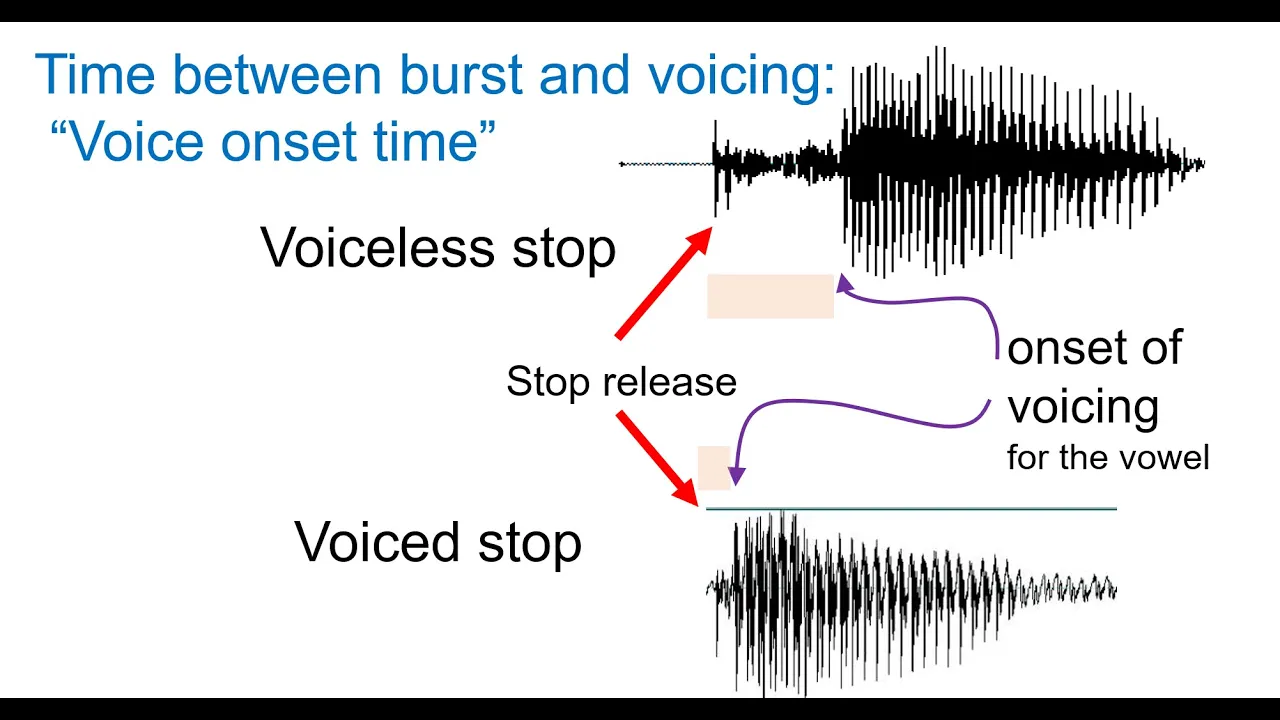












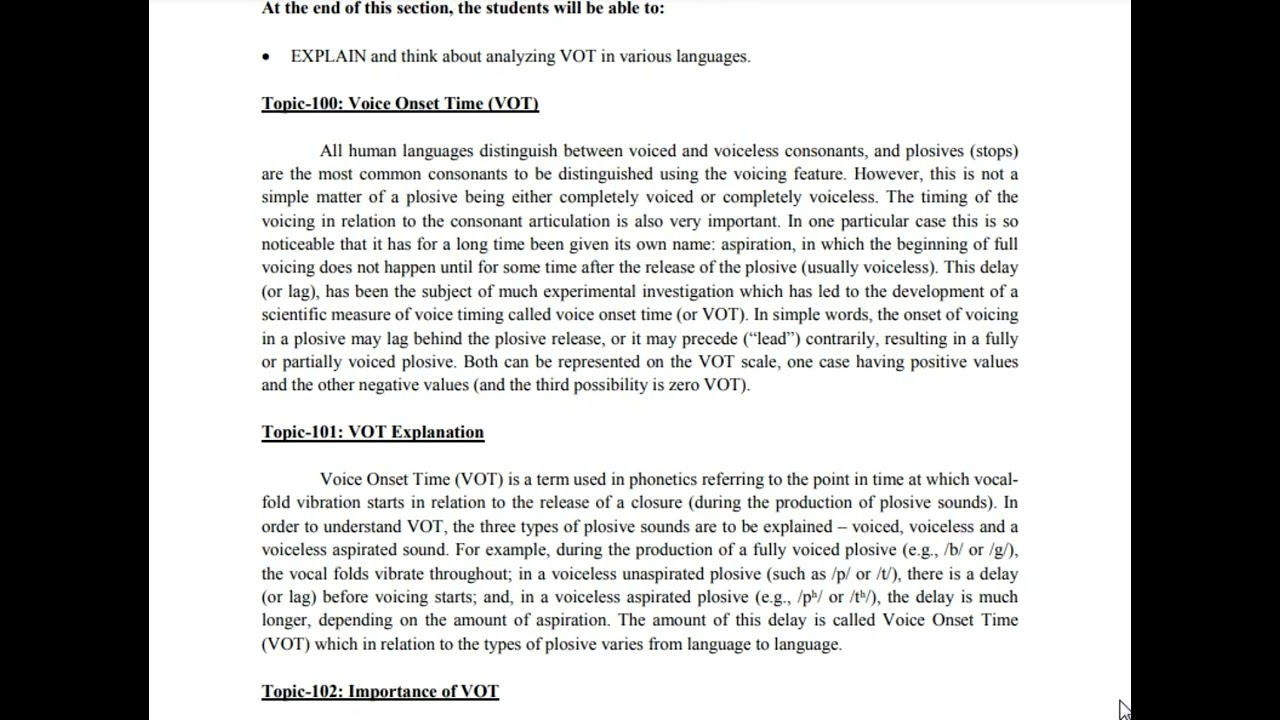
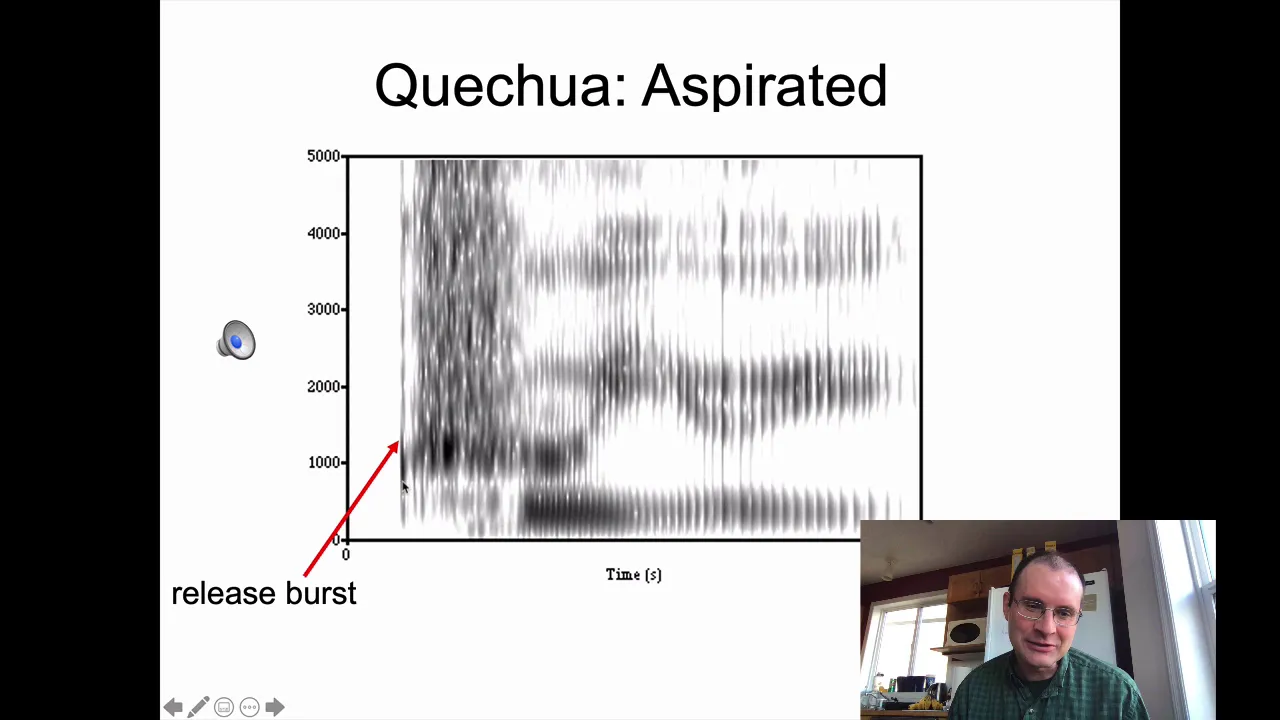

Voice Onset Time (VOT) is a phonetic measurement that distinguishes between different types of stops by measuring the time interval between the release of a closure (burst) and the start of voicing in the following vowel; in Praat, this is measured by marking the burst point with 'B' and the vowel onset with 'V' on a text grid, then creating an interval between these two points to calculate the duration, where positive VOT indicates voicing begins after the burst (voiceless stops like /p/) and negative VOT indicates voicing begins before the burst (voiced stops like /b/).
How to Measure Voice Onset Time (VOT) in Praat
Added:The conceptual definition of Voice Onset Time (VOT) and its significance in distinguishing voiced and voiceless stop consonants.
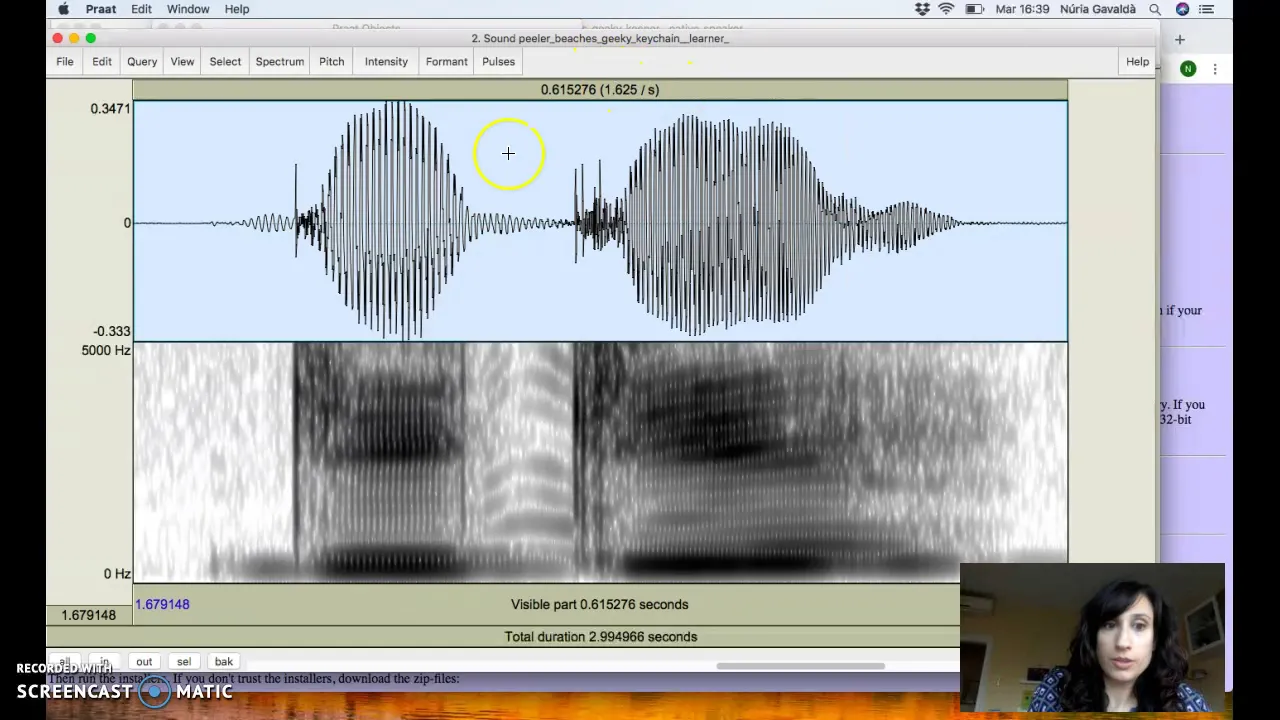
Acoustic characteristics of stop consonants, specifically identifying the closure phase, release burst, and subsequent formant transitions on a spectrogram.
Basic navigation of the Praat software, including opening audio files and configuring the waveform and spectrogram views.
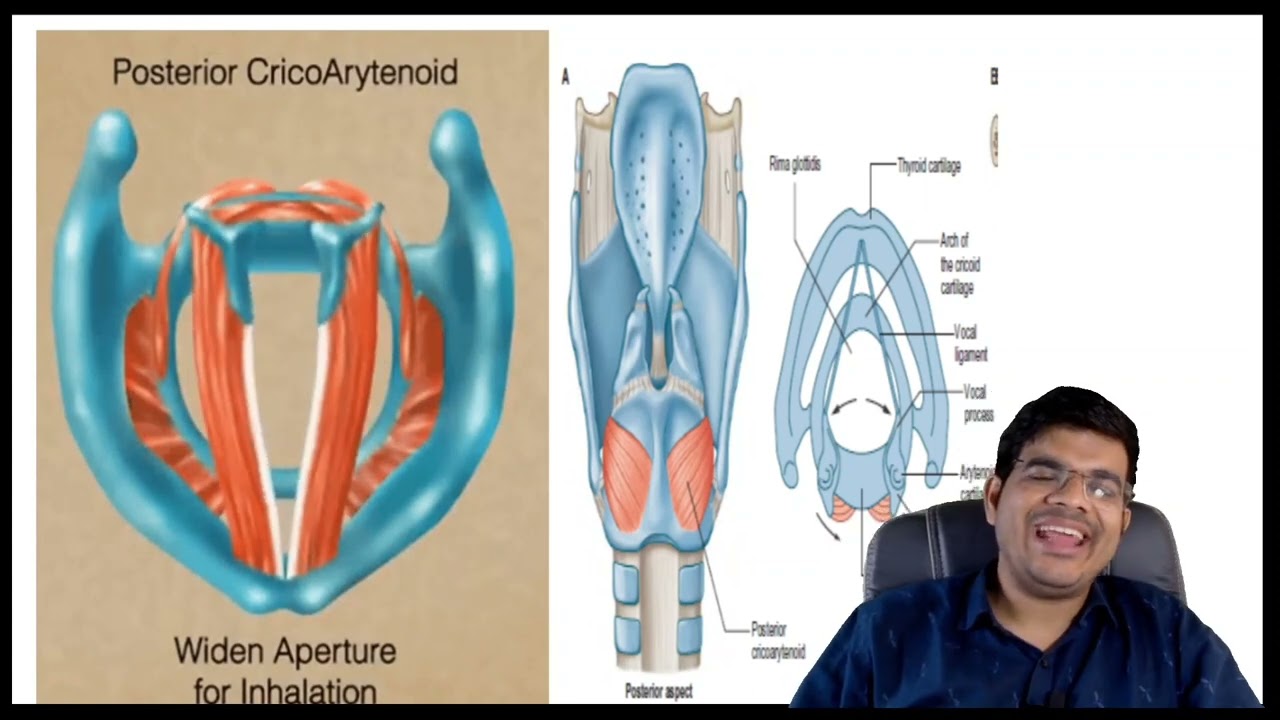
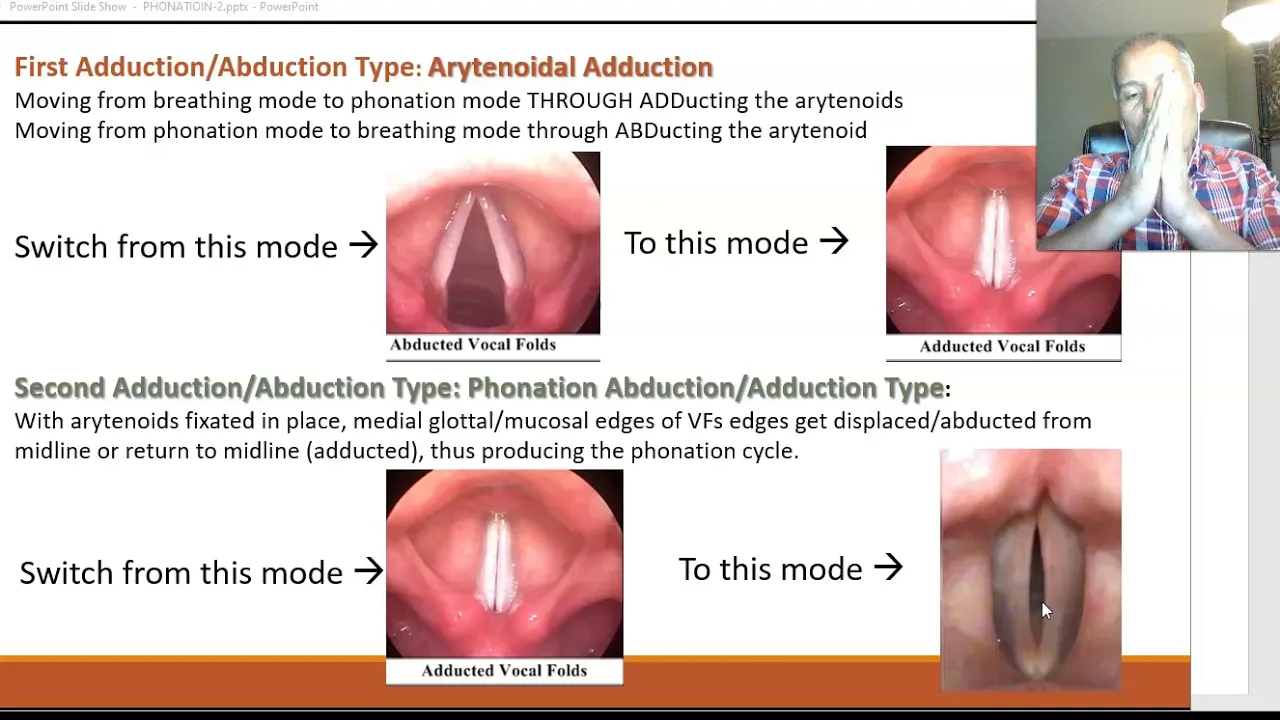
The physiological mechanism of phonation, including how vocal fold vibration (voicing) is represented acoustically as a periodic wave.
Writing or utilizing Praat scripts to automate the extraction of VOT measurements across large acoustic corpora.
Analyzing cross-linguistic variations in VOT category boundaries (e.g., comparing Romance pre-voiced stops with English aspiration patterns).
Investigating the effects of phonetic context (such as place of articulation, vowel context, and speech rate) on VOT durations.
Applying VOT measurements to clinical phonetics (e.g., assessing motor speech disorders) or second language acquisition (SLA) research.
8.2K views128likes7:36Original Release: 2021-06-23
Renwick>> In this video I'm going to show you how to use.wav files and text grids together in Praat to measure and understand Voice Onset Time which is a phonetic property that helps us distinguish between different kinds of stops.
Specifically in English we can use it measure the difference between the stops at the beginning of the word "tie" vs. the word "die."
We're going to start with an example from Hindi.
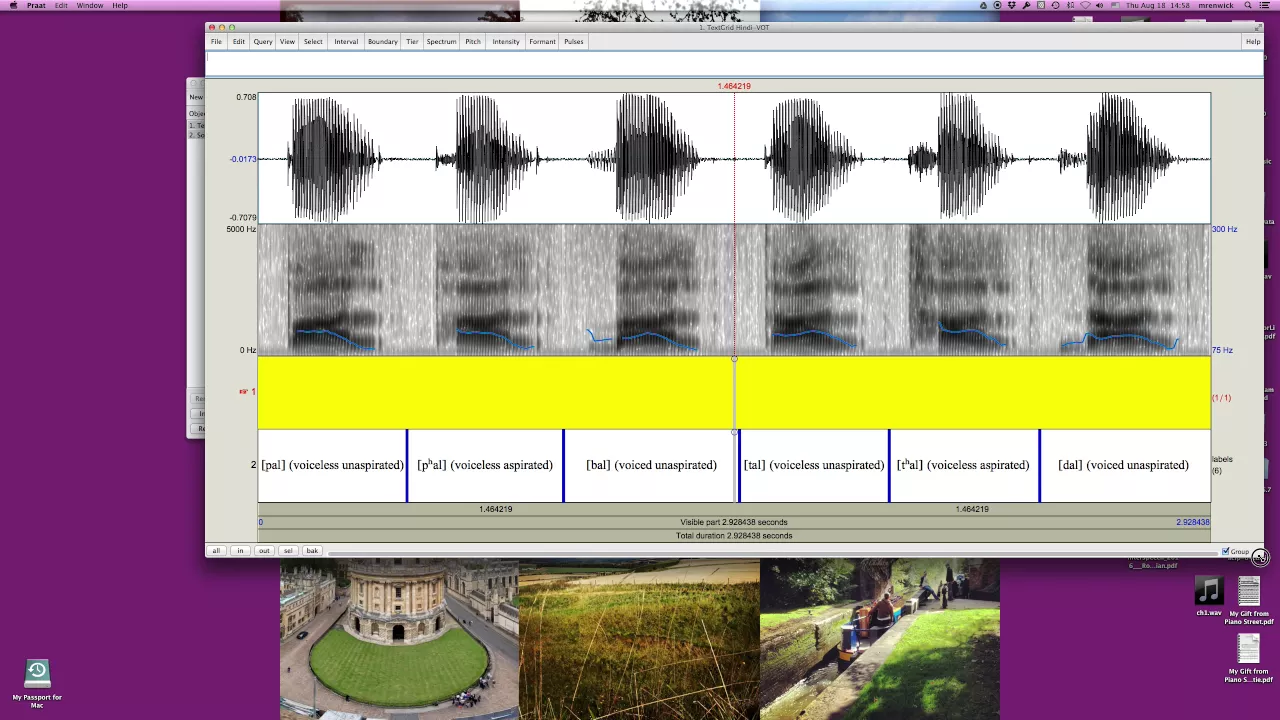
You can see that in my Praat objects window I've already loaded in a sound file and a text grid that match one another.
I open them together by selecting them both and click View & Edit which shows me the wave form, the spectrogram, and then the text grids which is a kind of text annotation linked to specific time points in the wave file.
You can see that I have inserted labels on the text grid that correspond to the different utterances.
There are six different syllables or words spoken in this sound file.
I have split them all up using these labels so I can now more easily find them.
What we are going to do first is zoom into [pal].
You notice I did that by selecting a particular area of the text grid so that it turns yellow and then clicking the SEL button to zoom in to the selected area.
This is [pal] and we can play it by clicking on the grey button.
What we want to do is measure the Voice Onset Time.
You remember that the Voice Onset Time as we discussed is the time between the release of a closure that's this right here.
That's the closure--I'm sorry that's the release of the stop.
It's the time between the release of a closure and the start of voicing in the vowel which is right here.
How do we get that time?
It's not that difficult and Praat can help you.
To start zoom in and we're going to place the cursor just before the burst, just to the left of the burst.
That gives us a red vertical line when we click.
Down in the tier of the text grid that's labeled Burst, I can click on the little blue dot and that gives us a marker.
This is now an annotation point and we can type when it's selected red like it is right now.
I'm going to type "B" for burst.
Next I'm going to go to the beginning of the vowel and I'm going to click right at the beginning of the voicing in the vowel.
Once again I have a red vertical line that gives me blue dots on the burst tier and the other tiers of the text grid as well.
If I click, I get a new marker and I'm going to type "V" for vowel.
So what we now want to find is the difference between B and V.
We're going to let Praat help us with that as well.
The way we're going to do that is by using the VOT tier to be able to add more text annotations.
If I click again on B, I get more blue dots on the other tiers.
If I click on the dot for the VOT tier, I now get a solid line.
What we're now creating is an interval rather than a point in time.
So an interval spans a period of time whereas a point simply marks a single moment in time.
Now we can actually just measure the VOT very easily.
The Voice Onset Time in this case is this duration of the selected area.
You can see the duration at the top of the wave form and also below the text grid.
It's.014287 and that is a duration in seconds, we can put into milliseconds.
It's about 14 milliseconds and that's a positive Voice Onset Time.
So that's how we measure the Voice Onset Time for a unaspirated voiceless stop like the one in [pal] but we also want to measure the Voice Onset Time of a voiced unaspirated stop like the one in [bal].
You can see that [bal] is very different because it has this long period of voicing in the closure.
This actually means that voicing starts before the burst, right?
So if Voice Onset Time is the time between the release of a closure and the start of voicing.
Well, voicing starts before the release so Voice Onset Time in this case is negative.
All right, so how do we get negative Voice Onset Time?
Let's have a look.
The first thing that we want to do is still to mark the burst itself.
We can mark that with a "B." Then we can go back over to the left and we can mark the beginning of the voicing.
This is the start of voicing during the closure itself.
The next thing that we want to do is measure the difference there.
If you want to, you can also mark where the vowel itself kicks in but we're not going to use that to measure the Voice Onset Time because we know that the Voice Onset Time is going to be negative.
It's going to be this amount to the left of the burst.
If we have a look at the duration, up here, of the selected interval.
It says.083952.
So that is about 84 milliseconds.
But remember this is negative voice onset time so it's -84 milliseconds.
Now we have measured VOT two different ways.
We've also seen how to insert labels in the text grid.
We can now use those to navigate.
The last thing that we want to do is before quitting Praat we want to make sure to save the text grid because if you do not save the text grid from within Praat, Praat will not save it for you and it will not give you any warnings.
It will just throwaway your work when you close the program.
To save the text grid click the Save button, then click Save as text file.
Give your file name with the extension ".textgrid."
Then click Save.
In my case because I already had it in my system so I'm just going to replace it.
That is how you use a text grid and a.wav file to measure Voice Onset Time.
Up Next

4:06
Measuring Voice Onset Time (VOT) in English Stops with Praat
@SpeakingL2
73.8K views•2012-07-04
36:52
Constraint Interaction in Optimality Theory: Epenthesis & Deletion
@Vidyamitra
180 views•2018-08-20

8:59
Forensic Linguistics: How Language Solves Crimes | PBS
@pbsstoried
1M views•2024-01-25

21:32
Accent Expert Explains U.S. Regional Dialects | Part 1
@WIRED
9.3M views•2021-01-21
Related Study Plans & Knowledge Roadmaps
Structured learning paths in Linguistics
linguistics
Optimality Theory: Tableaux & Constraints
01Phonological Basics: Sounds, Syllables & Rules
02Foundations of Optimality Theory: GEN, CON, and EVAL
03The Constraint Inventory: Markedness vs. Faithfulness
+ 2 more learning modules
15h5 modules
Explore Roadmap
linguistics
Morphosyntactic Alignment: S, A & P Systems
01Foundations of Syntax: Transitivity and Arguments
02The Linguistic Variables: Mapping S, A, and P
03Nominative-Accusative Alignment
+ 3 more learning modules
12h6 modules
Explore Roadmap
linguistics
Analyzing Sign Language: Phonology & Syntax
01Foundations of Sign Language Linguistics
02Phonology: The Five Parameters of a Sign
03Morphology: Word Formation and Classifiers
+ 2 more learning modules
14h5 modules
Explore Roadmap
linguistics
Pragmatics: Speech Acts, Grice & Politeness
01Introduction to Pragmatics: Meaning in Context
02Grice’s Cooperative Principle & Implicature
03Speech Act Theory
+ 2 more learning modules
14h5 modules
Explore Roadmap