











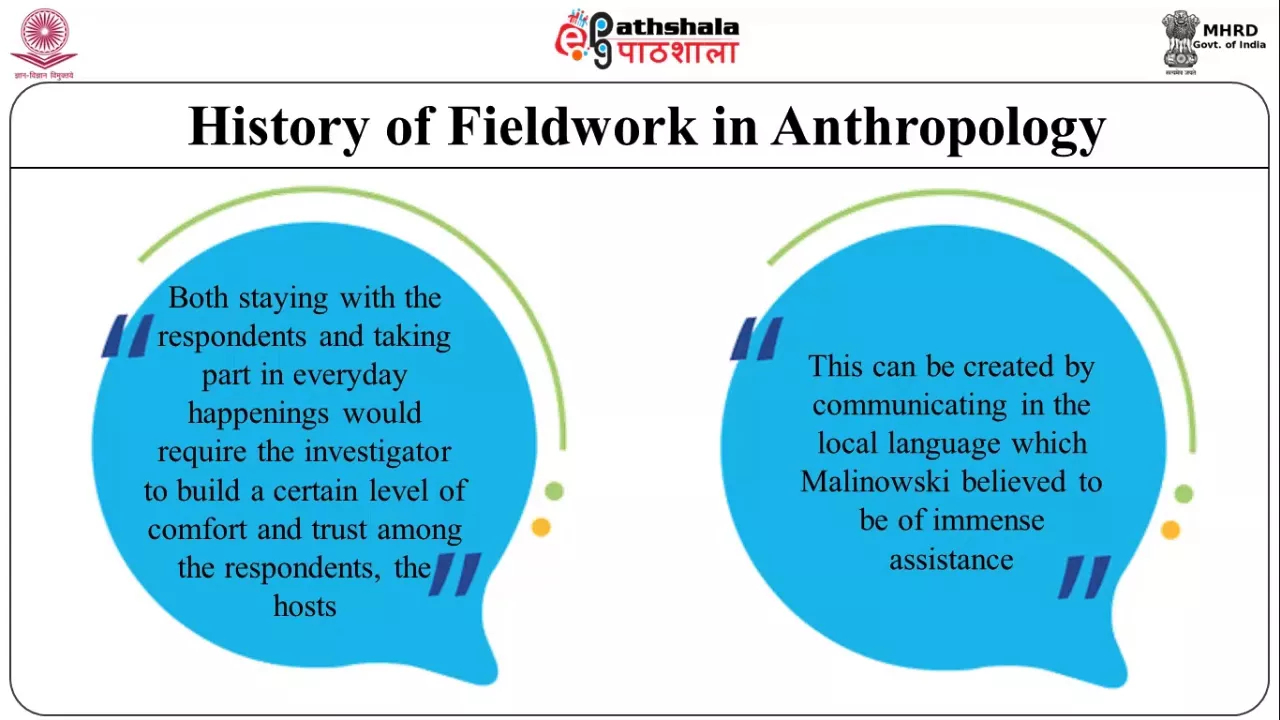








Anthropology employs four primary qualitative research methods: (1) Semi-structured interviews, where researchers enter with a list of prepared questions but allow conversations to flow naturally to learn about each participant; (2) Participant observation, where researchers immerse themselves in a community or environment for extended periods, observing either passively or actively; (3) Focus groups, which gather multiple participants with similar backgrounds to discuss specific topics and reveal how people acknowledge differing opinions; and (4) Textual analysis, which involves examining documents based on specific frameworks to understand concepts like reflexivity. Each method offers unique advantages and is suited to different research questions.
Anthropology Research Methods: Participant Observation & Interviews
Added:hello everyone welcome back to my channel or if you're new here hello my name is olivia brown and i am currently a fourth year undergraduate student at ucla studying anthropology and today we are finally talking about probably one of my most requested videos and that is all about anthropology research methods now anthropology research methods i found very quickly is not a topic that's very centralized anywhere online like i could not find a single article that was like all right these are the main five or four however many research methods of anthropology and so i was like no wonder everybody's asking me to talk about this so today we're gonna be focusing on the qualitative ethnographic sides of anthropology and anthropology research if you don't know what an ethnography is that's not a problem at all i recommend checking out this video if you want if not you'll be fine with context clues so let's just get into it now throughout my time researching for this video i kind of came to this conclusion that there's four main research methods that come up again and again in anthropology now the first one is a semi-structured interview and semi-structured interviews are really awesome because as the researcher or the anthropologist you go into this interview with a list of a few questions there's something that you're curious about there's something that you want to know about and you have these questions ready to go for when you interview your participants now the fun part is you have these questions and then you kind of just let it go from there you have this conversation with however many people you decide to interview and each interview is kind of going to go a little bit of a different direction because even though you have a set of questions that are like your starting point you get to focus a lot on each individual person that you end up interviewing now semi-structured interviews are also really great because they kind of occupy this middle ground between structured interviews and non-structured interviews i don't know if that's the technical term but you get the perks of both right you have some sort of control that you get from a structured interview because you do go in with a few questions that are the same for every single interview but then you also gain like this flexibility um from these non-structured interviews where you get to learn a lot about each of the participants now the next anthropology research method that i'm going to be talking about is participant observation and well i would argue that semi-structured interviews are probably the most widely used in the social sciences i would say that participant observation is probably the most well known when it comes to anthropology more specifically and participant observation really goes back to this traditional idea of anthropologists where you have an anthropologist going into some part of the world or new culture new community and observing exactly what's happening there it's a very traditional and a very stereotypical almost way of understanding anthropology but now this idea of participant observation can happen in many different ways it can be what i just said where the researcher goes and observes a particular community for several months or several years and comes to this conclusion but it can also happen in like the corporate space or the digital space or on a college campus or maybe you as the researcher go into the google workspace i i don't know and you kind of observe behind the scenes like what it's like how the employees interact with each other how you interact with your bosses and you can actually get hired to then tell like top dog of that company what could be fixed based on your observations and spending time in this space now one thing that i really do want to mention about participant observation is this can be done both passively and actively and the main difference there is whether or not you are becoming a part of this community so in the corporate space if you're observing some business structure i'm not really sure the passive way to do this would just be kind of you like walking around with your clipboard behind the scenes just like taking some notes right but the active way to do this would actually be talking to employees really learning more about the company maybe trying to participate in some of the things that you could participate in um and there's definitely pros and cons to the active and passive forms of participant observation but i did want to mention that like that research method kind of has two like sub methods so yes on to the next now this research method might be my favorite i just think it offers so much um and that is focus groups now in a focus group rather than interviewing one person like we talked about in the semi-structured interview you are interviewing a group of people and you're focusing on a certain set of questions or a certain idea hence the term or the name focus group now this is really great because right in front of you as the researcher you have a ton of different perspectives right like if you have one question is a hot dog or a hamburger better right some of these people are going to think the hot talk is better and some of these people are going to think the hamburger is better and they are going to be having this conversation and you get to see a lot when people have different opinions and how people acknowledge each other's differing opinions i think brings a lot to the surface and you get a lot out of that as the researcher now often what tends to happen in these focus groups too is you are targeting a group of people like the people in your focus group can have a similar background so maybe you have a bunch of single mothers in there or maybe you are interviewing an immigrant community or something else to create this kind of control and also usually you want like the people that you're interviewing to have some similarity because that's what your research is about but ultimately here you just get a lot of different perspectives and generally to the researcher will tend to do like many focus groups like there's not just one group and then you write your research paper you'll have these questions and talk to different groups of people many different times before you come to a certain conclusion now this last research method i've probably honestly interacted with the least as a college student and that is textual analysis now it's probably a little bit surprising because i feel like it's the thing that you actually would expect college students to be doing but textual analysis and anthropology research is exactly what it sounds like and you are analyzing a certain set of texts based on a certain idea or a certain framework so maybe you have a group of documents and you are looking at these documents and you're trying to understand reflexivity i'm making this up as i go it almost gives you like a starting point of investigation if that makes sense like you are starting with this idea of reflexivity and seeing how it plays into these different texts and then of course comparing and contrasting each of these texts so those are actually all four of the main anthropology research methods that i was able to compile for this week's video i do want to mention really quickly there are more types of anthropology research this is very connected and focused on qualitative research methods and of course that each of these research methods bring their own pros and cons to the table for some research projects and research questions one of these methods will be better than another and you can't have one that's the best my question for you guys now is would you guys like either a part two to this video or maybe a video series where i take a deep dive into each of these methods more specifically so a whole video may be devoted to participant observation and then semi-structured interviewing and focus groups i don't really know exactly what that would look like but i wanted to just throw it out there and would love to hear your guys's opinions now as always my sources will be linked down below any other important information will be linked down below and i will see everybody in next week's video so i hope you're having a fantastic week a fantastic sunday and yes i will see you all then bye [Music] you
Up Next

Corporate Anthropology: How Organizations Operate as Modern Tribes
@TEDx
50.6K views•2010-07-13

Astrobiology Through an Anthropological Lens: Field Insights
@georgiatechastrobiology
128 views•2021-04-14
Visual Anthropology Explained by UCLA Anthropology Major
@AliviaBrown
12.5K views•2021-10-31

Psychology of Internet Trolling and Pranks Explained
@AzzyLand
10.7M views•2017-12-20
Related Study Plans & Knowledge Roadmaps
Structured learning paths in Anthropology