Corporate Anthropology: Culture, UX & Design
Learning Goal: Apply the methods of design and corporate anthropology to analyze organizational cultures, decode user experiences, and develop culturally resonant products and brand strategies.
- Prerequisites: None (A background in qualitative research, sociology, product design, or brand strategy is helpful but not required).
- Estimated Total Study Time: 18 Hours
Module 1: Foundations of Anthropology and Ethnography
This module introduces the core scientific discipline of cultural anthropology and its primary qualitative methodology: ethnography. You will learn the historical context of the "four-field approach," grasp how to transition from an outsider (etic) to an insider (emic) perspective, and understand the foundational mechanics of participant observation in the field.
Recommended Videos

- Why this video: Dr. Montague provides an academic yet accessible introduction to cultural anthropology, detailing the systematic study of human culture. This lecture is critical for mastering the holistic four-field approach and understanding how immersive ethnographic fieldwork forms the bedrock of anthropological inquiry.

- Why this video: This video breaks down the concept of ethnography into its practical, real-world execution. It illustrates how researchers physically immerse themselves within a community over extended periods—participating in everyday routines to document the unwritten rules of human socialization.

- Why this video: This concise field guide explains the operational mechanics of participant observation and semi-structured interviews. It details the delicate balance an anthropologist must maintain between being an active participant and an objective observer in the field.
Module 1 Knowledge Check
- Define the difference between emic (insider) and etic (outsider) perspectives in ethnographic fieldwork.
- List the four subfields of traditional academic anthropology and explain why cultural anthropology is the most applicable to design and business.
- Identify two ways of minimizing observer bias when conducting participant observation in a newly entered environment.
Module 2: Corporate Anthropology: The Business of Culture
This module transitions from academic settings to commercial environments. You will examine the emerging field of industrial and corporate anthropology, learning how multi-billion-dollar technology firms and global brands leverage ethnography to decode consumer behaviors, uncover unexpected system interactions, and drive business innovation.
Recommended Videos

- Why this video: Michael Henderson introduces corporate anthropology by treating modern corporations as analogous to traditional "tribes." He explains how applying ethnographic tools internally and externally helps organizations realign their operational models with authentic human behaviors.

- Why this video: Dr. Genevieve Bell, a pioneer of corporate anthropology at Intel, delivers an incredibly comprehensive keynote. She demonstrates that technology design must start with human needs, histories, and cultural patterns rather than pure engineering capability.
- Why this video: This extensive interview with practicing anthropologist Amy Santee acts as a practical handbook for utilizing anthropological frameworks in business, design, and user experience fields. She details how to translate anthropological theory into strategic corporate action.
Module 2 Knowledge Check
- Explain how a corporate anthropologist treats a modern business enterprise as a "tribe" with its own linguistic, structural, and behavioral norms.
- Detail Genevieve Bell's perspective on why technological roadmaps often fail when they neglect historical and cultural contexts.
- Identify three distinct business functions (e.g., product strategy, market research, organizational change) that benefit from embedded anthropological research.
Module 3: Design Anthropology and UX Research
This module bridges cultural ethnography and modern product design. You will examine the critical methodological differences between standard UX research and true Design Anthropology. While UX often focuses on optimizing current interfaces, Design Anthropology centers on future-making, stakeholder ecosystems, and transforming the "familiar into the strange" to reveal latent user needs.
Recommended Videos
- Why this video: Professor Sarah Pink, a leading voice in visual and digital ethnography, introduces Design Anthropology. She outlines how the convergence of anthropology and design creates participatory, forward-looking research methodologies that go beyond simple UX testing.

- Why this video: Featuring Mike Youngblood and Ben Chesluk, this Nielsen Norman Group discussion highlights the primary anthropological methods used in design research, focusing on the core concepts of "making the strange familiar" and "making the familiar strange."

- Why this video: This tutorial outlines the tactical skills needed to conduct ethnographic-style qualitative user interviews, focusing on establishing psychological safety, active listening, and avoiding leading questions.
Methodological Gap Note: While these videos establish strong foundations in digital ethnography, Design Anthropology is uniquely focused on intervention and future-making (co-designing what could be, rather than merely evaluating what is). For deeper academic study on this distinction, we recommend reading Design Anthropology: Theory and Practice by Wendy Gunn, Ton Otto, and Rachel Charlotte Smith.
Module 3 Knowledge Check
- Differentiate between standard UX research (usability testing, A/B testing) and Design Anthropology (holistic ecosystem mapping, participatory design, and future-making).
- Explain the practice of "making the familiar strange" and provide an example of how it can uncover latent, unexpressed user needs.
- Describe how to design an interview protocol that prioritizes qualitative "psychological safety" to yield un-filtered, self-reported user stories.
Module 4: Corporate Ethnography and Organizational Culture
This module focuses internally, applying the lens of corporate ethnography to analyze workplace subcultures, administrative rituals, and organizational dynamics. You will learn how to systematically decode internal power structures, map corporate mythology, and execute structured cultural audits to drive meaningful alignment and change.
Recommended Videos

- Why this video: This MIT Sloan lecture explains how ethnography unmasks the underlying realities of workplace culture. It demonstrates that culture is not a top-down management mandate, but an emergent property born from day-to-day interactions, rituals, and employee socialization.

- Why this video: This video introduces a systematic 8-step framework for performing an organizational culture assessment. This process helps corporate ethnographers structure their research objectives, execute stakeholder observations, and design actionable change interventions.

- Why this video: This segment provides an in-depth breakdown of the Cultural Web Model—a crucial tool for corporate ethnography. It outlines how to audit internal subcultures by mapping out 6 key dimensions: power structures, organizational systems, control systems, rituals & routines, stories, and symbols.

- Why this video: This webinar provides a practical masterclass in decoding the unwritten rules of corporate communication, symbols, and status. It shows how corporate ethnographers can systematically audit official communications, KPIs, and corporate rituals to understand a firm's true underlying culture.
Methodological Gap Note: While the 8-step assessment and the Cultural Web Model offer robust, structured frameworks, conducting internal corporate ethnography requires navigating complex internal politics and ethics. For additional resources, look into scholarly guides such as Organizational Ethnography by Sierk Ybema et al.
Module 4 Knowledge Check
- Detail the 6 nodes of Johnson & Scholes' Cultural Web Model and how to use them to construct an internal culture audit.
- Reconstruct the 8-step process for executing an organizational culture assessment.
- Explain how corporate rituals (e.g., daily standups, pre-shift chants, annual reviews) reinforce internal power structures and influence employee retention.
Module 5: Culturally Resonant Product & Brand Strategy
This module covers the market-facing applications of corporate anthropology. You will learn to use semiotics (the study of signs and symbols) to design brand messages that connect with cultural movements. You'll also analyze real-world case studies of localized product design, illustrating how ignoring local contexts leads to product failures while deep cultural empathy drives global success.
Recommended Videos

- Why this video: This deep dive introduces brand semiotics, explaining how symbols, colors, typography, and imagery carry underlying cultural codes. It teaches marketers and designers to audit how their brand assets communicate meaning on both conscious and subconscious levels.
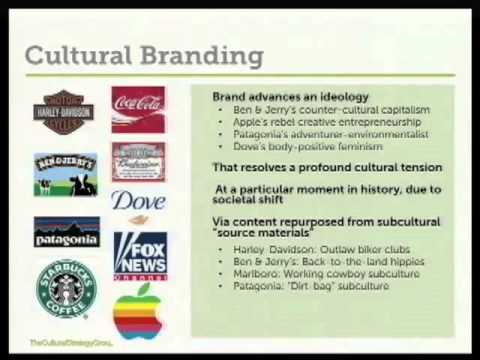
- Why this video: Douglas Holt, the pioneer of cultural branding theory, explains how iconic brands build massive equity by championing distinct ideologies that address societal shifts and resolve cultural contradictions, rather than simply listing functional product benefits.

- Why this video: This video highlights localized product design, detailing why Google Maps initially struggled in India because developers overlooked local navigation habits. It illustrates why products must adapt to local spatial behaviors.

- Why this video: This case study of Urban Ladder's high-end oak wood dining tables in India highlights the gap between product design and cultural context. It explains how overlooking local materials, environmental humidity, and housekeeping habits can lead to product failure, even with great design and pricing.
Module 5 Knowledge Check
- Explain Douglas Holt's concept of Cultural Branding and how it differs from traditional mindshare or emotional branding.
- Define semiotics within a marketing context and explain how a brand asset (such as a logo or color choice) can unintentionally convey negative cultural meanings.
- Analyze the failures of Google Maps (India navigation) and Urban Ladder (oak dining furniture) to describe why literal feature translation is inferior to cultural adaptation.
Course Map
Key People Index
- Dr. Genevieve Bell: Cultural anthropologist and former Intel Vice President. She pioneered the integration of cultural insights and ethnography into hardware and chip design at Intel, and currently serves as a leading voice on the social implications of AI and cyber-physical systems.
- Professor Sarah Pink: Director of the Emerging Technologies Research Lab at Monash University. She is a pioneer of digital, visual, and interventional design anthropology, specializing in how people interact with emerging automated technologies.
- Douglas Holt: Former Oxford marketing professor and developer of the Cultural Branding Model. His groundbreaking research explains how brands achieve iconic status by addressing cultural disruptions and offering powerful myths that resolve societal tensions.
- Michael Henderson: Corporate anthropologist, author, and organizational culture researcher. He focuses on studying companies as modern "tribes," applying anthropological observation tools to align workplace environments with natural human group dynamics.
Final Self-Assessment
Complete this comprehensive self-assessment to verify your mastery of corporate and design anthropology.
- Methodological Mastery: I can design a qualitative research plan that balances passive participant observation, semi-structured interviews, and artifact analysis.
- Emic vs. Etic Balance: I can identify my own cultural assumptions (etic) and outline a strategy to uncover a community's internal meaning systems (emic).
- Corporate Tribe Mapping: I can analyze an organization's internal culture, identifying how its formal structure differs from its actual, informal social networks.
- Cultural Web Diagnostic: I can map out all six nodes of the Cultural Web Model (symbols, stories, rituals, power structures, control systems, and organizational design) for any enterprise.
- Ecosystem UX Formulation: I can map user workflows not just as isolated digital interactions, but as part of a larger ecosystem of cultural habits, environmental constraints, and social relationships.
- UX vs. Design Anthropology: I can articulate when a project requires simple usability testing (UX) versus when it needs forward-looking participatory design (Design Anthropology).
- Semiotics Audit: I can perform a basic semiotic analysis on brand marketing materials, identifying the explicit signs, implicit codes, and broader cultural narratives they evoke.
- Cultural Branding Strategy: I can develop a brand strategy that addresses a current societal shift or cultural tension, positioning a product or brand to resolve that contradiction.
- Localized Design Risk Audit: I can review a product design roadmap and identify potential cross-cultural risks, avoiding the trap of simply translating copy instead of adapting the product's function.