

















Organizational culture assessment is a critical first step before implementing any culture change initiative, involving an eight-step process that examines Edgar Schein's three levels of culture (artifacts, espoused values, and shared basic assumptions) using multiple data collection methods including surveys, focus groups, interviews, observation, and artifact analysis to understand the current state and identify gaps between existing and desired cultural states.
Assessing Organizational Culture: Process, Models, and Tools
Added:Understanding the basic definition and components of organizational culture, such as Edgar Schein's three levels of culture: artifacts, espoused values, and underlying assumptions.
Foundational concepts of Organizational Behavior (OB), including how group dynamics, leadership styles, and structures influence workplace environment.
Basic knowledge of social science research methodologies, specifically the differences between qualitative methods (interviews, observation) and quantitative methods (surveys).
An introductory understanding of change management principles and why organizations undergo transition.
Developing cultural intervention and alignment strategies to bridge the gap between an organization's current culture and its strategic goals.
Managing cultural integration and conflict resolution during complex corporate events such as mergers, acquisitions, or rapid scaling.
Designing long-term metrics and Key Performance Indicators (KPIs) to monitor, evaluate, and sustain cultural transformation over time.
Exploring advanced diagnostic frameworks, such as the Competing Values Framework (CVF) or the Denison Organizational Culture Model, to analyze industry-specific case studies.
4.7K views115likes14:35Original Release: 2023-09-21
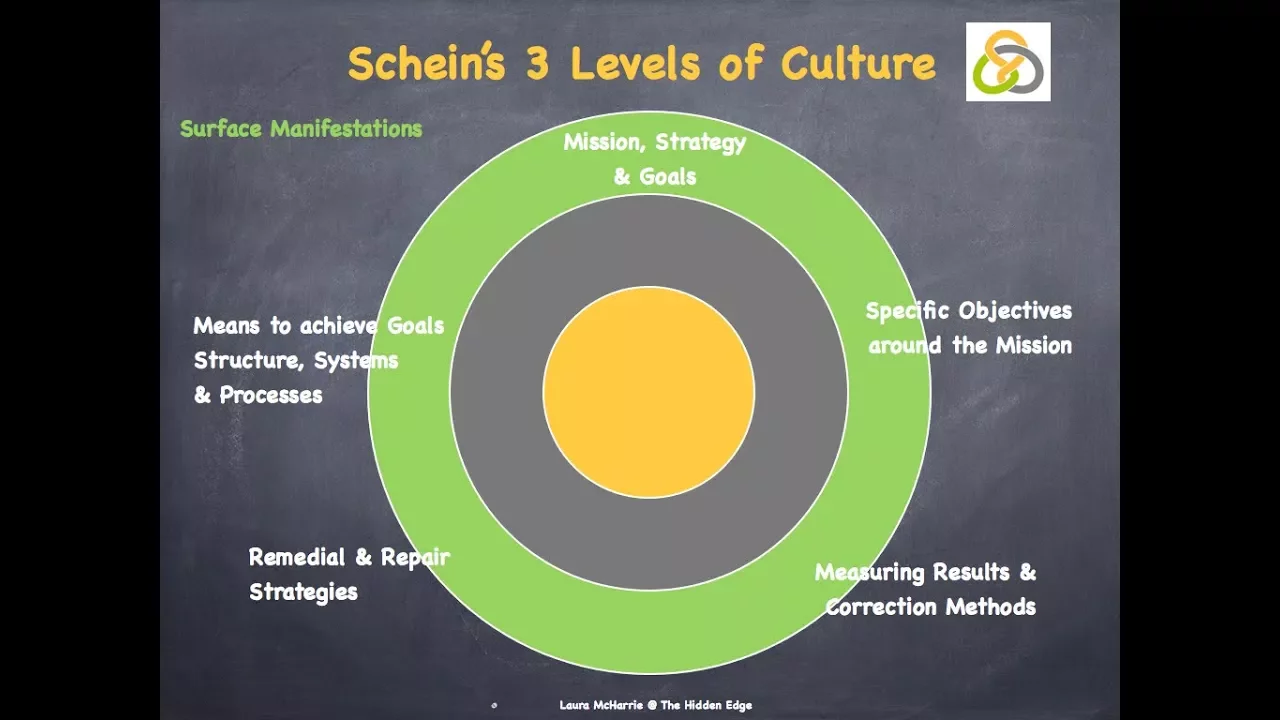
before embarking on any culture change maybe you'll want to assess the existing organizational culture first [Music] let's start with why do we need to assess organizational culture if you're going to create any kind of organizational change whether it's a minor operational process Improvement all the way up to full on organizational transformation then it's always going to be helpful to understand the status quo anti what that means is the current situation the culture of the organization as is this will allow you to design a project or program of change that can deliver for example improved employee satisfaction enhanced Employee Engagement reduced turnover or better customer service and therefore increased customer satisfaction clearly then this is important so what's the process for assessing organizational culture an assessment of organizational culture involves learning about understanding and evaluating things like shared values beliefs and assumptions behaviors and cultural norms within an organization Edgar shine analyzed organizational culture into three levels artifacts or the surface manifestations of culture values and underlying assumptions these are kind of like an iceberg with the most important levels largely hidden from View shine's model is an important one for project managers to understand so let me summarize it artifacts are the visible surface elements of an organization's culture the things that any outside Observer could notice they include things like Furniture decorations dress codes rituals and the stories that employees tell about their organization they are easy to observe but they can be very difficult to understand particularly if you don't conduct a deeper investigation of the culture often their history is deep meaningful and revealing spoused values are the company's set of established values and Norms of behavior they set out how things should be done what choices we should make values affect how the employees will interact with one another how they will behave and how they will represent themselves and the organization to the outside world they are often reinforced by public statements and values like strap lines brandings and statements of core organizational values shared basic assumptions are the Bedrock of organizational culture these are the beliefs that people take for granted and rarely question they therefore tend to go unremarked by employees and unnoticed by Outsiders yet they have a profound implication for all of the values behaviors and artifacts the organization produces understanding shared assumptions and will help you to explain otherwise inexplicable artifacts and values and behaviors so now we've got some important basic Theory under our belts let's get down to the meat of how we go about assessing organizational culture here are eight steps to help you craft your own assessment process first you need to agree the purpose of your assessment set down why you want to conduct your assessment of organizational culture maybe it's to identify areas for improvement or to align culture better with the organization's goals objectives and strategy perhaps you want to enhance Employee Engagement or improve customer service and satisfaction or maybe you'll be doing it to support another wider change initiative step two is to determine your assessment method there are various ways to conduct an organizational culture assessment and we'll look at those later select the methods that will serve your goals and fit your resources here you'll need to think about things like sample size and which elements of the organization's demographics you're going to be surveying you might naturally default to a full cross-section of the organization or you might be interested in particular part of the organization at step three you need to design your assessment agree the questions that you need to answer and if you're asking the questions directly rather than observing what's going on with things like interviews focus groups or questionnaires you'll also need to think about the sequence of the questions for a fully comprehensive understanding be sure to include both qualitative and quantitative methods I recommend you take a staged approach too that is to say you conduct your initial assessment with a small sample and from what you learn from that sample you refine your assessment process in subsequent stages and finally you also need to think about things like confidentiality and anonymity to ensure that you get the best and most honest responses from the people that you survey step four is easy to understand it's where we go out and collect the data administer your surveys conduct your interviews facilitate your focus groups and make your observations and after that step five is analyzing all the data that you've collected here you'll be looking for patterns for themes and also for discrepancies these will be the basis for your conclusions and your recommendations both of what changes to make and how best to go about making them consider using software tools to help you with quantitative data analysis and the collation of qualitative data this is an area where I expect AI tools will come into their own and make our data analysis and presentation much easier and more powerful step six is interpreting the results AI may already be able to provide a first pass at interpreting the data but I think this is wherefore the foreseeable future human beings will still be important in assessing what the data means and the conclusions we can draw from it identify the findings from your assessment of the culture which will support the changes you want to make and those which will hold them back from here you can determine the level of alignment between the current state of the organizational culture and the desired culture and of course you can start to understand where the misalignments LIE the penultimate step in the process is to report on your findings share your results with your survey sponsors and ultimately with your stakeholders present your findings clearly and be sure to separate facts from interpretations and of course good practice means presenting the findings up front Bluff bottom line up front people want to know what they want to know before they will sit through the reasoning and the process statements then facilitate a discussion both to make sure that everyone in the room has a shared understanding of what you've presented and also to put your findings and interpretations to the test them to a wider range of interpretations and understandings to come up with something that everyone can agree with finally the last step is to develop a plan this is where we move from assessing organizational culture to using your assessment so I will stop here knowing that you're fully familiar with the importance of setting goals and objectives defining scope building a schedule and a budget and creating a plan and of course once you have a plan implementing the plan and making the changes however do remember that assessing organizational culture is an iterative process as soon as you make any kind of change then you will need to go back and refine your assessment to assess Where You Are to fully understand your change process you need to take continuous soundings of the culture so when you want to conduct an assessment of organizational culture what are the tools you can use well there are a wide variety and I recommend that any assessment uses multiple tools not all of them but you will get a deeper and better understanding if you combine several Tools in your assessment process number one surveys and questionnaires are perhaps the most common way to assess organizational culture they are relatively quick and easy to develop and they are relatively inexpensive to deploy at scale they can produce a huge amount of data which can if designed properly create quantitative information for you the downside is that they are precise and therefore can't get at the subtle details it's very hard to know what questions to ask so that every person can give you a clear insight into their understanding of the culture for that you need other methods and the next is focus groups focus groups are a largely qualitative approach they'll allow us to get information from a small group of people at the same time they allow you to explore in depth those kind of topics that perhaps are not well suited to detailed exploration by surveys and questionnaires they can be expensive to run bringing together a lot of people and needing an experienced facilitator and observers to make them work properly however it can be less expensive than our third approach which is one-on-one interviews you can carry out interviews with employees at every level and within every part of your organization and you can select your interviewees to give you the kind of representation of the organization's demographics that you need to ensure that your survey of the culture is fully representative these can be the best way to get a deep level of insight into the subtle topics that are not well explored by things like focus groups or questionnaires the final two approaches don't ask people anything they just use observation and the first is observation of people and of behaviors people don't often say what they do in fact they don't always know what they're doing so observing what people actually do can give you very different information that complements what you learn from interviews focus groups and questionnaires it can often be the best way to identify unspoken cultural norms and shared values within the organization make sure you observe both the way that employees interact with one another and the way that they interact with customers clients and organizational partners the final technique is observation of artifacts wander around the organization seeing what you see try to look with fresh eyes and see the things that are around the organization notice everything from the style of formal documents to the graffiti in the toilet from the way that people leave their workspace at the end of the day to the organization of informal spaces like kitchens and coffee lounges wand around and use your eyes take photos make notes and discuss what You observe with a small group of colleagues now I want to end up with a quick plug but I'm not selling you anything I'm offering you something free on my second Channel management courses we have a full course on YouTube called the nature of organizations this course is a YouTube playlist which is entirely free so if you're interested in learning more deeply about organizations and in particular there are about a half a dozen videos documenting the main models of organizational culture then hop over to the management courses YouTube channel or indeed my management course's website and take a look at the nature of organizations course I'll put links in the description [Music] please do give this video a like if you've enjoyed it or learned from it I'll be making loads more great project management videos for you so please do subscribe to the channel and hit the Bell so you don't miss any of them and I'll look forward to seeing you in the next one
Up Next

61:56
What Is Semiotics in Marketing? A Brand Strategy Guide
@MarketingMeetup
988 views•2021-10-05
46:36
Retention Habits of Top DTC Ecommerce Brands Revealed
@SendItPodcast
44K views•2026-03-03

15:23
Decoy Effect: How Pricing Psychology Influences Consumer Spending
@bobinvestsUS
90K views•2026-01-05

17:30
The Planned Obsolescence of Light Bulbs and Tech
@veritasium
25.3M views•2021-03-26
Related Study Plans & Knowledge Roadmaps
Structured learning paths in Business
business
Pop-Up Retail: Strategy, Design & Execution
01Introduction to Pop-Up Retail & Strategic Goal Setting
02Budgeting, Site Selection, and Legal Essentials
03Experiential Retail Design & Visual Merchandising
+ 2 more learning modules
15h5 modules
Explore Roadmap
business
Reg CF: Startup Funding, Marketing & Launch
01Introduction to Equity Crowdfunding & Reg CF
02Platform Selection & Legal Preparation
03Crafting High-Converting Campaign Assets
+ 2 more learning modules
14h5 modules
Explore Roadmap
business
Productized Services: Scaling Solo Freelance
01Foundations of Productized Services
02Packaging and Scope Definition
03Pricing and Subscription Models
+ 2 more learning modules
15h5 modules
Explore Roadmap
business
Gov Procurement: Find, Bid & Win Contracts
01Introduction to Government Procurement & Business Setup
02Small Business Certifications & Set-Asides
03Finding and Analyzing Contract Opportunities
+ 2 more learning modules
14h5 modules
Explore Roadmap