Migrating to Usage Pricing: Strategy & Value
Learning Goal: Implementing a value-based pricing transition strategy to migrate enterprise clients from legacy fixed-rate contracts to usage-based pricing models.
Estimated Total Study Time: 12 Hours Prerequisites: Basic understanding of B2B SaaS business models and enterprise software sales processes.
Module 1: Foundations of Business Pricing Models
This module establishes the foundational theories of modern software pricing. You will explore the evolution of monetization—from upfront perpetual licensing to predictable flat-rate SaaS subscriptions, and ultimately to utility-based consumption. We will address the structural limitations of seat-based licensing and why the market is undergoing a seismic shift toward value-based and usage-based models to capture customer-aligned economic surplus.
Recommended Videos

Why this video is valuable: This video provides a critical historical perspective, mapping out the three major waves of software pricing: on-premises capital expense, SaaS subscription operating expense, and modern utility-based models. It clearly contrasts how fixed subscription fees create a mismatch between customer value and costs, pointing the way toward consumption-based pricing as the ultimate alignment vehicle.

Why this video is valuable: This session reviews the fundamental shift that occurred when Salesforce popularized SaaS subscriptions in 1999 and shows how data-intensive modern cloud environments demand a move toward true consumption-based options. It breaks down the commercial philosophy of paying only for active resource usage instead of broad user access.

Why this video is valuable: To migrate enterprise clients successfully, you must base your pricing on perceived customer utility rather than internal development costs or competitor indexes. This video introduces the core marketing mechanics of value-based pricing, instructing SaaS leaders on how to analyze buyers' alternatives and differentiate attributes to build value-based price points.
Why this video is valuable: This brief clip addresses the real-world performance context of modern enterprise SaaS. It explains why seat-based licensing is stagnating (e.g., Microsoft 365 slowing seat growth to 6%) and why the broader market is rapidly transitioning to value-driven, usage-driven metrics to sustain enterprise expansion.
Knowledge Checkpoint
- Explain the fundamental operational differences between seat-based SaaS subscriptions and consumption-based utility models.
- List the three distinct pricing waves of enterprise software and the core macroeconomic driver behind each transition.
- Define the formula for "Value-Based Pricing" and contrast it against "Cost-Plus" pricing.
- Discuss why mature SaaS enterprises experience seat-based saturation and why consumption billing provides a higher expansion ceiling.
Module 2: Understanding Enterprise Contracts & Value Metrics
To transition an enterprise from flat-rate to consumption pricing, you must determine what the client actually values. This module details the process of identifying, testing, and selecting a robust consumption-based "value metric." You will learn the rigorous criteria used by top-tier SaaS companies to ensure their billing metric scales in tandem with client success and company serving costs.
Recommended Videos

Why this video is valuable: Kyle Poyar of OpenView outlines how to identify the ideal value metric for usage-based products. He introduces five core selection criteria, emphasizing flexibility (allowing low friction land-and-expand strategies) and customer alignment, noting that the metric itself is often more critical than the actual dollar rate.

Why this video is valuable: This tutorial offers a direct framework for verifying that your value metric is commercially viable. It outlines the four non-negotiable conditions for a SaaS pricing metric: it must be measurable, customers must want more of it over time, they must expect to pay in this manner, and it must align with value delivery.

Why this video is valuable: Dan Balcauski breaks down the technical characteristics of a robust value metric. He stresses that the chosen metric must scale predictably with both the customer’s business value and the SaaS vendor's cost-to-serve, while remaining fully relatable and controllable from the buyer's perspective.
Knowledge Checkpoint
- List the five value metric selection criteria outlined in the Kyle Poyar playbook.
- State the four mandatory conditions for testing whether a SaaS pricing metric is viable in the enterprise market.
- Explain why a chosen value metric must correlate positively with the software vendor's internal serving costs.
- Define the term "relatable metric" and explain why metrics that are completely outside the customer's control fail during enterprise sales cycles.
Module 3: Designing a Usage-Based Pricing Structure
Once a value metric is established, you must design a structured, predictable, and fair commercial framework around it. This module covers the operational construction of pricing tiers, volume discounts, and hybrid models. We will analyze the mechanics of creating entry-level tiers that encourage adoption, as well as enterprise capacity tiers that mitigate cash flow unpredictability.
Recommended Videos
Why this video is valuable: This technical overview shows how a multi-tiered API usage structure functions in practice. It outlines a hybrid approach where a baseline quantity (e.g., 40 calls) is bundled into a predictable monthly fee, and subsequent use is charged at a variable tier.
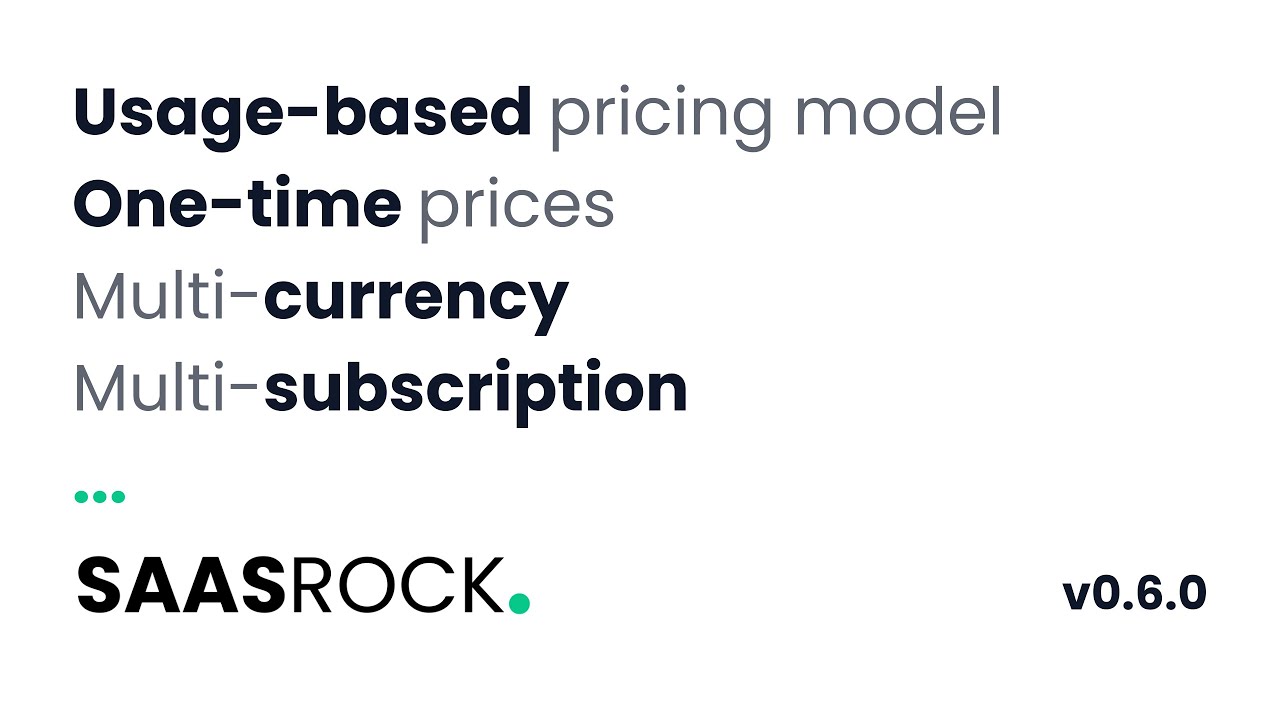
Why this video is valuable: Designing structures requires a practical look at hybrid systems. This walkthrough details the setup of "flat rate plus usage" packages, explaining how to blend fixed baseline subscriptions with overage-based billing engines to lock in recurring revenue floors.

Why this video is valuable: Enterprise procurement teams require financial predictability. This strategic clip highlights why you should design different packaging strategies for low-end versus enterprise markets, coupling usage flexibility with multi-year predictable commitments at the high end.

Why this video is valuable: Using Posthog as a case study, this video explains how to structure high-volume pricing tiers where per-unit costs systematically decrease as usage scales. This system incentivizes massive consumption while remaining fair to enterprise-scale accounts.

Why this video is valuable: This short video offers a clean, systematic framework for designing distinct pricing tiers. Learn the rule of premium tier creation, adding 25-100% value to higher levels to appeal to buyers with different budgets and needs.
Knowledge Checkpoint
- Detail the operational differences between tiered overage pricing and volume-discount pricing.
- Explain the mathematical mechanics of a "hybrid SaaS model" combining flat subscriptions with variable usage fees.
- How does Posthog's volume-discount structure scale per-unit rates down from 0.0009 per event? What is the business strategy behind this?
- Describe how to balance the buyer's need for budget predictability with the business's demand for usage-based upsells.
Module 4: The Migration Playbook: Operational Execution & Churn Mitigation
Operationalizing a pricing transition is often where enterprise migrations face the greatest risk. This module focuses heavily on transition tactics. We will cover parallel billing (dual-running billing systems during transition), the mechanics of grandfathering legacy enterprise accounts, and how to safely deprecate legacy pricing infrastructure without causing customer churn.
Recommended Videos

Why this video is valuable: This case study highlights a critical rule of migration: do not go live with a new billing solution on day one. It outlines the operational execution of running legacy billing processes in parallel with the new system to guarantee data integrity before full switchover.

Why this video is valuable: The CEO of CircleCI explains why changing pricing models is operationally complex. Specifically, it notes the technical challenge that companies face because they cannot easily decommission legacy billing infrastructure until every legacy cohort is completely migrated.
Why this video is valuable: This video provides a tactical look at grandfathering provisions. It demonstrates how to reward early loyal supporters by offering multi-year price protection windows (e.g., grandfathered rates locked in until a set future date), maintaining customer retention while paving the way for higher rates on new signups.

Why this video is valuable: This guide explains the strategic use of grandfather pricing as an incentive for client loyalty. It teaches you how to present price migrations to existing clients in a way that respects their historic lifetime spend, lowering churn risk.
Knowledge Checkpoint
- Outline the tactical process for executing a "parallel run" of two separate enterprise billing engines.
- Define the steps to decommission legacy pricing systems without interrupting client operations.
- Draft a model grandfathering contract provision that allows a legacy client to maintain their flat rate for 24 months before shifting to consumption.
- Explain the risk of immediate churn during sudden price migrations and how grandfathering mitigates this risk.
Module 5: Enterprise Negotiation & Client Communication
The final step is to pitch and negotiate the transition with enterprise clients and procurement teams. This module covers value-based selling frameworks, handling price objections without discounting, and communicating structural pricing updates clearly during contract renewals.
Recommended Videos

Why this video is valuable: Chris Orlob presents a masterclass on dealing with enterprise procurement. He teaches a framework to isolate pricing objections into three distinct buckets, enabling SaaS leaders to identify the real driver of buyer resistance and maintain value without resorting to discounts.

Why this video is valuable: Understanding the procurement perspective is key. This video outlines how corporate buyers assess price protection clauses and multi-year subscription terms, giving you the strategic foresight needed to structure your migration agreements.
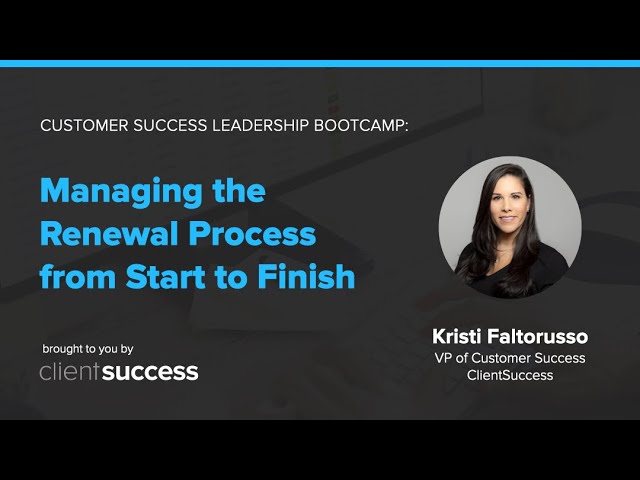
Why this video is valuable: This video lays out an actionable playbook for managing the pricing conversation during renewal cycles. It explains how to confirm renewal intent first and then run through current-versus-list comparisons, ensuring transparent and constructive billing adjustments.

Why this video is valuable: Salespeople often struggle with price resistance. This guide teaches structured, step-by-step tactics to acknowledge price concerns without lowering your rate, refocusing the client on the financial return of your value metric instead.
Knowledge Checkpoint
- Explain Chris Orlob's framework to isolate price resistance into three specific buckets.
- Define "Price Protection Provisions" from an enterprise procurement officer's point of view.
- Map out the timeline for a renewal conversation where a major pricing model change is being introduced.
- Demonstrate how to handle an objection regarding "unpredictable consumption charges" using value-based selling techniques.
Course Map
Below is the recommended sequence of modules and operational checkpoints for your transition program:
Key People Index
- Kyle Poyar (Partner at OpenView): A leading expert on product-led growth (PLG) and usage-based monetization models. Poyar established the industry-standard five-criteria test for validating consumption metrics.
- Dan Balcauski (Founder of Productside): A prominent B2B SaaS pricing consultant and expert on value metrics. Balcauski focuses on the alignment between customer value, serving costs, and predictable price controls.
- Chris Orlob (SaaS Sales Leader): Former executive at Gong.io and founder of pclub.io. Orlob is known for his highly practical negotiation frameworks designed to isolate and resolve procurement pricing objections.
Final Self-Assessment
Complete this final self-assessment to verify your mastery of the value-based enterprise pricing transition strategy:
- I can articulate the structural difference between seat-based licensing and consumption-based metrics.
- I can evaluate a potential pricing metric using Kyle Poyar's 5 criteria and the 4 validation checks.
- I can design a balanced hybrid model combining flat-rate subscriptions with overage tiers.
- I can explain how to set up parallel billing systems to run and verify usage data before deprecating legacy pricing.
- I can structure a multi-year grandfathering plan to transition existing enterprise contracts with minimal churn.
- I can categorize procurement objections into Chris Orlob's three core buckets to avoid discount loops.
- I can explain why capacity-based pricing options can help address the enterprise buyer's need for budget predictability.
- I can draft a renewal negotiation timeline that positions a pricing transition as a value-alignment event.