






















This video demonstrates a non-confrontational sales technique for handling price objections by breaking down the price into its components (standard features, options, government-mandated equipment, warranty, freight, and taxes), explaining market factors that affect pricing, and using value-based re-closing strategies including the 'kinder/gentler' take-away close and alternative choice close to help customers understand the true value and make purchasing decisions.
Strategic Approaches to Handling Price Objections in Sales
Added:Fundamentals of the sales cycle, including the standard stages of prospecting, qualifying, presenting, and closing.
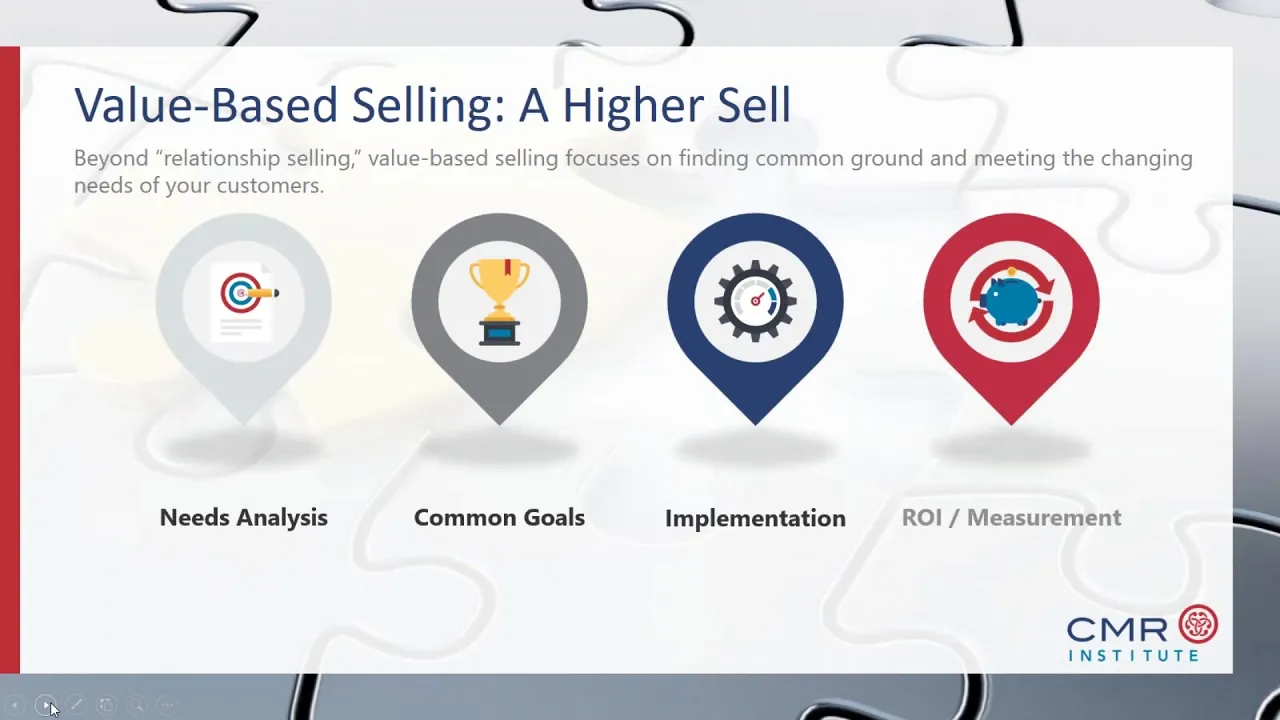
The concept of value-based selling, specifically how to establish and communicate a product's value proposition rather than focusing solely on features.
Basic psychology of buyer behavior, including risk aversion, decision-making triggers, and budget constraints.
The standard 'LAER' framework (Listen, Acknowledge, Explore, Respond) for addressing general customer concerns.
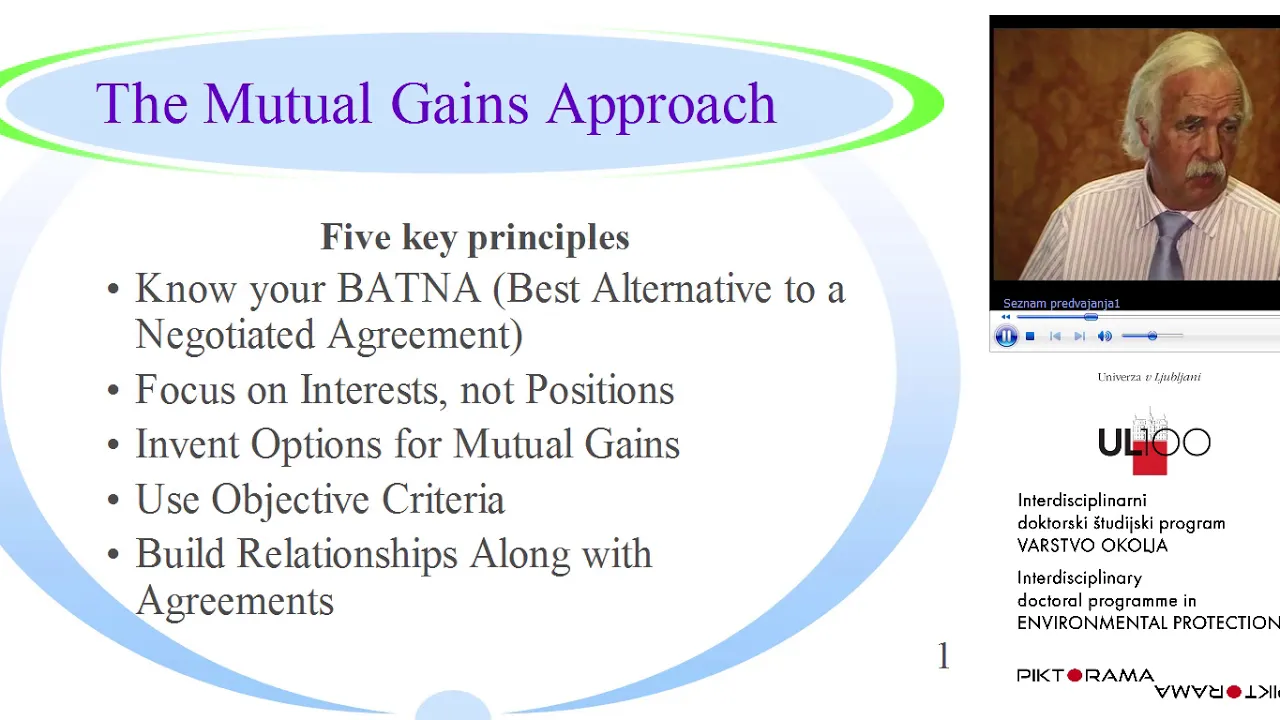
Advanced negotiation techniques, such as establishing a BATNA (Best Alternative to a Negotiated Agreement) and mutual-gains bargaining.
Behavioral pricing psychology, including price anchoring, framing effects, and decoy pricing strategies.
Customer lifetime value (CLV) optimization and post-sales relationship management to ensure high retention after a tough close.
Sales metrics analysis, focusing on tracking objection patterns and conversion rates to refine sales scripts and product positioning.
26.1K views145likes9:46Original Release: 2013-07-19
all right Ed so um if you will Circle and initial the plan that works best for you we'll get your new bike ready to ride home uh St I'm not prepared to do that that uh that just isn't going to work for me okay and which part of it won't work well in particular the price okay well the fact that you don't like the price um is not news to us virtually everybody says exactly the same thing um so it's not a problem we understand other than the price though Ed everything else is fine nothing else will stop you from taking that new bike and riding home and showing it off today correct yeah I don't think so okay hey not a problem you know the price is the easiest thing in the world to explain all right um the price is made up of factors that uh some factors certainly you'll know others may be a bit of a surprise number one would be the standard features found on every sing single Harley-Davidson bike okay handlebars for example you're going to get them whether you want them or not not an option however you did pick some options you pick the ABS package with the security you pick the red paint and you pick the cruise control all right all those make up the price something almost nobody ever considers is government mandated equipment all right there are certain things that go on every single motorcycle in this country all government mandated almost always emissions and safety related you've got the 24 unlimited warranty okay repair bills you're not going to see them for the next two years period end of sent somebody else makes those payments for you it should something break you've got Freight and setup okay those are all go in they all those go into the price now what comes out of your price well what comes out of your price is the Killer Creek discount all right we discounted at $775 okay we we didn't do it because we're nice guys we do it because it's a competitive market and we want your business now this is a plus or a minus availability in your particular case it did not add to the price of the of of the bike at all nor did it subtract it's a hot bike you picked out a terrific looking bike and a model that is very very popular we've got decent Supply so we don't get a premium nor do we have so many that we have to discount them dramatically um A Plus or a minus paint in your particular case it's a plus it added a bit to the cost because you piic you picked a special paint like you said earlier everybody's got a black bike you didn't want a black bike add to that the tavt tax um licensing and fees and you have the price you own the vehicle for at $20,000 now it didn't used to be so easy I know what you're thinking what do you mean easy it didn't used to be so easy there was a time when this $20,000 bike would sell for almost $25,000 in the not too distant past um there was an arrogance on the part of every Harley dealer we didn't discount we didn't negotiate we were inflexible and quite frankly we said hey it's our way or the highway now people bought the bikes but it was a bad taste in their mouth well it doesn't work that way anymore we are flexible we are willing to negotiate um we want to make sure that your time here is not just uh productive from purchasing the right bike but again we want you to have a good time too so with all this in mind the fact that we have disc candidate I just need you to pick out the terms that work best for you as far as 48 54 or 60 and okay one of those right there yeah I I hear what you're saying I appreciate the history lesson but I I still I just can't make sense of that price okay all right uh you want you want a better price and I I don't blame you um if we could put you on a street glide for $188,000 I Got a Feeling you'd be a whole lot happier wouldn't you oh yeah okay well you know what that's not a problem we can absolutely do that however I told you earlier today we'd adjust the price on most any bike that you picked out but what we would not adjust is your taste okay you said early on that the ABS and the security was something you definitely wanted on your next bike is it important to you definitely okay that's $1,195 all right but you know what that's your safety and that keeps the bike where it belongs okay I got a feeling that you probably could see the value in it for $195 you said black bike no thank you you said you wanted the red the red paint okay is $600 you said you're going to do a lot of writing on the highway the cruise was 295 all right now this adds up to so it adds up to 20 basically $2,100 so that's what we're talking about here but I want you to understand something please um I want you're you want the best price you can get and I don't blame you but if you keep this bike for 5 years which I doubt you will but even if you did 1050 of that is going to come back to you in resale value all right because these bikes after five years are holding actually a little more than 50% of their you know original value so this isn't going to be 2100 you spend it's going to net out to 1050 however the the bottom line is you've got $2,000 here worth of stuff that is keeping you from riding the bike home right now it's stuff that you want on the bike um $2,000 is about $40 $40 a month which is about a133 a day right um Ed you're not going to let a133 keep you from riding this bik come today well you know it's really I I just look at it as as my as my my toy that I'm you know that I'm just pissing my money away and and uh you know that's the thing that creeps me out about spending this much money for a bike is you know I just just that whole you know I've had many of car that I lost my ass on MH well you know your you're conservative ative way of looking at this is actually very very smart okay I mean that's one of the reasons you're able to buy this bike there's a lot more people that want these bikes they can actually buy them okay so my hat's off to you but let's look at let's look at two things okay we're looking at um basically a $21,000 purchase okay based on the number of miles you said you were going to drive um or ride this bike is going to be worth it and a lot more money than any car you've ever driven at the end of well let's uh let's take it out three years okay because at the end of three years I'm going to bet you a dollar to a dime if it's that long you're going to want another bike okay but you're worried you're you're thinking about the fiscal part of it and this is what I want you to recognize 9% a year is what these Bikes average depreciating okay okay I'm doing me a favor so 327 take uh 21,000 * 73% 15 330 15 330 okay now punch in $21,000 and subtract 15330 5670 divide 5670 by 36 15750 that's going to be the net cost to you per month to ride a 2013 Street Glide painted red with abs security and cruise control if you only wrote it four days a month okay that would be $45 a day it would cost you do you know if you went somewhere and rented a Harley it would cost you a minimum of 150 bucks plus per day to rent it and you wouldn't have anything after you turned it in at the end of the day at 45 bucks a day if you just roll it four days and that won't happen it's well worth every penny at is that makes sense yeah I'm good okay did I tell the truth
Up Next
67:18
The End of Free Trade: What Globalization Is Becoming
@unlearningeconomics9021
177.8K views•2025-09-22
66:41
Web3 Social Decentralization: Farcaster Co-Founder on Crypto Social Networks
@levychain
1.5K views•2022-10-18

15:23
Decoy Effect: How Pricing Psychology Influences Consumer Spending
@bobinvestsUS
90K views•2026-01-05

17:30
The Planned Obsolescence of Light Bulbs and Tech
@veritasium
25.3M views•2021-03-26
Related Study Plans & Knowledge Roadmaps
Structured learning paths in Business
business
CPG Retail Strategy: Pitching & Trade Spend
01Foundations of the CPG and Grocery Ecosystem
02Retail Math and Designing the Pitch
03Securing Shelf Space & Category Reviews
+ 2 more learning modules
12h5 modules
Explore Roadmap
business
Pop-Up Retail: Strategy, Design & Execution
01Introduction to Pop-Up Retail & Strategic Goal Setting
02Budgeting, Site Selection, and Legal Essentials
03Experiential Retail Design & Visual Merchandising
+ 2 more learning modules
15h5 modules
Explore Roadmap
business
Reg CF: Startup Funding, Marketing & Launch
01Introduction to Equity Crowdfunding & Reg CF
02Platform Selection & Legal Preparation
03Crafting High-Converting Campaign Assets
+ 2 more learning modules
14h5 modules
Explore Roadmap
business
Productized Services: Scaling Solo Freelance
01Foundations of Productized Services
02Packaging and Scope Definition
03Pricing and Subscription Models
+ 2 more learning modules
15h5 modules
Explore Roadmap