SaaS companies should use two distinct pricing models: usage-based pricing with automatic discounts for lower-end markets where customers value flexibility and cost efficiency, and predictable multi-year commitments for enterprise markets where CFOs prioritize forecast certainty, while ensuring both models scale with customer growth and maintain profitability.
Usage vs Predictability: Pricing Strategies for SaaS Value Metrics
Added:Deep Dive
Understanding of the core SaaS business model, including key unit economics like Customer Acquisition Cost (CAC) and Customer Lifetime Value (LTV).
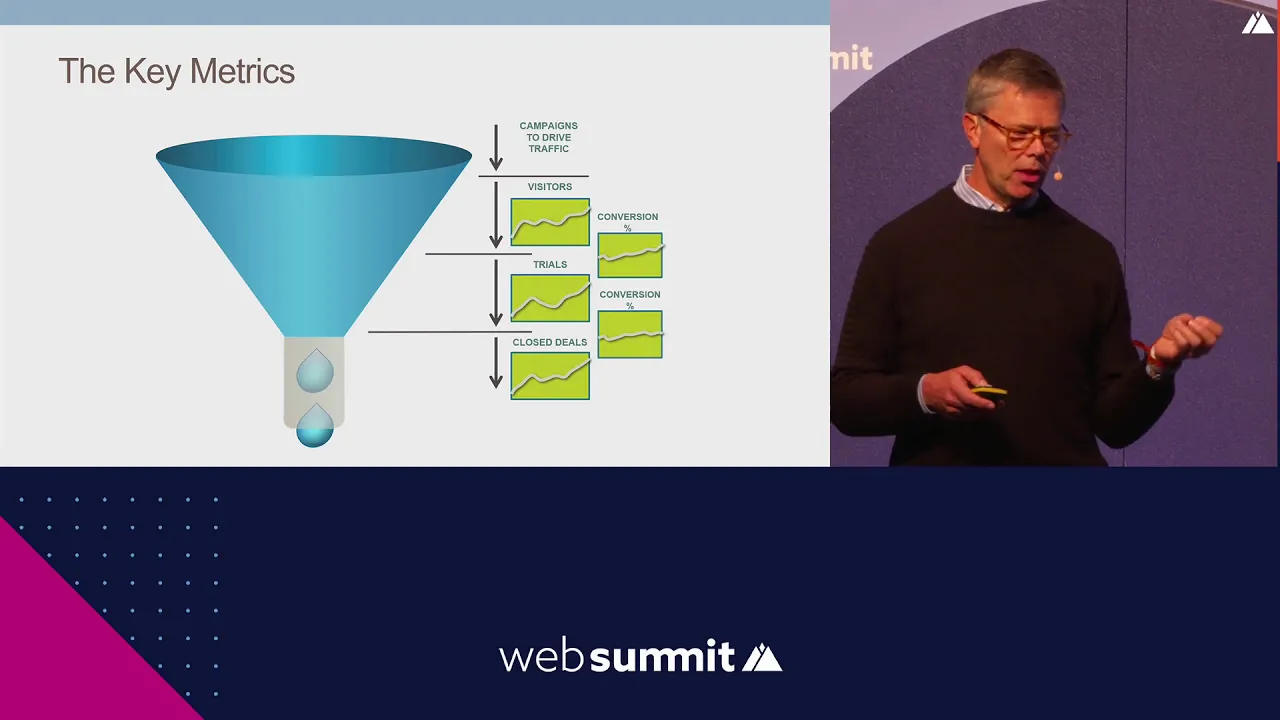
SaaS Business Model & Metrics: Key Drivers for Success
457.9K
To evaluate whether your funnel is profitable, you need to use unit economics, which looks at CAC (Cost to Acquire a Customer) and LTV (Lifetime Value of a Customer). The goal for a viable business model is that lifetime value needs to be significantly greater than the cost to acquire the customer. This is essential because traditional GAAP accounting metrics don't work for SaaS businesses due to the unique cash flow patterns.
Click to watch →

SaaS Business Models and Metrics | David Skok at Matrix Partners
48.1K
Unit economics are fundamental to SaaS viability, focusing on two key variables: Cost of Customer Acquisition (CAC) and Lifetime Value (LTV). The LTV formula multiplies gross margin by customer lifetime, where lifetime equals 1 divided by churn rate. This reveals how crucial churn is - doubling churn from 1% to 2% halves LTV. Most entrepreneurs incorrectly assume viral growth will eliminate acquisition costs, but real costs are significant (e.g., $6 per app install). The fundamental question is whether customers generate more profit than acquisition costs. Understanding these metrics helps calm investors during difficult periods by demonstrating business model soundness.
Click to watch →

Harvard i-lab | Startup Secrets: Business Model
761.6K
The fundamental ratio for sustainable business models is Customer Lifetime Value (LTV) divided by Customer Acquisition Cost (CAC), which should ideally be at least 3x. SaaS companies typically target gross margins of 80% or higher, with R&D dropping to about 15% in steady state. The key expense shift occurs from development to sales and marketing, which typically represents one-third of total costs. Subscription revenue and renewal rates (typically 85%+) indicate customer satisfaction and product value. High renewal rates often exceed 100%, meaning customers spend more over time.
Click to watch →
![Finance Case Study Example | SaaS Startup Financial Model [Template Included]](https://i.ytimg.com/vi_webp/nQSKvQkL_zc/maxresdefault.webp)
Finance Case Study Example | SaaS Startup Financial Model [Template Included]
52.7K
This section covers the foundational unit economics calculations for SaaS businesses. The presenter demonstrates how to calculate Customer Lifetime Value (LTV) by dividing 1 by the monthly churn rate (1/0.021 ≈ 48 months) and multiplying by monthly revenue ($12.99 × 48 = $618). Gross margin is applied to determine gross profit per user ($618 × 83% = $513). At the enterprise level with 5.6 users, LTV becomes approximately $2,900. Customer Acquisition Cost (CAC) is calculated as 15 times monthly gross margin ($60 × 15 = $900). The LTV/CAC ratio of approximately 3.2 indicates healthy unit economics where the business generates $2,900 in profit for every $900 spent on marketing.
Click to watch →

The Mathematics of Business, Explained
176.2K
LTV (Lifetime Value) is gross profit per customer over their lifetime; CAC is acquisition cost. The 3:1 ratio applies only to fully automated businesses (SaaS). With one human in the loop (ads to salesperson), target 6:1. With two humans (ads to phone salesperson with service delivery), target 9:1. With three humans, target 12:1. This padding accounts for inconsistency when hiring new people who are less effective. The goal is to 'nail the model' before scaling.
Click to watch →
Deep Dive
Familiarity with foundational subscription pricing models, such as flat-rate, tiered, and per-user/per-seat pricing.
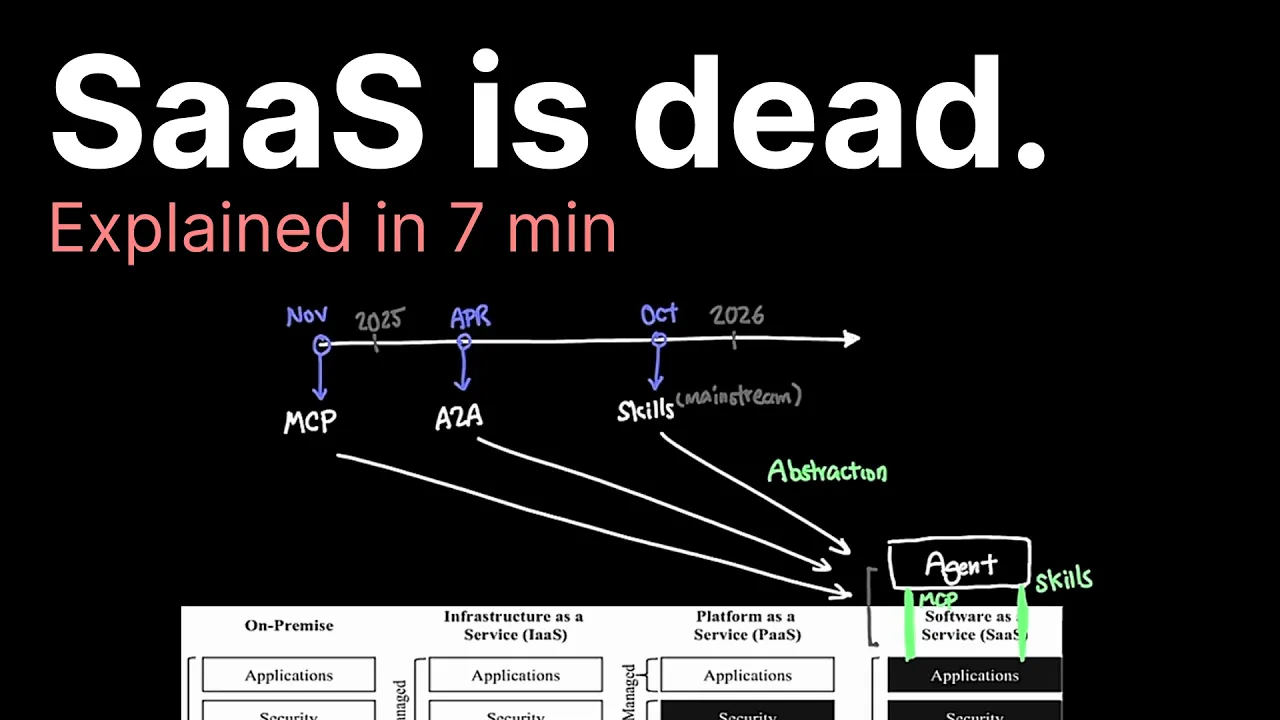
AI SaaS explained in 7 min..
83.7K
Traditional SaaS companies typically charge customers based on per-user or per-seat pricing models. For example, Salesforce offers pricing plans ranging from free to $100 per user per month. This pricing structure allowed investors to project company growth using Annual Recurring Revenue (ARR) as a key metric, since each additional user directly contributed predictable revenue.
Click to watch →

Subscription Pricing Model | Subscription 101 | Everything Film
187
Subscription pricing models are business strategies where customers pay regular fees for continuous access to products or services, offering benefits like dependable revenue, scalability, and ease of distribution; common structures include tiered pricing (bundling features at different price points), per-user pricing (charging based on number of users), per-feature pricing (allowing customers to select specific features), and flat rate pricing (fixed price for fixed features), each suited to different business contexts and customer needs.
Click to watch →

Uncal — Simple Calendar Booking for Small Teams and Individuals
105.8K
Uncal is a calendar booking tool that offers a flat-rate pricing model of $10 per month, eliminating hidden fees, price hikes, tiered access subscriptions, per-seat pricing, and feature gates.
Click to watch →

How To Price Your Software Product | Most Common Pricing Models EXPLAINED
804
Software pricing fundamentally divides into ownership-based flat-rate models and access-based subscription models. Flat-rate pricing involves a single payment for permanent product ownership, providing upfront revenue but excluding future updates without maintenance plans. Subscription models provide ongoing access rights rather than ownership, generating recurring revenue streams valuable to investors. Within subscription frameworks, four primary models exist: pay-per-user (charging per seat or named user), pay-per-feature (bundled feature packages), pay-per-usage (charging based on actual consumption like computing resources or project size), and tier-based pricing (organizing customers into different tiers with corresponding feature sets). Each model presents distinct advantages and challenges, requiring careful consideration of customer needs, business objectives, and market dynamics.
Click to watch →
![[Live Coding] Payment Processing APIs Pt 3: PayPal Checkout: Subscriptions (cont)](https://i.ytimg.com/vi/udptQuZr4rc/maxresdefault.jpg)
[Live Coding] Payment Processing APIs Pt 3: PayPal Checkout: Subscriptions (cont)
108
PayPal supports two main pricing models for subscriptions: fixed pricing and user seat (volume-based) pricing. Fixed pricing applies a consistent amount per billing cycle regardless of quantity. User seat pricing allows different pricing tiers based on quantity ranges (e.g., $10 for 1-5 seats, $20 for 6-10 seats). The tiered pricing model uses starting quantity, ending quantity, and amount per tier to define these volume-based pricing structures.
Click to watch →
Deep Dive
The concept of a 'value metric' and how identifying the correct unit of value aligns product usage with customer success.

AI Pricing Models with Paddle
1.1K
A value metric is the unit of exchange that determines how much a customer pays for a product. Effective value metrics should correlate strongly with the value the customer receives. Key criteria for selecting a good value metric include: (1) correlation with value - doubling usage should ideally mean double the value received; (2) predictability for customers to estimate costs; (3) scalability over time within a customer relationship; and (4) feasibility to measure without requiring customer input. Common examples include seats (user-based), compute/storage (usage-based), API calls, percentage of revenue collected, and tasks automated.
Click to watch →

SaaS Pricing Strategies that Work: How to Design an Optimal Pricing Model with FastSpring VP Product
14.9K
Usage-based billing fundamentally involves defining the value metric - the units by which you price your product. Common metrics include seats/users, which is essentially a form of usage-based billing. The value metric is critical because it links customer success outcomes to pricing. Key requirements: link pricing to customer success outcomes, keep it simple (easy to understand, estimate, and forecast), and recognize that seat/user-based pricing remains appropriate when success correlates with number of users.
Click to watch →

FunnelStory Podcast - What is wrong with customer success tools? | GIlad Shriki
109
Customer success should become a trusted advisor rather than a salesperson, suggesting product features only when they provide absolute value. Customer success teams should be measured by value metrics (deployment rates, adoption rates, renewal rates) rather than direct revenue metrics. These value metrics drive revenue and retention as outcomes. When teams are measured by value metrics, they naturally drive product usage without being caught up in money targets. Retention is ultimately driven by whether customers see value, making value metrics the foundation of sustainable customer success.
Click to watch →

Product-Led Growth & Usage-Based Pricing | SaaS Strategy
945
A value metric is a unit of value that determines how much a customer pays. Companies should evaluate potential metrics against five criteria: (1) Value-based - more usage means more customer value and better business outcomes; (2) Scalable - grows inside the average customer; (3) Flexible - customers can start with limited scope before expanding; (4) Predictable - helps customers estimate usage even if exact amounts are unknown; (5) Feasible - can be metered, tracked, billed, and reported consistently. The largest customers often account for disproportionate revenue, which is normal in usage-based models.
Click to watch →

Transitioning To A Usage Based Pricing Model
1K
A value metric is the unit of measurement that defines how customers perceive and experience value from a product or service. For usage-based pricing to work effectively, companies must identify the specific value metric that customers actually care about. Examples include API calls for software platforms, compute power for analytics services, number of campaigns for marketing tools, or miles driven for vehicle services. The value metric must be something that grows with the customer as they scale, is simple to understand, and aligns with how customers actually derive value from the product.
Click to watch →
Deep Dive
A basic understanding of corporate budgeting processes and why financial predictability matters to enterprise B2B buyers.

Business Value GPS for Your Business
100
Regular budgeting and forecasting processes demonstrate to buyers that owners understand their business and can predict future performance. Overly conservative budgets may indicate poor business understanding, while consistent achievement of forecasts increases buyer confidence in future cash flow projections.
Click to watch →

Orçamento – O que é Orçamento Empresarial? | Financeiro TOTVS Protheus
865
Enterprise budgeting provides several key advantages: it establishes a complete plan showing how much the company needs to generate in revenue and the spending limits that must be respected throughout the year. This creates predictability about the results the company should achieve. For revenue, the budget sets targets that the sales team commits to achieving, while for expenses, it establishes spending limits that must be followed.
Click to watch →

Noções básicas de orçamentos de empresas | SENAI Play
192
Corporate budgeting is essential because financial resources are scarce and must be allocated strategically; it involves planning, decision-making based on scenarios, and control mechanisms to ensure resources are directed to the most effective areas, helping businesses navigate market fluctuations and economic challenges.
Click to watch →

business finance 101, learn business finance basics, fundamentals, and best practices
74.7K
Budgeting serves two fundamental purposes: (1) Developing a plan to meet specified organizational goals; (2) Providing ongoing comparison between actual results and planned objectives. Companies that budget can control how, when, and where they spend money, while those that don't often feel they never have enough resources. Two main approaches exist: Top-down (authoritative budgeting) where senior leadership prepares budgets and distributes downward, and Bottom-up (participative budgeting) where managers prepare their own requests with hierarchical review. Research shows budgeting success depends on top management support, manager involvement in goal-setting, constructive handling of deviations, and avoiding punitive responses that create dysfunctional behaviors like budgetary slack.
Click to watch →

Pleasanton School Board Meeting
215
Budget predictability is essential for informed decision-making, while unpredictability leads to reactive and emotional decisions. Key principles include: (1) Financial controls through month-over-month, quarter-over-quarter, and year-over-year variance analysis, (2) Examining every line item in the general ledger to identify trends, (3) Historical data already exists and can be analyzed to identify patterns, and (4) Predictability improves with time and data analysis, not just with more data collection.
Click to watch →
Prerequisite Knowledge
- Concept 01Understanding of the core SaaS business model, including key unit economics like Customer Acquisition Cost (CAC) and Customer Lifetime Value (LTV).
- Concept 02Familiarity with foundational subscription pricing models, such as flat-rate, tiered, and per-user/per-seat pricing.
- Concept 03The concept of a 'value metric' and how identifying the correct unit of value aligns product usage with customer success.
- Concept 04A basic understanding of corporate budgeting processes and why financial predictability matters to enterprise B2B buyers.
Subsequent Learning
- Step 01Designing hybrid pricing structures that successfully combine fixed subscription bases with variable, usage-based overage fees.
- Step 02Advanced revenue recognition standards (such as ASC 606) and financial forecasting methods for contracts with variable usage components.
- Step 03Methods for conducting quantitative willingness-to-pay (WTP) research to optimize value metric thresholds and pricing tiers.
- Step 04Strategies for structuring enterprise software contracts with minimum volume commitments, roll-overs, and drawdown schedules.
- Step 05Analyzing and tracking the impact of usage-based pricing on Net Revenue Retention (NRR) and expansion revenue metrics.
Pricing Models
Lower-End Needs
Higher-End Focus
Predictability Design
Pricing Models
0:00Playing Section
- 1
Market split into lower and higher ends with distinct pricing needs.
- 2
Lower end values flexibility, scaling costs with usage volume.
The 'Taxi-Meter' Effect and the Case for Flat-Rate Simplicity
While usage-based pricing (UBP) theoretically aligns cost with value, critics argue it introduces psychological friction known as the 'taxi-meter effect.' When customers are billed per unit of consumption, they constantly monitor their usage, which can disincentivize them from fully adopting and exploring the product. This anxiety over unpredictable, fluctuating monthly bills can lead to budget unpredictability—a major pain point for enterprise procurement departments that prefer fixed, annual capital expenditures. Furthermore, complex value metrics increase cognitive load for buyers and complicate the sales cycle. In contrast, predictable, flat-rate, or unlimited pricing models eliminate billing friction, foster uninhibited product usage, and simplify financial planning for both the buyer and the vendor, proving that simplicity often triumphs over precise value alignment.
Deep Dive
Designing hybrid pricing structures that successfully combine fixed subscription bases with variable, usage-based overage fees.

EP93 Monetize This! How you can turn data, AI, and innovation into revenue.
123
Pure usage-based pricing creates extremely bumpy revenue streams, which CFOs and private equity held companies often dislike. Customers also have budgets and don't like uncertainty about whether they'll pay $1 or $100 at the end of the month. Hybrid models work better, such as including a certain amount of usage in a subscription with extra charges for overages, or warning customers when they're running out of included usage. More conservative approaches include letting customers exceed limits but then discussing the need to step up to a higher tier based on usage behavior. Subscription is often used as a broad term, but the more important question is what the subscription is based on. With AI and automation, the number of actual human beings using software might go down for many vendors. Pure user-based subscriptions based on number of named users might be a model that should be challenged because it could have reverse effects for some software vendors.
Click to watch →

Jak ustalać ceny w usługach i SaaS? Najczęstsze błędy pricingowe | #52 To(nie)kontroling
213
A hybrid pricing model combines a base subscription fee (for the application layer) with variable usage-based fees (for AI consumption). This approach provides predictability for both parties while allowing for variable consumption. The subscription component protects against AI cost volatility and provides baseline revenue, while the usage component captures value from high-consumption clients. This model is particularly suitable for companies that cannot afford pure usage-based pricing due to cost volatility.
Click to watch →

LeanScale x Prakash Raina Subskribe
15.9K
Usage-based billing manages complex metering and pricing rules including stair-step pricing, accelerators, and decelerators that are difficult to handle in spreadsheets. Multiple pricing models are supported: pure pay-as-you-go (no commitment), pre-committed models (commitment plus overage), and credit pool models (purchase credit bucket for various applications). For ARR reporting, companies distinguish between committed and uncommitted usage. Pure pay-as-you-go typically counts 80% of average consumption as committed ARR. Committed-plus-overage models have fixed base ARR with separate overage handling. Companies define their own policies for overage treatment, and auditors may interpret fluctuation patterns differently.
Click to watch →

The Big Problem With Monthly Subscriptions | Sahil Khanna
129
The best solution is often combining subscription and one-time pricing rather than choosing between them. Hybrid models separate different types of value: setup value, usage value, and ongoing value. Examples include software platforms charging subscription for access plus additional fees for usage, education products charging once for a program with optional ongoing membership, or SaaS platforms including implementation services alongside software. When pricing reflects these different value types, customers understand what they are paying for, and clarity reduces subscription fatigue. Founders should ask: What value actually repeats often enough to justify recurring billing? What user behavior proves ongoing value exists? Are we using subscription because it fits the product or simply because it's popular?
Click to watch →

Preisstrategie | Pricing B2B: Preis gehört zum Geschäftsmodell
1.3K
A hybrid subscription pricing model combines a one-time setup fee with recurring monthly payments. In this case study, companies paid €980 for a virtual booth creation (one-time) plus €78 monthly for ongoing services including sales and marketing integration. This structure provides upfront revenue while creating ongoing customer relationships.
Click to watch →
Deep Dive
Advanced revenue recognition standards (such as ASC 606) and financial forecasting methods for contracts with variable usage components.
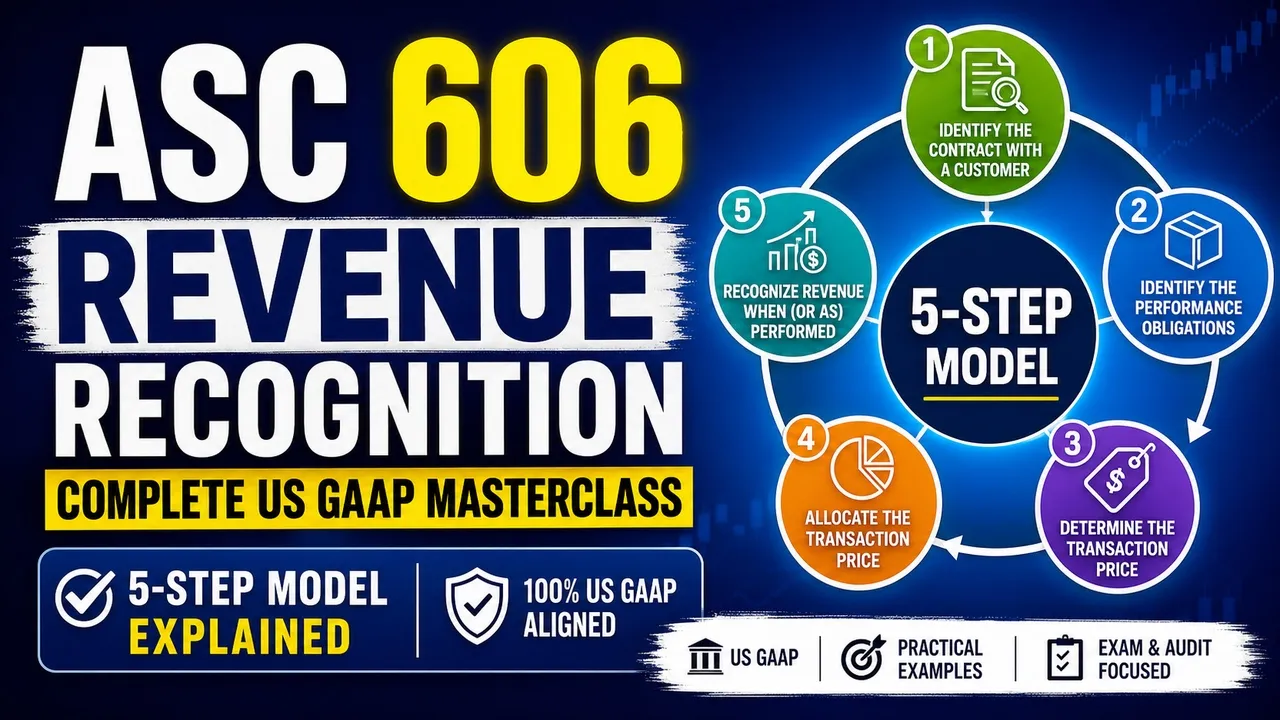
ASC 606 Revenue Recognition — Complete US GAAP Masterclass (5-Step Model Explained)
204
ASC 606 is the US accounting standard for revenue from contracts with customers, principles-based and applicable across all industries. The five-step model provides a structured approach: identify contracts (both parties approve, commercial substance, collection expectation); identify performance obligations (promises to transfer goods/services, distinct if capable of being distinct); determine transaction price (fixed, variable, non-cash consideration with constraint); allocate price based on standalone selling prices; recognize revenue when control transfers. Variable consideration uses expected value or most likely amount. Contract assets/liabilities track performance versus billing. Principal versus agent assessment determines gross or net recognition. Contract costs are capitalized when recoverable. Licenses are classified as right to use (point-in-time) or right to access (over-time). Warranties are assurance-type (liabilities) or service-type (separate obligations). Bill and hold requires control transfer criteria. Upfront fees are allocated to service periods if not distinct. Breakage is estimated and recognized proportionately.
Click to watch →
ASC 606 | Revenue from Contracts With Customers | USGAAP
6.9K
ASC 606 is a comprehensive revenue recognition standard developed jointly by FASB and IASB to replace multiple existing standards. It establishes a five-step model: (1) Identify the contract with the customer, (2) Identify performance obligations, (3) Determine the transaction price, (4) Allocate the transaction price to performance obligations, and (5) Recognize revenue when obligations are satisfied. A contract must meet five criteria: approval and commitment, identifiable rights, clear payment terms, commercial substance, and probable collectability. Consideration represents the value exchanged, which can be cash, assets, equity, or services. Entities must determine standalone selling prices for each performance obligation using methods like adjusted market assessment, expected cost plus margin, or residual approach. Revenue is recognized when (or as) performance obligations are satisfied, either over time or at a point in time. Progress tracking methods include output methods (measuring value transferred) and input methods (measuring efforts expended). Profit and loss recognition requires estimating total expected profit or loss from a contract and recognizing it proportionally as performance obligations are satisfied. Contract modifications change the scope or price of an existing contract, requiring entities to determine whether modifications add distinct goods or services (accounted for as new contracts) or relate to existing obligations (accounted for as part of the original contract).
Click to watch →
Revenue Recognition 1/2 | External Financial Reporting Decisions Section A CMA USA Part 1 Episode 24
102
The five-step revenue recognition process under ASC 606 includes: (1) Identify the contract with the customer, (2) Identify separate performance obligations, (3) Determine the transaction price, (4) Allocate the transaction price to performance obligations, and (5) Recognize revenue when obligations are satisfied. A valid contract must create enforceable rights/obligations, be approved by parties, clearly identify rights, specify payment terms, have commercial substance, and be probable of payment. Performance obligations are satisfied either at a point in time (supermarket purchases) or over time (construction projects). Transaction price may differ from contractual price due to variable consideration (estimated using expected value or most likely amount methods), significant financing components (requiring present value adjustment), or non-cash consideration (measured at fair value).
Click to watch →
Revenue Recognition ASC 606. Step 1: Identify the Contract.
62.3K
Under ASC 606 revenue recognition standards, the first step in recognizing revenue is identifying whether a contract exists with customers, which requires an agreement between two parties that creates enforceable rights and obligations, and must satisfy five criteria: commercial substance (the transaction has genuine business purpose), approval by both parties, no termination clauses allowing easy exit, identifiable payment terms, and collectibility of payment; contracts do not need to be in writing and can be oral, implied, or customary in nature.
Click to watch →
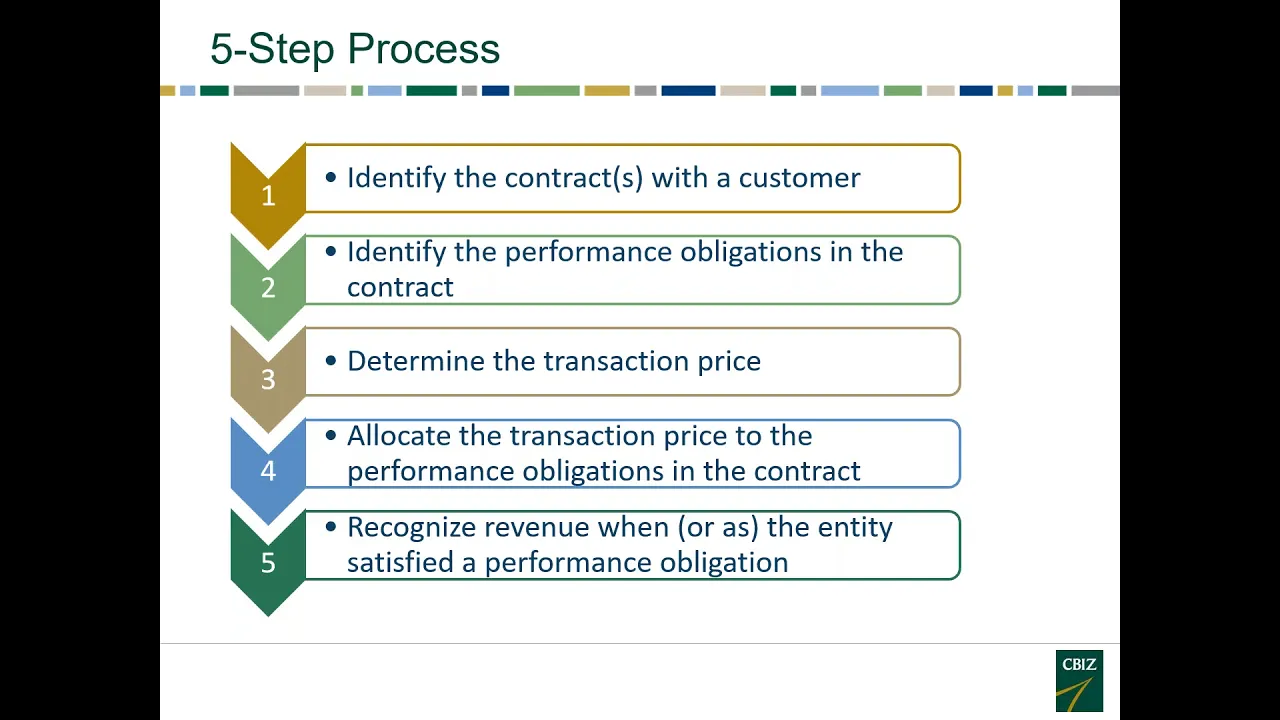
Variable Consideration, Right to Invoice and Commissions – Mastering Three Complex Areas of ASC 606
308
ASC 606 requires companies to estimate variable consideration (bonuses, penalties, discounts) and include it in the transaction price only when it's probable that a significant revenue reversal won't occur, using either the most likely amount method or expected value method; companies can use the right to invoice practical expedient to simplify revenue recognition when invoiced amounts directly correspond to value delivered; and sales commissions must be capitalized and amortized over the contract period if they exceed one year, following ASC 340-40 guidelines.
Click to watch →
Deep Dive
Methods for conducting quantitative willingness-to-pay (WTP) research to optimize value metric thresholds and pricing tiers.

Pharmacoeconomic Lec 7 part two
280
The Willingness to Pay (WTP) method is the second approach for calculating indirect benefits in cost-benefit analysis. Unlike the Human Capital method which only measures direct benefits, WTP captures both direct and indirect benefits including intangible factors like psychological well-being and quality of life. The method involves creating a hypothetical scenario describing the service (duration, effectiveness, outcomes) and asking patients what they would pay. Four approaches exist: (1) Open-ended questions asking for maximum willingness to pay, rarely used due to patient inexperience; (2) Closed-ended questions where researchers specify prices and ask yes/no responses, requiring larger sample sizes; (3) Bidding game method similar to auctions but suffers from starting point bias; (4) Payment card method where patients select from price ranges. After determining valuations, researchers compare willingness to pay with actual costs to determine cost-effectiveness.
Click to watch →

Journée d'étude février 2021 - Marine Le Gall-Ely
156
Willingness to Pay (WTP) is the maximum price a buyer consents to pay for a product or service, also called the reservation price or floor price. This concept has been studied since 1996 and applied in cultural institutions, agro-food quality labels, and scientific publishing. WTP differs from price elasticity (aggregate measure) and reference price (comparison benchmark). It represents the upper limit of the acceptable price range, which is wider than the reference price range. Value is the evaluation of experiences based on associated sacrifices and benefits, with WTP constituting the maximum monetary sacrifice accepted for perceived benefits. Key influencing factors include satisfaction (post-consumption evaluation comparing expectations with performance), risk aversion, consumer involvement, variety seeking, education level, brand loyalty, and consumer culture. Quantity increases WTP up to a limit, and personalization (consumer participation in defining product characteristics) increases WTP. Bundle pricing generally reduces WTP. Payment method affects WTP—credit card payments increase WTP compared to cash. Tiered pricing (access price plus marginal consumption price) increases WTP. When consumption level is uncertain, consumers have higher WTP than when consumption is known. Three families of methods measure WTP: real data methods using econometric analysis of sales data (high external validity but limited to existing products), survey methods including conjoint analysis and contingent valuation (suffer from hypothetical bias and strategic bias), and incentive-compatible methods from experimental economics (second-price auctions, BDM lotteries) that theoretically incentivize truthful revelation. In scientific publishing, buyers and consumers often differ—researchers (consumers) don't know subscription prices while institutions (buyers) pay. This information asymmetry creates inflated WTP estimates. The open access model is transforming this by providing broader access at lower reference prices, while publishers shift from subscriptions to article processing charges (APCs).
Click to watch →

PARE de DAR seu produto DE GRAÇA (como cobrar mais e certo)
17.4K
The best pricing approach is value-based pricing, focusing on the customer's willingness to pay (WTP). The gap between customer WTP and your cost represents the value you capture. To maximize profit, businesses should increase perceived value and reduce serving costs. Companies selling commodities face compressed margins because they offer no unique value. The key question is: what value do you create for your customer that justifies a higher price? This approach allows companies like Apple to capture maximum margin by creating products where customers perceive high value relative to price.
Click to watch →

Pricing: Willingness-to-Pay (WTP)
4.7K
Willingness-to-Pay (WTP) is the maximum price a customer is willing to pay for a product, and understanding WTP is essential for optimal pricing decisions. Key factors affecting WTP include the fairness effect (customers resist price increases during emergencies), positioning effect (placing substitutes next to premium products increases WTP), price-quality effect (consumers use price as a quality signal), switching cost effect (existing customers pay more for compatible products), difficult comparison effect (complex options reduce price sensitivity), and inventory effect (stockpiled items reduce immediate price sensitivity). Businesses can use WTP information to derive demand curves by plotting willingness-to-pay values against price levels, and to calculate consumer surplus (WTP minus price) to determine which products customers will choose. Methods for collecting WTP data include historical sales data analysis, field tests, pricing surveys, and conjoint analysis, each with different trade-offs between accuracy, cost, and practicality.
Click to watch →

Как определить ценность продукта с помощью WTP
1.6K
Willingness to Pay (WTP) is a critical tool for product founders to understand what customers are actually willing to pay for, rather than what they claim they would pay. The key insight is that free products often attract users who never convert to paying customers because they don't truly value the product enough to pay. To determine WTP, founders should conduct customer interviews, analyze existing customer data, and test pricing directly rather than relying on hypothetical questions. The most effective approach is to identify 'pain killer' problems (critical issues customers actively seek solutions for) versus 'vitamin' problems (minor inconveniences), as customers are far more willing to pay for solutions to pain killers. Early monetization forces founders to focus on solving real problems that customers genuinely value, rather than building features that may not be worth paying for.
Click to watch →
Deep Dive
Strategies for structuring enterprise software contracts with minimum volume commitments, roll-overs, and drawdown schedules.
Sell Websites to Businesses (Use My Copy/Paste Slides)
30.5K
Structure contracts with minimum commitments (3-month, 6-month, or 12-month minimums) followed by month-to-month renewal. Offer guarantees: if they don't love the homepage draft, send a full refund; if they don't get responses on reactivation campaigns or reviews, send a full refund. For clients without existing customers to reach out to, only offer the homepage guarantee. This creates accountability and reduces price objections.
Click to watch →

Should Investors Buy C3.ai Stock Right Now? | AI Stock Analysis | C3.ai Short Squeeze Opportunity?
904
Enterprise software companies often structure contracts with minimum annual commitments that decrease as the client generates sales. For C3 AI and Baker Hughes, the initial 3-year agreement guaranteed $320 million in minimum annual commitments, which was reduced dollar-for-dollar as Baker Hughes made sales. This structure incentivizes the client to purchase more services while providing predictable revenue for the software company.
Click to watch →

Blue Prism License and Costs
2.1K
Organizations should commit to license quantities that align with price break thresholds to maximize cost savings. Organizations should analyze their likely automation capability growth over time and commit to quantities that reach the next price break level. For example, if 11 robots represent a price break, an organization might commit to 11 robots but only use 3-4 in year one, 6-7 in year two, and 11 in year three. This allows organizations to benefit from lower per-unit pricing throughout the contract while managing actual usage risk.
Click to watch →

Economize na compra de software
697
Volume licensing provides enterprise benefits including company-tied licenses, flexible payment schedules up to 3 years, and access to Microsoft support channels. Contract types include Open Business (transactional), Open Value (relational, 2-year minimum), and Open Value Subscription (relational, 3-year minimum). Volume discounts of 15-20% off retail prices are available only through volume licensing. Organizations can add licenses during contract periods and renew at 30-40% of original value. Renewal ensures continued Software Assurance benefits and maintains compliance status.
Click to watch →

How to Structure, Negotiate, and Win the Azure Commitment Game
251
Enterprise cloud negotiations require developing viable alternatives beyond current spend, not just presenting historical revenue. Microsoft account managers face 20% annual growth targets, creating personal incentives that organizations can leverage. The decrease strategy—positioning potential revenue reduction as leverage—addresses Microsoft's historical complacency in competitive negotiations. Organizations must prepare alternatives 9-12 months in advance, as idle threats lack credibility. The overcommitment trap occurs when organizations exceed actual usage to meet obligations, defeating procurement purposes. A three-tier commitment strategy provides flexibility: low watermark (minimum expected spend), actual watermark (planned growth targets), and high watermark (optimistic projections 30-40% above baseline). Starting negotiations with lower commitments and building upward creates favorable bargaining positions while avoiding the trap of spending money merely to meet contractual obligations rather than achieving business value.
Click to watch →
Deep Dive
Analyzing and tracking the impact of usage-based pricing on Net Revenue Retention (NRR) and expansion revenue metrics.
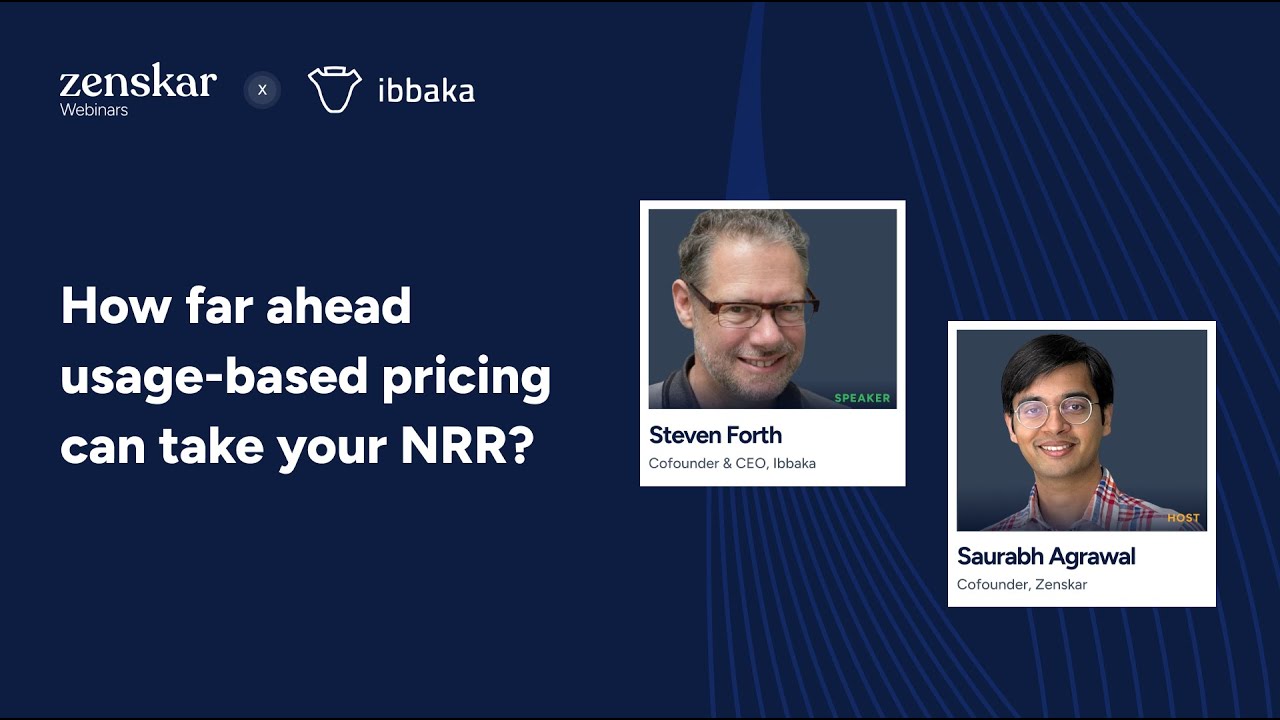
How far ahead usage-based pricing can take your NRR?
100
Usage-based pricing directly impacts Net Revenue Retention (NRR) by enabling revenue growth from existing customers, which distinguishes it from Gross Revenue Retention (GRR) that only measures revenue lost from churn; companies must design pricing models that connect usage to economic value creation for customers, as value capture ratios in B2B SaaS typically range from 5% to 30%, and effective NRR management requires analyzing both positive factors (growth in package, upsell, cross-sell) and negative factors (churn, shrinkage, downsell) separately rather than focusing solely on churn reduction.
Click to watch →

Jackie Vullinghs (Principal, Airtree) chats with Patrick Campbell (Founder & CEO, ProfitWell)
399
Net revenue retention (NRR) measures how much existing customers pay over time, with companies like Twilio (130%) and Snowflake (145%) achieving NRR above 100%. This creates 'baked-in growth' that doesn't cost much to acquire. A value metric is how you charge per user, per thousand visits, or per dollar retained - it bakes expansion revenue and lower churn into revenue. Add-ons are additional features sold to existing happy customers. A heuristic for identifying add-on opportunities is features used by 40% or less of customers.
Click to watch →

How to Sell GoHighLevel SaaS and Keep Customers Longer: Here's What Really Works! #highlevelcrm
5K
Successful recurring revenue businesses focus on two core objectives: acquiring customers onto recurring revenue quickly and retaining them to maximize lifetime value. The principle 'You manage what you measure' is essential—entrepreneurs must track key metrics like Net Revenue Retention (NRR), which measures revenue from customers over time accounting for churn and expansion. Investors seek NRR of at least 100%. HubSpot's 2014 crisis (88.6% NRR) stemmed from rigid pricing, limited upsell opportunities, and single-product focus. Usage-based pricing (charging by usage or seats) enables 'land and expand,' reduces adoption barriers, aligns costs with value, and creates natural expansion. This model is the gold standard for SaaS companies selling to small businesses.
Click to watch →

KeyedIn CEO Lauri Klaus: KeyedIn Hits $8m in ARR Helping 350 Customers in Project Management Space
495
Net Revenue Retention (NRR) measures how much revenue from existing customers is retained versus churned and expanded. KeyedIn's 108% NRR indicates customers are investing more over time, consisting of approximately 10% churn and 18% expansion. Upselling is based on usage metrics including number of seats, resources, projects, and storage. This value-based approach ensures customers pay proportionally to their actual usage and value derived from the platform.
Click to watch →

Software-Crash nutzen um Vermögen aufzubauen - Achte auf diese 4 Kennzahlen!
2.4K
Net Revenue Retention measures customer retention and growth in recurring revenue. The formula is: (Start ARR + Upsells - Churn - Downgrades) / Start ARR. It compares the beginning Annual Recurring Revenue to the end of the period. Interpretation: Over 120% is exceptional, 100-110% is solid, 100% means no growth, and under 100% indicates shrinking revenue. Companies like Snowflake and DataDog achieve over 120%, while others like HubSpot and Okta fall below 110%.
Click to watch →
Pricing Models
Lower-End Needs
Higher-End Focus
Predictability Design
Pricing Models
0:00- 1
Market split into lower and higher ends with distinct pricing needs.
- 2
Lower end values flexibility, scaling costs with usage volume.
The 'Taxi-Meter' Effect and the Case for Flat-Rate Simplicity
While usage-based pricing (UBP) theoretically aligns cost with value, critics argue it introduces psychological friction known as the 'taxi-meter effect.' When customers are billed per unit of consumption, they constantly monitor their usage, which can disincentivize them from fully adopting and exploring the product. This anxiety over unpredictable, fluctuating monthly bills can lead to budget unpredictability—a major pain point for enterprise procurement departments that prefer fixed, annual capital expenditures. Furthermore, complex value metrics increase cognitive load for buyers and complicate the sales cycle. In contrast, predictable, flat-rate, or unlimited pricing models eliminate billing friction, foster uninhibited product usage, and simplify financial planning for both the buyer and the vendor, proving that simplicity often triumphs over precise value alignment.
Understanding of the core SaaS business model, including key unit economics like Customer Acquisition Cost (CAC) and Customer Lifetime Value (LTV).
Familiarity with foundational subscription pricing models, such as flat-rate, tiered, and per-user/per-seat pricing.
The concept of a 'value metric' and how identifying the correct unit of value aligns product usage with customer success.
A basic understanding of corporate budgeting processes and why financial predictability matters to enterprise B2B buyers.
Designing hybrid pricing structures that successfully combine fixed subscription bases with variable, usage-based overage fees.
Advanced revenue recognition standards (such as ASC 606) and financial forecasting methods for contracts with variable usage components.
Methods for conducting quantitative willingness-to-pay (WTP) research to optimize value metric thresholds and pricing tiers.
Strategies for structuring enterprise software contracts with minimum volume commitments, roll-overs, and drawdown schedules.
Analyzing and tracking the impact of usage-based pricing on Net Revenue Retention (NRR) and expansion revenue metrics.
1.3K views3likes0:56@AcrossTheFunnelOriginal Release: 2025-10-16
And so we have actually two different pricing models. There's one for the lower end of the market where you can flex up and down. They really value being able to pay more when they use more and pay less when they use less.
Obviously with automatic discounts, so like it still scales with them. Like if they increase their volume by 10x, their costs don't 10x. So that was important for the lower end of the market. And then on the other end of the market, um, what they really really care about is not how much they're paying, but predictability. Like CFOs need to be able to project what they're going to spend over the next one, two or three years. And make creating a pricing model that is built on predictability with the same caveat that it has to scale with your business. like it has to be it has to continue to be profitable to serve that segment as they grow.
Up Next

25:28
Startup Pricing Strategy: PostHog's Ethical Cost-Cutting Model
@t3dotgg
58K views•2024-09-20

46:36
Retention Habits of Top DTC Ecommerce Brands Revealed
@SendItPodcast
44K views•2026-03-03

15:23
Decoy Effect: How Pricing Psychology Influences Consumer Spending
@bobinvestsUS
90K views•2026-01-05

17:30
The Planned Obsolescence of Light Bulbs and Tech
@veritasium
25.3M views•2021-03-26
Related Study Plans & Knowledge Roadmaps
Structured learning paths in Business
business
Pop-Up Retail: Strategy, Design & Execution
01Introduction to Pop-Up Retail & Strategic Goal Setting
02Budgeting, Site Selection, and Legal Essentials
03Experiential Retail Design & Visual Merchandising
+ 2 more learning modules
15h5 modules
Explore Roadmap
business
Reg CF: Startup Funding, Marketing & Launch
01Introduction to Equity Crowdfunding & Reg CF
02Platform Selection & Legal Preparation
03Crafting High-Converting Campaign Assets
+ 2 more learning modules
14h5 modules
Explore Roadmap
business
Productized Services: Scaling Solo Freelance
01Foundations of Productized Services
02Packaging and Scope Definition
03Pricing and Subscription Models
+ 2 more learning modules
15h5 modules
Explore Roadmap
business
Gov Procurement: Find, Bid & Win Contracts
01Introduction to Government Procurement & Business Setup
02Small Business Certifications & Set-Asides
03Finding and Analyzing Contract Opportunities
+ 2 more learning modules
14h5 modules
Explore Roadmap