













![Microsoft Licensing Audit Readiness and Audit Defence: a survival guide [Training 6/8]](https://i.ytimg.com/vi/7shzxv1SUFc/sddefault.jpg?v=611e34aa)







Negotiating enterprise agreements with Microsoft requires understanding the shift from perpetual to subscription licensing models, with key considerations including user-based versus device-based metrics, Microsoft 365 Enterprise offerings, and critical legal provisions such as limitations of liability, true-up terms, price protection, business downturn provisions, and regulatory compliance requirements including GDPR and CCPA. Successful negotiation strategies include defining requirements upfront, using term sheets to track negotiations, and addressing compliance status and audit rights.
Negotiating Microsoft Enterprise Agreements: Legal Strategies
Added:Fundamentals of software licensing models, including the distinctions between on-premises, subscription-based, and cloud-hosted (SaaS) structures.
Basic principles of commercial contract law, specifically focusing on intellectual property rights, indemnification, and liability clauses.
The core components of corporate IT infrastructure, including servers, virtualization, and client-access licenses (CALs).
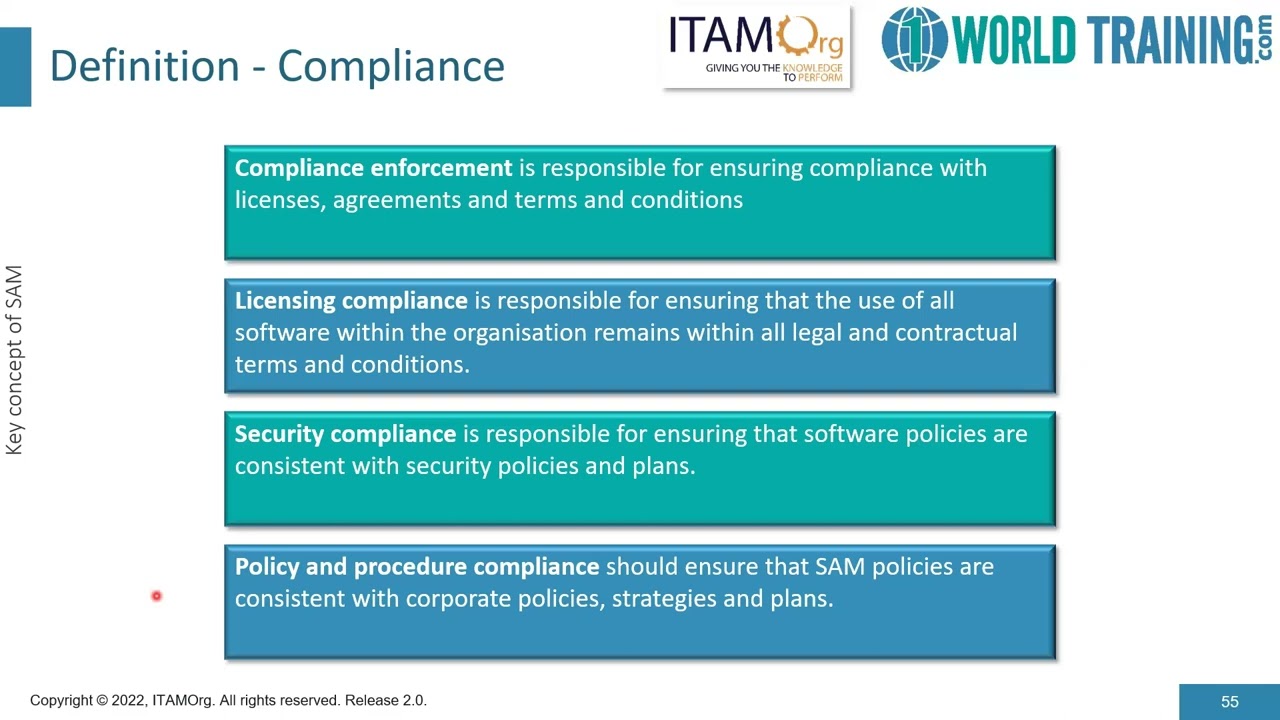
An understanding of Software Asset Management (SAM) and how organizations track license compliance to prepare for vendor audits.
Advanced strategies for managing Microsoft Software Assurance (SA) benefits and hybrid-use rights during a cloud migration.
Techniques for preparing for and defending against formal software compliance audits conducted by major vendors like Microsoft or BSA.
FinOps (Financial Operations) methodologies for continuously optimizing cloud spend and resource allocation post-negotiation.
Comparative analysis of negotiation frameworks for other major cloud providers, such as Amazon Web Services (AWS) and Google Cloud Platform (GCP).
1.8K views36likes1:03:09Original Release: 2020-05-28
good morning thank you all for joining welcome to today's webinar negotiating enterprise agreements with microsoft sponsored by scott and scott llp an intellectual property and technology law firm located in south lake texas voted technology law firm of the year usa by finance monthly your presenter today is a managing partner robert scott he has been representing mid-market and large enterprise clients in high stakes software license transactions and disputes for more than a decade rob has represented some of the world's largest companies in microsoft enterprise and cloud negotiations today's presentation will be recorded and you will receive a link to it in the next few days please enter any questions in the question box and rob will answer as many as time allows for those of you wishing illinois california or texas cle credit diana peterson will follow up with you later after the presentation after the webinar you'll receive a short survey requesting feedback on today's webinar and your ideas for future topics we'd appreciate hearing from you there is additionally a handout for cs for california cle credit applicants to fill out and return after the webinar and now turn it over to rob scott to start the presentation thank you marcus and thank you all for joining today as mark has said today's presentation is on negotiating enterprise agreements with microsoft this is an area that i've been focused on now for over a decade and some things certainly have changed in recent years and we'll be going through some of the changes for an agenda today we're going to jump into the different licensing models and look at some of the changes from perpetual to subscription and some of the licensing metrics including user-based metrics and device-based metrics and then we're going to jump into microsoft 365 enterprise to talk about microsoft's newest online offerings and then we'll get into the agreement types the structure of the microsoft customer what i refer to as the mbsa but some called the business and services agreement an agreement the enterprise enrollments and we'll also look at the microsoft product and services agreement which is the mpsa formerly known as the select agreement for those of you who have been dealing with microsoft licensing for a long time we're also going to talk about the legal issues that we confront when we deal with negotiating enterprise agreements with microsoft and some of the strategies and techniques that we found successful over the years including defining requirements what i have found is that a failure to define the requirements upfront leads to a lot of problems in the negotiations in fact many of the deals that i've worked on that appeared to have stalled out or gotten sideways in in every in every case i can attribute some of that struggle to a failure to define the requirements up front and so we work very hard with our clients to make sure that we provide to microsoft all of the customer requirements in advance and provide them everything that would be necessary for them to give the client a full and meaningful proposal including multiple options in terms of term license types etc so that the client can fully understand all of the options that are available and make an informed decision with respect to how to proceed we'll also talk about a term sheet in fact we have a term sheet available and if you're interested in in getting a copy of the microsoft term sheet that we have available um you can contact me at the end of the program or email diana in response to the follow-up emails that will come out following the presentation but it's an excellent term sheet builder it's focused uh significantly on cloud and many of my clients have used it not just for microsoft deals but other deals with other vendors because it does cover a lot of the key issues involved in cloud contracting we'll talk about transitioning to 365 how to do that how things to avoid when you're trying to transition to 365 that would be you know if you're currently using productivity suites on-premises deployments of office maybe purchased at oem with your hardware maybe you have it under an enterprise agreement and but you're not currently in the cloud and you're thinking about transitioning to cloud um we'll talk about how to do that and some of the incentives that may be available to you in order to do that now to evaluate the economics of those incentives that will be an important business discussion for those of you who are looking to migrate to cloud limitations of liability is a very important legal concept when it comes to cloud you know if you have been in enterprise agreements with microsoft or other vendors where you're primarily deploying on-premises software where the vendor has no access to your systems and therefore no access to personally identifiable or other customer information maybe limitations of liability wasn't a key term but as you move from perpetual licenses to cloud-based licenses and you start dealing with privacy and security business continuity and other risks limitations of liability become a central negotiating point when it comes to enterprise agreements uh with microsoft and other vendors we'll talk about truap one of the benefits of the enterprise agreement is the right to drew up periodically and for certain products not to be out of compliance in the interim between uh true up periods uh we'll talk about that we'll talk about uh price protection and why that's important in cloud for microsoft but not only from microsoft all other um vendors we'll talk about business downturn in in light of the pandemic in light of what appears to be significant economic fallout business downturn provisions i think are going to make a huge comeback um as we move forward and what those do is they allow a customer to essentially resize the commitment in the event of an unexpected business downturn reduction in force could be a divestiture could be other circumstances that where the the quantity of licenses ordered originally uh are able to be reduced based on the triggering of a downturn provision we'll talk about restacking restacking is a concept that is is related to downturn in that it provides flexibility but what restacking does it allows you to reorganize your spend within um the product family uh such that you can reduce your quantity of one product and increase your quantity of another product provided that your minimum spend commitment stays the same so that restacking is great for large organizations that don't fully appreciate what their deployments or needs are at the time of contracting and a restacking provision can help eliminate some of that risk associated with not knowing exactly what you need right now or what you're going to need during the term we'll talk about audit rights including the notion of a high water mark and something that i'm very concerned about with with microsoft standard language we'll talk about regulatory compliance including data processing agreements for gdpr for ccpa for new york shield obviously we're in an age of significant regulation of i.t and when you do a deal involving particularly cloud and personally identifiable information or personal data the regulatory pieces are quite important over the years i think microsoft has done a very good job of keeping up with the regulatory compliance obligations of its customers and is relatively compared to other vendors sensitive and easy to deal with when it comes to checking the box on things like data processing agreements and [Music] generally we'll have folks on the deal team that have expertise in the various uh regulatory schemes and i have found them to be reasonable and flexible when dealing with those issues we'll talk about defining your affiliates for purposes of the enterprise and why that's important we'll talk about some risks associated with acquisitions and divestitures and we'll also talk about your rights to outsource to hosting providers for the software that you license under an enterprise agreement so we got a busy schedule here big agenda uh and so we're gonna get going and hopefully i'll move a little bit quicker so perpetual versus subscription um you know in perpetual uh you're buying something you're typically uh accounting for it as a capital expense as opposed to a operating expense um it is the type of thing that um you know you buy it you install it it's yours um and at the end of it at the end of a term for example at the end of the term of an enterprise agreement for perpetual licenses you have the right to the then most recently available version of that software and you don't have to renew your enterprise agreement you have the right to run that version forever um and so that's the hence perpetual the the the rights granted are um they're not limited by time you buy the license and you have the right to run it forever um the trend has been towards subscription for a number of reasons one subscription is an operating expense not a capital expense it is more flexible you can make adjustments in your workforce it floats up and down with respect to cloud and hosted solutions uh data storage and ownership of hardware you know in the subscription models the cloud-based models the customer doesn't have to deal with owning infrastructure building data centers uh and the hosting ownership of hardware and delivery of the software are all bundled as a online service that's delivered through a subscription but when you buy subscriptions and your vendor has the keys to your operations and they could in the event of a dispute flip a switch and turn you off it creates business continuity risks that aren't in play in the perpetual model and as i said you know much of what drove interest in cloud-based licensing models and software as a service-based subscription was the difference in accounting treatment between capital and operating expense with many companies choosing with respect to i.t a preference for opex as opposed to capex one of the biggest changes that that subscription uh has brought particularly in the context of microsoft is the the rise of user-based metrics you know historically in microsoft enterprise agreements you know it was device-based for the most part and you know you you buy an operating system you put it on a device you buy a office suite you put it on a device and you could theoretically have multiple users per device which was quite handy in certain industries for example i have many clients in the call center um business where they've got multiple users per device also in the context of health care you know you think about nursing stations and you know multiple shifts of nurses all you know using one computer on the floor but it's multiple users per device um in in other contexts you may have multiple devices per user so think of my law firm you know if you're a lawyer at my law firm you've got a computer at home you've got a computer at the office you've got a laptop you probably have some uh mobile devices you probably have a tablet and and so in in the law firm context and other uh professional services and corporate uh computing environments you know it's likely that the opposite would be true that you have you know multiple devices per user therefore a user-based metric would be favorable for example in some microsoft licensing you can for with one license you can install the software for the same user on non-concurrent devices up to five times so if you think about device versus user it really depends on the nature of the of the use cases and and so we frequently had you know this idea of like mapping users to devices per you know previously we'd be looking at you know which way it made the most sense but as you get into large enterprises and and many of my clients are you know fortune 500 and very large global companies what we found is that it's very difficult to identify the number of devices not as difficult to identify the number of users why because you have payroll and your payroll records are pretty good records of users and you got to keep them up to date and it's extremely solid system of record and most of my clients regardless of how big they are are much better at counting users than they are devices and while there may be a premium to move to user-based licensing i would suggest that in most organizations the software asset management burden of device-based models is significantly higher than user-based models so much so that before microsoft offered as many user-based metrics as they do today i used to try to define what an enterprise device was as a device that was used by a user so that i could count users and not devices today microsoft offers you know 100 percent user-based uh models uh but for the vast majority of my clients uh we're still using a hybrid approach where we're device based for the os and user-based for the productivity suites and we can get into that a little bit more later so many of you have heard of uh 365 that's microsoft's uh code name for their cloud-based offerings around productivity but that suite of products is continuing to expand and they are have renamed the offering as 365 enterprise used to be the secure productive enterprise or spe um but the 365 enterprise is an offering that bundles a quite a bit of microsoft technologies and a use it can be device or user-centric subscription licensing model and of course it's got the office suite the word excel powerpoint access onenote etc but also include sharepoint and yammer includes outlook and exchange uh meeting and voice with teams uh also had some file uh sharing and streaming uh as well as um advanced analytics including power bi which is a a really cool tool that we've been doing some things with here and i i've found find to be very interesting and very powerful and then importantly the security and compliance pieces that many enterprises will require that include encryption and threat analytics and we feel that this is a smart move for microsoft to bundle more value within the 365 suite of products to you know really broaden out its cloud-based offerings and to bundle them in a way that is attractive for many of the enterprise customers it will increase the stickiness we think of microsoft's customers and it really covers a lot of the core it needs for many customers interestingly the switching costs to move away the broader the the the technology the more that's in the bundle the harder it is to move away and therefore without some of the contractual provisions we're going to talk about later this really puts more leverage in microsoft's hands you know for renewals and post the initial terms uh than in the customer's hands so while it's a you know quite an extensive bundle it also um will make it difficult for customers to migrate away uh after they sign up so let's talk about the structure of the microsoft licensing agreements a lot of like with all of it it seems like a lot of acronyms and um i think this chart will make it easier for you guys to understand uh what these acronyms are and how they relate to each other so the mbsa is like a master level agreement it contains you know core terms and conditions that are not subject to change you can't buy anything under it there's nothing to order it is a truly a master level agreement um if you're if you have a master in place then the next level is the program level and the program level for a lot of customers will be the enterprise agreement or the ea and again this is the program it is the it's the it's the category of license it's the licensing scheme that you're going to be ordering under again you're not going to order anything under the with the enterprise agreement you're going to do that at the next level down in the ordering documents and and when you're in an ea your ordering documents will be an enterprise enrollment uh that would be for perpetual licenses the enterprise subscription enrollment that would be for either subscription-based licenses or cloud-based licenses and then the sce which is the server and cloud enrollment and you don't need the server and cloud enrollment we have a lot of clients for example that put their sql server and other server products in the enterprise enrollment or subscription and don't use the sce and then we have others that define that the the savings associated with the sce are favorable to them it's something that when i talked about you know having multiple pricing options that would be one of the things that we would recommend for clients is to price the enterprise agreement one with an s1 one with an sce and one without it and see what that how that works the mpsa is a an agreement that is a volume licensing program it doesn't require the size of the enterprise enrollment which i believe at this point is a minimum of 500 users or devices so if you're under that amount or for whatever reason you don't want to buy software assurance on all of your licenses which is required as part of the enterprise agreement then the mpsa would be the open license agreement terms that you would use and it is a volume license that basically um has some reductions in price for volume and then also uh we have the online subscription agreement and that's going to cover your online services that would be all of the cloud-based offerings that microsoft has so this is the structure when you're working on a deal you're going to want to make sure you get all of these agreements from microsoft to the reseller as early as possible these forms change pretty frequently and a lot of times what will happen is microsoft and the reseller will drive and drive these agreements to you and lay them on you you know at the very last minute uh with limited time for review and uh negotiation of potential changes um i will tell you that with respect to the mpsa uh those terms are frequently non-negotiable we've had very limited success in negotiating mpsas however the enterprise agreement and its related stack for clients of our size and sophistication uh are typically extensively negotiated as part of either a new enterprise deal or a renewal that is bringing significant uh cloud adoption [Music] so what's in the online subscription agreement it's going to have the online terms it's going to talk about acceptable use policy and most importantly it's going to contain the security commitments the security commitments are critically important because as a regulated entity almost all of the federal regulations involving i.t are going to require you to do a risk assessment and due diligence on all of your vendors including microsoft and the disclosure of the vendor's security commitments is a critical part of that due diligence and so when we work on deals involving microsoft and other vendors we work very closely with our clients internal security experts to carefully review the security commitments to understand how those security commitments compare to the uh policies and procedures of the customer to evaluate with respect to specific use cases whether or not the security commitments contained in the online services terms are equal to greater than or less than the security measures that are in place related to the data in question today and so a thorough examination of the security commitments probing of the the parameters clarification of what they mean is critically important to discharging the due diligence requirement of your own security obligations when performing vendor due diligence and we spend quite a bit of time on the online subscription agreement focusing on those security commitments the enterprise enrollments um are um where you get into actually looking at you know how are you going to build out the solution are you going to do per device are you going to do hybrid so the hybrid as i said most of my clients are doing hybrid where they count devices for os and for productivity suites like office they're doing uh and cals they're doing user based so that's what hybrid means a hybrid between some products are device-based and some are user-based so you got to look at what kind of cals you need what kind of what cal suite you're going to want to be looking at you're looking at windows upgrades uh all that would be part of what you'd need to configure in your enterprise enrollment uh the enterprise cloud suite uh is gonna be that that per user focused approach where you can even get your windows essay per user and you've got the enterprise mobility suite and the 365 enterprise and all of that is licensed on a per user basis and it's conceivable that you'd have uh if you went in that direction you would need no device-based licensing and very attractive uh in the deals that i've looked at uh the premium for for this for my clients that have looked at it was higher than what they uh were comfortable with and they um for the most part have gone with that hybrid approach um that that i described earlier um so the server in cloud enrollment is is great um for some clients it it the difference is it's a enterprise-wide commitment so if you want um if you're comfortable uh that you're gonna have all of your server products uh on your enterprise agreement and you're gonna have all of your server-based licenses to carry software assurance then the server in cloud enrollment carries with it a pretty significant discount on a per sku or license basis uh the downside to it is for some clients the enterprise-wide requirement becomes costly and not a good fit for how they're built out in terms of their infrastructure but this would be another one as i said get it priced both ways and see if the savings of the enter of the se um are outweigh the the enterprise-wide obligation the mpsa is again the volume license agreement some clients will have a ea for some things and by other things under an mpsa that kind of rides along with it as i said this replaced the select agreements [Music] now the mpsa is a unified master agreement and program agreement meaning you don't need and then bsa to ride above the mpsa all you would need to enter into is the mpsa on its own it's based on a point system uh there's no minimum at the outset but you have to purchase a minimum of 500 points or cloud services for at least 250 users within each active product pool in order to maintain purchasing eligibility at level a um one of the downsides of for a large enterprise of the mpsa is um that if it's not standardized across the entire enterprise you can run into issues with [Music] compliance and software asset management again the the ea model is a lot more flexible and it offers things that the mpsa does not but there's no payment commitment on the mpsa it still will allow you to purchase you know the microsoft online services such as 365 and other cloud offerings so it's not the case that if you want to be in 365 for example that you need an ea because you can do that under the mbsa and um the mpsa will allow you to work with multiple recent sellers under a single account where the enterprise agreements are through a dedicated designated reseller switching gears a little bit to some of the strategies that we use in helping clients negotiate deals defining the requirements is critically important and uh understanding certain things as you go into a deal will help you significantly in terms of your outcomes and the efficiency of of the deal itself and one of the biggest things that i think complicates enterprise negotiations is the customer's compliance status if there's a significant compliance issue whether it is something that is revealed in the context of an audit or something that maybe the customer knows about but microsoft is not fully aware of uh but is concerned about uh you know significant compliance issues uh going into a negotiation can be um a very complicating factor in getting an ea deal done and so one of the first things that i'm going to want to understand at a very detailed level in working with a client is what is the client's effective license position what are its software asset management practices what type of sophistication in terms of data and reporting how recent is the reporting what kind of completion and completeness and accuracy testing has been conducted to really get an understanding of uh what is that effective license position where are we with respect to any compliance issues and how strong will we be able to present our position license position to microsoft in a way that will give them comfort that the the counts that we're putting forward are true um and if you can't get to a an agreed state of facts with microsoft or any publisher for that matter it's difficult to move a deal forward and so counting and compliance issues are critically important to understanding where you are with respect to your requirements also you know what are we using now we may be able to see what's deployed but how much of what's deployed is being used if we've got certain bundles of products and they include a variety of different skus uh are are people using them all could we for a high percentage of our users can we go with a lower cost product that doesn't include one or more of the components of what's currently deployed how will our needs be changing over the next three years uh are we planning to migrate to the cloud over that period of time what what extent will we be migrating to the cloud and so understanding sort of where we are with what's in use and what we anticipate will be used going forward is critically important to defining the requirements uh what are your goals currently what are your goals now what are your near-term goals and what would you what do you see operationally in three years uh what are your financial considerations do you need to spend less money than you've been spending are you open to spending more money getting more value you know what is it from a financial perspective that is is is important uh to communicate and then the legal terms what are your priorities like we're gonna go through a lot of different issues and you may look at some of them say you know that really doesn't apply to my business other others of them you'd look at him and say that would be critical for me that would be the most important uh thing that we could negotiate and so really understanding and laying out upfront you know in the requirements document the key legal priorities if that's limitations of liability if that's uh the the right to have transition services if that's the right to true up all products as though they're ea products whatever whatever your legal priorities are we like to communicate that way in advance you know that's not something that we like to spring on them you know after the deal has been fully priced negotiated and then you know the the agreements come they get sent to us and we redline them and all of a sudden all of these new concepts are being raised for the first time i do not recommend that approach i recommend on the key legal pieces uh getting those on the table up front as soon as possible um and in my experience even if you don't get agreement on them up front the fact that those are on the table and have been clearly communicated i think is critically important we like to prepare actually a powerpoint presentation and we give our clients a template you know to to work off of and we actually recommend that a powerpoint be put together and shared with microsoft and the reseller to to to clearly communicate the requirements you know whether it's a renewal or a new deal uh here's our slide deck on you know what are our talking points what are we trying to accomplish what's important to us here's our counts here's our product mix here's our goals here's our legal term priorities all up front in the form of a powerpoint presentation we have found that that is a very effective way to enter into the negotiations once we go um further into the deal and you know we're have received um a number of proposals and we're moving now toward a deal and we we know sort of what the products will be and we know what the program will be then we start working to build a term sheet uh and the term sheet uh is um really valuable not only for microsoft but in any enterprise negotiations because these stacks of paper just are very large and it's difficult to communicate to the stakeholders in in a clear and concise way what the issues are that are being negotiated and what the status is on each of those issues if you've got a thumb through redlines of hundreds of pages of documents well with the term sheet you have you know a relatively manageable size document that that can really provide a clear and understandable view of what the language is that is under negotiation and what the progress is on the negotiation so we use the term sheet to guide the negotiations over the contract changes and it's extremely valuable we often identify our proposed changes in the term sheet and it identifies the contract section so it'll say this is in the mbsa and this is the language that we're concerned about and this is our proposed language and then there'll be comments for you know why we're asking for this what our explanation is for the ask what the business reason or legal reason is that were asking for it and then as we move through um we can keep track of you know what the status of each of the requests is and we often will color code the term sheet as we go through so that the items that are resolved will be green the items that are in discussion but not fully resolved would be yellow and the items for which we can't reach agreement will be coded in red and you can start to see as the negotiation you know evolves kind of what progress is being made um as we move through uh we we generally will exchange it back and forth it becomes a document that you know is kind of exchanged back and forth and ultimately the language that is negotiated in the term sheet gets memorialized in a custom terms amendment so we we frequently don't redline the actual documents than microsoft sends although different people at microsoft have different preferences and the vast majority of the deals we work on we don't redline the documents we go from the term sheet to a custom terms amendment that then includes the negotiated language from the term sheet we recommend using the term sheet for all enterprise customers negotiating enterprise agreements with microsoft but also in any you know any significant deal involving cloud or software as a service we think the term sheet is great and we have a version of it that's available to participants on the call and my assistant diana can provide it to you or you can email me and my contact information will be on the last slide at the end of the presentation so many of my clients have uh you know looked to transition to office 365 they like the idea of cloud-based offerings they don't want to be in the hosting business uh they've come to believe in many instances that the privacy and security that's offered by microsoft is better than the privacy and security uh that they can provide on their own or that their current hosting provider or managed service provider is providing and so it's appealing on a number of levels uh it's attractive in terms of the way it's licensed it's uh opex synthetic catbacks you remove the requirement to have hardware and it's a simple solution so a lot of clients over the years and still many more to come we'll be migrating to 365 if you think about the impact of the pandemic and the need for more people to be working from home and remotely i think that all plays you know quite well into cloud-based offerings generally and specifically for microsoft what you got to look at when you transition is you probably already have some stranded investment in the microsoft office products and you need to evaluate what that investment is um you know how old the licenses are uh to what extent there's remaining software assurance if any uh and you're gonna want to negotiate to recapture some of that spend uh in many instances you may have recently purchased a substantial quantity of the same version that you will be getting into with 365 and you don't want to buy the same software twice and so that's a concept that microsoft clearly has heard from other customers and is sensitive to and therefore they will provide some financial incentives concessions etc to allow you to migrate we've seen that take the form of you know transition skus or delayed payment dates or just straight dollar concessions off of the enterprise enrollment price but capturing that stranded investment in office as you transition to the cloud is an important aspect of of negotiating an enterprise deal limitation of liability is the provision in the contracts that talks in terms of the customer's ability to recover damages in a lawsuit from microsoft uh if microsoft for example is negligent and your data goes missing um uh what will be the what will be the customer's ability to recover damages um and that will be uh limited by the limitation of liability and then the typical limitation of liability for most cloud deals is something like you can recover six or 12 months of the service fees that you paid for the service giving rise to the incident and that's a pretty weak limitation from the standpoint of the customer the probability that the customer could be made whole for its probable claims with a limitation liability crafted like that is relatively low and what i like to do with clients is say let's look at some probable claim scenarios you know what if your data goes missing how many records will it be what will be involved in you know giving notices what will the impact on the business be will we have to hire a crisis management firm will we have to do credit monitoring and start looking at what what types of dollars are likely to be involved in those claims and then do a calculation you know this limitation of liability says we get x months of service fees what are the service fees and if we take six months or 12 months of that how much does it add up to and does that sound like it will be enough then in many instances the answer is no the other thing to think about with limitations of liability is there are frequently carve outs the carve out would be the identification of a claim or claim types that are not subject to the cap for example it's common in uh deals with microsoft and other vendors that claims regarding ip infringement are not subject to the cap it's also common that claims for intentional and willful misconduct are not subject to the cap sometimes we'll want violations of the security commitments to be not subject to the cap but when you're negotiating for a customer a limitation of liability you want the carve outs to be as broad as possible i mean you want to carve out as many of your probable claim scenarios as possible another one that's commonly carved out is the party's indemnity obligations so the carve out may read except for um intentional uh misconduct i.p infringement claims and claims related to the party's indemnity obligations uh the vendors liability under this agreement shall not exceed xyz so the carve out is usually in the first is in the preamble to the to the limitation of liability the other thing to think about with respect to uh limitations of liability is that it's common in microsoft deals and all software deals that the parties will agree that neither party will be able to recover indirect or inconsequential damages and in most jurisdictions indirect and inconsequential damages include lost profits and business interruption and might include certain claims related to privacy and security and so it's very important when you're dealing with cloud-based deals to very carefully review the boilerplate limitation of liability on indirects because you may for example want to have a clarifying paragraph that says uh notwithstanding the foregoing the following types of damages shall be considered direct for purposes of this agreement and you can include for example um you know business interruption uh downtime for the application not working we frequently will include privacy and security related damages from data breach to make it clear that you know the types of damages associated with the data breach to the extent that could otherwise be argued to be indirect or inconsequential for purposes of the agreement shall be considered direct damages and therefore recoverable and subject to the cap or are carved out depending on where you land on that so again it's critically important to negotiate the limitation of liability i generally will leave this to last i like to hit the limitation of liability at the end and so frequently when i'm negotiating with microsoft we'll have a disagreement on this point and we'll agree to disagree and see if we can make progress on the other issues and come back to it and this is one that should be done close to the end because it's hard to really fully appreciate what you'd be willing to accept unless and until all the other aspects of the deal are fully uh negotiated so leaving this one to last can be a good strategy but we spend a lot of time on this particular issue and i think for good reason true up terms true up is a construct of the enterprise agreement that allows you each year to go and count what you have and to the extent that you have additional deployments of licenses to place an order to bring your license quantity in line with your deployments and one of the issues that is in the true up language in microsoft's more recent deals is this notion of maximum usage levels of additional products and i refer to that as a high water mark and i have made the argument on many levels that that nobody can really count this i mean short of doing an inventory every day it would be impossible for a customer to know what the maximum usage level was and and i think this language was added because there were a lot of customers that had cyclical businesses that timed their eas and the true up timing so that they were truing up at a time period where in a seasonal business they had the lowest quantity of deployments and uh microsoft added this language to make it clear that in a seasonal business where you have a wide variety of you know deployments you can't just true up at the end of your term and by only the minimum level you know at that time and essentially game the system that way but uh for everyone else that wasn't cheating uh this high watermark concept is incredibly onerous uh i don't know any clients that can you know comp you know can can meet it uh with accuracy and there's something that we generally push pretty hard on uh to negotiate away from the the high water mark it's uh it's something that is extremely onerous and fraught with the potential for compliance claims in the context of audits price protection refers to provisions in the agreement limit the vendor ability to increase prices both during the term and for renewal terms and we recommend negotiating a cap on pricing increases at least for the first renewal term uh and and perhaps even longer depending on the size of your business and the nature of the switching cost and the level of financial commitment that you're making uh i think it would be foolish for anybody to get into a deal where they're moving into somebody else's cloud for a three-year period and not have some visibility into what the renewal price will be at the end because at the end in subscription agreements you have no rights so it's not like you could say hey look i don't want to renew i'll just stay with what i have because at the end of the term you have nothing and now you're there at the end of a contract term you're fully um dependent on the vendor the vendor um has all the leverage in the situation uh on price and they may have given you a really good deal to get you in for three years and then next thing you know you're looking at 20 percent or more price increase at the end of the term and that is not a good position to be in and so we we recommend that price protection uh be heavily negotiated on all cloud-based deals including with microsoft business downturn is something that i used you know in oa 2010 time period where many of my clients were facing uncertain economic times and wanted to do deals but wanted some flexibility and these are custom provisions that we've written that basically allow the customer to negotiate for reductions in the enterprise product counts in the event that there's a downturn whether that be measured in terms of a reduction of revenue as a percentage or a reduction in force in a certain amount having these protections help to mitigate the risk of having to purchase products or services for users or devices that may be removed during the term you've got a three-year term you may divest half your business in that three year term you may have a 20 reduction in force and the last thing you want to do is be stuck with a bunch of software or services that you don't need and business downturn provisions accomplish that and i think as i said earlier in light of the pandemic and the related economic uncertainty i think that we're going to see a lot more of a need for this restacking is a concept that i developed years ago when i had clients that needed to do a deal quickly but didn't have their accounts together it basically allows you to re-stack what you're buying in terms of the quantities of each product is provided that what you're buying is equal to or greater than the value of the initial order quantities and and usually it's done within the first year and the unneeded quantities can be replaced with with other products that are needed more than for for example what we anticipated going in important to look at audit rights um uh we we general you know having a background in software audits and as many as we've done we're pretty focused on negotiating audit rights um obviously the vendor is going to have some right to audit for some you know extremely large clients with really good relationships with microsoft it's possible to you know get some forbearance of audit um it's harder and harder to get as time goes by um but negotiating more favorable audit rights uh in fact even for example negotiating to be not you know drawn out of a hat you know you know to require some reasonable suspicion uh all of these things are ways to reduce your audit risks and um not spend the money and time associated with defending audits when you're in an enterprise agreement we talked about regulatory compliance i find that microsoft is good at this but the onus is on the customer to understand which pieces they need becomes very important when you're dealing with hosted environments uh in addition to glba and hipaa which are large uh security and privacy regimes in the united states uh gdpr is is becoming very important for many clients as is california ccpa the new york shield was just recently passed and others are involved we have a lawyer on our team stephen vinson who is a certified privacy law specialist and when we work on ea deals for clients we bring him onto the team to focus just on the privacy and security aspects of the deal it's important to to understand uh how the affiliate licensee terms work with microsoft you want to make sure for example that everyone that's using meets this 50 ownership threshold and some of our very large clients do businesses globally they may operate businesses that they don't own 50 or more of and that can be a real big problem in the context of microsoft licensing and if you have that situation that's something you need to negotiate up front in terms of defining the enterprise and what the affiliate definitions are we do a lot of work and you'll see in our term sheet builder around improving the base agreement's capacity to deal with acquisitions and divestitures we recommend custom amendments specifically targeting m a activity things like the ability to provide access to a divested entity for a period of time for transition services we represent a lot of hospital systems where you know one business may buy a group of hospitals from another business and all that all of the electronic records are still going to be hosted by the seller for a period of time and without a transition services agreement in your ea that's not something that's easy to do and it's not there's not an easy way to license that without a transition services agreement so uh these are you know number of custom amendments that we develop related to m a activity and as i said many of our large global clients are very focused on m a and uh in light of the pandemic uh many believe that there will be an increase in m a activity um as liquidity uh continues to be an issue in financial markets um microsoft recently has implemented changes to the product terms that restrict how customers licenses can be used to support deployments at certain large-scale service providers including the large public cloud players alibaba google amazon and azure software assurance coverage is now required for all such deployments it's not going to matter in an ea deal because ea deals all have sa but it's important to understand you know how these outsourcing deployments work if you're using you know public cloud and you're wanting to bring your own licenses to public cloud infrastructure um it's it's very important that you understand how the licensing works and could be a significant impact on this and something you want to make sure that you're addressing in your negotiations we also have done cloud migration provisions that allow you to turn down licenses for example that were previously on-prem and uh and move into hosted environments through a migration strategy which is a essentially allows you to reduce your quantities as you migrate as marcus said there's a question tab over on the right hand side of the panel on the go to webinar panel and what i would ask you to do is enter your questions there and we will endeavor to answer them all and respond to you via email and for those of you who are interested in receiving the term sheet builder for microsoft you can either call the office at 214 999 and ask for diana and give her your information and she'll send it to you or you can feel free to email me at rjscott at scott scott llp and with that i'd like to thank you for joining and we look forward to having you on another presentation in the near future thank you
Up Next
54:06
Customer Success Renewal Management: A Comprehensive Guide
@Clientsuccess
10K views•2022-04-26
46:36
Retention Habits of Top DTC Ecommerce Brands Revealed
@SendItPodcast
44K views•2026-03-03

15:23
Decoy Effect: How Pricing Psychology Influences Consumer Spending
@bobinvestsUS
90K views•2026-01-05

17:30
The Planned Obsolescence of Light Bulbs and Tech
@veritasium
25.3M views•2021-03-26
Related Study Plans & Knowledge Roadmaps
Structured learning paths in Business
business
Pop-Up Retail: Strategy, Design & Execution
01Introduction to Pop-Up Retail & Strategic Goal Setting
02Budgeting, Site Selection, and Legal Essentials
03Experiential Retail Design & Visual Merchandising
+ 2 more learning modules
15h5 modules
Explore Roadmap
business
Reg CF: Startup Funding, Marketing & Launch
01Introduction to Equity Crowdfunding & Reg CF
02Platform Selection & Legal Preparation
03Crafting High-Converting Campaign Assets
+ 2 more learning modules
14h5 modules
Explore Roadmap
business
Productized Services: Scaling Solo Freelance
01Foundations of Productized Services
02Packaging and Scope Definition
03Pricing and Subscription Models
+ 2 more learning modules
15h5 modules
Explore Roadmap
business
Gov Procurement: Find, Bid & Win Contracts
01Introduction to Government Procurement & Business Setup
02Small Business Certifications & Set-Asides
03Finding and Analyzing Contract Opportunities
+ 2 more learning modules
14h5 modules
Explore Roadmap