




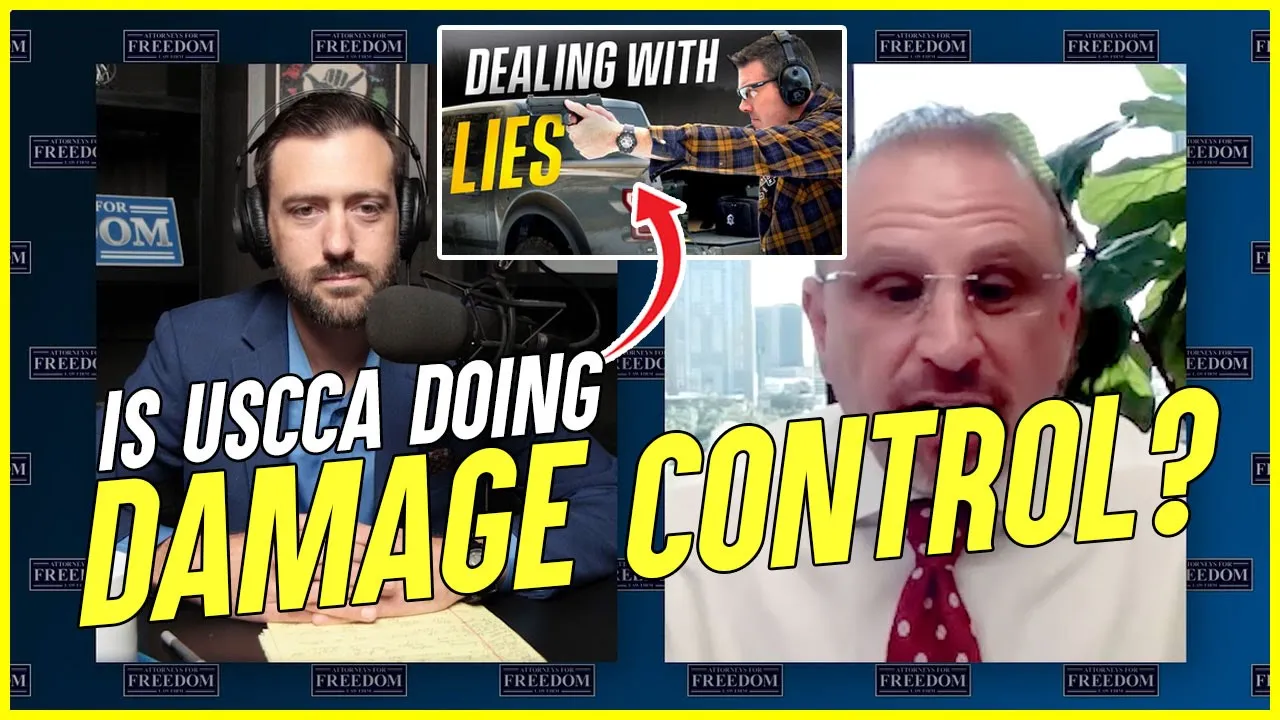

















Risk Retention Groups (RRGs), established under federal law (15 U.S.C. §§ 3901-3906), provide a regulatory solution that allows organizations to offer expanded benefits like civil liability and red flag law coverage without being classified as insurance companies, thereby avoiding state-by-state insurance regulations that could restrict their operations.
Attorneys On Retainer Program Expansion and Risk Retention Group Structure
Added:The distinction between criminal prosecution and civil liability, including differing standards of proof.
The basic operational structure of prepaid legal services, retainer agreements, and traditional self-defense insurance.
The legal definition and societal implications of 'Red Flag' laws (Extreme Risk Protection Orders).
An introductory understanding of Risk Retention Groups (RRGs) and how they differ from traditional commercial insurance.
Comparative analysis of major self-defense legal protection programs and their respective underwriting structures.
The regulatory framework of the federal Liability Risk Retention Act (LRRA) and state-level insurance compliance.
Advanced strategies in civil litigation defense, specifically focusing on tort liability following self-defense incidents.
Financial solvency and actuarial principles underlying risk pooling and capital reserves within an RRG.
14.4K views346likes1:08:26Original Release: 2025-04-02
It's the big announcement you guys have been waiting for. Attorneys on retainer vastly expands our program to offer all kinds of new great benefits. We've got the full breakdown. Stay tuned. This is attorney Andy Markell and attorney Mark J. Victor from the Attorneys for Freedom Law Firm here today to talk about a huge announcement.
How you doing today, dude? I've been waiting to make this video for so long.
I am really pumped up to get this out to everybody. Been a long time in the making this story, my friend. And I'm really excited to tell people. I want you guys to know what we got planned and I'm super excited to tell everybody about Well, it it's because of you guys that we were able to do this. We've been listening very carefully to the things you have been asking for. We know you guys want civil liability coverage. That was by far the thing people were asking for the most. People have been asking for red flag law coverage and we want to be able to cover that, too. Yeah. two things we hear more than anything else.
When are you guys going to offer civil liability coverage and when are you guys going to cover people for red flags? We hate red flag laws and we've said standby. We're working on something.
We're working on something. This more than anything else we have heard over and over again. So, we went to work on this. Yes, absolutely. And you know, there's another motivating factor here for us too, Mark, which is we want to be able to offer this stuff. But there's kind of a change going on that uh we've noticed with different states starting to talk about mandating civil liability coverage for firearms owners in those states. Yeah. To be fair, it wasn't just about people saying, "Hey, when are you guys going to add civil liability coverage?" We've been watching what's going on. Some of these anti-gun states have been making some noises about trying to get legislation passed that would require everyone in their state to have civil liability coverage. Okay, this is something we haven't been offering. Our competitors have been offering this and if this gets passed and it might withstand constitutional scrutiny. Nobody knows the answer to that question. This effectively would make the AO program really unusable in that state because if you don't have civil liability coverage, you can't have a firearm. Yeah. The reason why people like our program is we're not an insurance company. We're a law firm.
We're lawyers. We do self-defense cases.
That's our specialization. And so these things, civil liability coverage and paying for an attorney to cover a red flag case in an emergency, things of that nature, they start to sound like and look like insurance products. That's right. You know, regarding the limits of the civil liability coverage, people are in different positions here. Some people might not need any of this at all. Some people might want some civil liability coverage and other people want a million dollars of civil liability coverage. We want to have some flexibility because not everybody's in the same position here. In fact, you and I are going to make a video that will be available soon for people to review that will help people analyze for themselves what level of coverage, if any, is appropriate for them in this area. Yeah. But we want the option to offer several different plans that best fit people's needs. Um, other things people have been asking for, training. Once again, we're lawyers. We don't offer training at our law firm, but we want our members to be educated and receive training. That's another big one we hear. Hey Mark, can I get AOR and keep another program cuz I really like the training. And to be fair, some of these other programs offer really good firearms and self-defense training. It's hard for us to offer training. Yeah, we can give some education on this, but hardcore training where you're out to the range and you learn how to use a firearm safely, that's just not something as a law firm we're set up to offer. And as I've been saying from the very beginning, we've never been interested in having the second best program. We don't want to settle. We don't ask our clients to settle. Another huge category that people have been asking for, businesses have been asking, do you guys offer business packages?
Corporations have been asking us, can you guys cover my employees? Yeah, that's another big one. And I know some business owners have joined the program as individuals because they want to join as a business. They want to have their business actually covered. I mean, think about businesses where people are firearms trainers. And what they've been saying is, look, I want to sign up my business. I want to make sure I've got you guys on hand just in case I get sued for negligent training. That's a big deal for them. They're worried about that kind of liability and anybody can sue you for anything, right? And lots of times if you can't afford to have a legal defense, you wind up with a bad outcome. So that's something people have been asking for. Yes. So big addition for firearms trainers here. We now cover negligent training. So this kind of two big areas. First of all, for business owners, say that you're a business owner who trains people with firearms and you get sued because somebody claims that you negligently trained someone and that caused their damages. Well, this new benefit provides a defense. We're going to cover a legal defense in that civil suit. You're covered. And the second area is this covers affiliates who sell training by referring people to join the association. So, this is going to cover all members of the association. You get sued for negligent training, you're covered. Corporations have wanted to join this. Limited liability companies.
We got people who are in business themselves, just solos. They want to join as their business. They also want a real affiliate program so they can tell other businesses, family, friends, other people in their orbit about the attorneys on retainer program and get paid some money for pushing AOR. Look, this is a win for us. This is a win for them. We haven't really had a very developed affiliate program. Yeah, I was actually surprised by how many people were asking us for some sort of a comprehensive affiliate program. And I guess I shouldn't be because AO has expanded so much over the last year and a half or so since we've gone national mainly because of word of mouth, people talking to each other and seeing the type of work that we do and recommending us to friends, family, co-workers, employees, employers. And so it makes sense for us to have a more comprehensive affiliate program. Yeah.
When you get into these kinds of issues and other programs are offering it and we're saying, look, we're committed to having the best program out there. We got to be able to offer what they're offering in a better way than they're offering it. So it fits within the AOR standard of excellence. We have to be committed to excellence in everything that we offer. So when we went national with this program, like you said, we were dedicated to having the best program in the industry, and it involved this paradigm shift. We're not insurance-based. We're law firm based.
We're lawyers. We go and we represent people in self-defense cases all over the country as lawyers. And so we started offering this as a retainerbased model. Well, some of the anti-gun states started getting a little bit cranky about that and started saying, "Well, hold on. you guys are practicing insurance or we have reason to believe that you guys are practicing insurance without a license. Yeah, you're dealing in an industry here where a lot of states want to cause problems not just for us but for all of these companies.
You notice many of these companies say, you know, not available in this state, not available in that state. A lot of these anti-gun states say we're not going to allow this murder insurance. I mean, ridiculous claims and ideas.
They're just anti-gun. They don't like this kind of a product. So they look for anything that they can find to say you can't do business in our state. Yeah. To be clear, states can define insurance any way that they want to. They could literally write up their laws to say we define insurance as uh the attorneys for freedom law firm practicing in our state. Yeah. People don't understand this. They have in their minds an idea of what insurance is. And they're saying, "Oh, you know, a law firm offering legal services, that's not insurance." But the reality is insurance is generally regulated state by state and each state gets to decide for themselves what they define what qualifies as insurance. They can literally pick anything they want and say that's insurance. So while the other companies and AU we can all fight about what's insurance, at the end of the day, each state has a right to say for themselves, ah, we've decided that's insurance and you're not going to be able to do insurance in our state. And to be fair, while we've gotten a couple of cranky letters from insurance departments from different states over the last 6 to 8 months or so, none of them have taken any uh action against us, save for Connecticut, and we'll talk about that in a second, but most of the time it's people complaining about those incidental expenses that we have. It's them saying, "Well, hold on. The bail bonds and the cleanup and you know, firearm, gun reimbursement, things like that. Those things look like insurance to us." And so to be fair, most of the states weren't saying uh us offering legal retainers and practicing on a retainer type of a basis. Most of the states were not saying that looked like insurance. It was those incidentals and certainly things like civil liability and red flag law coverage would look to those states as if it's some sort of insurance product. Yeah, we could have just dropped the incidentals and very likely had no problems at all, but people want the other stuff besides just the legal representation. And so, you know, it should have been sufficient for us to put in our contract as we did from the beginning. Look, if any state finds that these incidentals are illegal or insurance or unethical or there's any problem with them in your state, then they're just simply not available. But it kind of creates two problems, right?
I mean, one, we don't want to have the problem with the state at all and haggle about this. And two, we might be required to say in any state, sorry, we can't offer the incidentals. And we don't want to do that. We want our cake and we want to eat it, too. We want to give them legal services, the best legal services, and all of the other things that could be seen by other states as an insurance product. And that's where we're getting a little bit of friction from these other states. Yes. So, for one state in particular, that language that we put in our previous fee agreement wasn't good enough. They didn't care. They said, "You guys are insurance. We think you're insurance."
And that, of course, is the state of Connecticut. Now, if you're not familiar with the Connecticut saga, check the link down below. We'll give you the full breakdown in that video, but the story is basically that we were offering our retainer program in Connecticut. And without even contacting us first, the insurance commissioner of Connecticut declared that attorneys on retainer program was insurance and uh immediately sent us a cease and desist, which we responded to. And we're actually gearing up the fight. Yeah. And we could have fought in Connecticut and we were really thinking about that. You know, my first inclination is let's have a big fight about this. They're ridiculous and this is nuts. But on the other hand, given what we had that we were working through our solution, which we're going to talk about in this video, it probably didn't make sense because we knew we were going to be able to do business in Connecticut exactly the way we want to do business in a pretty short period of time. And frankly, I'm very proud of what we did in Connecticut. It really gave us an opportunity to let the people in Connecticut know what we're about. I've said on countless occasions, the more the market finds out the truth about what we are actually about, who we are, what we're about, what our intentions are, how we practice law, what we're doing with the attorneys on retainer program, the more they know about that, and of course, you saw this with people who came in for the conference, right?
They walked through the firm, they met the staff, they got a pretty good feel of what we are about here at the attorneys for freedom law firm. They got a pretty good feel about what the attorneys on retainer program is. The more people find out about us, the better it is for us. So we said fine, we will stop doing business in Connecticut, but you can't stop us from covering everybody in Connecticut for free pro bono representing them. That's exactly what we've been doing all these months.
That's absolutely right. And I also am very proud of that. And our Connecticut clients, I mean, just the response that we got from our Connecticut clients, overwhelmingly positive. so thankful for us having their backs and our attitude is they can't stop us. So if we're not charging for our services, there's nothing they can do about it. But at the same times when we were at that crossroads, right, when we were kind of gearing up to fight them, we were thinking, you know what, if we fight this battle and there's a good chance that we can win, there's 49 other states and we might have to have this fight over and over and over again, maybe we win it in some states and maybe the less gunfriendly states we don't win it. and we said, "You know what? We need a long-term solution to all of this." And that's what led us to start researching.
Yeah. So, I start down this road. I mean, look, I'm a criminal defense lawyer. I'm not an insurance lawyer. So, what does a good lawyer do? Enlist the help of another good lawyer. So, I started talking to insurance lawyers said, "Look, what can we do?" Some of these other programs are sort of piggybacking on other insurance companies. You know, you see this, you see their policy, then you see some insurance company's name on their policy. they're kind of associated together. This is called having a fronted carrier or forming a captive insurance company. So, we started looking into that. One thing became clear right away. This isn't going to work for us. Yeah, we should definitely name our biases here. Uh for those who are not aware, we hate insurance. We absolutely hate insurance because it doesn't allow us to do what we want to do with our program. We are not willing to compromise in many many ways that insurance requires you to compromise.
Yeah. I thought let's get the data on this. Maybe we can find a company that can do everything we want to do. Like will they allow us to list all the things we do not exclude? Can can we do this thing without a criminal acts exclusion because we're not willing to do it otherwise? Also, uh we want to make all the decisions. We don't want someone in an insurance company making all the decisions. This is what we hate about insurance the most, that some insurance adjuster who has an incentive to disclaim the person asking for uh their claim to be covered makes the decisions unilaterally and maybe even just doesn't even see all the information and finds a way to disclaim the person in their time of need. That's the thing we hate the most about insurance. Yeah. So, the lawyers start looking at me like I'm crazy. Mark, let me get this straight. You want to do business with an insurance company. you want to make all the decisions at your law firm. Like, they shouldn't even get any information about the claim. Like, they can't even know about the person's name or that a claim was made. I'm like, "Yeah, and I don't want any exclusions.
I want to keep all the information here at the law firm." And we got to make all the dec.
Yeah. Yeah. Let me touch on that one.
Obviously, the attorney client privilege is important here, too. The point that you're talking about that all the information must stay in the law firm.
insurance companies were baffled by us making that request, right? Because they were like, "Well, hold on. We get to make the coverage decision and we need to be able to analyze the confidential information in order to make a coverage decision." And we said, "Hell no. We are absolutely not willing to compromise on that. Yeah, this isn't going to work."
And also, you know, we're aware of these other cases where these other companies are using programs where they're not calling a law firm. And if you're not talking to a law firm or member of the law firm when you make that call, then it's all discoverable. This blows up everything that makes the attorneys on retainer program special. It's what makes us different than everybody else.
Became very clear to us very quickly that this approach isn't going to work for us. So we continue to research and we consult many wonderful lawyers in this industry and we start looking all around the country for different solutions and researching the case law and the question driving us here over the last 6 to 8 months Mark that we've been working on this project is how do we get the best of both worlds? How do we get all the upsides of an insurance company to cover all of these additional things that we want to cover with none of the downsides? Still allows us to maintain our list of non-exclusions as opposed to insurance back products that have tons of exclusions. Still allow us to make all of the decisions about coverage as we have the entire time in our program. Still allow us to maintain attorney client privilege with our clients and not make their information discoverable. How do we have our cake and eat it too? And I'm like, by the way, and we're not doing a recruitment clause. Hell no. We don't want that thing. They're like, this is just isn't gonna work. So, it turns out that buried deep in the corners of the federal laws is a little creature that becomes available, frankly, as a result of something Ronald Reagan did in 1986. It's called a risk retention group. And it's not an insurance company, but you can kind of think of it as a private insurance company that we could form ourselves. We form up our own risk retention group and then we draft up our own policy that covers our own group. The only way to get coverage from our insurance company, which we might want to name the Attorneys for Freedom Risk Retention Group, and we want to write the policy. The only way to get coverage of that is you got to be part of our group. It doesn't sell to anyone else unless you're part of our group.
But as we went down that and we said, can we check the box? Can I include everything? I want to specifically put it right in the policy. There's no criminal act exclusion. We don't exclude any of the usual stuff. all the things that are in our original AO program about sensitive areas and illegal weapons and alcohol and domestic violence and prohibited possessor. I want all that stuff actually listed in the policy as a nonexclusion. I also want to say we make all the decisions. I also want to say we keep all the information at the attorneys for freedom law firm. Want it all explicitly spelled out in the policy. said another way, I want to keep our program exactly the way it is. I just want to add a bunch of stuff that you need insurance to add and you got to have a policy in a different entity. And to my delight, I was told there's a way to do this. Yeah. And so the way to do that is to restructure our current program. So think of this as three separate entities now. Entity number one, the Attorneys for Freedom Law Firm, same as it's always been. Entity number two, the attorneys on retainer association. This is now what you join when you join the attorneys on retainer program. Entity number three, the Attorneys for Freedom Risk Retention Group, which is wholly owned by entity number two, the Attorneys on Retainer Association. Currently, we're a law firm, the Attorneys for Freedom Law Firm. But what if we were to create an association called the attorneys on retainer association and to join AO basically means join the association and there are benefits to joining the association. One of those benefits is you get exclusive representation in self-defense matters from the attorneys for freedom law firm and you get a policy from the attorneys for freedom risk retention group that covers all of these things. And guess what? The policy was written by us, approved by us, and really resembles our old fee agreement that we used to use for the AO program.
It's also interpreted by us. I mean, we make all the decisions. This is the benefit when you write the policy, right? You get to make it look whatever you want it to look like. Yeah. So, we really had to research what this risk retention group is. And what we found is it checks all the boxes we're looking for. We don't have to change anything.
Like you said, none of the downside, all of the upside. But the way it works is you have to work with a state. One state gets to regulate the risk retention group. They get to license the risk retention group. I was so happy to discover the pro- freedom people over at the pro- freedom state in Montana.
Montana is one of those states that act and not all states do this by the way that form these risk retention groups.
Montana is one of those states. And so we contacted Montana. We said look here's what we want to do. We told them exactly what our plan was and they said, "You know what? We'll work with you."
And they've been excellent to work with.
They've been very collaborative. We had meetings back and forth. Montana's attitude is, "We want to dot the eyes and cross the tees and make sure we're doing everything completely within the law. We're not going to certify this thing as a risk retention group unless it fits within the law, unless it's something we're proud of, something we want to do." And they were very honorable over there. And when I told them what we were planning, I said, "Look, we deliver on everything we promise. We're going to be your best risk retention group over there in Montana." And that's what they're looking for. This wasn't sort of a fly by night thing. We had to bring in actuaries so we could show we're properly capitalized. This is a very serious process. They brought in their own actuaries to check the work that our actuaries did. They said, "Mark, if you want to do this, you got to put a bunch of money off to the side so you have proper reserves, so you are properly capitalized." Look, we've always been properly capitalized, but people never knew that. They never had sort of any independent confirmation that we're properly capitalized. Now, they do, right? The state of Montana says, "One of the things we do is make sure that this risk retention group fits squarely within the law. It complies with everything it's supposed to comply with and it's properly capitalized. This is one of the things that other states, one of the very few things the other states get to actually investigate. They get to go to Montana and say, "Hey, is this attorneys for freedom risk retention group properly capitalized?" Montana will then give them a very detailed comprehensive report showing our reserves, showing exactly what we're doing to say, uh, yeah, they are by actuarial standards that are accepted in the industry. The attorneys on retainer program, the attorneys for freedom risk retention group is properly capitalized under the law. Yeah, to be fair, this is the thing. This exact issue is the main thing that the other states, the maybe less friendly to gun states, were bitching about when they were saying, "You guys are practicing insurance without a license." Uh they're basically saying, "Oh, well, we haven't gotten, the government hasn't gotten to go through your books and take a look and, you know, see how much money is set aside. So, we can't verify to the public that you guys actually have enough in the coffers to cover your claims." Of course, we have the entire time, but here's proof. Yeah, they didn't know that. So to be fair, like I don't complain about that. There's a legitimate concern there. People really who signed up in AR, they don't know that. They're trusting us. We know we're perfectly fine. We've never failed to meet any obligation that we've had.
We've been a law firm in business now over 30 years. But they didn't know that. There wasn't an independent third party that has gone through everything, evaluated everything, used really industry standards to kind of load test the program. That's all been done now.
And so for people who do have that concern, that's no longer a concern. But this opens up so many possibilities. I'm like, wait a second. So we can do this attorneys on retainer association thing.
I want to go crazy with this thing.
Absolutely. So let's start by talking about all the benefits that remain exactly the same under this new restructuring. So once again, to join the attorneys on retainer program now means to join the association. and you join our association. And if you're currently a member of the attorneys on retainer program, we're going to give some information soon about how to make the switch over. But if you're signing up now, you now sign up for the association. Uh here's all of the great benefits that stay exactly the same from the previous program. Attorneys for Freedom Law Firm, that's our law firm, solely makes the decisions on what constitutes a self-defense related matter. And it's the same three criteria as it has always been. You sign up for the program before the incident occurs.
You are expecting to be charged with a crime or you are charged with a crime.
And then finally, you can assert self-defense in good faith as a defense.
If you meet all those three, we're going to cover you. It's the same as it's always been. We're the ones who make that decision. That's right. And there's no exclusion for criminal acts or negligent discharge or illegal weapons, domestic violence. any weapon. No weapon can be used as long as it's self-defense. Expired permit. No permit when required. Using a firearm in a prohibited place, using a firearm as a prohibited possessor, using alcohol or drugs at the time of the self-defense incident. Non-dely force and other common exclusions that you see in all these other programs. Specifically listed out in our contract, not excluded from coverage. Yeah, I really love this part. This was an indispensable piece for us because we weren't going to compromise on anything here. And so, as you said, joining the attorneys on retainer program now means you are joining the attorneys on retainer association. So, that means you get a contract with the attorneys on retainer association. In that contract, all those things that are not excluded are still listed in the contract. You also get a legal services agreement with our law firm, just like you always have. And in that legal services agreement, all the things you just read are listed in there as well as in the RRG policy. You don't have to take our word for it. Everything you just read in all three of those places is specifically listed right there as not excluded. So important here, too. Continuing the list of the benefits that have not changed at all with this restructuring. All of that attorney client privileged information is kept with the law firm. It's protected. And that goes also to our 247365 emergency hotline. Once again, you're going to be talking with a lawyer, a lawyer from the Attorneys for Freedom Lirm, not an insurance adjuster, not a club that it's discoverable in court or something like that. That remains unchanged. This is a big point for people because a lot of people like our program because all of their information stays with the law firm.
None of it gets sold. None of it goes to a third party. Look, you'd have to get a court order to get our law firm to cough up even the fact that somebody is a client of our firm. And that stays exactly the same. No information goes anywhere besides our law firm. So, as always, you get our prestigious strike force as your response team. If you ever have an emergency, you call that emergency line that we provide to our members only. And if you do have an emergency, you're going to be talking to a lawyer within a matter of minutes. Not an insurance adjuster, not some bean counter at some association. You are talking to one of the lawyers who will be representing you in your criminal matter. And importantly, all of that information is going to be strictly protected by attorney client privilege, not discoverable. That is so important.
Andy, if people knew how serious we take this strike force thing at our law firm.
First of all, you got to apply to be on the strike force. You go through an interview process at our firm and not everybody gets to be selected for the strike force. You got to really be committed to this. You get paid extra money. You get other benefits. You come to a monthly meeting where we sit down, we talk about the calls, how we handled them, how we can do better. The whole team is on call. If you call us any day, any time, you will be talking to an attorney from the Attorneys for Freedom Law Firm who will be involved in your case until the end. That's a big part of what we offer here that stays the same.
We're still covering both felonies and misdemeanors in self-defense cases.
We're still covering both trial level and appellet level legal representation.
Still unlimited legal fees for civil defense on self-defense related legal matters. We've always offered that through our law firm. Expert and investigator fees are definitely included. Bail bond funding, scene cleanup, psychological counseling, firearms replacement, victim representation, that's one unique to our law firm. If it turns out that you were victimized in your self-defense incident, and we can get that you acquitted, get the charges thrown out.
We will turn around and go after help you go after in a victim's advocacy capacity the person who actually was the bad guy in the situation. Yeah. And you know, this is all well and good. You might think this no big deal until you need it. This is legal representation as our client as a victim that to my knowledge no other program offers. Yeah.
And as you pointed out too, Mark, no recruitment clause. We don't need a recruitment clause in there saying that in the event that you're in violation of the contract or you're found guilty or something, we take a plea. Yeah. You take a plea and then we come after you for all the money. That's hogwash. We've never wanted it and we still don't have it. Yeah. And another thing that stays exactly the same as it was before for cases outside of Arizona where we are going to appear prohawk vich and we are going to take our lawyers. We are going to travel to your state and do the case but you also get to select local counsel of your choice. If you got somebody you love you will let us know and we will do our best to get that person on board. If you don't know who the best lawyer is, who's a great choice in your state, and this is a fine option, too. You let us decide. We will do the interviews. Find the very best lawyer who's available who we will add to our team. Look, if we're going to play, we want to win. Let us get the very best lawyer on board. So, here you get the best of both worlds.
You get the attorneys for Freedom Law Firm and you get the local attorney of your choice. And accordingly, our clients get the benefit of all of the experts in our network. We have experts that we work with all across the United States. And we use the biggest, baddest, best experts. If you want to learn about our team of experts, go and check out the website, attorneysforfreedom.com. But it really is important to have a dream team on these cases. We spare no expense when we go to defend a self-defense case. I mean, look, we've won and we've lost.
It's way more fun to win than it is to lose. And so we are going to give the best defense. I think what we've mentioned from the beginning is we are going to provide the legal defense that we would want ourselves if we're in that situation. That's our promise to all of our clients. But since we've restructured it allows us to add all kinds of awesome new benefits which we should go through. As we mentioned, addition of self-defense training and education benefit for all members.
Addition of commercial liability coverage for businesses and organizations, especially for firearms trainers. Addition of commercial employees benefits for businesses and organizations. We got an addition of a commercial affiliate program for all association members. We talked about how people really wanted that. Addition of legal advocacy to vindicate constitutional and business rights. This one's exciting. You want to say a few words about this one, Mark? I am so pumped up about this. when I learned we need to form this group to make this risk retention group thing work. We got to form our own group. So this gave birth to the association. So now the light bulbs are going off in my head because I'm like an association, you know, the things we could do with like let's make this association the best association that exists for firearms owners, people interested in self-defense, just people interested in pro- freedom issues. Let's take a portion of the money that people are paying and use that for the association to go after really the government in second amendment cases. Let's go for some big cases. Let's do the kinds of things you and I have always wanted to do that. It's attracted us to have a pro- freedom law firm in the first place. Let's have this association.
Let's use it to fund things like vindicating second amendment rights.
Let's use it to vindicate other constitutional rights. Let's use it to defend the free market. Let's go crazy on this stuff and have our association be the best association. Not just for training, which it has to be the best training, by the way. We're not just going to offer run-of-the-mill training.
It's going to be topshelf, first class, best training that you could possibly have. I also want to do business development. I want personal development. I want to talk to the people in the businesses in our association and see if we can do something for everybody to kind of step up, bring their best version forward, create an association that people in businesses join that they're actually really proud to be a member of. Yes. And as I mentioned earlier, because we're restructuring it like this, we can now offer civil liability coverage. And we're going to start out with a $100,000 policy on that. And we're going to be expanding that soon. As we mentioned, there's ways that we can easily expand it now that we have this restructuring.
And I think it's really important for people to be educated about this issue, too, because not necessarily getting the highest liability coverage is the best idea. And uh we've talked about this in past podcasts where it's like, is it really a good idea to have high civil liability coverage when you have a low amount of assets to protect because in that case, you're basically encouraging the other party to sue you.
you might want to have a high liability cover if you have a lot of assets to protect. So like you said earlier you and I will be making a video so people can educate themselves on this issue. The point is people will now have options right you will have civil liability coverage up to 100,000 and we will hopefully very soon be able to offer an option for people who want to have a million or maybe even more that may also apply to the bond limits.
People have asked about that like we have a lot of possibilities of doing things now that we have created the attorneys for freedom risk retention group. So red flag coverage and emergency order coverage. We're going to cover that up to $15,000 now. And the reason why we had to restructure it is because these are emergency hearings that usually take place very quickly. We have to um usually appoint an attorney in our network who's in your local jurisdiction in order to cover these because they happen so quickly that it's not enough time for us to get an admitted prohib.
And whenever you're just paying another lawyer in our network, maybe one of our of council to do the thing, it starts looking more like an insurance product.
No problem with an RG. Yeah, easy enough to do it now. You'll get the local attorney of your choice. We can still stay involved and consult on the case.
the thing goes on, we may even appear prohawk viche, but it really wasn't an option before for us as a law firm because we couldn't get admitted quick enough to deal with that. Now, one of the big things people have been asking for, so excited to add red flag coverage. Absolutely. And then we're also going to be adding funds for record clearing and expungement. To whatever extent your jurisdiction allows these different things, we're going to fund that project up to $5,000. These are usually formalities, paperworks. There's rarely a hearing, though sometimes there are hearings associated with that. No problem. We will cover all of that stuff up to five grand. Yeah, this is something people wanted, too. I mean, look, you could get charged and go to trial and win. There's still an arrest record. There's a record that you were charged, you went to trial. People can find that. And so if the state allows for us to seal that record, to clear that record, to set aside maybe something a little bit lesser, but something that's an option, we'll do what we can under the laws of that jurisdiction to clean up the record under this. Something now we can do that we couldn't do before. There's also going to be discounts on ammunition and firearms to our attorneys on retainer members of the association. Yeah, we want to leverage the power of our association. and say, "Look, we got a bunch of people in a group here. We want some discounts on firearms, on ammo, on other things that are of interest to the members of the attorneys on retainer association. Why not use and leverage the buying power of a group to get discounts on things?" So, there's a lot of things like this we're adding and we're not done yet. I intend and we intend at our firm to continue to add things. We have a new attorneys on retainer association director who's going to be working full-time and the charge is make this association the best association to join in the entire nation for a whole host of reasons. Yeah. One of the things I'm most excited about is the fact that we are going to be looking for proono cases to get involved in as well. I'm going to be the head of the proono department at our law firm and I'm going to be constantly looking throughout the United States for different cases of interest that our clients who are interested in the Second Amendment and self-defense might be interested in us assisting with, might be able to throw some monetary resources at, might be able to get involved and associate with the attorneys handling those draft motions, make oral arguments. We want to promote freedom.
We've been an activist law firm since day one. And that's what makes us special. And this will give us the opportunity as part of our duties in the association to go out into the community all over the United States and promote the Second Amendment, promote issues of freedom, free markets, the types of things that we value philosophically at our law firm. Yeah, this is a dream for us. I mean, this couldn't be any better for us. This is the kind of thing you and I both as young lawyers definitely thought about doing. like we want to handpick the cases that we want to bring and we want to fight them for the right reasons. So excited to do this with the new association and so we're going to be listening to members of our association just like we have with the addition of all these benefits. We want to hear from them on the cases they want us to get involved in. If there's a case of self-defense where you think somebody's being railroaded by the system that you think that we should go take a look at or maybe even get involved, we want to hear from our association members because part of the benefit of being in this association is you are funding us out in the community trying to make the world a better place for gun owners.
Yeah. So help us make the attorneys on retainer association the best association. The kind of association we are proud to have created. the kind of association people are proud to join. I want it to be hardcore pro- freedom, pro2a, and so we're open for suggestions from our members. Absolutely. So, those are all the wonderful benefits that are staying the same. Those are all the new benefits that we're going to be adding under this restructuring. But after all that, there's only one thing that we're no longer offering, and we should be transparent about it. Mark, there's one previous benefit that we used to offer that we are no longer offering, and that is for nonself-defense related matters for our members. We wouldn't cover them for free because we're a self-defense program. And so, we would cover things for free if it was a self-defense incident, but we're also a fullervice law firm and we do all kinds of different cases. We have, as you mentioned, for decades now. And so whenever a member of Attorneys on Retainer would come to us with a nonself-defense related legal matter, we would cover them at a discount. We would offer them a 35% discount off of our normal rates to cover a non-self-defense matter. But we no longer offer that coverage. You know, I think this is one of the things that you guys really appreciate about us and our law firm and how we do business. We've been transparent with you guys since day one.
We've explained exactly what we are and what we aren't. And while we do this, we want to lay out exactly whatever the downside is, what we're giving up, what you're giving up with this new structure. I want to lay it out. I did a whole critique on the attorneys on retainer program previously. This is us telling you what the downside is. So, let's get to the downside. Yeah. Well, it's not really a downside, Mark. So, yes, they are losing this benefit, but there's a really, really good reason that they are losing this benefit. You want to explain it, Mark? I'd call it a huge upside. It gives us an opportunity to do something we've never been able to do, which is really to transform our law firm into the only law firm in the nation that we are aware of, and we've done research on this point, that does nothing but self-defense cases. We are going to limit the attorneys for freedom law firm will no longer accept any case that is not a criminal case where somebody has alleged self-defense. Why do we want to do this? Well, reason number one, we love self-defense cases.
But reason number two, we want to be the most specialized criminal defense law firm in the nation. This is all we do.
This will give our attorneys an opportunity to really drill down on self-defense cases. I want them to learn everything there is to know about self-defense cases. Write about these issues, speak about these issues, train other lawyers on self-defense issues.
Every single attorney member of our team will be very highly specialized in nothing but self-defense cases. That defense in a criminal case. So, this is a huge announcement in this restructuring. The Attorneys for Freedom Law Firm now handles only self-defense cases and a statement that uh we had to research in order to be able to say, Mark, because when it comes to advertising of law firms, there are ethics rules about correctly advertising your law firm. So, we had to get this statement cleared with our ethics council. But after a lot of research and looking around and making sure this is a truthful statement, we can say with confidence, more gun owners trust our law firm with their self-defense cases than any other law firm in the nation.
Yeah. And I'm also proud to say that, but I feel a great weight here as well.
More gun owners trust our law firm for their self-defense case. We got to bring it big, which means we really got to focus on this area of the law. That's the charge to all the lawyers at our firm. So, this will actually reduce the private case load that we have so we can focus even more intensely on these kinds of cases. Every single lawyer at the firm is going to work on every single case at the firm, which will only be self-defense cases. You can't get more specialized than that in the legal industry, in my opinion. All right. So, next big subject I want to talk about here in today's announcement video is the RRG, the risk retention group. We should break that down a little bit for the listeners so they can understand exactly what we're up to here and how we were able to restructure it. But I think a good place to start is we mentioned we went this route because it was a long-term solution. And it was something from which we would have very strong footing in the face of any challenges where just working with a traditional insurance company does not provide uh protection for our clients and for our association. So why don't we start with talking about what is an RRG and maybe we'll even talk about why it being a federal entity is so important here.
Yeah. So great place for people to start if they want to learn about what on earth is a risk retention group. They should take a look at the federal statute. It can be found at 15 United States Code 3901 through 3906. That's what we looked at. We looked at all the cases that interpret this. A risk retention group is a creature of federal law. And as I said, Ronald Reagan signed something in 1986 that allowed an expansion of what risk retention groups could do. that allows us to really fit our program within the mandates of the Risk Retention Act. It's a creature of federal law. So what that means is federal preeemption applies. So it's not regulated by the states. It's regulated by one state, which in our case is Montana. Montana has thoroughly vetted this, has approved it. What's required under the statute is once Montana has licensed it, we got to give notice to each of the other 49 states. We have already tendered formal notice to the other states. That notice has been delivered. We're now in full compliance and under federal law, we can write that risk retention group policy and make it applicable to every person in every state who has joined the attorneys on retainer association. Yeah. The reason why this is such a strong solution to the issues we were having with some of the less gunfriendly states is instead of dealing with 50 states, we're dealing with one state. And federal preeemption basically says we put them on notice. We are now offering this product in your states and it's not something that can be challenged on the state level. It's regulated by federal law. So instead of having 50 different fights with 50 different states over what their individual subjective uh definitions of insurance are, this allows us to address the issue in one fell swoop. Yeah, this is one of the big differences between what a risk retention group is and what an insurance company is. As we said earlier, insurance companies are regulated in each of the 50 states. They could be regulated differently. A risk retention group because it's not an insurance company, it's a risk retention group. While it can write insurance policies only for the members of the group, which in our case is the attorneys on retainer association, it's not an insurance company in states have very very limited ability to have anything to say about a risk retention group. So this kind of cuts through the red tape that we've been dealing with.
To my knowledge, no one else has taken this approach. We are the only group who has endeavored to use the risk retention group tool to get our program kind of in a position where we can do business. And you might note we're not excluding any state, not Connecticut, not any of these other states. We are open for business in all 50 states. Yes. Um, now as we always do, let's be as transparent as possible and go straight to the policy.
Let's read some excerpts from the policy here. And of course, I think you did a full comprehensive video, Mark, of breaking down the entire RRG policy. Um, but I want to show some highlights uh in this video. Yeah, to be fair, if people want to read the entire RRG policy, that's available online. It'll also come with a video that I've done. They know they've seen these videos before where we specifically highlight certain areas and read certain sections. We'll do a little bit of that here. But if people really want to dig and take a look at the Attorneys for Freedom Risk Retention Group, I encourage them to do that.
There'll be a separate video that we will link to below this video that people can check out and go through the whole policy themselves. So, in order to have any coverage under the RRG, you have to have what we refer to as an occurrence related to association training. People are going to say, "What the heck is that?" Right? It used to be an act of self-defense. Why is it now titled an occurrence related to association training? Well, so let's go through it in the policy. I think the first place to start here is really section six at the end of the policy where the definitions are because definitions are important. And I want to direct people's attention to 6A. Here is what it says. Occurrence related to association training means in reasonable accordance with the general requirements of self-defense training. The actual or threatened intentional use of physical force or deadly physical force by the insured to protect any person. For purposes of this coverage, an occurrence related to association training is one where an insured can in good faith reasonably assert the legal defense of self-defense or defense of a third party as a legal justification in absolute defense to any criminal or civil allegations under applicable law. Okay, so people are going to wonder why did you call it an occurrence related to association training when really you could have titled this an act of self-defense. All right. Well, it says act of self-defense when people get the legal services agreement with the law firm and when they get the contract with the association, but in the RRG policy, it's written differently. Why is it written differently? Well, we're trying to do a little preventative maintenance here because we know some of these states may try to outlaw this type of policy in their state. We'd already know their language. This is murder insurance. Okay, we've written it in a way here really to tie it to association training that will at least give us an argument to say, you know what, this is not murder insurance. This is an occurrence related to association training. What training? the training that we will be providing to every single member of the association. It's not murder insurance. It's related to association training. So that's why it's written like that. But if you read it very carefully, I think it's very clear exactly what it means. That's how it's referred to in the RRG policy. All right, continuing on with the RRG policy here. As we mentioned earlier, it would have been a complete deal breaker if we had to include the long list of exclusions that a lot of these other products include in their insurance contract or even any of them. We weren't willing to compromise. Absolutely not willing to compromise. And you recall in our previous fee agreement for the attorneys on retainer program, we specifically and proudly list all of the things that we don't exclude. Well, under this RG policy, since we got to write it, we've included that exact list. Let's go through it. So, let's take a look at section 1 A4. Incidents specifically included in liability for occurrence related to association training coverage. If an incident occurs and results in a claim that includes the following or substantially similar circumstances, then the insured will not be denied coverage under this policy, so long as such claim would otherwise be covered by this policy. So, here's our list of non-exclusions. The occurrence related to association training is ultimately determined to be imperfect self-defense, illegal conduct, or even a criminal act. Not excluded. The occurrence related to association training involved a negligent, accidental, or unintentional discharge of a firearm, not excluded. The occurrence related to association training happened while the insured was impaired by alcohol or any other drug.
The occurrence related to association training involved an illegal weapon. The occurrence related to association training involved no weapon or a weapon other than a firearm. The occurrence related to association training happened at a place where firearms were legally prohibited. sensitive places and places where the government has decided you can't carry, we don't care. No exclusions. The occurrence related to association training involved a person who was in a domestic relationship with the insured, DV. That's a big exclusion for a lot of different companies. The insured did not possess a concealed carry permit or possessed an expired concealed carry permit. The occurrence related to association training happened in a vehicle, a public space, or a residence. The occurrence related to association training happened while the insured was a prohibited possessor and/or the occurrence related to association training was not a threat or use of deadly physical force. Our proud lists of non-exclusions made its way from our old policy right here to the RG. Yeah. A members that won't be anything new to them. They will recognize that list as the same list of things that are not excluded in the original program. It was, like we said the whole time, non-negotiable. If we were going to have one of these policies, it was going to specifically lay out these things that are not excluded. There you see it. It's in every single policy. Everybody who joins the associations automatically covered by the RG policy. None of this stuff is excluded. And speaking of non-negotiable, the thing we hate about insurance companies the most is that they get to make the decision about coverage. And we said we are absolutely not willing to do any sort of a program that won't allow us to have exclusive control as we always have in who gets covered and what counts as a covered incident. And here's such an important thing we are not willing to compromise on here Mark. It's attorney client confidentiality. I'd like to direct everybody to section 5B3.
AFF law firm will maintain all records pursuant to attorney client confidentiality rules and in no event will any such information be disclosed to any other person or entity unless pursuant to court order. That's pretty clear. The information all of it stays at the law firm just like with the original program. So I direct everybody's attention to section 4B. It's entitled claims decisions.
Here's what it says. We hereby delegate our authority to make all coverage determinations to AFF law firm. Period.
Now, that couldn't be more clear, could it be? The RRG policy delegates all coverage decisions to the firm. That's pretty crystal clear. Just like we said, just like we've always operated, we're making the decision. And we will direct everybody's attention here to part A, section one, subsection D. We have designated the Attorneys for Freedom Law Firm, AFF Law Firm, to receive and respond to any reports by an insured of any incident or claim. Couple other sections I think people would be very interested. Section 1A1 FNG. Here's what F says. A claim is deemed reported to us when AFF law firm receives either a telephonic, written, or any other commercially acceptable form of communication giving notice and reporting notice to us that an incident has happened andor claim has been made against an insured. Such notice may be made either by an insured or by any person acting on the insured's behalf.
That's pretty easy. All you got to do is contact the law firm just like before.
And then take a look at G. We have the sole and exclusive right to assign counsel of our choosing to defend the insured against any claim to which this insurance applies. Okay, that's a line that I've made a lot of hay with with other policies, right? And say, well, look, they get to decide. So, I've just paused there so the people who don't like our program could just sort of relish the thought that that same clause is in the RRG policy. However, if you read the next line, here's what it says.
We hereby irrevocably assign AFF law firm as defense council for all claims against and insured. Those are just some fun sections I think people would be interested in knowing about. But really, I encourage everybody if you're remotely interested in this issue at all, check out the RRG video, read the RRG policy, take a look at what we put down here.
This is a policy unlike any other policy in existence anywhere. And another notable thing about this policy, and it's not something that we can read.
It's actually important that it's not something we can read. No recruitment clause to be found. You could go through this whole thing. I promise you, you're not going to find a recruitment clause.
Yeah, there's something we can't show people. But if you do read the RRG policy and you find any recruitment clause, you let me know about it because there's no recruitment clause in this RRG policy. You know, Mark, this looks shockingly similar to our uh previous attorneys on retainer agreement, our fee agreement. It seems like identical language basically made its way into this RG. I wonder how that happened.
Well, you know, it happened because our attitude was at all times that we want all the upside with none of the downside. And given that we were the ones who were able to write the policy, we are the ones who interpret the policy. We are the ones who any claims under the policy are made to. We are the ones who keep all information about all people who are subject to this policy at the law firm locked down under attorney client privilege and the duty of confidentiality. You would expect that it would say exactly what we wanted. All of this, by the way, has been thoroughly vetted and approved by the regulators in Montana. They've read this and gone through it many times, and it fits within the structure of the RRG statute.
They're happy with it. We're happy with it. We know our clients are going to be happy with it. And so, we're really proud to put this out there. And so, yes, the Attorneys for Freedom law firm remains a law firm, remains a criminal defense law firm. Same commitment to excellence, same great attorneys, same activism. though now we'll be able to vastly expand that activism with the resources we get from the association to actually go out into the community and get involved in 2A cases, get involved in free market cases. We're even talking about challenging the commerce clause.
Uh there's lots of different issues that we're very interested in as freedom activists and we're also going to be having a pro bono section of the law firm which I'm very excited about to get involved. boots on the ground, criminal defense cases that promote self-defense principles. Love all that stuff. So, law firm is exactly the same. Only change is that now we only do self-defense cases on a private level. We will not accept any cases at this law firm, privately retained that are not self-defense cases. Yeah. I mean, what's happened here is we just went to work and we learned everything that we needed to learn about the insurance law and about what our options were. And we found a way to get our clients and the people in the AO program, all of the upside, the best of what the other programs offer with none of the downside. We haven't given up anything that people love about AOR. We have formalized it all.
Everything that everybody's been bragging about saying, "Hey, here's why AOR is different." All that remains exactly the same. Now we get the upside.
The things that people said, "Well, I'm going to keep another program for this or that reason." No reason for still.
Look, keep whatever programs you want.
It's your decision. That's fine. But we've added all that stuff to our program. We're not done adding. We're going to continue to work on this thing.
So, we stay the best program. We're way out ahead in front of everybody. No one else has a program like this. Nobody can do this. You got to have the law firm on board. And I, as I've said from the beginning, and I say all the time in our firm meetings, if people don't want the attorneys for a freedom law firm, you could throw this whole program out the window. We got to deliver the same kind of legal services that we've been delivering really for almost three decades now. That can't change. That's not going to change. If anything, we're ramping that up with this new really drilled down focus on self-defense.
That's dramatically changing our law firm. Our lawyers are excited about it.
we could now add everything we wanted and not give up anything. So, I'm sure a lot of people are asking themselves right now with all of these amazing new benefits and expansions and everything like that, is that going to make the program more expensive? You know, they're thinking that they're like, there's no possible way these guys are doing this same program at the same price. And you know what? They're right.
The prices are going to go up. But as always, we take care of our people. Just like in the Marine Corps, we take care of our people. And so that's been our attitude. So here's our thought on this.
Even though we are going to raise prices. If you upgrade in the attorneys on retainer association in 2025, which means you get it done before January 1st, 2026. Not only do you get the same price that you have right now if you're in the family plan, $25. If you're an individual, $35. Talk to us about the new corporate rates. You will be locked in until January 1st, 2030 at the rate that you have right now. And if you're a new member, sign up and you want to join the association. As long as you do it before 2026, you do it sometime in the year of 2025, you're going to get the same price that we're offering right now for new signups, and your prices will be grandfathered in. The big price change is coming in 2026. We wanted to give people, you know, ample time to be able to switch it over and get involved if they want to get involved now. So, uh, take this as your call to action, folks.
Uh, make sure to sign up in 2025 if you can. Yeah. And to be clear, if you are already enrolled in the attorneys on retainer program, you do need to upgrade your membership to the attorneys on retainer association. You have to get that done. you should get it done sooner rather than later because in order for you to get any of the new benefits, think civil liability coverage, think red flag coverage, think all of this new stuff with the affiliate program, everything that we're offering here. In order for you to get it, you have to join the association. Well, there's good news for those existing members. We're going to make it as easy as we possibly can for you. We've actually spent a good amount of time and resources into a new program and kind of a new system that will allow people to very easily switch over from their current membership and a to the association to get all these new benefits. So, we're going to be sending you an email. The email is going to have a code in it. Simply follow the link, enter in your code, enter in the information it wants you to do, and then everything will be automatically populated from your existing account over to the new account. Yeah. The charge to the team was, look, make it easy for our people to sign. They don't want to have to go through some big long drawn out process. Give them the number.
Put the number in when you join the association. All your information's populated there. You will have to put your credit card in again. Fine. That'll be the one thing. Verify your information. Make sure it's all correct.
You want to change anything, that would be a good time to change it. Put it in.
This should be very easy, seamless process. But you actually got to do it.
You should receive an email from us with your unique number that will tell the software to bring all your information populated. So, it's super easy. So, if you're joining for the first time, you'll join the association. If you've joined prior to this point, you'll need to upgrade to the association.
Everything else stays the same. Your rate stays the same. The due date stays the same. Nothing else changes. Not going to cost you a dime. You're on exactly the same program. and you are grandfathered in at the current pricing until January 1st, 2030. I think this will be clear to people exactly what we're doing, why we're doing it. Okay, so to summarize, here's what we're looking at for the new AO program.
You're dealing with two major entities.
You have first the Attorneys for Freedom law firm. Same law firm since 1997 that's been representing people and major felonies, many of them with firearms involving self-defense. Except now the law firm does nothing but self-defense. We administer that 24/7 365 emergency hotline. Same attorney client privilege. We make all the coverage decisions at the firm. You get the same team approach with all of the lawyers at Attorneys for Freedom. You get to pick your local council too. All of your information stays at the firm and we will also assist with a lawyer on the red flag and the civil cases. The other major entity with the other separate contract is the AO association, the attorneys on retainer association.
You get a whole bunch of new stuff now.
You get that online training and education component. Everybody who joins the association's automatically enrolled in the affiliate program. There's going to be two separate tiers there. A freedom level and then an armed level.
Lots of information to come on that. You get the legal advocacy in the pro bono.
That's right. A portion of the dues that you pay for the association we are now going to use to advocate for your second amendment rights and other pro- freedom issues. As you know, you get the same civil and criminal defense coverage.
Then, of course, the other benefits involved with the association, things like the conference and the newsletters and other information and advice, all the bells and whistles, but now it includes civil liability and red flag coverage. We can do that now because of the new Attorneys for Freedom risk retention group that is wholly owned by the AO association. It's now a complete program. You get the separate contract with the attorneys for freedom and then the contract with the AO association.
All the upsides that you would get from bringing an insurance product on board with none of the downsides. We keep all of the good stuff right here at the Attorneys for Freedom Law Firm. None of that changes. Dude, I'm so excited about this restructure. I'm so excited about where this program is going. All the great opportunities this opens up to ourselves and our clients. It's just really, really exciting right now to be at the forefront of this right now to specialize in self-defense cases. To travel all over the country to defend competent, responsible gun owners in self-defense cases while still being able to be activists and promote freedom and get involved in different proono cases to promote freedom in the free market and the Second Amendment. It's just really exciting, man. Yeah. For me personally, I don't know if I'm just more excited about the fact that our law firm is now really so specialized on self-defense cases or just ramping up this association, thinking about conferences and newsletters and getting information on all the new proono stuff you're talking about and really taking the challenge of making this association and there's some good associations out there that we like, right? making this the best of the bunch in terms of associations. That's going to be quite a challenge, but we're up for it. I'm excited about it and we are going to get it done. This is of course all thanks to you guys. Uh it's our members who have been giving us their suggestions and their wish lists of what they want us to offer on the program. And keep those coming, guys, cuz as we said, we do not plan to stop here. We are not interested in having the second best program. We want to have the best program. We want the best of all worlds. We want to have our cake and eat it too. And really proud of the solution that we came up with here to achieve these results. I want to thank all the people who really took a chance on us. Signed up early. We were the new guys in town and uh people who said, you know, I'm going to take a chance on AU. I'm going to trust those guys. They extended us some trust. We've delivered. I think this really shows, this program here really shows that we're sincere. We care about our people.
We're transparent. Here's the pros.
Here's the cons. Here's what you're getting. Here's what you're giving up.
Here's what it is. There's more videos out there. We're always available for questions. I think people who look at this program will come away and say, "Wow, these guys really came up with something nobody else thought of yet that allows them to get it done in all 50 states in a way where they get all the upside with none of the downside."
Bam, there it is. Exciting times, my friend. Thanks to everybody for tuning in today. Go and check out attorneysonretainer. us to learn all about this exciting program. We've restructured. There's all kinds of new benefits. Go check it out. I'm sure that you will love what you see. Also, if you want to learn about the attorneys that are going to be representing you if you ever need to act in self-defense, go and check out attorneys forfreedom.com to learn all about our law firm and our philosophy of defending competent gun owners in the United States of America.
As always, if you like this video, be sure to like it, subscribe to the channel, share it with a friend, and leave us a comment down below. Until next time, this has been attorneys Andy Markell and Mark J. Victor signing out.
Peace.
Up Next
55:18
The Facebook Dilemma: Privacy, Democracy, and Social Media's Impact
@frontline
1.8M views•2018-10-30

26:22
Walking in the City: Urban Rituals and the Flâneur in Contemporary India
@PSBTIndia
1.9K views•2016-08-02

9:49
FastAPI vs Flask vs Django: Choosing the Right Python Web Framework
@TechWithTim
302.5K views•2024-05-26

1:42
Game of Thrones Opening Credits: A Cinematic Analysis
@gameofthrones
46.3M views•2011-04-18
Related Study Plans & Knowledge Roadmaps
Structured learning paths in General & Interdisciplinary Studies
general-studies
Artificial Light: History, Tech & Human Impact
01The Pre-Electric Era: Fire, Oil, and Gas Lighting
02The Incandescent Revolution and Grid Electrification
03Gas Discharge and Fluorescent Illumination
+ 3 more learning modules
14h6 modules
Explore Roadmap
general-studies
Elevator Engineering: History, Physics & Cities
01From Hoists to Safety Brakes: The Dawn of Vertical Lift
02Hydraulic vs. Traction: The Engineering Physics of Elevators
03Modern Speed, Safety, and Algorithms
+ 2 more learning modules
12h5 modules
Explore Roadmap
general-studies
Rubber: Material Science, History & Geopolitics
01Origins of Natural Rubber & Mesoamerican History
02The Chemistry of Natural Rubber & Vulcanization
03The Geopolitics of the Rubber Boom & Colonization
+ 2 more learning modules
12h5 modules
Explore Roadmap
general-studies
Containerization: Evolution, Logistics & Trade
01Ancient Trade & Bulk Cargo: Amphorae to Barrels
02The Industrial Revolution & Cardboard Packaging
03The Containerization Revolution: Malcom McLean
+ 2 more learning modules
12h5 modules
Explore Roadmap