















This FRONTLINE documentary reveals how Facebook's engagement-driven business model, which prioritizes maximizing user interaction through algorithms that reward divisive and emotionally charged content, inadvertently enables the spread of misinformation, foreign interference, and political polarization, despite the company's stated mission of connecting the world and promoting open communication.
The Facebook Dilemma: Privacy, Democracy, and Social Media's Impact
Added:Understanding the mechanics of the 'attention economy' and how ad-supported business models prioritize user engagement over content accuracy.
Basic knowledge of algorithmic curation, specifically how machine learning algorithms personalize feeds to maximize time spent on a platform.
Familiarity with digital privacy concepts, including user tracking, data harvesting, and the creation of behavioral profiles for targeted advertising.
Awareness of sociological phenomena such as echo chambers, filter bubbles, and how confirmation bias influences online information consumption.
Examination of global regulatory frameworks designed to curb big tech, such as the European Union's GDPR, the Digital Services Act (DSA), and debates surrounding Section 230 in the United States.
Advanced study of computational propaganda, micro-targeting in political campaigns, and the mechanics of state-sponsored disinformation operations.
Exploration of ethical technology design, including the movement for 'humane technology' and methodologies for algorithmic auditing and transparency.
Investigation of alternative digital architectures, such as decentralized social networks (e.g., the Fediverse) and non-profit, public-interest media platforms.
1.8M views16.5Klikes55:18Original Release: 2018-10-30
>> NARRATOR: Tonight, part one of a two-night special.
>> We face a number of important issues around privacy, safety, and democracy.
>> NARRATOR: "Frontline" investigates... Facebook.
>> We didn't take a broad enough view of our responsibility and it was my mistake, and I'm sorry.
>> NARRATOR: Told by company insiders... >> It's possible that we haven't been as fast as we needed to be.
>> We've been too slow to act on... >> We didn't see it fast enough... >> I think we were too slow... >> NARRATOR:...and former employees.
>> I mean everybody was pretty upset that we hadn't caught it during the election.
>> NARRATOR: How Facebook was used to disrupt democracy around the globe.
>> I don't think any of us, Mark included, appreciated how much of an effect we might have had.
>> NARRATOR: Correspondent James Jacoby takes a hard look at the man who wanted to connect the world.
>> JACOBY: Is he not recognizing the importance of his platform?
>> He didn't understand what he had built.
>> NARRATOR: But is he accountable for helping divide it?
>> There is something wrong systemically with the Facebook algorithms.
In effect, polarization was the key to the model.
>> NARRATOR: Tonight on "Frontline"-- "The Facebook Dilemma."
(birds chirping) ♪ ♪ >> Are we good?
>> Should I put the beer down?
>> Nah, no, actually, I'm gonna mention the beer.
(laughing) >> Hard at work.
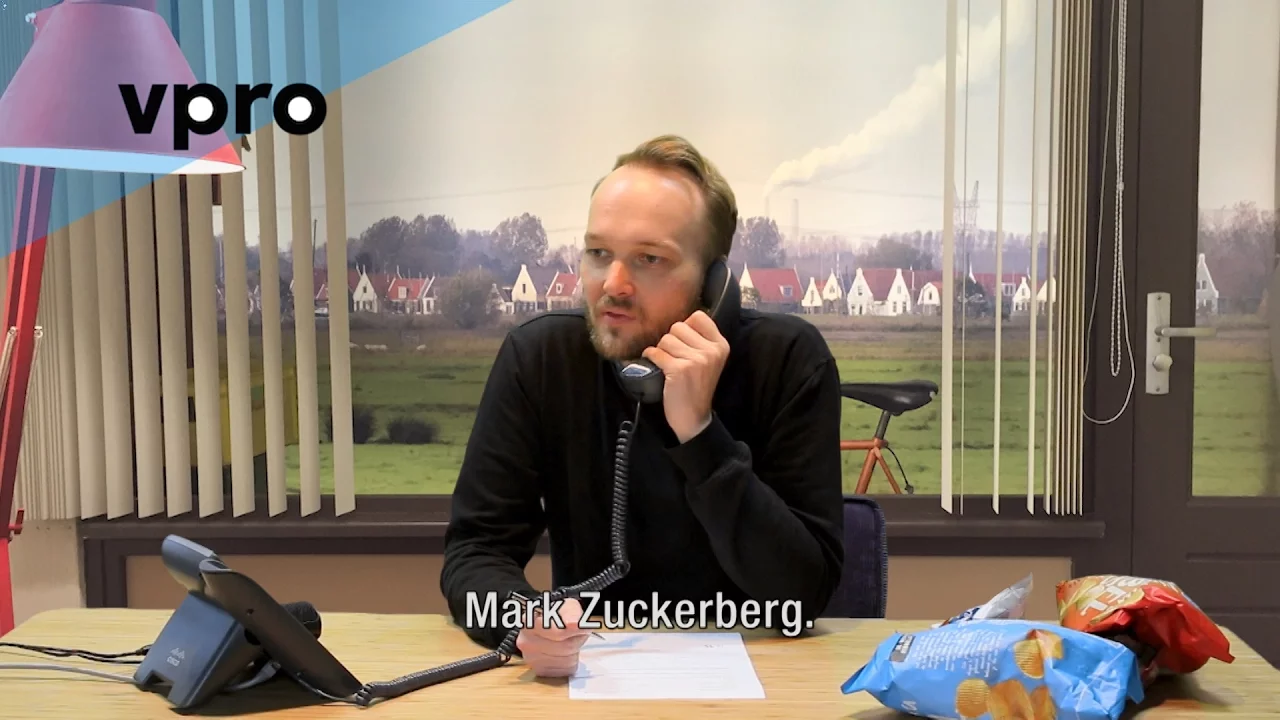
>> So I'm here in Palo Alto, California, chilling with Mark Zuckerberg of the Facebook.com, and we're drinking out of a keg of Heineken because... what are we celebrating, Mark?
>> We just got three million users.
>> 11, 12, 13... >> Whoo!
>> Tell us, you know, simply what Facebook is.
>> I think Facebook is an online directory for colleges.
I realized that because I didn't have people's information, I needed to make it interesting enough so that people would want to use the site and want to, like, put their information up.
So we launched it at Harvard, and within a couple of weeks, two-thirds of the school had signed up.
So we're, like, "All right, this is pretty sweet, like, let's just go all out."
I mean, it's just interesting seeing how it evolves.
We have a sweet office.
>> Yeah, well, show us... show us around the crib.
(talking in background) We didn't want cubicles, so we got IKEA kitchen tables instead.
I thought that kind of went along with our whole vibe here.
>> Uh-huh. What's in your fridge?
>> Some stuff.
There's some beer down there.
>> How many people work for you?
>> It's actually 20 right now.
>> Did you get this shot, this one here, the lady riding a pit bull?
>> Oh, nice.
>> All right, it's really all I've got.
>> That's cool.
>> Where are you taking Facebook at this point in your life?
>> Um, I mean... there doesn't necessarily have to be more.
♪ ♪ >> From the early days, Mark had this vision of connecting the whole world.
So if Google was about providing you access to all the information, Facebook was about connecting all the people.
>> Can you just say your name and pronounce it so nobody messes it up and they have it on tape?
>> Sure, it's Mark Zuckerberg. >> Great.
>> It was not crazy.
Somebody was going to connect all those people, why not him?
>> We have our Facebook Fellow, we have Mark Zuckerberg.
>> I have the pleasure of introducing Mark Zuckerberg, founder of Facebook.com.
(applause) >> Yo.
>> When Mark Zuckerberg was at Harvard, he was fascinated by hacker culture, this notion that software programmers could do things that would shock the world.
>> And a lot of times, people are just, like, too careful.
I think it's more useful to, like, make things happen and then, like, apologize later, than it is to make sure that you dot all your I's now and then, like, just not get stuff done.
>> So it was a little bit of a renegade philosophy and a disrespect for authority that led to the Facebook motto "Move fast and break things."
>> Never heard of Facebook?
(laughing) >> Our school went crazy for the Facebook.
>> It creates its own world that you get sucked into.
>> We started adding things like status updates and photos and groups and apps.
When we first launched, we were hoping for, you know, maybe 400, 500 people.
(cheering) >> Toast to the first 100 million, and the next 100 million.
>> Cool. >> So you're motivated by what?
>> Building things that, you know, change the world in a way that it needs to be changed.
>> Who is Barack Obama?
The answer is right there on my Facebook page.
>> Mr. Zuckerberg... >> 'Sup, Zuck?
>> In those days, "move fast and break things" didn't seem to be sociopathic.
>> If you're building a product that people love, you can make a lot of mistakes.
>> It wasn't that they intended to do harm so much as they were unconcerned about the possibility that harm would result.
>> So just to be clear, you're not going to sell or share any of the information on Facebook?
>> We're not gonna share people's information, except for with the people that they've asked for it to be shared.
>> Technology optimism was so deeply ingrained in the value system and in the beliefs of people in Silicon Valley... >> We're here for a hackathon, so let's get started.
>>...that they'd come to believe it is akin to the law of gravity, that of course technology makes the world a better place.
It always had, it always will.
And that assumption essentially masked a set of changes that were going on in the culture that were very dangerous.
>> From KXJZ in Sacramento... >> For Monday, June 27... >> NARRATOR: Mark Zuckerberg's quest to connect the world would bring about historic change, and far-reaching consequences, in politics, privacy, and technology.
We've been investigating warning signs that existed long before problems burst into public view.
>> It was my mistake, and I'm sorry... >> NARRATOR: But for those inside Facebook, the story began with an intoxicating vision that turned into a lucrative business plan.
>> Well, the one thing that Mark Zuckerberg has been so good at is being incredibly clear and compelling about the mission that Facebook has always had.
>> Facebook's mission is to give people the power to share.
Give people the power to share.
In order to make the world more open and connected... More open and connected... Open and connected... More open and connected.
(applause) >> JAMES JACOBY: How pervasive a mission was that inside of the company?
Give me a sense of that.
>> It was something that... You know, Mark doesn't just say it when we do, you know, ordered calisthenics in the morning and we yell the mission to each other, right?
We would actually say it to each other, you know, when Mark wasn't around.
>> JACOBY: And that was a mission that you really believed in?
>> How could you not?
How exciting.
What if connecting the world actually delivered a promise that we've been looking for to genuinely make the world a better place?
>> JACOBY: Was there ever a point where there was questions internally about this mission being naive optimism?
>> I think the short answer is completely yes, and I think that's why we loved it.
Especially in a moment like when we crossed a billion monthly active users for the first time.
And Mark's... the way I recall Mark at the time, I remember thinking, "I don't think Mark is going to stop until he gets to everybody."
>> I think some of us had an early understanding that we were creating in some ways a digital nation-state.
This was the greatest experiment in free speech in human history.
>> There was a sense inside the company that we are building the future and there was a real focus on youth being a good thing.
It was not a particularly diverse workforce.
It was very much the sort of Harvard, Stanford, Ivy League group of people who were largely in their 20s.
>> I was a big believer in the company.
Like, I knew that it was going to be a paradigm-shifting thing.
There was this, definitely this feeling of everything for the company, of this, you know, world-stirring vision.
Everyone more or less dressed with the same fleece and swag with logo on it.
Posters on the wall that looked somewhat Orwellian.
But, of course, you know, in an upbeat way, obviously.
And, you know, some of the slogans are pretty well-known-- "Move fast and break things," "Fortune favors the bold," "What would you do if you weren't afraid?"
You know, it was always this sort of rousing rhetoric that would push you to go further.
>> NARRATOR: Antonio Garcia Martinez, a former product manager on Facebook's advertising team, is one of eight former Facebook insiders who agreed to talk on camera about their experiences.
>> In Silicon Valley, there's a, you know, almost a mafioso code of silence that you're not supposed to talk about the business in any but the most flattering way, right?
Basically, you can't say anything, you know, measured or truthful about the business.
And I think, as perhaps with Facebook, it's kind of arrived at the point at which it's so important, it needs to be a little more transparent about how it works.
Like, let's stop the little (bleep) parade about everyone in Silicon Valley, you know, creating, disrupting this and improving the world, right?
It's, in many ways, a business like any other.
It's just kind of more exciting and impactful.
(Daft Punk's "Harder, Better, Faster, Stronger" playing) >> NARRATOR: By 2007, Zuckerberg had made it clear that the goal of the business was worldwide expansion.
>> Almost a year ago, when we were first discussing how to let everyone in the world into Facebook, I remember someone said to me, "Mark, we already have nearly every college student in the U.S. on Facebook.
It's incredible that we were even able to do that.
But no one gets a second trick like that."
Well, let's take a look at how we did.
(cheering and applause) >> JACOBY: What was the growth team about?
What did you do at growth?
>> The story of growth has really been about making Facebook available to people that wanted it but couldn't have access to it.
>> NARRATOR: Naomi Gleit, Facebook's second-longest serving employee, is one of five officials the company put forward to talk to Frontline.
She was an original member of the growth team.
>> One of my first projects was expanding Facebook to high school students.
I worked on translating Facebook into over a hundred languages.
When I joined, there were one million users, and now there's over two billion people using Facebook every month.
>> JACOBY: Some of the problems that have reared their head with Facebook over the past couple of years seem to have been caused in some ways by this exponential growth.
>> So, I think Mark-- and Mark has said this, that we have been slow to really understand the ways in which Facebook might be used for bad things.
We've been really focused on the good things.
>> So who are all of these new users?
>> The growth team had tons of engineers figuring out how you could make the new user experience more engaging, how you could figure out how to get more people to sign up.
Everyone was focused on growth, growth, growth.
>> Give people the power to share.
>> NARRATOR: And the key to keeping all these new people engaged... >> To make the world more open and connected.
>> NARRATOR:...was Facebook's most important feature... >> News Feed.
>> NARRATOR: News Feed, the seemingly endless stream of stories, pictures, and updates shared by friends, advertisers, and others.
>> It analyzes all the information available to each user, and it actually computes what's going to be the most interesting piece of information, and then publishes a little story for them.
>> It's your personalized newspaper, it's your "The New York Times" of you, channel you.
It is, you know, your customized, optimized vision of the world.
>> NARRATOR: But what appeared in users' News Feed wasn't random.
It was driven by a secret mathematical formula, an algorithm.
>> The stories are ranked in terms of what's going to be the most important, and we design a lot of algorithms so we can produce interesting content for you.
>> The goal of the News Feed is to provide you, the user, with the content on Facebook that you most want to see.
It is designed to make you want to keep scrolling, keep looking, keep liking.
>> That's the key. That's the secret sauce.
That's how... that's why we're worth X billion dollars.
>> NARRATOR: The addition of the new "like" button in 2009 allowed News Feed to collect vast amounts of users' personal data that would prove invaluable to Facebook.
>> At the time we were a little bit skeptical about the like button-- we were concerned.
And as it turned out our intuition was just dead wrong.
And what we found was that the like button acted as a social lubricant.
And, of course, it was also driving this flywheel of engagement, that people felt like they were heard on the platform whenever they shared something.
>> Connect to it by liking it... >> And it became a driving force for the product.
>> It was incredibly important because it allowed us to understand who are the people that you care more about, that cause you to react, and who are the businesses, the pages, the other interests on Facebook that are important to you.
And that gave us a degree of constantly increasing understanding about people.
>> News Feed got off to a bit of a rocky start, and now our users love News Feed.
They love it.
>> NARRATOR: News Feed's exponential growth was spurred on by the fact that existing laws didn't hold internet companies liable for all the content being posted on their sites.
>> So, section 230 of the Communications Decency Act is the provision which allows the internet economy to grow and thrive.
And Facebook is one of the principal beneficiaries of this provision.
It says don't hold this internet company responsible if some idiot says something violent on the site.
Don't hold the internet company responsible if somebody publishes something that creates conflict, that violates the law.
It's the quintessential provision that allows them to say, "Don't blame us."
>> NARRATOR: So it was up to Facebook to make the rules, and inside the company, they made a fateful decision.
>> We took a very libertarian perspective here.
We allowed people to speak and we said, "If you're going to incite violence, that's clearly out of bounds.
We're going to kick you off immediately."
But we're going to allow people to go right up to the edge and we're going to allow other people to respond.
We had to set up some ground rules.
Basic decency, no nudity, and no violent or hateful speech.
And after that, we felt some reluctance to interpose our value system on this worldwide community that was growing.
>> JACOBY: Was there not a concern, then, that it could be become sort of a place of just utter confusion, that you have lies that are given the same weight as truths, and that it kind of just becomes a place where truth becomes completely obfuscated?
>> No.
We relied on what we thought were the public's common sense and common decency to police the site.
>> NARRATOR: That approach would soon contribute to real-world consequences far from Silicon Valley, where Mark Zuckerberg's optimistic vision at first seemed to be playing out.
(crowd chanting) The Arab Spring had come to Egypt.
(crowd chanting) It took hold with the help of a Facebook page protesting abuses by the regime of Hosni Mubarak.
>> Not that I was thinking that this Facebook page was going to be effective.
I just did not want to look back and say that happened and I just didn't do anything about it.
>> NARRATOR: At the time, Wael Ghonim was working for Google in the Middle East.
>> In just three days, over 100,000 people joined the page.
Throughout the next few months, the page was growing until what happened in Tunisia.
>> Events in Tunisia have captured the attention of viewers around the world, and a lot of it was happening online.
>> It took just 28 days until the fall of the regime.
>> And it just created for me a moment of, "Maybe we can do this."
And I just posted an event calling for a revolution in ten days, like we should all get to the street and we should all bring down Mubarak.
>> Organized by a group of online activists... >> They're calling it the Facebook Revolution... (crowd chanting) >> NARRATOR: Within days, Ghonim's online cry had helped fill the streets of Cairo with hundreds of thousands of protesters.
(crowd chanting) 18 days later... >> (translated): President Muhammad Hosni Mubarak has decided to step down.
(cheering) >> They have truly achieved the unimaginable.
MAN: >> It's generally acknowledged that Ghonim's Facebook page first sparked the protests.
>> JACOBY: There was a moment that you were being interviewed on CNN.
>> Yeah, I remember that.
>> First Tunisia, now Egypt, what's next?
>> Ask Facebook.
>> Ask what? >> Facebook.
>> The technology was, for me, the enabler.
I would have not have been able to engage with others, I would have not been able to propagate my ideas to others without social media, without Facebook.
>> You're giving Facebook a lot of credit for this?
>> Yeah, for sure.
I want to meet Mark Zuckerberg one day and thank him, actually.
>> Had you ever think that this could have an impact on revolution?
>> You know, my own opinion is that it would be extremely arrogant for any specific technology company to claim any meaningful role in, in those.
But I do think that the overall trend that's at play here, which is people being able to share what they want with the people who they want, is an extremely powerful thing, right?
And we're kind of fundamentally rewiring the world from the ground up.
And it starts with people... >> They were relatively restrained externally about taking credit for it, but internally they were, I would say, very happy to take credit for the idea that social media was being used to effect democratic change.
>> Activists and civil society leaders would just come up to me and say, you know, "Wow, we couldn't have done this without you guys."
Government officials, you know, would say, "Does Facebook really realize how much you guys are changing our societies?"
>> It felt like Facebook had extraordinary power, and power for good.
>> NARRATOR: But while Facebook was enjoying its moment... (man shouting, crowd chanting) Back in Egypt, on the ground and on Facebook, the situation was unraveling.
>> Following the revolution, things went into a much worse direction than what we have anticipated.
>> There's a complete split between the civil community and those who are calling for an Islamic state.
>> What was happening in Egypt was polarization.
>> Deadly clashes between Christians and military police.
>> (translated): The Brotherhood cannot rule this country.
>> And all these voices started to clash, and the environment on social media breeded that kind of clash, like that polarization-- rewarded it.
>> When the Arab Spring happened, I know that a lot of people in Silicon Valley thought our technologies helped bring freedom to people, which was true.
But there's a twist to this, which is Facebook's News Feed algorithm.
>> If you increase the tone of your posts against your opponents, you are gonna get more distribution.
Because we tend to be more tribal.
So if I call my opponents names, my tribe is happy and celebrating, "Yes, do it, like, comment, share, so more people end up seeing it."
Because the algorithm is going to say, "Oh, okay, that's engaging content, people like it, show it to more people."
>> There were also other groups of thugs, part of the pattern of sectarian violence.
>> The hardest part for me was seeing the tool that brought us together tearing us apart.
These tools are just enablers for whomever, they don't separate between what's good and bad.
They just look at engagement metrics.
>> NARRATOR: Ghonim himself became a victim of those metrics.
>> There was a page, it had, like, hundreds of thousands of followers-- all what it did was creating fake statements, and I was a victim of that page.
They wrote statements about me insulting the army, which puts me at serious risk because that is not something I said.
I was extremely naive in a way I don't like, actually, now, thinking that these are liberating tools.
It's the spread of misinformation, fake news, in Egypt in 2011.
>> NARRATOR: He says he later talked to people he knew at Facebook and other companies about what was going on.
>> I tried to talk to people who are in Silicon Valley, but I feel like it was not, it was not being heard.
>> JACOBY: What were you trying to express to people in Silicon Valley at the time? >> It's very serious.
Whatever that we... that you are building has massive, serious unintended consequences on the lives of people on this planet.
And you are not investing enough in trying to make sure that what you are building does not go in the wrong way.
And it's very hard to be in their position.
No matter how they try and move and change things, there will be always unintended consequences.
>> Activists in my region were on the front lines of, you know, spotting corners of Facebook that the rest of the world, the rest of the company, wasn't yet talking about, because in a company that's built off numbers and metrics and measurements, anecdotes sometimes got lost along the way.
And that was always a real challenge, and always bothered me.
>> NARRATOR: Elizabeth Linder, Facebook's representative in the region at the time, was also hearing warnings from government officials.
>> So many country representatives were expressing to me a huge concern about the ability of rumors to spread on Facebook, and what do you do about that?
>> JACOBY: How did you respond to that at the time?
>> We, we didn't have a solution for it, and so the best that I could do is report back to headquarters that this is something that I was hearing on the ground.
>> JACOBY: And what sort of response would you get from headquarters?
>> You know, I... it's impossible to be specific about that, because it was always just kind of a, "This is what I'm hearing, this is what's going on."
But I think in a... in a company where the, the people that could have actually, you know, had an impact on making those decisions are not necessarily seeing it firsthand.
>> I think everything that happened after the Arab Spring should have been a warning sign to Facebook.
>> NARRATOR: Zeynep Tufecki, a researcher and former computer programmer, had also been raising alarms to Facebook and other social media companies.
>> These companies were terribly understaffed, in over their heads in terms of the important role they were playing.
Like, all of a sudden you're the public sphere in Egypt.
So I kept starting to talk to my friends at these companies and saying, "You have to staff up.
You have to put in large amounts of people who speak the language, who understand the culture, who understand the complexities of wherever you happen to operate."
>> NARRATOR: But Facebook hadn't been set up to police the amount of content coming from all the new places it was expanding to.
>> I think no one at any of these companies in Silicon Valley has the resources for this kind of scale.
You had queues of work for people to go through and hundreds of employees who would spend all day every day clicking yes, no, keep, take down, take down, take down, keep up, keep up, making judgment calls, snap judgment calls, about, "Does it violate our terms of service?
Does it violate our standards of decency?
What are the consequences of this speech?"
So you have this fabulously talented group of mostly 20-somethings who are deciding what speech matters, and they're doing it in real time, all day, every day.
>> JACOBY: Isn't that scary? >> It's terrifying.
Right?
The responsibility was awesome.
No one could ever have predicted how fast Facebook would grow.
The, the trajectory of growth of the user base and of the issues was like this.
And of all... all staffing throughout the company was like this.
The company was trying to make money, it was trying to keep costs down.
It had to be a going concern.
It had to be a revenue-generating thing, or it would cease to exist.
>> NARRATOR: In fact, Facebook was preparing to take its rapidly growing business to the next level by going public.
>> I'm David Ebersman, Facebook's CFO.
Thank you for taking the time to consider an investment in Facebook.
>> The social media giant hopes to raise $5 billion.
>> The pressure heading into the I.P.O., of course, was to prove that Facebook was a great business.
Otherwise, we'd have no shareholders.
>> Facebook-- is it worth $100 billion?
Should it be valued at that?
>> NARRATOR: Zuckerberg's challenge was to show investors and advertisers the profit that could be made from Facebook's most valuable asset-- the personal data it had on its users.
>> Mark, great as he was at vision and product, he had very little experience in building a big advertising business.
>> NARRATOR: That would be the job of Zuckerberg's deputy, Sheryl Sandberg, who'd done the same for Google.
>> At Facebook we have a broad mission: We want to make the world more open and connected.
>> The business model we see today was created by Sheryl Sandberg and the team she built at Facebook, many of whom had been with her at Google.
>> NARRATOR: Publicly, Sandberg and Zuckerberg had been downplaying the extent of the personal data Facebook was collecting, and emphasizing users' privacy.
>> We are focused on privacy.
We care the most about privacy.
Our business model is by far the most privacy-friendly to consumers.
>> That's our mission, right?
I mean, we have to do that because if people feel like they don't have control over how they're sharing things, then we're failing them.
>> It really is the point that the only things Facebook knows about you are things you've done and told us.
>> NARRATOR: But internally, Sandberg would soon lead Facebook in a very different direction.
>> There was a meeting, I think it was in March of 2012, in which, you know, it was everyone who built stuff inside ads, myself among them.
And, you know, she basically recited the reality, which is, revenue was flattening.
It wasn't slow, it wasn't declining, but it wasn't growing nearly as fast as investors would have guessed.
And so she basically said, like, "We have to do something.
You people have to do something."
And so there was a big effort to basically pull out all the stops and start experimenting way more aggressively.
The reality is that, yeah, Facebook has a lot of personal data, your chat with your girlfriend or boyfriend, your drunk party photos from college, etc. The reality is that none of that is actually valuable to any marketer.
They want commercially interesting data.
You know, what products did you take off the shelf at Best Buy?
What did you buy in your last grocery run?
Did it include diapers? Do you have kids?
Are you head of household?
Right, it's things like that, things that exist in the outside world, that just do not exist inside Facebook at all.
>> NARRATOR: Sandberg's team started developing new ways to collect personal data from users wherever they went on the internet and when they weren't on the internet at all.
>> And so, there's this extraordinary thing that happens that doesn't get much attention at the time.
About four or five months before the I.P.O., the company announces its first relationship with data broker companies, companies that most Americans aren't at all aware of, that go out and buy up data about each and every one of us-- what we buy, where we shop, where we live, what our traffic patterns are, what our families are doing, what our likes are, what magazines we read-- data that the consumer doesn't even know that's being collected about them because it's being collected from the rest of their lives by companies they don't know, and it's now being shared with Facebook, so that Facebook can target ads back to the user.
>> What Facebook does is profile you.
If you're on Facebook, it's collecting everything you do.
If you are off Facebook, it's using tracking pixels to collect what you are browsing.
And for its micro-targeting to work, for its business model to work, it has to remain a surveillance machine.
>> They made a product that was a better tool for advertisers than anything that had ever come before it.
>> And of course the ad revenue spikes.
That change alone, I think, is a sea change in the way the company felt about its future and the direction it was headed.
>> NARRATOR: Sparapani was so uncomfortable with the direction Facebook was going, he left before the company's work with data brokers took effect.
The extent of Facebook's data collection was largely a secret until a law student in Austria had a chance encounter with a company lawyer.
>> I kind of wanted a semester off so I actually went to California, to Santa Clara University in the Silicon Valley.
Someone from Facebook was a guest speaker explaining to us basically how they deal with European privacy law.
And the general understanding was, you can do whatever you want to do in Europe because they do have data protection laws, but they don't really enforce them at all.
So I sent an email to Facebook saying I want to have a copy of all my data.
So I got from Facebook about 1,200 pages, and I read through it.
In my personal file, I think the most sensitive information was in my messages.
For example, a friend of mine was in the closed unit of the... of a psychological hospital in Vienna.
I deleted all these messages, but all of them came back up.
And you have messages about, you know, love life and sexuality.
And all of that is kept.
Facebook tries to give you the impression that you share this only with friends.
The reality is, Facebook is always looking.
There is a data category called "last location," where they store where they think you've been the last time.
If you tag people in pictures, there's GPS location, so by that they know which person has been at what place at what time.
Back on the servers, there is, like, a treasure trove just, like, ten times as big as anything we ever see on the screen.
>> NARRATOR: As Facebook was ramping up its data collection business ahead of the I.P.O., Schrems filed 22 complaints with the Data Protection Commission in Ireland, where Facebook has its international headquarters.
>> And they had 20 people at the time over a little supermarket in a small town, it's called Portarlington.
It's 5,000 people in the middle of nowhere.
And they were meant to regulate Google or Facebook or LinkedIn and all of them.
>> NARRATOR: Schrems claimed Facebook was violating European privacy law in the way it was collecting personal data and not telling users what they were doing with it.
>> And after we filed these complaints, that was when actually Facebook reached out, basically saying, you know, "Let's sit down and have a coffee and talk about all of this."
So we actually had a kind of notable meeting that was in 2012 at the airport in Vienna.
But the interesting thing is that most of these points, they simply didn't have an answer.
You totally saw that their pants were down.
However, at a certain point, I just got a text message from the data protection authority saying they're not available to speak to me anymore.
That was how this procedure basically ended.
Facebook knew that the system plays in their favor, so even if you violate the law, the reality is it's very likely not gonna be enforced.
>> NARRATOR: Facebook disputed Schrems's claims, and said it takes European privacy laws seriously.
It agreed to make its policies clearer and stop storing some kinds of user data.
>> So without further ado, Mark Zuckerberg.
>> NARRATOR: In Silicon Valley, those who covered the tech industry had also been confronting Facebook about how it was handling users' personal data.
>> Privacy was my number-one concern back then.
So when we were thinking about talking to Mark, the platform was an issue, there were a bunch of privacy violations, and that's what we wanted to talk to him about.
Is there a level of privacy that just has to apply to everyone?
Or do you think... I mean, you might have a view of, this is what privacy means to Mark Zuckerberg, so this is what it's going to mean at Facebook.
>> Yeah, I mean, people can control this, right, themselves.
Simple control always has been one of the important parts of using Facebook.
>> NARRATOR: Kara Swisher has covered Zuckerberg since the beginning.
She interviewed him after the company had changed its default privacy settings.
>> Do you feel like it's a backlash?
Do you feel like you are violating people's privacy?
And when we started to ask questions, he became increasingly uncomfortable.
>> You know, it's... >> I think the issue is, you became the head of the biggest social networking company on the planet.
>> Yeah, no, so... but I... the interesting thing is that, you know, so I started this when I was, you know, started working on this type of stuff when I was 18.
>> So he started to sweat quite a lot, and then a lot a lot, and then a real lot.
So the kind that... this kind of thing where, you know, like "Broadcast News," where it was dripping down, like... or Tom Cruise in that "Mission: Impossible."
It was just... it was going to his chin and dripping off.
>> You know, a lot of stuff changed as we've gone from building this project in a dorm room... >> And it wasn't stopping and I was noticing that one of the people from Facebook was, like, "Oh, my God," and was... we were... I was trying to figure out what to do.
>> Yeah. I mean, a lot of stuff happened along the way.
I think, you know, there were real learning points and turning points along the way in terms of... in terms of building things.
>> He was in such distress, and I know it sounds awful, but I felt like his mother.
Like, "Oh, my God, this poor guy is gonna faint."
I thought he was gonna faint, I did.
Do you want to take off the hoodie?
>> Uh, no. (chuckles) Whoa.
>> Well, different people think different things.
He's told us he had the flu.
I felt like... he had had a panic attack, is what happened.
>> Maybe I should take off the hoodie.
>> Take off the hoodie. >> Go ahead. What the hell?
>> That is a warm hoodie. >> Yeah.
No, it's a thick hoodie.
We... it's, um, it's a company hoodie.
We print our mission on the inside.
>> What?!
Oh, my God, the inside of the hoodie, everybody.
Take a look. What is it?
"Making the..." >> "Making the world more open and connected."
>> Oh, my God. It's like a secret cult.
>> JACOBY: From that interview and from others, I mean, how would you have characterized Mark's view of privacy?
>> Well, you know, I don't know if he thought about that.
It's kind of interesting because they're very... they're very loose on it.
They have a viewpoint that this helps you as the user to get more information, and they will deliver up more... That's the whole ethos of Silicon Valley, by the way.
If you only give us everything, we will give you free stuff.
There is a trade being made between the user and Facebook.
The question is, are they protecting that data?
>> Thank you, Mark.
>> NARRATOR: Facebook had been free to set its own privacy standards, because in the U.S.
there are no overarching privacy laws that apply to this kind of data collection.
But in 2010, authorities at the Federal Trade Commission became concerned.
>> In most other parts of the world, privacy is a right.
In the United States, not exactly.
>> NARRATOR: At the FTC, David Vladek was investigating whether Facebook had been deceiving its users.
What he found was that Facebook had been sharing users' personal data with so called "third-party developers"-- companies that built games and apps for the platform.
>> And our view was that, you know, it's fine for Facebook to collect this data, but sharing this data with third parties without consent was a no-no.
>> But at Facebook, of course, we believe that our users should have complete control of their information.
>> The heart of our cases against companies like Facebook was deceptive conduct.
That is, they did not make it clear to consumers the extent to which their personal data would be shared with third parties.
>> NARRATOR: The FTC had another worry: They saw the potential for data to be misused because Facebook wasn't keeping track of what the third parties were doing with it.
>> They had, in my view, no real control over the third-party app developers that had access to the site.
They could have been anyone.
There was no due diligence.
Anyone, essentially, who could develop a third-party app could get access to the site.
>> JACOBY: It could have been somebody working for a foreign adversary.
>> Certainly.
It could have been somebody working... yes, for, you know, for the Russian government.
>> NARRATOR: Facebook settled with the FTC without admitting guilt and, under a consent order, agreed to fix the problems.
>> JACOBY: Was there an expectation at the time of the consent order that they would staff up to ensure that their users' data was not leaking out all over the place? >> Yes.
That was the point of this provision of the consent order that required them to identify risk to personal privacy and to plug those gaps quickly.
>> NARRATOR: Inside Facebook, however, with the I.P.O. on the horizon, they were also under pressure to keep monetizing all that personal information, not just fix the FTC's privacy issues.
>> Nine months into my first job in tech, I ended up in an interesting situation where, because I had been the main person who was working on privacy issues with respect to Facebook platform-- which had many, many, many privacy issues, it was a real hornet's nest.
And I ended up in a meeting with a bunch of the most senior executives at the company, and they went around the room, and they basically said, "Well, who's in charge?"
And the answer was me, because no one else really knew anything about it.
You'd think that a company of the size and importance of Facebook, you know, would have really focused and had a team of people and, you know, very senior people working on these issues, but it ended up being me.
>> JACOBY: What did you think about that at the time?
>> I was horrified.
I didn't think I was qualified.
>> NARRATOR: Parakilas tried to examine all the ways that the data Facebook was sharing with third-party developers could be misused.
>> My concerns at that time were that I knew that there were all these malicious actors who would do a wide range of bad things, given the opportunity, given the ability to target people based on this information that Facebook had.
So I started thinking through what are the worst-case scenarios of what people could do with this data?
And I showed some of the kinds of bad actors that might try to attack, and I shared it out with a number of senior executives.
And the response was muted, I would say.
I got the sense that this just wasn't their priority.
They weren't that concerned about the vulnerabilities that the company was creating.
They were concerned about revenue growth and user growth.
>> JACOBY: And that was expressed to you, or that's something that you just gleaned from the interactions?
>> From the lack of a response, I gathered that, yeah.
>> JACOBY: And how senior were the senior executives?
>> Very senior.
Like, among the top five executives in the company.
>> NARRATOR: Facebook has said it took the FTC order seriously and, despite Parakilas's account, had large teams of people working to improve users' privacy.
But to Parakilas and others inside Facebook, it was clear the business model continued to drive the mission.
In 2012, Parakilas left the company, frustrated.
>> I think there was a certain arrogance there that led to a lot of bad long-term decision-making.
The long-term ramifications of those decisions was not well thought through at all.
And it's got us to where we are right now.
(cheers and applause) >> Your visionary, your founder, your leader.
Mark, please come to the podium.
(cheers and applause) >> NARRATOR: In May of 2012, the company finally went public.
>> The world's largest social network managed to raise more than $18 billion, making it the largest technology I.P.O. in U.S. history.
>> People literally lined up in Times Square around the NASDAQ board.
>> We'll ring this bell and we'll get back to work.
>> With founder Mark Zuckerberg ringing the NASDAQ opening bell remotely from Facebook headquarters in Menlo Park, California.
>> NARRATOR: Mark Zuckerberg was now worth an estimated $15 billion.
Facebook would go on to acquire Instagram and WhatsApp on its way to becoming one of the most valuable companies in the world.
>> Going public is an important milestone in our history.
But here's the thing: our mission isn't to be a public company.
Our mission is to make the world more open and connected.
(cheering) >> NARRATOR: At Facebook, the business model built on getting more and more of users' personal data was seen as a success.
But across the country, researchers working for the Department of Defense were seeing something else.
>> The concern was that social media could be used for really nefarious purposes.
The opportunities for disinformation, for deception, for everything else, are enormous.
Bad guys or anybody could use this for any kind of purpose in a way that wasn't possible before.
That's the concern.
>> JACOBY: And what did you see as a potential threat of people giving up their data?
>> That they're opening themselves up to being targets for manipulation.
I can manipulate you to buy something, I can manipulate you to vote for somebody.
It's like putting a target... painting a big target on your front and on your chest and on your back, and saying, "Here I am.
Come and manipulate me.
You have every... I've given you everything you need.
Have at it."
That's a threat.
>> NARRATOR: Waltzman says Facebook wouldn't provide data to help his research.
But from 2012 to 2015, he and his colleagues published more than 200 academic papers and reports about the threats they were seeing from social media.
>> What I saw over the years of the program was that the medium enables you to really take disinformation and turn it into a serious weapon.
>> JACOBY: Was your research revealing a potential threat to national security?
>> Sure, when you looked at how it actually worked.
You see where the opportunities are for manipulation, mass manipulation.
>> JACOBY: And is there an assumption there that people are easily misled?
>> Yes, yes, people are easily misled, if you do it the right way.
For example, when you see people forming into communities, okay, what's called filter bubbles.
I'm gonna exploit that to craft my message so that it resonates most exactly with that community, and I'll do that for every single community.
It would be pretty easy... it would be pretty easy to set up a fake account, and a large number of fake accounts, embedded it in different communities, and use them to disseminate propaganda.
>> JACOBY: At an enormous scale?
>> Yes, well, that's why it's a serious weapon, because it's an enormous scale.
It's the scale that makes it a weapon.
>> NARRATOR: In fact, Waltzman's fears were already playing out at a secret propaganda factory in St. Petersburg, Russia, called the Internet Research Agency.
Hundreds of Russian operatives were using social media to fight the anti-Russian government in neighboring Ukraine.
Vitaly Bespalov says he was one of them.
>> JACOBY: Can you explain, what is the Internet Research Agency?
(speaking Russian) >> (translated): It's a company that creates a fake perception of Russia.
They use things like illustrations, pictures-- anything that would influence people's minds.
When I worked there, I didn't hear anyone say, "The government runs us" or "the Kremlin runs us," but everyone there knew and everyone realized it.
>> JACOBY: Was the main intention to make the Ukrainian government look bad?
>> (translated): Yeah, yeah, that's what it was.
This was the intention with Ukraine.
Put President Poroshenko in a bad light and the rest of the government, and the military, and so on.
(speaking Russian) You come to work and there's a pile of SIM cards, many, many SIM cards, and an old mobile phone.
You need an account to register for various social media sites.
You pick any photo of a random person, choose a random last name, and start posting links to news in different groups.
>> NARRATOR: The Russian propaganda had its intended effect: helping to sow distrust and fear of the Ukrainian government.
(chanting) >> Pro-Russia demonstrators against Ukraine's new interim government.
>> "Russia, Russia," they chant.
>> Russian propaganda was massive on social media.
It was massive.
>> There was so many stories that start emerging on Facebook.
>> "Cruel, cruel Ukrainian nationalists killing people or torturing them because they speak Russian."
>> They scared people.
"You see, they're gonna attack, they're gonna burn your villages.
You should worry."
(speaking Russian) >> And then the fake staged news.
(speaking Russian) >> "Crucified child by Ukrainian soldiers," which is totally nonsense.
(speaking Russian) >> It got proven that those people were actually hired actors.
>> Complete nonsense.
>> But it spreads on Facebook.
>> So Facebook was weaponized.
>> NARRATOR: Just as in the Arab Spring, Facebook was being used to inflame divisions.
But now by groups working on behalf of a foreign power, using Facebook's tools built to help advertisers boost their content.
>> By that time in Facebook, you could pay money to promote these stories.
So your stories emerge on the top lines.
And suddenly you start to believe in this, and you immediately get immediate response.
You can test all kind of nonsenses and understand to which nonsense people do not believe... (man speaking Ukrainian) And to which nonsenses people start believing.
(chanting in Russian) Which will influence the behavior of person receptive to propaganda, and then provoking that person on certain action.
♪ ♪ >> They decided to undermine Ukraine from the inside... (gunfire echoing, shouting)...rather than from outside.
>> I mean, basically, think about this-- Russia hacked us.
>> NARRATOR: Dmytro Shymkiv, a top adviser to Ukraine's president, met with Facebook representatives and says he asked them to intervene.
>> The response that Facebook gave us is, "Sorry, we are open platform, anybody can do anything without... within our policy, which is written on the website."
And when I said, "But this is fake accounts."
(laughs): "You could verify that."
"Well, we'll think about this but, you know, we, we have a freedom of speech and we are very pro-democracy platform.
Everybody can say anything."
>> JACOBY: In the meeting, do you think you made it explicitly clear that Russia was using Facebook to meddle in Ukraine politics?
>> I was explicitly saying that there are trolls factory, that there are posts and news that are fake, that are lying, and they are promoted on your platform by, very often, fake accounts.
Have a look.
At least sending somebody to investigate.
>> JACOBY: And no one... sorry. >> No.
>> JACOBY: No one was sent? >> No, no.
For them, at that time, it was not an issue.
>> NARRATOR: Facebook told "Frontline" that Shymkiv didn't raise the issue of misinformation in their meeting, and that their conversations had nothing to do with what would happen in the United States two years later.
>> JACOBY: It was known to Facebook in 2014 there was potential for Russian disinformation campaigns on Facebook.
>> Yes.
And there were disinformation campaigns from a number of different countries on Facebook.
You know, disinformation campaigns were a regular facet of Facebookery abroad.
And... I mean, yeah, technically that should have led to a learning experience.
I just don't know.
>> JACOBY: There was plenty that was known about the potential downsides of social media and Facebook-- you know, potential for disinformation, potential for bad actors and abuse.
Were these things that you just weren't paying attention to, or were these things that were kind of conscious choices to kind of say, "All right, we're gonna kind of abdicate responsibility from those things and just keep growing"?
>> I definitely think we've been paying attention to the things that we know.
And one of the biggest challenges here is that this is really an evolving set of threats and risks.
We had a big effort around scams.
We had a big effort around bullying and harassment.
We had a big effort around nudity and porn on Facebook.
It's always ongoing.
And so some of these threats and problems are new, and I think we're grappling with that as a company with other companies in this space, with governments, with other organizations, and so I, I wouldn't say that everything is new, it's just different problems.
>> Facebook is the ultimate growth stock... >> NARRATOR: At Facebook headquarters in Menlo Park, they would stick to the mission and the business model, despite a gathering storm.
>>...get their election news and decision-making material from Facebook.
>> The most extraordinary election... >> NARRATOR: By 2016, Russia was continuing to use social media as a weapon.
>>...Hillary Clinton cannot seem to extinguish... >> NARRATOR: And division and polarization were running through the presidential campaign.
>> Just use it on lying, crooked Hillary... >> The race for the White House was shaken up again on Super Tuesday... >> NARRATOR: Mark Zuckerberg saw threats to his vision of an open and connected world.
>> As I look around, I'm starting to see people and nations turning inward, against this idea of a connected world and a global community.
I hear fearful voices calling for building walls and distancing people they label as others.
For blocking free expression, for slowing immigration, reducing trade and in some cases around the world, even cutting access to the internet.
>> NARRATOR: But he continued to view his invention not as part of the problem, but as the solution.
>> And that's why I think the work that we're all doing together is more important now than it's ever been before.
(cheers and applause) >> NARRATOR: Tomorrow night, "Frontline's" investigation continues.
>> There is absolutely no company who has had so much influence on the information that Americans consume.
>> NARRATOR: He's the man who connected the world.
But at what cost?
>> Polarization was the key to the model.
>> NARRATOR: The global threat... >> This is an information ecosystem that just turns democracy upside down.
>> NARRATOR: The 2016 election... >>...Facebook getting over a billion political campaign posts.
>> NARRATOR: And the company denials... >> The idea that fake news on Facebook influenced the election in any way I think is a pretty crazy idea.
>>...Facebook CEO Mark Zuckerberg will testify... >>...and I'm responsible for what happens here.
>> NARRATOR: Is Facebook ready for the mid-term elections?
>> There are a lot of questions heading into this midterm... >>...the midterm elections... >> I still have questions if we're going to make sure that in 2018 and 2020 this doesn't happen again.
>> NARRATOR: Part two of "The Facebook Dilemma."
Tomorrow night on "Frontline."
>> Go to pbs.org/frontline to read more about more about Facebook from our partner, Washington Post reporter Dana Priest.
>> For Facebook the dilemma is can they solve these serious problems without completely revamping their business model.
>> Then watch a video explainer about what Facebook knows about you and how.
>>...even though you never signed up for it, Facebook now has data about you and stores it as a shadow profile... >> Connect to the "Frontline" community at pbs.org/frontline.
♪ ♪ >> For more on this and other "Frontline" programs, visit our website at pbs.org/frontline.
♪ ♪ To order Frontline's "The Facebook Dilemma" on DVD, visit ShopPBS, or call 1-800-PLAY-PBS.
This program is also available on Amazon Prime video.
♪ ♪
Up Next

65:38
Jon Stewart vs. Media Polarization: A 25-Year Political Analysis
@EzraKleinShow
786.7K views•2024-11-04

26:22
Walking in the City: Urban Rituals and the Flâneur in Contemporary India
@PSBTIndia
1.9K views•2016-08-02
54:48
US-China Trade War: Tariffs, Tech Conflict, and Economic Fallout
@frontline
5.4M views•2019-05-13

1:42
Game of Thrones Opening Credits: A Cinematic Analysis
@gameofthrones
46.3M views•2011-04-18
Related Study Plans & Knowledge Roadmaps
Structured learning paths in General & Interdisciplinary Studies
general-studies
Artificial Light: History, Tech & Human Impact
01The Pre-Electric Era: Fire, Oil, and Gas Lighting
02The Incandescent Revolution and Grid Electrification
03Gas Discharge and Fluorescent Illumination
+ 3 more learning modules
14h6 modules
Explore Roadmap
general-studies
Elevator Engineering: History, Physics & Cities
01From Hoists to Safety Brakes: The Dawn of Vertical Lift
02Hydraulic vs. Traction: The Engineering Physics of Elevators
03Modern Speed, Safety, and Algorithms
+ 2 more learning modules
12h5 modules
Explore Roadmap
general-studies
Rubber: Material Science, History & Geopolitics
01Origins of Natural Rubber & Mesoamerican History
02The Chemistry of Natural Rubber & Vulcanization
03The Geopolitics of the Rubber Boom & Colonization
+ 2 more learning modules
12h5 modules
Explore Roadmap
general-studies
Containerization: Evolution, Logistics & Trade
01Ancient Trade & Bulk Cargo: Amphorae to Barrels
02The Industrial Revolution & Cardboard Packaging
03The Containerization Revolution: Malcom McLean
+ 2 more learning modules
12h5 modules
Explore Roadmap