



















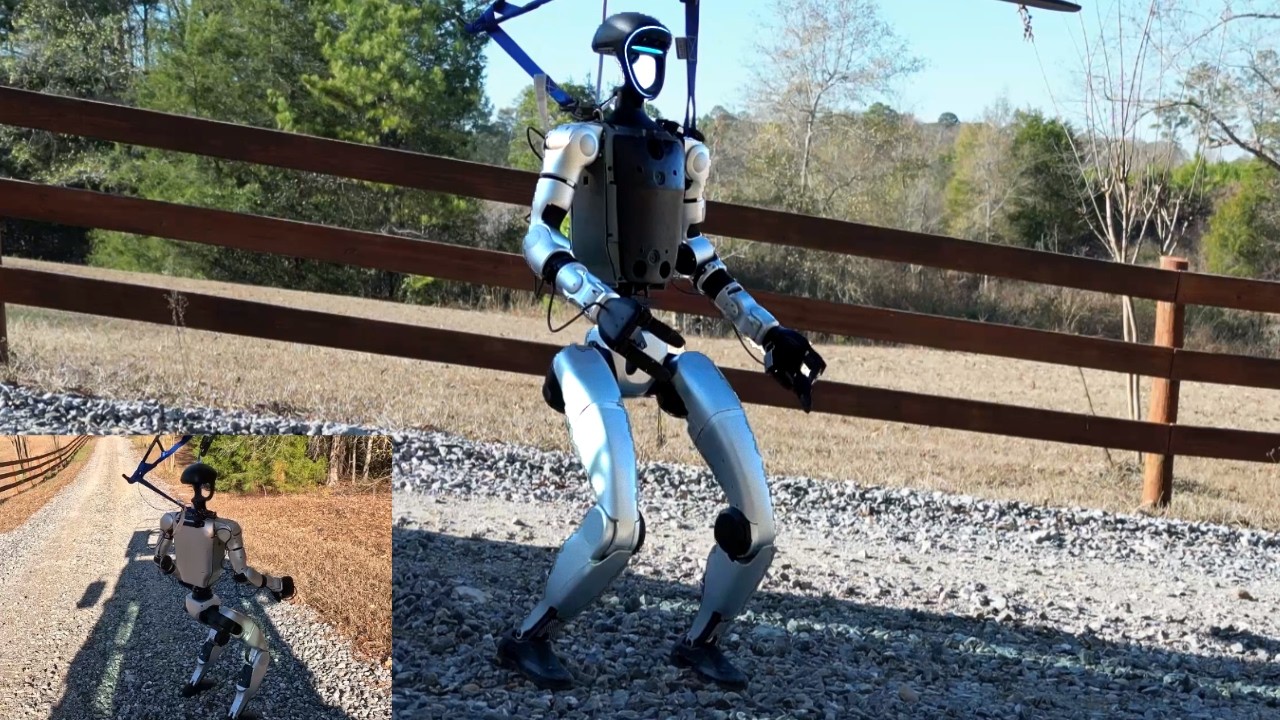


In Stable Baselines 3, you can save and load trained reinforcement learning models using the `model.save()` method with a filename, and load them back using the appropriate algorithm's `load()` function (e.g., `PPO.load()`), which is essential for tracking model performance, resuming training, and deploying trained agents; additionally, TensorBoard logging provides visualization of training metrics like reward averages and episode lengths to monitor algorithm performance over time.
Stable Baselines 3: Saving, Loading & Tracking Models in RL
Added:Fundamental concepts of Reinforcement Learning (RL), including agents, environments (Gym/Gymnasium API), states, actions, and rewards.
Basic theoretical understanding of policy gradient algorithms, specifically Proximal Policy Optimization (PPO) and Advantage Actor-Critic (A2C).
Proficiency in Python programming and basic familiarity with deep learning frameworks like PyTorch.
The general concept of model serialization (saving and loading model weights) in machine learning.
Implementing custom Callbacks in Stable Baselines 3 for advanced monitoring, evaluation, and early stopping during training.
Hyperparameter tuning for RL agents using optimization frameworks like Optuna integrated with the RL Baselines3 Zoo.
Integrating advanced experiment tracking platforms like Weights & Biases (W&B) or MLflow for comprehensive multi-run analysis.
Designing custom Gymnasium environments to train and deploy RL models on specialized domain-specific tasks.
Sim-to-Real transfer techniques and deploying trained PyTorch-based RL models into production or physical robotic control systems.
50.1K views898likes33:06Original Release: 2022-02-06
what is going on everybody and welcome to part two of the reinforcement learning with stable bass lines three tutorial series in this video we're going to be talking about saving loading and tracking the performance of your models so this is the code that we left off on we definitely learned that something is happening when we train it for x number of steps the problem is how many steps do we train for and as we saw for sure with a2c i didn't even look through the ppo but we definitely saw where performance at one point was actually in the positives but it ended at 100 000 steps with a reward in the negatives so how do we like deal with this so so that's what we're going to be focusing on uh here so first off uh we will go ahead and we will import os and then we're going to specify a models directory and this will just be we'll make models models slash and in this case depending on which one we're using so in this case we're using ppo so first for now i'll just say ppo but if we change the algorithm change change that name don't be like me and forget i'm sure i will so that's modelsdirt and then we'll also have a loggeder for whoops i didn't mean to run that i have to what what have i done logder equals logs so uh so once we've specified those we want to make sure they exist so if not os dot path dot exists and models der we want to os dot make durs models der and then we're going to do the exact same thing for the log directory so paste paste cool so that'll make them if they don't already exist these lines are totally fine and now what i'd like to do is set time steps so this could be in the form of a thousand time steps or ten thousand it really is going to depend on like how quickly does your environment step in my opinion so this just comes down to how free essentially how frequently do you actually want to save your model so for now i'm going to also comment this out because this was to actually run it and we'll get to that on the load here in a little bit but for now what we want to address is training and saving so so in this case let's say we're going to train every ten thousand steps you can change this to be five thousand ten thousand two thousand five hundred whatever whatever the heck you wanna use um put that number in i'll go with ten thousand since that's relatively quickly so let's say what we really want to do and we'll actually make a constant here time steps we'll say 10 000.
so model learn for those time steps and then we'll say for i in range and then how many time steps do you want to do so in reality we might actually make this a wow true loop but just so it'll be easy for me to kind of compare the two well again we'll be comparing a2c and ppo here so i'll just limit it in some way but for i in range 30 what we're going to do is model.learn for that many time steps now if we just leave it this way the model will reset every time the number of time steps that it's like already taken the model object i mean so every time you do model.learn it would reset the time steps that it's at but to stop that we can say reset num time steps and we'll set that to be false and then we'll also set a tb log name and again that will set that to be ppo um i feel like we need to have like a constant probably um i think we'll be okay with with two places to edit but if we add any more i think i should we should probably have a variable for that but anyways whatever model.learn uh so yeah so the so this reset time steps will help both with the output that we see in the console but also in the tensorboard itself so model.learn and then basically all we're going to add is model.save and we'll use an f string here models underscore oops we wanted to use those variables models dir slash and then in this case it will be uh we're just gonna save uh time steps times i so we'll say um whoops not a capital i dude there we go so go ahead and save that so now essentially this will be time step zero uh the first time through and in fact maybe we'll do a range one to thirty to make this actually actually accurate otherwise we'll be ten thousand steps off so model that save so now it will save that model every 10 000 steps so i'll go ahead save that and in fact i think we probably want to run this in its own little console so we'll go ahead and run this python3 p2 uh save dot pi let's make this a wee bit larger and let's go ahead and run that make sure we don't hit any errors so far so good okay and that's off that is training uh our model for ppo now what i'm gonna go ahead and do is let's just shift uh i'll put this over here i guess so i'll move that over i wish it told you somewhere in that output what type of model it was but that's okay so we got ppo training now i'm going to go ahead and toss in uh a2c to kill two birds one stone at a time here so let's make sure that we make all the changes that we're supposed to make ooh find and replace probably would have made sense but that's okay uh a2c uh a2c wasn't there one more spot yes there was not that it'd be an interesting model uh okay so i think i think we're all set we'll go ahead and save that let's confirm that uh we got models or logs so this will be tensorboard here models ppo so yeah we have our ten thousand twenty thousand and thirty thousand steps models already in there um whoops and i think we're good so let's just double check make sure i didn't screw anything up in fact let's go ppo found that one it's a good thing we didn't do a find and replace isn't it anyways okay cool so now whoops now we'll save and let's go ahead and i will run that one as well so open in terminal python 3 p2 save dot pi so again this should be running for a2c in our case so again we'll make it a little bigger and i will wait for that to at least start to output something for us let me check a2c cool and let's go ahead and check logs logs is empty why would logs be empty is it possible why would logs be empty maybe it's every hundred thousand steps is that what it's going to do to me i would think it would update the logs every 10 000 steps oh i know what i've done okay so i forgot to in model i told you we weren't going to be adding anything else but we are so so in here we're going to say tensorboard tensorboard underscore log equals log der and then this is the tb log name dang it okay so okay i'm gonna break these two that are training right now uh and come back over here i just want to clean everything up so actually i'm just going to delete that okay coming back here a2c a2c cool i wish i would have checked that earlier anyways let's rerun that so this will be a2c going and we'll make sure that we're actually logging this time okay that's training we'll come over here well let's confirm before we waste our time shall we so a2c underscore zero cool models a2c very well okay so now what i want to do is switch this to ppo copy paste paste paste and just to be sure a2c very good we don't have a2c and will we run ppo now i'll slap this over here also a little curious um nvidia s am i curious where i'm at gpu-wise okay my gpu yeah we're comfy uh thanks puget so um okay so now we have our things training we should have tensorboard logging happening so now to actually view the tensorboard what we'll do is uh do actually we need to be in that directory so we'll come down here open a terminal and we'll go uh tensorboard logder logder equals logs very well so okay so here although the graphs are very very small admittedly let's make this a little bigger so the main graph that you're probably going to care about the most is the reward average okay um and in this case ppo is our blue and a2c is our orange so you probably care about the the average reward the most that is typically the thing that we're trying to create here but the length of the episode also can carry quite a bit of significance um and maybe more on that later uh we'll see so ppo blue a2c is orange okay so what i'm going to do i think is i'll make i think i can do this no that's the wrong button i never remember which one which ones are the right buttons so i'm going to let these things train for the 300 000 steps hopefully i got that right it should take somewhere before that we should be able to solve these models these are very simple models okay obviously this is still training and i will continue to let it go for the 300 000 steps but eventually we'll get to 300 000 and either way while you're training like i said typically you're going to probably be using a wow true loop rather than you any known ending so now what we want to do is looking at our reward mean we might say okay we want to take ppo at you know maybe i don't know which one will we do 180 or maybe even 175 but we wouldn't have that saved so it'd either be 170 000 or 180 000 either one we can just grab one of those let's say we want to load that and run that also interestingly enough i'm kind of surprised that uh we've actually seen we actually see a2c overtaking ppo this is not that's not nothing is what i've expected so far in this series like i expected um our random agent in part one to be way more wild but actually our random agent part one was i think better than the 100 000 age that's just like what the heck man trying to make a tutorial here um let's go look at some of these metrics though so one thing that should be pretty clear by looking at these um they are different algorithms so take these take this with a grain of salt but in general the reality or the thing that i was hoping to be able to show even with the reward here is but you can also see it with the reward um ppo is a smoother algorithm in general it does it doesn't have as much volatility and one thing you will grow to really hate as you train these reinforcement learning algorithms is how volatile they can they can become right um especially like when i was doing ddpg for example with the robot dog um it was very frustrating to have a model learn learn learn learn learn and then just tanks it just explodes and it's like no good anymore it's like it just it really guts you so um in general i like something that is a little smoother and we can see that basically in all of these other metrics like entropy loss all the all basically all of these metrics across the board um ppo is the smoother metric and so for that reason it is a little more less stressful to use something like ppo also in general the performance is much better in this case it is comical to see a2c is actually is it still winning it is still winning real hard okay live demos so the other thing to think about too is a lot of models can be dictated by just randomness so where did you randomly initialize and where did you start taking steps from there so you can do two things you can either set your random seed specifically or i kind of just like to just run a few models randomly like to test truly test a model test your environment i would run like three to five something like that i've seen huge variation in exactly the same code and if and in fact maybe what i'll do before we leave it'll probably be an exact match but before the end of this this tutorial um i'll run one more ppo and i mean in fact we can just run it um i think we can get away ppo maybe make the models dirt could be a dash two and actually i don't want to overload the gpu so i'll wait until one of them is done but i'll show you at least another tensorboard before this is over um and you can hopefully see some of the variants my guess anyways these environments so basic that maybe there won't be much but anyways let's get to loading and kind of seeing one of our examples in action so for example let's say we want to take ppo and i forget already what was a good ppo one which one is ppo it's our blue so let's take ppo at 180 000.
so while things are training we probably want to see where we're at along the way because again you'll probably wind up doing it for just a while true loop and you might want to actually visually see it so sometimes you'll see the reward is what you want or maybe the episode length is what you want but nothing beats visually seeing it so again for example with the robot dog sometimes the reward looks really good but then you load it up and either one the uh the actual agent is somehow defying the laws of physics like it has found an actual like bug in the environment which is pretty common or two maybe it's doing something really dumb that will never be recovered from so one example that i've seen again from the robot dog scenario is it would like jump and do like this kind of roll but get stuck on its back and it just it was probably never going to get out of that that was a really short term kind of gain in reward but then actually recovering from that i've never seen it happen it's possible that it could like jump and roll and then jump and roll and then jump and roll or something like that but um in general it's good to see it visually so you have an idea of like what's actually going on in your environment uh to cause that reward even though it might look good on paper in practice it might not look good at all so so we want to see what's going on so to do that we still need our environment we do need a model but we're going to use our one of our saved models so i'm going to copy the models dir paste it over here and the first thing that we want to do is we're going to specify our model path model path and that will be um that will be the uh we'll make that an f string and it will be models der and then slash whatever that file name is in this case we'll do 170 000.zip that one was looking good at least to start and now what we want to do is actually load that model so we're going to say model equals and this will be ppo dot load and we will load in the model path and then we specify the environment so to just be m vehicles m now we want to actually run with the model so episodes 10 that's totally fine we get the observation yeah yeah cool cool basically what we want to do is swap out this action here so we're going to cut this out and we're going to say we want to take an action now what is that action going to be so to make that action we're going to say action equals model dot predict and actually uh it's gonna be action and then we'll just say like underscore it in this case it also the model that predict is returning um some states so if you are using we're not i'm not touching this right now but if you're using a recurrent algorithm this will this will be of use to you um but for now we're not doing that so we really only care about what is the action so we're going to say models.predict or model.predict rather and that observation so then we'll do the step based on our actual model's action we will get all of this other information um and then basically continue the loop so let's go ahead and save that and we can run that maybe yes okay so here we have i guess because i've changed the name it's all itty bitty let me fix that beautiful so here we can see our actual model in action this is our ppo model um so the episode length is starting to make a little bit of sense now it's not terrible right it's not crashing but the goal is to land in between these two flags and it's definitely not doing that right right now but this is better than random and it's better than the 10 000 model but clearly we need to possibly continue training so let's go ahead and check let's see here if anybody got even better no our best model in this case was actually around maybe 190 but also interestingly ppo and e2c performed identically it's this is so frustrating yeah you do like definitely ppo is supposed to win here i can't believe this and ppo also just turned to to crud by the end this is hilarious um so what i think i'm gonna do now is i'm gonna train i'm gonna train like i guess we'll do we'll do another run for each of them to be fair so i'll run another ppo and another a2c but also while we're at it let's go ahead and check an a2c at i guess 190k so we'll come over here we will oh it already died it died before i could do it so we'll change this to 190 and then we'll change this to a a2c we'll change this to a2c a2c cool uh and let's just go ahead and import ppo and a2c we don't need to be switching that around every single time cool cool run that wait for it so here's our a2c it looks pretty good too it's very comparable to our i think that i don't think we ever saw ppo actually succeed in any way this is interesting when i was like making the text based version of this tutorial this is this is like nothing like i was seeing it's funny um classic so okay so now what i want to do is i'm going to train both of these again and maybe maybe i'm going to walk away while i train these so i'm going to do maybe i'll do like a million steps just because i am surprised at our results thus far so cool so what i'm going to do is we'll just kill this and p2 save let's do models do ppo so the only thing if i want to run a bunch of ppos would be here and maybe what i'll do is import time let's get real fancy about this super fancy i will do an int time dot time cool and [Music] 30 let's do do i really want to do a million times kind of i kind of want to see the a better result here what was it so uh ten thousand so we'll do a hundred time steps and i think maybe i'll do like two and two so let's save that p2 save so what i'll do is come over here i'll run p2 save once okay it was trying to rewrite to the uh the other tensorboard logs so i guess we'll also say logs and then we'll do this logs slash ppo time.time what did i screw up ah boom okay try that again what i really want to see like it was trying to overwrite each other so here i'll show you what i what tipped me off to that one okay well maybe it was this one i might have made the logs a little messy but yeah i saw logging to logs and then it was just ppo underscore zero for both of them obviously we don't want that um because then we'd have crazy logs so hopefully we didn't totally murder well we did we murdered our other log but that's okay um that's all right okay that one is running so i will run one more uh ppo and just to clean up the logs i will come into here and i will delete maybe we'll leave the original a2c but this one's been ruined so i'll just delete it and now what i'll do is i'll also add an a2c take that pasta pasta a2c a2c i bet we could have fixed it with that we could that would have been the more proper place to fix it actually now that i think about it we should have added the time to that uh i don't think it will be relevant because it just doesn't it doesn't really matter but this we should have added the time stamp right there um whatever i think we're fine so let me check for ppo again cool okay so now what i will do we'll just run two more of these python 3 p2 save and i'm just going to open a tab python 3 p2 save let's check models make sure we're not screwing ourselves there look very good and then we'll check logs that's looking good so far and then finally let's check tensorboard looking good looking good i wish i didn't delete the original ppo oof whatever okay so see if i can fit this on the screen while it trains very good very good okay about an hour in some change hour and 20 30 minutes or so has gone by we are finally done training everything here and um interesting charts for sure so checking out kind of the results it does look like our best performer is this ppo model here but also curiously i believe that's this guy right here yeah so also curiously where's the talk there it is um who's our second best here see like our second best was like sort of even this like a2c for a second that for the original one that i said was really good for an a2c model by the way um that was actually our second or our uh second best for a little bit and then it appears that it kind of went bad oh well that was the well that was the one that we trained for only 300k steps um but then it's another a2c model that was actually pretty good for a little bit and then yes it throws it all away just just like the other one was clearly going to do in it and it never recovered but by the end uh the the two victors here are ppo and ppo so if you can use ppo use ppo it seems to be the best one that i've you know at least in my experience of using in in all fairness a2c i don't know anybody that's still using a2c for anything specific but anyways um yeah so we have our results we've compared models um you've seen now real examples of how that random initialization can make all the all the difference um so again you might want to actually explicitly set your random seed possibly or just simply train a handful of models in my opinion i would just again i would just kind of randomly train a few models and then whichever one is going well continue training that model i don't i don't really see any statistical reason why you want to set like random seed 0 for example for all the algorithms that you test because in theory you might be you know maybe you were that that bad ppo from before uh when really you could have been you could have been good ppo if you would have allowed that seed to you know come across your desk so anyways uh let's check out one of these ppos so it looks like um maybe around here is one of the better ones so we are where we step so let's do the 550k ppo so let's check that one out so p2c p2 load uh i already know i've i gotta figure out what was the uh 550 000 and which before i forget so let's see pb let me change this to be ppo um and which one was that ppo uh is there a way i can just yes i'll do that maybe cool come over here paste i think we can get away with that with the models there we'll save that let's run that and see if that works beautiful look at it look at it go yeah so yeah that's uh probably solved we'll look at a few more but i would say at this point yes that is indeed um that is indeed solved so the other thing that i wouldn't mind checking real quickly while that continues to play is what was our best a2c it looks like a2c like our original a2c is is the best one that went for 300 000 steps so the a2c at about not quite 200k steps but maybe 190.
yeah so a2c0 at 190k looked pretty good so let me um i guess i'll move this over here you can watch that and we'll just check it out so a2z a 2c 0.
is that going to be right for the modelster let me check that that'd be right for the logs but for models yeah it's just a2c i already forgot what i said was it 190k okay so this is our a2c um yeah i mean it's not it's not quite as good as the ppo it did learn at least but at least for sure on this environment i see no reason to use it ppo is faster and ppo is better so hopefully now you've got an even better understanding of reinforcement learning stable baselines three and you're coming to grips with how do you change your algorithms and all that now up to this point we've been using these pre-made environments and like i've been saying the really true hard thing is to figure out which environment do you want to use ppo on so so i'm just kidding there are other algorithms and obviously ppo is no good for there is continuous ppo but again we will we'll talk more i promise after the custom environments we will talk more about uh continuous versus uh discrete and all that kind of stuff um but i think the next best thing to do is i think anybody is getting into reinforcement learning if you're not just doing it just for the kicks is you want to apply this to your own environment so in the coming videos what i'm going to do is we'll just take some environment i can find online um i'm thinking some sort of pie game game or something like that convert that to a a gym environment so show you kind of the steps that are involved to do that and then actually train a model in that environment again because this is an environment that we're going to have to make up the observations so you'll see that it's not you know in this case we've just been handed observations so how do you come up with your own quality observations how do you start thinking in that way and then also how to come up with your rewards because again these two things are actually deceptively complicated sometimes so i think i think you'll see a few good examples as we as we go through that so anyways that's all for now thanks for watching and i will see you guys in another video you
Up Next
20:58
Create Your Own Reinforcement Learning Environments: Gridworld Tutorial
@MachineLearningwithPhil
39.1K views•2019-04-02

73:14
3D Computer Vision: Lecture 1 Part 2 - Projective Geometry
@cvrplabatnus8618
15.3K views•2021-01-20
55:16
Building a Custom Reinforcement Learning Environment with Q-Learning
@sentdex
116.5K views•2019-06-06
18:41
Neural Networks Explained: Math, Layers, and Learning Fundamentals
@3blue1brown
21.9M views•2017-10-05
Related Study Plans & Knowledge Roadmaps
Structured learning paths in Artificial Intelligence
artificial-intelligence
PINNs: Fluid Dynamics with PyTorch & DeepXDE
01Calculus & Fluid Dynamics Foundations
02Deep Learning & PyTorch Basics
03Introduction to Physics-Informed Neural Networks (PINNs)
+ 3 more learning modules
32h6 modules
Explore Roadmap
artificial-intelligence
Aligning LLMs: DPO, TRL & Custom Datasets
01Foundations of Python & Machine Learning
02Transformers and Large Language Models (LLMs)
03Aligning LLMs: SFT and RLHF
+ 3 more learning modules
24h6 modules
Explore Roadmap
artificial-intelligence
Federated Learning: PyTorch, Flower & Privacy
01Python & Machine Learning Foundations
02Deep Learning Basics with PyTorch
03Introduction to Federated Learning
+ 2 more learning modules
35h5 modules
Explore Roadmap
artificial-intelligence
Securing LLMs: Guardrails AI & NeMo Gateway
01Introduction to LLMs, Python, and APIs
02Understanding LLM Vulnerabilities & Threats
03Defending LLMs with Guardrails AI
+ 2 more learning modules
15h5 modules
Explore Roadmap