















The Master-Apprentice Language Learning Program is an informal, immersive language learning method designed for adults to learn endangered heritage languages through daily life activities and conversation practice, rather than formal classroom instruction. The program pairs fluent elders (masters) with motivated adult learners (apprentices) who spend 10-20 hours weekly together, focusing on oral communication, non-verbal understanding, and practical language use in everyday situations. This approach addresses the challenge of revitalizing languages with few remaining speakers by enabling new generations to acquire conversational proficiency and subsequently teach their children, thereby creating sustainable language transmission within communities.
Reclaiming Indigenous Languages: Master-Apprentice Learning Program
Added:good evening everybody so my name is jackie troy and i'm the director of research indigenous social and cultural wellbeing at the australian institute for aboriginal and torres strait islander studies and it's my particular pleasure to welcome you all to hear professor leanne hinton speaking about reclaiming indigenous languages and particularly the master apprentice language learning program which she has been a key mastermind in developing and is now helping us in australia to understand and which will lead to a lot of important language work here further important language work and it as the representative from i answers um we and we've had the privilege of also being co-funders in this evening's proceedings we also had the privilege of having leanne give a wonderful seminar at ayatsus on monday so i'd like to thank her once again for that event it was terrific and a number of you who are in the audience participated on the panel and as the ayatos representative and also as a person who's descended from people whose traditional country came down into this area the narugu people i would like to say that it is a great privilege to be here on the traditional country of a range of groups including nanowool mammary walgalu but particularly the nanowill people and it's a time to acknowledge the elders past and present and the living community here which many of you who live here in canberra participate with all the time so thank you for having us here this is about our languages and reclaiming them and i'd like to hand over now to sarah dr sarah ogilvy or is it professors um thank you very much thank you jackie and thank you for your welcome to country and to you and your colleagues at iaxis at the center for aboriginal and australian languages for the generous sponsorship of this lecture thanks to your sponsorship we're able to film it and therefore aboriginal communities around australia can can watch it and we're also able to have a wine and cheese function after this and you are all welcome at that so good evening my name is sarah ogilvy and i'm the director of the australian national dictionary center here at anu and it's a particular delight and honor that professor leanne hinton accepted our invitation to be a visiting fellow at the center for this month which has meant that we've all had the chance to enjoy her spending time with us here at anu i must say she's been a real hit at the center and we're very sad that that she's leaving tomorrow at the australian national dictionary center we've always rightly concentrated on australian english but we hope in the future to expand our remit to provide scope for work and collaborations on indigenous languages of our nation so professor hinton's presence with us is therefore an important indication of one of future directions which we hope that the centre will take internationally known for her research on language loss and language revitalization she has written numerous books and articles and consults with indigenous communities around the world as she has for the past two weeks in alice springs and kannanara leanne hinton is a professor emeritus in the linguistics department at the university of at the university of california berkeley she is a founder and advisory board member of the advocates for indigenous california language survival her books on language revitalization include flutes of fire the famous green book of language revitalization in practice how to keep your language alive which is the manual for the master apprentice pro program which we are going to hear more of tonight and her current book is bringing our languages home language revitalization for families professor hinton's work has been widely recognized as groundbreaking in the field of language revitalization in 2006 she won the cultural freedom award from the lennan foundation and earlier this year in january the linguistic society of america awarded her the language linguistics and the public award this evening she's going to speak to us on reclaiming indigenous languages using the master apprentice program in north america and here in australia it's a very great pleasure to welcome professor leanne hinton thank you thanks very much sarah i i want to thank the three organizations that are hosting the lecture the australian um national dictionary center and to sarah for all of the great hosting that she has given me while i'm here uh as well as to julia who's here and the staff who helped me become a visiting scholar and and i am going to miss the morning teas so much and also to ietsis to jackie and to others for the tours they gave me and for having me there monday for that wonderful panel and and thank you for the welcome to country and to jane simpson and and other folks that are in charge of this seminar series big ideas on language thank you for that so um i was here uh primarily to go spend two weeks out in alice springs and kononara in a training the trainers seminar or two training the trainers workshops and for that i have to thank many people but especially margaret florey and her staff at rnld reynold the resource network for linguistic diversity and i also want to thank wallace mckittrick of the indigenous languages support program in the office for the arts program of the australian federal government i'm going to lead up to the master apprentice program and the workshops through a somewhat lengthy introduction and so bear with me what you're seeing on the screen now is the first sentence in an influential set of articles written by ken hale michael krauss and several of their colleagues for the american journal language in 1992 it was subsumed under the title endangered languages and it sounded an alarm about the loss of linguistic diversity around the world and i think it was one of the key events that led to a new era of linguistic language documentation in linguistics it which is a venerable field but it had lost steam in the latter half of the 20th century and one of the quotes from it is from kraus where he says obviously for scientific purposes it's most urgent to document languages before they disappear and he also talked about how the work was potentially of equal or greater importance for the communities who were being documented and indeed the the new documentation is uh it's a wonderful trend there's a lot going on now in australia as well as the united states and south america and just about everywhere it's aided by great advances in technology and it focuses on frequently not always on massive documentation for many people and many genres including a new focus on everyday conversation which is enormously important for language revitalization and it allows for the new documentation allows for digital archiving and possibilities for immediate dissemination of materials even while people are still in the field and there's a new ethics where community is partner and fellow decision maker along with some or total even sometimes intellectual property rights but um and i was uh the seminar that uh we were in on monday i was talking about how documentation is used for language revitalization and has been uh very important to some very successful people in revitalizing their languages but the idea that documentation saves languages is a view of linguists but it's not necessarily shared by indigenous people who still have speakers especially as some language activists in california put it documentation is just pickling my language so the most common goal in language revitalization is new speakers and what happens is that indigenous communities often feel that documentation should take second place to a focus on language teaching and language learning i'll give you a quote from richard graham's phd in princeton from the theological seminary there and project director for the uc language project in sepulch oklahoma he's also a member of the yucci tribe and he and his two children are fluent second language learners of the uc language working with the elders so graham's viewpoint is as he says in in an article in 2007 the climax came when the linguist offered the idea to the yuchis that they would have a dictionary on their shelves 100 years from now i countered that 100 years from now i wanted yucci's to have the language on their tongues in the end the dictionary option won out he was very bitter about that the uchi language project had to divide the elders time with the dictionary project he was hoping the elders could spend full time with language teaching and learning so once again the goal of language revitalization is new speakers and documentation in itself does not bring new speakers sometimes people can use documentation to develop new speakers but the real problem is how to get new speakers when natural transmission in the home is no longer happening so what's working i'm going to just go through this fairly quickly one of the things that's working really well is immersion schools and language nests in new zealand and hawaii those are the special models here's some pictures from the school nawahi okalani opu in hilo hawaii and there's also some smaller uh programs i mean maori and hawaiian have large numbers now schools all over uh all over the state of hawaii in the country of of new zealand there are some smaller schools too on the mainland in the united states such as the cutswood school in montana for blackfeet and this picture is the entire student body of the single school that they have it goes from kindergarten through the eighth grade and then after that kids have to go to the english language public school here's another one the aqua sassani's freedom school mohawk sorry for the fuzzy picture there um and that's pre-k through ninth grade and then kids go to english language school so the larger tribes on the mainland can do immersion schools too although they're smaller in scope but smaller groups with only a few speakers would find it almost impossible if not completely impossible to have such schools at least for the present language survival schools are as they're often called are the most effective means of developing new speakers of endangered languages that are not being used at home and that's because children learn language at a young age they become fully fluent in the language there's relatively large new numbers of new speakers that can be generated all at once it also allows the development of a culture and a community of language revitalization so not only is the language being taught and the values and the culture within the schools but also language activism and over 20 years of survival schools in hawaii new zealand show that at least in the good schools and now he is one of those that's what i'm most familiar with that children are successful in school about 90 percent of the kids from nawahi go to college they're fluent in hawaiian or maori as well as english and of those who have children so far many are committed to raising their their language their children in the language so why are there so many language survival schools in hawaii and new zealand but not in australia or mainland usa well the answer is pretty obvious hawaii and new zealand have only one indigenous language each and that means there's relatively large populations that allow a large pool of teachers to teach in the schools and because there's only one language in each place both the government and universities have large programs for teaching the language to young adults at the university level which are then the people that most often are the teachers in the school because there are not very many young adults who grew up using the language at home this is changing of course because the people that went to the school many of them are coming back as teachers now so in hawaii for example you can actually go on to the university of hawaii after graduating from a hawaiian immersion school and you can major in hawaiian studies if you are so inclined and all the courses that you take will be in the hawaiian language whether it's courses in history natural history or whatever you can now get a phd in in indigenous language revitalization studies in hawaii still have almost all of your courses be in the hawaiian language well so those are the riches of having only one language per state now here's australia each one of those little colors is a different language and the united states this isn't a good comparison map the united states is just as diverse as australia is it's just that these colors represent language stocks instead of single languages so here's a little better map um for showing just part of the united states it's california and even this has uh um some language families that are melted together like pomo is actually seven languages rather than just one um but you can also see in california and this is typical of what's going on in both the united states and australia if you look at this this is a map that uh um as a result of a study i did in 1992 of the number of speakers of california indian languages and so each number represents how many speakers there are and you can see a whole lot of zeros so out of almost 100 languages that were originally in california at least a third of them have no speakers left alive and and of course this was done in 1992 and so the the situation has changed a good deal yurok for example which in 1992 had 20 or 30 speakers now has two or three speakers and none and none of those two or three are really as fluent as the best speakers were 20 years ago so you can you can look at every single language and see the same thing going on so um immersion schools in these linguistically diverse situations with very small numbers of speakers and often very small tribes are difficult or impossible to develop and maintain and and universities can't provide the teachers to the schools either when you've got 100 languages or 250 languages or in order to to try to people so what are the smaller groups doing they're still doing a lot so they have immersion camps a lot of immersion camps summer camps daily or weekly language classes in the schools or outside the schools people that have been able to learn their language as a second language are sometimes using it at home this is a miami child from oklahoma she was at the time being homeschooled in the miami language and her family all speaks miami and i should say that the idea of an immersion school or language nest is not impossible it's just really hard i had an email that i saw just five minutes before coming here from a friend of mine who's been working for 18 years with the cochiti pueblo in new mexico and they've been doing summer camps and intensive summer camps for the kids for 18 years and they and she wrote saying it's all coming to fruition now we're opening a preschool immersion school and she wanted money but so who's going to teach the children in um in in these small groups that are trying to revitalize their language and who is going to run these immersion camps if if all of the speakers are very elderly uh who is going to um what how are the parents going to learn the language that want to use the language at home how is all this going to happen who's going to teach those language classes in the schools well the smaller endangered languages have few of any adult speakers who are of parent age or professional age these are the missing generations those are the ones who didn't learn the language when they were the children so right now most of these languages at least in california that are deeply endangered have people only of like the great grandparent age however these generations the missing generations are they're not missing from action they're only missing from knowing the language they're the language activists they're the people who know what it means not to have their heritage language and they want it for their children the challenge then is for these adults to have a way to learn their language and so we finally get back to the master apprentice language learning program uh which is one way that people can learn their language adults can learn their language so the master apprentice language learning program and and that is the book that sarah mentioned the manual for it how to keep your language alive was developed by the advocates for indigenous california language survival around 1992 and these are us the advocates for indigenous california language survival everybody here is a tribal member of some california indian group except for marina drummer who's the financial administrator and i'm on and i'm the advisory board so the master apprentice language learning program is a is a kind of an informal method for adults that's designed for people to do it more or less by themselves most of the time so they don't have an actual teacher but it's a speaker and a learner that are supposed to spend if possible 10 to 20 hours a week together or more it's aimed at helping people learn how to learn from a fluent speaker who's not necessarily a trained language teacher and it's aimed at helping learners gain conversational proficiency in their heritage language through through language immersion practices and doing activities that are relevant to their daily lives so that they're learning language in situations where they can use it in their daily lives this is just a picture of one training we've done we've trained about 100 teams now in california and some in somewhere around 30 languages and we also are giving trainings elsewhere in the u.s and canada and it's as it gets more popular it's also there's a our manual has been translated into portuguese for distribution to the tribes in in brazil and there's also a group working on translation into japanese for um for use by the inu and there's also an mma program going on in australia just one in in kuninara so this is the first master apprentice training in australia in 2010 and this is al frank one of the members of the board and um crystal richardson who was an apprentice in the master apprentice program and has now become one of our trainers so margaret flory has been working with the mayor wong on other language revitalization and documentation projects and has seen it in action as well as hearing about it elsewhere including hearing a paper by newt um olowski who's one of the linguists at the mirama language center where the mirror wands are and um got the excellent idea of developing some groups here in australia who would do the training of master apprentice teams around the country so when she asked me if if we would mind i said oh no not at all but i also told her that i happened to be coming to australia in march with my husband gary scott and that i'd be willing to do a training the trainers workshop while i was here and this uh led to something bigger so it ended up with three advocates myself and and two of my colleagues from the advocates coming over here for these two workshops training some 40 people representing 28 different australian languages so and we've just more or less finished them less than a week ago so here's the group photo of the alice springs training workshop and the group photo of the canonra workshop and this is our team training team me with nancy steele who's karuk and stan rodriguez kumiyai here's some nice portraits of them that reynolds took rnld and um nancy is a both of them are long-term educators and both of them have um learned to speak their language primarily through the master apprentice program and they're both really talented teachers so stan lives in san diego and teaches kumiyai and nancy lives uh she's karuk and that she lives way up in the very top of the state so the alice springs participants um this is a list of them 21 participants representing 14 different languages and the kanonora participants 19 participants also representing 14 languages and the also the marijuana master apprentice teams were present along with francis cofote who is their other long-term linguist and the linguistic support staff included some of my favorite linguists in the world margaret florey john hopson margaret karu newt tolowsky kath dabroska susan poach francis cofote and jenny bell dropped in occasionally so these are the well and margaret organized all this over a period of about four months i don't know how she managed but uh it was a marvelous feat so these are the principles of the master apprentice program one is leave english behind that's what immersion is you don't speak the language that you're trying to get away from you speak the language that you're moving toward that you're trying to learn and in order to leave english behind how are people going to understand each other you make yourself understood through nonverbal communication this is not master apprentice this is much more general immersion practice and so nonverbal communication includes gestures and facial expressions and actions and uh objects and pictures and activities all of which communicate the meaning while the words are being said we focus in the master apprentice program on oral learning not on reading and writing so people learn to speak through listening and speaking the language and we try to get people to somewhat minimize the use of writing because it actually interrupts the the hearing and the speaking process one of the most important aspects of it is that the apprentice is a proactive learner that is he's he's what we have recently started to call a language hunter this is a term that evan gardner developed for another program uh in language learning for endangered languages called where are your keys and um and what that means is that the apprentice is going after the language he's not sitting there waiting to be taught and we'll i'll be explaining all of these and showing you how some of this takes place and people learn through activities and they learn language that they can use so uh and they use what they learn and then finally they need to teach others as they learn uh teach teach their children teach their teach a class teach other friends so the beginning of the workshops nancy ran a grief and growl session as she calls it so grieve and growl is uh it's related to what's been happening to endangered languages one of the things that's been happening in australia in the united states is that for many generations now people have been told not to speak their language they've been told that there's something wrong with their language and they've been told there's something wrong with them and there's a lot of internalized anger and a lot of internalized shame that kind of has to be dealt with before people can open themselves up fully to the language again and so nancy uh runs a session the grief and growl session and then and this actually can take all morning of the first day sometimes but uh then we can get down to the principles so the the principles that i was talking about each one of those has to be justified to a master apprentice team has to be exemplified and it has to be practiced and and so we ran the these training the trainer workshops in that way to try to justify and practice these principles so the first two principles then are leave english behind and make yourself understood through nonverbal communication so our first uh exercise is to um it's an exercise that's also an icebreaker we have a bunch of cards and each card has on it a task that somebody has to get somebody else to do so the task would be something like get someone to give you a dollar or get someone to sit on someone else's lap or something like that and so the person who gets the card has to hide it from everybody else and he has to get somebody to do that task and he can do it silently he doesn't have to use language at all or he can use the um the language the indigenous language he knows so long as he tries to get someone who doesn't know that language to do the task because the idea is to get people is to buy into the idea that you can make somebody understand you even if you don't have language in common so here's phil brown getting someone to take off her glasses and to put them on and to give him to somebody else to put on um um a glennis a marijuana herc this is glenn is right here her card was uh get two people to dance with each other i don't know whose card this was but it was get someone to tie someone else's shoelaces together so this is a fun activity and it certainly gets people out of whatever depression was caused by the grief and growl so each exercise we do adds one principle so the second um the second exercise is to focus on oral learning but you're doing it by leaving english behind and making yourself understood through nonverbal communication and that is um an exercise to read wordless books we have a whole collection of books that are stories without words where everything's told in pictures and it's a very comfortable uh first immersion exercise because it's clear that the apprentice can understand by looking at the pictures what's uh what the master is talking about even if they don't understand the every word so this is greg pascoe and his mother going through a wordless book together in in uh the cuckoo language and you'll have to forgive me if or if i pronounce things wrong here and with john hobson looking on and learning some kokuga at the same time there's jackie allen and others at her table going through a wordless book and her language is awa bakai that's another fun exercise everybody has a good time with it so we've gone through leave english behind make yourself understood focus on oral learning and the fourth principle is the apprentice is a proactive learner or a language hunter now one of the ways that we help a person empower himself to be a language hunter is to um have him learn survival questions and phrases as we call them and so these are um questions like what is this so you have to learn how to say it in the language you're learning or the only time you can use english is with the how do you say question where you can have a in that blank you can say an english word or what is he doing um that's something that's good for wordless books for example to point to people or animals in the book and ask what they're doing more advanced would be something like what is he thinking looking at expressions on somebody's face you can get people during activities the activities we want to say a beginning learner and uh would do an activity where the master is telling him what to do and giving orders as to what to do and sometimes you have to elicit the language the master might just say set the table well you want more language than that you know so you might just say what'll i do you know and then they say put the plate on the table and then you put them in a pile and say what do i do and um so you're eliciting more language you're also asking things like uh say it again say it slower to help in the learning or to uh you have to have something to overcome frustration like i forget how to say it if the uh if the teacher is sitting there waiting for you to say something and you can't remember or maybe you just need some time out and so how do you say that also the master and apprentice learn both learn to have reminder phrases if they catch themselves speaking in english one of them says please say that in our language or let's talk in our language so the next exercise in any master apprentice training is to learn a few of these sentences we just say learn two and uh we usually suggest what is he doing and what is this that's uh end actually learn three and what'll i do next because they all feed into the other exercises so here's dwayne and knut dwayne has taught knute how to say what is this and so uh he is asking dwayne what is this and dwayne's telling him the word for cup in the language back to the wordless book exercise these two are asking questions about what's going on in the book what is he doing what is that okay so that was the third exercise so we've gone through these principles learning through activities so almost everything would take place through activities and uh so first uh one one popular activity in um in the workshops is making finger puppets so uh we first demo that and uh here's a whole bunch of felt and glue and scissors and things feathers all kinds of things like that and uh we so stan is telling us in kumiei how to make the finger puppets and we're asking questions like what is this in order to learn languages like in order to learn words like feather and then everybody else starts doing it so here's uh django and leone making finger puppets in nungu here's uh mirawong making finger puppets in marijuana and in cuckoo yeah finished products so uh we've gone through all these learn through activities and the next principle is learn language you can use well of course making finger puppets it's sort of uh not an everyday activity we'd really like people to be learning through the activities of daily life which is harder to do in a classroom but we manage a few so here's people getting instructions on making up the swag making up the swag in wirangu uh estelle and and leonard are doing this and estelle is uh doing a good thing for an apprentice to do which is uh being reluctant to make the bed so that uh so that um leonard has to tell her every single step or she won't do it so she's getting more language uh here is making up the swag in pacquiante these two are laughing so hard they can hardly finish and then another thing we did as a daily exercise for daily living was what do you do when you get up in the morning and you have to wash up and so on so stan got all of these toiletries actually uh the staff got them and brought them in for him so there's a deodorant lipstick a brush toilet paper hair dryer there's all kinds of things that people might use in the morning ablutions and of course when a language hasn't been used for a long time people don't have words for most of these things so one of the issues is well how are people going to talk about modern life and we always have a lot of discussions in these training seminars about new words but we've learned not to say people are using that people should make up new words because people might feel that they don't have the authority to make up a new word or some people feel like new words shouldn't we we shouldn't be making new words anyway we should only be using the old words um so what we say is if there's not a word for something um use a descriptive phrase for it and so the deodorant might be you might say something like uh um the the thing that makes you smell good you know or uh toilet paper well you can imagine and so people really get off on it when they're not feeling like they're they're making a new word but are instead making a descriptive phrase and it also gives them the freedom then to talk about things that people didn't talk about 50 or 100 years ago and and to not be stymied by what's going on in in modern life which is most of what their daily life is nowadays so um here's denise taking a shower we drew a shower on the board um so that was part of the morning evolutions and so on so uh but then what we do is we go through a brainstorming on language learning activities or activities daily activities what are the activities that that each of the participants do on a daily basis what are the activities that what are the traditional activities that you do or might like to do what are some things that one of you might like to learn from the other do you like to go fishing do you like to go hunting would you like to learn to make baskets what are these things that you'd like to do and those are the activities that a master apprentice teams would be doing and if there's a program going where the where the master apprentice team actually is being paid you can be paid to do anything you want right so long as you're doing language in the process okay the last one is and use what you learn now if you're only going to talk about fishing when you're fishing there's not too much you can say so new newt was dude was saying all our master protest teams i like to go fishing so much but everybody already knows the words for all the names of the fish you know and so what can you do and what you can do is what do people do when they're doing fishing or making a basket they're really talking about something else most of the time they're just gossiping or talking about what they've been doing and that's what we really want master apprentice teams to be doing is to just be talking about whatever there is to talk about so our last uh main exercise is conversation practice and so stan lined everybody up um so that there were couples talking to each other there were like 10 or 12 couples talking to each other at any given time and then we have a set of what we call conversation cards for people that need the stimulation of a topic of a special topic and people can just draw a card and and talk about that but what we did in this case was we said okay the first thing is that everybody is each pair is going to talk to each other all at once everybody's talking to each other about your houses describe your houses any and for two minutes no english and most of these people are not fluent speakers that came to this conference and so they were using gestures they were often using individual words without sentences but what we're really after in the master apprentice program is communication rather than perfection we think you can think of a learner as being starting out like a baby might be starting out with just single words and and having to use a lot of non-verbal communication to make himself understood and he'll get better as time goes on especially if his master's talking to him a lot and he's getting the input he needs so we want people to feel free to make errors and so everybody as you can see pretty much having a good time doing this they wanted to keep on we did probably ten topics at two minutes each leading up to five minutes each then um one of the things that uh took place then in the workshops was knut talking about an assessment that he had done on the uh kananara master apprentice teams and he had given um he had various tasks for each level of each kind of proficiency for understanding single sentences understanding stories uh what uh saying what kind of vocabulary you might know um producing sentences and being able to translate uh full sentences from english all oral this all oral and let's just go to this one so what he found was that on a score of 10 uh on the 8th of february or no b february so these are each one of these is is one of the people that got a test and this person score scored high right from the beginning for comprehension 8.5 but it was 9.5 by um a year six months later he scored on text comprehension stories he scored eight and then ten full full comprehension six and then seven and so on just about everything they got uh on the average they they improved over the six month period and improved mightily with sentence production and sentence translation from english this uh lack or minus score was the only thing and and i think it was not a fair test because what they did the first time was they gave 20 sentences and then the second time they gave those same 20 sentences plus 20 more sentences that were more complicated and so they they tended to score lower but if they had tested just those 20 sentences they were they were testing higher and so they should have just had sort of separate scores for the old sentences and the new sentences then the last part of the workshop was people getting together with the linguists and with each other in groups and talking about where they were going to take this from from here what were people going to be doing what use could people make out of the master apprentice concepts in their own localities and many of them are ready to start master apprentice teams there were a number of of people there though that had no speakers to their languages so they would not be able to do master apprentice exactly but they could also use the the concepts for teaching the language then everybody gets you get certificates so each person has a photo of this then after that we got to have a day off in kononara so gary and i went to bird watching and had a real outback adventure got bogged down had to abandon the car and um so i want to especially thank margaret and wallace who i thanked at the beginning and and as you can see they were active participants in the conference all the way through and just to end um i'll talk a little bit about uh one family in the united states uh this is the this is a karuk family and they've been involved in the master apprentice program for quite a while and uh have have uh well they were for a while and now they're on their own but uh they met in college they're both karuk and she got pregnant unexpectedly while they were in college and it was sort of a stressful time because they were still in college and didn't have any money and so on and so when she told phil that she was pregnant he looked at her with as she writes with wide eyes and said we have nine months to get fluent so they use the language at home with their uh now three children and they um and phil is now a teacher in the um class at the school and and and both of them are active in summer workshops so to me this is this is the goal for master apprentice program is is being able to actually use the language hopefully with your family or with whoever thank you very much for questions right thanks so much leanne um i'm nick evans from the linguistics department in anu college of asia in the pacific and sarah asked me to take your questions and lead the discussion now the first thing i have to say is that because this is being recorded for media we want you to be a little patient if you've got a question just wait until the microphone gets to you which may give you a few welcome seconds to rehearse exactly how you're going to ask a question so um let's just open the floor now and see who wants to go first okay yeah please so the mic's coming um i guess i'm curious as to the potential you have for this program once these people learn the language there aren't i guess resources developed in that language as yet so they apart from where you have in hawaii and new zealand using these languages in the schools in places like the us and australia where there's so many languages and so few speakers what potential development could happen with it now you mean for language materials i guess i better get to the well as as far as master apprentice program goes the um the goal is not of course materials but putting the language back into use again and that can happen hopefully in within the community and within families in particular but everybody that is that has learned through the master apprentice program is also teaching somebody in their you know they will make materials for the teaching um if and the other thing is that documentation should not despite the richard graham's documentation should not cease because people are using oral methods to learn the language that documentation through through the development of grammar's dictionaries materials of all sorts teaching materials and so on should be occurring side by side with a master apprentice program and the master apprentice program is never by itself well well sometimes it is but it's usually a part of what people are doing for language revitalization very often for example for example the blackfeet who have who i mentioned is having an immersion school are using master apprentice uh program to to train uh teachers in the language because they need because they the potential teachers are usually not fluent and so they learn um by being in the classroom and outside the classroom with the fluent speakers there's um there's another group in oklahoma that is making materials getting ready for teaching the school and using the master apprentice program in preparation for that so i don't know am i answering your question kind of i guess because there are so many different language groups around um i guess you gotta have the resources to continue this so are you looking to jump on piggyback with with governments get into schools i guess what kind of resources do you need to continue from here um it might be 18 years like it is with cochiti before before some of the groups would even start with with creating their own schools or longer but funding is always an issue that comes up and it's and it's always problematic here you really actually have a lot more government funding than we do in the united states in the united states we have more philanthropy than you have in australia so we have these sort of different ways of of finding funding um and i i think that you know from outside we think about all these languages and how can all of them ever ever do anything well it's primarily up to the communities and so each community is thinking of its own community and hopefully each community can find a way to get things done not every community will not every community in the united states is doing language revitalization some groups are some groups aren't and it's really up to them hello i was wondering um what your thoughts were and also the thoughts of the some of the people that you were working with for example i saw jumina i'm david um newry up there in the canonro workshop about the use of this in communities where people might be living in a community where language is spoken all the time but you know different forms of language are being used by the old and the young people so the young people are not necessarily using creole but they're using a different perhaps less complex form for language so we're hearing older people saying we might be doing ceremony with people but they don't understand the words so they're living in communities where people are effectively having an immersion experience but different languages are happening between different at different ages you mean where the emer you mean where the immersion experience is with creole rather than with well the immersion experience is daily life we're you know in a community like harry where you know um with monken has just spoken all the time but old people will speak a different form than the young people and the you know young people might be speaking a creole but they might be speaking a different form of the language um it's challenging the um you know the language the language is going to change and um people that are speaking the language are not you know they're not speaking the same way that the elders are speaking and this is um this is of course uh a um i mean it's it's not necessarily a problem it's a it's a problem for the elders the elders hate it it's a problem for linguists linguists hate it but very often for the younger people what's important to them is just being able to use it in whatever form they can and i've heard a lot of people say things like what i what i just said about communication not perfection was something that um that a yurok man who's learning his language said that i'm not interested in perfection i'm interested in communicating in my language and so these are these are issues that every community is going to grapple with and i would say they'll have to work it out for themselves except that what's going to happen is the language will work it out somehow irrespective of what people decide should happen so that's sort of a general answer i know in um in hawaii where creole is also a factor um they don't use creole in the schools and uh but they but they accept creole as a um you know there's a on the nawahi uh website for example there's a section about creole being a real language and you know we respect it and so forth so it's um again it's something that that has to play a role in in the language revitalization and language use forever i guess just while we're passing to the next question i wanted to follow on something from that because while you went through the steps in your in your program i didn't see anything where you have that sort of consciousness raising on the part of the masters the teachers about being tolerant of deviation and the experience i've had i guess in a different sort of apprentice that is being a linguist but people very wildly and i've certainly heard it from a lot of people in communities where the language is very shaky that one of the things that really put them off even trying to learn the language was cutting sarcastic criticism from older people in the community making fun of the way they speak not that everyone does it but it's common enough and it doesn't have to have happened too many times before you give up so i think having that consciousness raising among people who are going to become masters in this program to say look you know if you do that people aren't going to learn how do you deal with it languages change it's not just your language it's not it's any language that's doing it is that built into the program somehow yeah it was even built into my notes but i forgot to say it yeah we we have long discussions about about tolerance on the part of the masters and also about getting a strong back as they put it on the part of the apprentices of being able to take that criticism and maybe respond to that criticism if if they get it and i agree that's often the last uh gasp of a dying language is the person who stopped speaking it because he was criticized i was just going to say thank you for that because with the work that we're doing with interpreters across the kimberley and the northern territory that's one of the major issues that younger interpreters talk for example talked about for example at the ietz's conference the younger interpreters did a presentation called which you're just a kid from the younger generation which is a phrase which is just often used to put people down that you know they're not speaking in the proper way in the proper context and you know it's a really hard job you know the sort of teasing and um that goes on so thank you great so jackie we swing back to you i was just thinking about as you were saying the language pods because i was thinking about the previous questions and comment that maybe one of the things that i see perhaps missing from the program as it is is the children um every immersion situation i've ever been in myself and i've most recently been in one with gilad thank you for a month of hebrew only isla but anyway what i was as i was sitting listening to all of this the word that keeps coming into my mind is maze what what and that was one of gilad's little children i think i learned more hibou from um giovanni and julio and julia than i did perhaps from all the adults i heard so i i think you know again to mitigate against this heavy criticism that adults lobby at each other in language learning environments um the children don't do that and what you know people say children are much better languages learners than adults are because there's some mysterious brain processes that shut down you know i mean i've i've read the literature and i'm interested in child language acquisition but i still remember a very experienced applied linguist saying to me many years ago that the problem for adults is not that their brains have changed if anything our brains are better learning brains it's just that we don't explore and experiment and practice in the way children do so i guess my addition perhaps i'd love i'm interested in your comment because often children are kept out of these sort of uh well learning programs where their programs are targeted adults and i think it's to detriment often of those programs and whenever i've engaged children in any kind of teaching exercise or learning program where it's really learning from scratch adults tend to you know channel their inner child and behave much more freely and so maybe there's a seventh or an eighth part that might they bring in the kids and channel your inner child i don't know but i'd be interested yeah that's a really nice comment the um the master apprentice program is pretty flexible it's usually just two people uh working together in whatever way they want to work together and learning whatever they want to learn and teach each other and um some of the most successful teams are are people where the apprentice has children and the children can often be part of it they may or may not be with the master apprentice team while the well the team is working together they will definitely be the subject of much of the learning so uh people who have children whose goal is to to have their children be learning the language we'll we'll be trying to learn things like how to uh put pajamas on a child and talk to them well while you're getting them ready for bed or how to change diapers or you know all of these things that that involve interaction between parent and child and um yeah i mean i also agree that not only are children better learners but in some ways they're better teachers too and in in every uh language learning program i know of that involves children the children go home and teach the parents who then come to to the teachers in the program and say i need to learn my language so they're very often also the generator of of the desire and the parents to learn the language now i'm very sorry i know there are other people with questions but we have to finish the formal part of the proceedings now but as a small compensation we are having drinks and nibblies outside so you'll get a chance to come and gather and talk and talk to leanne as well and you're all very cordially invited to that in a moment but before do doing so please uh join me in thanking them for making us uh apprentice in her own very very masterfully conceived program for this
Up Next

International Phonetic Alphabet Explained | Linguistics Phonetics
@Lingthusiasm
8.2K views•2017-03-16
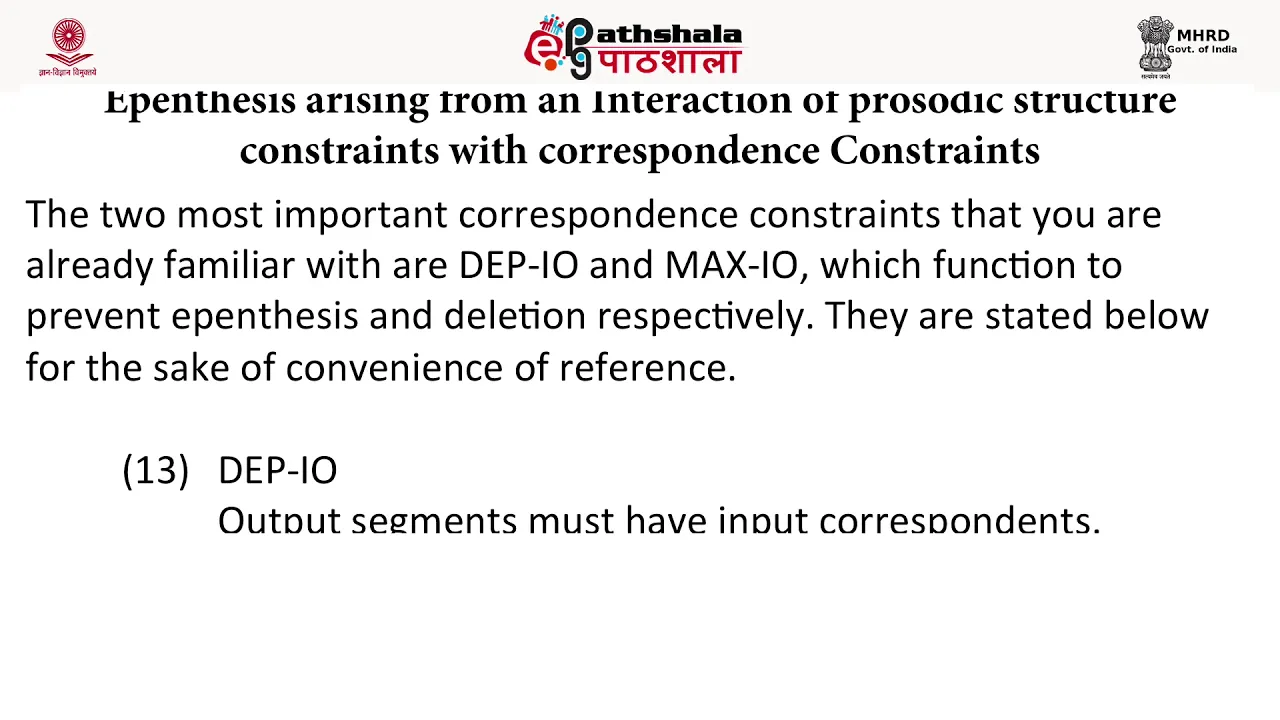
Constraint Interaction in Optimality Theory: Epenthesis & Deletion
@Vidyamitra
180 views•2018-08-20

Forensic Linguistics: How Language Solves Crimes | PBS
@pbsstoried
1M views•2024-01-25

Accent Expert Explains U.S. Regional Dialects | Part 1
@WIRED
9.3M views•2021-01-21
Related Study Plans & Knowledge Roadmaps
Structured learning paths in Linguistics