
















The International Phonetic Alphabet (IPA) is a standardized system created by the International Phonetic Association in the late 1800s to represent all sounds found in human languages using a consistent set of symbols, where each symbol corresponds to exactly one sound regardless of language, organized in a chart that categorizes sounds by their place and manner of articulation in the vocal tract, allowing linguists to transcribe spoken language precisely and universally.
International Phonetic Alphabet Explained | Linguistics Phonetics
Added:The distinction between orthography (spelling) and phonology (speech sounds), recognizing that written letters do not have a one-to-one mapping with the sounds we produce.
Basic anatomy of the human vocal tract, including primary articulators such as the tongue, lips, teeth, alveolar ridge, and velum.
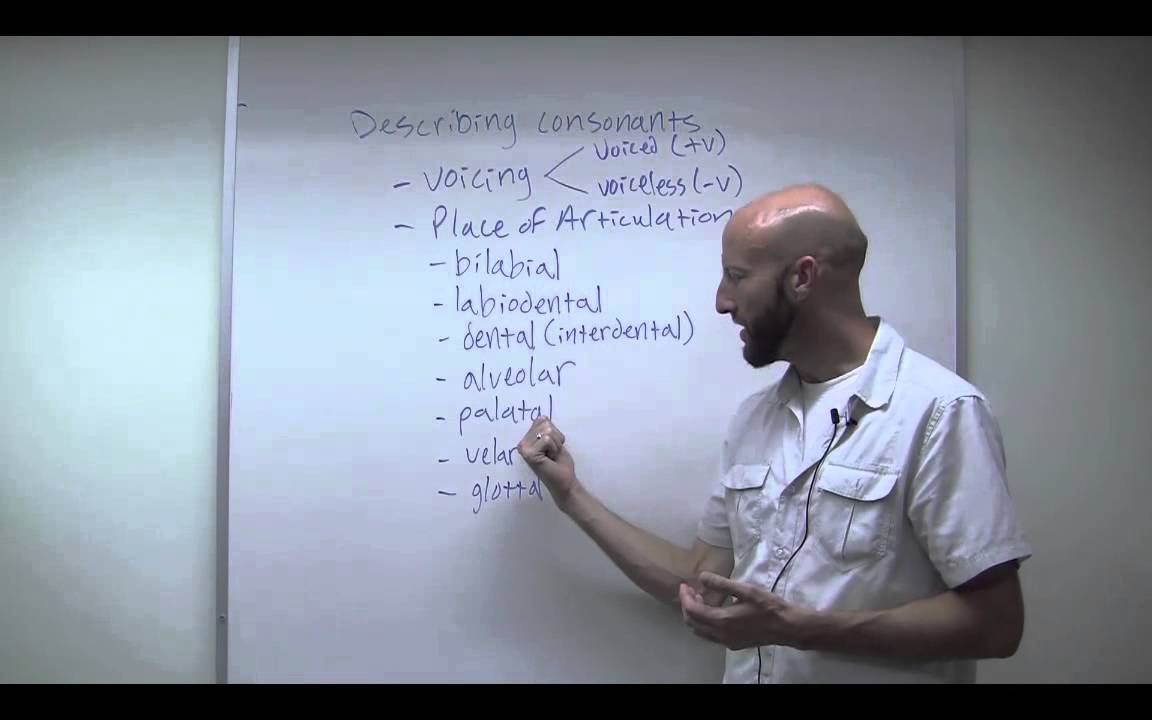
The concept of voicing, specifically how the vibration or stillness of the vocal folds differentiates sounds like /z/ from /s/ or /v/ from /f/.
The fundamental division of speech sounds into consonants (which involve some constriction of airflow) and vowels (which are produced with an open vocal tract).
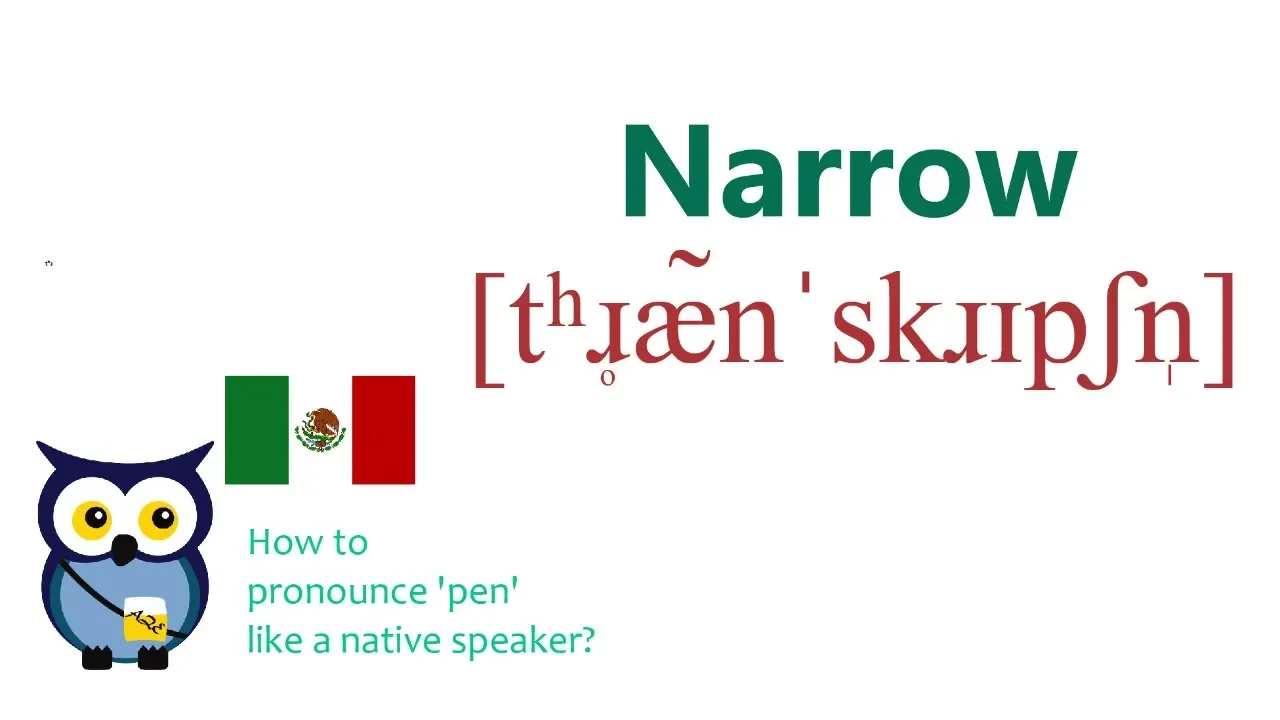
The difference between broad (phonemic) and narrow (phonetic) transcription, including the application of diacritics to capture subtle, non-distinctive sound variations.
Phonological processes and rules, such as assimilation, elision, and aspiration, which explain how speech sounds change when spoken in continuous context.
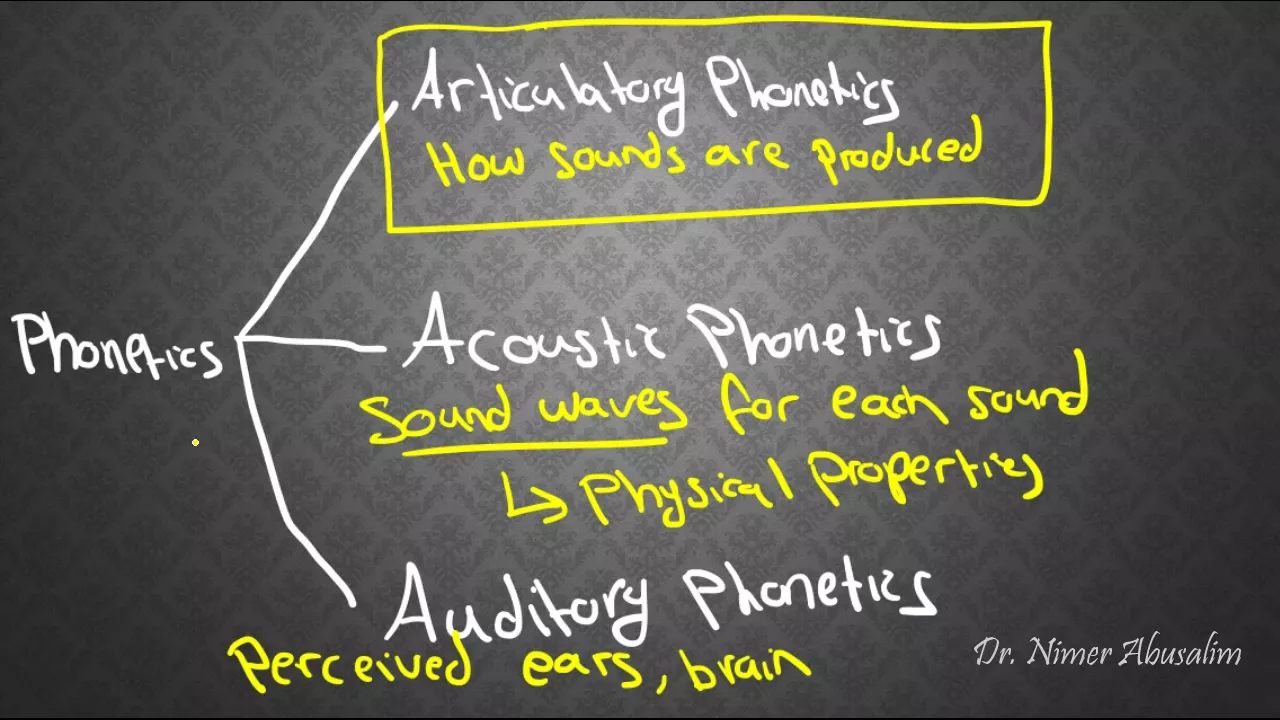
Acoustic phonetics, which involves analyzing the physical properties of sound waves and reading spectrograms to identify formants of vowels and consonants.
Practical applications of IPA in fields like computational linguistics (speech-to-text engines), speech-language pathology, and foreign language pedagogy.
8.2K views158likes34:36Original Release: 2017-03-16
G: welcome to Lingthusiasm, a podcast that's enthusiastic about linguistics. I'm Gretchen McCulloch L: and I'm Lauren Gawne and today we're going to be talking about the International Phonetic Alphabet. But first-- it was International Mother Language Day in February and even though it was a couple of weeks ago now on February the 21st I think it's still worth saying a belated 'Happy Mother Language Day' to you Gretchen G: Happy Mother Language Day to you! Which we are wishing in our of monther languages of English, which is kind of boring L: both wishing it our mother languages. Do you have any other heritage languages that you wish to acknowledge? G: I mean technically Scottish Gaelic is probably a long time ago a mother language for me but my ancestors were lowland Scots so it's a really long time ago L: well happy Scots Gaelic day G: do you have any other? L: my grandmaternal language is Polish and thanks to generally typical Australian attitudes towards non-English speaking in the 1960s that wasn't passed on to any of my mother's generation at all so yeah it's still a very recent part of our family history. I'm the only grandchild who ever learnt enough Polish to speak with my grandmother in her mother tongue G: oh that's cool L: which is cool I wish I still spoke that much G: well I mean it's cool that you learned it, it's not cool that no one else did L: it's probably questionable how much Polish I remember today. And yeah, I always like to think of my nan and my lack of opportunities to learn Polish on February 21st. What do you been up to or what's coming up? G: well by the time this episode goes out I will have been to South by Southwest where I will have done a panel with Erin Mckean and Jane Solomon and Ben Zimmer L: how are you not going to like die of fangirling at people?! G: Because I've already met all of them anyway? L: awwww I'm so jelly G: but they're really cool and I'm really excited to be on a panel with them, we're going to be talking about 'word curation, dictionaries, tech, and the future' which will happen by the time you guys get this episode so you can check out the hashtag that I'm sure will have action on it and we'll link to that in the show notes L: I'm really excited for that panel I'm looking forward to it hopefully - is it going to be recorded? Am I going to be able to see it as a non South by Southwest attendee? G: I think there's going to be an audio recording on soundcloud that South by Southwest is going to put up online because they've done that for previous years. So I can't promise that they'll do that again but they seem to like doing it in previous years, I don't know why they wouldn't do it again so we'll link to that if we have it L: yay, excellent! [theme music] so there's a problem when you learn to spell English, which is that it's really hard to spell English L: it's really a lifelong learning process as far as I'm concerned G: it's a lifelong learning process. You know some languages don't have spelling bees because their spelling systems are so consistent they don't need them - we can only wish! So the English spelling system is especially ridiculous, it's got silent letters, it's got something around 14 vowels but only five letters to write them in. My favorite demonstration of this is there's a phrase that has kind of all of the English vowels you just recite and the phrase goes - I have to have to say it in a non-rhotic accent because it only works that way - the phrase goes 'who would know aught of art must learn, act and then take his ease'. And each of those words has a different vowel in it L: cool! G: and that's one way of remembering the vowels L: that's a nifty sentence G: yeah but if you try to write that down in English it's hard L: with the English orthography that we have, or the English writing system - orthography - that we have G: and spelling systems are also inconsistent across different languages even languages that are consistent in themselves are often inconsistent when you compare them with each other, so a language that has, you know some languages use the letter J for the /dʒ/ sound [as in Jane], some languages use it for the /ʒ/ sound like French [Jean], some languages use it for the 'y' /j/ sound like German as in 'Jan' or 'Johann Sebastian Bach', some languages use it for the /x/ sound as in Spanish like 'Juan'. There's a whole bunch of different sounds you can use the same letter for depending on your language L: there's a really great tumblr post that kind of encapsulates this variety in the ways different alphabets that are based on the same alphabet English is based on use their orthographies in different ways which we'll link to. When I first read this I was like oh look someone's just posting in Norwegian or Danish or something, but then if you sit there and read it and you know the orthographic conventions in different languages it says something along the lines of 'I wonder if English speakers will notice that I'm writing this in English but using the spelling conventions of my language' G: and yeah a whole bunch of people have certain different versions of it there's a Finnish one which is pretty good, there's an Irish one which is fantastic L: it's good because once you know what the phrase is that gives you a feel for what the conventions are in different languages and for example I found the Polish one really easy to read and then for some of the others I was just basically guessing because I knew what the sentence was, and it really nicely illustrates this problem that we have that we all learn different spelling conventions for different languages G: and we're not the first people to have noticed this problem in fact people have been realizing this problem for quite a long time as long as people have been writing with different systems and it just became especially apparent as writing systems became standardised in the 1700s and 1800s when dictionaries are becoming popular and people were starting to write in a standardised sort of way and looking at other languages and realising that they're standardisations were converging on something different L: I really love that historically there was no consistent spelling conventions, and so in Old English text we actually have a good idea of the different common literate dialects of people who lived in Mercia or people who live in Cumbria and because of the way that they wrote English really reflected the way their accent worked, and once spelling systems became standardized that stopped being the case G: and it also became really difficult people for who are trying to learn English because even if you learn the spelling systems, when you pronounce the words the way they look and people look at you like "that's not actually how it's pronounced" and you're like "how was I supposed to remember that?"
Various people came up with various proposals for spelling reform for either just like a more phonetic way of writing English in total, or for ways of adapting English words so that it could be used for specialised purposes like people who are learning the language, or people who want to write down specific things and annotate exactly how they're said L: and some people went for massive 'let's create an entirely new alphabet', some people just wanted some small reforms. So Noah Webster is probably one of the people who had the most impressive effect on English especially on American English, so it was Webster who decided to take and consistently use conventions like 'i-z-e' instead of 'i-s-e' and using words like colour without the 'u' instead of with the 'u' as part of this attempt to make English spelling more realistically reflect the language that was being spoken G: yeah there were other British reformers that were trying to do this, so there was a guy named Henry Sweet who came up with an alphabet called the Romic /ɹomɪk/ alphabet or the Romic /ɹɑmɪk/ alphabet, I'm not actually sure how to pronounce the name of this alphabet, which... L: if only was written down some where in a consistently pronounceable script! G: if only!
He didn't seem to actually write the name of his own alphabet anywhere in a consistent script so that's a shame.
And that was based on mostly Roman letters but with adaptations for sounds that English had and Latin hadn't. And then there was Alexander Ellis who was apparently the real-life origin of Henry Higgins from 'My Fair Lady' L: Really?! G: I don't know that's what Wikipedia says L: ok because I'm going to invoke the supremacy of David Crystal, if that's okay. I don't know if Crystal officially trumps Wikipedia, but in his book called 'Wordsmiths and Warriors' he says if Higgins is anyone it has to be Daniel Jones who is a phonetician who is very influential in terms of like codifying the vowel system, so what we think of is the modern International Phonetic Alphabet vowel space kind of started with Daniel Jones' cardinal vowels G: I mean I don't know it could have been a composite or something L: I think to be honest that the most likely is it's, there was a genre of gentleman academic at the time who's very interested in these topics and there was a lot of work being invested in generating some kind of writing system that accurately reflected speech G: yeah and so they made the International Phonetic Association in the late 1800s, which confusingly enough also has the acronym IPA, and they had some meetings and they were like yeah we need to come up with a system for this L: so the IPA is where the IPA was created G: yeah I hope they were all drinking IPA but I can't guarantee that L: in an our reenactment that is definitely what's happening G: yeah when we when we all get dressed up in historic costume (bagsies Henry Sweet), then we will all drink IPA L: I'm Daniel Jones apparently - no I'm going to dress up as Cardinal Vowel, I always thought that would be a great linguist costume G: ah that's great! Were cardinal vowels invented yet? L: well it was Daniel Jones who did that, I don't know when he was working G: oh ok good L: I mean we'll have to have a whole episode just talking about vowels and how they work, but that was kind of a thing that was figured out at the time G: yeah and they came up with some principles for future development of this international phonetic alphabet and these were; each symbol should have its own distinctive sound and the same symbol should be used for the same sound across all languages L: so instead of having the J sound sounding like /dʒ/ or /ʒ/ or /j/ or /x/ across different languages, every time that sound was used it would be used for exactly the same sound G: every time that symbol was used L: yes sorry every time that symbol was used it would be used for the same sound G: They also came up with some principles that influenced which symbols ended up being chosen for which sounds. So they decided to use as many ordinary Roman letters as possible and to have a very minimal number of new letters and to use what they called quote unquote international usage to decide the sound for each symbol L: so they wouldn't, the symbol that we have for 's' they wouldn't decide 'oh we're going to make that the sound for 'l' because we're crazy people' G: yeah well they didn't do that but the other thing is, so look at the vowels, the IPA vowels look kind of weird from an English perspective. So the IPA uses the letter that we think of as 'i' to represent the 'ee' /i/ sound and uses the letter we think of as 'e' to represent the 'eh' /e/ sound and so on. And this doesn't make sense for English, but it does make sense when you look at a whole bunch of other languages like Spanish and Italian, and the way the Roman alphabet has been used for non European languages generally falls along these principles as well. So they said look even though we're English speakers we're going to not do the English things L: okay so they really did go with this kind of international general preference GL yeah I mean they're still eurocentric, they're still starting with European languages and kind of working their way outwards, but they were at least not completely anglo-centric, which is helpful here, because English does some weird stuff with its sounds L: yeah so we only have 26 letters in the English alphabet, a few more if we kind of pull everything that we have across European languages, and there are so many more sounds that the world's languages can make, so once we've run out of kind of standard letters where do we go from there? G: so where we are from there is often Greek letters or latinised looking versions of Greek letters because those were familiar to these creators. Another thing that they did was they would rotate letters. and this was partly because the shapes are still familiar if you do that and partly because this is the 1800s and people were typing with metal bits of type, and so if you just make a lowercase 'e' and turn it upside down you can just take your new character and flip it and rotate it and then you can print this and you don't have to cast a new metal type bit L: I have a really nice example from Australia, so I was at a workshop the other day and a colleague was showing me a booklet of Kamilaroi, so it's a language from the New England area of New South Wales in Australia, and William Ridley was working on this language in 1856 so this is even before the IPA was codified and so these languages have a sound like an English sound but you may not notice it in English because it's a sound at the end of words like 'sing' or 'bring', that /ŋ/ sound, but that sound can occur anywhere so you can have it at the start of the word as well as at the end. So this /ŋ/ sound now has a symbol in the IPA that looks like an 'n' with a little tail and it's called an 'engma' G: yeah kind of like an 'n' with a 'g' tail shoved on it L: yeah, and he is one of the first people who adopted this symbol for use in his describing languages work so 1850s before kind of 1880s and the IPA was established, but this symbol had begun to be used for this /ŋ/ and it makes sense because it's like an 'n' and a 'g' squashed together, but when he sent it to the typesetters for his booklet they didn't have a /ŋ/ and so they just turned a capital 'G' upside down which sounds a bit crazy and it looks a bit crazy it looks like it's just full of upside down 'G's, but it meant that that was a way that they could represent this /ŋ/ sound. Apparently he sent it to some other journal in Europe and they just turned it all into a 'z' G: wow, a 'z'!
L: yeeeah G: wow that's really bad! yeah so I guess that's why it's good that another principle the IPA was the look of the new letters should suggest the sound they represent, so once you've learned the kind of basic ones and if you see a couple languages and you have a sense of what's used in other languages then you can often guess fairly accurately what an IPA letter is going to be like, so it's better to have a symbol for /ŋ/' that looks like an 'n' and a 'g' shoved together because that's how it's often written in different languages, a bit like an 'n' sound, a bit like a 'g' sound. And one of their principles was that diacritics should be avoided where possible so adding extra little like accent marks or other types of small bits on top of letters was something that they tried to avoid for their basic sounds, and that was supposed to be if there's a modified version of a sound, but not for like basic sounds in general. So in the current IPA you still get these rotated letters which must make the IPA very difficult for people who are dyslexic, you get small capitals, you get Greek stuff like the Greek letter theta is used for the 'th' /θ/ sound, and the runic and ultimately Icelandic sound /ð/ so the symbol that looks like an 'o' with kind of a cross above it that is from Icelandic that used to be in English before the Normans came, that got borrowed back in, so borrowing from other established systems because then you could just go to Iceland and grab some of their metal type bits, I don't know, or go to Greece and get some from them L: it's something that was a problem with the original metal type but it's also been a problem for a long time with modern software. So for a long time computers didn't really have fonts that expanded beyond the kind of really basic font set of like English and French and some diacritics and some special things and so you have some older software and if you look at older digital documents you have you know people using capital 'A' for particular vowel sounds, vowel characters in the IPA that are symbols in the IPA that aren't in regular type or you know schwa would be a capital 'E' for example G: yeah you can even see this on some old websites, people will use a different system that only uses the basic 26 plus capitals to do the extra stuff or maybe some places use like an 'at' sign @ to indicate a schwa, so because we've also had a different version of this encoding problem with technology L: so it's not just the metal type it's also modern computing G: it's also the byte! It's the type and the byte! L: type and the byte have been a problem, it's getting better G: it's getting better thanks to Unicode, thanks Unicode! So yeah so their first version from 1887 was designed to work for sounds in English, French, and German because that's what they were doing at the time, and it's a bit weird compared to the modern IPA because we're used to seeing it as a chart and they just gave a list of symbols and keywords that stuff was found in in various languages, so they'd say something like okay this 'a' symbol is going to be like the sound in English 'father' or this symbol is going to be like the sound in German 'Bach' and they just give the key words like sometimes you see in the front of the dictionary and then later, so they kept on working on it in the late 1800s and then by the year 1900 they expanded, published a version that included Arabic and other languages sounds were found in those and they finally publish it as a table for the first time L: so why would it be in it table, for people who aren't familiar with the International Phonetic Alphabet?
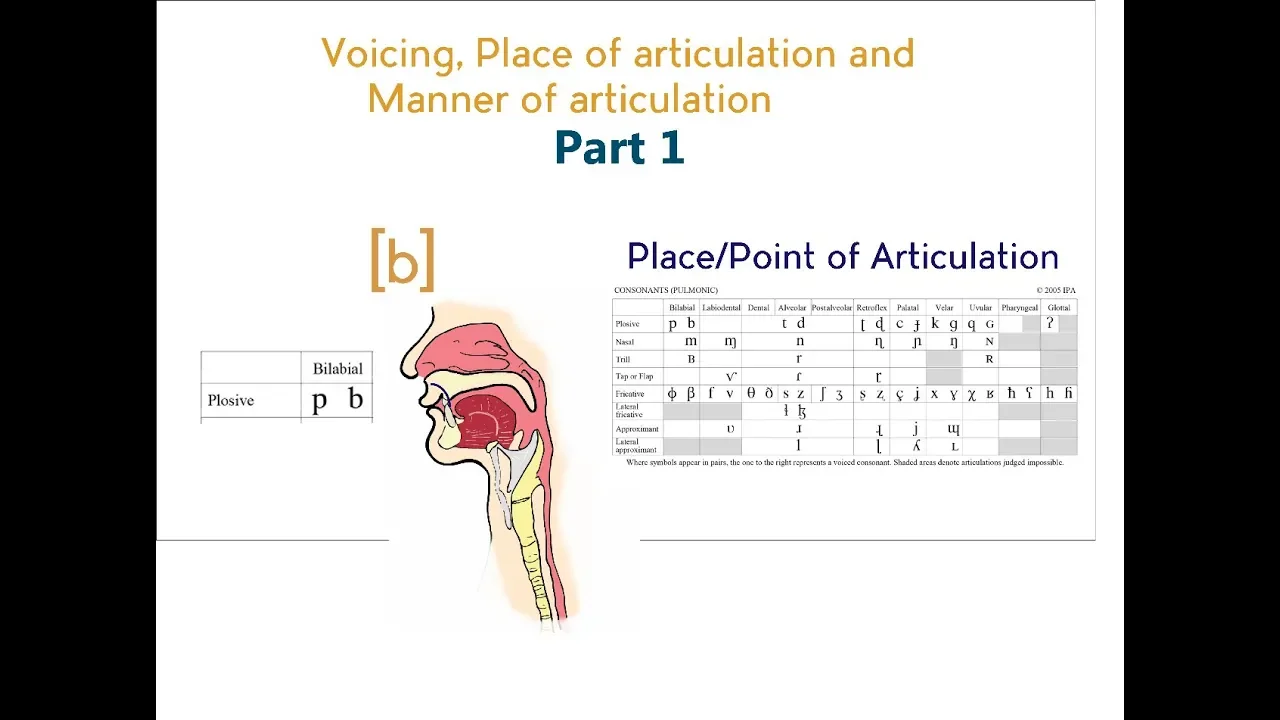
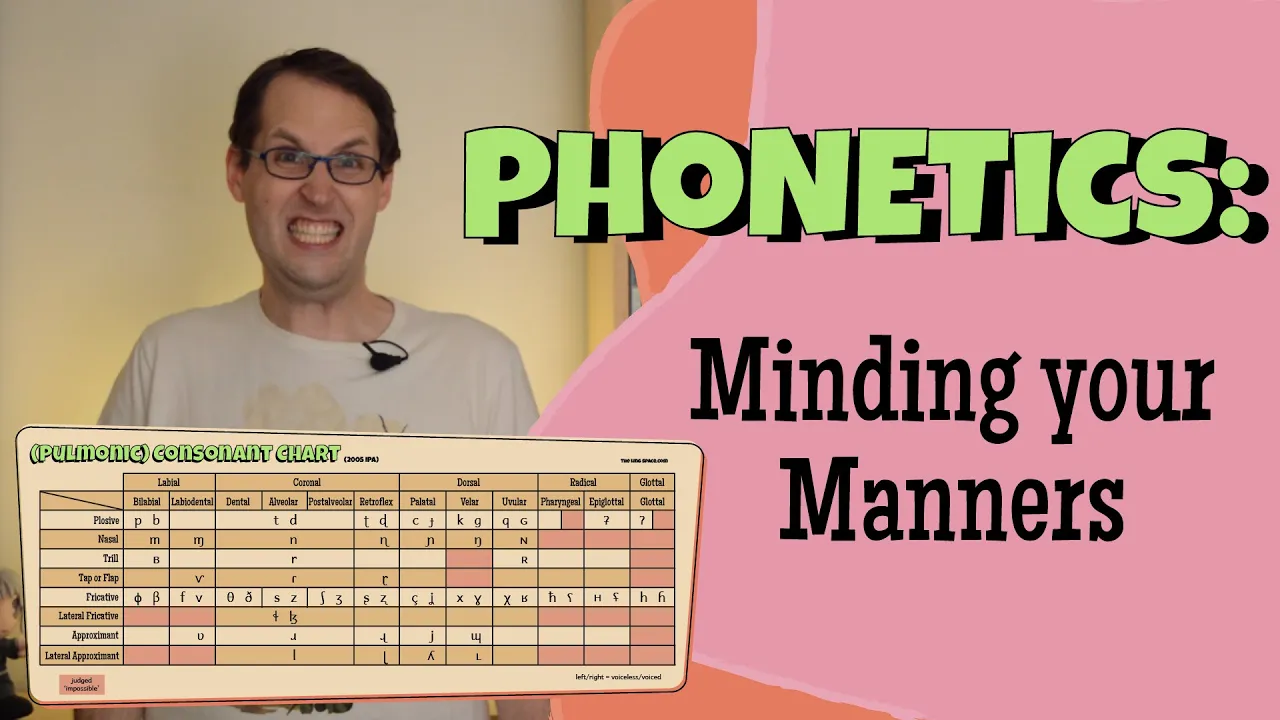
G: so the cool thing about the table, so our English alphabet that you learn as a kid, 'ABCD' is in no particular order that's just the order it is, that's just for historical reasons but the table is ordered based on how the sounds are produced. So sounds get produced with constriction in various parts of the mouth and with different degrees of constriction once you're in that place L: so it's a nice feature based table of all the kind of combination of features in particular places G: yeah exactly and so if you superimpose a mouth onto that table, it looks a bit weird but you can kind of do it and you kind of see where each of the sounds is produce a little bit L: so it's the left edge of the table for people who are familiar, I think i have a link somewhere to an audible IPA chart so you can click on the sounds and hear what they sound like, but the ones on the very left side are all produced with like just the lips, and the very front of the mouth, and then the ones at the very right edge are kind of all the way back at the far back of the mouth, and that's things like your velar sounds like /g/ get made with that soft bit there or your uvula like right down in the very far back in the mouth G: yeah so it goes from your lips to like through your mouth along the roof of your mouth and back into your throat and the weird thing about this version from 1900s is that it's a mirror image of that so it has 'p' and 'b', your labial sounds on the right instead of on the left L: oh no that would confuse me so much G: you can see an image of it on Wikipedia, it's all like typewritten, we'll link to that L: wow awesome G: but it looks really weird and they also have the vowel chart and the consonant chart on the same chart L: right, okay! G: they just have like a really wide section where the vowels go L: how weird! G: yeah, which is something that changed later L: so there's now a table for the consonants, there's a few consonants that don't even fit, and then there's a vowel chart that's a separate thing, but it's very similar principle like it starts at the front of the mouth and goes back G: yeah and what's cool is that the version that we use today is actually very very similar to the version that was solidified in 1932 it's which was quite a while ago, you know there were some adjustments made in 1989 and then after that it's just like 'oh well we need to add this one symbol because we found some languages that use it' but pretty much it stays very similar for quite a long time once it's established L: nice. So it goes from left to right all the different places in the mouth, and then from top to bottom there are different ways just looking at the consonants, the ways to pronounce different consonants so you have like a stop so the very plosive like /b/, /k/, /d/, /t/ - we call them stops - along one row and your nasal sounds so your /m/, /n/, /ŋ/ sounds along one row, and in that that way G: it kind of goes in order of how much you need to drop your jaw. So if you think about the sounds in the top row your mouth is the most closed when you're making like a 'p' or a 'b' you have to literally close your mouth for a second, you have to close your lips to make those sounds, whereas if you're making a sound like 'r' /ɹ/ you don't have to actually close anything you're letting the sounds kind of come through so the 'r' /ɹ/ sounds are near the bottom, but the /p, b/ sounds are near the top L: I mean that's the thing I found super neat about it when I was studying the IPA in undergrad was just how elegantly it captures all these different parameters in one table G: yeah just to realize that someone has thought this through, thinking 'ok what are all the permutations you could put your mouth in and which ones people actually use and let's organize this' L: and English just uses one subset of it G: yeah, but every language is going to pick some subset of the sounds in this table or if it doesn't we have to add something so one of the cool things that you can do with the IPA because it's based on different positions the mouth can be in. So Lauren Ackerman who has a blog 'Wug Life' has made a table of emoji with their mouth positions as if they're making sounds in the IPA so you could look at this table and she has things like you have surprised emoji has kind of a round mouth and so that's like an 'oo' /u/ sound because you have to round your lips for that and the 'ee' /i/ is kind of like a smile, and it is completely ludicrous but also great L: these are the important things that linguists do with their downtime G: yeah and the other cool thing you can do with the IPA is because you can use it to represent mouth sound is you can write beatboxing in IPA, because beatboxing is done with the mouth L: oh yeah, that must look amazing! G: it looks so cool I have a picture of it, of a chart that some beatboxing linguist researchers made L: that is awesome G: so we'll link to that too G: I mean we both both have a lot of love for the International Phonetic Alphabet, obviously it's something we engage with a lot in all variety of linguistic work. I think it's worth mentioning though that like, it's not... it's really annoying sometimes. G: yes!
L: particularly as I mentioned in terms of that font encoding on computers is still a problem, you still occasionally will get proofs back from a publisher for a journal article and all the engma, they're all mysteriously like really ugly still, we haven't quite got there with them being part of the font set for every single font G: yeah it can be hard to write on a normal keyboard L: yeah it's also really annoying to write on a normal keyboard sometimes.
Also especially in the vowels, like I get a bit of like IPA anxiety when I use IPA and share it with people publicly especially for long passages of text it's not always that easy to transcribe things G: yeah and as fluent writers we've gotten used to the Byzantine nature of the English spelling system and we we also know how to talk, but thinking about how you talk in a more conscious way to say 'what sound am I saying there, what sound am I saying here' it can be hard to write extended passages in IPA. I know if I make a blog post that has an English sentence or two in IPA, I'll inevitably get some corrections from a linguist or something that says I think you're probably producing this sound here and I'm like oh yeah you're right because there's no spell check for IPA L: yeah and also even if there were a spell check, you and I would produce different IPA transcriptions for our own pronunciation of things G: yeah and you know we're pretty good with understanding people's different pronunciations of things when we're hearing them, because I guess humans have a lot of evolutionary practice at that but reading things we have a fairly standardised system and so I remember when I was still a young linguist back when John Wells's phonetic blog was active and he's a well-known British linguist who's involved in some of the history of the IPA and he used to keep a blog and he would sometimes write full posts in IPA and they were really interesting for me to read to practice but I also found them very difficult because he would be transcribing his own accent and he was British and so he wouldn't write all these 'r' /ɹ/ after vowels that I would, so I had to figure out where all these /ɹ/ were supposed to be.
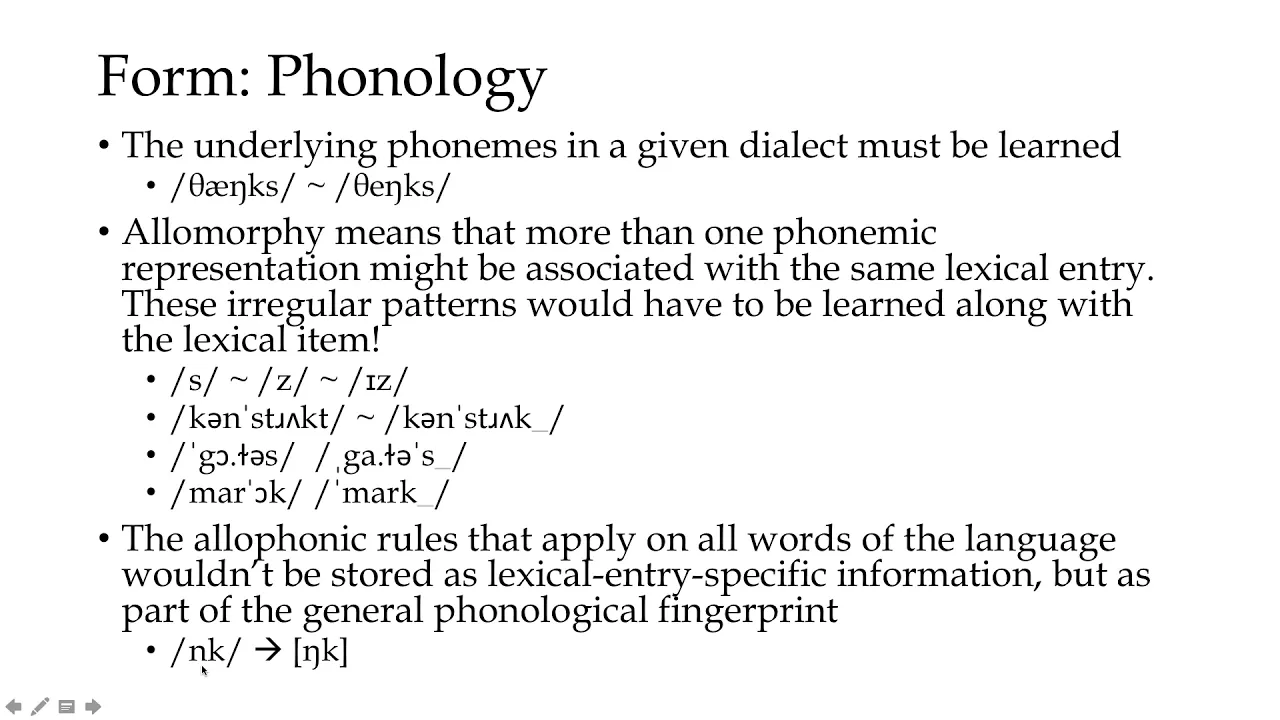
I'd end up reading his post out loud to myself and hearing the British accent being like oh yeah this is what he's trying to say L: you would be saying it in his accent? G: but I'd be saying it in his accent because you can write someone's accent, which is the cool thing but also the more challenging thing about reading it L: there's also, linguists talk about like broad IPA and narrow IPA transcription so like you can do a kind of rough-and-ready, mostly correct but actually if you are a phonetician and you're looking really closely at how people actually articulate things you discover all kinds of things that you need to transcribe to capture the correct and accurate transcription but which people don't hear kind of consciously or would find really weird when you've represented it to them G: yeah or don't notice L: and there's often like phonological processes, like when you tell people that the vowel that they use in the middle of 'handbag' is actually, for native speakers if they say it quickly, it often becomes 'hambag' G: 'hambag', like a ham sandwich L: yeah, like a bag-o-ham.
If you've write it out in IPA people are like that's incorrect, and you're like 'well that's what you said' G: there's a fun story about that, so English speakers also often say 'sammich' instead of 'sandwich' because the 'm' the like the nasal sound becomes like the 'w'. Except for Anglo-Italians; so in Canada there's like Italian Torontonians and Italian Montrealers and they have a particular, at least people who grew up in that communities often have a particular accent. So in that accent they say 'sangwich' instead of sammich' because in an Italian the 'w' sound is kind of more velar whereas in English it's more labial and so it like pulls the nasal along with it to be a different sound L: and when you start transcribing things in really close IPA you can see those distinctions, it's really cool G: yeah and we often just reduce the vowels in words that were saying quickly or in the small unimportant function words we often reduce the vowels all to schwa or something like that L: I still remember in in my undergraduate class learning that English vowels will often go to being this is schwa, this /ə/ sound in unstressed syllables and I just it made me realize that for a certain set of words that's why I was really bad at spelling them because you sit there and you're like 'is it amu... amuni ammunition?'. Is it that, like is that I mean is it ammunitiON or I mean is it ammunitiAN and it's not a great word but it's the first one that came to mind but like for these vowels where you're like, because it's unstressed and it's a schwa, any of the vowels that it could possibly be become that, you have to memorize what the spelling is because your pronunciation doesn't help you. And that's why I tell people I'm bad at English spelling, not my fault it's the fault of my stress system and orthography!
G: well the other thing is is sometimes English orthography gives you useful cues to distinguish between certain words or when a suffix who's added sometimes the stress changes and you have to recover vowels that are kind of there but had turned into schwa, so if you take a word like 'electric' which becomes 'electricity' in some senses it's weird that it's spelled with a 'c' and not with a 'k' or an 's' because 'c' is completely redundant, it always makes a different sound but it does reflect that when it's 'electric' with the 'k' sound and then when you add an '-ity' to it, the 'k' sound becomes an 's' sound because that's what happens with 'c', but it doesn't happen with 'k' or the vowels also change 'electric', 'electricity' you get different sorts of vowels.
So it's kind of useful to have some of this stuff there that was historically there and has changed in it's sound but it creates this extra layer of complication and it's you know, you can get used to speed reading because a word always looks like the same spelling whereas if you had to speed read a whole bunch of different accents then you'd like meet someone and you might be harder to speed read, but then again it's harder to learn it if you have an accent that's less similar to the spelling system L: we still love it for all of the occasional detriments that occur G: we still love it and it's still useful to have it as an option to write something very specifically I find if I'm meeting somebody and I haven't heard their name before and I can write it in IPA and then I can pronounce it correctly when I'm talking back to them, people like that L: that's handy. The journal of the Phonetic Association, or journal of the International Phonetic Association, used to accept articles written in IPA, which blows my mind. So people would write about some feature of phonetics and they would do the whole thing in the IPA and I think it very quickly became apparent that that was more labour both to produce and to consume than it was like any benefit in doing that for many of the reasons that we've already mentioned G: like 'hi I'm going to write about like long vowels in Sussex' or something and like that whole thing would be in IPA L: yes I think academics clearly had more time on their hands 50 years ago.
G: I mean to be fair I have played IPA Scrabble, which is like Scrabble, but you do it in IPA L: you just kind of argue for your own pronunciation or do you have to do it in your own dialect? G: yeah so the way that I've done it is I combined IPA Scrabble with descriptivist Scrabble, which is a little bit like those bluffing games, so as long as you can convince other people that it's a word then it's a word L: ah I like that G: yeah because like dictionaries are arbitrary authorities anyway, and so you know you can use whatever means you have at your disposal to convince people that it's a word and of course choosing an obvious word like dog or something is going to be easier to convince people than saying L: blergh?
G: something.. blerg is a word and 'honestly it means a color kind of like gray and blue at the same time' but you can try!
L: there are heaps of cool things people have done with the IPA including someone has made a set of IPA Scrabble G: yeah so I posted on All Things Linguistic a set of frequencies and scores that you can use for IPA Scrabble tiles because I made it with a friend in undergrad and we had figured this out, we just cut out bits of cardboard to make them, and then some undergrads at Yale came across this and decided to get their friend who has like a wood cutting machine to cut these out of these gorgeous wood tiles and they sent me some photos which I've also posted, you can see those, they're amazing, so yeah so someone has made a wooden IPA set that I still have not played but I think it'd be really cool L: IPA characters also make for popular tattoos because they're quite beautiful so I like I've definitely seen a schwa tattoo and I've seen a glottal stop which is a little bit like a question mark - it's our logo! G: it is also our logo. Do people get whole words in IPA or like phrases in IPA tattooed on them? L: mmm I haven't seen any but if anyone has we will definitely be interested in seeing it G: if you know any IPA tattoos please send them to us L: well I've seen a couple but not that long G: there's also a whole version of Alice in Wonderland that's published in IPA, so this takes us back to the Journal of Phonetics, and she's like talking to the Mad Hatter and so on and it's all in IPA. The weird thing about this particular version is that this publisher decided to also have capital letters L: huh, interesting G: and of course they had to make capital versions for all of the IPA letters L: wow that's commitment G: because you know if you think about it capitals are redundant, they don't add any extra phonetic information to a sound, so the IPA doesn't use them and sometimes the IPA uses small cap versions of a letter to indicate a different sound because it's an extra symbol. And so instead this person decided that no, if I'm going to write it as a book I'm going to make capitals and so yeah it's very interesting the table there L: yeah, there you go. My IPA nerd craft activity was to cross stitch the consonant chart, did that quite a few years ago and it's a very useful adornment in the office when you just need to quickly refer to some of the symbols. I also, I was going to do the vowel chart but the modern vowel chart is very very complicated and messy which is why i went with Jones's much more elegant original cardinal vowel G: ahh so you did a simplified version L: yep I'll put links to those in the show notes G: and you also did a cookie cutter right? L: oh yeah! I made a schwa cookie cutter for Christmas last year, just what you need, and it's a 3d printable cookie cutter so you can also download that design and print your own and make your own gingerbread schwa or shortbread schwas G: that's great. There's also an IPA version of the game 2048, which came out when the when the game 2048 was popular so that's the one where you like slide the tiles around and you try to combine to make bigger and bigger things and so you start with a schwa and then you combine them to make an engma, which makes no sense phonetically, and then you combine them to make an esh. Again so this won't teach you anything about phonetics L: but it goes into more and more elaborate and less frequent forms G: yeah it does get to more and more elaborate stuff, like you end up with like a click or something, a glottalised bilabial click or something like that L: right, it doesn't officially teach you anything about the IPA but it is a good excuse for a distraction G: you should not do it if you're a student and you're about to write an exam on the IPA that is not a good way to procrastinate L: official warning! G: instead you should play IPA scrabble L: much better way! G: which will teach you some more about the IPA L: or read Alice in Wonderland G: there's also a fun sketch from the sketch comedy show John Finnemore's Souvenir Programme, which is a sketch where some characters encounter some skeletons and the skeletons are pirates but these skeletons cannot tell you that there are pirates because they don't have any lips, so they cannot produce the 'p', sound so they call themselves 'kirates', L: Awww G: and the characters who encounter them are very confused, like 'what are you?' 'we're kirates, I said we're kirates!'. Anyway I am probably not doing it justice but you should listen to it I couldn't think to how to do that L: excellent G: although they don't make the point which I kept thinking was like 'well if the don't have any lips, they probably don't have any tongues either, so they probably can't produce any sounds because they're skeletons' L: the probably don't have any kind of pulmonic air flow ability G: like all they can do is clack L: yup, Morse code? G: yeah! So skeletons can communicate with us in Morse code, there we go L: yeah. I was going to say sign language just because like I seem to want to mention sign languages because they're always cool G: oh yeah please do L: it's also worth pointing out that like obviously the IPA is for all spoken languages if you haven't figured that out by this point in the podcast, I'll just make that abundantly clear. So for all oral languages. In individual sign languages people talk about like phonemes and morphemes in terms of hand shapes so there are some hand shapes that are possible in some sign languages that don't occur in others and so you have a similar kind of basic feature sets that you can refer to in in sign languages but because it uses a more complex modal articulation system and it isn't just limited to the mouth then it's a bit more complicated cross sign linguistically but they do have their own kind of equivalent of phonemes or phonetics G: there's a couple different standardised sign transcription systems, I don't know if any of them have caught on at an international level in the same way to the IPA has, I mean to be fair there there are other phonetic transcription systems that aren't the IPA, it's just the IPA now has caught on more than the others. But you can transcribe sign, there's a couple different ways of doing that and there's also, so sign languages have alphabets that they use to borrow words in from spoken languages among other functions and there are sign equivalence of at least some IPA characters because I've been to linguistics conferences and seeing interpreters signing talks and they will sign a particular IPA sound when the person who's giving the presentation is talking about that particular IPA symbol L: there you go G: yeah I cannot recite any of them for you but I remember noticing it and thinking 'huh, ok I guess that's what they're doing L: man awesome! [theme music] L: for more Lingthusiasm and links to all the things mentioned in this episode go to Lingthusiasm dot com. You can listen to us on iTunes, Google Play music, SoundCloud or wherever else you get your podcasts.
You can follow at @Lingthusiasm on Twitter, Facebook and Tumblr. I tweet and blog as Superlinguo G: and I can be found as @GretchenAMcC on Twitter and my blog is All Things Linguistic dot com.
Lingthusiasm is created and produced by Gretchen McCulloch and Lauren Gawne, our producer is Claire and our music by The Triangles.
Stay Lingthusiastic!
Up Next

8:38
Master the IPA Vowel Grid: Tongue Position & Lip Rounding Guide
@PronunciationStudio
72.3K views•2024-01-30
36:52
Constraint Interaction in Optimality Theory: Epenthesis & Deletion
@Vidyamitra
180 views•2018-08-20
46:01
Ergativity Explained: Language's Hidden Alignment System
@Lingthusiasm
939 views•2023-10-20

21:32
Accent Expert Explains U.S. Regional Dialects | Part 1
@WIRED
9.3M views•2021-01-21
Related Study Plans & Knowledge Roadmaps
Structured learning paths in Linguistics
linguistics
Optimality Theory: Tableaux & Constraints
01Phonological Basics: Sounds, Syllables & Rules
02Foundations of Optimality Theory: GEN, CON, and EVAL
03The Constraint Inventory: Markedness vs. Faithfulness
+ 2 more learning modules
15h5 modules
Explore Roadmap
linguistics
Morphosyntactic Alignment: S, A & P Systems
01Foundations of Syntax: Transitivity and Arguments
02The Linguistic Variables: Mapping S, A, and P
03Nominative-Accusative Alignment
+ 3 more learning modules
12h6 modules
Explore Roadmap
linguistics
Analyzing Sign Language: Phonology & Syntax
01Foundations of Sign Language Linguistics
02Phonology: The Five Parameters of a Sign
03Morphology: Word Formation and Classifiers
+ 2 more learning modules
14h5 modules
Explore Roadmap
linguistics
Pragmatics: Speech Acts, Grice & Politeness
01Introduction to Pragmatics: Meaning in Context
02Grice’s Cooperative Principle & Implicature
03Speech Act Theory
+ 2 more learning modules
14h5 modules
Explore Roadmap