The Kayapo people of Brazil demonstrate how indigenous communities can strategically use media and international attention to protect their ancestral lands from destructive development projects, as shown when they organized a tribal reunion at the proposed dam site to unite previously hostile factions and stage-manage media coverage with international figures like Sting.
The Kayapo: Media Tactics at Altamira | Indigenous Land Rights
Added:Deep Dive
Basic understanding of the legal concepts of indigenous land rights, sovereignty, and self-determination, particularly within the context of the Brazilian Amazon.
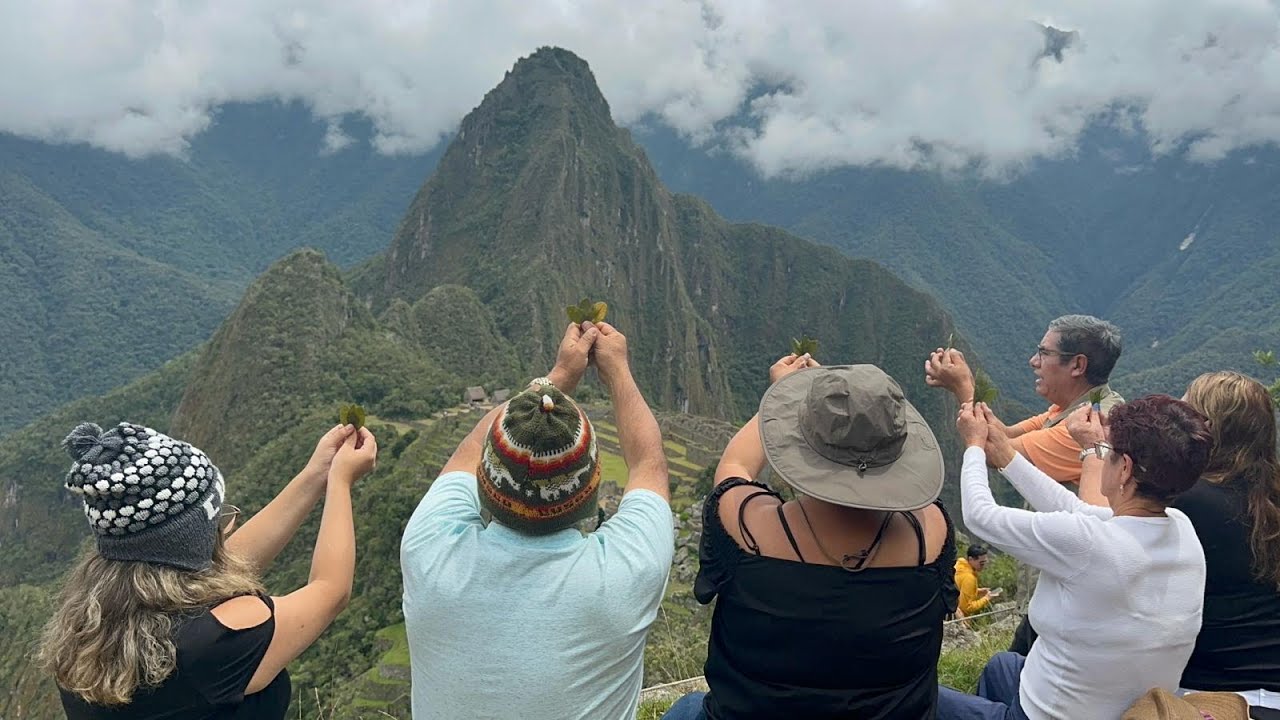
EXPLORANDO A SELVA AMAZÔNICA NO PERU
335.8K
Indigenous communities in the Amazon have special legal rights that allow them to establish and maintain settlements anywhere within the Amazon region. Unlike non-indigenous people who must purchase land and obtain permits, indigenous communities can build their homes and establish settlements without these requirements. This legal protection stems from their status as indigenous peoples and their historical connection to the land.
Click to watch →

Bolsonaro é homenageado por índios: ‘nenhum presidente anterior se lembrou do índio brasileiro’
218.9K
Indigenous peoples in Brazil have the right to the same rights over their lands as any other citizen. Brazil has over 300 indigenous ethnic groups, each with their own representatives. Indigenous peoples have various stages of development, from isolation to university education. Article 169 of the Brazilian Constitution clearly states that indigenous peoples have the right to choose their own destiny. Indigenous communities want to engage in legal economic activities including mining, timber extraction, and other productive endeavors. Brazil has 14% of its territory demarcated as indigenous land, including areas in the Amazon region. Indigenous lands face illegal exploitation where outsiders extract resources without authorization. Indigenous peoples have the right to decide what happens on their lands, as guaranteed by Article 231 of the Brazilian Constitution. Indigenous rights to development do not conflict with national sovereignty but represent a legitimate exercise of indigenous agency within the national framework.
Click to watch →
The Amazon in danger - Indigenous peoples and their struggle for the rainforest | DW Documentary
431.8K
Indigenous communities assert their right to self-determination in governing their ancestral lands, stating that while others may rule in Brasilia, they decide what happens on their territory. This sovereignty extends to making rules about resource use and rejecting deals that would compromise their lands. The demand for government recognition of territorial boundaries represents a broader struggle for political autonomy and legal protection of indigenous rights against both governmental and private encroachments.
Click to watch →
![[PARTE 3] O PERIGO DO SÍNODO DA AMAZÔNIA: ANÁLISE DO INSTRUMENTUM LABORIS](https://i.ytimg.com/vi_webp/vwfNAfxrEqI/maxresdefault.webp)
[PARTE 3] O PERIGO DO SÍNODO DA AMAZÔNIA: ANÁLISE DO INSTRUMENTUM LABORIS
24.5K
Indigenous peoples have rights to territory and self-determination, but this may serve revolutionary agendas to create independent nations outside Brazilian sovereignty. Amazon defenders are criminalized as communists despite legitimate concerns about illegal mining and land invasion. Claims that Amazon deforestation has reached 40% are exaggerated; Brazil actually preserves 66% of its territory compared to less than 10% in Europe. Brazil uses less than 8% for agriculture and is the world's second-largest grain producer, challenging claims that agricultural expansion destroys the Amazon.
Click to watch →
Live 27/08/2019: Bolsonaro, Moro, Amazônia e a crise econômica.
48.6K
Article 231 of the Brazilian Constitution establishes that indigenous peoples have original rights over lands they traditionally occupy. The Union (federal government) is responsible for demarcating, protecting, and respecting all indigenous rights. Resource exploitation (including minerals and energy) in indigenous lands requires congressional authorization after hearing affected communities, with communities guaranteed participation in benefits. Bolsonaro's claims that indigenous demarcation causes Amazon fires and hinders economic development are false and violate constitutional provisions.
Click to watch →
Deep Dive
The ecological and social impacts of mega-infrastructure developments, specifically how large hydroelectric dams affect river basins and local populations.

Patagonia sin Represas - Documental completo
12.3K
Mega-dam projects create cascading ecological and social destruction across multiple dimensions. On the Pascua River, habitat loss threatens the emblematic Chilean huemul deer, pushing it toward extinction. Rivers transport sediments that feed marine photosynthetic organisms capturing atmospheric carbon dioxide; dams trap these sediments, potentially causing greater net carbon emissions than avoided by replacing thermal plants. Construction phases create maximum social disruption through noise, pollution, and displacement. Local populations lack qualifications for dam work, forcing influxes of external workers bringing associated social problems like drug use and crime. Climate change amplifies risks, with glacial lake outburst flooding occurring three times in 2008 alone—once every two to three decades previously. With dams built, these floods would combine with dam-induced flooding, potentially overwhelming structures and threatening downstream communities like Tortel with devastating consequences.
Click to watch →
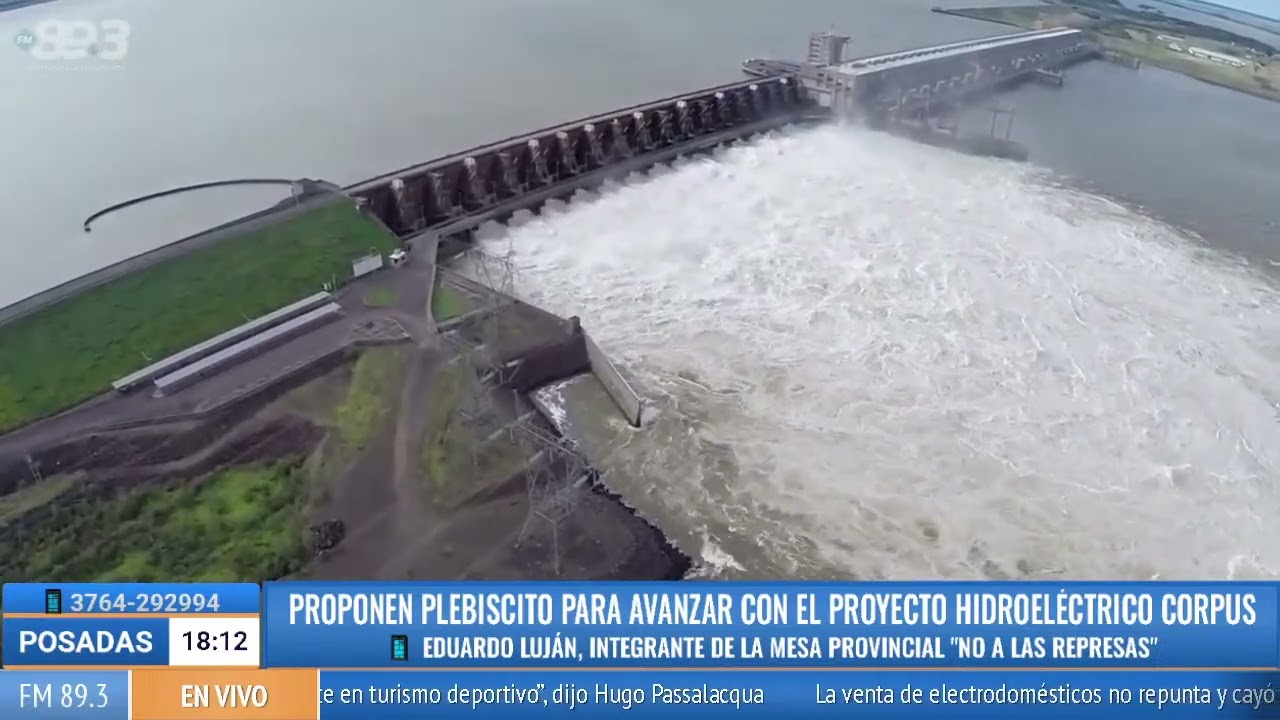
Proponen plebiscito para avanzar con el proyecto hidroeléctrico Corpus
103
Mega-hydroelectric dams cause severe, irreversible environmental and social damage. Environmental consequences include deterioration of water quality in rivers like the Paraná, increased flooding due to inability to properly retain water, accelerated water flow from deforestation causing uncontrolled overflow, and spread of waterborne diseases such as dengue and malaria. Social consequences include loss of traditional livelihoods for riverine populations, inadequate compensation for displaced communities, and permanent loss of biodiversity and native species. The transformation of local geography, such as arroyo Garupá becoming a stagnant lake, demonstrates how these projects fundamentally alter landscapes in ways residents experience daily. The speaker emphasizes that some consequences are permanent and irreversible, making the decision to build such projects a point of no return.
Click to watch →
![CONCURSO POLÍCIA CIVIL DE RONDÔNIA - GEOGRAFIA - AULA 02 [Bacias hidrográficas e Hidrelétricas]](https://i.ytimg.com/vi/NKqBASxsXn8/maxresdefault.jpg)
CONCURSO POLÍCIA CIVIL DE RONDÔNIA - GEOGRAFIA - AULA 02 [Bacias hidrográficas e Hidrelétricas]
2.7K
Large hydroelectric dams create significant impacts including: inundation of vast areas (desterritorialization of indigenous and traditional populations), loss of agricultural land, groundwater level changes, riverbed sedimentation (assoreamento), increased erosion and landslides, disruption of fish migration, microclimate alterations, urban expansion, and increased social problems. The sedimentation issue is particularly concerning for the Rio Madeira, which carries massive sediment loads.
Click to watch →

Tucuruí - UHE - Operação Curupira - Resgate dos Animais da Área do Lago
22.8K
Large-scale hydroelectric dams like Tucuruí (the world's fourth largest, with 8 million kW capacity on the Rio Tocantins in the Amazon) create significant environmental changes including permanent river-to-lake transformation, temporary flow interruption for reservoir filling, and massive habitat submersion (120,000 hectares of tropical forest), while also requiring complex social relocation of affected communities (over 3,000 families in 1982) with compensation and new settlements, demonstrating that such infrastructure projects involve inevitable trade-offs between energy production and environmental/social costs.
Click to watch →
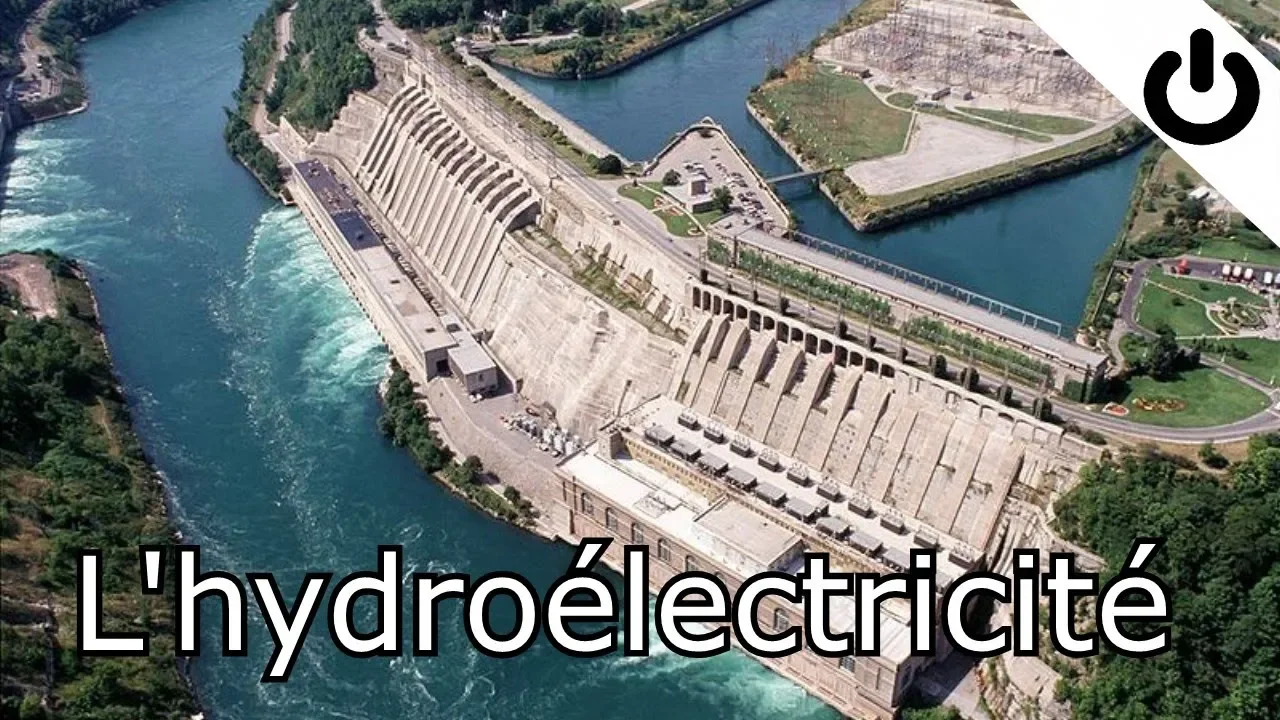
L'hydroélectricité.
152.5K
Large dams create significant environmental and social challenges. Construction floods vast areas, destroying forests, agriculture, and displacing communities—the Three Gorges Dam displaced 1.8 million people. Ecosystems split into upstream and downstream sections, disrupting migratory fish patterns despite fish ladder installations. Sediment flow cessation causes downstream erosion problems. Catastrophic dam failures pose extreme risks: the Banqiao Dam collapse in 1975 killed 26,000 directly and 145,000 from subsequent crises, making it one of history's deadliest disasters. While these risks must be acknowledged, careful maintenance and engineering standards minimize probabilities, and the benefits generally outweigh the dangers when properly managed.
Click to watch →
Deep Dive
The fundamentals of media advocacy and strategic communication, including how marginalized groups use public relations and journalism to gain political leverage.

Os Feiticeiros de Waverly Place - T04E01 | Alex Conta ao Mundo (2/5)
4.5K
Strategic publicity can be used as a powerful advocacy tool. By revealing hidden truths to the public, marginalized groups can generate sympathy and pressure authorities to change their actions. The strategy involves creating compelling narratives that humanize a group, making it difficult for the public to ignore their plight. This approach leverages public opinion to achieve political or social change, transforming secrecy into a strategic advantage.
Click to watch →

Power Prism® Training Series: Grassroots and Media Advocacy
120
Media advocacy is the strategic use of mass media to influence decision-makers and advance policy initiatives, focusing on getting issues into press in ways that provoke new thinking rather than promoting organizations. It creates urgency, gains community voice opportunities, and applies pressure to decision-makers. Planning requires identifying what media decision-makers consume by asking them directly and following them on social media. Research previous coverage to understand how issues have been framed and identify reframing opportunities. Media lists should include diverse outlets serving communities of color and non-English speakers. Identifying both issue experts (science/research) and lived experience experts (personal stories) creates balanced messaging. Plotting legislative calendars (12-24 month timelines) and coordinating with coalition partners ensures preparedness for key moments. Understanding opposition patterns helps anticipate counterarguments and reframe issues effectively.
Click to watch →

We're getting AOC THROWN OFF THE BALLOT in NYC!
103
Political advocacy requires strategic communication to generate public awareness and support. Effective challenges employ 'free earned media' to gain coverage without paid advertising. Successful advocacy earns professional recognition from election lawyers and political professionals, validating the legitimacy of advocacy efforts. The process involves training, systematic line-by-line review, and persistent engagement with political processes to achieve meaningful change.
Click to watch →

One Life to Live 1/18/1990
7.8K
This segment demonstrates how media serves as a powerful tool for advocacy and public opinion formation: (1) When criticism emerged about Prince Raymond's ability to rule, Sarah Gordon used satellite television to deliver a rebuttal reaching international audiences; (2) Strategic choices included using international satellite coverage to maximize message reach; (3) The segment illustrates how media literacy and strategic communication are essential skills for advocacy; (4) Public speaking and media presence were framed as important for credibility—comparing actress versus expert credentials. This shows how modern advocacy increasingly depends on understanding media dynamics and strategic communication to achieve goals.
Click to watch →

Webinar 2: Changing Social Norms & Health Equity
399
Media advocacy is the strategic use of mass media to support community organizing and advance public policy. Unlike information campaigns, it focuses on influencing decision-makers. Effective communication operates at three layers: overall strategy (defining problems and solutions), message strategy (what to say, to whom, by whom), and access strategy (gaining reporter attention). These layers must be developed sequentially, with overall strategy guiding all other decisions.
Click to watch →
Deep Dive
A general ethnographic overview of the Kayapo people, their social structure, and their historical relationship with their ancestral territories.

documentário sobre a luta dos guerreiros KAYAPÓ contra a barragem belomote.
14.9K
The Kayapo have a unique warrior system centered around the men's house, which is central to their culture. Boys are removed from their parents' houses at age 12 and live together in the men's house in a toughening process similar to boarding school. Younger boys must learn to obey men from older groups who rank above them. The elder married men are the leading political actors in Kayapo life, and all political decisions come from the men's house. The Chiefs implement decisions, with two Chiefs at the very top. Whether hunting, fighting, or dancing, the Kayapo always act together in their age groups. The whole village comes to life in collective efforts. Women and girls work together in age groups, gathering fruit from the forest. Some women from older age groups later played surprisingly militant roles at the Altamira demonstration. Women are aggressively independent, scolding their men for laziness and lack of manliness. They also perform ceremonial functions, such as ritually presenting newly ripened fruit or crops like corn to their kinsmen in the men's house.
Click to watch →
Tribus de la Amazonía: Así Sobreviven en la Selva Más Peligrosa del Mundo | Documental Completo
9.8K
The Kayapó (Me vengocre, 'those who live in the place of the water beings') inhabit the Brazilian Amazon frontier where forest and human transformation constantly conflict. Their villages are circular with houses arranged in arcs around central plazas, with the men's house (Gabe) serving as the space for collective decision-making and knowledge transmission. This architecture reflects a social structure with deliberative participation. They have developed managed forests through sustained human interventions over generations, where tree species composition and medicinal plant distribution are not completely wild. Hunting is central to subsistence and identity, with large bows and specialized arrows for prey including white-lipped peccaries (requiring collective coordination), tapirs, and primates. The Kayapó have been in contact with the outside world for decades, protagonizing significant indigenous resistances including the 1989 Altamira meeting against Shingu River dams and 2010 opposition to Belo Monte dam construction. Internal tensions exist regarding resource exploitation, with mercury contamination from gold mining affecting their diet and health.
Click to watch →
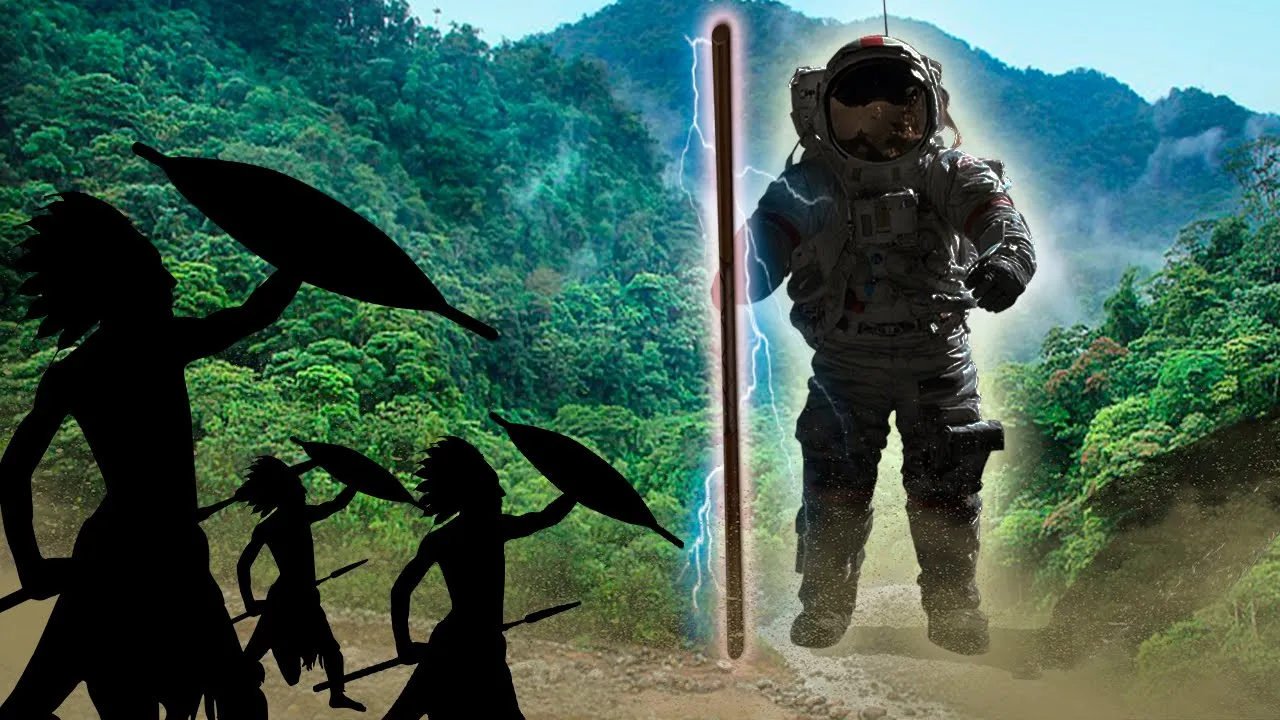
Der Weltraumkrieger, Der Mit Einem Indigenen Stamm Im Amazonas Lebte
70.7K
The Kayapo are an indigenous people of approximately 10,000 members living in Brazil's Xingu region south of the Amazon. They maintain a sophisticated ecological lifestyle with extensive plant knowledge for agriculture, including fertilizers and pesticides. Their social organization centers on dance as the primary means of community bonding, with central villages featuring communal squares for festivals. According to legend, an alien visitor named Web.de (meaning 'I come from the sky') arrived wearing a strange garment called 'bo' and carrying a weapon called 'coup' that emitted lightning. The Kayapo documented this legend through traditional dance costumes resembling astronaut suits, with the story preserved in oral tradition for generations.
Click to watch →

Gli Indiani Kayapo del Brasile.
230
The Kayapo Indians of central Brazil receive approximately 2 million dollars annually from Brazilian miners extracting gold from their territory. This economic relationship creates tension between those who accept mining revenue and those who oppose it. The Kayapo maintain a sophisticated political strategy, with leaders like Romney successfully convincing the Brazilian government to grant their people legal rights to live according to their own laws. The Kayapo society is organized into groups based on age, with both men and women working together in well-organized teams. The social hierarchy places older men, particularly the heads of families who are hunters, at the top of this pyramid. During hunting expeditions, the oldest hunters depart first, followed by young unmarried men who prepare the path to new camps, and adolescents who prepare wooden frames for captured turtles. Women and children support the expedition by building new camps, cooking, and transporting supplies.
Click to watch →

Kayapo Tribe Of The Amazon Rainforest Brazil & Their Fascinating Rich Culture.
166.6K
The Kayapo (Mebêngôkre) are an indigenous people in Brazil's Xingu and Altamira region who have preserved a rich cultural heritage through vibrant headdresses, elaborate body painting rituals, and a pantheistic worldview connecting them to nature; they have demonstrated remarkable resilience by successfully stopping the World Bank-funded Belo Monte dam project in 1989 and continue to defend their lands against deforestation and illegal mining while maintaining traditional practices alongside some Christian influences.
Click to watch →
Prerequisite Knowledge
- Concept 01Basic understanding of the legal concepts of indigenous land rights, sovereignty, and self-determination, particularly within the context of the Brazilian Amazon.
- Concept 02The ecological and social impacts of mega-infrastructure developments, specifically how large hydroelectric dams affect river basins and local populations.
- Concept 03The fundamentals of media advocacy and strategic communication, including how marginalized groups use public relations and journalism to gain political leverage.
- Concept 04A general ethnographic overview of the Kayapo people, their social structure, and their historical relationship with their ancestral territories.
Subsequent Learning
- Step 01The long-term legacy of the Altamira gathering and the subsequent struggle over the Belo Monte Dam, including its eventual construction and environmental impacts.
- Step 02The academic field of Indigenous Media and Visual Anthropology, exploring how indigenous communities globally utilize video technology for self-representation and political resistance.
- Step 03International legal frameworks and treaties concerning indigenous resource rights, such as ILO Convention 169 and the UN Declaration on the Rights of Indigenous Peoples (UNDRIP).
- Step 04Comparative studies of global indigenous-led environmental movements, analyzing tactics used against extractive industries (e.g., the Standing Rock oil pipeline protests).
Kaiapo Crisis
Kaiapo Crisis
0:14Playing Section
- 1
Chiefs gather in angry meeting over proposed dam.
- 2
Pakan unites factions against river flooding; Robney joins.
- 3
Government invites tribe to inspect existing dam effects.
The Pitfalls of Strategic Essentialism and the 'Hyperreal Indian' Myth
While the Kayapo's media-savvy campaign at Altamira is celebrated as a triumph of indigenous activism, anthropologists and political ecologists highlight the long-term risks of their strategy. To capture global media attention, the Kayapo relied on 'strategic essentialism,' projecting a romanticized image of themselves as exotic, unchanging guardians of nature. This created a fragile alliance built on the Western myth of the 'ecologically noble savage.' When some Kayapo communities later engaged in logging or mining to secure economic development, international support wavered, exposing how media-driven activism can commodify indigenous identity. This critique argues that relying on global media forces indigenous groups to conform to unrealistic, external expectations of authenticity, ultimately limiting their political autonomy and making their rights contingent on satisfying Western ecological ideals.
Deep Dive
The long-term legacy of the Altamira gathering and the subsequent struggle over the Belo Monte Dam, including its eventual construction and environmental impacts.

Xingu - A luta dos Povos pelo Rio - Parte II
27.7K
The Xingu indigenous peoples have been fighting for over 20 years against the Belo Monte hydroelectric dam construction, mobilizing through public meetings like the 2008 Altamira gathering where all 24 indigenous communities and riverine populations protested the government's decision, which they argue violates their rights under ILO Convention 169 by proceeding without proper prior informed consultation, while also expressing concerns about the dam's socio-environmental impacts on their territories and the Xingu River ecosystem.
Click to watch →

Altamira - Belo Monte Dam
13.8K
The Altamira protest against the Belo Monte Dam demonstrates how indigenous communities organize collective resistance against large-scale infrastructure projects that threaten their ancestral lands and way of life; despite previous successful protests that halted dam construction when international attention was high, the Brazilian government continued pursuing the project by financing it domestically, highlighting the ongoing struggle between indigenous rights and state-led development initiatives in the Amazon region.
Click to watch →

Belo Monte Dam
185
The Belo Monte Dam is a hydroelectric complex under construction on the Xingu River in Pará, Brazil, with a planned capacity of 11,233 MW, making it Brazil's second-largest hydroelectric project. Plans began in 1975 during the military dictatorship when consulting firms conducted hydrographic studies. CNC completed its study in 1979, identifying five dams on the Xingu River and one on the Araguaia River. The project was part of a 2010 plan including 297 dams. The government offered little transparency to affected people, provoking indigenous tribes to organize the 'Iron Control' movement. At the 1989 Timira Gathering, indigenous leader Toa Ra held her machete against engineer José Carlos Muniz Lopes, sparking international repercussions. Following opposition, the five dams above Belo Monte were removed from planning and Caxiuanã was renamed to Belo Monte. Between 1989 and 2002, the project was redesigned, reducing the reservoir surface area from 1,225 km² to 440 km². In 2002, a new environmental impact assessment presented three alternatives. In 2008, another assessment included two canals to divert water away from indigenous territories. On February 1st, 2010, IBAMA granted a provisional environmental license. In April 2010, Odete Kamaro and CPFL dropped out of the tender. On April 20th, 2010, the Brazilian federal attorney general's office suspended the tender on constitutional grounds, citing Article 176 requiring federal law to determine conditions of hydroelectric extraction in indigenous territories. The Regional Court reinstated the auction. On August 26th, 2010, President Lula signed the contract with Navegante. Construction was not permitted until IBAMA granted the installation license, requiring proof of meeting 40 socio-environmental mitigation conditions. According to an October 2010 IBAMA report, at least 23 conditions had not been met. On January 14th, 2011, FUNAI staff expressed concerns about the project's location, impact on reservation land, and lack of attention to indigenous needs. Despite this, FUNAI Senior Management sent a letter on January 21st, 2011, not opposing a limited construction license. On January 26th, 2011, a partial installation license was granted. On June 1st, 2011, IBAMA granted the full license after the Consortium agreed to pay $1.9 billion for social and environmental problems. On February 25th, 2011, the federal public prosecutor filed its 11th lawsuit, suspending the partial installation license on constitutional grounds. Brazilian federal judge Ronaldo Desaro blocked the project citing environmental concerns in Brazil's biggest public hearing ever. The ruling was overturned on March 3rd, 2011. On September 28th, 2011, a federal judge prohibited infrastructure work interfering with the Xingu River's natural flow to protect local fish stocks. On November 9th, construction recommenced after judge Maria Duque Cardoso ruled that indigenous consultation was not legally required. The Belo Monte Dam complex consists of three dams, numerous dikes, and canals supplying two power stations. The Pimental Dam is 36 meters tall and 6,248 meters long with a structural volume of 4,768,000 cubic meters, creating the Cadu Xingu Reservoir with 2,669 million cubic meters capacity and 333 square kilometers surface area. The Belo Monte Dam is 90 meters tall and 3,545 meters long with 2,556,000 cubic meters volume. The Bella Vista Dam is 33 meters high and 351 meters long. The Dos Reservoir has 1,889 million cubic meters capacity and 108 square kilometers surface area. The main power station contains 20 vertical Francis turbines at 550 MW each, supplied by 113-meter penstocks with 89.3 meters hydraulic head. The Pimental Power Station contains seven Kaplan bulb turbines at 25.9 MW each. The planned capacity is 11,233 MW, composed of the main Belo Monte Dam (11,000 MW) and Pimental Dam (200 MW with 25.9 MW bulb turbines). In February 2011, Navegante signed contracts with IMSA worth $450 million for Francis turbines. Walter Coronado claimed Belo Monte would be one of the least efficient hydro projects, producing only 10% capacity between July and October. According to Brazil's Energy Research company, 39% is below the 55% average, though normally hydro capacity factors range from 30-80%. Critics claim the project would only make financial sense with additional upstream dams for year-round water flow. Supporters argue the seasonal minimum flow occurs when other Brazilian hydropower plants are well supplied. Brazil's National Council for Power Policies approved only one dam on the Xingu, with critics questioning the cost-benefit ratio affecting 25,000 indigenous peoples. The project is developed by Navegante, controlled by state-owned Eletrobrás (49.98% stake). Partners include Navegante (19.98%), Eletrobrás (15%), CHF (15%), BDO Participações (10%), G Participações (9%), Caká Kevic (5%), OAS (2.51%), Quirós Galvão (2.51%), FUN (2.5%), and various construction companies. The dam complex costs over $16 billion with $2.5 billion for transmission lines, funded by Eletrobrás, BNDES, and Brazilian pension funds. Private investors include Alcoa, Vale, Andrade Gutierrez, OAS, GDF Suez, and Neoenergia. In 2006, Conservation Strategy Fund found initial benefits marginal without environmental costs. Belo Monte would require additional upstream dams for dry season generation. CSF concluded Belo Monte would not be sustainable without the Timira Dam, which would have a reservoir 10 times larger and flood 30 times the area submerged by Belo Monte. Alternatives WWF Brazil released a 2007 report stating Brazil could cut electricity demand by 40% by 2020 through energy efficiency, saving power equivalent to 14 Belo Monte plants and $33 billion. Ex-director Alfonso Mor Santos argued large dams were unnecessary for 6% growth goals, suggesting wind power expansion. A Federal University of Rio de Janeiro study published in June 2011 criticized these alternatives and defended Belo Monte as cheaper economically and socio-environmentally. The environmental impact assessment listed adverse effects: loss of vegetation and natural spaces, changes in water quality and fish migration routes, temporary water supply disruption for 7 months, and incomplete assessment. The 100-meter long Big Bend diversion affects species distribution. Two IBAMA officials resigned in 2009 citing political pressure. In January 2011, IBAMA president Abílio Vedo also resigned. 140 organizations decried the decision-making process. The Xingu River has an estimated 600 fish species with high endemism, with many species found nowhere else. The area either d
Click to watch →

“Distopía amazónica” de Lalo de Almeida | CASA SEAT
415
The Belo Monte hydroelectric dam, one of Brazil's largest infrastructure projects in 20 years, caused massive displacement of riverine communities along the Rio Xingu. The dam created a reservoir that killed trees and destroyed traditional ways of life. Altamira's population increased by 50-80% in one year, with 80% being male workers, leading to severe social problems including prostitution and violence. By 2015, Altamira became Brazil's most violent city. The Rio Tapajós basin has become the center of illegal gold mining, with rivers contaminated by mercury. The Munduruku indigenous people organized protests to prevent another hydroelectric dam in their territory, demonstrating active resistance against development projects threatening their lands.
Click to watch →

CONCURSO PMPA 2019. Atualidades 1.01 Bacia hidrográfica e potencial energético no pará
944
The Belo Monte construction attracted large numbers of workers to Altamira, but as construction progressed, many workers became unemployed. This unemployment led to increased violence in the region, with the 1st Command of the Red Command (1º Comando Vermelho) becoming involved in drug trafficking. Altamira experienced a wave of homicides linked to criminal factions. The Tucuruí plant, constructed from the late 1950s through the military regime, was part of the Carajás iron ore extraction project and brought immediate development to the region, with workers remaining in Pará state after completion.
Click to watch →
Deep Dive
The academic field of Indigenous Media and Visual Anthropology, exploring how indigenous communities globally utilize video technology for self-representation and political resistance.

Pinar Yolaçan: Body-Image
243
Camera technology provided by anthropologists transformed into powerful tools for indigenous self-representation and advocacy. Communities learned to document environmental destruction, organize protests, and communicate with media and NGOs. Social media platforms like Instagram and Facebook now enable indigenous peoples to share their perspectives globally, converting communication technologies from colonial instruments into tools of cultural preservation and political resistance.
Click to watch →

VÍDEO NAS ALDEIAS (1989)
362
Video technology serves as a powerful tool for indigenous communities to document their cultural traditions, preserve oral histories, and assert political rights, enabling them to control their own narrative and participate in national political processes such as lobbying and protests.
Click to watch →
Vídeo nas Aldeias (1989)
23.3K
Video technology has become a strategic instrument for indigenous communities in their political struggles. Communities use it to document government promises, hold authorities accountable, record land demarcation journeys, and document violence against indigenous populations. This documentation enables communities to transmit information about challenges faced by their representatives back to villages, strengthening collective political action. The technology empowers communities to defend themselves, document their political mobilization including constitutional assemblies and protests, and share their perspectives with broader audiences, representing a sophisticated application of technology for indigenous political agency and self-determination.
Click to watch →
Turning the Lens: Brazil's Kayapo Communities' Use of the Warrior Image
523
The Kayapo learned to use video cameras and filmmaking as powerful tools for defending their land rights and political causes. When anthropologist Terrence Turner helped them acquire cameras during filming about the Belo Monte dam struggle, they documented existing dam sites to show villagers what destruction would look like. This visual evidence helped mobilize support for their protests. The Kayapo became pioneers in indigenous media, using appropriate technology for their own cultural purposes. They view video cameras as weapons for self-defense, and their filmmaking techniques naturally capture ritual processes through repetition and circular motion, producing remarkable footage that Western-trained filmmakers cannot replicate.
Click to watch →

CINE Y ANTROPOLOGÍA EN RESISTENCIA
249
Indigenous communities have reclaimed cinema and video as powerful tools for cultural resistance, transforming from passive subjects of anthropological study into active creators who document their own histories, preserve traditional knowledge, and challenge external narratives. This transformation began with organizations like CLACPI (Coordinadora Latinoamericana de Cine y Video de los Pueblos Indígenas), which has trained indigenous filmmakers since 1985 and facilitated the recovery of historical scientific films documenting indigenous peoples, enabling communities to control their own representation and use visual media as a weapon for cultural preservation and political resistance.
Click to watch →
Deep Dive
International legal frameworks and treaties concerning indigenous resource rights, such as ILO Convention 169 and the UN Declaration on the Rights of Indigenous Peoples (UNDRIP).
Free, Prior and Informed Consent (FPIC), Indigenous Rights and the OECD Guidelines
218
The UN Declaration on the Rights of Indigenous Peoples (UNDRIP), adopted in 2007, serves as foundational international recognition of indigenous rights, supported by most nations globally. ILO Convention 169 is the only binding international treaty specifically recognizing indigenous peoples' rights, establishing standards for land rights consultation, participation, self-determination, and non-discrimination. As of 2025, only 24 countries have ratified ILO 169, primarily in Latin America and Europe, with only Nepal in Asia. These instruments establish that FPIC represents a specific right for indigenous peoples recognized in international law, forming the foundation for advocacy in business-human rights contexts.
Click to watch →
II Fall Symposium: The Global Indigenous Peoples Movement | Session 5
206
The ILO Convention 169, adopted in 1988-1989, is the only legally binding treaty in the world concerning indigenous peoples. It resulted from revising the outdated assimilationist Convention 107 (1957). This convention has an extraordinary recourse mechanism and, together with the UN Declaration, provides a complete package for recognizing the economic, social, cultural, political, and spiritual rights of indigenous peoples. The Inuit Circumpolar Council is now considering how to expand its role within intergovernmental regimes like the Arctic Council, using international human rights standards to advance their rights in the context of the rush for Arctic resources.
Click to watch →
Sistema Nacional de Evaluación de Impacto Ambiental Sectorial (1)
7K
ILO Convention 169 establishes that indigenous peoples' rights to natural resources in their territories must be protected, including participation in utilization, administration, and conservation. Article 15 grants indigenous peoples rights to direct participation in resource exploitation and benefits from such exploitation. Multiple constitutional cases in Peru are currently litigating the possibility for indigenous communities to receive direct economic benefits from resource exploitation in their territories. This reflects the practical implementation challenges of indigenous rights provisions in environmental governance.
Click to watch →
CONVENIO 169 Y EL DÍA DE LOS PUEBLOS INDIGENAS
159
ILO Convention 169, established in 1919, is a binding international legal instrument for indigenous and tribal peoples in independent countries. It establishes fundamental collective rights including the right to maintain customs, preserve language, and maintain territory. The convention recognizes indigenous peoples as those who populated territories before other civilizations arrived. It also establishes the right to free, prior, and informed consultation regarding projects affecting their territories. The UN recognizes August 9th as International Day of Indigenous Peoples, highlighting the importance of these rights.
Click to watch →

21.1 Не экзотика на краю света: правовой статус коренных народов в международном праве
1.7K
The International Labour Organization adopted Convention 169 in 1989, providing a legal definition of indigenous peoples as 'peoples in independent countries who are regarded as indigenous on account of their descent from the populations which inhabited the country or a geographical region at the time of conquest or colonization or the establishment of present state boundaries, and who, irrespective of their legal status, retain some or all of their own social, economic, cultural and political institutions.' The convention emphasizes that self-identification as indigenous is a fundamental criterion for determining which groups are covered.
Click to watch →
Deep Dive
Comparative studies of global indigenous-led environmental movements, analyzing tactics used against extractive industries (e.g., the Standing Rock oil pipeline protests).
How To Become An Organizer (my story) | DIRECT ACTION 101 - EP 1
20.7K
Standing Rock (2016) was an indigenous-led movement against the Dakota Access Pipeline that offered transformative lessons in cross-movement solidarity. The speaker participated multiple times, observing diverse tactics including prayer-based approaches, direct confrontation, and various levels of militancy. The experience revealed complexities of cross-racial solidarity, including instances of anti-blackness within the movement. It taught the importance of assessing different factions within movements and understanding whether groups are genuinely committed to revolutionary change or merely seeking symbolic victories.
Click to watch →

The Dark Origin Story of the Next Generation of Activists I The New Resistance Episode 1
14.8K
Indigenous youth activists explain how corporate interests exploit both indigenous lands and the global environment. The Standing Rock campaign against the Dakota Access Pipeline demonstrated how social media campaigns can mobilize global attention. Activists recognize that the same industries causing pipeline construction are also driving climate change, placing indigenous communities at the front lines of environmental destruction.
Click to watch →
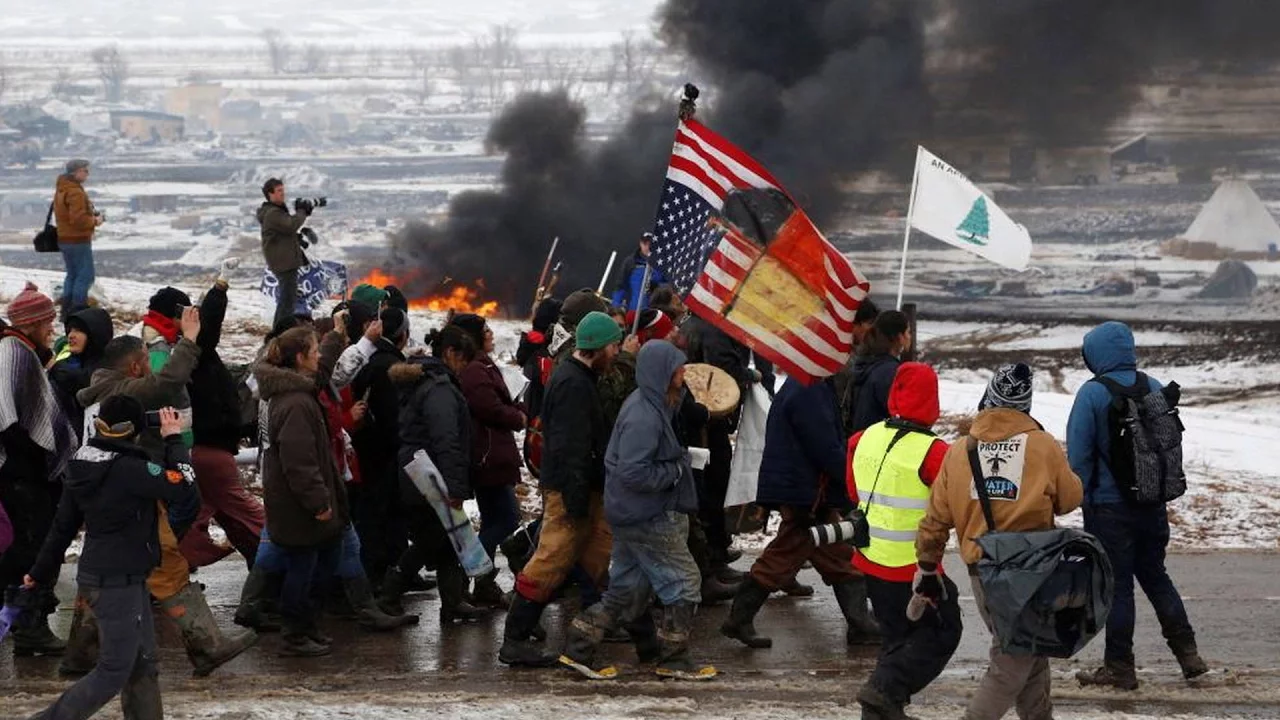
We Have to Keep Fighting: Water Protectors Vow Continued Resistance to DAPL as Main Camp Is Evicted
16K
The Standing Rock protests represent a landmark convergence of indigenous sovereignty, environmental justice, and intergenerational resistance. Water protectors from the Standing Rock Sioux Tribe established resistance camps on unceded Sioux territory under the 1851 Treaty of Fort Laramie, opposing the $3.8 billion Dakota Access pipeline. At its peak, over 10,000 people gathered in various camps, making it the largest Native American gathering in decades. The movement encompasses multiple dimensions: direct action at drill pads, legal battles requiring Environmental Impact Statements, political advocacy in Washington D.C., and divestment campaigns targeting banks supporting fossil fuels. Protesters describe the pipeline as 'cultural genocide' threatening sacred sites, medicinal plants, and ancestral lands. The movement extends beyond Standing Rock to oppose other pipelines across North America, demonstrating how indigenous communities employ diverse strategies—from traditional practices like controlled burning to modern legal and political tactics—to defend their homelands and ensure a livable future for their descendants.
Click to watch →

Is There Good News About Climate Change?
31.1K
Indigenous communities have achieved decisive victories against fossil fuel infrastructure, blocking projects equivalent to 25% of U.S. and Canadian annual emissions. The Enbridge Northern Gateway pipeline was stopped after crossing 130 First Nations lands. Standing Rock brought together the largest gathering of Indigenous nations in North American history, strengthening transnational movement bonds. Daniel Hunter describes movements as rivers—people contribute their energy and the current continues flowing regardless of individual outcomes. Celebrating victories attracts new participants. Movements don't win or lose; they persist and evolve, adding depth and breadth to the ongoing struggle for ecological justice.
Click to watch →

Lucha Eterna - CAYE CAYEJERA ft. BLACK MAMA ft. M. ANKAYLI ft. TAKI AMARU ft. DJMIC
78.1K
This extended segment presents a comprehensive critique of how extractive industries (particularly mining) threaten indigenous communities. The lyrics describe how 'business that brings blood always fails' and how 'my culture is being violently attacked.' The content articulates that indigenous peoples have inherent rights to their territories and that external forces using 'progress' as justification for dispossession are fundamentally wrong. The segment emphasizes that indigenous communities maintain 'memory in the soul' and 'word' as tools of resistance, while corporate interests use 'force of the militia' to combat traditional lands. The Shuar people are specifically mentioned as engaged in 'eternal struggle' against these forces.
Click to watch →
Kaiapo Crisis
Kaiapo Crisis
0:14- 1
Chiefs gather in angry meeting over proposed dam.
- 2
Pakan unites factions against river flooding; Robney joins.
- 3
Government invites tribe to inspect existing dam effects.
The Pitfalls of Strategic Essentialism and the 'Hyperreal Indian' Myth
While the Kayapo's media-savvy campaign at Altamira is celebrated as a triumph of indigenous activism, anthropologists and political ecologists highlight the long-term risks of their strategy. To capture global media attention, the Kayapo relied on 'strategic essentialism,' projecting a romanticized image of themselves as exotic, unchanging guardians of nature. This created a fragile alliance built on the Western myth of the 'ecologically noble savage.' When some Kayapo communities later engaged in logging or mining to secure economic development, international support wavered, exposing how media-driven activism can commodify indigenous identity. This critique argues that relying on global media forces indigenous groups to conform to unrealistic, external expectations of authenticity, ultimately limiting their political autonomy and making their rights contingent on satisfying Western ecological ideals.
Basic understanding of the legal concepts of indigenous land rights, sovereignty, and self-determination, particularly within the context of the Brazilian Amazon.
The ecological and social impacts of mega-infrastructure developments, specifically how large hydroelectric dams affect river basins and local populations.
The fundamentals of media advocacy and strategic communication, including how marginalized groups use public relations and journalism to gain political leverage.
A general ethnographic overview of the Kayapo people, their social structure, and their historical relationship with their ancestral territories.
The long-term legacy of the Altamira gathering and the subsequent struggle over the Belo Monte Dam, including its eventual construction and environmental impacts.
The academic field of Indigenous Media and Visual Anthropology, exploring how indigenous communities globally utilize video technology for self-representation and political resistance.
International legal frameworks and treaties concerning indigenous resource rights, such as ILO Convention 169 and the UN Declaration on the Rights of Indigenous Peoples (UNDRIP).
Comparative studies of global indigenous-led environmental movements, analyzing tactics used against extractive industries (e.g., the Standing Rock oil pipeline protests).
58.5K views145likes3:10@royalanthroOriginal Release: 2014-12-15
[Music] [Music] you [Music] our story starts a month before the demonstration in another Brazilian Town 35 Chiefs key leaders of the kaiapo warrior Nation arrived to hold an angry meeting they're welcomed by a young kaiapo Chief pakan the organizer his task today is to unite the jealous and independent factions of the 13 kaiapo Villages against the proposed Dam yeah none of [Music] last to arrive is Chief robney as one of the most independent and warlike of the kaiapo leaders robney support is essential to Pan's plan the crisis Gathering is to react to Brazilian government plans to build dams on the jingu river running through the heart of caiapo territory the river would flood huge areas of their land pakan with the most experience of dealing with white Brazilians has persuaded the authorities to let kaiapo Chiefs assess the effects of an existing Dam on a neighboring River the huge tuuri Dam the kaiapo Chiefs Begin by cautiously accepting the invitation from electro nor the government power company to inspect the great dam for spee side for with their War clubs the kaiapo have brought along video cameras a forest tribe have jumped an entire Industrial Revolution and are using tools of high-tech communication The Villages back in the forest will be able to see how a hydroelectric Dam affects the rivers and Forest on which it's built e
Up Next

53:58
Kayapo Indians: Gold, Culture, and Resistance in the Amazon
@g.derrickhodge3629
38.3K views•2014-02-07

38:41
Astrobiology Through an Anthropological Lens: Field Insights
@georgiatechastrobiology
128 views•2021-04-14

4:45
Proxemics Explained: The Study of Personal Space
@Vox
536K views•2016-07-05

10:38
Psychology of Internet Trolling and Pranks Explained
@AzzyLand
10.7M views•2017-12-20
Related Study Plans & Knowledge Roadmaps
Structured learning paths in Anthropology
anthropology
Space Anthropology: Analogs, Culture & Habitats
01Foundations of Space Anthropology & Cosmic Imaginaries
02Extreme Isolation & Micro-Societies in Orbit
03Space Analog Habitats & Earth-Based Simulations
+ 2 more learning modules
15h5 modules
Explore Roadmap
anthropology
Legal Anthropology: Customary Law & Pluralism
01Foundations of Legal Anthropology and Social Justice
02Legal Pluralism: Coexisting Legal Systems
03Customary Law and Indigenous Dispute Resolution
+ 2 more learning modules
15h5 modules
Explore Roadmap
anthropology
Global Tourism: Gaze, Authenticity & Heritage
01Introduction to the Sociology of Tourism
02The 'Tourist Gaze' (John Urry)
03Staged Authenticity in Tourism
+ 3 more learning modules
14h6 modules
Explore Roadmap
anthropology
Modern Kinship (ART, Adoption & Chosen Family)
01Foundations of Kinship and Family
02Assisted Reproductive Technologies (ART) & Relatedness
03Transnational Adoption and Global Kinship
+ 2 more learning modules
12h5 modules
Explore Roadmap