

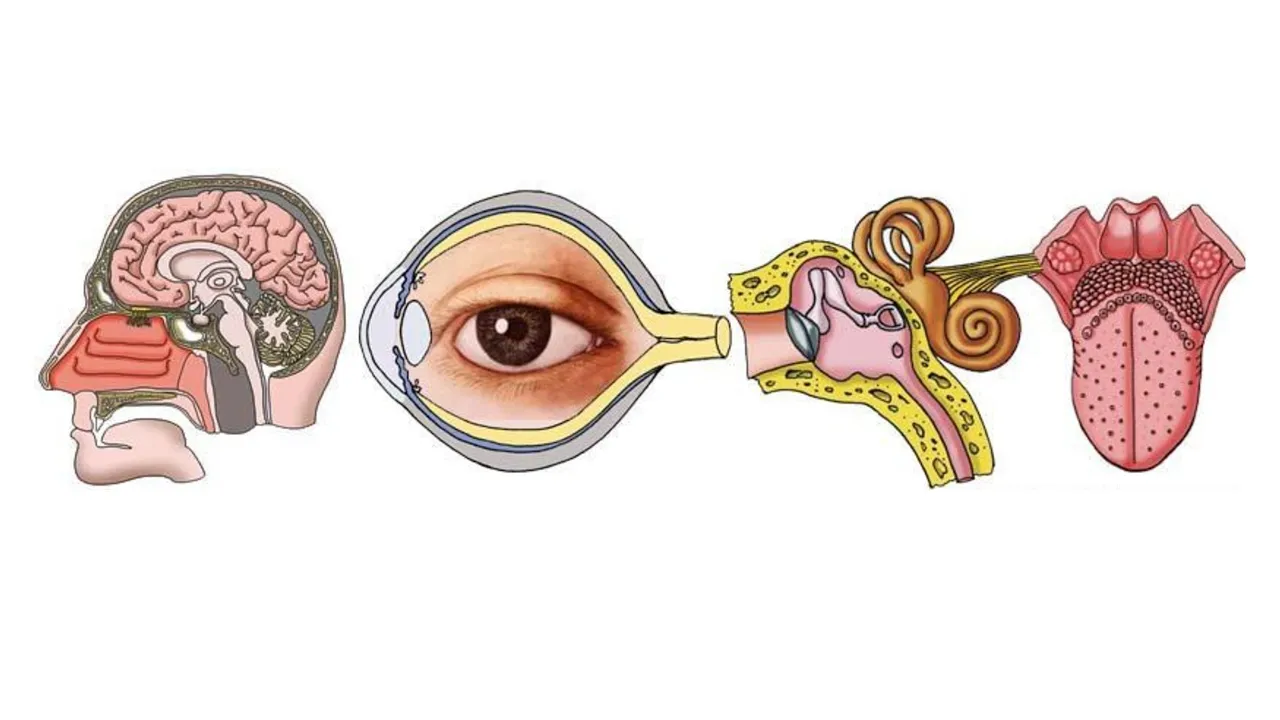




















Birds experience the world through specialized sensory adaptations that differ dramatically from human perception, including wraparound vision (seeing 360 degrees around them), ultraviolet vision (seeing colors invisible to humans), highly sensitive mechanoreceptors in bills for detecting buried prey, exceptional hearing capable of processing rapid song changes, and magnetic field detection for navigation; these adaptations mean birds perceive their environment in ways fundamentally different from humans, experiencing a unique 'umwelt' or sensory world that reveals hidden dimensions of reality.
Understanding Bird Senses: Vision, Hearing, and Smell
Added:Basic vertebrate anatomy and sensory physiology, particularly how eyes, ears, and olfactory receptors function in general.
The electromagnetic spectrum, specifically the difference between human-visible light and ultraviolet (UV) light.
Fundamentals of wave physics, including how sound waves propagate, to understand hearing and the principles of echolocation.
Basic evolutionary principles, such as adaptation and natural selection, which explain why different species develop specialized sensory traits.
The ecological impact of sensory pollution, such as how artificial light at night (ALAN) and anthropogenic noise disrupt avian migration and communication.
Avian magnetoreception, exploring how birds use the Earth's magnetic field for navigation during long-distance migration.
Comparative neurobiology, specifically studying how avian brains process complex sensory data differently than mammalian brains.
Biomimicry in engineering, looking at how avian visual and auditory adaptations inspire technologies like collision-avoidance sensors and drone navigation.
962 views19likes1:19:25Original Release: 2024-08-19
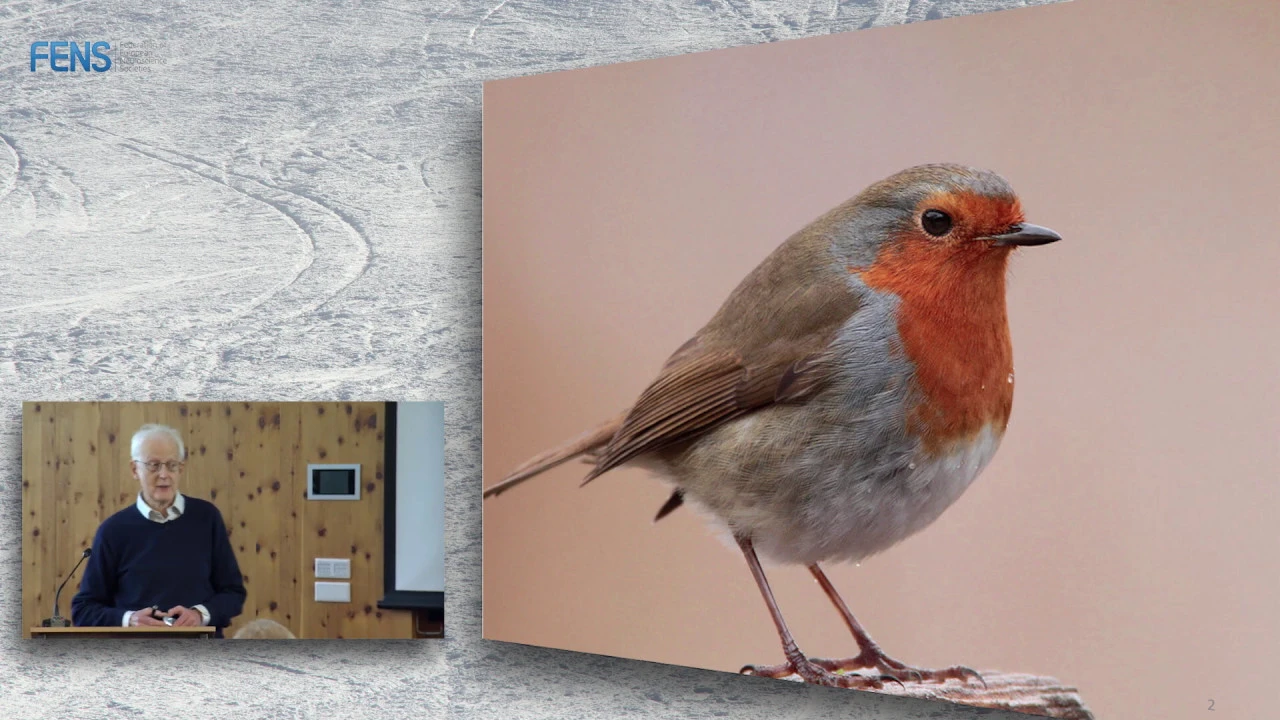
um I'm just going to kill time for a little bit while more to let more people come in but so three things firstly um it's really nice to see a bunch of people who I've met in the field field some of you have gone birding with um I have to say it's kind of weird seeing you all in nice non-field clothes um Bruce where did you get that shirt it's amazing thank you can can I have okay we'll talk later um secondly um thanks to everyone who's wearing a mask um I founded and lead a uh set of birding outings for people with long covid and other similar chronic illnesses which I guarantee you you do not want so thank you to everyone who's doing something small to protect our entire Community tonight um and then the third thing is thank you to this community for welcoming me so warmly um as Glenn said I moved to Bay Area last May and started birding kind of last September um and this has been a very wonderful place to kick that off um and everyone has been really lovely so thank you for that um tonight I'm going to talk about how all the birds that you love and see and spend time with um experience the world this is a talk based on my second book an immense worlds um how animal senses reveal the hidden Realms around us if any of you have a copy of the book I'm happy to sign later uh if not uh you can get your copy from bookshop.org and I'm sure I will bump into you in a future ggba event all right I'm going to start off with some poetry um so in 1790 uh can we maximize this screen yeah can everyone hear me oh okay it might actually be that you can't do that because it's on it all right [Music] um okay we'll start with some poetry so in 1790 as part of the marriage of Heaven and Hell uh William Blake wrote this stanza um how do you know but every bird that cuts the Airy way is an immense world of delight closed by our senses five I love this verse it gave but it also speaks to the big theme of the book which is that animals are spectacular in ways that we sometimes Miss because of the limitations of our own senses because we despite all of our technology and vaunted intelligence are only capable of perceiving a thin sliver of the fullness of reality and that gives us only a partial understanding of the lives of other creatures even those who we spend an inordinate amount of time obsessing over for example uh now the field marks are very subtle here but this is a dog um and specifically this is my dog his name is typo um people tend to notice his very cute ears and his very cute eyes but I want you instead to focus on his nose which is the seat of his most important sense um smell is the main way through which hyper interacts with the world and experiences the world he will smell things on our walks that I cannot sense all dog owners here will be familiar with the experience of walking or dog along and having it grind to a halt and furiously investigate a patch of pavement that looks completely nondescript to your eyes typer also sees different colors than what I see he hears different frequencies than what I hear he exists in a world dominated by other stimuli that I don't perceive so that even when we are sharing ing the same physical space standing right next to each other we're experiencing that space in radically different ways we each exist in our own sensory bubble and there is a wonderful word for those bubbles that word is no all right uh that word is umelt not um um never give anyone else your slides um the word is umelt it is just German for environment but it means more than just the physical environment my umelt is not this microphone it is not this Podium it's not this floor beneath me my umelt is my sensory environment it is the unique cocktail of SES and sounds and textures and smells that I am privy to and that another animal or even another individual might not be I think that this is actually one of the most profound and beautiful Concepts in all of biology because it it is a very humbling idea it shows us that despite the fact that our perception of the world feels complete it is not it is only partial it is limited and for that same reason the umelt concept is wonderfully expansive it tells us that everywhere we are even in the most mundane of settings there is Magic to be found there is the extraordinary always lurking behind find the ordinary and one way to experience that extraordinary hidden side of the world is to think about what other animals are experiencing by extending our curiosity and our empathy to them we can go on incredible Journeys without having to travel anywhere so I'm going to take you on a tour tonight through the umon of the birds that you love to experience the world through their senses and to show how much you're missing through your eyes your ear and your other sense organs and we're going to start with vision which is the sense that most of us rely on the most and a sense that is also incredibly important to birds too uh birds like us have two eyes they're on their heads neither of these traits is given around the animal kingdom there are lots of very weird eye setups out there but birds are similar to us um they are different in that with a few exceptions like owls their eyes tend to be the sides of their heads a very simple difference that actually radically changed their experience of the visual World um a scientist named gr Martin said it best when he said that the human visual world is in front and humans move into it but the Aven world is around and birds move through it they can see to the sides of the heads without needing to turn around many species can even see behind them so when we use this phrase a bird's eye view to basically mean anything that is our normal view but a bit elevated we are using it misleadingly a bird's eye view is not just a higher version of one it is more um immersive more surrounding many birds have eyes not just on the sides of their heads but a little bit further up too a lot of ducks have this setup this is a model duck um that setup means that when this duck is sitting on the surface of a lake it can see the entirety of the sky above its head without needing to look around um herons uh have eyes that face downwards a little bit so that when a heron is standing straight with its beak facing forwards it can see the fish swimming between its feet its visual field covers 180 degrees in the vertical covers an extraordinary amount of space um for those of you who've seen American bittens at Coyote Hills when the bittens are doing this Sky pointing thing that's same coverage means that they too can see the entirety of the sky without needing to look around these visual Fields can have strange consequences so this is a griffin vulture and this is what its visual field looks like um it extends quite a long way through the side so a vulture soaring can see other vultures soaring in the sky around it without needing to look around but you might notice that vertically that visual field is quite narrow it's certainly not the 180 coverage that a heron gets there are these blind spots above and below and when the vulture flies its head tends to point downwards a little bit to look for prey which means that the blind spot is now directly in front of the bird and this is thought to be one reason why vultures and other Raptors often Collide into really obvious things like wind turbines which you would have thought given their incredibly good Vision they would be easy they would easily avoid but they can't avoid it if they can't see it and they can't see it if it's not in their field of view and for millions of years of their evolutionary history they never needed to see anything directly in front of them as they were soaring high up in the sky I said that birds of prey have very good V very high uh very acute vision and actually they are one of our only rivals in that department um humans tend to have very very high resolution Vision higher than most other animals I mean I am wearing minus 6 andus 7.5 contact lenses so maybe not me per se but like in general uh as a species uh we see a lot more detail than what most other animals are seeing actually about half of birds are legally blind by human standards um but Raptors like this wedget tailed eagle from Australia have very very very sharp eyesight um so this uh bird has is actually the current record holder for resolution of vision um I want you all to give me a thumbs up great I'm actually going to use this to explain something this isn't just for self validation but this feels good I'm I'm liking this um so if you do this um if you imagine a pair of black and white lines painted on your thumbnail you would easily be able to tell them apart now if you had 60 pairs of black and white lines um it might not seem like it but you would actually still be able to resolve that that's pretty much at the the limit of the resolution of our vision um this Eagle can do about 140 pairs so it is seeing the world on a screen with about twice as many pixels as ours and can spot a rat from about a mile away ites does this in part because its retina um like yours is full of light sensitive cells photo receptors but its photo receptors are incredibly spelt and narrow so it packs a lot of them in the same area it's why it has more pixels on its mental screen um there is a one huge drawback to that which is that when light levels Get Low you are now splitting the total amount of very little light among a higher number of receptors which then don't work this means that Eagles struggle like we do when the light gets low it's why there are no nocturnal Eagles this is a tradeoff that all animals that see face you can either have an eye that is very very high resolution or you can have an eye that is very sensitive and you can never have both at the same time some birds also have Vision that is much faster than ours um this is a pied fly catcher this is the fastest vision of any vertebrate so one way of thinking about the speed of vision is to imagine a flickering light if that light was flickering maybe once or twice a second you would definitely see it it would probably be quite annoying but once it gets to about 60 times a second the flickers just look continuous to us it's why like fluorescent lights that do flicker often um look like they're just giving a steady glow um that you can sort of think about that as like the frame rate of human Vision right so it's 60 times per second this fly captur it's about 146 so it is seeing it is capable of resolving much faster movements than we can resolve which is a good thing because it eats fast flying insects and needs to be able to track their movements I think a lot of insect eating birds have similarly fast movement um incidentally for this reason a lot of birds probably find FIS and lights very very irritating they tend to Flicker at about a 100 times per second which we cannot detect but a lot of them can um Birds many birds are also famously incredibly colorful um I went to Kenya recently this is a lilac breasted roller which is an accurate name but it's also really like the Lilac breasted white brow Zan crowned Olive backed blue winged roler really seems weird to pick up the Lilac breast but like fine um while we might gorp at these colors and quite rightly so um we should understand that this is just a thin shadow of what the birds themselves are seeing you can imagine like an even more kaleidoscopic experience of this bird than what your eyes are giving you bird visual pettes are much richer than ours for at least two reasons first most of them can see ultraviolet a color just off the Violet end of the rainbow that we typically cannot to detect if you can see UV a lot of the natural world looks very very different so here is a blackeyed Susan it is a flower that to us on the left looks just plain yellow um but to an eye that can see UV has this very Vivid Bullseye this Halo in the middle many many flowers have these patterns sunflower have patterns like this they include Halos and Bull's eyes and Landing strips and arrows that direct the attention of pollinating insects many of which can see UV and since birds can see UV too they are also cluded into this hidden language that flowers have um but flowers are not the only thing that have striking UV patterns uh bird feathers also do this is a blue tit very common bird in uh the UK where I am from um the blue parts of this bird actually reflect quite a lot of ultraviolet this was discovered in 1998 by two independent researchers one of whom published one of my favorite research paper titles ever blue tits are ultraviolet tits but also there's a difference between the Sexes so male and female blue sits look very much the same to our eyes but they look very different to each other because the males reflect a lot of UV on those blue markings so we to us they are sexually monochromatic look the same to them they are sexually di chromatic males and females look different and actually that turns out to be true for a lot actually most of the passs the song birds um so it used to be thought that about 67% but two in three passerine species were sexually monochromatic males and females look the same but a study from 2005 showed that that's only actually true for about a fifth to a quarter of them um under UV there are very very clear differences in species that really look the same to us so a male Robins breast blazes with UV um this is the yellow breasted chat that was at Lake Elizabeth earlier this year um you can see this very um uh what looks like a uniform yellow marking from the throat all the way to the belly um under UV there's actually a kind of a demarcation Midway through that so another pattern that's obvious to the birds themselves and not to us um some of you might have heard the thing about castels and UV no um well I'm going to tell about it now um there is an idea that castol can track vs because V urine reflects a lot of UV um this idea shows up a lot in books in documentaries and it is a myth uh the Cals absolutely cannot see that because voline does not reflect UV and is not distinguishable from water I I don't know where people got that from it is not true um now I said that bird color vision differs from ours in two important ways one is UV the for the other let's return uh to typo for a second just to remind you not a bird um this image shows what how I see typo and his favorite toys and this image shows what typo would see in that same situation so it is a common myth that dogs don't see color they only see black and white it's not true they do see color but clearly are much more limited palettes than we do so Reds will look like this kind of Muddy mustardy yellow uh violets will look like a kind of dark blue greens will look kind of in the middle um it's really about blues and yellows whites and blacks and Grays um this is because um the average human eye has three kinds of cone cells which are responsible for color discrimination so think of them as three kinds of color sensing cells um dogs have two um so we are TR chromatic they are di chromatic and as a consequence they probably see about 1% of the colors we can see so we see 100 times more different cues than what are pets the same is also true for cats for horses for a lot of other mammals um it's also same for true it's also true for a lot of people with red green color blindness so if any of you have that these two images probably look very much the same so um I point this out because it helps us to it helps to think about this difference when I tell you that birds have four kinds of cones they are tetra chromat and that doesn't just mean that their visual palette is extended at the margins it's not just they see our rainbow plus UV it really means that they have unlocked an entire dimension of colors that is inaccessible to us um so Cassie star did some great work with broad tailed hummingbirds where she um trained them to um visit certain feeders uh and showed that they could very easily tell AP part feeders that had green lights on them versus say green plus ultraviolet that look completely identical to us but were easily discernible to the hummingbirds themselves and hummingbirds and really all other birds are probably seeing a 100 times more colors than we are seeing just as I can see a 100 times more colors than my dogs can see and you will note that I have not shown you a visual reconstruction of what that's like because that is impossible I cannot take a tetr chromatic view of the world and and put it in and show it in a way that a tri chromatic eye can pass you really have to use your imagination and I think that this taxes the limits of mine This is actually a common problem with thinking about the umelt concept um Thomas Nagle wrote about this in his essay what is it like to be a b where he argued that you could imagine flying through the air on leathery wings and with you eating insects but you would never really understand what it is like to echolocate to perceive the world through sonar um in the way a back can similarly I think that for Birds I can tell you that um a malard has a wraparound vision of the entire Sky I can tell you that a hummingbird sees a dimension of colors that we can't see I can tell you that A P fly catches sees twice the frame rate of all Vision but it's really really hard to actually grasp what that means for the bird and in some ways we will never know and part of the point of my book is that despite the futility of the task it's worth attempting because it teaches us something important about the lies of other creatures and it reveals something new about the world that we live in I've dwelled on Vision quite a lot because it is important to birds as it is to us but it is just one of several senses that they use um it's not massively helpful when you're trying to find things that you can't see that are hidden by Darkness or for example buried in mud and so when these red knots and many other Shorebirds forage um by probing into mud they're not using Vision they're using touch um bird beaks are made of bone and keratin the stuff your fingernails are made of made out of they seem I don't know what they seem like to you they seem kind of inanimate maybe insensitive to me I think that's the sort of stereotype one has of them but in many species the tip of the bill like in these red knots contains a lot of mechano receptor cells cells that are uniquely and exquisitely sensitive to changes in pressure touch sensors this kind of corn cob structure um at the tip of the red knots Bill shows that each of those little pits would be filled with full of mechano receptors so the bird pushes its beak down into the mud and feels very keenly what the beak encounters but there is more to it than that as the beak descends into the mud it pushes down on the thin rivulets of water that lie between the sand grains and it creates a pressure wave that radiates outwards if there is a hard object in the way of that pressure wave like say a clam or any kind of buried food then the water has to flow around it and that distorts the pattern of pressure and that bill can detect those distortions which means that when a red knot is foraging it doesn't need to actually touch food to know that it's there it can sense stuff that exists beyond that lies Beyond where the bill is actually probing um and for that reason it's because of that that they are really really effective so red knots tend to find food about eight times more frequently than you would expect if if they were just haphazardly probing into the mud they use a kind of touch that works at a distance we think of touch as a sense that requires direct contact not always uh dabbling ducks like this Northern shoveler are also masters of touch their bills are packed with mechano receptors and in many places um are as densely pack those cells are as densely packed as they are on our fingertips which are some of the most sensitive organs of touch in the animal kingdom so again you have this organ that doesn't scream sensitivity but absolutely is uh embodies that in practice with re these kinds of with these bills dabbling ducks and grabs were fing tadpoles in the dark they can filter edible morsels from inedible mud um Tim burco author of bird sense wrote about this beautifully he said imagine being given a bowl of musle and milk to which has been added a handful of gravel and trying to sift the gravel out with your face it's what these ducks are doing all the time um many birds that don't specialize in touch still rely upon it in interesting ways um pile have some of the most ostentatious feathers of any bird and you know what they do they fan the tail out they'll um vibrate they'll shake the tail they tend to shake the tail at a frequency of 26 Hertz so 26 times a second what do you think is the resonant frequency of those feathers on the peacock's Crest it's 26 HZ uh that is probably not a coincidence it means that when a pan is standing in front of a quoting peacock she likely doesn't just see the display but feels it in her head um at the base of each of those crust feathers is a very small feather called a filoplume that's just a single strand with a little tuft at the end um when the moving air shakes the crust feather the crust feather then shakes the filoplume the filoplume triggers a nervous signal that goes to the brain but filoplumes are everywhere right they're not just on a peacock's crust they're at the base of a lot of other bird feathers Birds probably use them to monitor the position of their feathers they can tell when plumage is ruffled or needs a PR and it's that fops really really play an important role when the birds are flying um so maybe these tactile sensors allow bir to tell when it is uh hitting a position of of uh terrible lift when it's about to stall and correct for that this is a black skimmer that I photographed in Haywood um showing that precise flying very beautifully French opthalmologist Andre Ron dueno once wrote that a bird is a wing Guided by an eye um I think it was wrong the B the wings also guide themselves through touch um I picked the skimmer for this because it's also um a master of touch so the lower mandible is much larger than the upper one the bird flies over the surface of the water and drags a lower mandible through the water when it hits anything the jaw the mouth closes the bird gets a meal or in this the case of this particular individual a stick um this is a skill unique to the skimmers and it means that they can forage nocturnally I think one birer in the Bay Area posted some really nice photos from the ferry um taken at night of skimmers skimming along the side other nocturnal Birds rely on a very different sense uh hearing um the last speaker in the series was Jennifer akan who just wrote a fantastic book about owls um and what they're like so I'm not going to dwell too much on this I do want to point out though that it wasn't actually too long ago that most people thought that owls uh only really used Vision very large eyes to hunt in the darkness and some definitely do so screech owls tend to prioritize Vision but in 1956 Roger Payne who was also the guy who told us about whale song um showed that barn owls rely on exceptional hearing and so pay worked with an owl called wall wall after the owl from Winnie the Pooh um he put owl wall in a garage where he had blacked open the windows and uh strewn the floor with bried leaves and then he would release mice onto that floor and even though there was no light the ow would snatch the mice um with total accuracy if Payne uh took wads of paper and drag them through the floor the AR would also attack if he tied a rust a leaf to the tail of Mouse um so that the rustling was now coming from behind it the hour would miss its attacks so relies on hearing um many structures on its face uh are uh important for that scent this whole radar dish setup consists of very stiff feathers which funnel incoming sound towards the owl's ears which are roughly behind its eyes those ears are asymmetric um so if the owl's face is a clock then ears are at 2:00 and 8:00 and that setup means that SS are very good at localizing where sound is coming from not only in the horizontal but in the vertical so I can tell I mean I can theoretically tell where sounds are coming from because if they're coming from over here they'll hit this ear before that ear and there'll be a slight volume difference too but if they're coming from 6 feet above me versus 6 feet below they arrive at my ears at the same time and I don't know where they're coming from um um owls are really really good at that um I say theoretically because birding has taught me that I'm really really bad at localizing sound like I don't know if any of you have had this humiliating experience of like hearing a bird call and being like no it's it's literally 180 degrees in the other direction um so um with these adaptations and generally just like an auditory setup that is like more the the C clear the structure in the inner ear more um the the auditory processing centers in the brain more this word is tuned for hearing um this because of that bar barn owls can detect faint noises that we would never never detect but even in the sounds that we do hear we are missing quite a lot um which bird is this this is a spectrogram of a recording I made it is in the Bay Area anyone take a guess come on it's it's in the Bay Area that's a million vers the okay this is a Pacific Ren um this is a Pacific rent this is one of um I don't really have a spark birds bird but if I had uh a few this would be on one of them um look at everything that that is going on here right these very quick changes in pitch and volume all of this stuff this complexity how many of you have listened to a singing bird and and heard something that you thought and that that made you think I just can't hear everything that's going on there there must be stuff that I am missing and that the birds themselves are picking up we all right to think the frequency range of bird hearing is actually very similar to ours so theoretically we should be able to hear all of roughly all the notes they're singing But you just can't keep up with the speed the processing speed of bird hearing is much faster than ours um a guy called masasu kunishi showed this in the 1960s by um recording from neurons in the Hearing Centers of a Sparrow's brain and then playing rapid clicks to it so click the neurons fire click they fire 770 clicks per second and the neurons are still keeping time at that speed with little clicks play being played just barely more than a millisecond apart a cats neurons can only keep up 10% of the time and the birds were just perfect so they can process very fast changes in their um songs in their auditory world than what we can process this sense that there's more in the song than what you can hear that is very real and a guy called Robert duing showed this in great experiments with this bird this is the zebra French um from Northern Australia he would present them with pairs of Buzzy sounds and he trained them to indicate if they could tell the difference between those sounds the pairs were typically identical but dueling would flip a tiny fragment in the middle so imagine like taking a movie taking like three frames in the middle of that and just reversing the order now human ears could tell that that had happened if the the amount of flipped noise was about 4 milliseconds uh these birds weren't even phased by like one millisecond they could always tell when something was weird um and then deing some really really cool experiments that um that I truly love so um the zebra French songs consist of several syllables that they produce in a very very fixed and repeated orders like ABCDE e so this the experiment would take like one of those and flip them around and asked if the birds could tell the difference now human listeners could not even with practice and the birds always could so interesting right they are paying attention to subtle differences in the songs that we can't hear now then he doubled the gap between two of the syllables and now human listeners absolutely Canal difference just sounds like a glitch in the recording and the birds could not or at least they didn't care one of the two then he just flipped the order of the syllables completely and now it sounds very very distinct to us and the birds again seemed to not be bothered or couldn't tell so the finches are clearly caring about aspects of their songs that are very different from what we pick up like we care about the order of the notes that's how we think about bird song that's how we transliterate bird songs into ponics that we can remember and the finches just didn't care what they care about are the tiny changes within the span of a single note those just those changes in volume and pitch that are called the temporal fine structure um when these birds sing it really sounds like every individual is just singing the same thing again and again and again but maybe it's those differences in the temporal fine structure that we can't perceive that allows them to encode meaning in a song Maybe that's how they communicate specifics to each other um another way thing of a bird hearing is that it changes over the seasons so remember with vision I told you that there was a trade-off between resolution and sensitivity so you can either have an eye that's very very sharp or an eye that um works really well in the dark there is a similar tradeoff with hearing so you can either have an ear that has very good temporal sensitivity so it's very sensitive to those changes in pitch and volume that I showed you or an ear that is very very good with pitch and those two qualities seesaw against each other and sometimes with certain Birds they ceas or against each other in different ways over the course of a year so this is a Carolina chick it does this chiad call with rapid pitch and volume changes in the fall when this bird is very sociable it needs to pass all the information that's encoded within that temporal fine structure and its ear tends to be more um it tends to have a much higher temporal resolution at the cost of sensitivity to pitch but in Spring the song changes it starts doing this courtship song that's Feb febe so four notes Each of which is close to a pure tone a male's sexiness depends on on the consistency with which he can sing those notes and in getting exactly the right pitch drop between the Fe and the B now pitch is all important and the ears actually change so that they become more attuned to pitch at the cost of temporal resolution so speed takes all in the fall pitch is King in the spring the white breasted nut hatch does something different it's courtship song that kind of nasal wow wow wow um has a temporal fine structure that includes very fast changes in volume so in the spring its hearing becomes faster higher temporal resolution than in the breeding season and less sensitive to pitch is can either have high temporal resolution or pitch sensitivity if you are a bird you can just get the both of both best of both WS depending on your needs um finally on hearing this bird uses its ears in a very special way does anyone what this is great you're so good um this is an oil bird it lives in caves in South America as it enters and exits those caves it makes clicking noises these clicks are a form of echolocation they're the same skill that bats and dolphins use so a bat will make high-pitched huls as it flies and listen out for the Echoes bouncing off objects in the air around it by timing very precisely how long the call takes to go away from the bat and to return to its ears it can judge its distance to other objects this is a form of sonar and allows bats to avoid large obstacles to grab insects out of midair to pluck spiders from their webs um oil Birds seem to use a very very rudimentary version of this um and they have this kind there's not a lot that's known about their echolocation and what is known as very puzzling so with bats there's a very close match between the frequency of the bat bats call and the Sens the pictures that its ear are U are most sensitive to right so emitter and receiver are very closely aligned that's not the case with oil Birds their hearing is best at around 2 ktz the clicks have frequencies mostly between 7 and 23 khz um so some parts of the clicks the bird probably can't actually hear um why this is the case is a bit of a mystery but maybe it's just that birds have been latecomers on the Echolocation scene maybe if we give oil Birds a few tens of millions of years they're going to be as fine-tuned as bats currently are I think echolocation is interesting though because um when the first people the first scientists who suggested that this might be how bat move through the world in the 1940s were kind of ridiculed with this um it was it just seemed Preposterous like bats see with their ears come on um and there's a lot in sensory biology that works like that where Dogma um eventually gets overturned by people who discover animals using their senses in ways that just seemed unbelievable at the time um for example Donald Griffin one of the p iers of bat echolocation himself was incredibly skeptical about the idea that um animals could sense the magnetic field of the Earth itself because that field contains very very very little energy much much much less energy than say a photon of light from the sun um it just seemed Preposterous that animals would be able to detect that and yet it turns out that birds absolutely can and a lot of birds can there was a really good paper on Magneta reception this year which featured I think round Pelicans swainson Hawks um a lot of really cool birds that we have around us that are very different from the small song birds like this Eurasian Robin that were the first subjects of Magneta reception research so in the 1950s um some German uh scientists realized that if you took robins and put them in a darkened room devoid of any other landmark they will still hop in the right direction when it comes time to migrate um they measured this in a lot of fun ways including eventually just putting ink pads at the bottom of the cages and then filter paper around the edges and just counting where the footprints were going as the birds tried to hop um in the in the direction that they knew in their heads that they needed to head in as I said um the Earth's magnetic field is extremely weak so so the random jiggling motions that molecules make when they just move around carry about 200 billion times more energy than the Earth's magnetic field so it really is weird that animals can detect something so ludicrously faint and indeed Magneto reception this magnetic sense is still the only sense for which we don't have a sensor so with vision we know your eyes are what are what's responsible I could go into inordinate detail about how the photo receptors in your retina work we have that all mapped out we don't know that for Magneto reception what is the organ which are the cells what how does the any of that work um we do have good ideas and there are three one of them involves the inner ear uh one involves the beak um but the one that has got the most traction involves the eye and it also annoyingly involves a lot of quantum physics so I am not going to try and explain it in any detail but the general gist of it is that there are proteins in the bird's eye that are light sensitive when light hits them they switch shape and they enter a state when they can be influenced by the incredibly faint magnetic fields that surround the Earth there's a lot of evidence behind this hypothesis I don't think the people who have worked on that would say themselves that it is the the case has been completely sealed but there's a lot of momentum behind it and I think it is true then it raises the really compelling possibility that birds can see the Earth's magnetic field that maybe so there's some kind of heads up display in their Vision that indicates the right direction for them to go in again we don't know we can only really imagine that this is not the only sense that birds have that we didn't know about you probably know this man this is John James aabon he was a slave owner who dabbled in paint um in 1826 Odon did some really terrible experiments with turkey vultures which led him to claim that they find food with sight and not smell uh his supporters did some even worse experiments and extended their claim to all birds and for decades the textbook wisdom was birds don't smell maybe some of you have heard that birds don't smell I'm delighted to inform you that birds in fact do smell and some of them smell very very well two women corrected that myth uh Betsy bang was what Bernie wnel was one of them she was a physiologist who showed that the olfactory bulbs it's part of the brain that processes smell um of hunging pigeons turkey vultures loads of other birds would just light up when the birds were given whiffs of scented air to smell um Betsy bang proved with Anatomy what wsel did with physiology she dissected the nasal passages of a lot of birds and very clearly showed a lot of anatomical apparatus dedicated to smell she was the one who worked out what the tube nooses of tube-nosed seabirds are for other people then took up that mantle Gabrielle nevit showed what the tube noses are smelling for well never copy captions between slides that's humiliating I'm the speaker if I say it's an an's humming but it absolutely is no one's reviewing my e this I'm going to the bar um all right so um this is a black brow Albatross not an Anis hubbing bird as youve correctly pointed out as it flies over the ocean that water looks featureless um but it is not it is bursting with scent um one chemical that these albatrosses are particularly looking out for is called DMS dimethy sulfide it is the scent of the sea it smells kind of oyster and seaweedy but in particular it is the scent of bound into full Seas um when Plankton are munched on by kill and other organisms higher up in the food webs they release DMS and so this chemical gives the bird an indication of where rich sources of food are as this bird flies over the water it is not experiencing a flat and featuress Landscape it is experiencing rolling topography mountains and valleys of scent that its nose can detect um DMs landcapes are also tied to actual Landscapes so they are affected by the underwater topography um by seam mounts and valleys that affect things like currents and nutrients that then affect the rise of DMS over the surface and nevit believes that seabirds build a map of those locations over their lifespans using their noses to learn where the best feeding spots where their home nests so birds can smell uh what about taste in 2004 the chicken became the first bird to have its genome sequenced and uh looking at its DNA um scientists noticed something weird the chicken was missing a gene that humans and other mammals require to taste sweet things that builds a receptor for sugar so chickens can't taste sweet stuff but then they looked at the genomes of a lot of other birds and found the same thing no sweet receptor Gene so maybe all birds can't taste sweet stuff I think not right um so yes huming birds can taste sweet stuff because M bwin discovered that they have actually tweaked a gene that builds a receptor for Umami so Savory tastes um and have turned that into to a sweet receptor so they have re-evolved the ability to sense sugars that their ancestors presumably dinosaurs did not have now uh it's pretty obvious why hummingbirds did that but it turned out that passerines so song birds the most common group of birds also did basically the same thing independently so they can also taste sweet stuff why did they do it well one clue comes from Australia um this is a new Holland honey eater um inventing a completely new form of flying um Australia has this unique combination of very nutrient poor soils and a lot of sunlight so its plants are very very good at photos synthesizing but very bad at turning all the sugars they produce into actual tissues so what they don't use they give away so Australia's flowers are bursting with NE Australia's trees bleed sugar and gum from their box the whole country is the whole continent is full of forests that are exuding calories um and that might be why the ancestors of song birds which by the way come from Australia so like all the finches and the Jays and the backyard birds that you have originated from this continent um that might be why songs came to re-evolve this sweet tooth and why they why Australian birds are so unusually large and aggressive and intelligent and vocal they just hopped up on sugar like all the time but there's kind of an interesting story here that I I think is is not like really uh nailed down but I I find really compelling right so here you have the most successful group of birds in the world and they come from an ancestor that that re-evolved the sweet tooth in a place that was over flowing with calories like was that part of the reason why they eventually became so successful but you could sort of craft a story where um this OB centory ability allowed these birds to build up enough calories to then travel large distances to other parts of the world it allow them to find ready sources of Al goodness wherever they landed maybe the story of bird song is also a story of sugar and a story of taste those changes those events are really hard to nail down because they happened millions of years ago but many changes are a foot in the sensory world of birds right now over the course of our lifetimes um Glenn talked a little bit about this in his um slides in the annual meeting before this talk but light pollution is a huge problem we have bathed the darkness in light 99% of Americans and Europeans now live under light polluted skies and every year the proportion of the planet covered by artificial light gets very slightly bigger very slightly brighter this is bad news for Birds especially on migration in 1886 after Edison commercialized the electric light bulb about a thousand Birds died after colliding with a single illuminated Tower and today almost 7 million Birds a year die in the US and Canada after flying into communication Towers a study showed done with the um 911 tribute um two gleaming beams of light that shine into the New York Sky um showed that at their Peak they would make whay about a million migratory Birds every week sound pollution is a huge problem too um in the early 2000s European researchers showed that in urban environment a lot of birds are forced to shift the nature of their songs to cope um great tits would sing at higher frequencies they were less easily masked by Urban noise Nightingales just belted out their Tunes um but we now know that um sound pollution has a lot of um other negative effects on Birds um one of the studies that I think best demonstrates this uh was published in 2012 where Jesse Barber and his colleagues built a phantom Road in a ridge in Idaho that acted as an important stopover for migrating birds so they just recorded the sound of a highway and then played it out of these speakers lashed to trees so now you have um only the sound of a road you don't have the exhaust you don't have the threat of being hit by a car you only have the sound and that was enough to reduce the species of birds in this area by a third and to reduce the body weight of a lot of those that stayed behind because they kept on spending their time looking around for danger instead of doing the things that they needed to do like foraging and putting on weight for their migration these types of sensory pollution I think don't seem viscerally off-putting to us they're very different to chemicals billowing from a smoke stack or Plastics befouling a beach they don't create that same kind of visceral disgust but they can be equally damaging to the animals that we care about and I think that they can be detrial Al to our own experience of those animals too I've talked about sensory pollution as the pollution of disconnection a type of pollution that severs our relationship with the natural world light pollution stops us from being able to see the stars in the night sky sound pollution stops us from being able to hear the birds that we want to hear there is a reason why at the start of the pandemic a lot of people talked about being able to suddenly hear birds for the first time people joked about how humans were retreating back into their homes and the animals were rising up to take back the world that we had abandoned but it wasn't true it was just that when we were quieter we heard more and we not only heard more but we heard over larger distances stion collapses the radius of our own sensory bubble and thins out the noises that we can hear within it I think when you put all these things together it contributes to the sense of that is very prevalent in this country of being equivalent to stuff like this right so Grand Vistas big remote national parks your yellowston and youres um your Grand Canyons that's fine like these are spectacular places but I think if this is your idea of Nature and Wilderness it means that it's always going to be distant from our daily lives something remote something inaccessible for most of us and I think this community understands better than most that that's not true that nature is here all the time oh this is where the caption went um so I moved from DC to Oakland last May and the first night I moved into my new house um we saw Anna's Hummingbird um on perch tree and as I was walking around I became aware of so much more bird song than what I was used to on on the East Coast Oak tit mice and Buick Rens the Pacific Rens and Red Rood Regional these are one of the reasons I took up birding last September and since then one things I've Loved most about birding here is its accessibility like all of these photos were taken within about 30 or 40 minutes of my house right SE plane Lagoon Mission Peak Elsie Roma Elena Bay Coyote Hills these are sites that I go to all the time they remind me that nature is all around us there for us to savor and to me thinking about the unbell concept helps us to savor it more to go on these Grand Adventures without needing to travel to look at all these birds that we might see all the time and to have a deeper um appreciation of the possibilities of their existence this is a gift and I think it is a gift that might be uniquely human I don't think that in this photo my dog is wondering about what kinds of colors this Crow might see um I don't think that this Crow is thinking what is this dog smelling that I am not I can think about those things and I can tell you about them that ability to extend our curiosity and our empathy to know what other creatures are experiencing because of the products of Science and Technology and just our minds asking the question what is their world like is something that is ours and I think it is a gift that we should cherish thank you very much that's yeah thank you anyone have any question questions from me I'll come to come around and hi first I wanted to thank you for your writing during the pandemic um it was extraordinary and I always looked forward to your stories um as a birder and also a chicken owner um I am curious about whether birds can see an infrared I have cameras in my yard for watching Predators Etc and I've often wondered if it bothers the chickens at night um so not to my knowledge but I don't know if that's because no one's looked or because it doesn't happen um I but but to my knowledge no I I think that um infrared sensing is actually quite a rare skill um some animals have it so a lot of parasites have it it's a very good way of find finding warm-blooded prey so vampire bats can sense infrared um there are beetles that sent infrared because they lay their eggs in Burn forests so they head towards sources of fire um the only animals that might see infrared are rattlesnakes and other pit vipers so they have two pits in the front of their faces that are really really good infrared detectors so they uh if we turned off all the lights in this room and there was a rattlesnake on my head I don't know why it would be able to sense the body heat of a mouse on my finger um whereas you all might struggle to like feel the heat of the person sitting next to you right so um really really incredible skill we don't fully know how it works but also those pits have nerves that eventually connect to the those coming from the snake's eyes and end up in similar parts of the brain so there are certainly scientists who study these animals who who do suspect that maybe infrared is just another color to them that they can see um they can see it in the way that we can see red to Violet but no I don't know I don't know of any birds that might have that ability um I um also thank you for everything that you've done um so I uh on Tuesday I got to see uh the new film uh my penguin friend uh with the director Q&A over in San Francisco and I've also um years ago I helped raise baby melanic penguins at the San Francisco Zoo right and there one penguin species unusually that actually has a very long migration and it's based on the true story of uh I guess it was a juvenile penguin when it was first oiled and this man in Brazil which is the very very Northern end of their migration rescued it and then for eight years the penguin came back every year to visit him um and that would be a different sort of migration from the tube noses in that you know Penguins obviously they can't fly so they're going to be missing a lot of cues presumably that you know the flying birds could get but they're able to do a completely aquatic migration for thousands of miles from Argentina to in this case Brazil and come back to the same house yeah um every year what sort of Cu do you think they'd be using similar cues would the magnetic cues still work yeah that's a good question um so uh I don't know anything about penguin sensors in particular but I can I can take a couple of guesses usually when I do these um talks and Q&A I have to tell people I can't explain why your pet does the weird thing that it does and I feel like with this particular audience I have to say like I can't explain why your favorite bird does the weird thing that that it does um but so so I think my my best guesses and if anyone actually is a penguin expert please chip in um are are smell still and um Magneto reception so smell just because um a lot of aquatic animals have very very good senses of smell um so sharks famously salmon famously um being underwater cly deprives you of that kind of aerial topography that a tube nose might pick up but it's not going to render smell um uh meaningless actually quite the opposite smell travels over quite long distances underwater and so that might be part of it um certainly the fact that Magneto reception has been discovered in a lot of very evolutionary diverse Birds um suggests to me that it it should be a skill that one thinks about when asking this kind of question for birds in general um and there are um other Aquatic longdistance migrants that likely use Magneta reception as well there's a really cool study on whales um showing that um on days with um on days with intense solar storm activity which tends to create magnetic anomalies in the earth's field um some whales are more likely to Str um and I think there was actually another similar paper um with birds that came up quite recently but so so all this to say um uh I think both of those are solid ideas about how these animals are migrating over long distances under the water underwater certainly we have precedent for that in other creatures so we're going to take a couple of questions from online um first um so um um Devin asks do male and female corvids have UV differences um C previous answer but I can't explain why that particular right so um most of them do I don't I don't know but like given that um now now we what so the outcome of that paper was that around maybe 80% of passerines have those differences so I would expect so another question uh from Marilyn how do red knots know the difference between clams and rocks oh that's a really good I do not know the answer to that but that's a great great question um they don't great all right yes please that would be amazing was this like finus pmo's work so he did a lot of the not touch experiments okay okay okay a great deal is known about the neurophysiology uh of uh binocular disparity tuning particularly in mammals whose visual Fields do not directly overlap and of course uh a number of the birds that you showed have such large visual fields that although their eyes are widely spaced they do overlap but there must be many that do not and what is known about how the integration that's so important for flying Raptors uh to uh Target uh what what what's obviously necessary namely uh clear tuning of the three-dimensional world so um stereopsis that kind of binocular um that that um what is commonly known as binocular vision has actually only been shown like clearly for a few other animal species and that's not to say that like other animals don't have this but it's a very difficult thing to actually investigate so it's been shown in I think playing mantises cutle fish I don't know of bird experiments But to answer the question about Raptors um yes Raptor eyes do tend to face a little bit more forward than those of most other birds but it's not actually um necessarily true that they are focusing with both eyes on their prey um so your eye has a zone right in the middle um that where your vision is most acute that is the fobia um birds have that too um these acute zones but they tend to have um they those their tend to face to the sides and Raptors tend to have two in each eye one that faces forward and one that faces a little bit off at about 45° and it's actually the 45 Dee one that they use when hunting so when a paragan falcon Stoops after a pigeon it is not pointing its head straight down and focusing on it with two eyes it is flying in a descending cork screw so it can keep the Pigeon in the 45° acute zone of one eye and usually the right eye for reasons no one really understands um I had a follow-up question about um the infrared vision yeah which is I've wondered this for a long time and haven't really found a answer online but um I was wondering why infrared vision is so rare in the animal kingdom I would sort of naively think that for any nocturnal Predator it would be really nice to be able to like see your play prey gring in the dark and I don't know that's because um like um mammal doesn't actually emit enough infrared light for that to be useful um but your point about parasites made me wonder yeah so um I think in part so so yes kind of right so I think a part of this is um uh about the amount of energy in the radiation so UV at the opposite end of spectrum is very energetic it's why you get sunburns right um infrared is less so so it's just harder to detect and even so the the ratted snakes I talked about are a really instructive case here because yes they may see infrared possibly but it's it's that's going to be very very blurry um so certainly no animal seems to have sharp infared um Vision so when you see like the the videos from like thermal imaging cameras like on Nature Documentaries um that that's not what a rattlesnake sees it's going to get something very very blurry has anyone seen the movie Predator um where it has the alien has thermal uh Vision but it's like kind of grainy and this is the first time anyone's everever accused the wiy predator of being realistic but that is actually what what infrared vision is probably more going to be like and maybe that explains why it's not more common thank you for being here um I'm really curious about the the sugar tasting yeah so you named two families that hey sugar the hummingbirds passin y as it turns out those are two of at least the three families that I'm aware of that are known to learn their songs there maybe some other birds that learn their songs as well but those are two most others their songs are hardwired and that could be coincidence or maybe not but so the third one is parrots M can you say anything about the ability of Paris to taste sugar I cannot because I don't think that's been done yet so this is actually very very recent work um and I think there so I I name checked mud Baldwin who I'm as as far as I know is the only person who studies this particular thing so the hummingbird work came out probably a decade or so ago the song bird work only came out in 2022 um so it is like new it'sot off the presses very very new science um arits would be the obvious next thing to look at I think and I would be shocked if they did not also have the same kind of it just seems like a very possible thing for birds to do we have a question another question online from Wing um do Raptors use sound to recognize their mate when they return to their nest location ah I don't know the answer to that does anyone else know the answer to that sorry sorry I am just a beginning bu right I couldn't even identify an albatross right don't don't listen to anything I'm saying and I loved your book but there's one thing that I just really couldn't quite get a grip on okay and that was how birds fly in a flock and turn and fish I didn't get that can you talk about that a little bit please um so flocking is really interesting and that's not something I wrote about in the in in this book but something I am thinking about for the the third book that I'm currently working on um so I did a a peaceful Wired Magazine uh in 201 14 um roughly 260 years ago um about this exact thing so Collective Behavior right so how does uh has anyone seen like a stalling murmuration or like something re right how does that work um and um some anthologists in the I think early 20th century believed that they were basically telepathic right so that they were using some kind of um which you know like I think we can laugh at but like doesn't seem that ludicrous like when you see how tightly coordinated they are the thing that really comes across from research on Animal Collective behavior is that those incredible Dynamics are completely possible through very very very simple um individual level behaviors so there are the the traditional models have three things um attraction so you must want to be near your um flock mates but also repulsion so you don't want to be too close and Alignment so you want to tend to move in the same direction as the birds around you if you take those three things and just plug them into a computer model you can create what looks exactly like a flock of birds so this was done with a program called boids um in the mid 20th century um and it just shows that you you really only need a very small number of very simple rules to create these incredible patterns um there's there's a some Italian researchers who did work with starlings um because obviously if you studied this why why wouldn't you right um and what they showed um by recording and filming a lot of flocking stylings is each styling is really only paying attention to six or seven staring around it maybe and it's basing what it is doing based on that so just through that you can have this incredible spectacle that that looks like it requires some kind of top down coordination it doesn't at all it's all bottom up um I think you did talk about this for fish in the book right I mean yes yes could it be something simil I mean for them it was like the the lateral line or the lateral line yeah and and for vision too I I think fish use both of those senses and I think birds are clearly using Vision to um uh to so it comes down to these local individual inter interactions with immediate neighbors but it's probably Vision that's guiding that it's probably um I would guess some sort of touch as well in the same thing way that it works with fish you know the the wings are very sensitive so maybe it's a combination of air currents and vision um I don't I don't think we really know the answer to that like if you if you think about the kinds of experiments that you would need to really get at that like the these are very hard things to do you know even just filming the birds and making sense of those videos is is really hard but like maybe you know we're reaching the time when you could imagine like very very good backpacks of the kinds that are used to track migrating birds being used to study these um uh these inter in intro flock Dynamics do like maybe two more thank you so much this has been absolutely brilliant thank you congratulations your award the thank you very much the what you're touching on is you know we're all R rushing into Ai and machine learning and what you just described uh for a flocking bird you know we built this job program you know this bird is flying and it's sensing and it's tweeting and it's doing all these things with a with a bird brain so can you can you think about the or or think about help us AR out how a bird's brain can process all of this information in in a nanc if we watch the bird fly and you think you're going to land there no it's not going to land there we can't even anticipate where it's going to land so think about how the bird brain can process that is it because it's been evolved for 300 million years that it's packed that much neurons into such a tight little space yes U I believe so um but but to yeah so I I think this is a really good question and I think it it actually opens up um some really interesting ground because we we see animals performing these incredible Feats and we we mark at them in part because we try and imagine what it would be like if you were piloting a bird and having to deal with all that information but of course your brain evolved in the context of your Anatomy your physiology your ecology your evolutionary history your brain your mind evolved to Pilot a human body not a bird one um and a bird's brain evolved in its own context I think what this I think it's there's several things you can draw from this like first um I mentioned this in the book like that kind of fantasy Trope of like humans turning into animals like projecting your Consciousness into another species that that these ideas are very um they're very common in our mythology and our fiction it just wouldn't work because your brain the the way your brain works involved in your particular context you can't just trans transfer it into another body and hope for the best um but I think it also means that we need to rethink what we think what we Define as intelligent um so we Define intelligence in a human context we are very flexible we can use tools we can plan and strategize but we can't flock together in the same way that starlings can we can't pass out the temporal fine structure of a Pacific Ren song well you can't do any of that um you can sort of build those things as other kinds of adaptations that aren't intelligence but then it leads you to the question you asked right like how is a bird's brain capable of doing all that because we sort of have this interent sense of a bird's brain as being like a little bit less capable than ours but it's extraordin capable just in very different ways and I think what what when we think about intelligent birds they tend to be birds that are doing the kinds of things that impress us right they're like corvids and um like right like new Caledonian crows and Scrub Jays the episodic memories right but but is that really is is that really more impressive than what the zebra finches are doing um I I don't know I I don't I don't really think so
Up Next
73:26
How Insects Anchor Spatial Information | Central Place Foraging
@futureofforagingseminarser6642
371 views•2023-03-15
50:12
Bacterial Communication: Quorum Sensing and Biofilm Formation Explained
@JHUAAP
12.6K views•2011-06-28

5:35
Enteric Nervous System Explained: The Gut's Brain | Neurobiology Lecture
@alumniu6029
438 views•2018-09-12
7:08
Bacteriophages: Earth's Deadliest Killers and Future Antibiotics
@kurzgesagt
34.6M views•2018-05-13
Related Study Plans & Knowledge Roadmaps
Structured learning paths in Biology
biology
RNAi: Biogenesis, RISC & Gene Silencing
01Molecular Biology Foundations: DNA to Protein
02Introduction to RNA Interference (RNAi)
03Molecular Biogenesis of miRNA and siRNA
+ 2 more learning modules
10h5 modules
Explore Roadmap
biology
Mycorrhizae: Signaling, Biophysics & Ecology
01Foundations of Mycorrhizal Symbiosis
02Molecular Signaling and Root Colonization
03Biophysics and Bioenergetics of Nutrient Exchange
+ 1 more learning modules
11h4 modules
Explore Roadmap
biology
Circadian Clocks: TTFL, SCN & Periphery
01Foundations of Molecular Biology & Gene Expression
02Introduction to Chronobiology and Actograms
03The Core TTFL: Molecular Architecture of the Clock
+ 3 more learning modules
14h6 modules
Explore Roadmap
biology
Population Genetics: Math, Drift & Selection
01Genetic & Probability Foundations
02The Hardy-Weinberg Principle and Baseline Models
03Mathematical Modeling of Natural Selection
+ 3 more learning modules
18h6 modules
Explore Roadmap