






![[LIVE] NEW DAY at arirang (2024-05-21)](https://i.ytimg.com/vi/cyL3SwqI3gM/maxresdefault.jpg)















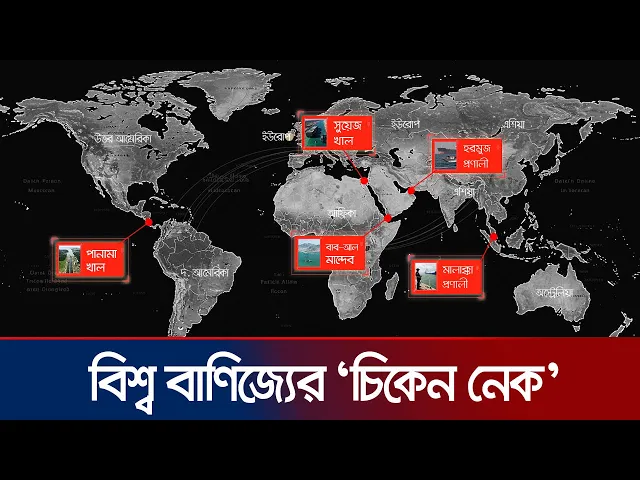
The Strait of Hormuz exemplifies how strategic chokepoints create interconnected vulnerabilities between nations, where military actions targeting energy infrastructure can trigger unintended economic consequences that strain alliances; specifically, when Israel bombed Iranian oil facilities during the 2026 conflict, it disrupted the mutually assured destruction incentive that normally keeps the Strait open, causing oil prices to spike to $116/barrel and forcing the U.S. to reconsider its alliance with Israel, demonstrating how energy security concerns can override traditional military strategies and create diplomatic tensions even among allied nations.
The Strait of Hormuz Crisis and US-Israel Strategic Rift Explained
Added:Geopolitics of Maritime Chokepoints: Understanding the strategic and economic significance of narrow shipping lanes, specifically the Strait of Hormuz, in global trade.
Fundamentals of the US-Israel Strategic Alliance: The history and core pillars of diplomatic, military, and intelligence cooperation between the United States and Israel.
Iran's Foreign Policy and Regional Ambitions: Knowledge of Iran's post-1979 geopolitical stance, its nuclear program ambitions, and its adversarial relationship with the West and Israel.
Global Energy Market Economics: Basic principles of how crude oil distribution works and how geopolitical threats to transit routes impact global oil prices and economic stability.
Strategic Divergence in Foreign Policy: Analyzing why close allies like the US and Israel can develop conflicting security strategies and threat perceptions regarding shared adversaries.
Maritime Security Operations and International Law: Studying how nations project naval power to secure sea lines of communication (SLOCs) and the legal framework of transit passage under UNCLOS.
Escalation Dynamics and Proxy Warfare: Examining how localized tensions in the Persian Gulf can escalate into broader regional conflicts involving state actors and proxy networks.
Energy Transition and Geopolitical Realignment: Exploring how the global shift toward renewable energy and diversification of supply routes might alter the future strategic leverage of Middle Eastern chokepoints.
146.5K views8.4Klikes15:16Original Release: 2026-03-10
February 28, 2026 was a watershed moment in history. It marks the day that a majority of Americans went from being unable to locate the Strait of Hormuz on a map to the vast majority of Americans saying that they have always told you that the Strait of Hormuz was the single most important choke point in the world.
Well, by virtue of watching this video, you are almost certainly the type of person who actually always knew not only where the Strait of Hormuz is but also of its importance.
But now that we live in a world where the Strait is causing all of those problems that we had hypothesized about for years, something else is happening on top of it that may force the White House to change course.
So, today, we need to spend some time discussing a quiet rift that has formed between the United States and Israel, how it connects to the broader oil market, and what this says about the broader war situation.
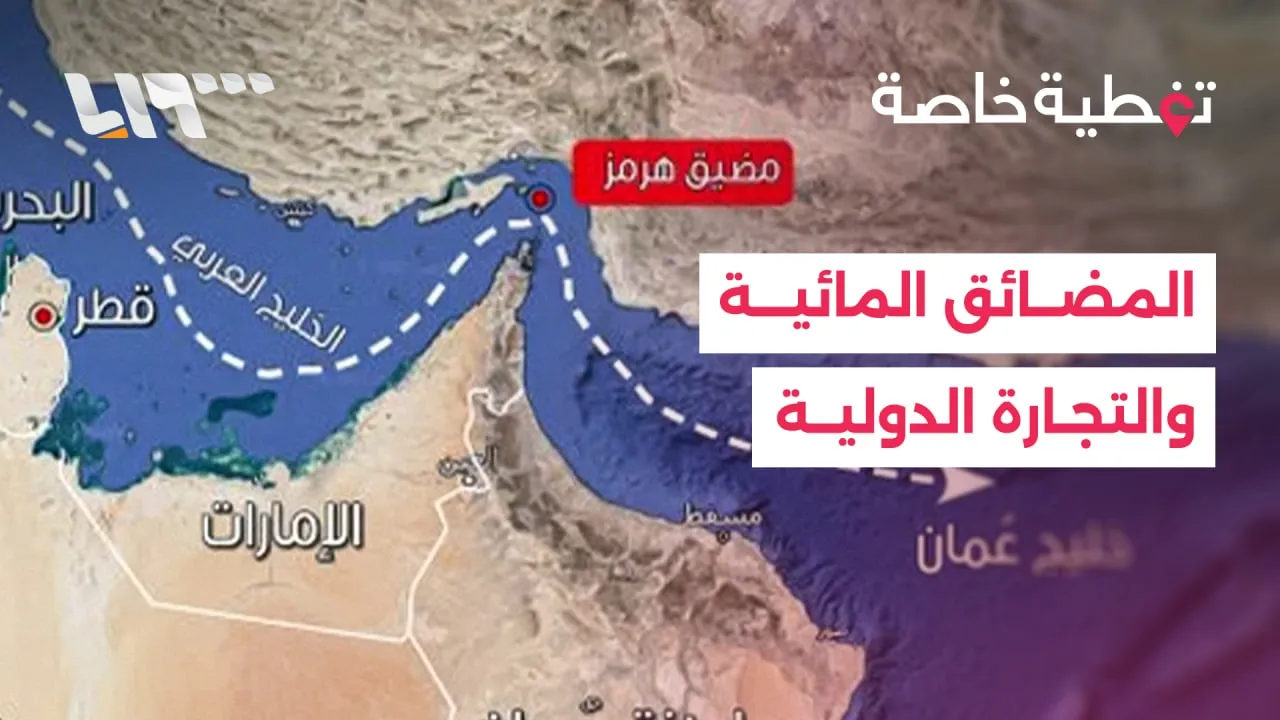
But let’s begin with a quick overview of what is happening along the Strait of Hormuz and how it illuminates a deeper puzzle.
And I am going to focus just on the observable consequences of what has happened so far, rather than give an overview of a larger Hormuz strategy.
I already covered that in a video from about a year and a half ago. I just rewatched it, and the general principles hold up quite well for our current predicament.
The short version is that 20% of the world’s oil normally transits the Strait of Hormuz.
That is because almost all of the oil exports from Iraq, Kuwait, Bahrain, and Qatar go through there, as well as the majority of oil from Saudi Arabia, the United Arab Emirates, and Iran. Each of those last three countries has a way to cheat oil around it, hence that qualifier.
Well, the UAE in theory has a way to cheat. Just bypass the Strait altogether and place the oil terminal on the other side. Simple enough, right? Nope. Iran is attacking that too.
Even when cheating on the oil works to some degree, those alternatives ignore the situation with natural gas and fertilizers. They transit the Strait too, plus there are food imports that need through it. The situation is a mess.
To think that Iran has caused all of these problems not by actually firing on oil tankers transiting the Strait, but just by threatening to fire on tankers crossing the Strait. Insurance companies do not want to deal with it, so premium rates skyrocket, and tankers will not move without affordable insurance.
To situate where we are, a barrel of West Texas Intermediate oil closed at $67 per barrel on February 27, the eve of the war. By March 6, it had jumped to $90 a barrel. That was likely well within internal White House projections conditional on the Strait closing. A few days ago, I noted that the media conversation that this spike would cause the administration to reevaluate the war was wrong, because you would need unexpected information to force a change in behavior.
Well, you did not have to wait much longer. We saw that over the weekend when prices jumped to $116 per barrel, still largely reported as a consequence of the Strait’s closure.
That kind of price may very well have exceeded the White House’s estimates, and it may indeed lead to a reevaluation of what is happening.
A one dollar increase in the price of a barrel of oil roughly implies a 2.5 cent increase in the cost of a gallon of gasoline. So at $116 per barrel, we would be looking at an extra dollar per gallon at the pump.
Beyond the sticker shock from U.S. consumers, there are deeper problems here.
Gasoline is an input good for just about every finished product. Increase manufacturing costs, and you will have increased final costs. That is just a fancy way to say “inflation is coming.” Given that Trump largely won the presidency because U.S. voters believed that the Biden-Harris administration had failed at reining in costs, that is setting up a political disaster for Trump.
But it gets worse. Inflation raises mortgage rates, another pain point for Americans. It also increases borrowing costs for the U.S. government, a major problem when you are carrying a $39 trillion national debt.
Putting these problems together, you can see why the White House may have been getting squeamish over the weekend.
Perhaps they could weather a decent jump in oil prices. But this was getting too high.
Now, given everything that is at stake here, it is important to be precise about the cause of the price jump. Moreover, the exact mechanism for the price hike is interesting and speaks to a deeper strategic problem.
During the same weekend in question, Israel began bombing Iranian oil infrastructure. Netanyahu’s reasoning is straightforward—Iran uses the oil revenues to fund its war machine. Cut the cash, cut the capacity. It is the same reason why Ukraine is on month eight of its epic refinery campaign against Russian targets.
However, Israel’s move ran against basically every element of the Trump Administration’s broader global strategy.
Jumping back to Venezuela for a minute, there is a reason why special forces executed a Special Maduro Operation, and the military did not initiate a broader invasion. An invasion would inevitably lead to a degradation of state capacity. And that would lead to Venezuela’s oil infrastructure falling into disrepair. Hence the transition to Delcy Rodriguez, and the hope for a clean continuation of the Venezuelan state apparatus, just one more compliant with U.S. demands. That would not only keep Venezuelan oil flowing around the world, it was also transition sales out of the gray market.
Back in Iran, the military reality of the situation has dictated a heavier hand and substantially more bombing. But you will notice that the United States has tried to focus on attriting Iran’s military capacity. No invasion, and, all things considered, relatively little degradation of the state’s infrastructure. There is a hope and a prayer that protestors will force the government out of power without much resistance in the country’s political center, so that the country can continue with business as usual—relatively speaking—in the aftermath.
Israel, of course, imports its oil. It therefore does not escape the consequences of higher global oil prices. The difference is that Israel cares a lot more about destroying Iran one way or another. The dollar extra per gallon is a price imposed on the entire world; Israel only internalizes a fraction of the consequences. But Israel captures the lion’s share of increased security from a neutered Iranian regime. And so here we are, starting to see the cracks in its alliance relationship with the United States. Hold that thought for a minute.
Still, that does not get to the heart of the strategic problem. Markets were not reacting to Iran’s oil infrastructure getting damaged directly. After all, that oil was not hitting the global export exchange anyway.
Rather, the markets were reacting to the expectation that the Strait of Hormuz would reopen in a timely fashion—and, namely, that it would *not* reopen in a timely fashion.
To draw a nuclear parallel, closure of the Strait was supposed to create a mutually assured destruction incentive. It would be a disaster for *everyone*, because countries on both sides use it to export oil. The possibility that a conflict might shut it down therefore deterred either side from jumping off the cliff of war.
Or, at least once the parties had jumped the continued closure was supposed to encourage both parties to come to the bargaining table as soon as possible to resolve their dispute.
However, imagine a world where Israel continues to bomb Iran’s oil infrastructure into oblivion. Then what economic incentive does Iran have to reopen the Strait? Well, there is still food and regular commerce into Iran, but the main prize is gone.
And mutually assured destruction is gone along with it. Hormuz turns into a weakness for everyone else and indifference for Iran.
That is how you get the full oil shock. It is not just that the Strait is closed. It is that Iran may lose the desire to negotiate to reopen it. Hence oil at $116 per barrel.
Okay. What can the United States do to mitigate the damage? Unfortunately, not much.
Usually when oil prices spike, you would turn to Saudi Arabia and United Arab Emirates to turn up production, because they have the most slack in their systems. Moreover, both countries would love to help out if it means punishing Iran. But you can already see the problem: they are trapped behind the Strait. If anything, they are having the opposite problem. There are only so many places to store crude oil. Once they start running out of storage space, they will have to consider whether to shut down some wells, which will inflate oil prices even after the Strait reopens.
For the United States specifically, the Trump Administration has floated suspending gasoline taxes or tapping into the strategic reserve. Both of these are parlor tricks that do not solve the underlying problem. The strategic reserve in particular is already low, so any effect there will be very temporary.
A better solution is for the U.S. Government to assume the risk of ships passing through the Strait by offering insurance. After all, to quote a prior administration regarding Middle East policy, “you break it, you buy it.” This is the same thing Russia did for shadow fleet vessels to great effect after Western insurers abandoned the country. And indeed, the White House has proposed just that.
However, you still need the vessel operators to accept the scheme.
The biggest problem there is that humans ultimately operate the ships, and they might not want to assume the personal risk of sailing though a war zone.
As it stands, some tanker contract offers have increased by an order of magnitude since the war began. Still no takers among the tankers, though.
You can understand their perspective. Trump wants civilian vessels to go through the Straits, but the U.S. Navy is not even operating in the Persian Gulf. Rather, they are staying in the relative safety of the Gulf of Oman and the Arabian Sea. What does it say about the safety of civilian vessels if not even the military has the confidence to go through there?
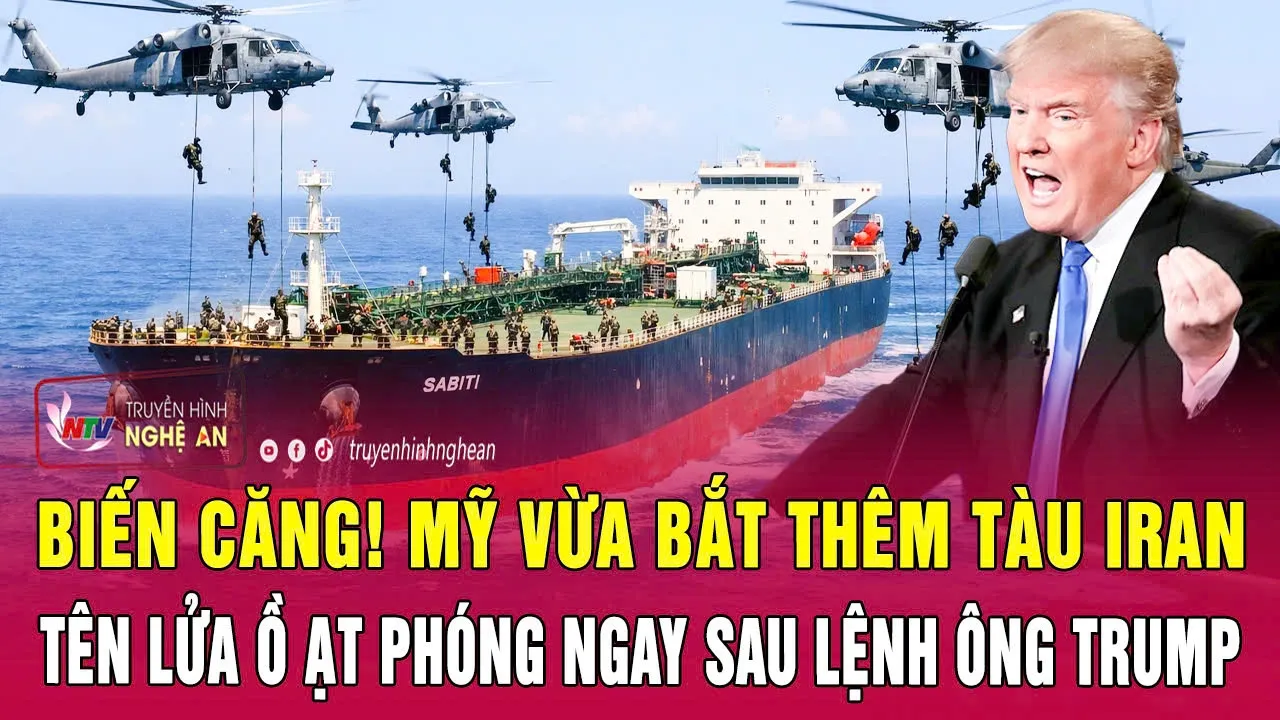
Now, that may be about to change. The U.S.S. Gerald R. Ford started the war along the Mediterranean coast of Israel. Its strike group has since transited the Suez Canal, ostensibly to join the battle closer to the Iranian coast. That may provide enough metal to begin expanding the U.S. Navy’s presence northward.
The military solution is to focus more bombing runs along the Iranian coastline to reduce the direct danger to tankers. Then the U.S.
Navy can form convoys of tankers and escort them through the area.
The United States ran a similar scheme for more than a year during the Iran-Iraq War. This fell under the banner of “Operation Earnest Will.” Unlike today, it was not a response to a direct closure of the Strait. Rather, Iran and Iraq targeted tankers connected to each other’s coalitions throughout the Persian Gulf.
The operation was complicated, not only for the ships in the water, but also for the surveillance in the sky. The United States had to use AWACS planes to survey the threat landscape, something that they are currently doing over the entire Middle East.
Nonetheless, the plan worked as intended, and the Navy still has the capacity to do this.
However, the simplest solution to get oil prices somewhat under control is for the White House to rein in Israel.
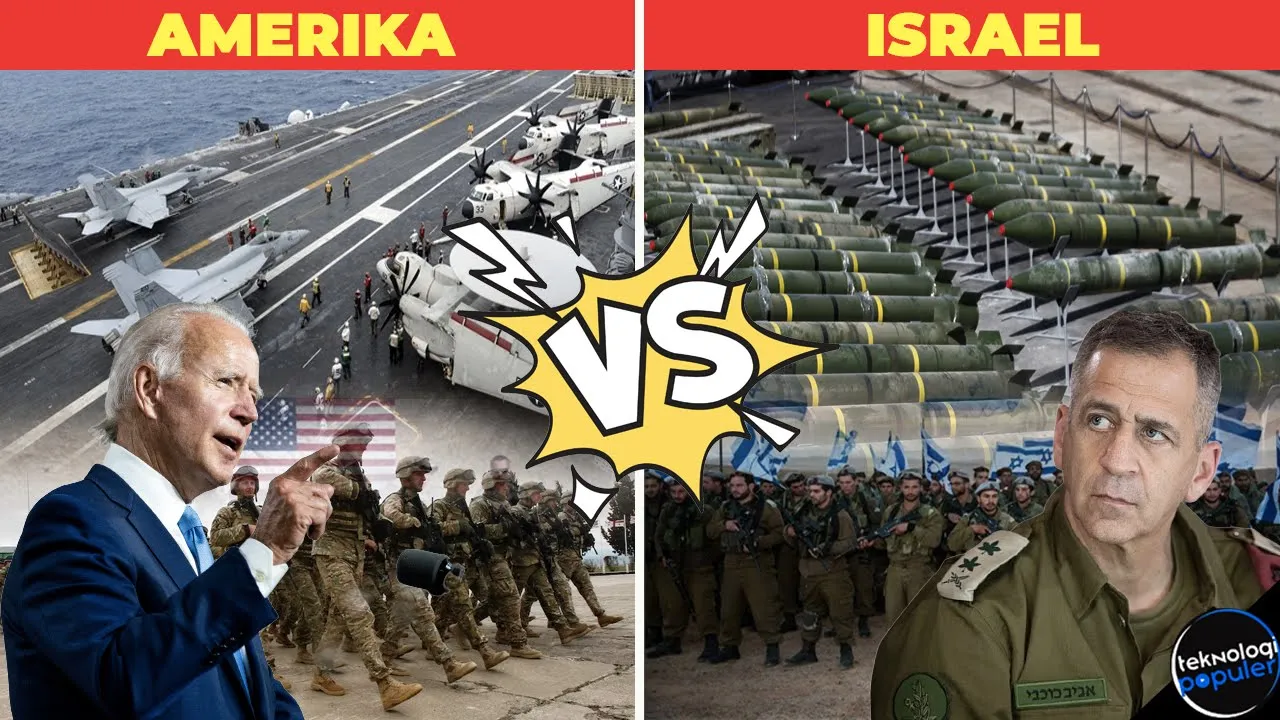
Israel may value the results of the operation in Iran more than the United States, but Netanyahu still depends on U.S. mass to pursue the war in relative safety.
This is how the conversation began about whether Israel entrapped the United States in this war, primed by Marco Rubio’s comments that the United States had to strike first because Israel would have anyway, and it was bad to lose the initiative.
Now, the dichotomy between entrapment and abandonment is common in any alliance, where solutions to prevent patron states from abandoning protégé states increase the risk of proteges entrapping patrons. Yet solutions to prevent protégés from entrapping patrons increase the risk of patrons abandoning protégés.
Overall, the Iran War does not feel much like a case of entrapment. Entrapment implies that the patron would have preferred the status quo to military action. Here, though, the United States very much feels like a willing participant. Lest we forget that Trump wanted to start shooting earlier, and he only pumped the breaks after coalition partners convinced him to first deploy more defenses to the region.
However, the White House might feel partially entrapped by certain aspects of the conflict, particularly when it comes to targeting oil infrastructure. Reports indicate that the United States told Israel to cut it out. And maybe Netanyahu internalized that message. The leverage the United States has here is to abandon Israel in the middle of a war that Israel would very much like to continue, even if oil infrastructure is no longer on the table.
Now, those oil price highs of $116 per barrel over the weekend eventually descended to $85 by late Monday. One way to interpret what happened there is that the markets believe that Israel will indeed comply with the Trump Administration’s request. The $85 price tag is still elevated, but back within reasonable expectations given the Strait’s closure.
Notably, the price drop off was not a consequence of Trump’s comments that the war will end “very soon.” The number was falling well before that news came out late in the afternoon.
And the prediction markets did not believe that either. The likelihood of a ceasefire by March 15 was at 7% before Trump’s comments. It briefly spiked to 19% before descending back down to 8%.
It seems that the crowds realized that you probably should not listen to what leaders say, and that Trump has strong incentives to convince an American public that is very skeptical about the war that fighting will not continue forever.
High oil prices will only make the American public more skeptical. At $85 per barrel, though, the Trump Administration will feel safe enough to continue the war until it is militarily satisfied. Still, the situation remains volatile, and other landmines (or sea mines) could very well cause a new shock. And there is also no guarantee that Israel will not directly cause new shocks by hitting Iran’s oil infrastructure once again.
Meanwhile, I will spare you any further shocks today by simply ending things here and telling you about this playlist that can get you up to speed with everything that is happening in the Middle East.
And if you enjoyed today’s video, then please like, share, and subscribe, and I will see you next time. Take care.
Up Next

21:35
Prohibition Era Moonshining: The Real History of Lawless (2012 Film)
@AnnapurnaChannel
1.4M views•2017-03-24

5:07
Impact of Yuan in Indo-Russian Trade Amid Sanctions
@WION
261.9K views•2022-07-01
47:41
US Secondary Sanctions on Russian Oil: Impacts
@Gametheory101
214.7K views•2025-08-05

113:18
The Age of Easy Money: Fed & Inflation | Full Documentary
@frontline
21.2M views•2023-03-15
Related Study Plans & Knowledge Roadmaps
Structured learning paths in Economics
economics
Sovereign Debt: Defaults, IMF & Restructuring
01Introduction to Sovereign Debt & Government Bonds
02Debt Sustainability & Credit Ratings
03Anatomy and History of Debt Crises
+ 2 more learning modules
12h5 modules
Explore Roadmap
economics
Market Design: Matching Theory & Gale-Shapley
01Introduction to Market Design and Price-Free Markets
02Two-Sided Matching & The Gale-Shapley Algorithm
03School Choice Systems and Mechanism Design
+ 2 more learning modules
10h5 modules
Explore Roadmap
economics
Impossible Trinity: Forex, Capital & Policy
01Introduction to Monetary Policy and Central Banking
02Exchange Rates and International Capital Flows
03The Mundell-Fleming Model
+ 2 more learning modules
8h5 modules
Explore Roadmap
economics
Healthcare Economics: Market Failures & Systems
01Introduction to Healthcare Markets and Market Failure
02Asymmetric Information and Adverse Selection
03Moral Hazard and Insurance Design
+ 2 more learning modules
12h5 modules
Explore Roadmap