














Probability Context-Free Grammar (PCFG) is a statistical model that extends traditional Context-Free Grammar by assigning probabilities to production rules, enabling effective ambiguity resolution in natural language parsing through a four-step process: defining production rules, training the model by calculating rule probabilities using frequency counts, generating different parse trees for ambiguous sentences, and selecting the most probable parse tree as the best interpretation.
PCFG Models for Ambiguity Resolution in NLP Parsing
Added:Concepts of Context-Free Grammars (CFGs), including non-terminals, terminals, and production rules.
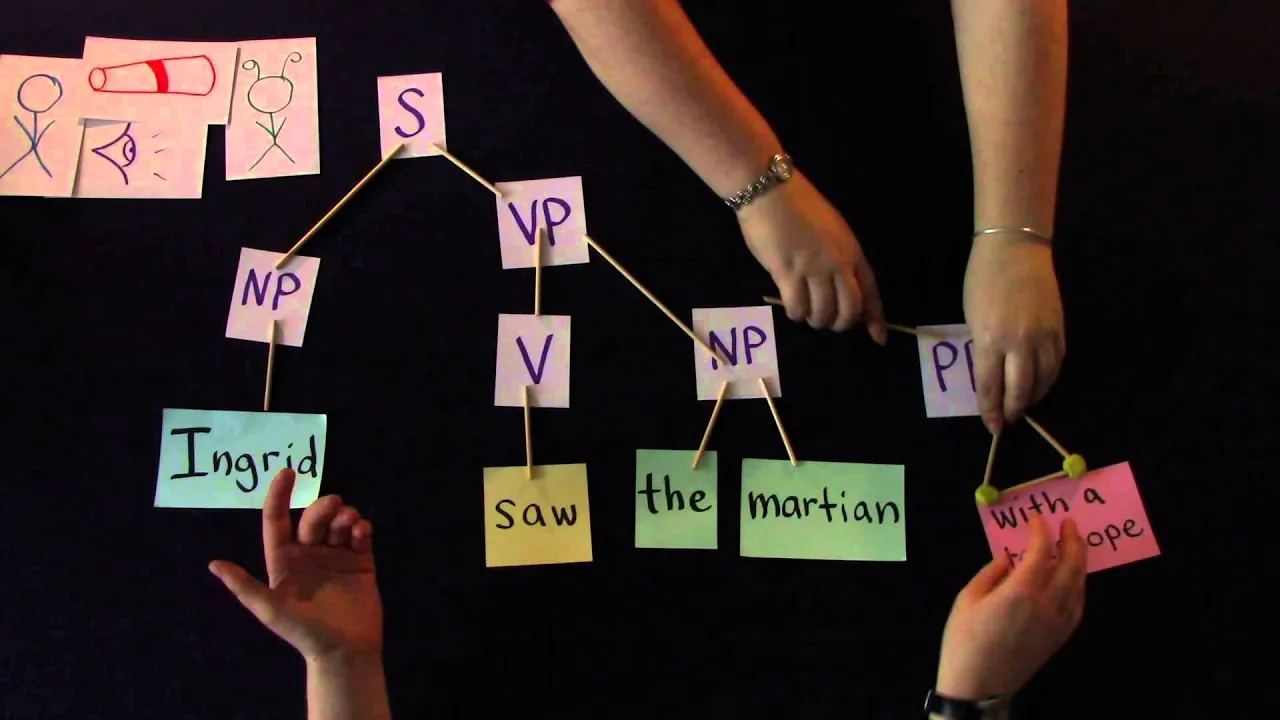
Understanding of syntactic ambiguity in natural language, such as prepositional phrase attachment ambiguity.
Basic probability theory, specifically conditional probability and joint probability distributions.
Fundamental parsing algorithms, such as the standard Cocke-Younger-Kasami (CKY) algorithm.
Lexicalized PCFGs to integrate word-to-word semantic dependencies into the statistical parsing process.
Dependency Parsing as an alternative paradigm to constituency-based parsing.
Parser evaluation methodologies and metrics, such as the PARSEVAL metric (precision, recall, and F-measure).
Modern neural parsing techniques, including transition-based neural parsers and Transformer-based constituency parsers.
12.2K views179likes4:46Original Release: 2024-04-30
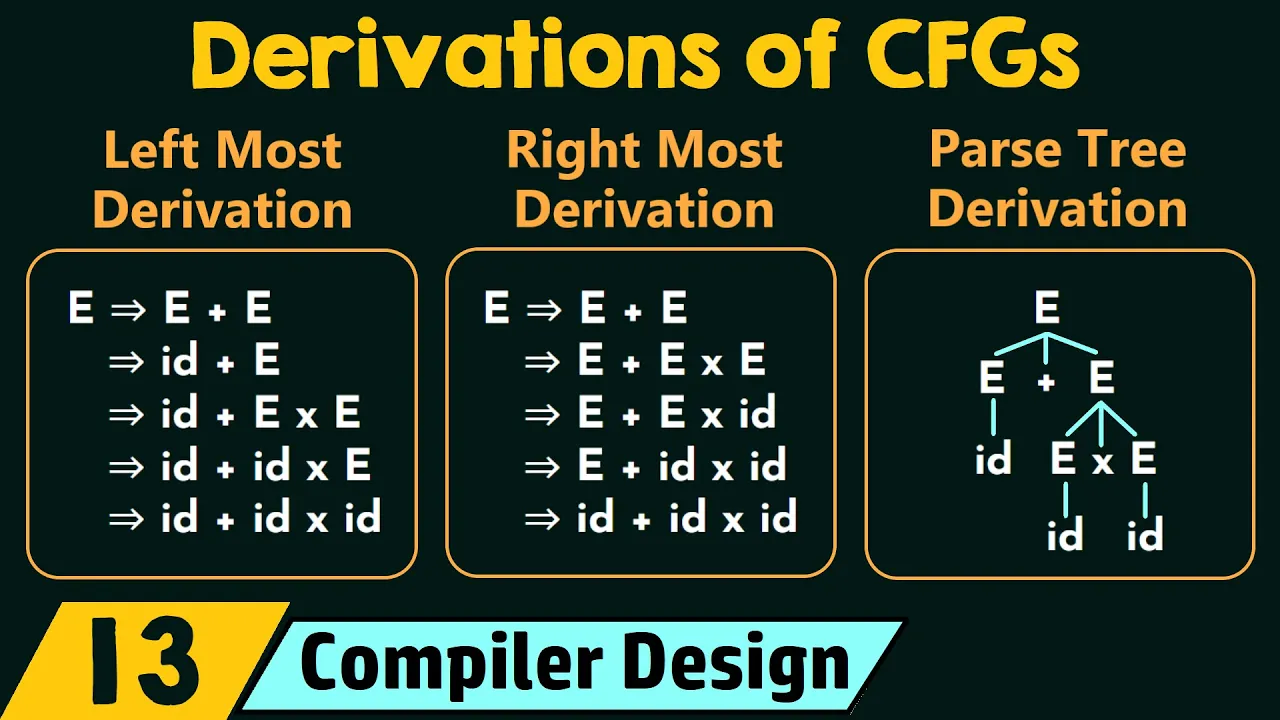
hi guys welcome back to my channel so in this video I'm going to discuss about the morals for ambiguity resolution so before getting started with this video I would like to request you all that if you haven't subscribed yet please do subscribe and if you are already a subscriber then please do watch whole video and hit the like button so now let's get started for ambiguity resolution so what is mean by ambiguity ambigu means that the word you will be having the same word but with different meanings right so in order to resolve this ambiguity in a particular sentence you will be having three models for it the first one is pcfg that stands for probability context free grammar the other is generative model and the third is discriminative model in this particular video we are going to discuss about pcfg in the other videos we are going to discuss about uh gener and discriminative model so now let's discuss about what is probability context free grammar so this pcfg is a statistical model for passing natural language so what we are going to do this with P PCF JS first we are going to pass the natural language you know what is passing right and then it is an extension of CFG by assigning the probabilities to production rules see this is an extension of CFG that is nothing but it is an extension of context free grammar so what is the difference between this context free grammar and PCF JS in pcfg you are going to assign the probabilities to the production rules okay so why it is why it is used for it is used for the ambiguity resolution pcfg is used for ambiguity resolution so there are different steps you need to follow in order to do pcfg I mean in order to resolve the ambiguity by using pcfg so the first step is Define a set of production rules which specify how sentences are formed from constituent Parts the first thing you have to do is you have to Define some set of production rules production rules you know right I have already said that s TS to NP VP so that is nothing but production rules right NP and VP these are nothing but the production rules first you have to Define this production rules why you are going to Define this production rules is in order to specify how the sentences are formed from the constituent Parts the second point is train this pcfg model with the text during training assign production rules with probability so first thing while you are going while you train the pcfg model with the examples or with the text you have to ask assign the probabilities to the production rules so how we are going to assign is you are going to use this particular formula so what is this formula probability equals to frequency of the rule by total number of times the non-terminal appears in training data what is non-terminal whatever U like the symbols that are present in the left hand side of the production rules those are nothing but the non-terminals and what is the frequen of rule you have to mention so how many times you are going to use that particular rule in the given sentence is nothing but the frequency of rule the third one after you find the probabilities you have to find the third point is you have to find the different pastries for the given sentence you have to find the different pastries for the given sentence so at the last last step you have to do is you have to find the best pastry from the different pastries that you have found in the third step you have to find the best pastry in the fourth step so this is about the probability context free grammar so in the next video I'm going to discuss about the other models for ambiguity resolution thank you so if you want to uh get any um Regular updates about the video uploads then please do join our telegram Channel and we also introduced the telegram chat so you can join it so you can share the PDFs of any particular subject in that chat thank you
Up Next
114:52
Natural Language Processing | CS50 AI Python Course Lecture 6
@cs50
38.9K views•2020-04-10

57:48
Secure Multiparty Computation (MPC): Foundations & Challenges
@SimonsInstitute
7.3K views•2015-05-28

13:03
Bypassing Tor Censorship: Bridges and Pluggable Transport Guide
@Coding_ForEveryone
397 views•2024-06-11
18:41
Neural Networks Explained: Math, Layers, and Learning Fundamentals
@3blue1brown
21.9M views•2017-10-05
Related Study Plans & Knowledge Roadmaps
Structured learning paths in Artificial Intelligence
artificial-intelligence
Aligning LLMs: DPO, TRL & Custom Datasets
01Foundations of Python & Machine Learning
02Transformers and Large Language Models (LLMs)
03Aligning LLMs: SFT and RLHF
+ 3 more learning modules
24h6 modules
Explore Roadmap
artificial-intelligence
Federated Learning: PyTorch, Flower & Privacy
01Python & Machine Learning Foundations
02Deep Learning Basics with PyTorch
03Introduction to Federated Learning
+ 2 more learning modules
35h5 modules
Explore Roadmap
artificial-intelligence
Securing LLMs: Guardrails AI & NeMo Gateway
01Introduction to LLMs, Python, and APIs
02Understanding LLM Vulnerabilities & Threats
03Defending LLMs with Guardrails AI
+ 2 more learning modules
15h5 modules
Explore Roadmap
artificial-intelligence
Building Recommenders: Two-Tower & Vector DBs
01Foundations of Python & Machine Learning Basics
02Introduction to Recommender Systems
03Deep Learning & Representation Learning
+ 3 more learning modules
75h6 modules
Explore Roadmap