




















Indigenous peoples face systemic discrimination and violence, including disproportionate rates of sexual assault (one in three Native women), lack of legal recourse on reservations, and environmental threats from fossil fuel projects; however, through unified resistance and cultural preservation, indigenous communities demonstrate remarkable resilience and power to protect their lands and rights.
Indigenous Rights and Standing Rock: A Call for Climate Justice
Added:The historical context of tribal sovereignty and treaty rights in the United States, specifically the legal weight of the Fort Laramie Treaties.
The foundational principles of environmental justice, which examine how environmental hazards and resources are unequally distributed along racial and socioeconomic lines.
A basic understanding of the Dakota Access Pipeline (DAPL) project, including its route and the geographic significance of the Missouri River and Lake Oahe.
The core concept of climate justice, which frames climate change as an ethical, social, and political issue rather than a purely environmental one.
The application of the United Nations Declaration on the Rights of Indigenous Peoples (UNDRIP) to domestic environmental and land-use disputes.
Comparative analysis of other Indigenous-led environmental resistance movements globally, such as the Line 3 pipeline protests or Amazonian forest conservation efforts.
How Traditional Ecological Knowledge (TEK) is being integrated into modern climate change mitigation and resource management policies.
The role of corporate finance and fossil fuel divestment campaigns in shaping the viability of large-scale infrastructure projects.
238.8K views5.3Klikes11:04Original Release: 2018-04-30
[Ojibwe: Hello.
My English name is Tara; my Native name is Zhaabowekwe.
I am of Couchiching First Nation; my clan is bear.
I was born under the Maple Sapping Moon.]
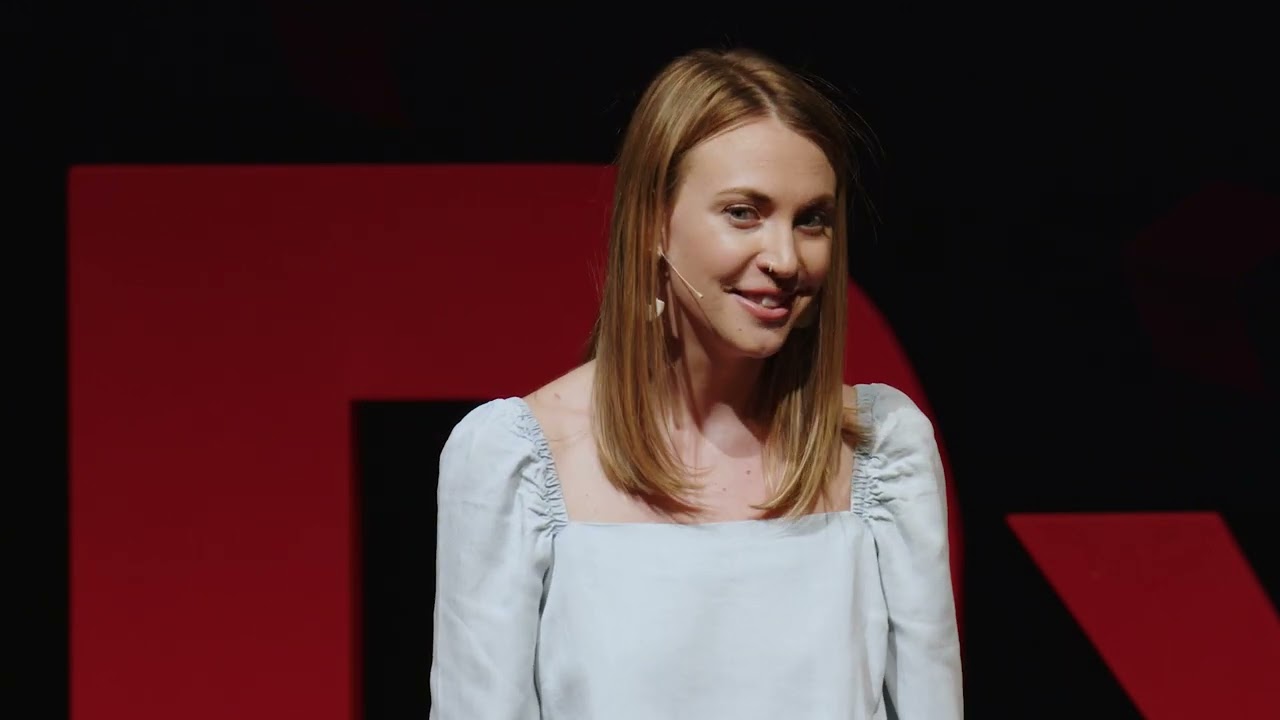
My name is Tara Houska, I'm bear clan from Couchiching First Nation, I was born under the Maple Sapping Moon in International Falls, Minnesota, and I'm happy to be here with all of you.
(Applause) Trauma of indigenous peoples has trickled through the generations.
Centuries of oppression, of isolation, of invisibility, have led to a muddled understanding of who we are today.
In 2017, we face this mixture of Indians in headdresses going across the plains but also the drunk sitting on a porch somewhere you never heard of, living off government handouts and casino money.
(Sighs) It's really, really hard.
It's very, very difficult to be in these shoes, to stand here as a product of genocide survival, of genocide.
We face this constant barrage of unteaching the accepted narrative.
87 percent of references in textbooks, children's textbooks, to Native Americans are pre-1900s.
Only half of the US states mention more than a single tribe, and just four states mention the boarding-school era, the era that was responsible for my grandmother and her brothers and sisters having their language and culture beaten out of them.
When you aren't viewed as real people, it's a lot easier to run over your rights.
Four years ago, I moved to Washington, DC.
I had finished school and I was there to be a tribal attorney and represent tribes across the nation, representing on the Hill, and I saw immediately why racist imagery matters.
I moved there during football season, of all times.
And so it was the daily slew of Indian heads and this "redskin" slur everywhere, while my job was going up on the Hill and trying to lobby for hospitals, for funding for schools, for basic government services, and being told again and again that Indian people were incapable of managing our own affairs.
When you aren't viewed as real people, it's a lot easier to run over your rights.
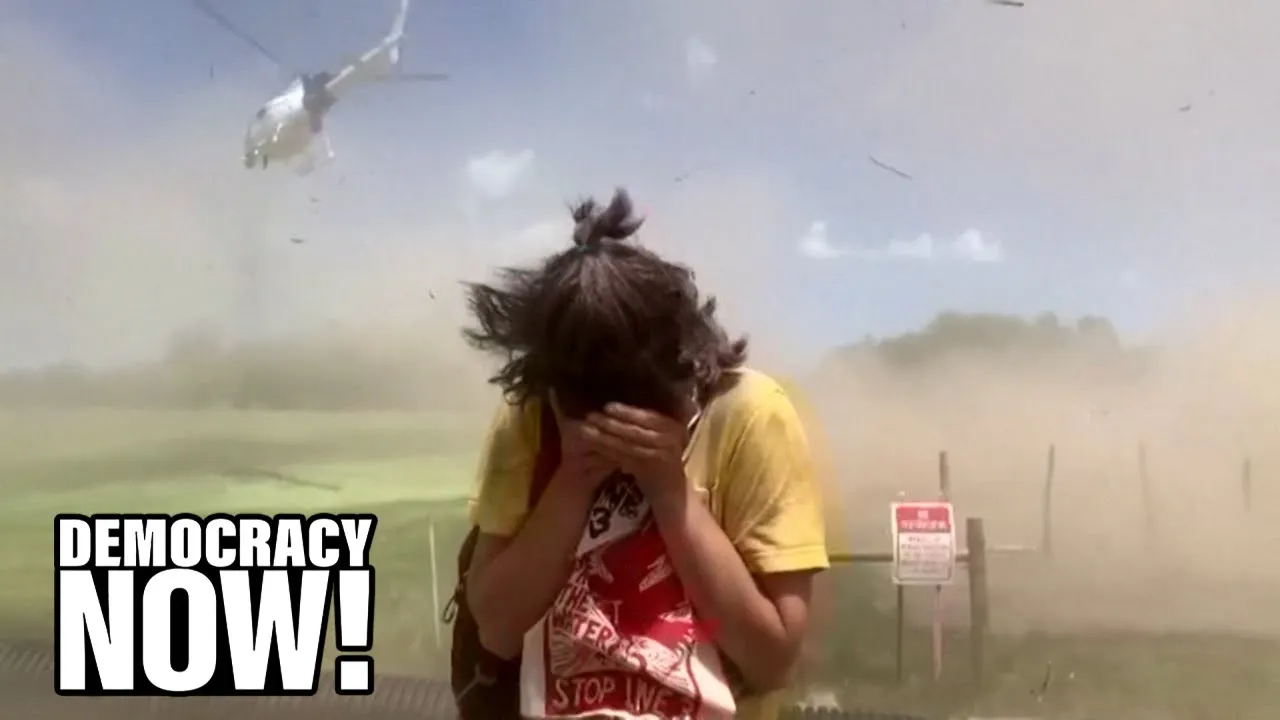
And last August, I went out to Standing Rock Sioux Reservation.
I saw resistance happening.
We were standing up.
There were youth that had run 2,000 miles from Cannonball, North Dakota all the way out to Washington, DC, with a message for President Obama: "Please intervene.
Please do something.
Help us."
And I went out, and I heard the call, and so did thousands of people around the world.
Why did this resonate with so many people?
Indigenous peoples are impacted first and worst by climate change.
We are impacted first and worst by the fossil-fuel industry.
Here in Louisiana, the first US climate change refugees exist.
They are Native people being pushed off their homelands from rising sea levels.
That's our reality, that's what we live.
And with these projects comes a slew of human costs that people don't think about: thousands of workers influxing to build these pipelines, to build and extract from the earth, bringing crime and sex trafficking and violence with them.
Missing and murdered indigenous women in Canada has become so significant it's spawned a movement and a national inquiry.
Thousands of Native women who have disappeared, who have been murdered.
And here in the US, we don't even track that.
We are instead left with an understanding that our Supreme Court, the United States Supreme Court, stripped us, in 1978, of the right to prosecute at the same rate as anywhere else in the United States.
So as a non-Native person you can walk onto a reservation and rape someone and that tribe is without the same level of prosecutorial ability as everywhere else, and the Federal Government declines these cases 40 percent of the time.
It used to be 76 percent of the time.
One in three Native women are raped in her lifetime.
One in three.
But in Standing Rock, you could feel the energy in the air.
You could feel the resistance happening.
People were standing and saying, "No more.
Enough is enough.
We will put our bodies in front of the machines to stop this project from happening.
Our lives matter.
Our children's lives matter."
And thousands of allies came to stand with us from around the world.
It was incredible, it was incredible to stand together, united as one.
(Applause) In my time there, I saw Natives being chased on horseback by police officers shooting at them, history playing out in front of my eyes.
I myself was put into a dog kennel when I was arrested.
But funny story, actually, of being put into a dog kennel.
So we're in this big wire kennel with all these people, and the police officers are there and we're there, and we start howling like dogs.
You're going to treat us like dogs? We're going to act like dogs.
But that's the resilience we have.
All these horrific images playing out in front of us, being an indigenous person pushed off of Native lands again in 2017.
But there was such beauty.
On one of the days that we faced a line of hundreds of police officers pushing us back, pushing us off indigenous lands, there were those teenagers out on horseback across the plains.
They were herding hundreds of buffalo towards us, and we were crying out, calling, "Please turn, please turn."
And we watched the buffalo come towards us, and for a moment, everything stopped.
The police stopped, we stopped, and we just saw this beautiful, amazing moment of remembrance.
And we were empowered. We were so empowered.
I interviewed a woman who had, on one day -- September 2nd, the Standing Rock Sioux Reservation had told the courts -- there's an ongoing lawsuit right now -- they told the courts, "Here is a sacred site that's in the direct path of the pipeline."
On September 3rd, the following day, Dakota Access, LLC skipped 25 miles ahead in its construction, to destroy that site.
And when that happened, the people in camp rushed up to stop this, and they were met with attack dogs, people, private security officers, wielding attack dogs in [2016].
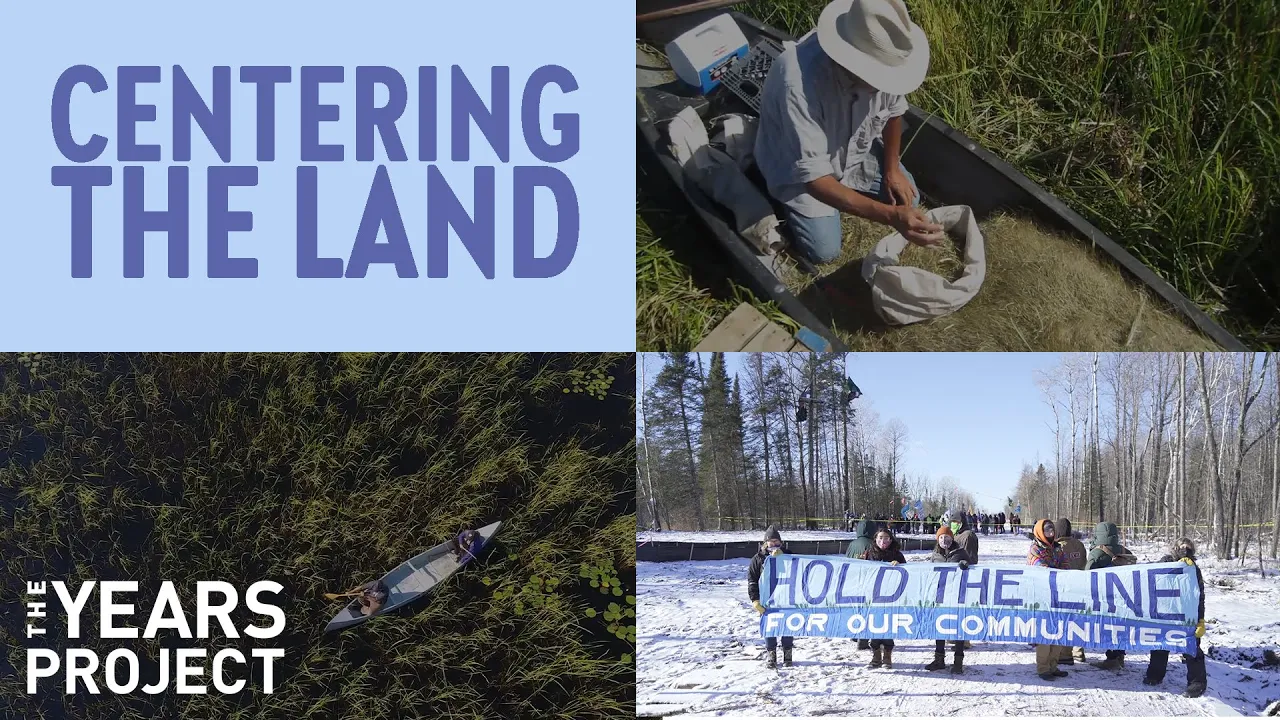
But I interviewed one of the women, who had been bitten on the breast by one of these dogs, and the ferocity and strength of her was incredible, and she's out right now in another resistance camp, the same resistance camp I'm part of, fighting Line 3, another pipeline project in my people's homelands, wanting 900,000 barrels of tar sands per day through the headwaters of the Mississippi to the shore of Lake Superior and through all the Treaty territories along the way.
But this woman's out there and we're all out there standing together, because we are resilient, we are fierce, and we are teaching people how to reconnect to the earth, remembering where we come from.
So much of society has forgotten this.
(Applause) That food you eat comes from somewhere.
The tap water you drink comes from somewhere.
We're trying to remember, teach, because we know, we still remember.
It's in our plants, in our medicines, in our lives, every single day.
I brought this out to show.
(Rattling) This is cultural survival.
This is from a time that it was illegal to practice indigenous cultures in the United States.
This was cultural survival hidden in plain sight.
This was a baby's rattle.
That's what they told the Indian agents when they came in.
It was a baby's rattle.
But it's incredible what you can do when you stand together.
It's incredible, the power that we have when we stand together, human resistance, people having this power, some of the most oppressed people you can possibly imagine costing this company hundreds of millions of dollars, and now our divestment efforts, focusing on the banks behind these projects, costing them billions of dollars.
Five billion dollars we've cost them so far, hanging out with banks.
(Applause) So what can you do?
How can you help?
How can you change the conversation for extremely oppressed and forgotten people?
Education is foundational.
Education shapes our children. It shapes the way we teach.
It shapes the way we learn.
In Washington State, they've made the teaching of treaties and modern Native people mandatory in school curriculum.
That is systems change.
(Applause) When your elected officials are appropriating their budgets, ask them: Are you fulfilling treaty obligations?
Treaties have been broken since the day they were signed.
Are you meeting those requirements?
That would change our lives, if treaties were actually upheld.
Those documents were signed.
Somehow, we live in this world where, in 2017, the US Constitution is held up as the supreme law of the land, right?
But when I talk about treaty rights, I'm crazy.
That's crazy.
Treaties are the supreme law of the land, and that would change so much, if you actually asked your representative officials to appropriate those budgets.
And take your money out of the banks.
That's huge. It makes a huge difference.
Stand with us, empathize, learn, grow, change the conversation.
Forty percent of Native people are under the age of 24.
We are the fastest-growing demographic in the United States.
We are doctors, we are lawyers, we are teachers, we are scientists, we are engineers.
We are medicine men, we are medicine women, we are sun dancers, we are pipe carriers, we are traditional language speakers.
And we are still here.
Miigwech.
(Applause)
Up Next

28:01
Anthropology 101: The Four Fields and the Study of Humanity
@davidianhowe
25.6K views•2021-03-19

38:41
Astrobiology Through an Anthropological Lens: Field Insights
@georgiatechastrobiology
128 views•2021-04-14

22:10
Corporate Anthropology: How Organizations Operate as Modern Tribes
@TEDx
50.6K views•2010-07-13

10:38
Psychology of Internet Trolling and Pranks Explained
@AzzyLand
10.7M views•2017-12-20
Related Study Plans & Knowledge Roadmaps
Structured learning paths in Anthropology
anthropology
Space Anthropology: Analogs, Culture & Habitats
01Foundations of Space Anthropology & Cosmic Imaginaries
02Extreme Isolation & Micro-Societies in Orbit
03Space Analog Habitats & Earth-Based Simulations
+ 2 more learning modules
15h5 modules
Explore Roadmap
anthropology
Legal Anthropology: Customary Law & Pluralism
01Foundations of Legal Anthropology and Social Justice
02Legal Pluralism: Coexisting Legal Systems
03Customary Law and Indigenous Dispute Resolution
+ 2 more learning modules
15h5 modules
Explore Roadmap
anthropology
Global Tourism: Gaze, Authenticity & Heritage
01Introduction to the Sociology of Tourism
02The 'Tourist Gaze' (John Urry)
03Staged Authenticity in Tourism
+ 3 more learning modules
14h6 modules
Explore Roadmap
anthropology
Modern Kinship (ART, Adoption & Chosen Family)
01Foundations of Kinship and Family
02Assisted Reproductive Technologies (ART) & Relatedness
03Transnational Adoption and Global Kinship
+ 2 more learning modules
12h5 modules
Explore Roadmap