

















Seeds use four main dispersal strategies to escape parent plants and find suitable growing conditions: wind dispersal (using lightweight structures like milkweed fluff or maple wings to travel 400 miles or 100-150 yards), animal dispersal (fruits attract animals that carry seeds through digestion or caching, with trees like oaks using masting to overwhelm predators), hitchhiker seeds (sticky or hooked seeds attach to animals), and fire dispersal (serotinous cones release seeds only when fire melts their protective resin); each strategy evolved for specific environments, with tropical forests favoring animal dispersal and open forests favoring wind dispersal.
How Seeds Disperse: Wind, Animals, and Fire Explained
Added:Basic plant anatomy, specifically understanding the structure and function of flowers, fruits, and seeds.
The biological distinction between pollination (the fertilization process) and seed dispersal (the distribution of offspring).
The concept of ecological competition, highlighting why offspring must scatter to avoid competing with the parent plant for resources like sunlight, water, and nutrients.
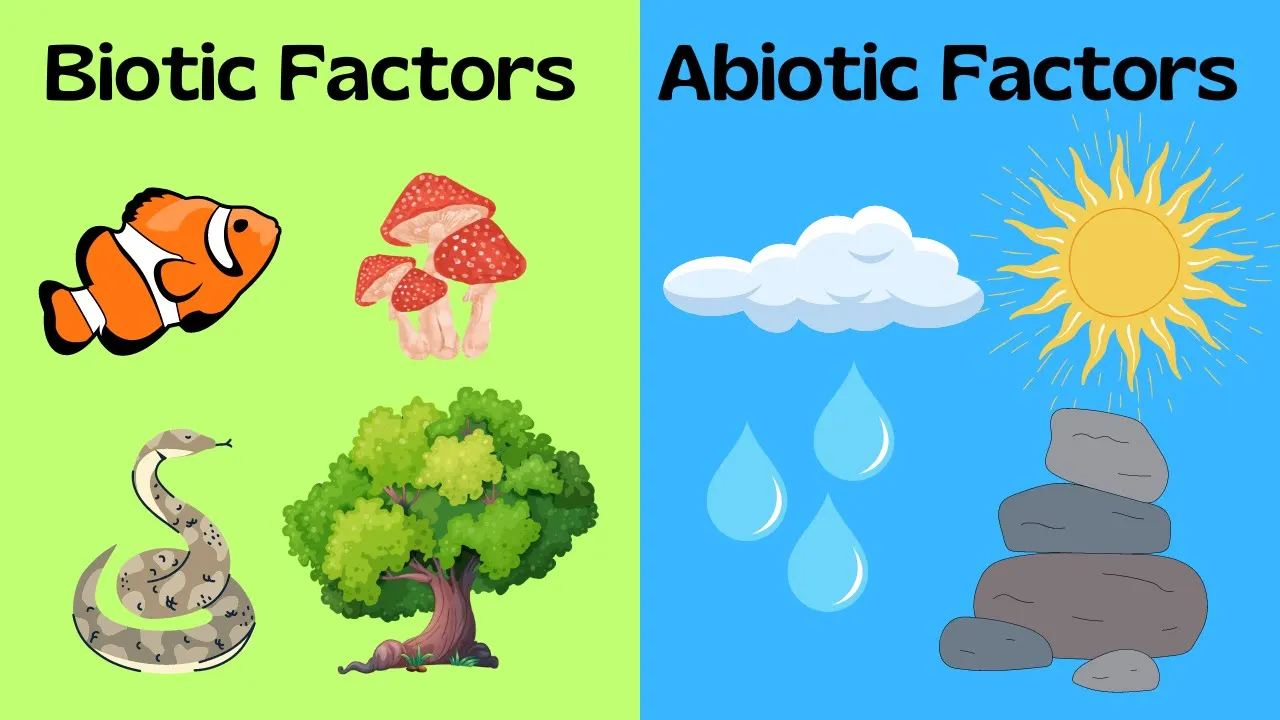
The difference between biotic (living, such as animals) and abiotic (non-living, such as wind and fire) environmental factors.
The concept of ecological succession, particularly how pioneer species use fire-adapted seeds (serotiny) to regenerate forests after a wildfire.
The evolutionary biology of seed morphology, analyzing how specific shapes like wings (samaras) or hooks (burrs) evolved for specific dispersal vectors.
Co-evolutionary relationships between plants and animals, such as mutualistic seed dispersal (e.g., birds, rodents, and ants) and its impact on biodiversity.
The threats of habitat fragmentation and loss of animal vectors on the migration patterns and survival of plant species under climate change.
799.2K views2.6Klikes12:51Original Release: 2012-05-20
[Music] [Music] [Music] Hello, my name is Meredith Cuni and I'm a student at Cornell University where I study environmental science.
Forests are actually extremely important for our society. They clean our air, clean our water, and they provide a lot of valuable products for us, including edible products like nuts. And so, because these forests are so important, I wanted to come here and study how forests are able to regenerate themselves. They produce seeds that they send to a new location that can grow up and become adult forests themselves. And this process of seeds moving from one location to another is called seed dispersal. Everyone kind of knows the fundamental of what makes plants grow, right? Water, sunlight. Those are the two main important things that seeds need to grow. But something that's not often considered is space. So when a parent tree is growing and it produces all of these different seeds, each seed needs to find a piece of ground where it can get the water and sunlight that it needs to grow. Often times the ground immediately below the parent tree is not a suitable location for seeds to grow.
Their parents are already in that location using the water, taking the nutrients and shading the entire environment so that the sunlight cannot get to the ground and help the seed grow. The whole point of seed dispersal is to get seeds away from the parent tree, much like when kids go away to college, so that they can grow up and become their own tree. So, this process, like I said before, is called seed dispersal. And there are tons of different ways that seeds can do this.
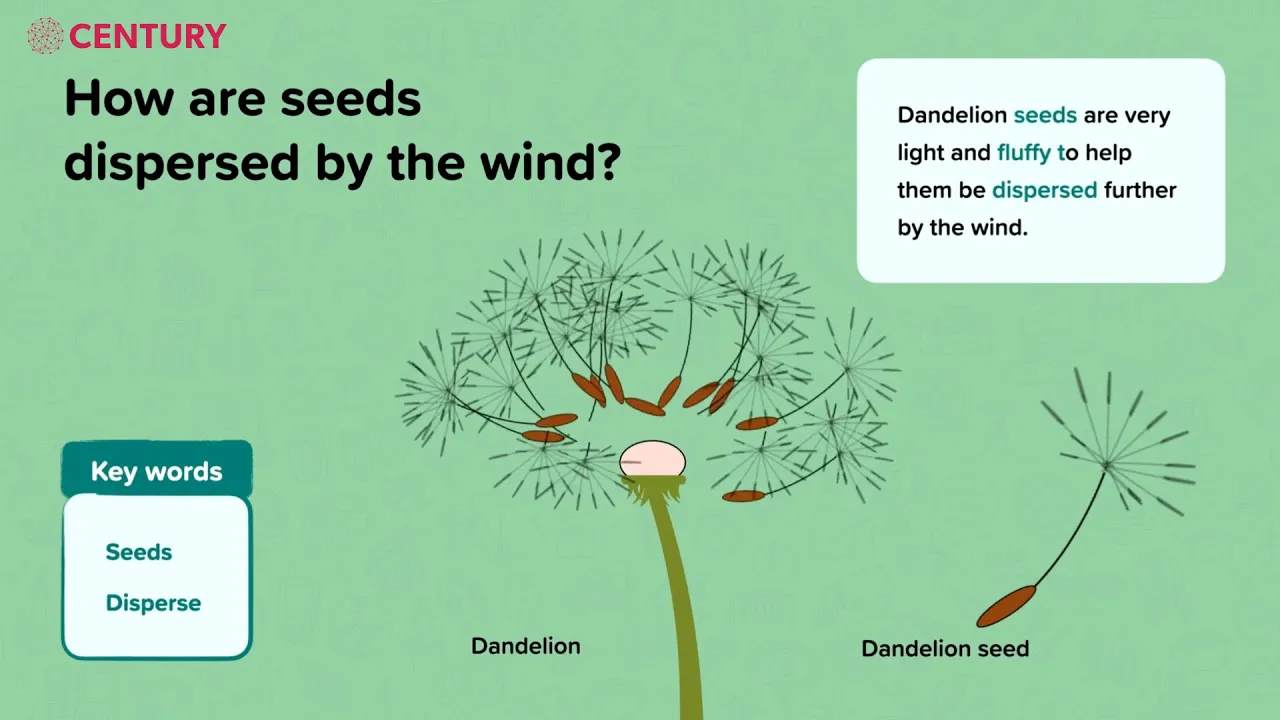
So seas have developed a bunch of different adaptations, which is simply a trait that has evolved over time to help them get from one place to another without legs. One type of adaptation that plants have to disperse their seeds from one location to another is by harnessing the power of the wind. And so we've all seen a dandelion before, right? And you've seen when you blow on those seeds, they can travel really far and they carry really easily on the breeze because they're big and they're light. So one type of wind disperse seed that you might not have heard heard of before is called milkweed. All right. So this is an example of milkweed seeds.
They come in this, you know, pod. And this pod is on a stock on the plant. And inside this pod are hundreds of these tiny milkweed seeds. And right here on the top, you can see in my hand is the seed. And it's a pretty tiny seed. And on top of the seed is a big poof of fluff. And then you know the entire point of this fluff is to carry the seed in the wind so that it can get far away from the parent plant and find a suitable place to grow. So if I toss it up in the air, you can see it drifts slowly down to the ground. And if I blow on them, they float really gently down and they can get far away. And if there's a breeze, it'll carry them to a good place where they can grow. Because they're so small and they kind of waft on the breeze, they can travel 400 miles away from their parent plant. That's roughly the distance from here in Ithaca all the way to New York City. Now, these maple seeds, because they're a little bit bigger and bulkier, they don't fly as far as the milkweed seeds. They can travel approximately 100 to 150 yards.
That's roughly the size of a football field, plus a little extra. And because of their different structure, these wing structures, they also fly differently than the milkweed seeds did. They kind of spin around like a helicopter. So another type of dispersal strategy is animal dispersal strategy. And this is basically any strategy that a plant uses that kind of steals an animal or uses an animal to help them get their seeds from one place to another. So, a really common way of doing this is by making their seeds edible or having the seed reside in something edible like a fruit.
So, we've all seen apples before, right?
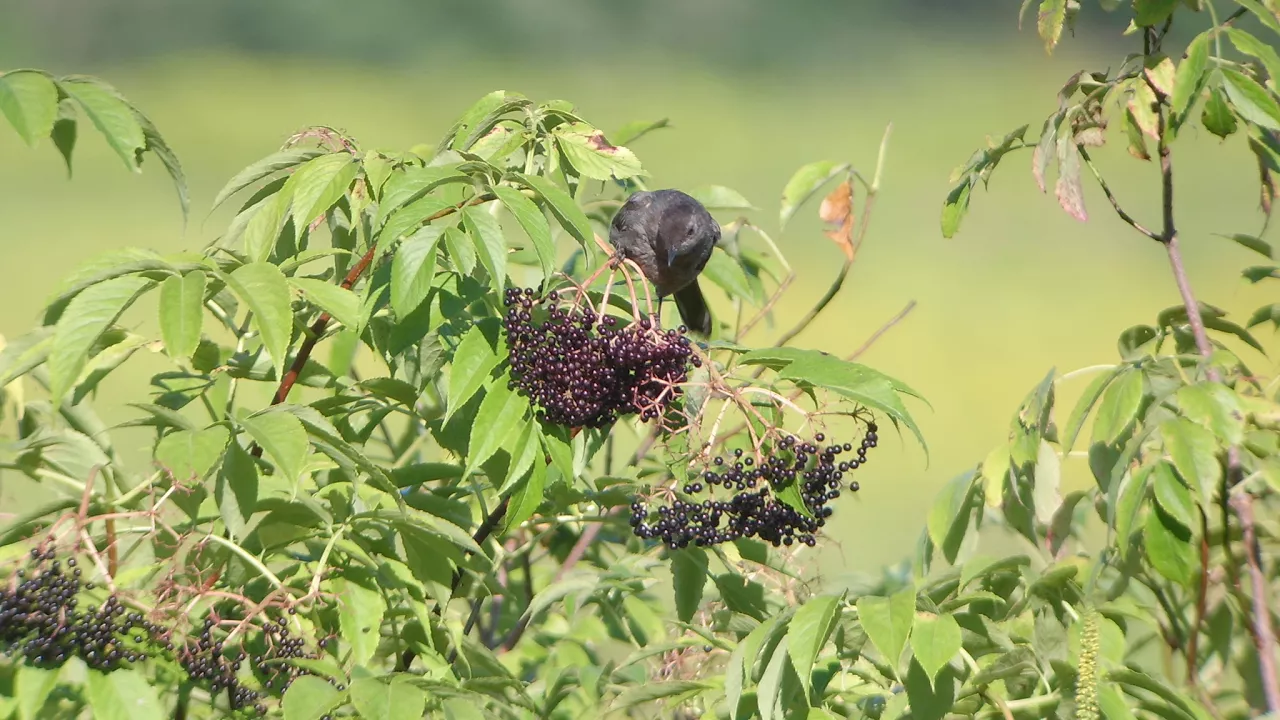
And so, an apple is a perfect example of a animal dispersed plant. And if I cut into this apple, inside the middle of the apple, you see this star shape. And inside each one of the points of the star are two different seeds. And each of those seeds can grow up and become an apple tree. And so what fruits do is with their bright colors and their nutrient-rich flesh, they entice animals to come and eat the fruit. And when the animal eats the fruit, it walks away while it's digesting it. And maybe a few hours or a few days later, when it, you know, poops out the rest of the fruit that it didn't eat, inside that is going to be all the seeds that were inside the apple. And now those seeds are in a nutrient-rich environment, hopefully where there's enough sunlight in space for them to grow up into apple trees of their own. Some trees actually make the seed itself something that's edible. So here is a chestnut, but the part of the nut we actually eat is the seed itself.
Whereas in the apple, the animal ate the apple, but it didn't hurt the seeds. The seeds were able to pass right through its digestive system and then grow into a tree once they were excreted. But in the case of nuts, when animals eat the nut, they're actually eating, you know, the future plant. And so they destroy this seed's opportunity to become a tree one day. While this this seems like a terrible strategy, why would a tree do this if you know all of their seeds are going to get eaten and never become adult plants? So, what a lot of animals will do with these seeds, like squirrels for example, squirrels will take acorns like this, you know, a little baby acorn, and um they'll bury them all over the place in tons of different locations. And then this is this is called caching. And then in the spring when, you know, they just come out of hibernation and they're really hungry, they'll go and find all the seeds that they hid in the fall.
But occasionally they'll forget one and then that seed is in a perfect location where the squirrel buried it to grow up into an adult tree. Trees don't want to just trust that a squirrel might be forgetful at one point. They want a more secure way of getting their seeds to grow. And so one thing that trees can do is something called masting. And oak trees especially are well known for masting. So what masting means is every year an oak tree may produce a hundred acorns. All right?
And then you know the squirrel population will develop and come to rely on that tree to produce those 100 acorns. And so maybe only one squirrel will live in that tree because that's only enough acorns to support one squirrel. And then one year the oak tree decides to outsmart the squirrel and it drops a thousand acorns. That's way more acorns than one squirrel could eat. And so because the squirrel can't simply eat all those acorns, it still moves them all over the place and hides them, but it can't possibly get back to all of them. So a much higher percentage of the acorns has an opportunity to sprout and grow into an adult tree. It takes a lot of work for the tree or plant to make a fruit.
All of this flesh on the inside is really high nutrient, high sugar content uh plant tissue. Therefore, it takes a lot of time and energy for the tree to make each fruit. You know, while animal dispersal is really kind of precision dispersal in that you are attracting an animal to come and get the fruit and take it to another location, there's this trade-off in that you can't make too many of these fruits because each one takes so much work. So the same goes with the nuts.
So if we look at this chestnut, it's much much larger than the wind dispersed seeds that we looked at earlier. And that's because this nut is also packed with a lot of nutrients so that the tree has the best chance of growing. Some plants try and trick animals into dispersing their seeds for them without giving the animal anything in return. We call these kinds of seeds hitchhikers because they're getting a free ride from the animal without giving them anything back. They can also be sticky or have lots of little hooks all over them. then then they function more like velcro and get carried away wherever the animal goes and eventually they'll drop off and leave their seeds behind somewhere where they can grow. So while hitchhiking seeds don't have to worry about putting all the energy into producing a fruit or a lot of nutrients into their seeds to attract animals to eat them, they have a trade-off because if an animal doesn't brush by the plant and get a seed stuck in its fur, then that seed doesn't have the opportunity to disperse. So, it's extremely reliant on some animal walking by the plant and getting the seeds caught up in them. If this doesn't happen, there's no future for that seed.
This whole time we've been talking about how seeds have to get away from their parent plant in order to get the water and sun and nutrients that they need to grow. But in the case of fire dispersal, the game changes a bit. So, when there's a huge fire, all the adult trees that are living there get totally destroyed.
So the environment becomes perfect for new seeds to grow. There's zero competition and they have all the light and nutrients and water that they could possibly need. What the seeds really need to do in order to be successful in this environment is be able to wait until a giant fire comes to kill all the parent seeds and be ready so that when the fire comes, they can take full advantage of this opportunity.
So the way that seeds dispersed by fire do this is by living in special cones.
So these cones are what we call serotoninous cones.
And while this isn't an example of a serotoninous cone, it is a good way to kind of visualize how these cones function. So in serotoninous cones, each of these individual scales is held together by a special resin, which is basically a fancy word for glue. When a huge fire comes through, the resin inside these cones is specially designed by the tree to only melt at the temperature of a fire that's hot enough to kill all the parent trees.
So when that happens, when that fire comes through, it melts the resin on the cone and it lets the seeds open up. The scales open up and release all the seeds that they have inside. So these cones lie dormant, lying wait for a big fire to come. And then the fire melts all of the resin on the scales, releasing the seeds at the perfect opportunity to take advantage of this new nutrient-rich, sunlightrich, water-rich environment.
But the important thing to keep in mind when we just talk about all of these different kinds of seed dispersal is that each strategy is important and evolved for a reason and a specific environment. So if you could imagine a tropical forest, right? tropical forest are totally dense. There's trees and vines and bushes and animals all over the place. So, if you were trying to be a wind dispersed seed in a tropical environment, the wind might pick you up in one place and carry you two centimeters the other way when you would just smack into another tree and you wouldn't get very far. So, in tropical environments, animal dispersal is the major type of sea dispersal. However, up here in New York, where the forests are more spacious and the trees aren't so densely packed together, wind dispersal is the most common type of dispersal because it doesn't require a lot of energy from the plant or inputs and there's enough room for the seeds to get carried those long distances by the wind. There is no best strategy for seed dispersal. Each strategy is extremely unique and adapted to the environment that the plants grew up in and evolved in. So, next time you're out in your neighborhood and you're walking around and you come across a seed, really look at it and see if you can figure out how that seeds disperse and think about the environment that that plants in and how that might play a role in determining how it disperses its seeds.
[Music]
Up Next
41:04
Fire Ecology of Coast Redwoods and Rare Butano Cypress Regeneration
@CrimePaysButBotanyDoesnt
40.8K views•2020-12-11
50:12
Bacterial Communication: Quorum Sensing and Biofilm Formation Explained
@JHUAAP
12.6K views•2011-06-28

5:35
Enteric Nervous System Explained: The Gut's Brain | Neurobiology Lecture
@alumniu6029
438 views•2018-09-12
7:08
Bacteriophages: Earth's Deadliest Killers and Future Antibiotics
@kurzgesagt
34.6M views•2018-05-13
Related Study Plans & Knowledge Roadmaps
Structured learning paths in Biology
biology
RNAi: Biogenesis, RISC & Gene Silencing
01Molecular Biology Foundations: DNA to Protein
02Introduction to RNA Interference (RNAi)
03Molecular Biogenesis of miRNA and siRNA
+ 2 more learning modules
10h5 modules
Explore Roadmap
biology
Mycorrhizae: Signaling, Biophysics & Ecology
01Foundations of Mycorrhizal Symbiosis
02Molecular Signaling and Root Colonization
03Biophysics and Bioenergetics of Nutrient Exchange
+ 1 more learning modules
11h4 modules
Explore Roadmap
biology
Circadian Clocks: TTFL, SCN & Periphery
01Foundations of Molecular Biology & Gene Expression
02Introduction to Chronobiology and Actograms
03The Core TTFL: Molecular Architecture of the Clock
+ 3 more learning modules
14h6 modules
Explore Roadmap
biology
Population Genetics: Math, Drift & Selection
01Genetic & Probability Foundations
02The Hardy-Weinberg Principle and Baseline Models
03Mathematical Modeling of Natural Selection
+ 3 more learning modules
18h6 modules
Explore Roadmap