Micro-celebrities with smaller but engaged followings (500-13,001 followers) can generate significant returns on investment through high conversion rates and effective brand building, particularly on platforms like Instagram, making them a valuable strategy for businesses seeking ROI.
Three Undisclosed Keys to Success: Essential Insights
Added:Deep Dive
Understanding the fundamentals of Goal Setting Theory (such as the SMART criteria) to establish clear, measurable objectives.
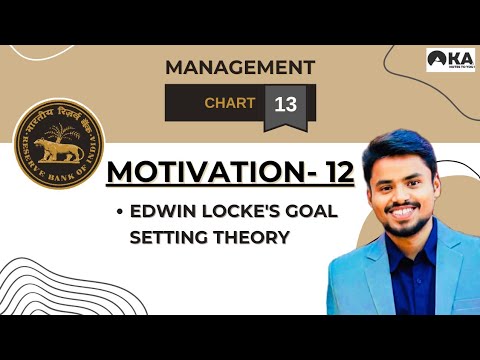
RBI GRADE B-Management Chart 13 (Edwin Locke's Goal setting theory) ; Aryan's Grade B; Kumar Aryan;
1.2K
Edwin Locke's Goal Setting Theory states that individuals are motivated when they have challenging and clear goals combined with ongoing feedback. Difficult goals attract attention and energize individuals, making them want to achieve more than others. Goals should be SMART: Specific (clearly defined), Measurable (can be quantified), Achievable (realistic), Relevant (aligned with objectives), and Time-bound (has a deadline). Effective goal setting requires five principles: Challenging (requires significant effort), Clarity (unambiguous), Commitment (full dedication), Task Complexity (appropriately challenging), and Feedback (ongoing progress tracking). These principles work together to maximize motivation and success.
Click to watch →
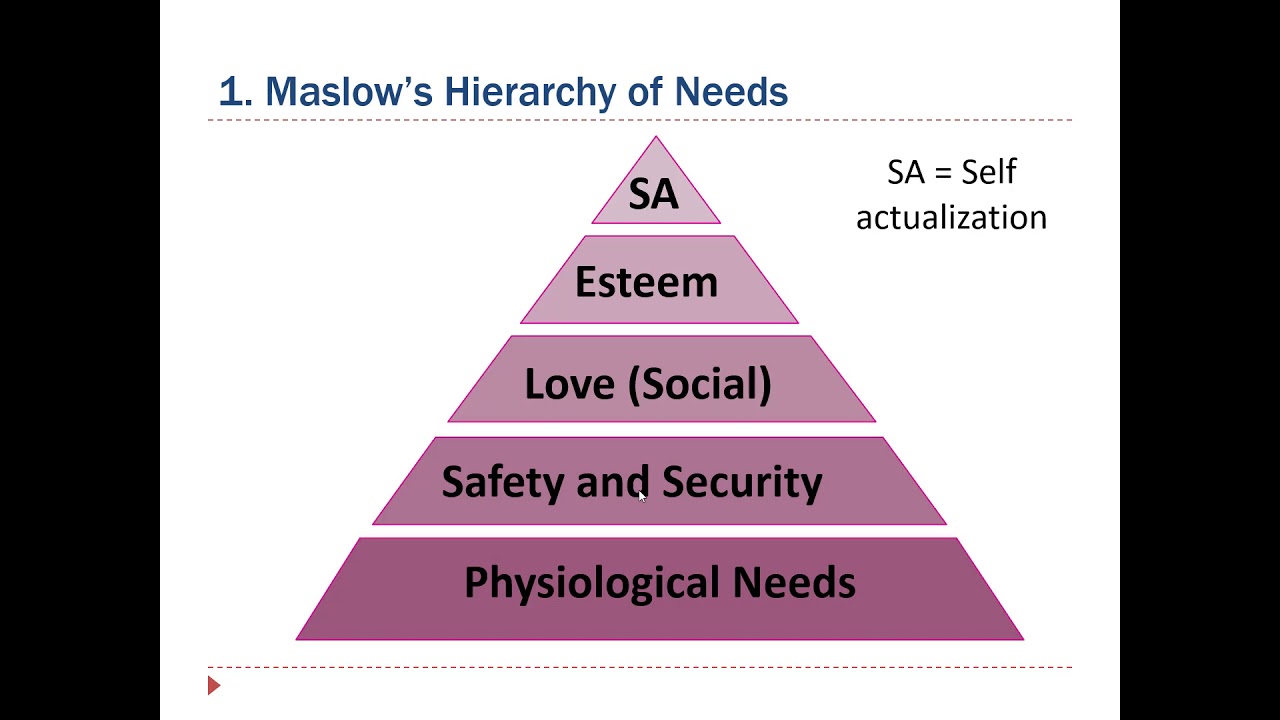
Motivation
1.5K
Goal setting theory states that specific, well-defined goals enhance motivation and performance. Effective goals follow the SMART criteria: (1) Specific - clearly defined objectives; (2) Measurable - quantifiable progress indicators; (3) Achievable - realistic yet challenging targets; (4) Relevant - aligned with broader objectives; (5) Time-bound - set within specific deadlines. Additionally, goals should be exciting to generate commitment and reviewed regularly with feedback to maintain motivation and adjust as needed.
Click to watch →
HBP Final Fall 2020
246
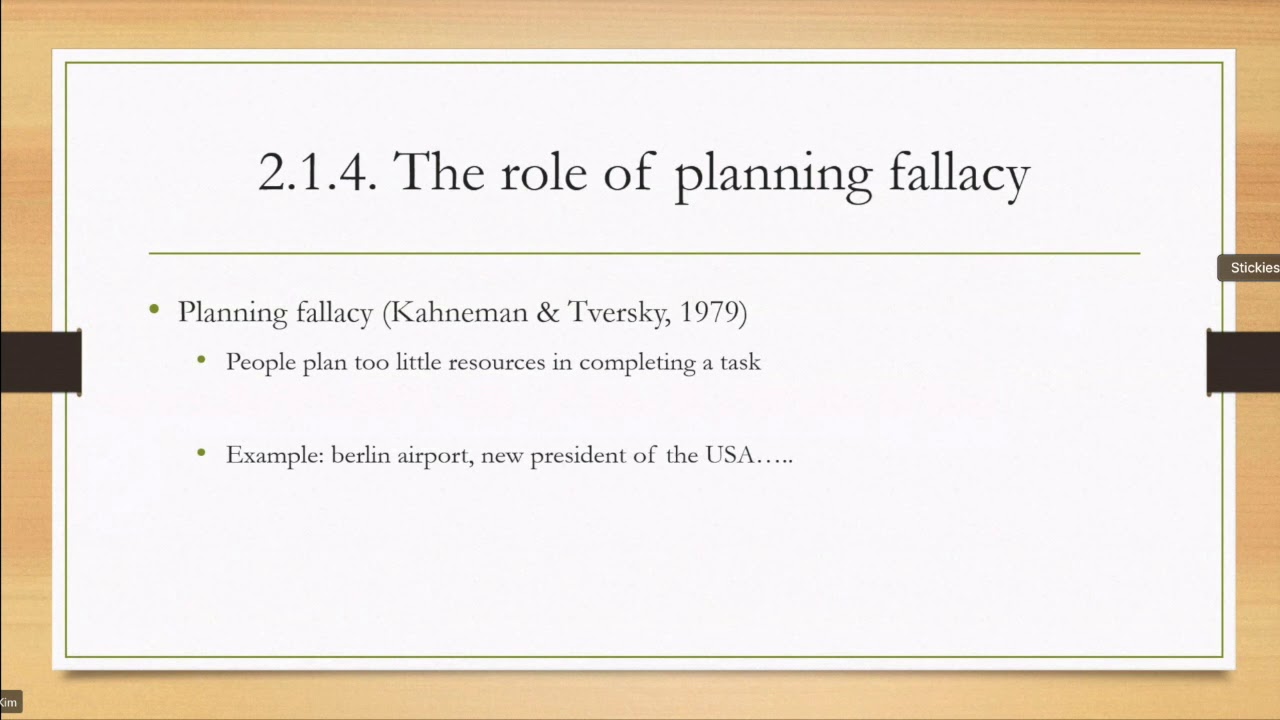
Goal Setting Theory states that effective goals should be SMART: Specific, Measurable, Attainable, Relevant, and Timed. Specific and difficult goals are important because they relate to enterprise performance - easily attainable goals may not motivate follow-through, while high goals lead to better performance even if not fully achieved. Moderators include feedback, commitment, and task complexity.
Click to watch →
الأهداف الذكية | SMART Objectives مع د. محمد العامري
1.6K
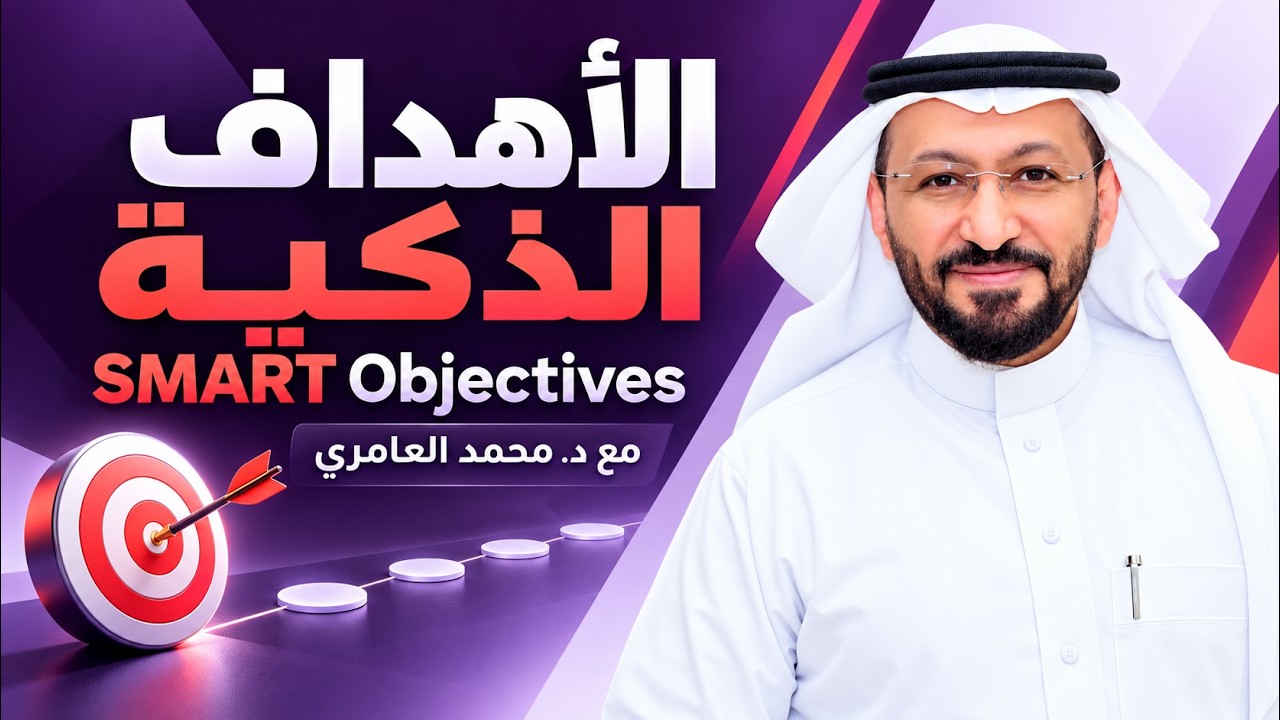
The seven-step process for effective goal setting includes: (1) Identifying the main organizational goal and long-term secondary goals, (2) Setting short-term goals and distributing them to departments, (3) Defining organizational structure and relationships for goal implementation, (4) Forming internal teams to achieve goals, (5) Establishing performance standards and outcome criteria, (6) Determining monitoring and communication mechanisms, and (7) Ensuring all stakeholders participate in the goal-setting process. SMART consists of five criteria: (1) Specific - goals must clearly define what performance is expected, (2) Measurable - goals must include quantifiable metrics to track progress, (3) Achievable - goals must be realistic given available resources, (4) Relevant - goals must be meaningful and aligned with broader objectives, (5) Time-bound - goals must have specific deadlines.
Click to watch →

Foundations of Business Ch 10 Pride 7e
378
Goal setting theory states that specific, well-defined goals lead to higher motivation and performance. Effective goals follow the SMART criteria: Specific (clearly defined), Measurable (quantifiable), Achievable (realistic), Relevant (meaningful), and Time-bound (with deadlines). When employees have clear benchmarks and know that achieving them will result in rewards, they become motivated to reach those goals. Without these five elements, a goal lacks the structure needed to drive motivation.
Click to watch →
Deep Dive
Familiarity with the concept of a Growth Mindset, specifically how beliefs about intelligence and ability impact personal development.

INTELLIGENCE, CADRE MENTAL ET CROYANCES LIMITANTES | Check tes biais #06
2.6K
Carol Dweck, a Stanford psychologist, developed self-theories examining how beliefs about intelligence affect motivation and development. She identified two fundamental theories: Fixed Intelligence Theory (intelligence is innate and unchangeable) and Growth Intelligence Theory (intelligence can be developed through effort). Students with fixed mindsets feel anxious about their intelligence, avoid challenges, and interpret failures as evidence of low ability. Students with growth mindsets focus on learning, embrace challenges, and view difficulties as opportunities for improvement. This framework demonstrates how beliefs about one's own capabilities fundamentally shape behavior and outcomes in education and life.
Click to watch →

184 Days to Manifest Your Dreams | The Complete Roadmap to Make It Happen in 2026 @AmiettKumar
42.9K
Carol Dweck's research distinguishes between growth mindset and fixed mindset. People with a fixed mindset believe their abilities, intelligence, and talents are fixed and cannot be changed. They think talented people are born that way and nothing can be done afterward. People with a growth mindset believe abilities can be developed through effort, practice, and learning. They see challenges as opportunities rather than threats, and view failures as learning experiences rather than evidence of inadequacy. The shift from fixed to growth mindset is essential for manifestation because it changes how you respond to setbacks and approach personal development.
Click to watch →

Bakışınızı Değiştirecek 10 Deney: İnsan - Selçuk Şirin & Emrah Safa Gürkan / 101+
154.4K
This segment explains Carol Dweck's research on growth mindset versus fixed mindset. Dweck's work demonstrates that people who believe intelligence can be developed (growth mindset) perform better on challenging tasks than those who believe intelligence is fixed (fixed mindset). The professor explains that when students are told that intelligence can be developed, they perform better on difficult tasks because they are more willing to engage with challenges and persist through difficulties. This research has important implications for education, suggesting that how intelligence is conceptualized can significantly impact academic performance and achievement.
Click to watch →

OS SEGREDOS DA FORÇA DE ROCK LEE EXPLICADOS
31.5K
Carol Dweck, a Columbia University psychologist, developed the growth mindset theory through extensive research including neurological analysis. She identified two mindsets: fixed (believing abilities are innate and unchangeable) and growth (believing abilities can be developed through effort). Research shows praising children for effort rather than intelligence leads to better outcomes—those praised for effort continue attempting difficult tasks while those praised for intelligence give up. Modern society's constant praise for fixed characteristics has created a generation with low tolerance for criticism and failure. Parents should reinforce effort, persistence, and resilience rather than innate abilities.
Click to watch →

SEDAT PEKER'İN MİNGUZZİ CİNAYETİ İLE İLGİLİ SÖYLEDİĞİ 'HALKIN ADALETİ SAĞLAMA İÇGÜDÜSÜ' NE DEMEK?
187.2K
Stanford psychologist Carol Dweck conducted experiments demonstrating that beliefs about intelligence significantly impact academic performance. In her study, students were randomly divided into two groups: one told that intelligence is fixed (unchangeable), and another told that intelligence can be developed through effort. Both groups initially performed equally. However, when faced with challenging problems, the 'fixed mindset' group gave up more easily, while the 'growth mindset' group persisted and improved. This research shows that believing intelligence can be developed through effort leads to better outcomes, while believing it is fixed leads to avoidance of challenges.
Click to watch →
Deep Dive
Basic principles of self-regulation and habit formation, including how routine behaviors are established and sustained.

2020 Kohl's Circle of Wellness workshop
123
Research shows that self-regulation requires mental energy - it's our ability to direct our behavior and control our impulses to meet standards and achieve goals. However, because it requires mental energy, our brains naturally look for ways to conserve energy, which slows us down when trying to make changes. The solution relies on habits - 40% of our behavior is repeated in the form of habits. Any behavior that can be reduced to a routine is one less behavior we have to spend time consciously thinking about and making decisions on.
Click to watch →

아이 성격은 습관에서 만들어진다|불안을 다루는 부모의 힘 | 차의과대학 의학전문대학원 김성곤 교수 강의 | #부모 #자녀교육 #불안
1.5K
Habits are formed through repeated behaviors, but emotional context determines whether behaviors become lasting habits. Neuroscience shows that behaviors connected to strong emotions are remembered more vividly than neutral actions. When parents respond to learning with frustration, children develop anxiety-based routines; when parents celebrate progress, children develop achievement-based routines. Effective habit formation requires starting small (5 minutes daily), using visual cues to trigger behaviors, and creating predictable environments where the brain recognizes safe patterns. Self-regulation is the ability to recognize internal states and adjust behavior accordingly, not merely the ability to endure. Effective routines contain three stages: initiation (transitioning from distraction to focus), maintenance (sustaining focus despite interruptions), and completion (reviewing work and planning next steps). Research shows self-regulation is a stronger predictor of academic achievement than IQ. Routines reduce cognitive load by eliminating repeated decision-making, allowing the prefrontal cortex to conserve energy for actual learning. The key is creating intentional feedback loops where completing routines leads to positive emotional outcomes, training the brain to associate desired behaviors with reward.
Click to watch →
Cómo me autorregulé en TV Azteca (millones viendo) | Período Refractario explicado
380
Self-regulation is the process of reprogramming the nervous system to naturally execute desired behaviors. The speaker explains that creating habits requires understanding that retraining takes time—days, months, not hours. The gap between knowing and doing is caused by the absence of this retraining process, not by lack of knowledge or motivation.
Click to watch →

【LIVE】COMPASS療育チャンネル 第1回 発達障害 #成長できるかわかるセルフチェックに関して #療育の悩みにお答えします。
2.4K
Habit formation indicates cognitive development: (1) Consistent daily routines (tooth brushing, dressing) show the child can learn, remember, and apply procedures; (2) Self-initiated behaviors (brushing teeth for 10 minutes, organizing slippers) demonstrate emerging self-regulation and judgment; (3) Understanding cleanliness and personal care indicates cognitive maturity. Children who develop these habits show significant growth potential.
Click to watch →

ЭФФЕКТИВНЫЕ МЕТОДЫ САМОРЕГУЛЯЦИИ - Живой разговор с Юрием Карпенковым 23.04.2024
123
A principle that existing habits and routines serve as anchors for self-regulation. Techniques that have become habitual are often more effective than new methods because they are already integrated into one's lifestyle and provide a sense of familiarity and reliability.
Click to watch →
Deep Dive
Introductory time management and prioritization frameworks, such as the Eisenhower Matrix, to effectively organize daily tasks.
7خطوات هتساعد كل ام وربة منزل على ادارة الوقت وتنظيم اليوم والمهام اليومية #تنظيم الوقت
48.6K
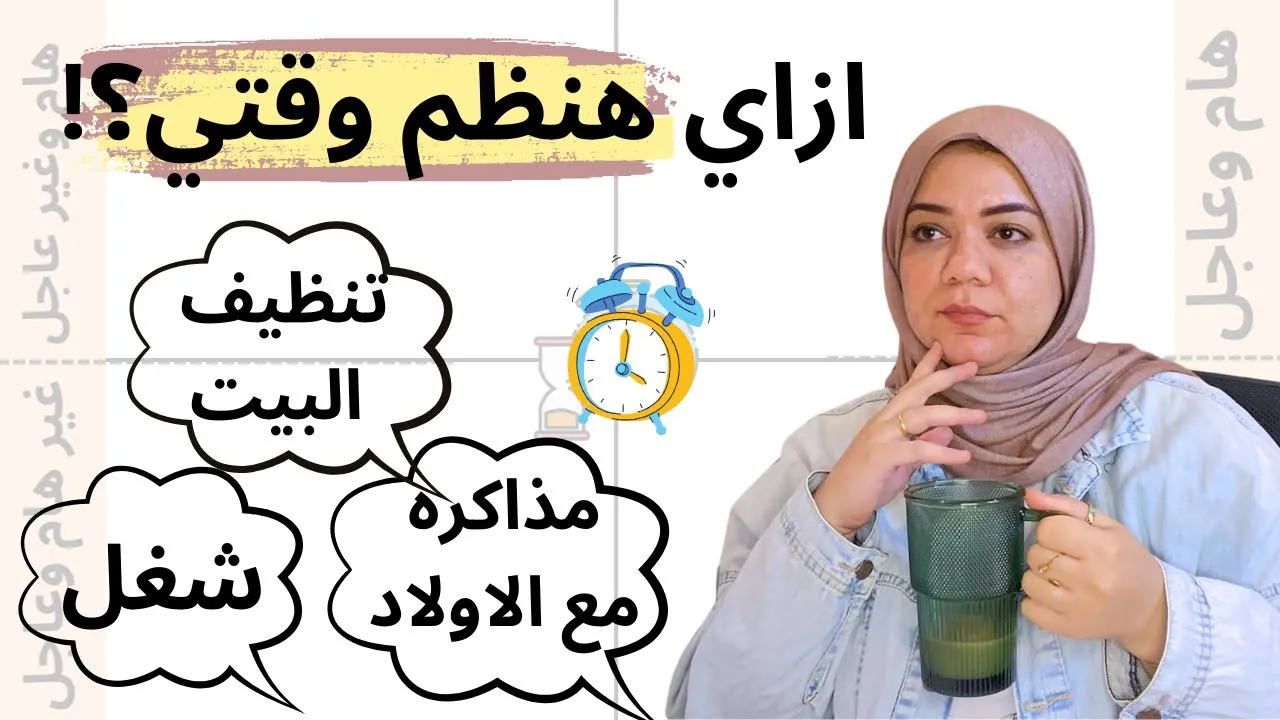
The Eisenhower Matrix is a prioritization tool consisting of four quadrants that help organize daily tasks. The four categories are: (1) Important and Urgent - tasks requiring immediate action like prayers, meals, important meetings, or urgent visits; (2) Important but Not Urgent - tasks requiring planning such as study schedules, personal development, house cleaning plans, meal planning, and freezing food; (3) Not Important but Urgent - distractions like phone notifications, emails, or interruptions that drain time without adding value; (4) Not Important and Not Urgent - activities like mindless phone scrolling on social media that waste time and mental energy. This matrix helps individuals understand how to allocate their time and energy effectively throughout the day.
Click to watch →

Tư Duy Giúp Bạn Tập Trung Vào Điều Quan Trọng Nhất | Sách Tư Duy Tối Ưu - Stephen R. Covey
1.7K
The Eisenhower Matrix is a time management framework that categorizes daily activities into four quadrants based on two criteria: importance and urgency. The four quadrants are: (1) Important and Urgent, (2) Important but Not Urgent, (3) Urgent but Not Important, and (4) Neither Important nor Urgent. This matrix helps individuals organize their tasks and prioritize effectively.
Click to watch →

كيف أنظم يومي ؟ بانكيك صحي ، زراعة النباتات 🪴🤍
4.9K
The Eisenhower Matrix is a time management tool developed by Dwight D. Eisenhower, the 34th President of the United States. It helps individuals organize tasks by categorizing them into four quadrants based on two criteria: importance and urgency. The four categories are: (1) Urgent and Important - tasks that must be done immediately, (2) Important but Not Urgent - tasks that should be scheduled for later, (3) Urgent but Not Important - tasks that can be delegated, and (4) Neither Urgent nor Important - tasks that should be eliminated or minimized. This framework helps people prioritize effectively and avoid being overwhelmed by their responsibilities.
Click to watch →

ADMINISTRAÇÃO DO TEMPO ⏰ - Organize seu tempo de Estudo | Victor Ribeiro
80.7K
The Eisenhower Matrix is a time management tool that classifies daily tasks into four quadrants based on two axes: importance and urgency. The matrix was originally developed by President Dwight D. Eisenhower and later popularized by Stephen Covey in 'The 7 Habits of Highly Effective People'. This framework helps individuals understand how they spend their time and make better decisions about task prioritization.
Click to watch →

Introdução à Matriz de Eisenhower: como ela ajuda a organizar tarefas
151
The Eisenhower Matrix is a powerful time management tool created by former U.S. President Dwight D. Eisenhower to help organize tasks based on urgency and importance. It divides tasks into four quadrants: (1) Urgent and Important - immediate attention required with significant impact; (2) Important but Not Urgent - long-term impact, should be scheduled proactively; (3) Urgent but Not Important - can be delegated or resolved quickly; (4) Neither Urgent nor Important - distractions to eliminate. This framework helps individuals and managers focus on high-impact activities, prevent task overload, and achieve better results. In educational settings, it helps organize team meetings, project deadlines, and administrative tasks efficiently, ensuring critical activities receive appropriate attention while routine matters are delegated or scheduled in advance.
Click to watch →
Prerequisite Knowledge
- Concept 01Understanding the fundamentals of Goal Setting Theory (such as the SMART criteria) to establish clear, measurable objectives.
- Concept 02Familiarity with the concept of a Growth Mindset, specifically how beliefs about intelligence and ability impact personal development.
- Concept 03Basic principles of self-regulation and habit formation, including how routine behaviors are established and sustained.
- Concept 04Introductory time management and prioritization frameworks, such as the Eisenhower Matrix, to effectively organize daily tasks.
Subsequent Learning
- Step 01Advanced strategic planning and systems design to integrate individual success habits into larger professional workflows.
- Step 02The study of Emotional Intelligence (EQ) and its role in building high-performing teams and professional relationships.
- Step 03Exploring methods for long-term career planning, executive coaching, and establishing effective mentorship networks.
- Step 04Analyzing case studies of industry-specific leaders to see how foundational success principles are applied in complex business environments.
Sector Alert
Micro Fame
Real Impact
Platform Edge
Action Plan
Sector Alert
0:00Playing Section
- 1
Highlights an overlooked sector with massive growth potential.
- 2
Stresses a limited 24 to 36-month window for high returns.
The Myth of Meritocracy and Situational Determinants of Success
This perspective challenges the notion that individual success is primarily determined by personal strategies, hidden habits, or sheer willpower. Critics argue that this individualistic framework overlooks the profound impact of systemic factors, such as socio-economic privilege, access to institutional resources, and luck. Sociological and economic research suggests that structural barriers often limit upward mobility regardless of individual effort. Promoting 'hidden keys to success' can inadvertently perpetuate survivorship bias—focusing only on the few who succeeded while ignoring the vast majority who applied the same principles but failed due to external circumstances beyond their control. Therefore, a holistic understanding of success must balance individual agency with systemic and situational realities.
Deep Dive
Advanced strategic planning and systems design to integrate individual success habits into larger professional workflows.
Strategic & Intentional Planning in Product, Design, and Life
1.3K
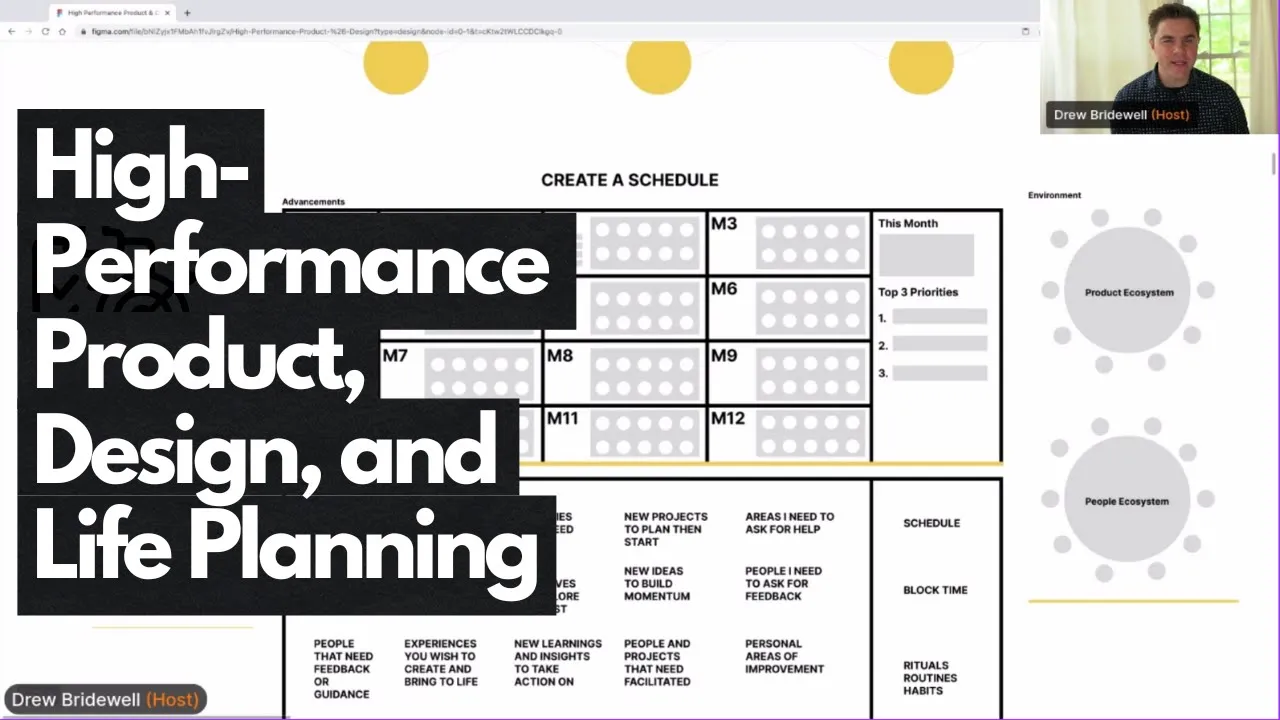
Successful planning requires establishing rhythms, routines, and habits. This includes identifying recurring meetings (both professional and personal), understanding their impact on your workflow, and connecting them back to your larger projects and goals. Additionally, incorporating joy, excitement, and fun into your work streams is essential because we're not cogs in a wheel—we should design enjoyable experiences into our productivity systems.
Click to watch →
فكّر كعبقري: تغلّب على أي تحدٍّ وحقق نجاحاً باهراً في الحياة (كتاب صوتي كامل)
128.8K
Execution isn't about bursts of willpower but about daily habits and reliable systems. Habits automate success; systems create consistency. Build core habits—small actions that create positive ripple effects. Examples: Morning routines that set your mindset, daily priority reviews, journaling to track successes and lessons. Identify and develop habits that align with your strategy.
Click to watch →

RAQUEL CORTÉS | REORDENANDO TUS HÁBITOS PARA TENER ÉXITO DESPUÉS DE ESTA CRISIS
54.5K
Business principles remain constant while techniques and practices may change—understanding this distinction is essential for long-term success. Those who want to continue growing must continue doing the activities that drive growth. Success is planned and designed, not accidental—even when starting from a position of being a customer, individuals should plan their path to becoming a distributor and achieving their goals. Planning should include achieving maximum benefits such as discounts and rewards. Success should not involve suffering—those who work hard but do not work intelligently will not achieve their goals. Success involves planning each movement and working smart rather than working hard without direction. Success is designed and planned, similar to designing a custom suit.
Click to watch →

How to Achieve Your Most Ambitious Goals | Mindshift 11
7.2K
After prioritizing and visualizing, you need to strategize by writing down specific actions needed to turn your vision into reality. A Stanford study found that students with a strategic mindset perform nearly 30% better than those without. To strategize: start with the end in mind (your vision), write down your goal, and then reverse engineer the process. Systematizing means creating habits and systems that automatically help you achieve your goals. The most successful people have very similar habits: they wake up early, exercise, spend time in prayer and reading, eat healthy breakfasts, spend time with family, and attend church. To systematize, you need to plug specific actions into your schedule so they become automatic.
Click to watch →
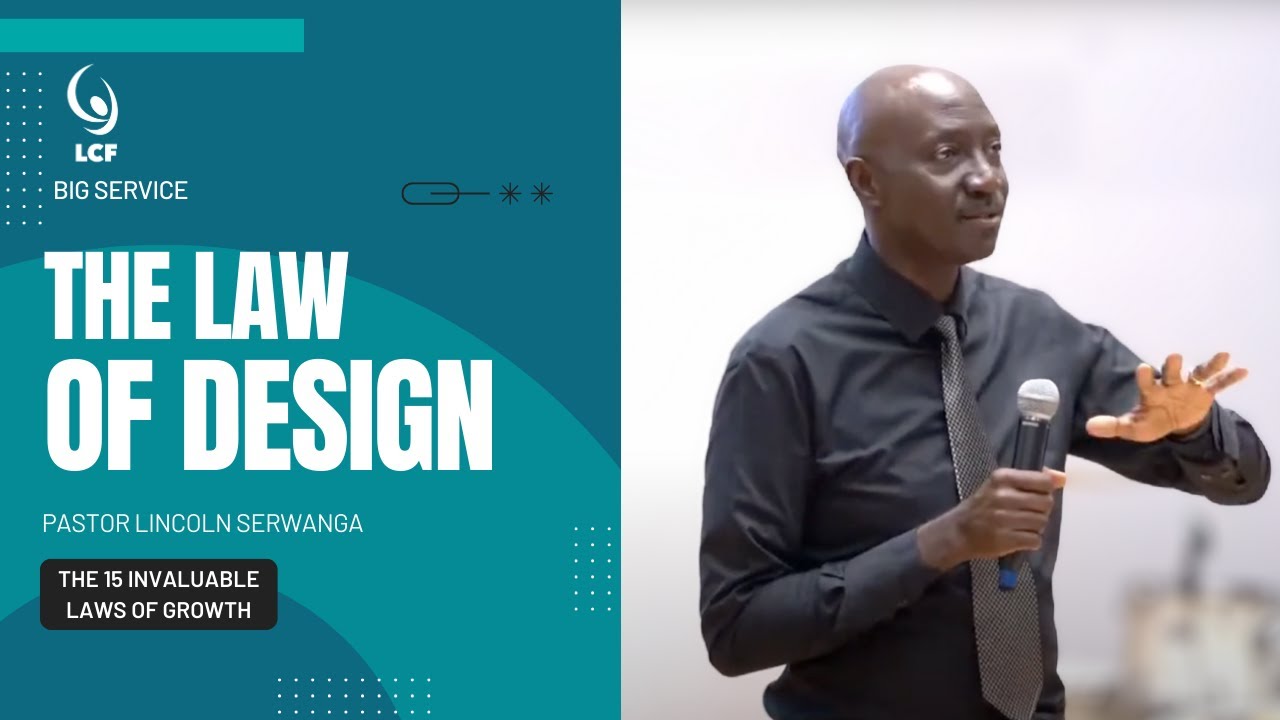
BIG Service | Pastor Lincoln Serwanga : The Law Of Design
134
To reach your full potential as a person, you must design and install systems for organizing your time, work, space, money, and every area of your life. Design does not happen by chance; it must be intentionally created. People with well-developed habits of order, structure, and organization achieve significantly more than those who are random and spontaneous. Systems save you stress, time, effort, and money. Without systems, you will experience stress, waste time, work harder unnecessarily, and waste money. The key difference between successful and unsuccessful people is their approach to systems and organization.
Click to watch →
Deep Dive
The study of Emotional Intelligence (EQ) and its role in building high-performing teams and professional relationships.

The Value of Emotional Intelligence-Travis Bradberry
248.4K
EQ scores peak at middle management and decline at executive levels, yet highest performers at every level demonstrate strong EQ. Traditional education neglects practical life skills like emotional intelligence, focusing instead on subjects with limited real-world application. In relationships, conflict volume doesn't predict success—how partners approach conflict does. Those who initiate repairs and seek compromise demonstrate superior EQ, requiring both self-awareness and social awareness to navigate disagreements constructively.
Click to watch →

GS MAINS 2023 PAPER DISCUSSION PAPER-4 ETHICS #shubhraranjan #upsc #upscmains #viral
1.1K
EQ (Emotional Intelligence) is ability to perceive, interpret, and understand own and others' emotions. Daniel Goldman supports EQ being more important than IQ for success, character, happiness, and lifelong achievement. High EQ builds high Adversity Quotient (AQ) - ability to bounce back from crises. EQ improves interpersonal relationships, enables ethical decision-making, and helps conflict resolution. Success depends on 'Golden Triangle' of IQ, EQ, and AQ. People with high EQ manage emotions effectively, maintain strong networks, and avoid unethical behavior during emotional states.
Click to watch →

10 SECRET Things EMPLOYERS LOOK For In An INTERVIEW
40.6K
Emotional intelligence (EQ) may be more important than IQ for getting hired. EQ is the ability to recognize and understand emotions in oneself and others, then using this understanding to make sound decisions and solve problems. EQ involves reading social cues, bringing out the best in people by appealing to their strengths, and working well on teams. People with high EQ display traits like integrity, empathy, and teamwork abilities. Daniel Goldman's research explains that while traditional intelligence gets you so far, EQ determines leadership potential and recognition.
Click to watch →

What Is EQ and Why Is It So Important for Your Career? ft. Kwesi James | Indeed Explains
33.7K
Emotional intelligence (EQ) is the ability to recognize, understand, and manage your own emotions and the emotions of others. Coined by psychologists Peter Salovey and John Mayer in 1990, EQ differs from IQ by focusing on social intelligence and emotional awareness. Daniel Goleman popularized the concept through his 1995 book, identifying five key components: self-awareness, self-regulation, motivation, empathy, and social skills. Research shows EQ is a stronger predictor of job performance than technical skills alone, with 75% of HR professionals preferring to promote employees with high EQ over those with high IQ. Organizations benefit from EQ through strengthened teams, increased learning, enhanced sales, improved performance, and higher retention rates.
Click to watch →
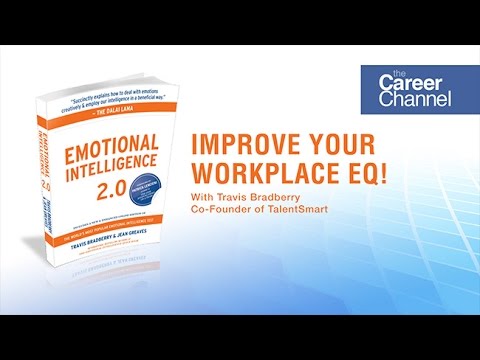
Emotional Intelligence 2.0
358.3K
Emotional Intelligence (EQ) is the ability to read and respond to emotions in yourself and others, consisting of four core skills: self-awareness, self-management, social awareness, and relationship management. Unlike IQ, which remains relatively fixed throughout life, EQ is a highly plastic skill that can be significantly improved through deliberate practice. Research shows that EQ explains approximately 58% of workplace performance, compared to only 20% explained by IQ, making it a far stronger predictor of career success. Organizations are increasingly recognizing EQ's importance, with companies like Goldman Sachs incorporating EQ training into leadership development programs. Key strategies for improving EQ include getting objective feedback through assessments, working on two to three skills simultaneously, prioritizing quality sleep (7-9 hours), managing stress through practices like gratitude exercises, and understanding that EQ differs fundamentally from personality traits.
Click to watch →
Deep Dive
Exploring methods for long-term career planning, executive coaching, and establishing effective mentorship networks.

Bismah Mahmood: Premed, Real Estate, Corporate Tech Consultant, Government Analyst
1.5K
Having mentors is highly valuable for career development, and individuals can have multiple mentors for different aspects of life including professional guidance, personal advice, and specific skill development. Mentors can be found through professional networks like LinkedIn, university events, and casual social gatherings. Building genuine relationships without transactional expectations is key to effective mentorship. Long-term career planning should be flexible and adaptive rather than rigidly planned. Individuals should identify their core interests and niches while remaining open to global opportunities. Personal balance, including health goals and family relationships, is equally important alongside career development.
Click to watch →

HR to CHRO : Podcast with Ms Megha Latawa, CHRO iD Fresh Food India Pvt Ltd
196
Mentorship is crucial for career growth—professionals should identify mentors from HR and business who are genuinely invested in their success. At minimum, they should have career conversations with mentors at least once per quarter, asking about their path, investments, and areas for improvement. For long-term career planning, professionals should first determine their 'destination role' (where they want to be 10 years from today) and then map multiple paths to get there. Most destination roles have various career paths, not just one. Focusing only on the next role is a common trap, especially for mid-management.
Click to watch →

Osayi Alile: On Networking, Strategy & Emotional Intelligence | Women Unlimited with Arese Ugwu
11.7K
Successful professionals navigate careers through mentorship and long-term planning: (1) Recognize that not everyone will like you regardless of competence; (2) Build alternative networks and alliances at every level; (3) Seek mentorship from experienced professionals who can provide guidance and trust-building opportunities; (4) Be available and prepared so others recognize and advocate for your capabilities; (5) Mentor younger professionals to create sustainable legacies; (6) Start investing early, even with small amounts, as the future arrives quickly; (7) Corporate professionals with stable salaries have greater capacity for risk-taking; (8) Prepare for inevitable career setbacks by building financial resilience; (9) Maintain emergency funds and diversified portfolios during prosperous periods.
Click to watch →

Career Check #7|3 yếu tố mấu chốt để xây dựng chiến lược nghề nghiệp|Donald Nguyễn,CEO WeCreate.Life
6.5K
Effective career planning requires: (1) Creating a 'Do List' (things to do more of) and 'Don't List' (things to do less of) based on actual market experience; (2) Setting specific, measurable goals aligned with personal values and life milestones; (3) Finding mentors who understand your position and can provide relevant guidance. Mentorship works best when both parties share similar backgrounds or challenges, creating authentic connection and mutual understanding.
Click to watch →

Episódio especial | AeC • 11 Anos/ Site Arapiraca • DDi #261
216
Long-term career planning with mentorship guidance leads to success. Milena discussed her career goals with her manager 10 years ago, and that guidance helped her achieve her positions, demonstrating the value of career planning and mentorship relationships.
Click to watch →
Deep Dive
Analyzing case studies of industry-specific leaders to see how foundational success principles are applied in complex business environments.
Erfolg ist keine Branchenfrage.
889
Success principles are universal and can be learned from any industry, as demonstrated by Deutsche Post DHL studying Formula 1 logistics processes to understand how top organizations manage complex operations, tempo, and complexity; these principles can be recognized, transferred, and applied to any business context regardless of the specific industry.
Click to watch →

Asking Millionaires How They Got RICH! (Dallas)
2M
Successful business leaders share common principles: understanding consumers better than anyone else, using technology to stay on top of trends, and being consumer-obsessed. Leadership requires understanding company culture, recognizing that each business is unique, and prioritizing customers before shareholders. Success comes from preparation, hard work, authenticity, and treating people well. A CEO's responsibility is to make employees realize their importance to the company. The blueprint for success involves understanding who your customers are, taking care of them, and ensuring employees are valued.
Click to watch →

I Analysed Alex Hormozi's $100M Book Launch (Here is why)
114
Case studies serve as powerful tools for validating your solution across different industries and business models. By presenting examples of people in similar situations who have achieved success, you address the fundamental objection of 'how will this work for me?' The video demonstrates how Alex used case studies during his live stream to show that his money model works across different industries, making it applicable to prospects regardless of their specific business context.
Click to watch →

글로벌 마케팅 전략 (김창호 교수).동국대학교 APP과정/2023.04.20
104
The first foundational principle is environmental adaptability—businesses that cannot adapt to environmental changes will fail. Changes bring opportunities, and the ability to recognize and seize these opportunities determines success. The second principle is having a clear existence reason (mission). Without a clear purpose, businesses will disappear. The third principle is having core competencies—understanding and adapting to environmental changes, clearly defining existence reason, and possessing capabilities to fulfill that purpose. These three elements form the foundation for business success.
Click to watch →

2026년 ‘대공실 시대’의 시작|문 닫는 가게들, 절대 피해야 할 자영업 7가지
1.7K
Japan's failures across industries reveal consistent patterns: (1) Display - Sony's LCD hesitation and Panasonic's plasma bet led to complete displacement, (2) Shipbuilding - Moss method's structural safety couldn't overcome Korea's membrane efficiency advantage, (3) Batteries - Panasonic's conservatism vs. LG's aggressive customer diversification. Each case shows that hesitation during transitions and failure to recognize efficiency advantages leads to complete industry displacement.
Click to watch →
Sector Alert
Micro Fame
Real Impact
Platform Edge
Action Plan
Sector Alert
0:00- 1
Highlights an overlooked sector with massive growth potential.
- 2
Stresses a limited 24 to 36-month window for high returns.
The Myth of Meritocracy and Situational Determinants of Success
This perspective challenges the notion that individual success is primarily determined by personal strategies, hidden habits, or sheer willpower. Critics argue that this individualistic framework overlooks the profound impact of systemic factors, such as socio-economic privilege, access to institutional resources, and luck. Sociological and economic research suggests that structural barriers often limit upward mobility regardless of individual effort. Promoting 'hidden keys to success' can inadvertently perpetuate survivorship bias—focusing only on the few who succeeded while ignoring the vast majority who applied the same principles but failed due to external circumstances beyond their control. Therefore, a holistic understanding of success must balance individual agency with systemic and situational realities.
Understanding the fundamentals of Goal Setting Theory (such as the SMART criteria) to establish clear, measurable objectives.
Familiarity with the concept of a Growth Mindset, specifically how beliefs about intelligence and ability impact personal development.
Basic principles of self-regulation and habit formation, including how routine behaviors are established and sustained.
Introductory time management and prioritization frameworks, such as the Eisenhower Matrix, to effectively organize daily tasks.
Advanced strategic planning and systems design to integrate individual success habits into larger professional workflows.
The study of Emotional Intelligence (EQ) and its role in building high-performing teams and professional relationships.
Exploring methods for long-term career planning, executive coaching, and establishing effective mentorship networks.
Analyzing case studies of industry-specific leaders to see how foundational success principles are applied in complex business environments.
245 views2likes0:55@gennadythoughtsOriginal Release: 2026-05-30
I want to talk to you about another sector that is becoming massively important and is being disrespected and has a 24 to 36-month window for you to get a bigger return on your investment.
I call it micro celebrity.
I don't mean people with a million or 2 million followers. I mean the long tail of influence. I have seen enormous conversion rates, great brand building, sales, the we should all care about, by engaging people that have 500 937 13,001 followers, especially when you do it on Instagram. I've seen very little on Twitter, but on Instagram, completely over the top. Back to the point of attention. And so I highly recommend people in this room that are trying to create ROI and understand, sell, brand, market, for you to start going down a path of
Up Next

57:41
Post-Merger Integration Best Practices for Synergy Realization
@GlobalPMIPartners
8.5K views•2014-02-24

46:36
Retention Habits of Top DTC Ecommerce Brands Revealed
@SendItPodcast
44K views•2026-03-03

15:23
Decoy Effect: How Pricing Psychology Influences Consumer Spending
@bobinvestsUS
90K views•2026-01-05

17:30
The Planned Obsolescence of Light Bulbs and Tech
@veritasium
25.3M views•2021-03-26
Related Study Plans & Knowledge Roadmaps
Structured learning paths in Business
business
Pop-Up Retail: Strategy, Design & Execution
01Introduction to Pop-Up Retail & Strategic Goal Setting
02Budgeting, Site Selection, and Legal Essentials
03Experiential Retail Design & Visual Merchandising
+ 2 more learning modules
15h5 modules
Explore Roadmap
business
Reg CF: Startup Funding, Marketing & Launch
01Introduction to Equity Crowdfunding & Reg CF
02Platform Selection & Legal Preparation
03Crafting High-Converting Campaign Assets
+ 2 more learning modules
14h5 modules
Explore Roadmap
business
Productized Services: Scaling Solo Freelance
01Foundations of Productized Services
02Packaging and Scope Definition
03Pricing and Subscription Models
+ 2 more learning modules
15h5 modules
Explore Roadmap
business
Gov Procurement: Find, Bid & Win Contracts
01Introduction to Government Procurement & Business Setup
02Small Business Certifications & Set-Asides
03Finding and Analyzing Contract Opportunities
+ 2 more learning modules
14h5 modules
Explore Roadmap