




















A monopoly maximizes profit by producing where marginal revenue equals marginal cost, but unlike competitive firms, it faces a downward-sloping demand curve where marginal revenue is always less than price, leading to higher prices, lower quantities, and deadweight loss compared to perfect competition; however, monopolies can increase profits through price discrimination if they can identify different consumer groups and prevent arbitrage, with perfect price discrimination eliminating deadweight loss entirely by charging each consumer their maximum willingness to pay.
Monopoly Market Structure: Price, Profit & Deadweight Loss
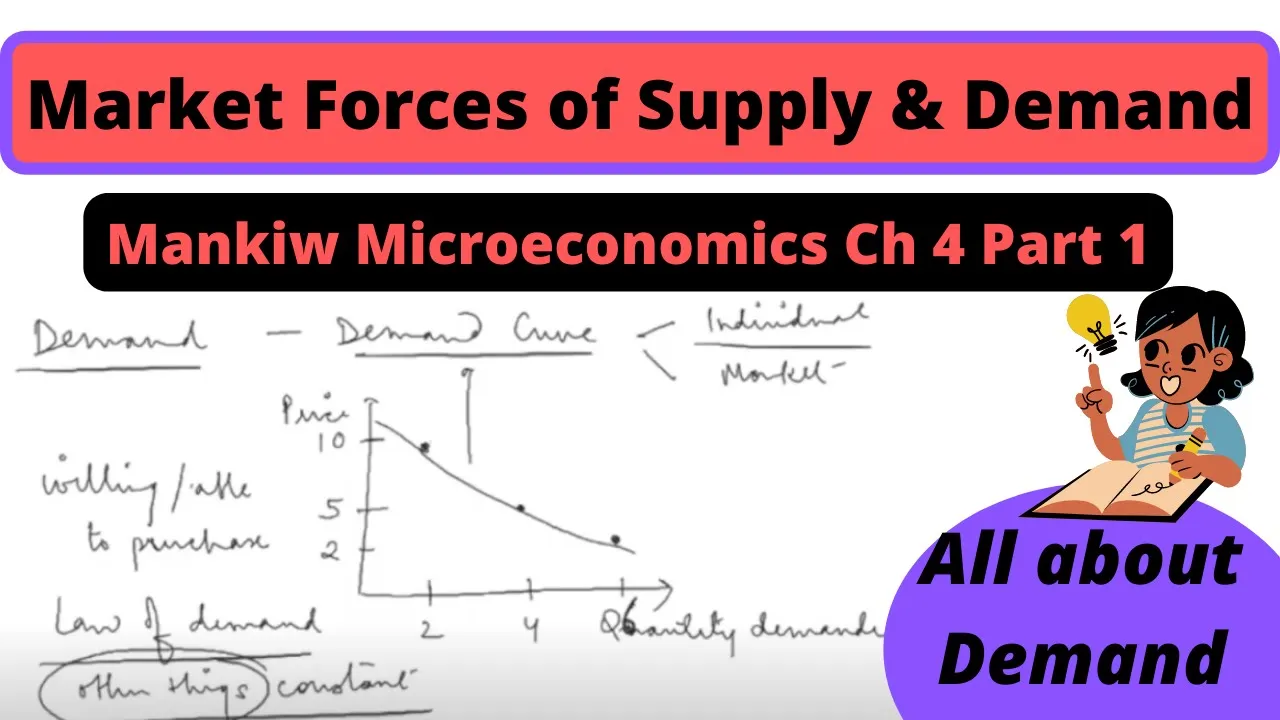
Added:The law of demand and how demand curves represent consumer willingness to pay.
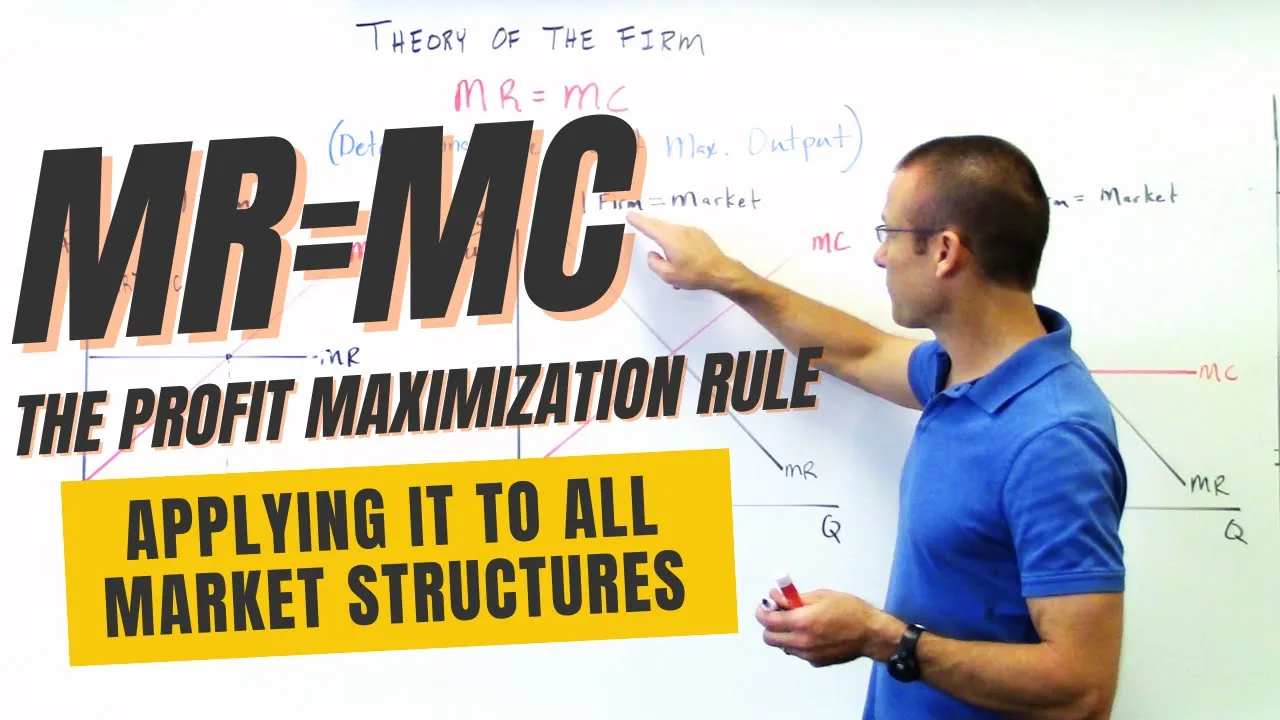
The concept of marginal analysis, specifically how firms apply the profit-maximization rule where Marginal Revenue equals Marginal Cost (MR = MC).
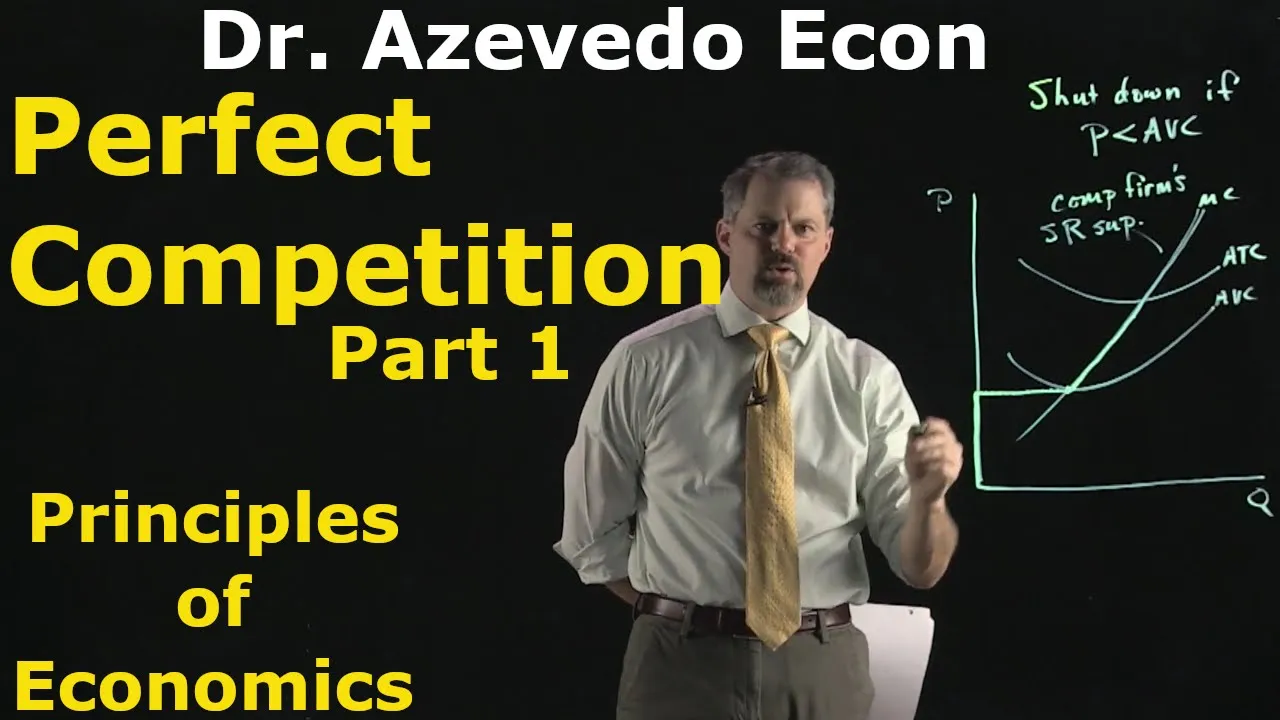
The differences between perfect competition and imperfect competition market structures.
The definitions of consumer surplus, producer surplus, and total economic surplus.
The mechanics of Price Discrimination (first, second, and third-degree) and how it affects profit and welfare.
Government intervention and regulation of monopolies, including antitrust laws and price controls (e.g., average-cost and marginal-cost pricing).
Natural monopolies, their unique cost structures (economies of scale), and public policy solutions.
Alternative imperfectly competitive market structures, such as Oligopolies (including game theory) and Monopolistic Competition.
132.7K views2.8Klikes1:20:25Original Release: 2020-03-26
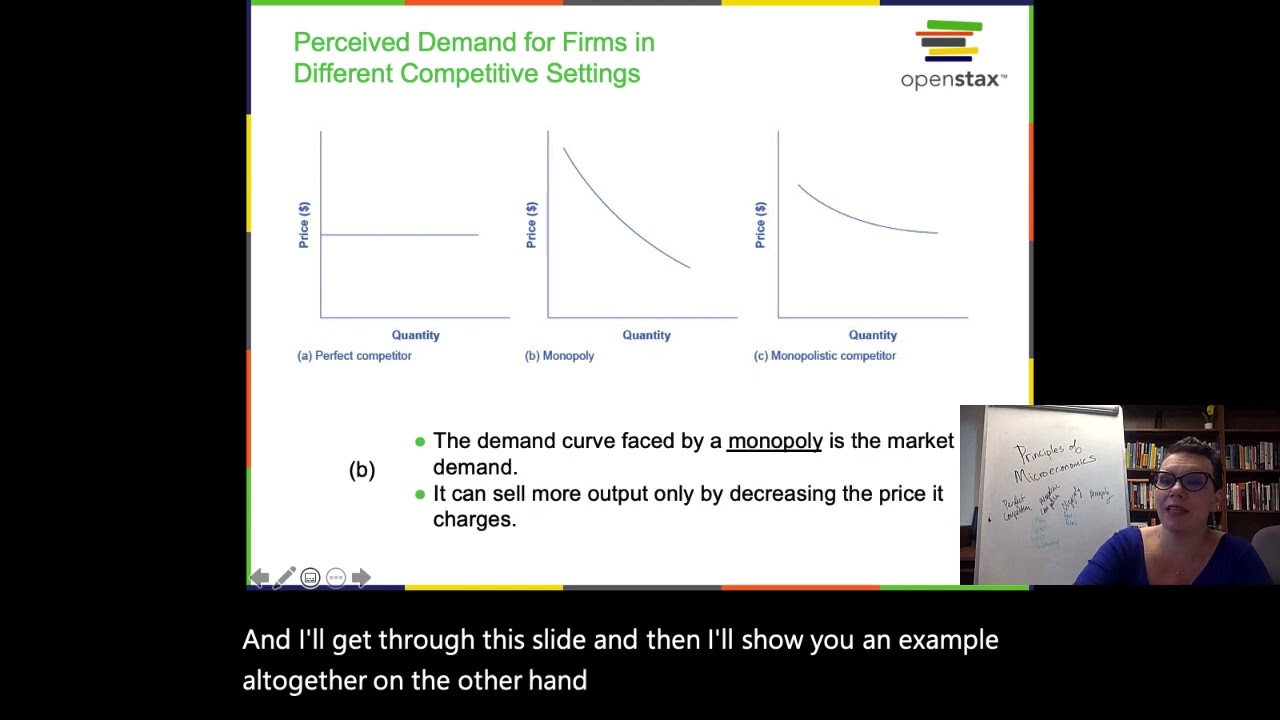
in this video we're going to take a look at how a monopoly maximizes profit now a monopoly is a situation where you only have one seller so if we think about how this fits into what we've already talked about we've talked about perfect competition where there are lots and lots of buyers and sellers and the goods are all identical as a matter of fact we could kind of think about this range of competition I'll call it we've talked about perfect competition let's put that down here on this end perfect competition lots and lots of buyers and sellers the goods are all identical the complete other end of the spectrum is what we're going to talk about now we're going to think about monopoly once we get done with monopoly in another video we're going to talk about oligopoly and oligopoly fits right in here colleague up can't spell it olga polly and then we're going to think about monopolistic competition that fits in somewhere down here so we're gonna think about all four of these types of markets so we're thinking about the two ends of the spectrum first a lot of what we've done with perfect competition we'll be able to use that to help us understand what happens in these other markets so let's start with our monopoly discussion and and the key here is that monopolies have no competition as a matter of fact let's list the characteristics of this type of market so characteristics we did this with perfect competition the characteristics were that there were lots and lots of buyers and sellers the goods were identical and there was free entry and exit in terms of monopoly there's going to be one firm one seller that has no competition there's going to be one good clearly if there's only one firm there's one good and that good will have no close substitutes now that's going to give this firm what we're going to call market power this firm will have some control over the price in a way that perfectly competitive firm did not and then the last characteristic of a monopoly is that there is going to be no entry I'm going to say that there are strict barriers to entry strict barriers to entry these characteristics the fact that there's one firm there are strict barriers to entry we will say that the monopoly is a price maker monopoly is a price maker they get to choose their price they have market power so saying that they are a price maker is I'm going to also describe that by saying that they have market power so that phrase market power essentially means some control over the price the monopoly is going to have as much market power as it is possible to have now let's think about what that means for a second the monopoly is going to be the only seller of a particular good and sometimes people believe that that that means the mark that the monopoly can charge whatever price they want and that's certainly not true the monopoly is going to have as much power over price as it's possible to have but they still can't reach into your pocket and take dollars out you still have to make the decision to buy the good or not and so what that means is the monopoly is going to be restricted by the consumers willingness to pay so they're not going to be able to charge a crazy price if consumers are not willing to pay that price so let's think about before we get into how a monopoly going to make its decisions on on what quantity to produce and what price to charge let's think about some sources of barriers to entry okay so let's call this sources of barriers to entry the first one that we're going to talk about is that the government can block entry so let's just say there are government sources of barriers and those could come in the form of say a patent or a copyright so sometimes the government grants a patent if you've come up with a new idea or a new pharmaceutical then you can get a patent for that and what that patent guarantees is that you'll be the only person that can profit from that particular invention at least for a period of time and it might be 18 years it depends on on whether or not or not we're talking about a mechanical patent or a pharmaceutical patent or something like that so a patent or a copyright so if you were to let's say write a song and and record that song and it becomes very popular then you're the only person that can profit for that from that for a period of time if anybody else were to try to take your song and make money off of it or even just use it even if they're not making money off of it if they were to use it they have violated your copyright and you would be able to to pursue that in a court of law and you would typically be able to win if you can prove that it was yours so sometimes the government creates barriers to entry now here's what we're gonna see in this chapter we're gonna see that having a monopoly in a market creates deadweight loss so later on we're gonna be talking about some things the government might want to do to prevent monopolies and so at that point you might think back and say well hold it sometimes the government creates monopolies why would they create it and then try to fight it well what's happening is that the government needs to create some type of incentive for people to be productive and for people to innovate and create new products to to go out and find cures for ailments and so what the government does is they create this this patent or a copyright that is going to be the reward for the firm that comes up with a cure for cancer or somebody who comes up with a very entertaining movie or a very popular book there's that reward if if that reward didn't exist firms would never spend the millions and millions of dollars that it takes to develop some new pharmaceutical drug so there's this fine line we want to create an incentive for firms to innovate and to find new things like a some cure for something the problem is once they've found it they have market power and they're able to use that market power and so that's kind of a tricky situation but that's why this exists the government creates these these situations because they want to there to be a reward to being innovative another situation where there's a barrier entry would be if a single firm owns all of a key input so single firm owns all of a key input not really that common but there are some great examples of this so if you were to go back and look at a company called Alcoa there was a period of time during which Alcoa had a monopoly in aluminum production and the reason is that Alcoa had control of all the bauxite and you need bauxite to make aluminum so when they had control of all the bauxite they were the only people that could the only business that could make aluminum so they had a monopoly another kind of textbook example is De Beers diamonds De Beers owns a vast majority of of the most productive diamond mines in the world and so do years for all practical purposes has a monopoly in in the sale of diamonds so first two sources of barriers to entry we can have what's referred to as a natural monopolies a natural monopolies is a situation where there are economies of scale over the relevant range of production levels so economies of scale exist let's think back to what economies of scale mean we talked about that when we were thinking about costs of production we talked about if we had costs up here and we had quantity down here and our long-run average total cost curve was always declining as quantity increased then we called that we said the firm is experiencing economies of scale what this means is it's cheaper to produce larger quantities than it is to break that up into smaller quantities and produce it may be an individual factories so if we were thinking about this being the total quantity in the market if we had one firm producing that quantity then the average total cost would be right up here remember this is the long-run average total cost curve so this would be the average total cost of producing that quantity in one business one plant we could think about what would happen if we had two plants each making half of that amount well half of this amount would be this here's Q over two so if each firm was making half that amount we could think about what would happen to their costs on average and their long-run average total cost would be up here so you can see that there are economies of scale there is a benefit to getting bigger if we did have two companies there would be an incentive for those two companies to merge and produce all of that quantity in one production facility so that they can reduce their costs on average we tend to see the and things like utilities so if we're talking about delivery of water to households the delivery of water to households through a set of pipes well typically you have one water company in an area and you might say well let's suppose that you had I don't know in your backyard you had a giant lake of clean fresh water and you wanted to sell that piece sell that to people and you wanted to be able to deliver that through pipes to their house well you could go to the other water utility and say hey would you let me borrow your pipes so that I can pump my water through your pipes to people's houses and they're gonna say no clearly so what's gonna happen is you're gonna have to lay another set of pipes to everybody's house well laying two sets of pipes just drives the cost up on average so in a situation like water utilities clearly it's a natural monopoly it's cheaper to have one firm than it is to have multiple firms and and that's really the nature or a result of the shape of the long-run average total cost curve so you can see that these sources of barriers to entry are these aren't things that you go to get your MBA to learn right you you don't businesses don't have lots of market power businesses don't become a monopoly by making good decisions this is really something that's kind of a you kind of look into it or the government you you create something that is very useful that lots of people want to buy and you have a patent on it that's going to create a lot of market power for you so let's talk now about what profit maximization looks like for a monopoly so here's the key this is really for a monopoly what it boils down to the monopoly faces the market demand curve the monopoly faces the market demand curve we talked about perfect competition perfect competition or competitive markets that's a situation where there are lots and lots of buyers and sellers so no individual seller faces the market demand curve actually in perfect competition each seller faces a perfectly elastic demand curve for their product and the reason is each firm is selling a good for which there are perfect substitutes so if one particular firm tries to raise its price consumers will just go to the other firms that are selling the exact same good in this situation we've got a firm that has no competition consumers can't go to another business to buy the good they either buy it or they don't that's the decision they have to make so the monopoly faces the market demand curve the monopolies we already said is a price maker they get to choose their price competitive firms had no control over the price it went up or down depending upon what happened to market demand there's nothing they could do or what happened to market supply they have no control over but a monopoly does they are limited by consumer willingness to pay let's think about what this means about the marginal revenue curve because what we're going to do is the same thing we did with perfect competition we're going to look where marginal revenue equals marginal cost but now what we're going to see is that this firm faces a different type of marginal revenue curve then a competitive firm did so let's do the same thing we did with perfect competition let's create a little table here that allows us to look at total revenue will calculate marginal revenue we'll calculate average revenue and we'll just see what ever or what marginal revenue looks like so let's put up here the demand curve that the firm faces let's start with quantities and let's go from 0 up to 10 and then let's think about price now when we were doing a perfectly competitive firm remember the perfectly competitive firm was small compared to the size of the market so it didn't matter the quantity that the perfectly competitive firm produced they had no impact on the price so that our column our price column for the competitive firm was all the same it was six dollars all the way down now we're putting up here the market demand curve so what we know is demand curves are downward sloping and so if the monopoly wants to sell more a higher quantity they have to lower the price on every unit they sell so let's put here let's start our price here at six dollars and let's just go down by $0.50 each time five fifty five dollars so you can fill the rest of this in by going down by fifty cents each time and we'll draw this demand curve so it goes down to $1 we can draw this demand curve it's very simple the choke price the highest price that consumers are willing to pay is six dollars we call that the choke price because that's the price at which quantity demanded Falls to zero at a price like seven nobody wants to buy any of it so if we draw the rest of that demand curve it's going down it's got a slope of 50 cents it goes down 50 cents every time it goes over one so by the time it gets out here to ten it's down here at $1 so there's what that demand curve looks like it's just a downward sloping linear demand curve like we've worked with before let's figure out what total revenue looks like total revenue is just price times quantity so if the firm sells zero units of course they make zero revenue if they sell one unit at five dollars and 50 cents they make five dollars and fifty cents in total if they sell two units at five dollars each they get a total revenue of ten dollars remember these are not profit these are total revenue so here's what the rest of those look like it's going to be thirteen fifty sixteen dollars seventeen fifty eighteen dollars seventeen fifty again sixteen dollars thirteen fifty and ten dollars so look at what total revenue is doing total revenues going up and then it reaches a maximum and then it starts to go down again this is not profit this is just total revenue and and so what's happening here is you have to remember that the way that to interpret this table is not that the firm sells the first unit for 550 and the second second unit for five and the third unit for 450 that's not what's happening this tells us the price they can charge if they want to sell four units if they want to sell four units they have to sell all four of those units for four dollars if instead they want to sell eight units they have to lower the price to two dollars per unit okay now that we've got total revenue we can let's figure out average revenue now remember average revenue is always equal to price and here's why we know that total revenue is equal to price times quantity average revenue is equal to total revenue divided by Q so if we take price times quantity divided by Q the quantities cancel average revenue is just equal to price that's always true so our average revenue here we're not going to calculate we can't divide by zero but if we take our our total revenue and divide it by quantity 550 divided by quantity of 1 gives us 550 which is the price $10 divided by 2 is 5 which is the price so this is just the price all the way down 454 goes down by 50 cents each time so it's the same as this column so there's what average revenue looks like let's figure out what marginal revenue looks like cuz that's what we're really interested in marginal revenue remember marginal revenue is just the change in total revenue when we change quantity okay sometimes a lot of times I write it this way change in total revenue when you change quantity but marginal revenue is just the slope of the total revenue curve so what we need to look at we're going to not do anything for zero we need to go from zero to one we see that as if we produce if we produce that first unit our total revenue goes from zero to 550 so our marginal revenue for that first unit is five-fifty if we produced the second unit our total revenue goes from 550 to ten so it goes up by four dollars and fifty cents if we produce the third unit our total revenue goes from ten to 1350 so our marginal revenue is three dollars and fifty cents you can see that our marginal revenue is falling by a dollar each time so it goes down here to 250 and then 150 50 cents and then it goes negative if we take 50 Cent's minus a dollar that's negative 50 cents and then minus a dollar 50 minus 250 minus 350 so there's what our marginal revenue looks like now let's think about what's going on here notice that marginal revenue at all of these production levels down here we see that marginal revenue is less than price let's think back to what happened with the perfectly competitive firm so with the perfectly competitive firm we saw that price and marginal revenue were always equal every time the units or the firm sold another unit they made $6 sell another unit you make $6 sell another unit you make six dollars every time you sell a unit you make six dollars which means your marginal revenue it's always six dollars here this isn't happening for this firm if it wants to sell another unit it's got to lower the price for every unit it sells so it's marginal revenue of the next unit is going to go down and so what we're seeing here is that marginal revenue is less than price we see that for a monopoly marginal revenue is less than price that is important what we want to do is we want to graph the marginal revenue curve but in order to do that I need to clear off this side I'm gonna leave the table and then we'll take a look at what the marginal revenue curve looks like let's draw the demand curve that we've got here again and then let's draw also the marginal revenue curve and see what they look like compared to each other so here's this is going to be the the demand curve that the firm faces so our demand curve starts up here at six dollars and it's linear and by the time we get out here to a quantity of ten it's down at one dollar but we're really interested in this marginal revenue curve so notice that the marginal revenue starts out here at the first unit at 550 it starts out somewhere like this and then by the time it gets out here to a quantity of six or seven it's going to cross the horizontal axis and become negative so the marginal revenue curve actually looks like this here's the demand curve the firm faces there's the marginal revenue curve marginal revenue is below price in other words if we graph this the marginal revenue curves linear also but notice it has twice the slope as the demand curve the slope of the demand curve here is $0.50 when we go down 50 cents over one unit down 50 cents over one unit our marginal revenue would go down a dollar over a unit down a dollar so this marginal revenue curve has twice the slope as the demand curve as a matter of fact in terms of graphing the marginal revenue curve here's the general rule and this is something you need to remember because there will be times when you may be given the demand curve and you have to figure out what the marginal revenue curve that goes with it looks like well here's the rule for doing it and this rule works for a linear demand curve so I'm going to say for a linear demand curve if it's if the demand curve is nonlinear then this isn't going to work but in this class we would be using a linear demand curve so this will work for everything that we're going to do so for a linear demand curve the marginal revenue curve has the same vertical intercept it's the same vertical intercept and twice the slope as a demand curve same vertical intercept and twice the slope as the demand curve so drawing a marginal revenue curve if you're given the demand curve drawing the marginal revenue curve is not hard at all so if I were to give you a demand curve that looks like this then you just start your marginal revenue curve up here where the demand curve starts and you give it twice the slope there's the marginal revenue curve that would go with that demand curve or if I were to give you a functional form for a demand curve suppose I said that the demand curve is equal to 10 minus 2q there's a demand curve it has a vertical intercept of 10 and a slope of negative 2 that's just the slope-intercept form of a line well our marginal revenue curve would have the same intercept and twice the slope there's the marginal revenue curve it also has an intercept of 10 but its slope is negative 4 instead of negative 2 so you can see that this general rule is very useful let's talk for just a second about whether or not that rule worked for a perfectly competitive firm so for a perfectly competitive firm that perfectly competitive firm faced a perfectly elastic demand curve for its product the demand curve that the perfectly or that the competitive firm face look like that and what we saw was that the marginal revenue curve was right on top of the demand curve so let's think about whether or not the rule that we've got here works in this case well so the marginal revenue curve and the demand curve had the same vertical intercept it's right here and then the slope of the demand curve if we took the slope of the demand curve is zero two times zero is zero so the marginal revenue curve does indeed have twice the slope of the demand curve because they're both equal to zero so for the perfect perfectly competitive firm the rule still follows the key here is that if the demand curve is perfectly elastic then the marginal revenue curve will lie right on top of it but as soon as this demand curve has any downward slope the marginal revenue curve is going to fall below it okay whatever downward slope it has the demand curve has the marginal revenue curve will have twice that downward slope okay so now we've got what we need we know what the marginal revenue curve looks like for a perfectly competitive firm all we need to do is put that together with our cost information and we can look where marginal revenue and marginal cost are equal and that's going to tell us what the firm is going to do so I'll clear this off and then we'll take a look at that so the way a monopoly maximizes profit is the exact same way that every firm maximizes profit we saw in our perfect competition chapter that all firms maximize profit by producing the quantity where marginal revenue equals marginal cost so that's the thing that we're looking for anytime we're thinking about a firm maximizing profit if you're stumped on how to solve a problem and and it's a problem where a firm is maximizing profit that's the first thing you need to be looking for figure out where marginal revenue equals marginal cost okay that may involve taking a demand curve and drawing the marginal revenue curve it may involve taking a table of numbers and figuring out total revenue and then figuring out marginal revenue but the goal is always going to be to look where marginal revenue equals marginal cost so let's think about what this looks like for a monopoly so let's draw a picture of the monopoly and I'm going to put up here the the cost curves for the monopoly first so let's put up here the marginal cost let's go ahead and put our average total cost curve there's average total cost so there's a picture of our monopoly let's make sure we label it monopoly now notice that if I were drawing a perfectly competitive firm I would have drawn that picture also the cost curves of the firm are not what's different between the different types of markets it's the revenue for the firm that's different between a perfectly competitive firm versus of monopoly versus a monopolistically competitive firm versus an oligopoly so this stuff anytime we draw a picture of the firm most of the time we're going to be drawing this picture so now we want to put the revenue information in there so I'm going to put in the demand curve that the firm faces I'm going to just draw it out here it doesn't really matter don't really worry too much about where it intersects everything now we're going to be looking where marginal revenue equals marginal cost so we need the marginal revenue that goes with that firm so the marginal revenue curve has the same intercept and twice the slope so it's going to come down here something like that there's our marginal revenue curve and again don't worry exactly where it intersects everything there's really only one intersection that we're interested in and that's the one where marginal revenue equals marginal cost so the firm is going to produce the quantity where marginal revenue equals marginal cost that happens right here and and in your picture your intersection right there might be above the average total cost curve it might be a long ways from it it doesn't matter that's the only intersection that's important at this point so this is the quantity that the firm is going to produce there's I'm going to call it Q M for the monopoly quantity now let's think about the price that the monopoly is going to charge for this so there's the quantity that they want to produce if this was a competitive firm that's the end of the story because the competitive firm has no control over the price but the monopoly does and what the monopoly is going to want to do is charge the highest price that they can get for that particular quantity and fortunately for the monopoly they know what that what that is because the demand curve the height of it represents consumer willingness to pay so they know how much consumers are willing to pay for that particular quantity so we simply go up to the demand curve for that particular quantity and we can see that consumers are willing to pay that amount that is the monopoly price that's the price the monopoly will charge so they will produce this quantity they will charge that price so that's a picture of the profit maximizing decision for the monopoly now let's take a look at another example here what I want to do is focus on the relationship for the monopoly between price and marginal cost so let's draw a smaller picture here I'm gonna put my marginal cost for this picture I'm not going to put my average total cost because I want to focus on marginal cost let's go ahead and put the demand curve that the firm faces it's downward sloping let's put the marginal revenue curve that the firm faces it's right there the firm's going to produce the quantity where marginal revenue equals marginal cost and that happens right there there's the quantity the monopoly produces they're going to charge the price found by looking at the demand curve so we go up to the demand curve they're going to charge this price now let's look at the relationship between price and marginal costs so let's identify the marginal cost of producing this quantity well that's easy all we have to do is go up from this quantity to the marginal cost curve and we hit it right there there's the marginal cost of producing the quantity that the monopoly is producing and what we see is that for the monopoly price is greater than marginal cost okay so for monopoly price ends up being greater than marginal cost which is not surprising because we also saw that for a monopoly the marginal revenue is less than price and the monopoly is equating marginal revenue and marginal so this shouldn't come as a big surprise but here's the practical interpretation of what's going on here remember that for a perfectly competitive firm price was equal to marginal cost that meant that when you buy a product from a firm that's perfectly competitive you can be assured the price they charge you is equal to their cost of production well here's what this means for a monopoly they charge you a price that's greater than marginal cost that means when you buy a good from a monopoly you can be assured that the price they charge you is greater than their cost of production this will end up creating some deadweight loss and we'll see that here in just a little bit first let's talk about how we identify profit so let's draw a couple of pictures here remember that profit is equal to the difference between price and average total cost multiplied by Q so let's draw a picture actually let's draw two pictures one of them we're going to have a firm earning a positive profit and then the other one we're gonna have a firm a monopoly earning a negative profit so let's start this one with our marginal cost let's put our average total cost down here kind of low so here's average total cost still u-shaped still in marginal cost still intersects average total cost at the bottom of the average total cost curve now let's put our demand curve in here there's a demand curve the firm faces here's the marginal revenue curve the firm is going to produce the quantity where marginal revenue equals marginal cost that happens right here here's the quantity the firm is going to produce there's QM they're going to use the demand curve to figure out the highest price they can charge for it so we go up to the demand curve there's the monopoly price now we've got price and we've got quantity we need the average total cost so if we go up from this quantity to the average total cost curve we hit it right there there's the average total cost of producing that quantity this area would represent the profit that the firm is earning so this is a firm earning a profit that is positive Bena monopoly does not guarantee you a positive profit though if the demand for this product was relatively low so just because you're the only seller of something does not mean that people want to buy it so let's draw a picture where let's start with our marginal cost I'm gonna put my average total cost kind of high this time I'm gonna put it somewhere right up in here here's average total cost now I'm gonna move my demand curve back I'm gonna move my demand curve down here where it's under the average total cost curve so suppose there's my demand curve I'm gonna draw the marginal revenue curve that goes with that demand curve there's marginal revenue the firm's going to look where marginal revenue and marginal cost are equal and that happens right here so this will be the quantity that the firm will produce there's QM we go up to the demand curve to find the price there's the price they're going to charge that's p.m. now we need the average total cost of this quantity so we go up to the average total cost now we hit it up here there's average total cost and now we see that average total cost is bigger than price so the area of this rectangle is going to be the loss that this monopoly earns this is a firm a monopoly earning a negative profit a loss so again being the monopoly doesn't guarantee you a positive profit it depends on where that market demand curve is relative to the cost curves let's talk about the supply curve for a monopoly and it turns out that this discussion is relatively easy to have because the monopoly has no supply curve monopoly has no supply curve let's talk about what that means so the monopoly clearly makes a supply decision the monopolist is going to decide how much to sell in all of these pictures the monopoly is choosing a quantity to sell but we have to be careful about labeling anything a supply curve actually we can't label anything a supply curve and let's talk about why so if we were talking about a competitive firm so we draw you a picture of a competitive firm here's our competitive firm we've got the marginal cost curve I'm not going to draw any average total cost curve or anything like that the way the competitive firm made its decision is it looked at where the market price was wherever that market price was all it had to do was go over to the marginal cost curve and that gives us the quantity so if the price is p1 quantity will be q1 if price falls down here to p2 quantity is going to be q2 where if price were to go up here to p3 quantity is going to be q3 so what happens is that that marginal cost curve tells us everything we need to know that's why we can just label that thing a supply curve with a monopoly the marginal cost curve does not tell us everything that that we need to know the marginal cost curve is important for figuring out what the quantity is going to be but notice then we have to use a third curve we've got to use this demand curve to figure out the price so here the marginal cost curve is is helpful for figuring out the quantity but the marginal cost curve doesn't help us figure out the price we've got to use the demand curve so in our monopoly pictures notice we're using three curves we've got to use the marginal cost curve and the marginal revenue curve to first figure out quantity and then we've got to use a third curve the demand curve to figure out the price there are three curves involved in figuring everything out whereas with our perfectly competitive firm there was only one curve involved and so we could just label it a supply curve so what we're saying when we say that the monopoly has no supply curve is we're saying that we we can't label anything a supply curve they still make a decision of what quantity to sell okay it's just that we can't label one of one of these curves a supply curve let's talk about the difference between the short run in the long run so when we discuss perfect competition we spent a long time talking about the firm's supply curves in the short run and what the market supply curve looked like in the short run in the long run and so we spent time thinking about the difference between the short run in the long run we spent time thinking about the effect that a change in market demand has first in the short run and then in the long run we don't have to do any of that in the case of the monopolies because there's no entry that takes place in a monopoly that makes things nice and simple because if a monopoly is earning positive profit in the short run like this firm is they can continue to earn that positive profit in the long run because there's no entry there are strict barriers to entry so there's nothing that's going to drive that profit to zero so we don't need to worry about the difference between the short run and the long run because there's no entry there's nothing that's going to end up causing anything to change in that picture I want to clear this off and then we'll talk about a couple of things before we kind of finish this up let's talk about the effect that having a monopoly in a market has on total surplus so let's think about the effect of a monopoly on the efficiency of markets which is something we spent a video talking about earlier what I want to do is draw two pictures here let's draw a picture of a competitive market and a monopoly market so this is going to be a monopoly and this one's going to be a perfectly competitive market not a perfectly competitive firm a competitive market competitive market so let's start by putting in the market demand curve okay now what I want to do is I'm going to draw the same market demand curve in each picture because the market demand curve has to do with the consumers okay so that's not a difference necessarily between a competitive market and a monopoly market now I'm going to draw the marginal cost curve and I'm going to draw the marginal cost curve here like we would have drawn it back when we first learned the demand and supply model I'm going to draw it like this and I'm gonna label it a supply curve so in a competitive market we know now that that market supply curve at least in the short run is the horizontal summation of all of the individual firm marginal cost curves this is just a marginal cost curve itself now over in our monopoly picture I can put the marginal cost curve also and it's going to look like this marginal cost curve but I'm not going to label it a supply curve because over there we know we can't label any one curve as a supply curve so I'm just gonna call it a marginal cost curve still represents the marginal cost of production now the way that a competitive market works is we know that the market price is driven to the intersection of this market demand curve and the market supply curve so we get P star and we get Q star and we talked about consumer and producer surplus we know that our consumer surplus would be this area up here our producer surplus is this area down here all of the area under the demand curve and above the supply curve represents total surplus and we know with it a compact with a competitive market total surplus is my so mised let's talk about what happens though with a monopoly so with a monopoly when the monopoly maximizes its profit it doesn't care where the marginal cost curve and the demand curve intersect it's going to be looking where the marginal cost curve and the marginal revenue curve intersect so we've got to put our marginal revenue curve up there this will be the quantity that the monopoly produces this is QM and they're going to charge a price found on the demand curve so we go up to the demand curve and there's the price the monopoly will charge so now we can use these two pictures to compare what would happen in a competitive market to what happens with a monopoly and the first thing that we can see is that the quantity with the monopoly is going to be smaller than the quantity with a competitive firm or with a competitive market with a competitive market this would be the free the quantity that gets produced but what happens is the monopolist uses its market power to restrict quantity and drive price up so we see that with a monopoly quantity is lower than it would be with competition and we see with a monopoly price ends up being higher than it would be with a perfectly competitive market so the monopoly is using its control over price it's using its market power to restrict quantity and drive price up hey we'll see we'll draw a picture here in a second but you can see that consumer surplus is going to be smaller with the monopoly then it would be with the competitive market you'll also see you can see it in this picture we'll draw another picture but because the monopoly reduces quantity it's going to create some deadweight loss which is going to be this area right in here these triangles right there you can see the deadweight loss as that area right in there same as what we saw when we were thinking about a price floor or a price ceiling or a tax it's going to create deadweight loss because it pushes us away from that free market quantity let's draw a different picture with the monopoly now and let's just identify some different areas so we can see the effect on consumer and producer surplus so I'm going to put my marginal cost up here let's put the demand curve that the firm faces the marginal revenue curve here's the quantity the firm produces QM here's the price they charge we'll call it p.m. let's identify our perfectly competitive price which would be right there I don't need to draw a P here would be the quantity produced in a perfectly competitive market the intersection of the demand and supply curves would be right there so we can label I'm going to label this bigger triangle right up here let's label it big a so a here represents I realize there's a line cutting it in half but a represents that B represents the area of this rectangle right here here's C D is going to be all of this kind of trapezoid looking area and let's call that e so with a competitive market perfect competition consumer surplus would be a plus B plus C and with perfect competition producer surplus would be D plus E but let's think about what happens with the monopoly let's start with consumer surplus consumer surplus with the monopoly is just area a so the loss of consumer surplus is B plus C compared to perfect competition producer surplus with the monopoly ends up being all of the area under the price and above this marginal cost curve which is B plus D and then finally let's talk about the deadweight loss so this will be the deadweight loss of Manoj this is total surplus that we miss out on because the monopoly is using its market power to restrict the market quantity the deadweight loss would be C plus C now let's think about this for a second having the monopoly in the market creates deadweight loss but the monopoly is doing nothing wrong the monopoly is simply maximizing its profit so when we think about this deadweight loss we're looking at that from society's viewpoint we're saying that the economic pie is not as big as it can possibly be but again that's not because the monopoly is doing anything wrong the monopoly is making as much profit as it can make so the goal of the monopoly is not to maximize total surplus the goal of the monopoly is to maximize its profit that's that should be the goal of the monopoly it's just that it ends up having this negative side effect on society that it creates deadweight loss because of that deadweight loss the government may have some desire to step in and and prevent there being a monopoly in a market or fix it if there is a monopoly so let's talk about some government policy towards monopoly and let's start by thinking about some antitrust legislation so antitrust legislation you can think about this as the anti market power legislation or the anti-monopoly legislation and really the first piece of antitrust legislation was the the Sherman Antitrust law of 1890 and there were lots and lots of other antitrust laws that came along after that but essentially that that Sherman Antitrust law gave the power the government the power to do a few different things to try to prevent this deadweight loss of monopolies try to prevent a firm from having too much market power one of the things that the sherman antitrust legislation and other pieces of legislation have given the Justice Department the ability to do is to prevent merger so if there were two really big companies like Coke and Pepsi and they wanted to merge into one big soft drink company they would have to run that by the Justice Department and the Justice Department would most likely say no we're not going to allow that so the the Justice Department has the ability to prevent mergers I believe they have to argue it in front of a federal judge so it's not that the Justice Department has a final say I think the companies might be able to appeal it that's beyond what we need to worry about right now so the government can prevent mergers they can break companies up the government has the ability again if they argue before a federal judge and the federal judge agrees with them they can break companies up this is how Bell Telephone was broken up decades ago into what became known as the baby Bell companies and so essentially the Justice Department determined that Bell Telephone had a monopoly in in the market for telephone service and it broke it up into some smaller companies each with a smaller amount of market share and the idea there is it creates competition between those companies and you know there if one company has if there's just one company they're gonna use their market power but if it's multiple companies competing against each other then it's a different type of market it's an oligopoly we'll talk about that a little bit later so the government can break companies up another thing that the government can do is regulate the monopolist regulate the monopoly so the government could instead of breaking it up they could go in and say hey you've got to charge a price equal to this or you need to produce this quantity this is common in the case of a natural monopoly common with natural monopolies let's think about how that can be kind of a challenge though turns out that if we think about a natural monopoly a natural monopoly the cost curves are going to be a little bit different than kind of what we've drawn right here if we think about a natural monopoly we can think about a natural monopoly as being a situation where the average total cost is constantly declining so what the cost curves tend to look like for a natural monopoly is this we tend to have a constant marginal cost and then our average total cost is declining now when your cost curves look like this this means that there is some fixed cost if fixed cost was zero then the average total cost curve and the marginal cost curve would be the same curve but if there's a fixed cost than our average total cost is always going to be declining so we have a picture that looks like this this is the cost curves for a man a natural monopoly let's put the demand curve that the firm faces let's put the de market demand curve now if this monopoly was able to make its own decisions then we would look at the marginal revenue curve which would have the same intercept I intercept would be up here but my marginal revenue curve would come down like this there's marginal revenue the firm would look where marginal revenue equals marginal cost which would happen right here they'd produce this quantity and charge this price there's our monopoly quantity there's our monopoly price so now let's think about what would happen if say the government came in and regulated the monopoly to charge a price equal to marginal cost say suppose the government said you know what we're not going to let you charge a price that's higher than your cost of production well if they force them to charge a price that's equal to their marginal cost then the price they charge would be right down here the problem is that here would be their average total cost of production if we go up from this quantity here's the average total cost of production the average excuse me a ver äj-- total cost well if they're forced to charge a price equal to marginal cost their price would be below average total cost they make a negative profit they access the market in the long run so the government has to be careful in terms of the regulation that it imposes on a natural monopoly because some types of regulation could drive the natural monopolies out of the market the government could also say you know what instead of producing this quantity you have to produce the the competitive market quantity this quantity where the demand curve intersects what would be the supply curve in this market if it were perfectly competitive so they could force them to chart to produce this quantity and charge a price equal to marginal cost but then again their average total cost is going to be higher than the price they can charge they would exit the market in the long run so if the government it's it's not as simple as you might think for the government to regulate especially in natural monopolies the final thing that we'll think about is let me sneak it right in here the the last thing that we could think about the government doing in terms of monopolies to do nothing one of the challenges with the government stepping in to fix the deadweight loss of a monopoly is that there's this other thing that that tends to happen and we call it government failure there's a lack of accountability a lot of times when the government steps in so if we think about the problem with this the problem with doing some of these things is that there's a lack of accountability and so sometimes when the government steps in to try to fix a problem they create a bigger deadweight loss than the one they're trying to fix and so the last thing we would want is for the government to step in try to fix something and then create a bigger problem than the one they're originally trying to fix one of the problems with government it's a problem if we're thinking about fixing things it's not a problem in terms of how the government functions is that there's there's relatively long lags in terms of the government's ability to take action and those lags are built into the Constitution for a reason I can give you lots of examples where when the government acts very quickly people are not helped by that and so we have to be very careful about the government taking very swift actions sometimes there are our times when that needs to happen sometimes you wish that they could take action quickly and they can't but for most cases we don't want the government acting very rapidly and those are those lags and government action make it hard to solve problems like this the lack of accountability makes it really really challenging to to get a government situation where you know the the government is going to be able to do much of anything that's very effective one thing let's put in here now that I think about it I kind of skipped over one of the important ones that we need to think about sometimes the government just takes the monopoly over so let's put here instead of after breaking companies up the government can take the monopoly over that's the case of the US Postal Service it's a situation where the government took control of delivery of mail and so you can see why I mean if frankly I'm I worked at the post office for many years and I can tell you there are a lot of things there are a lot of hard-working people that work at the post office and they they do an amazing job of delivering the mail that they deliver after working there for many years it's it's kind of surprising to me that as many things get delivered as as actually do get delivered but the problem is that they're terribly inefficient and part of that is that there's a lack of accountability it's a government institution and so the government is not held to the types of accountability that a private firm would be held to so you have to be really careful with this taking something over there may be a time when that needs to happen but most of the time at least my personal opinion would be that's probably not the first thing we need to take a look at so these give you some some ideas about what the government can do a lot of times they do nothing and and you know maybe maybe dealing with that deadweight loss of monopolies is is fine we didn't talk about it but there really aren't that many cases of a good monopoly I gave you in when we were talking about the sources of barriers to entry we talked about DeBeers and we talked about Alcoa but there really aren't that many cases where there's what we would consider a pure monopoly I honestly I can't come up with what I would consider a perfect example of a pure monopoly so it's not that common but where it does exist it's going to create some deadweight loss what we want to do now is kind of clear this off and finish up by talking about some different pricing strategies we need to talk about what we're going to call price discriminate and how a monopoly might be able to make even more profit than it would if it charged only a single price so we'll clear this off and take a look at that let's talk about price discrimination now so price discrimination is the act of charging different consumers different prices for the exact same good and we'll talk about the conditions under which a firm can do this this is not illegal the firm can't price discriminate based upon a protected category like gender or race or anything like that but in terms of geographic location firms do not have to sell the same good on the west coast for a pride the same price that they sell that good here around the Midwest so firms can price discriminate based upon age so there can be senior citizens discounts there can be student discounts there can be military discounts those are situations where the firm is selling the exact same product to different groups of consumers for different prices so let's think about why the firm would want to do this if the firm can price discriminate they can increase their profit so the idea here is that kind of the simplest way to think about different groups is let's think about two groups with different willingness to pay to groups different willingness to pay so we may have a one group with a high willingness to pay and one group with a low willingness to pay so if we think about what's happening there if the firm is able to prevent the two groups from selling it or buying the good from each other if the firm can sell to this group and sell to this group and be able to identify who's in each group then they can make more profit than if they just chose one price to sell to everybody so if we've got a monopoly that cannot price discriminate we would call that a single price monopoly but if we've got a monopoly that is able to price discriminate then we would call that a multiple price monopoly or a price discriminating monopolist so let's think of an example let's suppose that I draw two pictures here I'm going to have one group where we have a high willingness to pay and one group where we have a low willingness to pay I'm actually going to for these pictures I'm going to simplify the marginal cost and the average total cost the picture I erased over here we used a constant marginal cost I'm going to do that over here and I'm going to to also make it even more simple than that I'm going to assume that our fixed cost is zero if we assume that then our marginal cost and our average total cost will be equal so it's just a simplifying assumption we could do this with upward sloping marginal cost and and everything would be fine but this this allows us to focus on on the effect of the price discrimination a little bit better so these are going to be let's let me draw them a marginal cost in each so here's marginal cost equals average total cost in each picture price quantity now over in this picture let's let's put our low willingness to pay group no willingness to pay and then in this picture we'll put the high willingness to pay now remember that willingness to pay is represented by the height of the demand curve so let's draw the high willingness to pay group first that means that at every quantity their willingness to pay is going to be higher than this group so I'm gonna put my demand curve that the firm faces up relatively high let's put in our left picture let's put a relatively low willingness to pay remember the firm is not in control of the willingness to pay so this group has a demand curve it's below that groups demand curve now the firm remember isn't interested so here's the demand curve the firm's not interested in where the demand curve intersects the marginal revenue curve they're interested in where the marginal revenue curve intersects the marginal cost curve and so if we put our marginal revenue on here for each picture now we can figure out the quantity that they're going to produce and the price that they're going to charge so the firm will charge this or produce in for this low willingness to pay group this quantity and charge this price for the high willingness to pay group the firm will produce this quantity this is where marginal revenue equals marginal cost in this picture and charge this price so you can see that the firm the monopoly would charge not surprisingly the high willingness to pay group a higher price and the low willingness to pay group they'll charge a lower price let's think about the situation that this firm would be in if they could only charge one price to everybody so if they can only charge one price to everybody they would look at the marginal or excuse me the the market demand curve and that they face we could sum these to mark demand curves together to get the market demand curve but let's make it more simple than that suppose they could only pick one of these two prices well if they were to pick this price if they picked the high price and they tried to charge that to everybody then none of these consumers would buy the good right looks like there might be a couple people up there that might buy the good or so if they choose this price they're not going to sell to most of these people down here these people just wouldn't buy it or they could choose this lower price and all of these people represented along this portion of the demand curve would buy the good and then these people over here many of them would want to buy it but this price would be too low over here they would be selling the good to these consumers for an inefficiently low price so if they choose one or the other prices they're just not going to make as much profit as if they were able to choose the right price for this group and the right price for that group but now here's the problem the firm has to prevent be able to prevent what we call arbitrage so let's suppose what would happen if somebody in this group bought the good at this price and then was able to go over to people in this group and say hey I'll sell you the good for a price that's less than what the monopoly would charge you but more than what the monopoly charged me notice that there's a if I were to extend this over here there's a range of prices here that would work for these people and these people there's a price somewhere in the middle like that where it would make these people better off they're able to buy it at this price and sell it for that and it would make these people better off because they're able to buy it at this price and it would have cost them that if they bought it from the monopoly we call that arbitrage if you're able to buy at a discount and sell it to somebody else you're making some money off that your arbitrage in the difference in prices so for price discrimination to work the firm has to be able to prevent arbitrage they have to be able to prevent people in one group that are able to buy it at the discount from selling it to people in the other group that don't get the discount so let's think about some categories that the firm can price discriminate on so I mentioned a couple of them they can discriminate based on geography they can discriminate based on age so they can give senior citizens discounts they can give student discounts they can price discriminate based on income universities do this universities chart give different amounts of financial aid to different students that is classic price discrimination they're charging different students different prices to sit in the exact same classroom as everybody else and they're deciding on that price based upon the income of the student more typically the income of of the student's parents but that's an example of price discrimination if we think about where we tend to see price discrimination take place it happens in markets where the arbitrage potential is low so if we think about it it's things like movie tickets let's say airline tickets it's a situation where consumers cannot I can't buy a ticket and sell it to you you wouldn't be able to get on the flight discount coupons we could think about financial aid I mentioned that we could also think about quantity discounts that's a little bit different than what we're talking about here but a quantity discount something like Sam's Club or Costco that's a situation where if you're willing to buy in larger quantities they'll give it to you for a different price than they would charge other consumers who want to buy in smaller quantities it's a form of price discrimination so you can see that it happens it's not that common but you've probably gotten a student discount or us if you're a student you probably haven't gotten a senior citizens discount maybe a military discount things like that let's talk also about something that we call perfect price discrimination perfect price discrimination this is a very rare form of price discrimination but it results in something that's kind of unusual and interesting so let's talk about perfect price discrimination this is a situation where the monopolist charges each consumer their maximum willingness to pay so each consumer is charged their maximum willingness to pay so the firm the monopoly would have to know your maximum willingness to pay so you can see that this is this is very rare it would be rare for the firm to know what your maximum willingness to pay is and I can tell you as a general rule it's never in your best interest to disclose your willingness to pay if you were to walk on to say a used-car lot the first question that they're gonna ask you if they're good at their job is what are you looking to spend today if you answer that question honestly you probably deserve to get taken advantage of don't tell them what you're willing to willing to pay I mean if it were me I would if they ask me what's my maximum willingness to pay I would turn around it turn it around and say hey you know what I'm interested in what's your minimum amount you'll take so don't ever disclose your willingness to pay you that just takes all of your bargaining ability away so it's rare for the firm to know what your maximum willingness to pay is but let's suppose they do and I can tell you that you know to get financial aid from a university you have to disclose pretty much your entire or your parents entire financial condition and so that's a situation where the firm the university has a pretty good idea or at least they have data that they can use to estimate your willingness to pay they get a pretty good idea of what your willingness to pay is with that so let's suppose the firm does know your maximum willingness to pay so let's look at the situation that this firm is going to be in so let's put up here let's let's also use this constant marginal cost thing just to make it easy marginal cost equals average total cost so we're assuming fixed cost equals zero again not important that you understand even why that results in this not not in this class let's put the market demand curve up here here's the demand curve now normally what we would do we draw the marginal revenue curve but let's think about what's happening here if the monopoly is able to charge each consumer their maximum willingness to pay and we recognize the fact that all of our consumers are represented along this demand curve and those with the highest willingness to pay are up here those with the low willingness to pay are down here think about this consumer with the highest willingness to pay the firm is going to charge them that price and then if we think about the next consumer with a little bit lower willingness to pay the firm is going to charge them that price and then the firm's going to charge this consumer that price and this consumer that price so there's not just one price there's not two prices there's a different price for every consumer what that means is the price is always found along the demand curve which means our demand curve and our marginal revenue curve once again are the same curve because the additional revenue that the firm gets from an additional consumer is found on the demand curve because it represents the price that consumers going to pay so now if we look now that we know that the demand curve and the marginal revenue curve are once again the same curve marginal revenue equals marginal cost right there there is the quantity that the perfectly price-discriminating monopolist will end up producing they will not charge one price we can't identify any one price because every consumer is charged their maximum willingness to pay so if we think about what's happening here notice that if this was a perfectly competitive market that would be what we would call Q star that is the quantity that would be produced with perfect competition so with perfect price discrimination with a monopoly that can do this we end up with the same outcome in terms of quantity that we get with perfect competition what that means is there's no deadweight loss in this market so with a perfectly price-discriminating monopolist deadweight loss is equal to zero if all we're interested in is total surplus this is as good as perfect competition but now if you're a consumer this type of market think about what your what consumer surplus is here if each consumer is charged their maximum willingness to pay consumer surplus is equal to zero all of this area under the demand curve and above the supply curve which if this was a competitive market that marginal cost curve would be the supply curve all of this area is total surplus so total surplus is maximized but it's also all producer surplus because consumer surplus is going to equal zero so if we go back to our argument where we talked about the efficiency of markets and the benevolent social planner the benevolent social planner who would be taking the point of view of society as a whole the benevolent social planner would not have any problem with this the benevolent social planner would say you know what in terms of total surplus that's as good as perfect competition problem is it would bad to be a consumer in that type of market because consumer surplus is equal to zero consumers still get the good it's just that they get no consumer surplus it would be great to be the monopoly in that type of situation because producer surplus is huge it all goes to the monopoly so and and clearly the monopoly knows everything about your willingness to pay so it's not surprising that you end up getting the short end of the stick as the consumer there are other types of price discrimination and if you went on in in a higher level economics class we would talk about different types of price discrimination but this gives you a good idea of kind of the the two main forms of price discrimination perfect price discrimination and then the type of price discrimination where they can break consumers up into a high willingness to pay group and a low willingness to pay group but this should give you an idea of what happens with this far end of the competitive spectrum where there's no competition what we're going to do in the next couple of videos is we're going to talk about what comes in between their monopolistic competition and oligopoly so I'll see you in those videos
Up Next

50:18
Patents, Copyrights, and Intellectual Property Barriers Explained
@cepr
1K views•2013-01-14

67:20
Globalisation and the 21st Century Enlightenment | Joseph Stiglitz
@EdinburghUniversity
44.8K views•2009-02-10
57:26
Production and Economic Growth Explained: Key Determinants and Policies (Part 1)
@DrAzevedoEcon
48.7K views•2022-10-13

113:18
The Age of Easy Money: Fed & Inflation | Full Documentary
@frontline
21.2M views•2023-03-15
Related Study Plans & Knowledge Roadmaps
Structured learning paths in Economics
economics
Intellectual Property: Innovation vs Monopoly
01Foundations of Market Power: Monopolies & Deadweight Loss
02The Economic Trade-Off of Intellectual Property
03Patents: R&D Incentives vs. Market Monopolization
+ 3 more learning modules
12h6 modules
Explore Roadmap
economics
Sovereign Debt: Defaults, IMF & Restructuring
01Introduction to Sovereign Debt & Government Bonds
02Debt Sustainability & Credit Ratings
03Anatomy and History of Debt Crises
+ 2 more learning modules
12h5 modules
Explore Roadmap
economics
Market Design: Matching Theory & Gale-Shapley
01Introduction to Market Design and Price-Free Markets
02Two-Sided Matching & The Gale-Shapley Algorithm
03School Choice Systems and Mechanism Design
+ 2 more learning modules
10h5 modules
Explore Roadmap
economics
Impossible Trinity: Forex, Capital & Policy
01Introduction to Monetary Policy and Central Banking
02Exchange Rates and International Capital Flows
03The Mundell-Fleming Model
+ 2 more learning modules
8h5 modules
Explore Roadmap