













![[맨큐거시13] 맨큐의경제학_25-3. 경제성장과 정부정책~25-4. 결론 장기 성장의 중요성](https://i.ytimg.com/vi/d0jYgL8MvFI/maxresdefault.jpg)




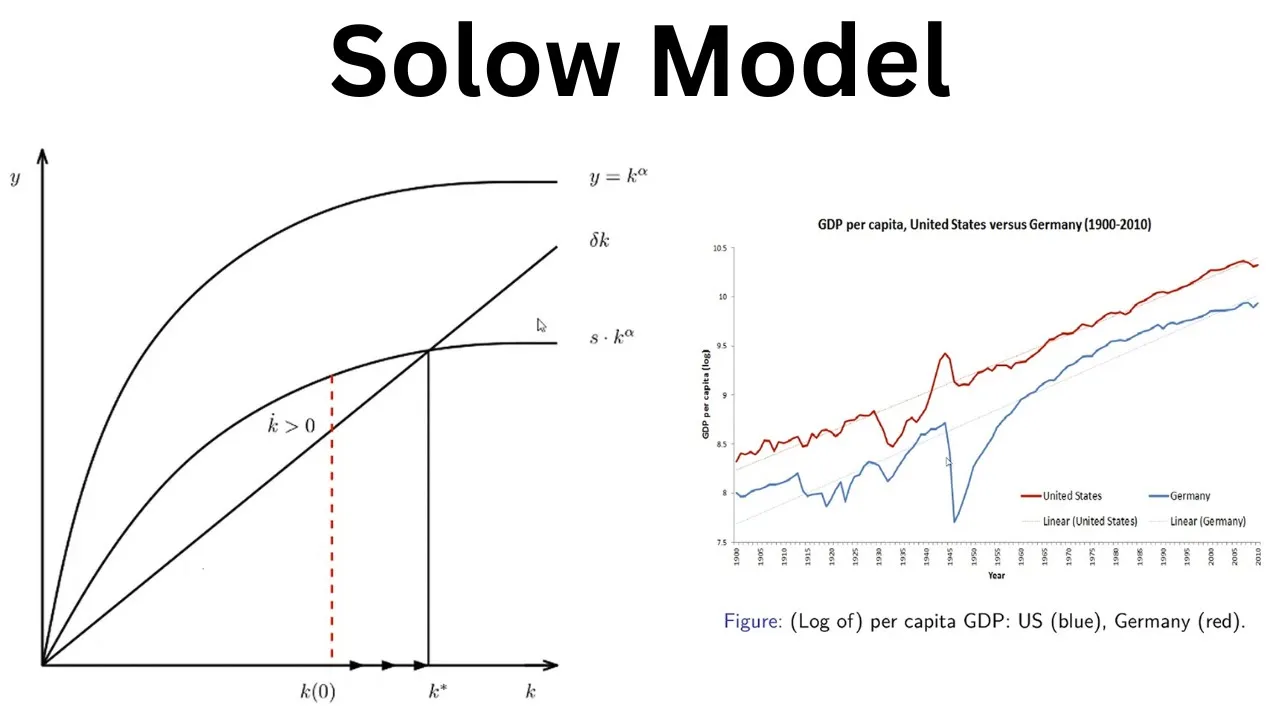








Economic growth is driven by productivity improvements, which depend on four key factors: physical capital per worker, human capital per worker, natural resources, and technical knowledge. The production function shows how these inputs combine to produce output, with diminishing marginal returns occurring as more of one input is added while others remain constant. Public policies that encourage saving and investment, education, health, property rights, free trade, and research and development can promote economic growth. The catch-up effect explains why poorer countries can grow faster than wealthy ones due to diminishing returns on capital. Growth accounting allows economists to decompose output growth into contributions from each factor.
Production and Economic Growth Explained: Key Determinants and Policies (Part 1)
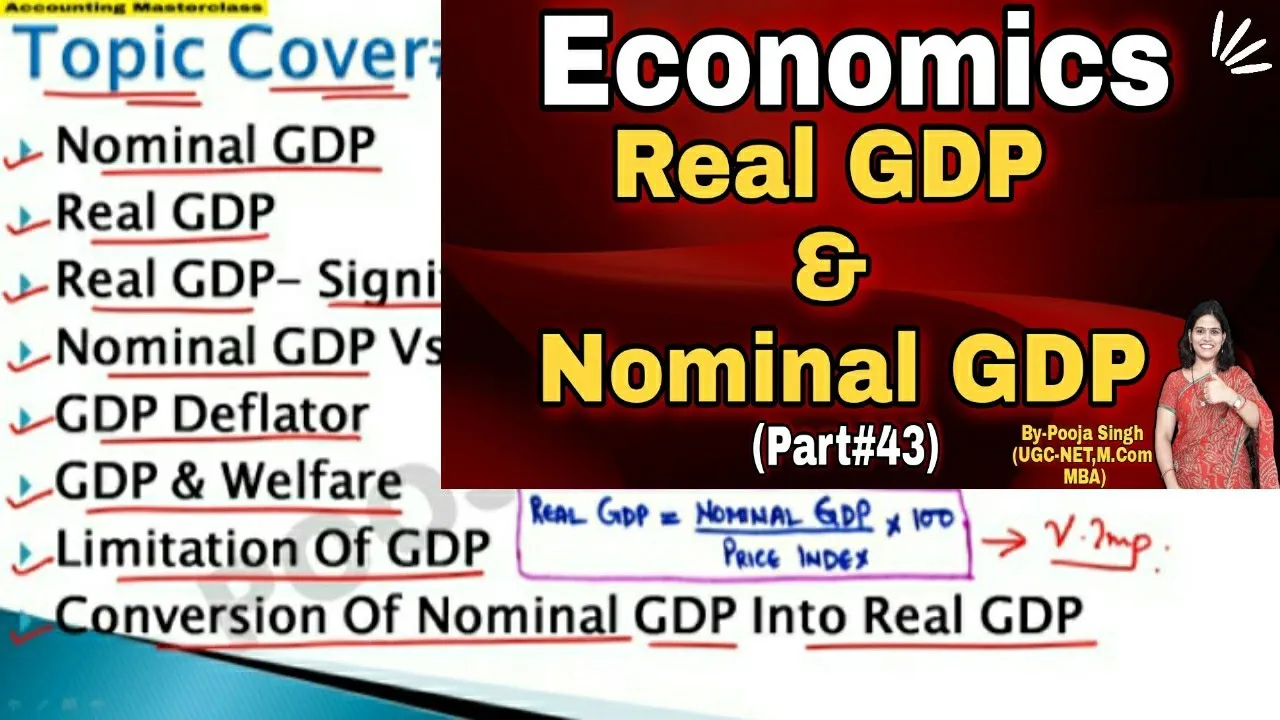
Added:Basic definition and measurement of Gross Domestic Product (GDP), specifically the difference between nominal and real GDP.
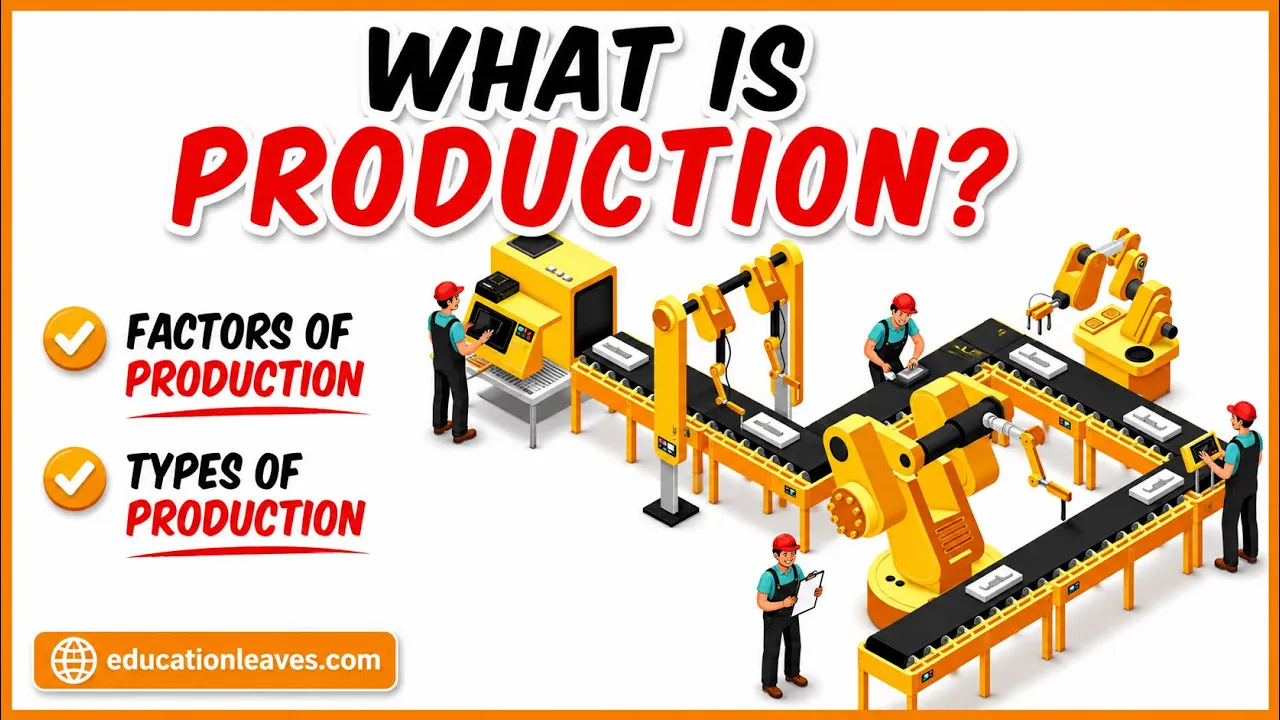
The core factors of production: land, labor, capital, and entrepreneurship.
The distinction between short-run economic fluctuations (the business cycle) and long-run economic growth.
The concept of opportunity cost, particularly how investing in physical or human capital requires sacrificing current consumption.
The Solow-Swan Growth Model, including the concepts of capital accumulation, steady-state, and diminishing returns.
Endogenous Growth Theory, which explains how technological progress and knowledge spillovers are generated within the economy.
The institutional framework of growth, exploring how property rights, legal systems, and political stability affect investment.
Case studies of growth policies in practice, such as the differences between export-led growth and import-substitution industrialization.
48.7K views949likes57:26Original Release: 2022-10-13
in this video we're going to talk about production and economic growth so um really the the main thing that we're going to be thinking about is what determines the standard of living in a country why is it that there are some countries that have high standards of living on average in other countries that have very low standards of living and also be thinking about what causes the standard of living in a particular country to change over time what are the ingredients that lead to economic growth so if we look at and it kind of depends on the stretch of time that we're thinking about but if we were to look at real gross domestic product per capita so in a previous video we've talked about gross domestic product remember that's our measure of the income of people in a country gross GDP per capita means income per person so it's a good measure of of kind of the average um standard of living in a country if we were to look at the United States so over about the last maybe hundred years the standard of living or the growth rate of real GDP per capita in the U.S has been a couple of percent around two percent now if you were to limit that to just say the last 40 years or maybe the last 50 years it's been higher it's been maybe four to five percent some years higher than that some years lower than that um if you were to look in at China say over just the last 40 years maybe maybe 30 years their growth rate's been even higher than that it's been upwards around eight to nine percent and again it depends on the time period that you die sit down into if you take certain short periods of time you can get very different numbers but on the other hand there are some places like Zimbabwe where standards of living have actually declined over time so over here we're going to put a picture that just lists some countries and it lists some time periods typically those time periods are going to be around the late 1800s or 1900s up until about 2017.
um things have changed a little bit with covid and and so these numbers if we were to look at current numbers they'd be a little bit different but this we're not really interested in in the exact number we're really more interested right now and what's happened over time so if you take a look at this picture you can see that the standards of living vary widely both at the beginning time period and at the end time period so those countries on the list there are ranked by growth rate you can see that um um over this time period that we're talking about China has had the highest growth rate per year 2.64 percent there are lots of countries that are not included on this list obviously at the bottom of the list has been the United Kingdom growth rate of 1.43 percent so you can see there that that several countries have improved dramatically so China has improved dramatically if you look at their real GDP per capita at the beginning and at the end that's a pretty dramatic Improvement Japan Germany um and then some of not if you look at at Pakistan and Bangladesh they have not improved dramatically also see that the United Kingdom was uh in terms of per capita real GDP at the beginning of the time period the richest nation but not anymore um so over time rich countries can become richer typically we tend typically to see countries that don't start out as as being wealthy countries typically over time what we've seen is that they've become wealthier not all of them let's talk for a second now about kind of a useful tool and this has come up in in other videos if you've watched my other videos you've probably seen me talk about something that we call the rule of 72.
it can be a good way to uh help understand the importance of changes in the growth rate so sometimes depending on if you're in a maybe a finance class or there are other times when people use a slightly different rule so there's another rule known as the rule of 70. I've seen the rule of 69 before for what we're going to do and there are appropriate uses for those all of them are going to give you a similar answer and so what we're interested in is just um getting an answer that gets us in the right Ballpark and so we're going to use the rule of 72 even though you you might you could use the rule of 70 and and be just fine um so here's the idea behind the rule of 72 it really just kind of gives you an idea a way of understanding how many years it takes a dollar amount to to double depending upon the growth rate so for example if the way you use it is the number of years to doubling is going to be equal to 72 divided by the growth rate I'm going to call it g so if the growth rate in a country is one percent then the number of years it's going to take standards of living to double in that country is going to be 72 divided by 1. it's going to take about 72 years neighborhood of 72 years for standards of living to double now in the table we saw that some of these countries had growth rates of a two percent two and a half percent I mentioned before that the United States has had three four five percent in recent decades China has had eight nine percent um so let's let's take ten percent if we had a country that was growing at a rate of 10 percent um then 72 divided by 10 is 7.2 right that means the standards of living are going to double every 7.2 years um so it let's go back to our one percent growth rate at one percent growth rate it takes 72 years at 2 percent growth rate it's going to take 36 years so you can see that going from one percent to two percent growth has a dramatic impact it immediately cuts the amount of time to doubling in half so it's important to understand that even very small changes in these growth rates can have huge impacts over time tempting for a lot of students to think that the difference between one percent growth and two percent growth is just one percent right it's one versus two but it's not it's a hundred percent more growth Okay so let's also talk about a useful way to calculate real GDP per capita growth rate so let me put a an equation up here that will help us as we think about um figuring out what growth rates are going to look like so let's say real GDP Real gross domestic product per capita growth rate so this is going to be equal to the growth rate in nominal GDP so I'm going to put nominal GDP growth rate minus the inflation rate minus population growth rate let's just write population growth rate now the first part of this there's a minus sign right there the first part of this these three terms right here may look familiar to you you may have seen in a different video where we talked about if you want to calculate real interest rate you've got to take the nominal interest rate and subtract off the inflation rate this is similar to that only it's not we're not talking about um interest rates here we're talking about growth rates and this is growth rate of per capita so this is per person that means we have to add this term that adjusts for changes in the population so if you've got the change in the growth rate in nominal GDP and you would calculate all of these as the percent change remember your percent change if you're going to calculate a percent change the way you calculate that is it's a fraction a ratio of two things in the numerator we have how much it changed by how much it changed and then we divide by the starting value and then we multiply by a hundred to move the decimal point a couple places to the right so all of these would be calculated as a percent change so what this means is if you've got the percent change the the growth rate of nominal GDP and what you're after is how much did real incomes grow by then we have to subtract off the inflation rate over the time period that we're talking about minus the population growth rate and that's going to give us the growth rate of real GDP per capita so there are going to be times when you may need to use that now let's start talking about productivity so remember our goal here is to start to understand what causes growth and so if you think about differences across country or you think about changes in the growth rate for a particular country over time the thing that's going to change or cause there to be differences in in growth is going to be productivity and and one of the the best ways to think about this I think is to think of of what a lot of textbooks call the Robinson Crusoe example so if you think about the uh the novel by Daniel Defoe Robinson Crusoe um basically it was Robinson was a sailor trapped on a desert island and basically had to become self-sufficient so Robinson is completely responsible for catching fish and and growing any food that he wants and and making clothing so now let's think about that situation let's pretend we think about the situation that Robinson is in so what determines Robinson's standard of living at that point well it's going to be his productivity right it's going to be how many fish can Robinson catch and it's going to be Robinson's ability to to grow vegetables an ability to make food and that can change over time right so he can increase his standard of living by becoming more product more productive now this is also true for an economy so if we were to think about something that you've probably seen in another video of mine or at another point if you've studied some economics if you've probably talked about a production possibilities Frontier a ppf so a ppf typically looks like this so we have some output good I'm just going to call it q1 and another output good Q2 and then a production possibilities Frontier typically looks like that and so this is used to represent all of the production possibilities all of the combinations of q1 and Q2 that this economy can possibly produce given its inputs and given its technology so the inputs would be land labor Capital that kind of stuff and then given the technology that it can use to combine those inputs into output so we know that the economy can produce any of these combinations inside the production possibility Frontier or any of these combinations on the production possibilities Frontier they're going to want to be on the production possibilities Frontier because we want to get the most out of the resources that we've got but they can't produce any point outside of this production possibilities Frontier so this is the same idea there's going to be a limit on what Robinson Crusoe can produce and the limit to Robinson crusoe's standard of living is going to be whatever they can produce so now if we think about what it would mean let's suppose that Robinson Crusoe is on this island for an extended period of time and over time he becomes better at catching fish or he develops maybe some some techniques that allow him to produce clothing quicker or maybe grow vegetables better then productivity's going up there and if we were to think about how we would represent a change in productivity in this picture then you probably know that this production possibilities Frontier can shift it could shift out in one direction or the other direction or both directions so we could have a a shift maybe that looks something like this it doesn't have to shift out the same amount in both directions so what this means is that something has changed that will allow now this economy to produce a set of bundles in this little sliver right here or on this new ppf that they couldn't have produced before that can be more inputs maybe they get more more labor or or it could be a change in uh um technology a technological Improvement that allows them to produce more with the inputs that they've got so in order to understand what is going to affect say the situation that Robinson Crusoe is in or the situation that an economy is we need to understand what are the things that affect productivity and so let's just run through the things that that typically we think about as having an impact on the productivity now I'm going to be thinking about a nation or an economy but we can think about this as uh working for as I said Robinson Crusoe the first thing we're going to think about would be say physical capital per worker physical capital per worker so if each worker has more Capital to work with than before then that's going to cause them to be more productive so if they have more tools or better tools then they're going to be able to produce more so same with Robinson Crusoe right if Robinson Crusoe had all of a sudden there were some fishing poles there where there weren't before then then he's going to be able to to catch more fish or if if he comes up with an idea for a great tool that would help him in farming then that new Implement is going to increase his productivity so now let's think about physical capital the the terminology that we use in an economics class would be or let's say that what we're typically thinking about is going to be equipment and structures equipment and structures and the terminology that we use for that is investment so you've probably if you've studied economics you've probably heard a conversation where somebody said look a lot of times when we think about investment out there in the real world a lot of people think about buying stocks and bonds but in an economics class that's not the way that we use the word investment we're thinking about investment as being when businesses purchase equipment and structures okay so now Capital physical capital think about how this is different from other inputs so physical capital is an input that used to be an output right so it's different from labor or it's different from natural resources physical capital is something that was produced to produce other stuff okay it's an input that was once an output so physical capital is going to be an important determinant of productivity second one we could think of human capital so human capital per worker so here we're talking about really Knowledge and Skills and workers get Knowledge and Skills through through training through education through experience so as Robinson Crusoe is on this island for longer stretches of time he's going to gain knowledge about the right ways to do things and improve the the skills that he has to catch fish and make clothing and grow vegetables that kind of stuff um so obviously human capital per worker is going to be an important determinant of productivity we can also think about natural resources per worker natural resources per worker so here we're thinking about land Rivers mineral deposits and those mineral deposits can be renewable um things like clean air clean water the the world's ecosystems are really really good at cleaning water it can be polluted up to certain amounts I mean we can we have the ability to pollute water to where it can't be used again but if we don't reach that amount you can pollute it um and then the the Earth itself the the ecosystem is going to clean it and make it usable again so um trees would be another example of a renewable resource or a resource could be non-renewable something like oil where once you use it it's it's done you can't reuse it um it's not necessary for an economy to have a lot of Natural Resources to become or to have a high standard of living so for example Japan has relatively few natural resources um and relatively high standards of living so that's not a necessary ingredient because natural resources can be imported into the country another determinant of productivity is going to be technical knowledge so that's all obviously going to be an important determinant so this is just going to be understanding of the best ways to produce goods and services right so this is really what allows a relatively small number of farmers in the United States to produce all of the food that we need in the United States and then export food to the rest of the world technical knowledge has increased dramatically in agricultural production over over uh the last century and before that so this is similar to human capital right human capital is really the learning of the knowledge down here so those are closely related so those are going to be important determinants of how productive workers are let's talk for a second about something that you may have seen in another class and that would be a production function this is another way that we can think about productivity so if we talk about a production function I'm going to write a general version of a production function so let's suppose we have y we're going to use y to stand for output I'm going to have the number a here that's just going to be a number if we want to get fancy we could call it a scalar but the word scalar is just a fancy word for the work for number so don't don't be confused by that um a and then we're going to have some function f okay and then inside there we're going to have Labor which we designate L we're going to have Capital which we designate k h we're going to use to stand for human capital and then in we're going to use to stand for natural resources so we've got labor Capital human capital this is going to be physical capital human capital and natural resources so what this says is the amount of output that we can produce is some function here F we could write this F as just some general function okay don't worry about what version that looks like what mathematical form it takes we're not going to worry about that in this chapter if you were to go on and talk more about production Theory and and maybe the costs of production then you'd worry about that but for what we're doing we don't need to think about it so this really a here represents productivity a represents productivity so the higher a is the more output we get out of these inputs so these are our inputs there's our output this production function represents the technical part of how the inputs combine to turn into output but a here is going to represent productivity okay so increasing the amount of output that we use if we were to increase labor or if we were to increase capital or if we were to increase human capital or natural resources that's going to allow us to produce more output and we can think about graphically representing the amount of output that we can produce as a function of the amount of input that we use if we were to put output up here and say put the amount of Labor that we use down here then we could think about the relationship and it's probably going to look something like this this would be what we would call a production function so this is the mathematical representation of a production function a general mathematical representation and this would be a graphical representation of that production function so you can see that increasing the amount of Labor increases the amount of output that we can produce but it's increasing it at a decreasing rate so if we're down here and we increase the amount of Labor that we use we get a bigger increase in output than if we're up here um and really we would think about this we're not going to make too much of this right now we would think about this as a short run production function so the idea here is that you're increasing labor but you're holding these other things constant and so what happens is output increases at a decreasing rate because of something that we call the law of diminishing marginal product um so I'm going to say law of diminishing marginal product if you're not 100 sure what we mean by that don't worry about it it's not that important right now if you want to know more about that then what you should do is you should go check out the video I've got on the costs of production um the idea is that if you're holding the amount of these other inputs constant like say for example physical capital and you're just adding more labor than um the laborers have to start sharing Capital they have to share space everybody's productivity is going to go down you may have heard the the saying there's too many cooks in the kitchen well that that's a way of saying the law of diminishing marginal product without sounding like an economist foreign so now let's think about what would happen if instead of holding some of these inputs constant we just think about changing all of the inputs so if we're talking about the long run where nothing is fixed we can think about changing this slightly let's rewrite it this way I'm going to write it as a times f um I'm going to reverse the order of this I'm going to put my y over here A times f is equal to x times L I'll explain what I'm doing there in just a second x times capital x times human capital x times natural resources equals x times y so let's think about what that means for right now so the X there I'm just thinking about changing the amount of inputs that we've got so if we were to say treat X as if it's 2.
then all that means is we're using twice the amount of Labor twice the amount of capital twice the amount of human capital twice the amount of natural resources and what we get out of that is twice the amount of output not all production processes are like that it could be that if you double the amount of inputs that you use you get more than double the amount of output could be that if you double the amount of inputs that you use you get less than double the amount of output if you get exactly X if we double inputs and that results in a doubling of output then we call that constant returns to scale instant returns to scale if you double inputs and you get more than double the output we would call that increasing returns to scale and you probably figure out if you double input and you get less than double the amount of output we call that decreasing returns to scale let's talk about now some limits to growth limits to growth so there are several people out there that would make the argument that standards of living can't continue to increase because at some point we're going to run out of uh the natural resources that we've got if you want a good example of that there was a researcher named Jay Forrester and Jay Forrester did a lot of work in the early 70s and a lot of that work ended up leading to a book that was called the limits to growth um and then there was another book called beyond the limits that I believe was published at some point in the early 90s and basically what those books said is that that given the number of people that we've got on this Earth and given the resources that we've got to work with we have exceeded our ability to continue things as they are there are limits to growth and and in beyond the limits the argument was made that that Society will collapse there we're going to reach a day a point when we all of a sudden are going to realize that we are out of resources and that's going to lead to the the complete collapse of uh civilization of course we're still around so you know that those predictions did not happen um the problem with those is that they ignore what has actually happened in the world and that is that we have had incredibly dramatic changes in technology technology technology has improved in ways that we never imagined possible say 50 years ago and there is no reason to believe that somehow that's going to end so if you assume that technology is not going to it to increase then yeah that you get we are beyond the limits to growth there's probably going to be collapse that's not the way that things work those models that the the limits to growth were based on were also models that ignored things that we know about basic human behavior so for example we know that as things get scarce their price tends to go up um as the supply curve shifts to the left that drives price up so when things get scarce price tends to rise now as price tends to rise what we know is that people respond to that by decreasing quantity demanded when price goes up we want less of it if you assume that that's not going to happen then as price goes up as Things become scarce if you assume that people aren't going to want less of it then you're going to be left with nothing but the conclusion that we're gonna things are going to collapse well but we know that that's not how humans behave what we've seen is that as resources become scarce that creates an incentive for people to to go out and find more that increasing price creates a bigger reward to finding more of the resource or finding better ways to use it so that we don't have to use as much as we used to and it creates an incentive for people to want to use less of it so again what we know about human behavior is that um um people don't behave the way that they assumed that Jay Forrester assumed in in those studies um you can look at the world around us and know that that's not what they predicted is not happening if resources were becoming more scarce we would be observing increases in the price of resources and for most resources we are not we're we're actually observing decreases in real terms in the price of those resources over time so human ingenuity is the thing that that causes us to know that that there's probably not any obvious limits to what what we can achieve in the future does that mean we need to be Cavalier about how we use things and just waste it of course not but then that's what we know about human behavior that scarcity drives prices up which affects our behavior all right let's talk about uh economic growth and public policy so our our goal here is to understand growth and we've talked about the things that are determinants of growth they're right here let's talk for a little bit about uh um public policy that that might encourage growth so one of the things that we can think about right off the bat would be physical capital we can think about investment so I'm going to call this saving let's say saving and investment foreign so we know I just said a little bit ago that investment is when businesses buy Capital so policies that encourage saving and investment are going to result in more Capital which increases productivity which then tends to increase the growth rate of real GDP um the challenge to that is that if we engage in investment now that decreases the amount of consumption we engage in right now so more resources put towards investment means that we have to delay consumption until the future and that can be challenging for people to do if if you've seen my other videos you may have seen the video on saving an investment and so you may know that there are some some policies that the government cannot can enact that will increase or decrease the amount of saving and investment that is done in the economy so unfortunately what we tend to see is that a lot of a lot of governments will create incentives that discourage savings so for example a capital gains tax a capital gains tax means that some of the reward to saving gets taken away from you it gets taxed away well if you do that if you decrease the reward to saving there will be less saving and consequently less investment and and so all other things equal we have to be careful about having capital gains taxes say that are too high then there are incentives like investment tax credits that can increase that can give businesses an incentive to engage in more investment so I talk about those in in a different video um let's talk about another policy and that would be say uh um or let's actually just talk about diminishing returns and I'm going to put in here diminishing returns and the ketchup effect catch up effect so let's think about what happens if we increase or if we engage in policies that increase the amount of capital actually what I need to do is I need to clear this off and kind of start fresh so I'm going to clear this off and then we'll come back and talk about that so let's think about pursuing a policy that increases the Capital stock so the amount of physical capital that we've got so we know that that's going to increase productivity in the uh longer run it's going to create more rapid growth in GDP but how long is that growth going to last let's think about that for a second if we were to draw a picture that's similar to one that we had up here let's put a output per worker and then let's put over here instead of Labor let's put Capital per worker we've got a production function here so now let's think about how Capital per worker effects output as we increase Capital per worker outputs going up but it's going up at a decreasing rate um so we're getting more output per worker but not as much as out here as we do down here so if we think about increasing Capital per worker draw a little horizontal line let's suppose we start right here with this much Capital per worker and we increase it then what we're going to get out of that is going to be that much more output per worker we increased Capital per worker by this amount we get that much output per worker as in return let's do that over here so if we were to increase it by the same amount I'm going to draw a little arrow the same distance right there increase Capital per worker now we're starting from a situation where we've already got more Capital per worker than we have down here and so what we see is the return that we get out of that in terms of output per worker is smaller Okay so the result what we're seeing here is that that the higher savings rate which is going to result in a higher amount of investment isn't going to lead to as big a reward out here so if you're talking about a country that has a high relatively High Capital per worker compared to a country with a relatively low Capital worker or Capital per worker then and they both increase the amount of capital per worker that they've got typically what this would tell us is that that the amount of output is going to increase much more dramatically in the country that starts out with the lower Capital per worker they're going to start to catch up fast right and so that's what we call the ketchup effect it's easier for a country to grow grow fast if it starts out relatively poor you may see in other places you may see this called convergence and so this is really an empirical question is do we observe convergence is it the case that when a country countries that are relatively poor grow faster than countries that are relatively Rich it's empirical and there's evidence for it there's evidence against it you can if you're interested in that you can do some searches and you'll you'll find plenty of information on it um we can talk about uh other policies so for example we could talk about investment from abroad investment from abroad so foreigners can engage in investment in our country or we can engage in investment in another country so let's suppose that a U.S company builds a factory say in Mexico um what we would we've got a name for that we would call that foreign direct investment foreign Direct investment or we could think about somebody in the U.S buying stock in a Mexican corporation that would be called foreign portfolio investment in both cases what's happening is that that Americans are providing resources to increase the Capital stock in Mexico right and so this happens all over the world um there are people that from other countries that buy stocks in American countries and people in in America that buy stocks in countries all around the in corporations all around the world and then there are businesses that say will build a factory in other places um and a lot of times people are skeptical of this I guess maybe it's just natural for people to wonder okay well is that a good thing or a bad thing so for example it could be that uh a Chinese firm builds a plant in the U.S or uh Chinese citizens buy shares of stock in U.S corporations a lot of times people will say hold it wait is that is that good for a Chinese citizen to be engaging in that type of purchase of of things here um and and so let's just talk about the effect that that has so let's go back to our example where the U.S company builds a factory in Mexico or a U.S citizen builds or buys a share of stock in a Mexican Corporation so those activities will increase productivity in Mexico and consequently increase GDP in Mexico um but not in the same way as if it was done by Mexican citizens some of the some of the income from that behavior is going to go back to the U.S so the company that builds the factory it's going to increase productivity and it's going to increase GDP there but some of that income from that behavior is going to come back to the U.S and if a U.S citizen buys a share of stock which represents partial ownership in that Corporation in Mexico well Dividends are going to come back some of the profits are going to come back to the person in the United States that bought it um so it still results in growth and and typically economists who are serving as policy advisors to countries will advocate for removing restrictions on foreign ownership because even though the impact is not as big it still has a positive impact on growth and a positive impact on GDP another policy thing that we can think about would be say education so investing in human capital is at least as important as investing I would argue in physical capital um if you look at say education in the United States it's estimated that each year of schooling tends to increase future wage by around 10 percent and so going to school getting education or getting skills it doesn't have to be book learning it can be going to a trade school those things tend to increase future wage but you have to also remember that if you're sitting in a classroom for a year there's an opportunity cost of that it obviously costs what you're going to pay in tuition and and books and that kind of stuff but there's a bigger cost and the bigger cost is that if you're sitting in a classroom for a year or four years then you're not working a job for a year or four years and so you have to factor that into the cost and and if you went out and got a job even at working at ten dollars an hour that's twenty thousand dollars so the cost of getting that education There's an opportunity cost right now but what we tend to know is that it typically pays off it's also the case that extra or that education creates externalities an externality is when one person's Behavior imposes a cost on another person or when one person's Behavior gives another person a benefit with the cost we would call it a negative externality with a benefit we would call it a positive externality I've got a video on externalities and public goods so if you want to know more about how externalities work you can take a look at that but um education creates a positive externality for people other than the person that's being educated um when more people are educated we tend to have better decisions made society-wide it just creates a better environment for other people to live in so education is going to be important another one that's going to be important would be we could say health and nutrition so from a policy perspective it would be good to an uh encourage policies that result in people taking better care of their health eating better you can look at countries with relatively low standards of living and you will typically observe a link between low levels of nutrition and countries with relatively low standards of behavior because it's hard to be productive when you're in poor health it's hard to be productive when you aren't consuming enough calories to engage in a day's worth of Labor so policies that encourage or that improve the health and nutrition of workers increase productivity increases the growth rate of real GDP we can also think about property rights property rights and political stability these are very important so in order for markets to work well there has to be a well-defined set of property rights there's very little incentive to be productive if you know that that if you're productive today then and tomorrow somebody comes along and steals what you made and there's no way that you can get it back then you're not going to be productive so what we tend to see is that in in situations where property rights are not well protected we tend to see people be relatively low lowly product not as productive in situations where there's political instability we tend to see people not be as productive um so it's most economists would agree that one of the most important functions of government is to establish property rights a well-defined set of property rights create a a legal system that protects those property rights and then engage in in Behavior where political stability is encouraged when you have economies where there's a lot of corruption a lot of bribery we also tend to see those have relatively low levels of growth and real GDP so we want to see less of that another policy thing that would lead to higher levels of growth would be say free trade countries that restrict trade tend to not do as well as countries that do not restrict trade so for example if you look at say Argentina many decades ago Argentina went to a set of policies that were more inwardly based policies reduced interaction with other countries and if you look at how well Argentina did over those years not well at all restricting trade does not increase well-being in fact if you've watched some of my other videos especially if you've watched the video on uh 10 principles of economics you know that one of the basic principles is that free trade can increase human well-being that doesn't mean that all free trade increases the well-being of everyone that's not what we're saying but all other things equal we would rather see more free trade rather than less so if you want to see more on that take a look at either that that 10 principles video or there's a video on the gains from trade that would be a good one to take a look at um let's talk about research and development research and development so it is good policy to encourage research and development and lots of countries do this typically through say uh funding of grants for research or through the establishment of a patent system that protects your rights if you come up with a new idea or a new invention um if you look at the amount of technological progress that we've experienced over time a vast majority of that has come from private research um it's it's been the result of what businesses have done and inventors it's a vast majority of the amount of technological progress that we've experienced has not come about because of the government in fact the government governments are notoriously bad at not being able to pick winners so it typically happens through private research but the government can encourage that and can provide grants to engage in it's not to say government has never come up with great ideas NASA has created a tremendous amount of technological progress It's just that private research tends to create a lot more but the government has a role to play at encouraging those things again through through grants for research through protecting property rights in the form of patents we can also talk about say population growth this is a an important issue when we start thinking about human well-being and productivity and growth and standards of living and really the the effect of population growth is is uncertain so on the one hand if if you have more workers that means you can produce more output on the other hand if you've got more workers that means you've got more people consuming that output and so it's not clearer it's not completely obvious whether having more workers helps you or hurt you in fact if you go back and you look at say the early 1800s there was an economist named Thomas Malthus and Thomas Malthus wrote A Treatise in which he argued that um population growth is going to result in indefinite poverty for the world's population his argument was this our ability to grow food is limited much more than our ability to increase population population growth happens faster than than food growth and so his conclusion was that we are destined to live in poverty forever we're not going to be able to grow enough food to feed the world's population so what we need to do is we need to limit the world's population turns out Thomas Malthus was dramatically wrong completely wrong for a similar reason that Jay Forrester was completely wrong and that is that he completely underestimated the amount of technological progress that we experience so let's just say population growth it's it's not it's not clear exactly what uh what to do with that let's finish up by talking just a little bit about what has come to be known as growth accounting growth accounting so one thing we've talked about the important characteristics of of growth of productivity we've talked about some public policies related to encouraging those we could also start to talk about what are the most important things what should we pay the most attention to we can think about the growth rate of real GDP we can separate out the kind of the components of that into the com contribution of of Labor and the contribution of capital and the contribution of Technology by using this statement I'm going to say G with a little y there that's going to stand for the growth rate of output it's equal to the growth rate of technology which I'm going to put that little a there remember previously we had technology as being represented by a Plus that a a lowercase a multiplied by the growth rate of capital g k plus 1 minus a multiplied by the growth rate of Labor now a again this a stands for technology this a right there that's the amount of uh or the share of output that goes to Capital so share of output that goes to Capital this would then represent the share of output that goes to labor l so if let's say one-third if a was one-third one-third of the output that was produced in the economy goes to Capital then two-thirds would go to labor this plus that add up to one so this gives us a good way if we're thinking about how fast capital is growing how fast labor is growing how fast technology is growing um and then we can think about the share of output that goes to both capital and labor this gives us a good way of thinking about how fast output is going to grow of course we can use this if we know any of these things if there's one of these things that we don't know and we know the rest we can solve for the the thing that we don't know so if you are taking a test or working homework where you were doing a problem like this you should be prepared not to be given all of these things so that you can calculate that you should be prepared to be given uh let's say the a and then three of the Four G's and calculate the other one okay so hopefully that gives you an idea of the things that lead to growth in a country the policies that we can engage in that would encourage growth so I'll see in another video
Up Next

4:56
Why Nations Fail: Daron Acemoglu on Inclusive vs Extractive Institutions
@mit
128.1K views•2012-03-23

5:07
Impact of Yuan in Indo-Russian Trade Amid Sanctions
@WION
261.9K views•2022-07-01
66:43
Externalities & Public Goods: Pollution Economics & Coase Theorem
@DrAzevedoEcon
67.4K views•2022-09-29

113:18
The Age of Easy Money: Fed & Inflation | Full Documentary
@frontline
21.2M views•2023-03-15
Related Study Plans & Knowledge Roadmaps
Structured learning paths in Economics
economics
Sovereign Debt: Defaults, IMF & Restructuring
01Introduction to Sovereign Debt & Government Bonds
02Debt Sustainability & Credit Ratings
03Anatomy and History of Debt Crises
+ 2 more learning modules
12h5 modules
Explore Roadmap
economics
Market Design: Matching Theory & Gale-Shapley
01Introduction to Market Design and Price-Free Markets
02Two-Sided Matching & The Gale-Shapley Algorithm
03School Choice Systems and Mechanism Design
+ 2 more learning modules
10h5 modules
Explore Roadmap
economics
Impossible Trinity: Forex, Capital & Policy
01Introduction to Monetary Policy and Central Banking
02Exchange Rates and International Capital Flows
03The Mundell-Fleming Model
+ 2 more learning modules
8h5 modules
Explore Roadmap
economics
Healthcare Economics: Market Failures & Systems
01Introduction to Healthcare Markets and Market Failure
02Asymmetric Information and Adverse Selection
03Moral Hazard and Insurance Design
+ 2 more learning modules
12h5 modules
Explore Roadmap