




![[EBS] 2022 공인중개사 유료 기초강의 무료공개! - 부동산학개론 기초이론 8강](https://i.ytimg.com/vi/8tw1bcavJto/sddefault.jpg)











![[사회과학동향] 기후 변화와 게임이론 - 국민대학교 이상아](https://i.ytimg.com/vi/7w8jpGGtTak/maxresdefault.jpg)








Externalities occur when economic activities impose costs or provide benefits on third parties not directly involved in the transaction, leading to market inefficiency; negative externalities (like pollution) cause markets to produce too much of a good at too low a price, while positive externalities (like education) result in too little production, and these inefficiencies can be addressed through government interventions such as taxes, subsidies, tradable permits, or by addressing the underlying property rights structure that enables externalities to exist.
Externalities & Public Goods: Pollution Economics & Coase Theorem
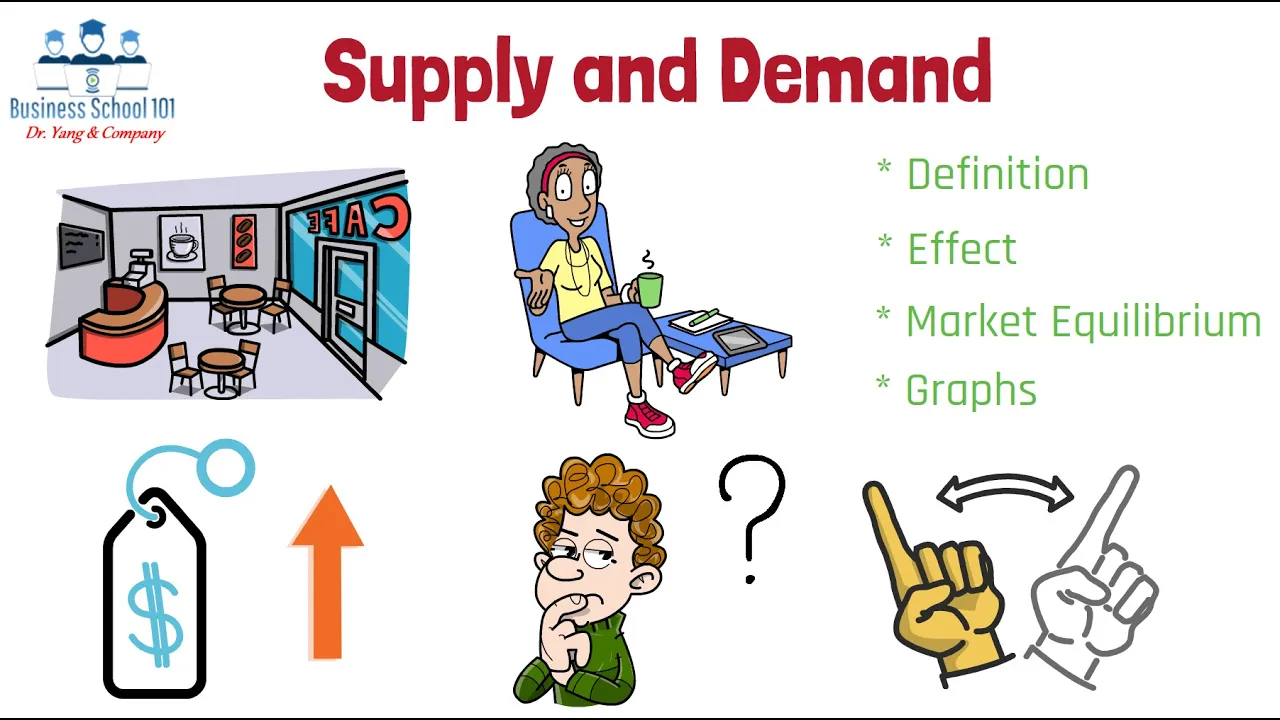
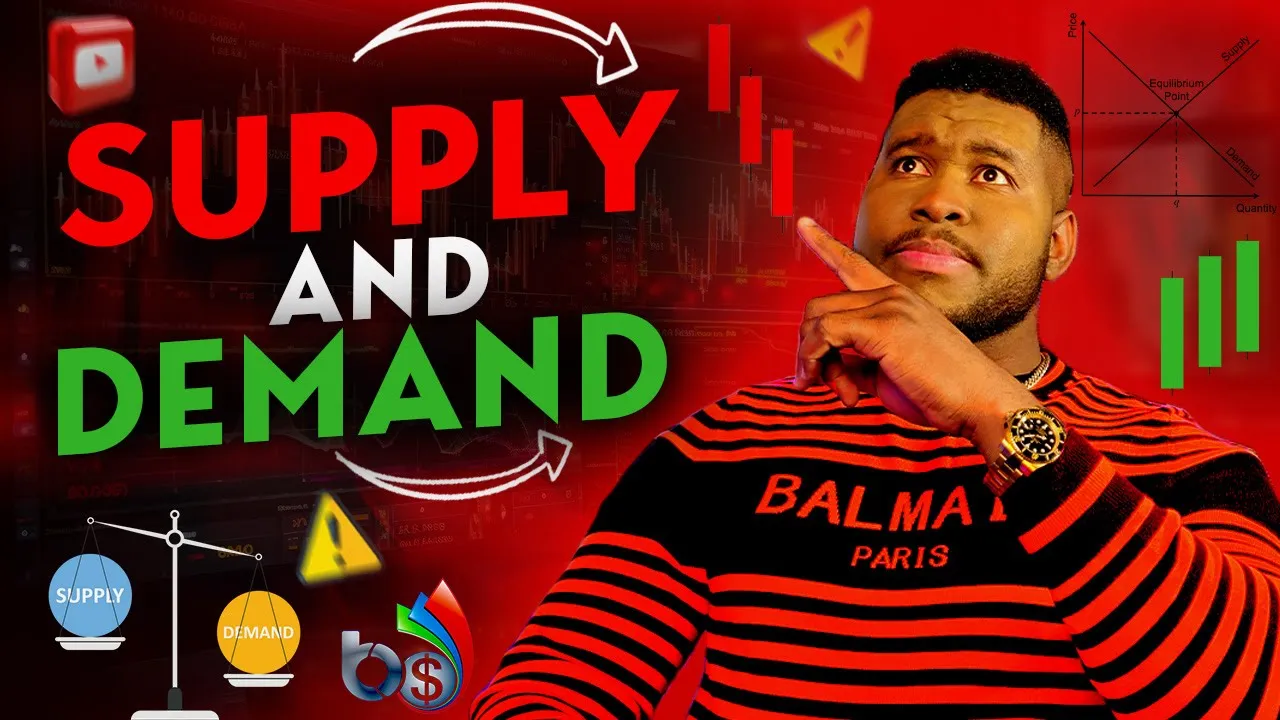
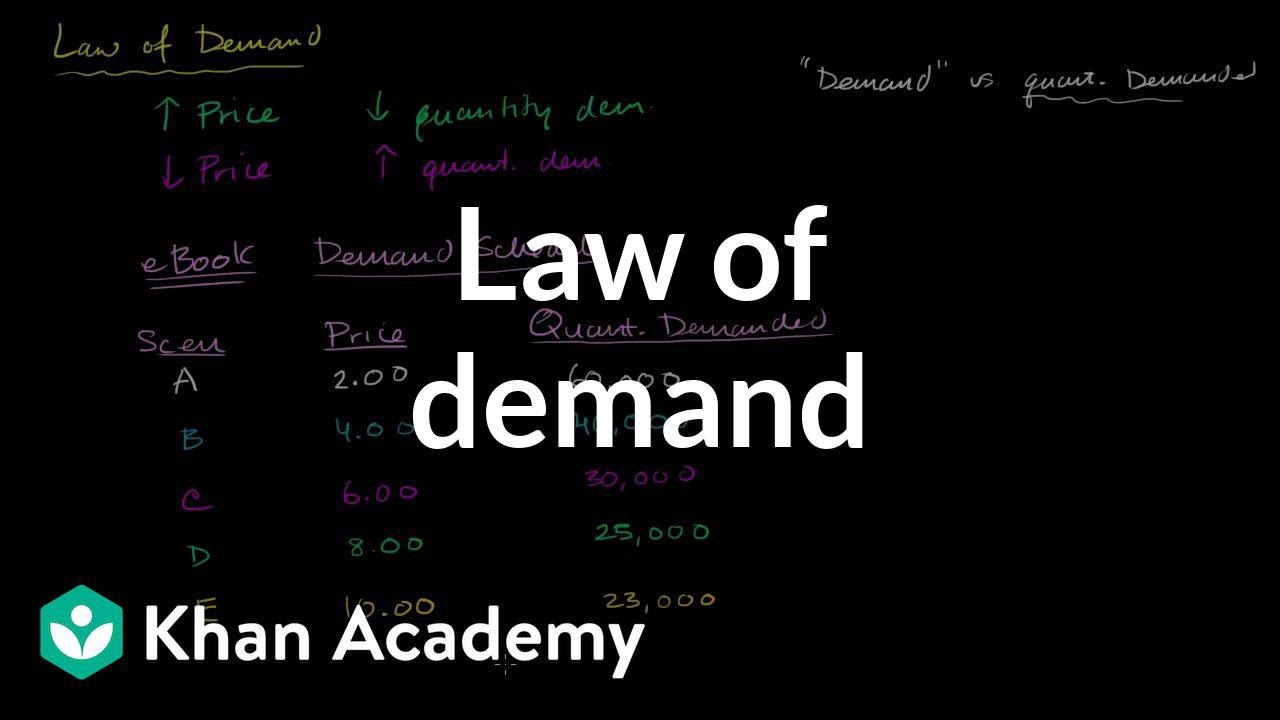
Added:The Law of Demand and Supply and how competitive market equilibrium is established.
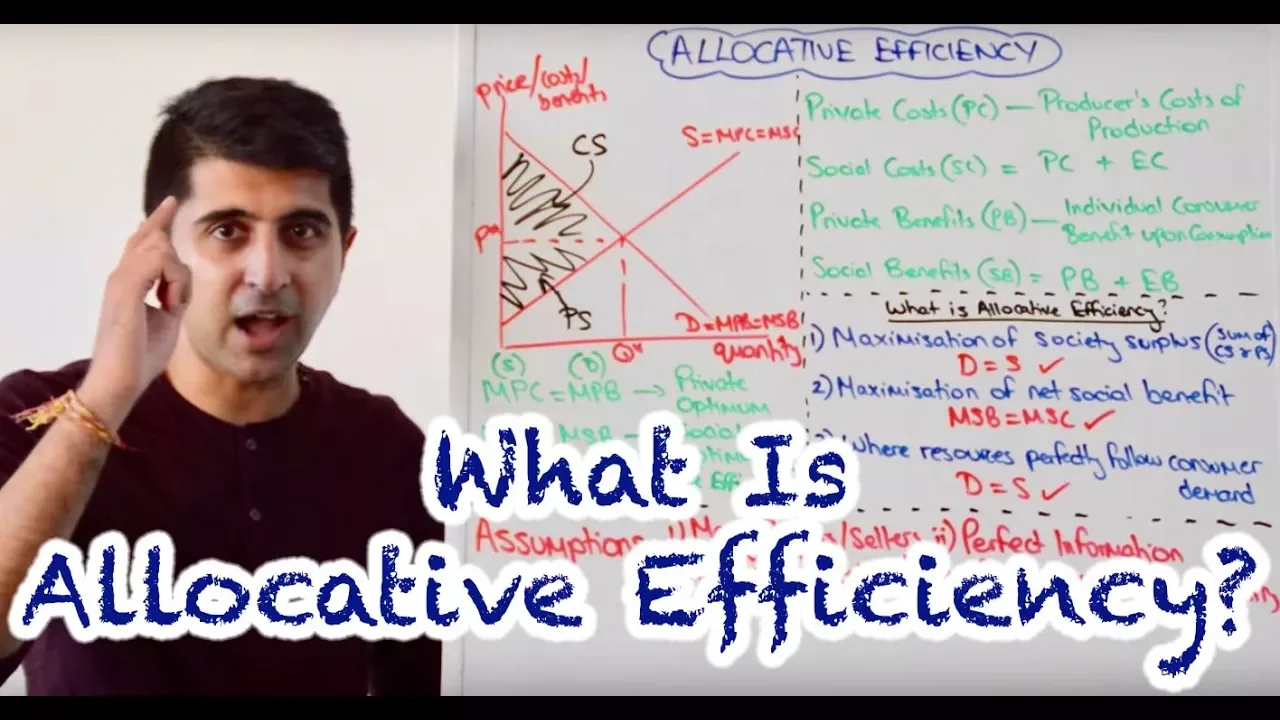
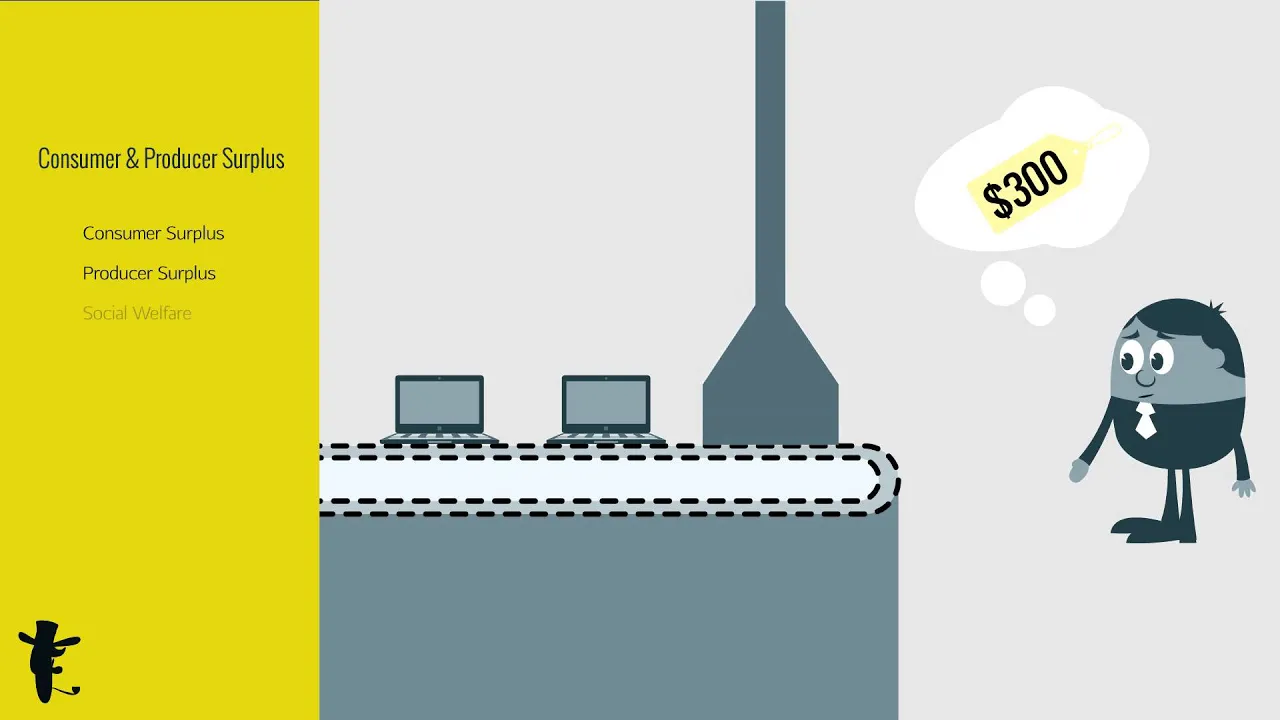
The concept of Allocative Efficiency and how free markets maximize consumer and producer surplus.
The basic distinction between private costs/benefits and social costs/benefits.
An introductory understanding of 'market failure' as a concept where free markets allocate resources inefficiently.
The Tragedy of the Commons and the economic governance of common-pool resources.
Practical design and economic analysis of Cap-and-Trade systems (e.g., carbon pricing mechanisms).
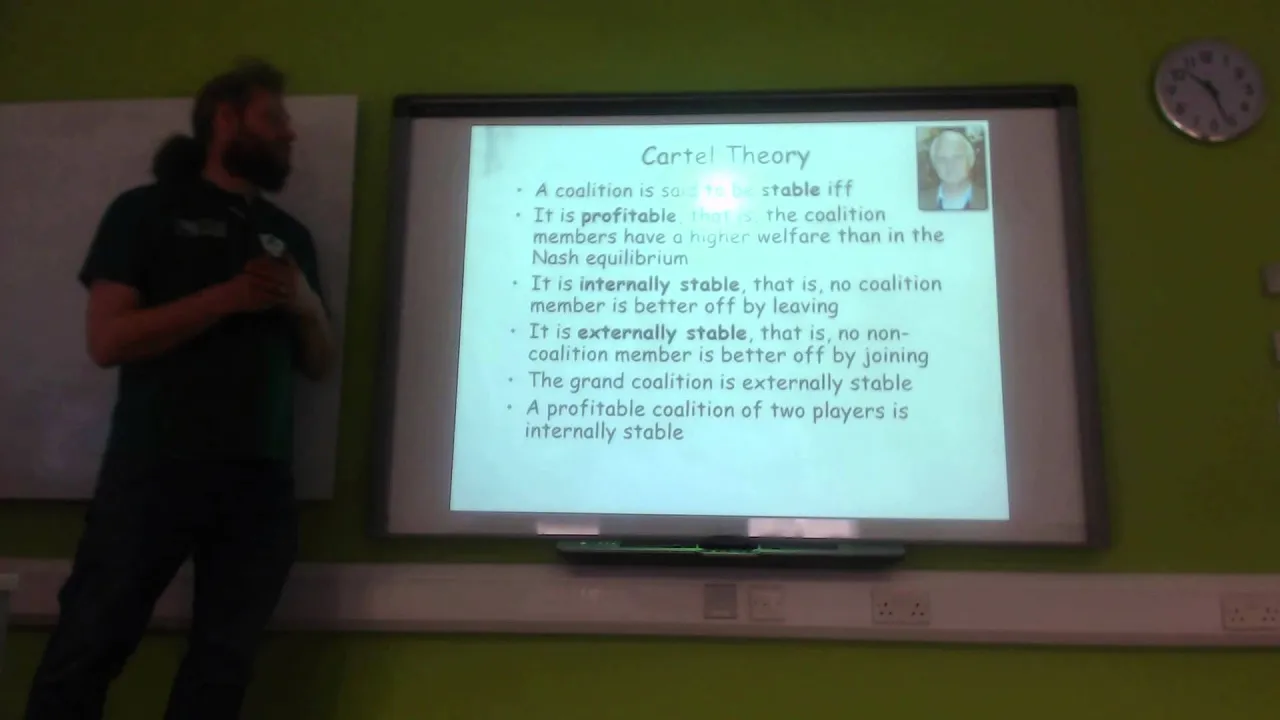
Game Theory applications to international environmental agreements, addressing the global free-rider problem.
Cost-Benefit Analysis methodologies used by public policymakers to value non-market goods like environmental quality.
Other sources of market failure, specifically Asymmetric Information (adverse selection and moral hazard).
67.4K views1.3Klikes1:06:43Original Release: 2022-09-29
in this video I want to talk a little bit about a concept known as externalities and really what we're going to be thinking about is the issue of pollution where pollution comes from why it's created and then what we can do to try to have less of it okay so we're going to think about how how markets result in the creation of pollution actually any economic activity results in the creation of pollution but we'll think about specifically how the issue of pollution is dealt with within Mark a market-based systems so let's start by thinking about um this question what's the right amount of pollution and that's a kind of a tricky question because if you go out and you ask people on the street what's the right amount of pollution everybody's knee-jerk reaction is to say zero but we have to think very carefully about that question because it's much more subtle than than just saying no we we need to strive for having none um what we know about this world that we live in is that that any type of economic activity the the production of anything creates pollution pollution is not something like um tires that are created solely created in a factory we don't have pollution factories out there if we had pollution factories and that was where pollution came from then we just closed those factories down pollution is a byproduct of the production of everything and so if as a matter of public policy we wanted to have zero pollution then the only way to achieve that is to have zero production of anything or everything well clearly we don't want that and so we have to figure out well what's the how do we balance the benefits that we get from the production of things like baby formula and medicines and food and transportation to different places and entertainment how do we how do we pick the right amount of that so that we don't have too much pollution because pollution is something that we don't want to have we want to have less of that so we have to think about well what what are the benefits of the things that we're producing out there in the economy but also what are the costs and the pollution is one of the costs of of production and unfortunately a lot of times the the costs created by pollution tend to kind of get pushed aside and and ignored because they can be hard to put a dollar amount on and so it's easy to ignore them it's easy to ignore anything that you don't have a dollar amount for but we have to think about if we're going to make good economic decisions we can't ignore that so let's start by thinking about a concept known as externalities externalities so here's the definition of an externality we can have a positive externality we can have a negative externality but here's what an externality is an externality is a either a benefit or a cost that affects somebody that's not directly involved in the production or consumption of a good or service okay so let me give you a different less sophisticated definition of it an externality an externality exists anytime one person's Behavior affects somebody else so somebody's either getting a benefit or bearing a cost and that benefit or cost that they're bearing is a result of somebody else's Behavior it's not a result of their behavior okay so let's think about a negative externality or some examples of negative externalities this would be a situation negative externalities a situation where one person's behavior is creating a cost that is being borne by somebody else okay so the classic economic example of a negative externality secondhand smoke so this would be a situation where the smoker is breathing out exhaling smoke and then somebody else that's in the vicinity ends up breathing it and they're breathing that smoke it's creating a cost for them that's not part of their behavior it's part of somebody else's Behavior um production of a good that creates pollution that's an example of a negative externality production of a good that creates pollution so we've got let's say a firm a business that's producing some good and that during the course of production of that good maybe there's something that comes out of some smoke stack or maybe it's something that um is emitted into a Waterway or maybe it's noise pollution um and then there are people outside of the firm maybe people in the vicinity of the factory that are just going about their daily lives and they have to breathe in the stuff that comes out of the smokestack that would be an example of a negative externality it could be anybody driving a car you driving your car if you drive your car then there are things that are coming out of your exhaust pipe that go into the air and other people breathe those things in and so you anytime you're driving you're creating a negative externality it's not very big but it's still a negative externality and you might think well no I've got a an electric car but it's still the same right it's just that the the emissions aren't coming out of your car they're coming out of the electricity Factory that's generating the electricity it's just that the emissions are coming from a different location and keep in mind that a majority of the electricity that we use is still generated using fossil fuels and so um it's still creating a negative externality again not a very big one the size doesn't matter it's it's a negative externality and there are lots of other examples playing your music loudly so that it it disturbs somebody else that would create a negative externality there are also positive externalities so if we think about some examples of positive externalities something like you getting a college education so if you get a college education then people with more education tend to make more responsible decisions they tend to be more productive in society and when people are more productive that that benefits me so you getting your college education actually passes on a little bit of benefit to me because it improves Society not a lot you actually capture a vast majority of the benefit of your college education but there is some benefit that you pass on to other people so that's an example um immunizations so you being immunized or you getting your kids immunized um creates a healthier Society in the future so other people benefit from that so those are examples of positive negative externalities another example of a positive externality would be say you spending time Landscaping your yard to create a a pretty scene that somebody could drive by and see so if I drive by your yard you've spent a lot of time making it look nice then I could drive by and sell wow I like driving by here that that makes my day just a little bit better and there you of course can enjoy you're getting the benefit but you're also passing along a little bit of benefit to me so what we've talked about earlier in the class we've talked about a situation where free markets what we know is that free markets maximize the economic well-being of both buyers and sellers we've seen that that total Surplus is maximized when you have a free market now what we're going to think about now is what happens if there's an externality present and what we're going to see is that a free market does not maximize total Surplus in the presence of an externality either a negative externality or a positive externality so if externalities are present this is a situation where the government may play a role to try to move the market outcome to a better outcome something where total Surplus is actually bigger than it would be if the government didn't do something let's start by thinking about a negative externality so a negative externality is a situation where the supply curve the marginal cost curve does not capture all of the costs associated with the production of the good so we'll think about production of some good that creates a negative externality so let's start by thinking about what this picture is going to look like we've got the price up here and the quantity down here let's think about say the production of electricity okay so let's say that this is the generation of creation of some amount of electricity and so here's the price price of electricity now we've got some demand curve a market demand curve all of us have have some demand for electricity going to be a supply curve then a label this supply curve um call this private remember that's a marginal cost curve anytime we have a supply curve we know that the market supply curve is just the horizontal summation of all the individual firm Supply curves so that market supply curve represents the cost of production it's a marginal cost curve but now let's label it private because what we're going to do is we're going to think about let's say s private represents the private costs of production of electricity so it represents private costs of production of electricity now what what we mean by that is that it represents the cost that the the electrical utility faces okay so the the utility is ha going to have costs associated with production of the electricity that it generates and and they would respond they would maximize their profit by looking where marginal revenue equals marginal cost but they're only going to respond to the costs that they themselves bear so when we say private costs we're thinking about the private sector versus say the public sector maybe the public in general that's probably a better way to think about it but now what that means is that there's going to be some cost that the utility doesn't bear maybe they emit something out of smoke stacks that particulate matters matter or maybe it's some pollution that that clouds the sky or creates some health impact for people okay so there's going to be let's say that the firm is able to pass some cost onto everybody else okay foreign this would be the pollution so whatever form that pollution takes it could also be that maybe it's uh this is a generation electricity generating facility where water is used to cool something down and then that water is emitted back out into a lake and it warms up the water temperature that's some something a situation where some cost would be passed on so the firm is able to pass some cost to everyone else okay we call this the external cost the external cost so if we think about what this supply curve represents if we were to pick a quantity a quantity out here and go up to the supply curve the height of that supply curve would represent their private cost but then there's going to be some additional external cost so if we were to go up a little bit higher at each quantity if we were to go up a little bit higher this vertical distance is going to represent the external cost so let's have a little arrow that says here's our external cost that's the cost that the The Firm itself doesn't have to bear they're passing that on to everybody else so if we were to think about the total cost if we were to have another supply curve that was everywhere that vertical distance higher than the original one we'll call this the supply curve we'll call this the social cost I'll just say social that's the full cost to society it's made up of the private cost which is this distance plus the external cost that's borne by people outside of the firm so out here at these quantities the private cost would be this vertical distance and then there's this extra external cost that's passed on so this curve represents the full cost to society now if we think about what happens if the firm is able to pass that cost on then the free market outcome is going to be right here let's call this Q I'm going to say free market there's the quantity that would be produced if the the firm is able to pass this cost on to everybody else and here would be the price in the free market I'm just gonna say free market there's the free market quantity and price but now let's think about what the right quantity in price would be and and the right quantity in price is going to be the quantity that exists and the price that exists if no cost is passed on or let's say no cost is ignored so from a from society's perspective the full cost of production at the margin would be represented by this curve and right here would be the right quantity this would be the quantity that the benevolent social planner would choose because the benevolent social planner would not just pass this cost on to somebody else and then not worry about it the benevolent social planner wouldn't wouldn't ignore any cost and so right here is what we would call the efficient quantity and right up here would be the efficient price so let's call this Q star and we'll call this P star so here's the conclusion that we get anytime we've got a negative externality where production of some good and it's not just production it could be any of these things what we see is that the free market results in too much of the good being produced and the free market price is too low it doesn't reflect the full cost of production so once the the externality is accounted for we would produce less of the good and charge a higher price okay so let's say negative externality foreign Ty results in production of too much of the good and let's say here with a free market so anytime you've got a free market and an externality is negative externalities present the free market is going to result in too much being produced and we have a name for this we call this market failure Market failure I've never been a big fan of this term because I think that the term itself makes it seem as if the market is not adjusting to eliminate surpluses or shortages it that's not what we're talking about here the market fails not in that price doesn't adjust or if a a surplus is present there's no incentive to lower price that's not what happens clears it's just market results in the wrong quantity an inefficient amount of the quantity being produced okay so there's going to be dead weight loss created that's what we mean when we say market failure now let's think about what happens if there's a positive externality so let me clear this off and then we'll take a look at that let's take a look now at what the picture is going to look like if we have a positive externality now remember a positive externality is when there's some benefit that's being passed on to somebody that's not engaged in the behavior themselves so for this one let's do uh let's do college education so let's suppose our quantity is um here we'll we'll just say college education we could describe that in terms of number of students getting educated or the number of college hours of Education we don't even need to worry about that let's just say it's quantity of college education we could even talk about it in terms of maybe scholarships but let's just leave it as that this will be the price of a college education so let's put our demand curve up here and our supply curve market demand market supply now in this situation there's a benefit that's being passed on now remember the supply curve represents the cost and when we were talking about a negative externality and there was a cost being passed on we rep we recognized the fact that that supply curve didn't represent the whole cost but now there's a benefit being passed on remember that it's the demand curve that represents the benefit so we're going to call this demand curve the let's call it the marginal private benefit I'm just going to put private down here like we did with our supply curve represents the marginal private benefit but now there's some benefit that's being passed on we could call it an external benefit and so if we were to pick any quantity and go up to the height of the demand curve the height of the demand curve would be rep capturing the private benefit that would be the benefit that the students themselves get from going to college but then there's going to be some external benefit that's passed on and so let's suppose that that external benefit is say that vertical distance okay and it's going to be that vertical distance whether we're talking about this quantity or this quantity there's our external benefit so if we were to represent the full benefit the curve that captures all benefits associated with college education then we'll call this one D Social that represents all of the benefits the benefits that are captured by the private individuals engaged in getting the education but also the benefit that's captured by Society because other people are getting an education so keep in mind the benevolent social planner would never ignore that that benefit that's going to other people now if we were to think about where the free market goes well individual students are going to respond to their own private benefit and so this would be the outcome in a free market we'll call that Q free market and this would be the price foreign now if we think about what would happen if we don't ignore any benefit the benevolent social planner would point out okay well this is what happens in the free market but right up here is the quantity that would be provided if we were thinking about ma actually maximizing total Surplus we'll call that Q star here would be P star so we get a similar thing to what we saw with a negative externality except it's in the opposite direction what we see is that with a positive externality the free market results in too little of the good being provided so the Practical conclusion that we could get from this is that there is a good justification for why the government would want to get involved in increasing the amount of college education that takes place whether that be through grants or whether that be through scholarships of some type there's a or or subsidizing universities in some way there's a good theoretical explanation for why we wouldn't want to just rely on the free market okay results in too little of the good if there's a positive externality let's ask this question what causes externalities what causes externalities and there's kind of an interesting explanation for what causes externalities what it boils down to is that there's some failure of the property rights structure so let's just say the the main cause the cause of externalities whether they're positive or negative is what we would call an incomplete property rights structure incomplete property rights structure that's what allows some people to pass on costs to other people and it's also the problem of not being able to capture all of the benefits associated with a positive externality so let me give you an example to kind of illustrate what's going on here let's suppose that you own a piece of land and that land has a lake on it and let's suppose that you lease some of the land to a paper mill foreign your leg well if you own the land and the lake is on your land and you lease that land to the mill and they pollute your Lake then you can hold them responsible the court system will allow you to sue them as long as you can prove that they somehow did this beyond the contract that you agreed upon then they will be held liable in that case there's no externality because they're not able to pass on the cost you can hold them responsible for it but now let's suppose that that that Mill is built on let's say privately owned land on the banks of a lake that's owned by the state now that creates a whole different situation because if the lake is owned by the state then then in reality it's not owned by anybody if everybody owns it that's the same thing as nobody owning it because if you you yourself as a private citizen cannot sue somebody else for polluting a public Lake okay so in the absence of any type of government regulation that prohibits them and there are certain restrictions but emitting some pollutant into a lake is not completely illegal you have to abide by whatever the government regulations are but nobody can sue for that in that case the cost of the pollution is passed on to society that is a situation where the firm would be able to make that cost external to them they don't have to worry about it and what is different between the two situations is who owns the property whether or not it's owned by a private individual or whether or not it's public property public property means that no private individual is able to sue based upon what happens to that property okay you can't challenge anybody else's ability to use the link and that's what creates the problem it's an incomplete property rights structure there's a a failure of anybody to own that so now let's think about how we fix that problem the way we fix it is we have to address the property rights structure and there's a a let's say a handful of ways that we can do that so let's talk about private solutions to externality private Solutions to externalities I'm just going to abbreviate that and let's start by reminding ourselves that the efficient amount of pollution is not zero we have to balance the the good that we get out of production of the the goods and services or in the the picture that we drew the good that we get out of production of that electricity and remember that production of that electricity is allowing people to heat their homes when it's cold and allowing people to have lights and it's allowing people to run um let's say appliances in their house all of those things that enhance people's well-being but then there's this negative side effect and that is that it's also creating some pollution so we have to balance the good that we get from the things that we can use the electricity for with the bad that we get from production of the electricity so if we think about let's draw a little picture here let's suppose that we think about pollution reduction here quantity of pollution reduction so here's our quantity let's put our our price let's put just dollars up here this will be the cost and benefit so if we think about what's the right quantity of pollution reduction well there's going to be a marginal cost of pollution reduction it's going to be upward sloping the more pollution we reduce the more costly it is to reduce pollution when you let's suppose that we're not reducing any pollution then that means there's going to be some low-hanging fruit so to speak there's going to be some easy things that we can do that have relatively low cost that allow us to reduce pollution but then as we reduce more and more pollution it gets harder to reduce more and more you can install scrubbers on smoke stacks and that will capture a large part of the pollution but then there's always going to be very small amounts that are very hard to capture and you need much better technology and that better technology is much more costly so if we want to reduce a lot of pollution at the margin it's going to be very costly now in terms of the marginal benefit of reducing pollution if we do no pollution reduction then the marginal benefit of reducing a little bit is is high but then as we reduce more and more and more and more the marginal benefit declines if you've reduced 99 of the pollution that's out there then the marginal benefit of reducing that last one percent is very low so just like any demand curve or marginal benefit curve it's downward sloping so let's call this marginal benefit this is downward sloping for the exact same reason that any demand curve is downward sloping when you don't have very much of something you value an additional unit highly but the more of something you have the less you're willing to give up to get another unit at the margin this is why the first bite at the buffet is always the Best Buy right but then as you continue to eat each consecutive bite gives you less and less benefit and by the time you're full one more bite's not doing you much good at all now what we've seen in this class is that we get the right outcome when marginal benefit and marginal costs are equal a decision maker takes an action as long as the marginal benefit is higher than the marginal cost never when the marginal cost is higher than the marginal benefit so the right amount of pollution reduction is right here let's call it Q star don't confuse this with with production of some good this is we're talking about how much pollution should we reduce the conclusion that we get here is that we should not reduce all pollution we need to reduce pollution until the marginal benefit of reducing pollution is equal to the marginal cost of reducing pollution okay let's think about in terms of some private solutions to externalities let's talk about something that we call the COS theorem cos theorem States created a first written about by an economist named Ronald cose and what Dr Coast said is that as long as transaction costs are low then the firms or the the parties that are involved in the negative externality are going to have an incentive to come to some agreement between themselves that will eliminate the externality okay so let's just say that um private bargaining that's the key thing private bargaining will fix the problem so here's the idea let's suppose that um um I own the lake and um no let's let's change it let's suppose that um there's a river looks like this and let's suppose I own a resort down here 's a resort and up here is a firm that generates electricity so electric let's just say the Electric Plant and so I own this Resort here's the Electric Plant this is a public River and let's suppose that this plant as part of the generation of electricity let's suppose they take in some water they heat it up to they use it to cool off some of their I don't know turbines or something and then they emit that warm water back out into the river okay so there's warm water getting emitted back into the river let's suppose the river flows this way towards my Resort and let's suppose that that warm water makes it uncomfortable for people at my resort to get into the water okay and so that's hurting my business so here's what the coast theorem says the coast theorem says that I have an incentive as the Resort owner to go to the Electric Plant and offer to pay them to reduce the amount of warm water that they emit into the river I have an incentive because I'm losing out on some of my profits that I would make otherwise so up to the amount of my losses I would have an incentive to pay them to reduce the um the temperature and and we can show theoretically that yeah there is an incentive and we can also show that the electricity plant would also have an incentive to make a deal with me as long as as the transaction costs are low the problem with this is that that it doesn't apply a lot it's nice it's nice to think that there could be some private bargaining that goes on but a lot of times what we see out there in the real world is that the firms tend not to negotiate with the resort and especially if there are a lot of people let's suppose it's not just one electricity plant suppose it's multiple plants the bottom line is that the coast theorem is nice theoretically but it doesn't apply very often so let's think about some government remedies foreign the first one that we'll think about is attacks if you look at this picture if we go back and look at this picture you should recognize this picture or at least let's say this picture should remind you of something that we did earlier in the class and that was when we were analyzing attacks um there when we analyzed attacks we had a curve shifted by the amount of the tax and this picture's similar now what we need to do is clear this off and draw a different picture because in in our tax picture um we actually had it shifted the different direction than this one so let's clear this off and then we'll draw another picture and see how attacks can be used to fix an externality all right let's draw a picture of what this will look like we have a negative externality so we can we don't need to worry about what the good is let's just suppose that production of this good creates some uh some negative externality Okay so we've got demand curve that represents the benefit that consumers get from the good and then we have our supply curve that represents the costs but remember we're going to have this private supply curve that represents the private costs of production for the firms and then there's going to be this external cost we can draw another supply curve that represents we called it social that represents the full costs associated with production of the good and the vertical distance here is the amount of the external cost that's passed on so the free market quantity we found was right here let's call it q1 P1 now this picture should look very similar to the picture that we saw with attacks so what we saw is that if we impose a tax then we can illustrate that tax graphically one of two ways actually there's three ways but two of them involve shifting a curve we could illustrate a tax by either Shifting the supply curve up by the amount of the tax or we could have shifted the demand curve down by the amount of the tax but if we're sitting here at this point let's call it point a if we're sitting at Point a and we wanted to get to this outcome which we would call point B that's the efficient outcome then if we imposed a tax of this vertical distance on the sellers then that would shift that supply curve up by the amount of the tax which in this case is equal to the external cost so the tax would be equal to the external cost the cost that's being passed on if we were to impose that tax then that would result in this outcome Q star and this price so you can see that if we were to impose a tax equal to the amount of the cost that's being passed on then that would fix this problem let's think about the challenges with that the first challenge the first and most obvious challenge is that the government would need to know how big the external cost was in order to figure out how big to make the tax and that's challenging because the costs that get passed on oftentimes are it's hard to put a number on those actually if you're interested in that I teach another class called natural resource economics econ 4020 where we would look at how you put a dollar amount on that we can do it we've got some techniques that we can use to place dollar values on things that are very hard to place a dollar value on but that's one of the challenges with this is that the government it's not obvious um what that tax should be and you might think well let's just go out and ask people what what do they think the tax or the external cost that they're bearing is going to be well people have an incentive to exaggerate that there there are some reliable techniques that we can use let's let's leave it at that here's an interesting thing about this what we know is that we could get that efficient outcome by taxing the um producers we could also get that efficient outcome if we tax the buyers politically that seems like a much uh an unpopular thing to do the general public typically doesn't understand that it doesn't matter who you place the tax on the outcome is going to be the same but if we're trying to create a tax that fixes a pollution problem and we tax anybody but the creators of the pollution that's easy to criticize even though from an economics perspective we know that it doesn't matter it has the exact same outcome in the end um if we wanted to have a similar remedy for a positive externality instead of a tax we would need a subsidy because we know that with a positive externality too little of the good is bought and sold too little of the good is produced so we would need a subsidy to increase production of that good um let's talk about some market-based systems actually before we before we talk about that let me just add on one thing to this government remedy and that is another thing that the government could do is what's referred to as command and control and that simply means that the government instead of at using attacks can just set a quantity instead of of using a tax to try to influence the amount of the good that creates the pollution the government could just say you know what here's the amount of pollution that you can create it's referred to as command and control the problem is that different producers have different technology different producers create different amounts of pollution and the government doesn't have the ability to know the the those quantities that are being produced by of pollution by The Producers so that makes it very challenging for the government to try to somehow tell each firm how much pollution to um to emit market-based systems one of the obvious ones is what's referred to as a tradable permit system essentially the way a tradable permit system works is that the government issues some rights to pollute and what and then once those rights to pollute are are um issued to the firms the firms can buy and sell them from each other and we don't have time in this class to really go into why that's a good system and a lot of times when you first hear that it it seems weird because it seems odd to to people that the government should should somehow be in the business of giving people the right to pollute once you understand that the right amount of pollution is not zero it starts to feel less weird to you but if you're under the impression that the right amount of pollution is zero then you certainly would not agree with the government allowing people or giving people permission firms permission to pollute what we do know though is that these systems are very good ways of of reducing the amount of pollution to the efficient amount as a matter of fact if you were to go back several decades there used to be a problem with what was referred to as acid rain actually it was a very big problem it was a problem with sulfur dioxide in the atmosphere combining with rain droplets falling back to the ground and and creating all kinds of problems health problems and problems with food production because it killed plants and problems with buildings because that acid rain starts to wear down the out Outer surfaces of buildings it created a lot of problems and the way that problem was solved was through a tradable permit system sulfur acid rain is not a problem now we did not reduce the amount of sulfur dioxide in the atmosphere to zero we reduced it to the point where it's not creating a lot of problems that that outweigh the costs of the good products that we get that create it as a byproduct there are several issues with tradable permit system and again if you're interested in that we have a class where we would talk extensively about the good things and the bad things having to do with the tradable permit system but it does reduce or it does result if done correctly in the efficient amount of the good being produced um let's talk here a little bit about four different categories of goods or categories of goods and we're going to think about a couple of Dimensions that we're going to use in this discussion the first is what we call rivalry rivalry so rivalry is when one person's consumption reduces the amount of the good there is available for other people to consume consume we would say that the good is rival most goods are rival an example would be a pizza so if we have some people in a room and we have a pizza and I consume a piece of the pizza then that's one piece of pizza that can't be consumed by anybody else we would say that a good like that like a pizza is rival most goods are that way right if I go to the store and I buy anything that and I use it I consume it then that means that that can't be consumed by somebody else okay another dimension of a good that we're going to think about is what we call excludability a good is excludable if anybody who doesn't pay for the good can be excluded from consuming it so for example you can't consume the pizza unless you pay the seller for the pizza and I know that you might be thinking well I could if I steal it we're not we're not talking about breaking the rules most goods are excludable and what that means is that you don't consume it unless you compensate the seller for it okay so most goods are rival and most goods are excludable not all are though so let's now think about four categories of goods and they're all going to differ in terms of whether or not their rival and whether or not they're excludable so the first one that we're going to think about is what we call Private Goods most goods are private goods and that means that the good is both rival and excludable so just about any good that you think of especially if it's a physical good most Services as well though so a haircut they it's excludable and it's rival if the crew if you consume the haircut then that's a haircut that somebody else can't consume the person cutting the hair can't be cutting both heads of hair at the same time it's excludable in that you can't walk in and get a haircut without paying for it so pizzas haircuts all lots of goods just about everything that you thought about would be in this category of private Goods there's also what we call public goods let's say these are rival and excludable rival and excludable I'll just abbreviate it public goods are non-rival and non-excludable non-rival and non -excludable so let's think about some examples once you hear some examples it starts to become obvious what falls into this category so these would be things like let's say public television so public television is non-rival in other words I can turn my TV set on and watch public television and that doesn't diminish the amount of public television that there is available for everybody else to watch we could all be watching at the same time it's also non-excludable in the sense that it's it's broadcast over the airwaves if you've got an antenna you can pick it up for free you don't have to pay for it you don't have to uh somehow compensate the uh producers of public television they will have telethons where they they ask you to do it but you can still watch it even if you don't so public television is non-rival and non-excludable other examples would be things like National Defense foreign I can enjoy the benefits of having National Defense the security that we have and that doesn't diminish your ability to enjoy it and I get to enjoy it even if I don't contribute anything to it I don't have to support it I it's non-excludable I realize that taxes go to it and all of that but it still falls into this category um here's what we tend to see in this type of situation with public goods we tend to see that the free market doesn't result in in the right production of it and the main issue here is that what we see is that there's a lot of what we call free riding so if you've ever watched public television and not sent a check in what you were doing is free writing you were taking advantage of the fact that you can consume it without pain it's a very natural thing to do and and there are other situations where we tend to see that and it's true for public radio public television National Defense um and again in a a natural resource economics class we would talk more about that there's uh let's talk about the third category it's what we call quasi-public Goods a quasi-public good would be one that is non-rival foreign but excludable so this would be something like satellite radio or satellite TV so if you don't pay for a subscription then you can't capture the signal but it's still non-rival because my consumption of it doesn't diminish the ability for anybody else to consume it and then finally we have what are reform referred to as common resources common resources are rival but non-excludable rival but non-excludable so these are things like the Buffalo and the American West so you couldn't exclude people from hunting the Buffalo back when we were when the U.S was expanding Westward but their rival because if one person captures a buffalo kills a buffalo then that's one that somebody else can't we could think about flowers in a public park that's probably flowers in a public park and you might say hmm I don't see too many flowers in a public park well here's why because they're common resources they are rival if I pick a flower in a public park that means that nobody else can enjoy that flower but it's non-excludable We Can't Stop people from doing it what we tend to see is that common resources get exploited that's why you the idea of seeing flowers in a public park might not be uh something that you're very familiar with because a lot of times they get picked and and you don't see them let's talk about demand for a public good so let's go back to this one and think about demand for a public good you've talked about how to figure out what the market demand curve for a private good looks like and the market demand curve for a private good we know it's just the horizontal summation of all of the individual demand curves so it looks something like this I'll draw a little picture we've got a demand curve another demand curve this could be person one person two if we want to figure up the market demand curve we'd pick a price P1 we'd go over and see how much this person wants to consume at that same price of P1 we'd see how much this person wants to consume and that tells us that if these are the only two buyers in the Market at that price of P1 the total amount is going to be this amount plus that amount it's going to be something out here and that's going to be a point on our market demand curve that's how you get a market demand curve for a private good a good that is both rival and excludable if we wanted to figure out what the demand curve for a public good looks like it's going to be different because it's non-rival my consumption of the good doesn't diminish this person's ability to consume it so you can't just add up the quantities it doesn't make sense and so let's clear this off and then we'll take a look at how we construct the demand curve for a public good in order to think about what the market demand curve for a public good looks like I'm going to draw a picture and it'll be similar to the kind of horizontal summation except now what we have to do is add vertically so let's do this let's start down here at the bottom I'm going to think about let's say person one down here let's put person two right here and then we're going to think about the market demand curve up here so now keep in mind that because this good is non-rival it doesn't make sense to think about adding up the quantities if we think about public television as a good example if I consume an hour of public television and you consume a hour of public television at the same time then there's still only one hour of public television that's been provided we can all consume it at exactly the same time it's very different from a slice of pizza if I consume a slice of pizza and you consume a slice of pizza then two slices of pizza had to be created so that's why we can't in the case of a public good add up the quantity if we're talking about public television there's only 24 hours of it in a day and all of us could consume 24 hours a day of public television and still they only need to supply 24 hours a day so instead what we do is we add up how much we value it so if you value a unit of it at a certain amount and I value a unit that same unit at a certain amount we can certainly add up the value to get the total value that you and I place on the good so let's think about a quantity and let's go up to this demand curve to see what this consumer is willing to pay for that particular quantity of the good here would be consumer one's willingness to pay we'll call it willingness to pay one and then if we think about at that quantity what this consumer is willing to pay this consumer is willing to pay this amount let's call it willingness to pay two so if this consumer is willing to pay that amount and this consumer is willing to pay that amount then the total willingness to pay for this quantity would be this distance plus that distance it would be somewhere up here so this would be willingness to pay one plus willingness to pay two that would be total willingness to pay and the market demand curve we would just add up the willingness to pay at each quantity it's a vertical summation so if we're thinking about the optimal amount of a public good to provide then what we would be doing is thinking about a market picture so if we were to think about this as being public television then there's some supply curve there's this market demand curve that we've gotten through this vertical summation here's the market demand curve the market supply curve and the optimal quantity of course would be that quantity right there where that demand curve is the vertical summation of the individual demand curves the question of course is would the free market provide that quantity of a public good and the answer is no it won't if we leave it up to the free market because the good is non-excludable you don't have to actually pay that amount to consume that quantity you can be a free rider so what we tend to see is that people's contribution to it in practice is actually much lower than the full amount that they value it which means that the demand curve the actual demand curve that would come from people actually contributing amounts of money to public television is much lower and so we end up with a much smaller quantity than the efficient quantity that's why it's provided typically through government grants because the free market would result in too little of the goods so again too little of the good with the free market and the reason is because of the free rider problem think about common resources that last foreign type of good we thought about or common goods if we're thinking about a common property good or a common resource and the example that we talked about was flowers in a public park um the problem with that type of good is that um let's go with the hunting example if we think about Buffalo and this would be true of any any resource extraction of any resource whether it's a buffalo or whether it's timber in a forest or whether or not it's fish in a pond or or flowers in a park it doesn't matter but if we're thinking about um Buffalo as an example if a hunter takes a buffalo then they incur the costs but not all of the costs and and what's going on there is that um if somebody harvests a buffalo then it becomes much harder for other people let's say not much it becomes harder for other people to to harvest from that resource so that cost is being passed on to somebody else the the hunter would capture all of the benefits but able to pass on some of the costs um and what we see is that in that case Buffalo were over hunted they were over harvested the free market results in in US abusing the resource not because anybody's necessarily doing anything wrong but because the property rights associated with a common pool resource like Buffalo or or flowers in a park allow people to pass on a cost to other people and it just results in a misuse of the resource if you'd like to read more about that there's the the concept Here is known as the tragedy of the commons tragedy of the commons it is why common property resources or common property is a very very bad way to establish property rights um if you're interested in the tragedy of the commons um there's paper that's called A Tale of Two Fisheries actually it's an article Tale of Two Fisheries it was published in the New York Times years ago it is a very very good explanation for why the tragedy of the commons happens they write it in terms of um I think the article is written about different types of fishing but mainly they focused on focus on on lobster fishing and um it's not written for an academic art audience it was written for a you know the the popular press and it's very interesting article I would highly encourage you to um read that if you're interested in how we can fix the tragedy of the commons it's a problem but it's also a problem that has some solutions and there are actually some um interesting Solutions so hopefully that gives you an idea of um some of the issues that we think about when we're talking about the right amount of pollution externalities positive and negative it's an issue that we need to think about there are lots of externalities out there and it's an example of when the free market doesn't work as good as we would hope but there are some solutions that we can use to get to an efficient outcome so I'll see you in a future video
Up Next

2:53
Carbon Fee and Dividend: A Market-Based Climate Solution Explained
@stevenlevymath
2.4K views•2016-08-09
5:07
Impact of Yuan in Indo-Russian Trade Amid Sanctions
@WION
261.9K views•2022-07-01
57:26
Production and Economic Growth Explained: Key Determinants and Policies (Part 1)
@DrAzevedoEcon
48.7K views•2022-10-13

113:18
The Age of Easy Money: Fed & Inflation | Full Documentary
@frontline
21.2M views•2023-03-15
Related Study Plans & Knowledge Roadmaps
Structured learning paths in Economics
economics
Sovereign Debt: Defaults, IMF & Restructuring
01Introduction to Sovereign Debt & Government Bonds
02Debt Sustainability & Credit Ratings
03Anatomy and History of Debt Crises
+ 2 more learning modules
12h5 modules
Explore Roadmap
economics
Market Design: Matching Theory & Gale-Shapley
01Introduction to Market Design and Price-Free Markets
02Two-Sided Matching & The Gale-Shapley Algorithm
03School Choice Systems and Mechanism Design
+ 2 more learning modules
10h5 modules
Explore Roadmap
economics
Impossible Trinity: Forex, Capital & Policy
01Introduction to Monetary Policy and Central Banking
02Exchange Rates and International Capital Flows
03The Mundell-Fleming Model
+ 2 more learning modules
8h5 modules
Explore Roadmap
economics
Healthcare Economics: Market Failures & Systems
01Introduction to Healthcare Markets and Market Failure
02Asymmetric Information and Adverse Selection
03Moral Hazard and Insurance Design
+ 2 more learning modules
12h5 modules
Explore Roadmap