






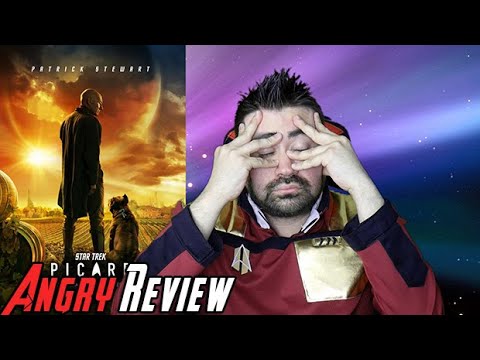


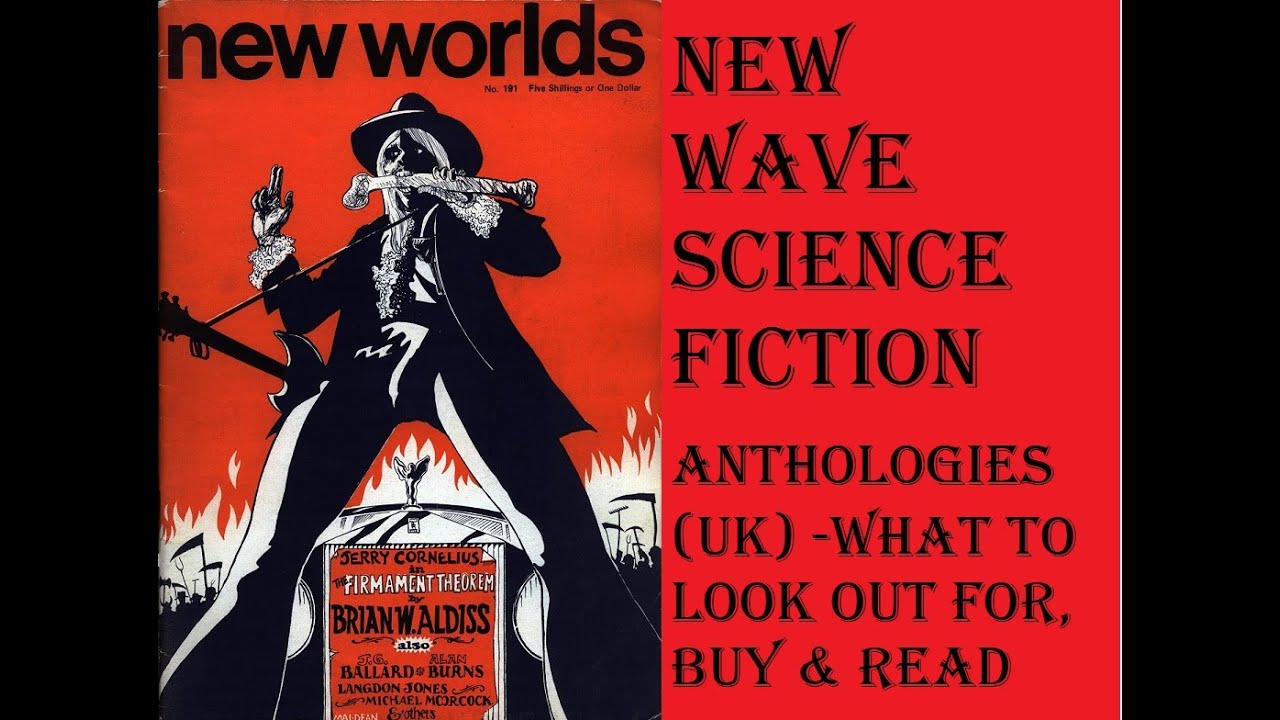






Samuel R. Delany, an influential African-American and gay science fiction writer from Harlem, pioneered New Wave SF through his linguistically sophisticated works like Babel-17 and Dhalgren, which explore how language shapes reality and identity; Star Trek (1966-1969) similarly embodied New Wave characteristics by blending social progressivism with familiar storytelling, featuring diverse characters and progressive themes like the first interracial kiss on American television, while incorporating New Wave writers like Harlan Ellison into its production.
New Wave SF: Delany & Star Trek | ENG 2420 Lecture
Added:Familiarity with the 'Golden Age' of Science Fiction (typically 1930s-1950s) to understand the conventions and techno-optimism that the New Wave reacted against.
A basic understanding of the 'New Wave' science fiction movement of the 1960s and 1970s, which emphasized literary experimentation, psychology, and social sciences over hard technology.
An introductory awareness of Samuel R. Delany's status as a pioneering African American, queer science fiction author known for themes of language, sexuality, and identity.
Familiarity with the premise, cultural context, and utopian themes of Star Trek: The Original Series (TOS) in the late 1960s.
Analysis of Delany's critical theory works, such as 'The Jewel-Hinged Jaw', to study the linguistics and semiotics of science fiction reading protocols.
Exploration of the transition from New Wave SF to Cyberpunk and post-modern speculative fiction in the late 1970s and 1980s.
Advanced study of Afrofuturism and Queer Theory in speculative fiction, tracing lineages from Delany to modern writers like Octavia Butler and N.K. Jemisin.
Critical analysis of how subsequent Star Trek series (such as Deep Space Nine or Discovery) continued to adapt and evolve the socio-political and philosophical critiques introduced during the New Wave era.
243 views4likes33:43Original Release: 2020-04-27
and welcome back for another week of lectures in our science fiction class this week we're going to continue with new wave science fiction but a few throats to start things out first off I'm going to post a separate video that shows you how to turn in your research essay on our open lab site so look for that video it'll also include screenshots to go along with that that will show you step-by-step how to get your work turned in before the last day of class which is a little less than a month away so keep that on your radar now for today's lecture I'd ask you to read James Tiptree juniors women men don't see Samuel or Delaney's I and Gomorrha and also watch one episode of Star Trek the original series titled the city on the edge of forever now what I still want you to keep to the reading schedule but in today's lecture I'm only going to talk about Delany and Star Trek because I want to keep things more still on that very new way focus and then i'ma pick up James Tiptree jr.
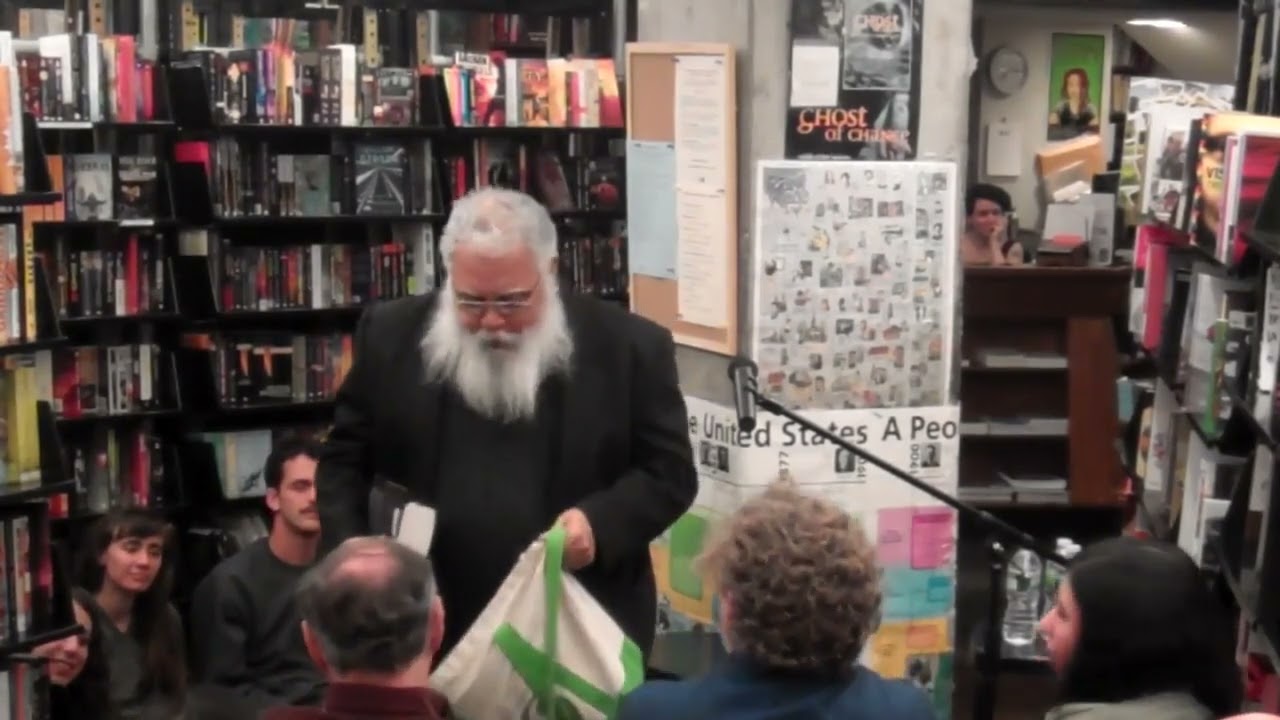
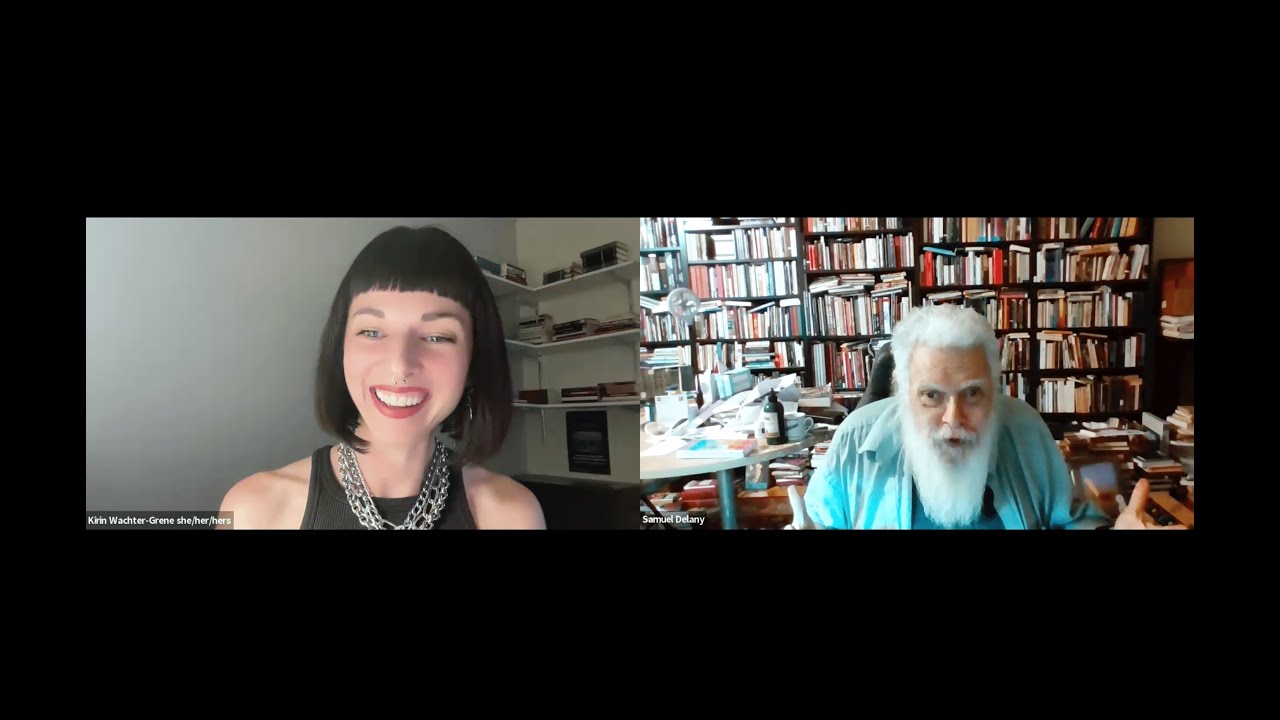
or by a real name Alice B Sheldon in our next lecture which is going to be on feminist science fiction so go ahead and your summaries you can go ahead and write about titties story Delaney's story the Star Trek episode and the lecture or you can save it for next week either way it's fine as long as you hit on it in one of those two places I'll be happy so for today's class continuing NuWave science fiction and I'll be talking about Delaney and the original Star Trek series so similar Delaney is originally from Harlem and he was born 1942 still alive and he's an extremely influential african-american and gay writer of science fiction his writing ability and his self-taught expertise on linguistics and literary theory led to his teaching writing and literature major university since nineteen eight he recently retired from Temple University in Philadelphia and he was a keynote speaker for the second annual City Tech science-fiction symposium in 2017 and in this photo you can see him standing in the middle of the city tech science fiction collection which was right after the symposium now a little bit about Delaney before we get into the story so some of Samuel our Delaney's critical works include the jewel hinged jaw notes on the language of science fiction from 1977 the American Shore meditations on a tale of science fiction from 1978 and starboard wine more notes on the language of science fiction from 1984 and the thing about these critical works is that they are as insightful as they are rigorously argued he's a very very strong on literary as well as science fiction critic so there's a lot we can learn from them not just in terms of the stories details but also what he has to say about the science fiction genre in general now while Samuel R Delaney and I guess I should note make sure you are writing his whole name out make sure you remember his name is Samuel our middle initial our Delaney it's important with all the different writers that we're talking about that we respect the way that they present themselves and this is the way that his work shall find so while Samuel R Delaney is written short fiction like what we read for today's class what's unusual is the fact that his first science fiction work was a novel the drawers of apt or 1962 most writers tend to get into the genre by writing short fiction first before they write a longer work like a novel but with Delaney he jumped feet first into the deep end with that science fiction novel in 1962 the jewels of apt or now maybe this story share these characteristics the first is the main characters usually have physical or psychological damage of some sort - Delaney highlights the social background of stories and colorful detail so it's not just about the characters the technologies but the social situation the social environment the culture is really important to the storytelling third mythology is important and the mythology could be something existing within the story or something that emerges from the story fourth communication linguistics and language communication linguistics and language notably Delaney believes that our perception of reality depends on our language but all this in terms of their what we say how we say things what meanings does what we say have to in our minds and also in what we write has to do with what we call semiotic SEM IOT ICS and so Delaney is is is very cognizant of how important language is both to the way that we communicate with one another the way that we think about the world and how our language is shape our understanding of the world world and this is something like you appear to take my English eleven I mean 1710 introduction language and technology class we talk a whole lot about in terms of the interplay between language and our technology and how they affect one another obviously how they affect us not just in terms of how we're able to communicate with one another but how it changes the way we think fifth characteristic is that explores cultural difference in the social construction of identity his fiction explores cultural difference and the social construction of identity and what this means is that it's not just about you're trying to create some sort of a culture he shows how there are new different cultures and subcultures within a world how the different characters are going to you come together from those different backgrounds from those different cultures and also being your recognizing of the fact that our identities are socially constructed they're they're constructed by your the society in which we find ourselves the people that we interact with the culture that yo seeps into our minds through you know all our different senses but particularly again getting back to the to language is that these things new construct our identities that we don't form an identity separate from the society in which we find ourselves invent 6is sexuality and eroticism that you this is again getting back to those characteristics of the new wave is like you know this acceptance of the fact that your science fiction is about human beings and human beings obviously are sexual beings and for Delaney he brings in sexuality as well as eroticism in different layers I can do his stories now let's look at a some of his different major works so it can be argued that he has had different audiences in his career a wide traditional readership up to and including Dahlgren one of the works on my talk about and a mirror were perhaps more intellectual campus-based readership thereafter so the first novel I'm going to talk about is called Babel seventeen bab-ee l - seventeen and this came out in 1966 it won a Nebula Award and it reveals a notable advance in sophistication in terms of the kinds of writing is winning these awards Babel 17 whose chapters carry epigraphs from the work of Samuel are Delaney's wife was you know early in his life even though he identifies as gay he was married to a woman Marilyn hacker who is a professional poet in her own right so he has these epigraphs at the beginning of each chapter would come with with writing from his bedtime wife and the novel is about language and it has a poet heroine in a future of galactic society radio broadcasts and and apparently alien language or received they are thought to be connected with sabotage an alien invasion much of the novel is to do with cracking the language to deciphering this alien language then in 1967 he published the Einstein intersection as a very dense work with rich imagery and what the story is about is that Earth has lost its humans how has never made clear in the story but their corporeal form has been taken on by a race of aliens who an attempt to make coherent sense of the alien artifacts among which they live take on human traditions - there are avatars of Ringo Starr from the Beatles Billy the Kid as well as Christ ah the hero is a black musician who plays tunes on his murderous machete the book is a tour de force through a cryptic though a cryptic one since the bafflement of the protagonist trying to make sense of their transformed lives tends to transfer to the reader Samuel are Delaney's own Diaries provide part of the text for the novel I'm so this is something where he's working through like the in a sense how do we understand culture and if you think about like how we look at cultures of the past the Anthropology here we find their tool we find their buildings we find things have been left over after they've gone and in this case if Humanity is gone and these aliens you know find our artifacts are remnants in order to fully understand or better understand as they take on our own forms and it came in a sense you make sense in a sense like if you need to you type on a keyboard if your if your bodily existence is like let's say lots of tentacles it may not be as wildy as if you were to have like human-like hands in which you could then type at the keyboard so in these ways and there's that one way you can imagine bigger ways in which being human having on a human body form allows you to interface in some way with that culture and its artifacts now 1975 he published if he's in my opinion like yo his masterwork Dahlgren d h al g re n and Dahlgren is what we would call a very postmodern novel it's very controversial and there's probably as many people that dislike it guys like it but it was a best-seller it has a very long book and what's about is an anonymous youth known only as the kid comes to the violent nihilistic city of Bologna where order has fled and there are two moons in the sky though the rest of this near future USA are apparently normal he becomes an artist it gets into fights and writes a book that might be Dahlgren before leaving the city and so in a sense the novel is self-reflexive the opening sentence completes the unfinished final sentence and which is like this enigmatic circle it is a book primarily about the possibilities and difficulties of a youth culture and partly about being a writer now this is a as I said a postmodern work of fiction now what do I mean by postmodern modernity mo de RN ity is roughly the period beginning with the Enlightenment through the Industrial Revolution to the Second World War modernity focused on grand narratives or big ideas that were considered Universal one of these is the liberal humanist idea of identity or a center itself post-modernism follows and overlaps the end of modernity and it is characterized by an array of cultural theories and attitudes that have developed as skepticism colored with irony emphasizing language and power relationships toward long-standing Western universalized theories and beliefs including the theory of human progress the power of reason and nashing rationality objective reality and human modernism had already brought into question many of these issues especially concerning the human and center of the self and of the world but post-modernism extends and critiques these earlier reformulations Delaney Harlan Ellison who I talked about in our last lecture and other New Wave science fiction writers are also in many ways considered postmodern writers it is during the postmodern era that we see slippage --is between science fiction and mainstream literature for example Thomas Pynchon pyn chom one of the most highly regarded mainstream literary writers almost always has science fictional elements jokes and intertextual allusions in his work but you will not find his books in the science fiction section of the bookstore so that brings us to what you had read for today's class I and Gomorrah so eying Gomorrah is another story is a story influenced by particle physics and the effects of radiation on the human body and the story spacers or astronauts who are neutered before puberty so that their reproductive organs are not damaged by cosmic rays and hard radiation in outer space this connects to ideas from the early days of the space race in the 1950s and 1960s is it easier to construct spacecraft and spacesuits that protect astronauts or is it easier to adapt human beings to the environment of space cyborgs or assemblages of human and machine first took form during this era in response at least in part to these debates returning to the story there are some unmodified humans who are fetishists who desire spacers despite the fact that they are androgynous and lacks sexuality these fetishists are called frogs fre lks the spacers prostitute themselves to the fro frogs both as a joke on the frogs as well as a loneliness or lack of attraction to others the story shows how technological interventions in the body can have unintended consequences for those whose bodies are altered as well as the change in culture around those altered bodies all right so now that brings us to Star Trek and again just remember that with James Tiptree jr. we're going to talk about her work and next week's lecture so a Star Trek the original series was on NBC from 1966 to 1969 and it was created by Gene Roddenberry G E and E Roddenberry ro D D en BER ry and get a picture up here to copy every good story Gene Roddenberry lived from 1921 to 1991 and a Roddenberry had an interesting life before he came to create Star Trek he was a pilot during World War two then he became a commercial airline pilot and after that he became a police officer for a while he left the LAPD to become a full-time TV writer and to the the key components of Roddenberry's outlook on life in the universe and everything is that he was a humanist which means that he believed that everything in a sense revolves around humanity that in the earth what we want to accomplish is up to human beings to do and he was also an agnostic an agnostic as someone who has since acknowledges the existence of a higher power but doesn't ascribe to any particular religion so Gene Roddenberry pitched Star Trek as a wagon train to the stars wagon train was a long-running Western TV series about the western expansion following the Civil War so it's about ideas of exploration moving into uncharted areas in this case instead of moving into the Uncharted West where indigenous peoples lived here we're moving out to space where there are alien species that have their own civilizations on other planets the opening narration I think is important for us to think about so this narration is in the beginning of each episode of Star Trek space the final frontier these are the voyages of the Starship Enterprise its five-year mission to explore strange new worlds to seek out new life and new civilizations to boldly go where no man has gone before from this opening we learned that this is a space offering set in space there's a frontier you go to new worlds meet new aliens and go where no man has gone before but importantly in 1987 with the debut of Star Trek The Next Generation the phrase was changed to where no one has gone before because obviously while in the past man was used to indicate humanity on this isn't an acceptable term for us to use today and so it was brought in to note one now see there's one two three four five six general characteristics of Star Trek that I want you guys to know about first is that it was a socially progressive and optimistic television series about the future socially progressive and optimistic about the future second it blends the fantastic with the familiar it blends the fantastic with the familiar and this in turn makes its exotic ism manageable and unthreatening so while it is a spaceship out in the stars there's a lot of aspects to it just in terms of like language the way people interact on some of the settings are very earth-like makes it familiar to us while at the same time being a little bit different but not so much so that it's really strange to us the third characteristic is social criticism of the here-and-now and moral lessons safely veiled vei LED veiled in science fiction social criticism of the here-and-now and moral lessons safely veiled in science fiction for example the first interracial kiss on scripted American television was in an episode of Star Trek in 1968 and so to give you a little context the groundbreaking Civil Rights Act of 1964 had only passed a few years prior and it was only one year prior 1967 that the Supreme Court ruled in Loving v Virginia that laws prohibiting interracial marriage were invalid in season three's episode titled Plato's stepchildren in 1968 Captain Kirk and lieutenant Uhura are made to kiss by super beings the studio ordered two cuts filmed one kissing and whatnot but Roddenberry was assistant that they show the kiss so Shatner and Nichols came it up in every non kiss tape so that they had to run the take with the kiss essentially they screwed up the ones that were they weren't kissing there were concerns about offending stations in the deep south and there and there were some that refused to run the episode a fourth characteristic it's formulaic like each individual episode is kind of formulaic at certain beats that it follows and you have a beginning and you're a bit mentally grabbing it and this is opposed to the cliffhangers that we used to see in what the film serials like in Flash Gordon and Buck Rogers now this has changed obviously today where most modern TV shows especially streaming shows aren't you know formulaic self-contained individual episodes they often had some sort of continuity so the story is top told over episodes and you will have cliffhangers so there's kind of like this return to that older style of storytelling they built audience engagement get people to come back much more the fifth characteristic is alien super beings alien super beings so in a sense humanity in the series might have starships but they are essentially the new kids on the block that essentially these other alien races have been around much longer have had much more time to evolve have more powerful and interesting technologies than we have and so it's not to say like you just because we have spaceships and we have these new technologies that we're all powerful and Roddenberry's you I think it's important to remind us that we're not and then the last characteristic is that it is scientifically lacks LAX scientifically lacks meaning is scientifically not always that accurate that it suffers from in particular a term that we call technobabble you should definitely know this term Tec H and O Bab ble technobabble and what this is is you take technical and scientific terms and you combine them together in ways that evoke the rhetoric of science and technology but don't necessarily either work together or explain in in reality what is taking place or what's going on let's see so I'll talk a little bit about the crew of the enterprise and talk a little bit about some of the new wave writers who wrote for the show and then we'll talk about the episode that you watched so the crew of the USS Enterprise is that is first we have captain james t kirk jane Tiberius TI ber I us Kirk played by William Shatner shown over here on the left and then we have his his counterpart is good friend in the show mr. Spock played by Leonard Nimoy who is an original creation for the show being half human and half Vulcan then some of the other principal characters are dr. McCoy played by DeForest Kelley who has like this Southern gentleman air about him we have mr. Sulu played played by George Takei japanese-american Scotty who's engineered the enterprise is played by James Doohan an interesting thing about James Doohan he's a Canadian and he took six bullets following d-day from fit friendly fired four shots went in the leg one in the chest and one in his hand a silver cigarette-case stop the chest shot but he had to have his right middle finger amputated so if you notice in the show just this a bit of trivia he's usually hiding in some way or knuckling over his right hand so that you can't see that one missing finger then we have also on the bridge crew instant Chekov played by walter Koenig who portrays a Russian and again this is getting to the multicultural like utopianism of the show that in the future that earth would be a unified planet that there wouldn't be a division between the west and the east in terms of life near the Western democracies and then communism and Russia the USSR and then closing out the the bridge crew we have lieutenant Uhura played by Nichelle Nichols and as I mentioned before Kirk and your on screen kiss in 1968 was the first interracial kiss on Mary Contiki also notably after the first season Nichols wanted to leave the show for Broadway but she received a very special phone call from a really big Star Trek fan dr. Martin Luther King jr.
he convinced her of her importance and her character's importance to people of color who looked up to her and she helped keep the door open for future opportunities for people of color so she decided to stay on the show after that phone call now one of the neat things about Star Trek is that many of the episodes were written by new ways science fiction writers and so I had a big influence NuWave had a big influence on Star Trek the first and second seasons were the strongest most budget to hire top science fiction writers including Jerome Bixby who co-wrote the story that was turned into the film Fantastic Voyage in 1966 we got Robert Bloch who wrote science fiction and horror and well known as the novelist who wrote psycho in 1959 which was in filmed a year later by Alfred Hitchcock a Harlan Ellison who we talked about last time and who wrote the episode that we watched for today there's Richard Matheson who's famous for writing the book I am Legend in 1954 he got turned into the film Will Smith much one of his adaptations Norman's spin read who's famous for writing bug Jack Barron which was serialized in new worlds in 1969 and also Theodore sturgeon who wrote more than human published in 1953 so a lot of New Wave science fiction influenced into Star Trek so in today's episode the city on the edge of forever broadcast in 1967 we see the ambiguity that I say makes good as Seth the original script was penned by Harlan Ellison but his script was watered down by the series stable of writers to accommodate studio demands for the show's perceived audience I'd like you to think about how this show bridges the new wave to a more popular audience we have here the new wave made more palatable for general audience so the episode is a time-travel narrative in which bones goes into Earth's past and inadvertently changes the future including that of the enterprise and its crew Kirk and Spock must travel into the past to correct what bones did but correcting the changes requires Kirk to sacrifice a woman Edith Keeler who he'd begun to fall in love with it raises questions of ethics and causality in this surprise at least in my opinion were the best Star Trek episodes from the original series so that's it for today's lecture I'll have office hours this Wednesday from 5:00 until 6:00 I'll post that google hangout link to our open lab site as I've done before some of you guys been taking advantage of that I appreciate it that's what I'm there for I want to help you guys as much as I can if you can't make the office hours remember to email me my email address is Jay Ellis at Sydney tech community bu and if you either you know we can work over email or if you need to talk face-to-face like on video or the phone just let me know like when you're available we'll figure out a time to make that work and also stay tuned for that separate video I'm going to make that shows you how to turn in your work by creating a post on our open lab site for your research essay for the other things there's going to be coming up do such as your the final version of your notebooks for all your notes and for the final exam those things I'll be talking about as we get closer to the end of the semester and know we're getting very close now but right now I just want you focused on your research essays remember the the main point of that essay is you choose a work of science fiction that we're not talking about in the class and then you prove to me that it's science fiction and you do that by using some of those definitions of science fiction that I gave you in the beginning of the semester and you also do a little bit of research on your own using the library databases and you can refer back to one of my past lectures where I show you all the ins and outs of using the library databases if you're having trouble with that like I do send me that email let me know what you've already found like what you're working on or what you're having trouble with and then we'll take it from there you're building a conversation to try to get you on track and get this thing you the way that you want it so to both you're learning something about science fiction you're learning something about doing a research they were learning something about writing an argument and but obviously practically you meaning the learning outcomes from the class okay so I'll be talking to you guys a asymmetrically as well as symmetrically or asynchronously as well as synchronously I mean um if he buys got anything just send me that email J Ellis at City Tech you need any do you see you guys
Up Next

5:38
The Art of Metaphor: How Metaphors Shape Understanding
@TEDEd
1.7M views•2012-09-24

13:43
Formalism in Literary Criticism: An Academic Lecture Overview
@mattalberhasky9952
39.1K views•2015-08-05

6:08
Point of View in Fiction: First Person vs. Third Person
@magicalthriftyteacher
153.8K views•2014-03-31

15:25
1984: Orwell's Dystopian World and the Mechanisms of Totalitarianism
@AlternateHistoryHub
7M views•2017-03-04
Related Study Plans & Knowledge Roadmaps
Structured learning paths in Literature
literature
Graphic Memoirs: Visual Art, Trauma & History
01Foundations of Sequential Art and Visual Language
02Autographics and Processing Historical Trauma
03Visualizing Personal Trauma, Grief, and Graphic Medicine
+ 2 more learning modules
14h5 modules
Explore Roadmap
literature
Campus Novels: Evolution, Themes & Critique
01Introduction to the Campus Novel Genre
02Mid-Century Satire and the Post-War Academy
03Dark Academia and the Critique of Privilege
+ 2 more learning modules
14h5 modules
Explore Roadmap
literature
Theater of the Absurd: Philosophy & Plays
01Postwar Existentialism & Historical Roots
02Dismantling Narrative: Esslin & Absurdist Conventions
03Samuel Beckett and Tragicomic Existentialism
+ 2 more learning modules
12h5 modules
Explore Roadmap
literature
Revenge Tragedy: Justice, Madness & State
01Foundations of Early Modern English Theatre
02Anatomy of Revenge: Structural Conventions
03Psychological Complexity: Madness and Melancholy
+ 2 more learning modules
15h5 modules
Explore Roadmap