





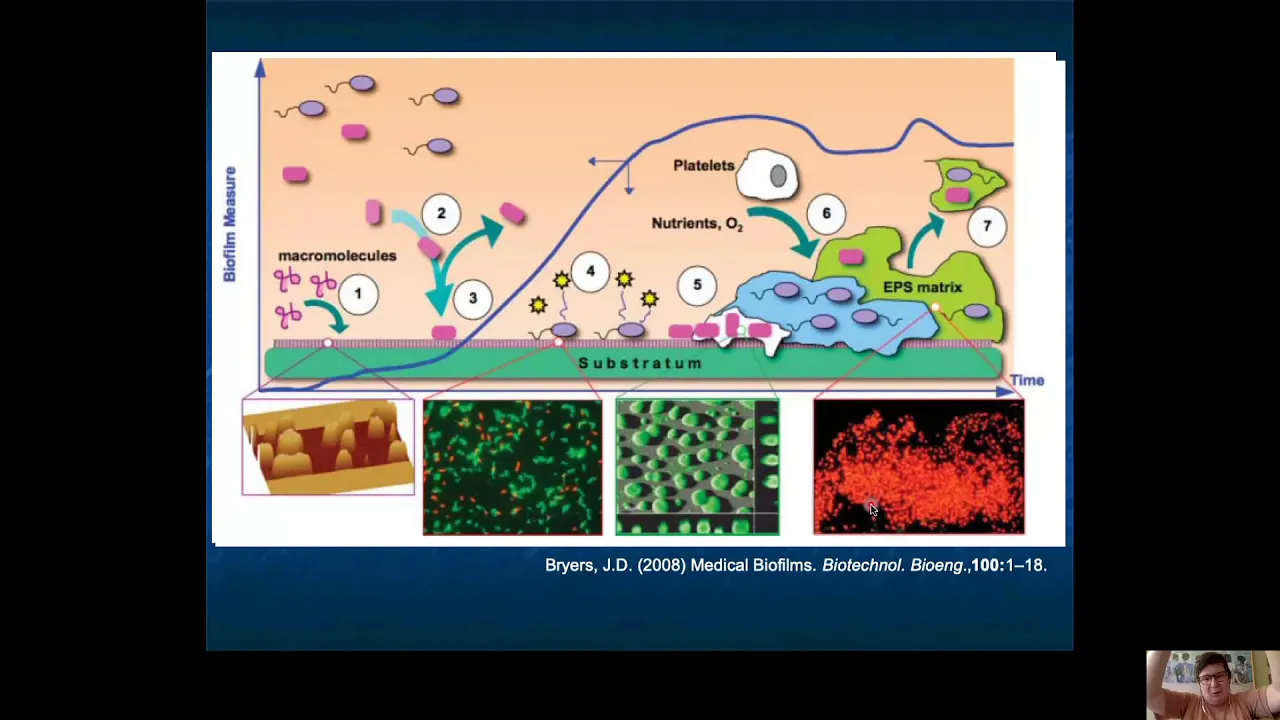











Microbial biofilms are complex three-dimensional communities of microorganisms embedded in an extracellular matrix composed of polysaccharides, proteins, lipids, and DNA, forming coordinated functional communities that develop through five distinct stages: initial attachment via weak van der Waals forces, irreversible attachment using pili and hydrophobicity, initial maturation through quorum sensing, final maturation with extensive exopolysaccharide production creating tower-like structures, and dispersion where cells detach to colonize new areas.
Biofilm Formation Stages: The City of Microbes Explained
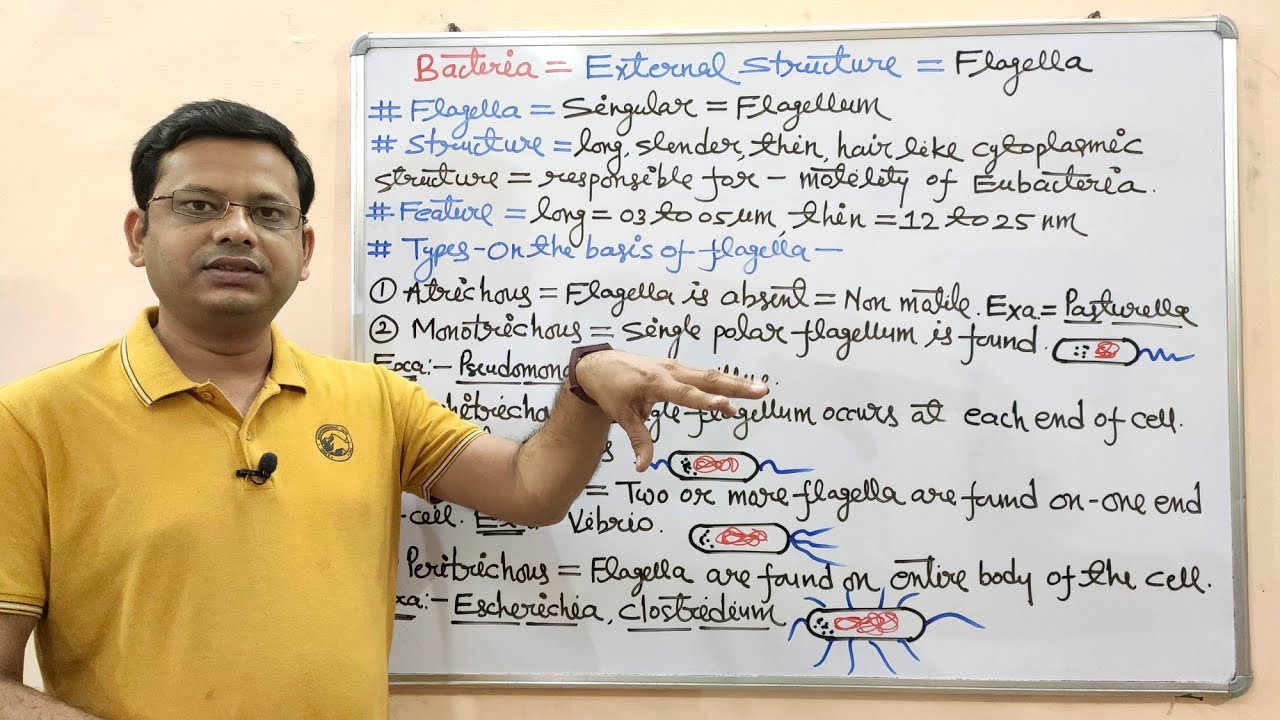
Added:Basic bacterial cell anatomy, specifically structural appendages like flagella and pili that facilitate initial surface attachment.
The conceptual difference between planktonic (free-living, single-celled) and sessile (anchored, multicellular) microbial lifestyles.
Fundamental principles of chemical signaling, including how cells release and detect signaling molecules in their local microenvironment.
The basic composition and role of macromolecules, particularly polysaccharides, extracellular DNA, and proteins that form protective barriers.
Clinical pathogenesis of biofilms, focusing on chronic wound infections, cystic fibrosis lung infections, and contamination of indwelling medical devices.
Mechanisms of biofilm-mediated antimicrobial resistance (AMR), including physical diffusion barriers and the physiology of dormant 'persister cells'.
Strategies for biofilm eradication and prevention, such as quorum quenching (disrupting cell communication) and surface modifications to deter bacterial adhesion.
Industrial and environmental applications of biofilms, including wastewater bioremediation, microbial fuel cells, and mitigation of biofouling on marine vessels.
29.2K views732likes6:19Original Release: 2019-07-28
hi everyone welcome to the basic science series by dr. Luke inter Guan I have created this program to promote scientific knowledge among students and young researchers in this episode we will discuss in detail about micro bill biofilms also referred as the city of microbes we will know what are microbial biofilms and what are the basic components of microbial biofilms we will also know about different stages of microbial biofilm formation and by the end of the episode you will have all the basic information about microbial biofilms let's first define a microbial biofilm a typical biofilm is composed of a population of micro organisms in which microbial cells are attached to each other and also attached to a solid surface these cells are embedded within a slimy extracellular matrix that is composed of extracellular substances this extracellular substance X as a cementing material to keep the structure of biofilm intact extracellular substances include polysaccharides proteins lipids and DNA which is deoxyribonucleic acid because of their three-dimensional structure they are called as cities of microbes biofilms may form on living as well as on nonliving material and can be present in almost every environmental conditions including nature industry and hospitals in a distance biofilms look like a hydrogel but these are more complex than that these are not just a layer they are coordinated functional communities where even these bacteria talk to each other and response using chemical signal molecules all right let's discuss the stages of biofilm formation they our final distinct stages of biofilm formation stage 1 initial attachment stage 2 irreversible attachment stage 3 initial maturation stage 4 final maturation and stage 5 dispersion let's start with the stage 1 which is initial attachment this stage starts with the attachment of free-floating cells to a solid surface at first cell might attach the surface by weak Wonderwall forces these forces are the physical forces present between molecules and atoms and there is no chemical interaction present using these forces bacteria make their initial attachments to a solid surface stage 2 is a reversible attachment in this stage if the initial attachment process is successful bacteria use cell adhesion structures to attach tightly to the surface most important cells are filled structure is pilla building on the hill like structure found on the surface of many bacteria another property of bacterial cell that help in the attachment is hydrophobicity hydrophobicity is the property of molecule that quantify how much a molecule is repelled by the water most of the time biofilms are formed in a moist environment so hydrophobicity helps the cells to get repelled by the water environment and forced to be remain close to this solid surface stage 3 is the initial maturation of biofilm here cell communication or quorum sensing plays a very important role at this stage microbial cells secrete small chemical signal molecules that are also detected by the same microbial cells the amount of these molecules determine the amount of microbial cells present in the surrounding area when the amount of this molecule reached up to a threshold concentration this molecule induce activation of these cells and then cell switch the expression of various new this complete process helped in the formation of biofilm as well as the spread of microbial bathrooms Stage four is the final maturation stage at this stage bacterial cells start producing very high amount of EXO polysaccharide material in this surrounding this helped the cells to make the huge star light structure of the bacterial biofilm Stage five is the dispersion or the detachment stage at this stage the cells detach themselves from microbial biofilms to look for new area for the formation of new biofilms if they shall keep themselves to the same place the population will grow and the new clean will be depleted leading to the death of the biofilm therefore for the survival of microbial cell the cell should keep looking for new places to colonize cells use an enzyme called dispersion B to make their way out from a microbial biofilm by degrading extracellular substances after getting detached from the microbial biofilm the cells again start with a stage one and the complete process is repeated to make new bathroom the stage of dispersion fits interestingly to the idea that humans are also trying to find new planets for their survival we know that his sources are limited and we need space food energy therefore like microbes we have at this stage of dispersion to make new habitats so the human community can survive if the resources are finished on planet Earth with this node I conclude this presentation please like and share the video with students and young researchers please subscribe the YouTube channel to get updates on new presentation on basic science topics please forgive my mistakes thank you and namaste
Up Next
44:34
Bacterial Biofilms, Chemical Communication & Nanoparticles | Prof Alan Decho
@mastscot
463 views•2015-11-27
50:12
Bacterial Communication: Quorum Sensing and Biofilm Formation Explained
@JHUAAP
12.6K views•2011-06-28
4:29
Staphylococcus Quorum Sensing via Autoinducing Peptides
@biologygoal
1.4K views•2023-11-29
7:08
Bacteriophages: Earth's Deadliest Killers and Future Antibiotics
@kurzgesagt
34.6M views•2018-05-13
Related Study Plans & Knowledge Roadmaps
Structured learning paths in Biology
biology
RNAi: Biogenesis, RISC & Gene Silencing
01Molecular Biology Foundations: DNA to Protein
02Introduction to RNA Interference (RNAi)
03Molecular Biogenesis of miRNA and siRNA
+ 2 more learning modules
10h5 modules
Explore Roadmap
biology
Mycorrhizae: Signaling, Biophysics & Ecology
01Foundations of Mycorrhizal Symbiosis
02Molecular Signaling and Root Colonization
03Biophysics and Bioenergetics of Nutrient Exchange
+ 1 more learning modules
11h4 modules
Explore Roadmap
biology
Circadian Clocks: TTFL, SCN & Periphery
01Foundations of Molecular Biology & Gene Expression
02Introduction to Chronobiology and Actograms
03The Core TTFL: Molecular Architecture of the Clock
+ 3 more learning modules
14h6 modules
Explore Roadmap
biology
Population Genetics: Math, Drift & Selection
01Genetic & Probability Foundations
02The Hardy-Weinberg Principle and Baseline Models
03Mathematical Modeling of Natural Selection
+ 3 more learning modules
18h6 modules
Explore Roadmap