
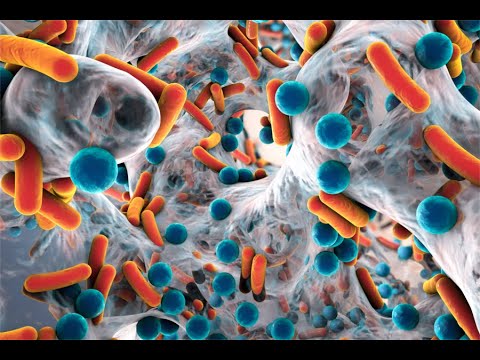


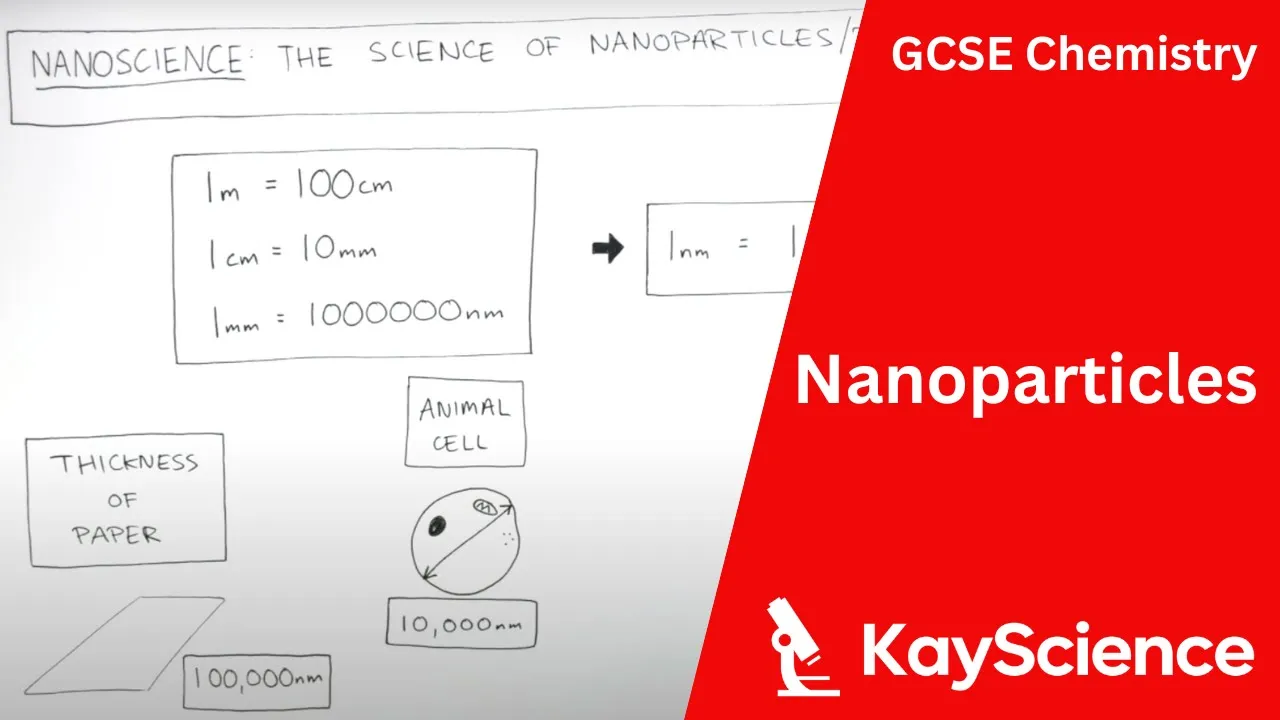
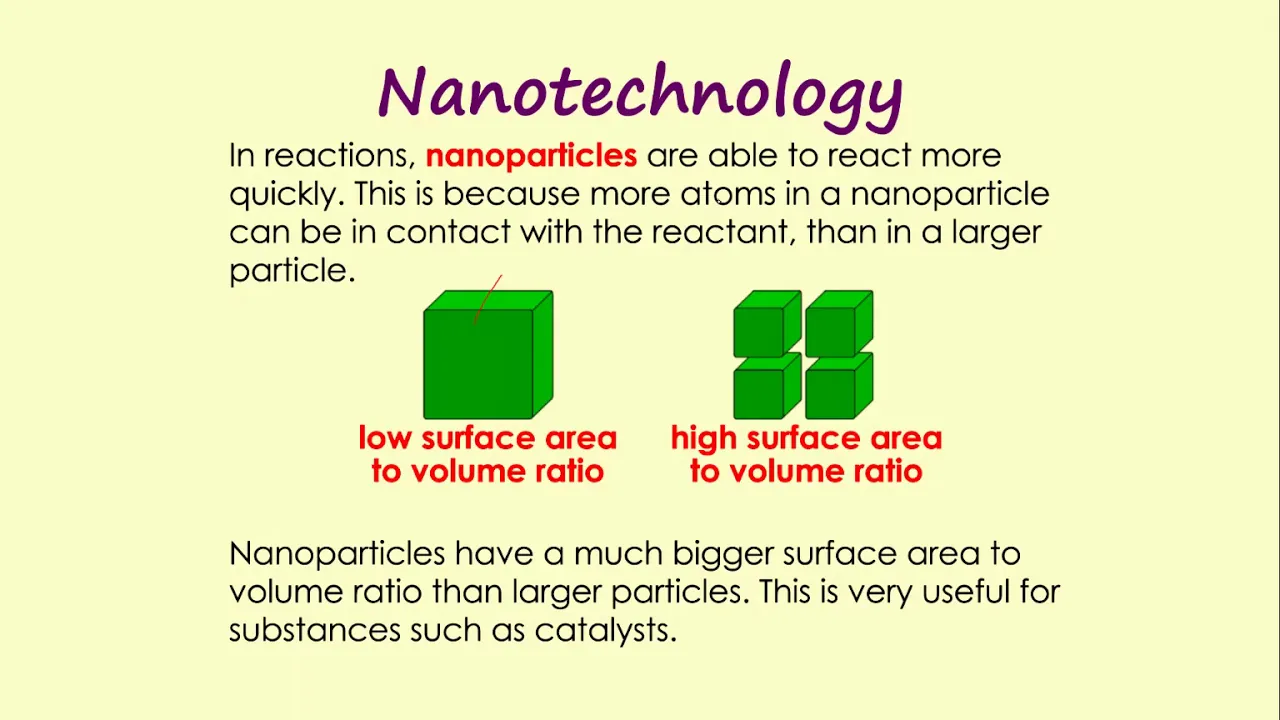


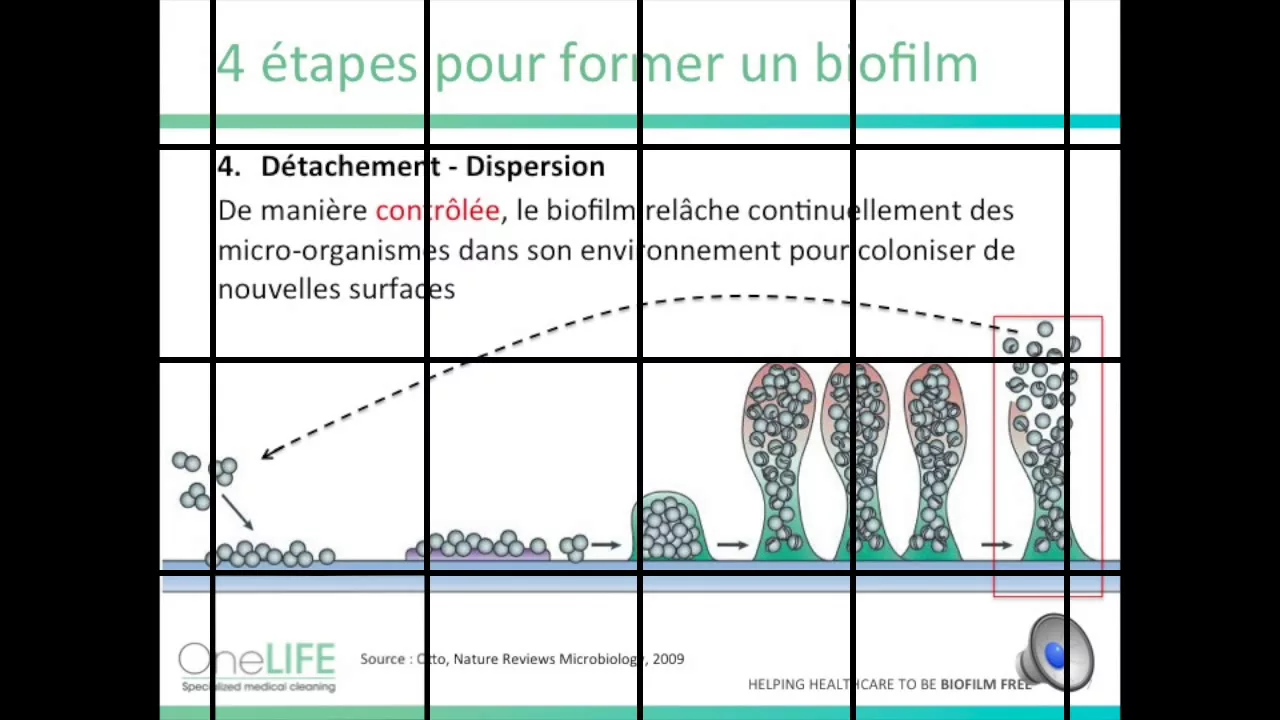


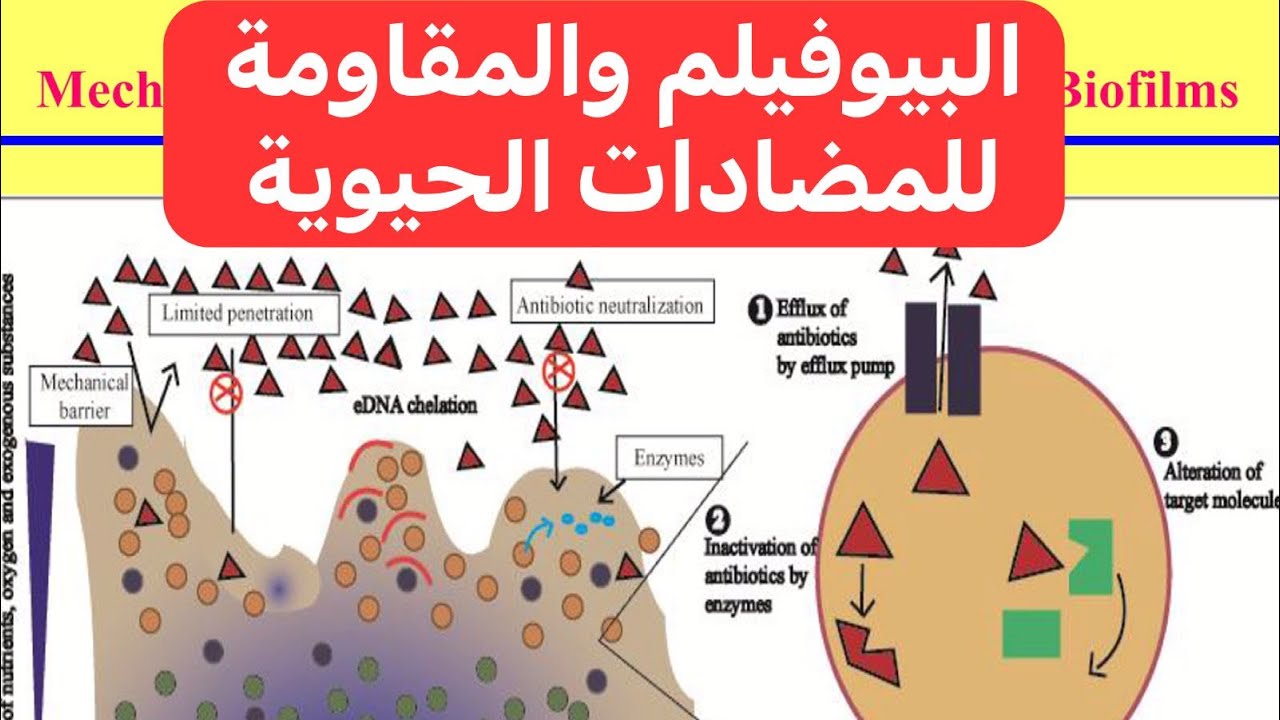







Bacteria predominantly exist in biofilm communities attached to surfaces rather than as free-floating individuals, forming complex three-dimensional structures surrounded by an extracellular polymeric substance (EPS) matrix composed of polysaccharides, proteins, DNA, and lipids. These biofilms provide bacteria with protection, enhanced nutrient acquisition, and coordinated behavior through quorum sensing—a chemical communication system where bacteria release and detect signaling molecules (such as acyl-homoserine lactones or AHLs) to coordinate gene expression and physiological activities. Recent research explores using nanoparticles functionalized with cyclodextrins to disrupt quorum sensing and inhibit biofilm formation, offering potential applications for controlling biofouling and bacterial infections without killing the bacteria themselves.
Bacterial Biofilms, Chemical Communication & Nanoparticles | Prof Alan Decho
Added:our second mast's webinar and i'm delighted to welcome professor alan deco who's visiting the university of saint andrews as part of the mass visiting fellowship scheme allen started out his academic career at the connecticut state connecticut state university where he did a ba then followed on his work in a number of laboratories passing through ohio university then woods hall and completing his phd at louisiana state university before moving for a year to csiro in queensland australia and then working for the geological survey for a period of years and now he holds the associate chair and director is also for his sins director of graduate studies at the department of environmental health science at the university of south carolina alan and i go back a number of years due to our interest in biofilms and sediment dynamics and alan has studied the minutiae of the relationships between bacteria and is going to talk today on bacteria chemical communications and the implications and use of nanoparticles so it's my great pleasure to welcome alan deco to this webinar on behalf of masks all right thank you david and good morning everyone what i'd like to do today is give you an overview of the process of biofilm formation and hopefully related to a number of different topics that may be of interest to mass researchers first of all when we think of bacteria we always think of a single cell or many cells floating around in a liquid medium but really acting as individuals what i hope to show you is that most bacteria do not do this in fact they tend to hang around in groups and as we'll see even act as individual groups but they occur in the biofilm state when they attach to a surface as shown on the right and this provides them a number of advantages and opportunities it provides them protection it allows them to acquire nutrients a little more efficiently and also localize different processes so the many advantages to be gained are largely the result of what's called the eps matrix extracellular polymer secretions that are produced by the bacteria themselves so the biofilm consists of many cells in various shapes and sizes surrounded by a self-secreted matrix of eps this allows them to exchange genes localize their extracellular enzymes that they secrete so they're not lost to the surrounding water but they also over time will bud off group parts of the biofilm to produce planktonic cells which can then colonize other areas but it provides in general a very stable three-dimensional environment as opposed to a one-dimensional environment now i mentioned eps is very important what is it made of it's made of a number of things polysaccharides proteins dna lipids but more importantly it has a lot of different functional groups to it this is a infrared spectra showing different functional groups that pop up on one type of eps and as you can see it's loaded with things like carboxylase amines phosphates so on and so forth and this in fact is what gives eps its main properties that are helpful to cells now to show you what biofilms uh actually do or what the microbes forming the biofilms do here's an extreme example these are called giant stromatolites on the right side and there's a diver there just for scale these can be three meters and tall in three meters tall but they are the production of bacteria layer by layer over perhaps thousands of years of smaller versions are shown on the left side but in addition to these giant dramatic macro structures we also see that in oceans they are involved in things like sediment cohesion marine snow formation the deep sea hydrothermal vents and the bacteria that live there mineral precipitation pathogens and also things like animal symbiotes very important in those processes in a more practical stance we see water distribution systems which are filled up with things like corroding iron and so forth a lot of these processes are microbial mediated release in part and we see that newer pipes made of other types of plastic like materials they become followed as well not to such a great extent but of of importance to to masts and uh and other oceanographic researchers is perhaps the bio following process it's a very very dramatic cost for example to our u.s navy somewhere around 200 million dollars per year in added fuel costs just due to the buyer following of ship hulls the formation of biofilms is the first step in the colonization of other organisms that later are involved in bio following as we can see above barnacles protozoans different types of algae mussels and so forth the bio following of sensors is also another process that's beginning to be looked at we know now that the eps matrix changes the optical properties of the surface that it's covering it enhances forward scattering and it forms what's called a biofilm gel effect in other words it has a different response to the sensor than it would be if there wasn't a biofilm present at all we could see this in this diagram where the incident photons are coming in from the left side just as an example they're scattered in all directions and a portion of these enter the instrument sensor when we have a biofilm there is enhanced forward scattering so there are more photons going into the sensor under some circumstances and more photons being scattered under other circumstances so the following just by a very small biofilm tens of microns and thickness could enhance or decrease the optical signatures that are being preserved perceived by the instrument and we call this the biofilm gel effect in the study of marine mammals uh we're now realizing that biofilms form on the surface of the skin of these mammals dolphins for example lots of fish in addition they're also very important in the gut bacteria of most animals using it's b this is being studied uh to a wide extent in humans now because they're thought to be very important to maintaining our health but also in perhaps many diseases as well we always think of bacteria as just infections but they're very important to our health and very likely to the health of marine mammals as well so in short biofilms are everywhere and you will just see a simple salt marsh but any surface that is that encounters water will likely have some type of bacteria attached to it and hence a biofilm by extension and so one important process we have been studying in a little bit more detail has been that of chemical communication among bacteria a process called quantum sensing this is where groups of cells release signals and are perceived by other cells and it allows them to act as a coordinated group and we'll see how this happens in a minute it allows them to coordinate their gene expression physiological activities and uh also their their behavior in many cases it becomes a communication network and it's a density dependent process in many cases not all them because the signals are released and they diffuse so if the bacteria were floating around in the water their signals would be released and simply flowed away when they're in a biofilm the signals can be more efficiently localized so other bacteria perhaps can detect them and respond so why target quorum sensing in our research this is because it is likely a key step in biofilm formation and bio following to a to a larger extent had begun work with with dave and vladimir and and others to try to examine how bio following can affect the operation of different devices that are placed in the water and so in short we want to know what is the role of quorum sensing because this affects the biofilm and its ability to resist being removed and so forth quorum sensing is a multi-step process first of all the molecules are secreted by the organism the bacteria when they reach a threshold concentration somewhere in the nanomolar range usually there is a gene response usually gene activation but sometimes repression this is followed by protein responses and hence physiological changes down the road in short as i mentioned earlier it allows coordination of activities and it allows the bacteria to now start acting as a coordinated group rather than a bunch of individuals out for themselves there are many types of signals that are produced we're focusing on what are called the ahls we'll see those in a moment but there are many others which i've simply listed a few of these groups of molecules here we're using ahls because they are very well characterized and we have good biological sensors we understand their gene responses and so forth so it provides a good platform for studying this process the ahl is a pretty simple molecule it's composed of a lactone and an acell chain that varies in length from four to about 18 or 20 carbons and the length and number of substitutions on this acyl chain will give it an identity we call these a c6 or c8 depending on the number of carbons on this chain but this also expresses the identity to the cell certain cells may recognize only c6 and c8 signals or just c14s also they may recognize several different types of signals and they may regulate different processes in the cell responding to a c14 signal just as an example may trigger the production of certain toxins or the production of extracellular enzymes while in the same organism encountering a c6 signal may cause the bacteria to up and leave the biofilm there are many many roles that these signals have to the cells and it depends on the species and their genetic makeup and how they respond so i guess what i'm trying to say in a roundabout way is that it's a very complicated process you could have different combinations of signals in fact acting like different letters and words different combinations will change the meaning of many of the signals to the cell so a lot of the uh the military are studying this bacterial type of signal because it's a very simple but efficient way of information processing and so they're very interested in that now how does it happen we have the signals up top the ahl signals out in the environment diffusing around they then cross the cell membrane diffuse into the cell sometimes are actively transported in where they encounter a receptor protein shown in green and once the receptor proteins and ahl contact each other they both change shape and at this point the protein then begins moving towards the dna operon where it attaches and begins activating the gene and so um this is a very straightforward uh example of how this works sometimes the proteins and signals have to form dimers and even triners have been detected so it certainly has a lot of more complicated pathways as well now bacteria in nature when we look at them we tend to see that they form groups which would suggest they might be quorum sensing on the left is a cross section taken with a confocal microscope of a microbial mat from a stromatolite dave patterson and myself have worked on these systems and i've shown you it's very colorful just because of the fluorescence of the convo but the purple are sediment grains they're very round but the things of interest are the uh the gold masses up top which are sulfate-reducing bacteria spinning to the fish growth the red strain things are cyanobacteria i think what you can see is that it's packed with bacteria we'll see there are over 30 000 different types of bacteria here but when we look up at these close up with the confocal we start to see the individual cells and this in fact is what we see are clusters of cells very close to each other probably signaling each other and communicating very rapidly and just to blow up at the bottom of one of these clusters when we look at any type of surface we will see the same clustering of bacteria and what becomes important in the chemical signaling process is who is communicating are they simply communicating within a single cluster or are clusters communicating with other clusters and if so what is the calling distance that signaling can occur how far can this occur remember each of these bacteria shown here are approximately a micron in size so these are relatively small distances but when you put in the eps matrix that we cannot see here it could slow diffusion significantly so cell clusters appear to be ideal places for chemical communications can we actually find signals there and to do that we we extract the sediments in this case and using a range of organic extractions we pull these out purify them and then run a mass spectra on these and we can see a natural mat has many uh different peaks on the bottom chromatogram at the top are standards of different sized ahls that i mentioned earlier with c6 c8 c10 and when we get the same retention peak we could then isolate that heap with the mass spec and re-run it under a higher energy and break that molecule if it breaks into two pieces the acyl chain and the lactone the lactone at 102 the acyl chain of varying length then we have pretty good confidence that in fact this natural molecule is a signal it's behaving exactly the way a standard signal under those conditions we never know for sure of course and on the right is a bio assay showing that the signal activates a certain type of bacteria that respond very well to ahl signals the dark blotches are the bacteria reducing a colorful compound when we extract these signals over a day versus night has shown this graph of the night time in black the black bar the daytime blue bars we see significant differences in their concentrations and this is likely due or in part due to photosynthesis the ph of these mass is very high during the day due to net photosynthesis and this produces an alkyl alkaline ph of course and that is destructive to the ahls so part of these ahls of c10 and c8 in this case may be at reduced concentrations during the day simply because they're being hydrolyzed by the alkaline ph at night we see higher concentrations another possibility of course is that they're secreting more at night than in the daytime but laboratory evidence thus far at least does not indicate that another challenge that signaling has in many places that bacteria within biofilms is desiccation remember bacteria expand are exposed to many environmental challenges such as salinity changes ph changes uv temperature and we find that in these microbial mats when they're hydrated as shown in cross-section on the left we can see different functional groups of bacteria the diatoms on the surface cyanobacteria underneath sulfate reducers and many other groups when these same nuts become very dry as shown on the right they have a lot of salt which forms concretions on the top the bacteria are completely dried up and remains so for months at a time yet when water is added within an hour or two we can detect quantum sensing this seems to be too rapid for cell production of signals to reach those concentrations from what we know in the lab so we have to suspect that the signals themselves are surviving in the dry mat these are pretty delicate molecules but yet they're surviving somehow and so we tried to set out to see how this might occur and we are coming to the conclusion based on data is that there's a formation of a glass what's called a glass within the eps this is where you get an amorphous structuring of molecules that allows a protein for example to be protected from denaturation kind of similar to the way a chaperone works within a cell and before it's realized now that glasses glasses are used in the food industry to preserve proteins that are in food which provide flavor or texture to the food so anything in a box that you buy will likely have a glass that's has proteins that are important to the food embedded within it we're finding trilos in very abundant amounts within the eps and this is likely one of the things at least that may be forming the glass and hopefully preserving the ahls we have done nmr spectra on these where we're looking at the triolos by itself the ahls by itself and the two together and they're starting to suggest that yes several triolosis bind to a single ahl they kind of swing around it like horseshoes and perhaps protect the shape we're trying to have the chemists model this but apparently it's very complicated and so when we when we put we create eps glasses in the laboratory we can expose the signals to high temperatures to very alkaline phs even and they're able to survive and retain their biological activity so that's very interesting to us because in nature bacteria are exposed to this desiccation process in many many places and it allows them to kind of just quickly begin metabolizing once they're rehydrated again and this is just another view where we are continuing our studies of microbial mass i mentioned stromatolites we're also working on hyper saline mats as shown here they're very uh orange in color due to the prevalence of archaea but there are over 30 000 different types of bacteria and archaea in these maps very very abundant and the question immediately arises how do they know who they're talking to when they're sending out signals 30 000 different types of bacteria all sending out signals how do you control the signaling and not have too much interference in static there are also model antibiotics and anti-cancer drugs that can be found in such mats and they're used as a model for understanding early life or extra terrestrial life now this brings us to another research question that is related and that is how do we control or manipulate biofilms and hence the bio following process one possibility is to use nanotechnology we would like to see if we could manipulate surfaces in a way to either reduce the formation of biofilms or to get rid of biofilms once they're there and in targeting the chemical communication process this provides a perhaps a very good tool very briefly nanoparticles are particles that are on the scale of about one to one hundred nanometers the number of bacteria is about a micron or a thousand nanometers so particles at this size seem to offer unique physical chemical properties and they tend to act different than larger particles even at the same composition and so what we're trying to examine first is how will the eps matrix inhibit or enhance the movement of nanoparticles through this matrix remember the eps is shown in this atomic force micrograph is a series of molecules intertwined in different ways and the dark spaces in between the lighter molecules are water spaces and this is where diffusion occurs through the eps so you can see how it could be slowed in any type of molecule small or large trying to move through this eps matrix and eps varies in how dense it is uh or how loose it is it can range from totally dissolved molecules floating in the water a lot of the doc and oceans is eps two very tight gels that can't be penetrated by even antibiotics and so the bacteria are manipulating this matrix to some extent at least to protect themselves and afford themselves adaptations and so we want to understand how nanoparticles especially with surface charge groups could interact with eps what about the nanoparticles can affect their binding to and penetration of the eps matrix and maybe so how could we manipulate the coating on nanoparticles to enhance this or increase this of specificity that's what the protein corona refers to this is an area being studied a lot in medicine at present but what we're doing with chemists at this point is trying to create nanoparticles that can disrupt the quantum sensing and hence we call them quantum sensing disruptors and what is shown in this schematic is a nanoparticle with left like molecules extending from the nanoparticle and these can be synthesized in different sizes and then we attach what are called cyclodextrins shown in the bottom center which are round kind of doughnut-shaped molecules with a hydrophobic core and these bind ahl molecules shown on the right which are signals very well so we attach the cyclodextrins to these long raft molecules and we could attach up to 30 000 at present onto a single nanoparticle if the raft molecules coming off there become too dense it's kind of like a hairbrush it's impossible for the ahls to reach the cycle of dextrins so you have to manipulate these to only a certain density and not too dense and when i say i mean my chemistry colleagues it's a very involved process but what we hope to do is create nanoparticles loaded with cyclodextrins which could bind these signal molecules and so if they could be implanted or migrate into a biofilm they could begin binding the signals and we're looking at the binding strength of the ahls on these cyclodextrins which are on the nanoparticles are using nmr are present and we're starting to get some very strong binding with modifications of the inner core of the cyclodextrin and so we're hoping to get more specificity in the binding of cyclodextrins modified cyclodextrins with ahls and then what we hope to do is to attach other types of raft molecules perhaps longer than the cyclodextrin containing ones that will help facilitate the migration into the biofilm they'll help the nanoparticle splitter by the eps molecules and not get stuck and that is a big problem but if all works well we use a luminescent bacteria which produces light when it's quantum sensing vibrio fischeri is the name and you can see on these other plates especially on the right those are bacterial colonies which are producing ahls and they're quantum sensing and hence they're producing light when you put them in a culture flask and they're dense enough uh they produce lots and lots of light as shown here someone's holding this up uh and it's um produces a lot of light you could read a newspaper with it and so what we hope to do is when we get our particles working correctly to disrupt quorum sensing we'll have all these lights being produced by the bacteria we'll add the nanoparticles and if all works the light should go out and then we'll want to verify this enzymatically are actually at a genetic level using pcr and so one of our hypotheses that we're trying to explore further is how the density of the eps matrix and the pore space size may affect the ability of nanoparticles to enter and penetrate the eps and biofilm and using very simple models in the laboratory at this point we're using different size nanoparticles with different surface functional groups and we're manipulating the density of the eps gels and then trying to actually measure the sizes of the water spaces in between the molecules using atomic force microscopy and if we could create the gels very consistently at present we could get different size pore spaces on average and using small enough nanoparticles we would want to see if they could penetrate into the gel more efficiently than if the pore spaces are too small it seems reasonable right now uh common sense but nature works fine so we're just trying to take it one simple step at a time and so really the the challenge of the biofilm is the chemical communication certainly can we get to it perhaps shut it down maybe even specifically just shut down certain genes in a bacteria this could affect bio following but before we do that we have to understand much more about the eps matrix it's been called the black box of biofilms because or the dark matter of biofilms because it's not very well understood relative to cells and so we're trying to see if we could manipulate nanoparticles to penetrate the biofilm as shown on the top left versus getting stuck at the top biofilms remember in nature are very uh heterogeneous i think is a simple way to put it they're different their density their composition their even movement they're very complex adaptive structures and so when we start examining them in nature there will likely be a lot of variability to deal with and so for this reason we're looking in the laboratory at very simple biofilm systems but we're concurrently trying to work in the field examining the same processes in natural biofilms and with that we hope to continue our study and at this point i would like to open it up for any questions that some of the listeners might have thank you thank you alan while john is working with the technology there i'll start off when you have a drying biofilm and you create the glass-like state that suggests that the signal that's being preserved is the signal that was there at the time of the drawing why would that be the appropriate signal to be there when the hydration starts again i'm just curious about whether a different signal would be necessary or you think it's just a what's it doing that signal why is it an advantage well we suspect that the bacteria are under stress they're getting ready to dry up basically and so they're probably signaling each other having to do something having to do with the desiccation that's occurring or the very high salinity that's occurring and so it may be to activate genes to produce more internal chaperones or produce more triolos the genes uh for treeholes are there are many different forms of them that we're finding in the natural maps so um i think i think that's partly my point if if triolos is a protective mechanism so i can see that you signal you create the tree alloys as the system is drying but then as it rehydrates you've still got that signal there which would seem to me to create more of the thing you don't need anymore because it's rehydrating yeah the only way we could reason what they might be doing are we to think like a bacteria i guess is that as they're rehydrating they're going to be exposed to very high salinity conditions and sometimes this rehydration involves a brief rain which gets them wet but then it dries within a couple hours again so i think they're getting ready for more stress uh when they wake up i don't know i guess it's the short answer yes if you succeed in use getting nano particles to inhibit biofilms are you not worried that you're just creating a major new class of pollutant because if it gets into the water it's going to affect the gut health of everything that lives in it including including ultimately cells certainly certainly that's a big area of concern uh i think we're already there in that nanoparticles are used for so many different things in industry it's a i think it's predicted to be a 15 trillion dollar business in about three or four years because they're added to everything from our socks to orange juice all sorts of things uh suntan lotion so we're already putting a lot of nanoparticles in the environment and there are lots of natural nanoparticles produced but but yes that's a major concern formulation that specifically affected biofilms you think would be particularly problematic uh we don't know if it would be any more problematic than say a silver nanoparticle which is toxic to everything but that's something that will have to be tested very stepwise one of the things we'd like to do is carry antibiotics into infections in the human body and it's at least 10 years if everything goes according to plan which it never does you have to make sure they're not toxic to the cells into rats into humans it's a long long process can we invite any questions from the audience at large are um any questions from the the hyperspace okay in that case i'll continue at the moment which is just to follow up on ian's point if the nanoparticle adding simply disrupts a quorum sensing molecule is that process reversible oh yes the bacteria should be it's simply acting like a sponge so as soon as it gets saturated uh quantum sensing will begin again yeah so that actually is a as a something disrupting an environmental process may not be as as nasty as say a silver particle because once that nanoparticle is saturated with the signal then that's it out of action is that right yes in terms of infections though um it's it's advantageous to inhibit quorum sensing because it doesn't kill the bacteria it simply shuts down some of their processes if we could shut down what the toxins it produces that makes us sick the virulence factors then the bacteria that are nasty to us could suddenly just become okay sitting there they're not doing anything bad to us anymore and we have a lot of examples of that with e coli if it's in the long part of the body it'll kill you it's in the right part it produces essential vitamins so so i'm not quite sure the technology hmm very early webinars oh sorry we have a question i think ah right yeah okay uh there's a question coming from hi dang um who asks who wonders what happens when the biosynthetic pathways of hls presumably production is knocked out well they they have mutants that we use in the lab where they don't produce ahls and so uh they've already done that in nature i would imagine this would um this would be a problem for the bacteria or perhaps it would not because what they would become is what's called a cheater they're able to perceive the signal but they're not investing the energy to produce it and people have done numerical studies where as long as the cheaters are remaining low abundance they could survive in the population quite well they're kind of in the background picking up the scraps using what the other bacteria are producing signals in this case or are reaping the benefits from it and when they get too abundant then the whole system crashes so i i'm not sure if that answer to your question so if you have these populations that can't produce ahls what's the difference you know in terms of their growth and functionality how can you keep them alive or not should be able to they're able to grow the ahls in most cases simply allow them to coordinate some larger activity that's better done as a group so they should have all the functions they need to live just in a culture flask but then if you get a mixed assemblage where you have too many as you call cheaters then something falls apart yeah yeah that it would seem like the biofilm itself would be weakened and that would be selected against so it doesn't function competitively as a biofilm anymore right so if you could do that in terms of having some kind of way of delivery of a mechanism for turning off hl synthesis then you would have a potential control of biophiling yes and in fact we're starting to get interested in this in other groups as well in attaching uh micro rnas to nanoparticles and if you could get them inside the cell you could actually turn off specific specific genes or specific proteins and that could be one of them it could be a very specific way of controlling one process at a time so becoming quite sophisticated and targeted yeah yeah at least on paper okay thank you any further questions at the end of our time allocation so in that case i will round it up and say thank you very much alan for taking part in this
Up Next

Capturing Emergence in Bacterial Biofilms | Research Lecture
@ias_uva
221 views•2020-06-08
Bacterial Communication: Quorum Sensing and Biofilm Formation Explained
@JHUAAP
12.6K views•2011-06-28

Enteric Nervous System Explained: The Gut's Brain | Neurobiology Lecture
@alumniu6029
438 views•2018-09-12
Bacteriophages: Earth's Deadliest Killers and Future Antibiotics
@kurzgesagt
34.6M views•2018-05-13
Related Study Plans & Knowledge Roadmaps
Structured learning paths in Biology