Autoinducing Peptides (AIPs) are small signaling molecules (7-9 amino acids) produced by Staphylococcus bacteria that enable quorum sensing, a communication system where bacteria coordinate their behavior based on population density; AIPs bind to the transmembrane histidine kinase AgrC, triggering a two-component signal transduction cascade involving AgrA response regulator, which then modulates gene expression of virulence factors and regulatory components; different Staphylococcus species produce distinct AIP structures and are classified into agr types based on sequence variability, creating species-specific communication networks with built-in autoinduction and auto-repression mechanisms to maintain balanced gene expression.
Staphylococcus Quorum Sensing via Autoinducing Peptides
Added:Deep Dive
Basic cell biology of Gram-positive bacteria, including cell wall structure and membrane characteristics.

Gram Positive And Gram Negative Bacteria | B.Sc. Botany 1st Semester | Swati Ma'am |
29.3K
Gram-positive bacteria have a simpler cell wall structure consisting of: (1) Inner plasma membrane, (2) Thick multilayered peptidoglycan layer (2280 nm thick), (3) Teichoic acids embedded within the peptidoglycan. The peptidoglycan layer is thick and multilayered, providing structural strength. Teichoic acids are polymers of glycerol phosphate or ribitol phosphate that are covalently linked to peptidoglycan and are absent in Gram-negative bacteria. The thick peptidoglycan layer retains the crystal violet stain during Gram staining, resulting in purple coloration. This structure makes Gram-positive bacteria more susceptible to antibiotics that target peptidoglycan synthesis.
Click to watch →

THE WISDOM SHOW | SESSION 12 | NITIN SIR | GRAM + AND GRAM - BACTERIA | WISDOM ANM CLASSES
12.9K
Gram-positive and Gram-negative bacteria differ fundamentally in their cell wall structure. Gram-positive bacteria have a single-layered cell wall with thick peptidoglycan (20-80 nm), teichoic acid, and no outer membrane. Gram-negative bacteria have a double-layered cell wall with thin peptidoglycan (8-10 nm), lipopolysaccharide in the outer membrane, and no teichoic acid. These structural differences affect antibiotic susceptibility, with Gram-positive bacteria generally being more susceptible.
Click to watch →

11 сынып биология "Грам оң және грам теріс бактериялар" ЖМБ
170
Gram-positive bacteria possess a thick peptidoglycan layer that constitutes the majority of their cell wall. This thick peptidoglycan layer is responsible for the bacteria's ability to retain the crystal violet stain during gram staining, resulting in a purple coloration. The peptidoglycan layer provides structural integrity and is the primary target of many antibiotics. Gram-positive bacteria lack an outer membrane, making them more susceptible to antibiotic penetration. The cell wall also contains teichoic acids that extend from the peptidoglycan to the cell surface. This structural simplicity distinguishes gram-positive bacteria from gram-negative bacteria and has important implications for antibiotic treatment strategies.
Click to watch →
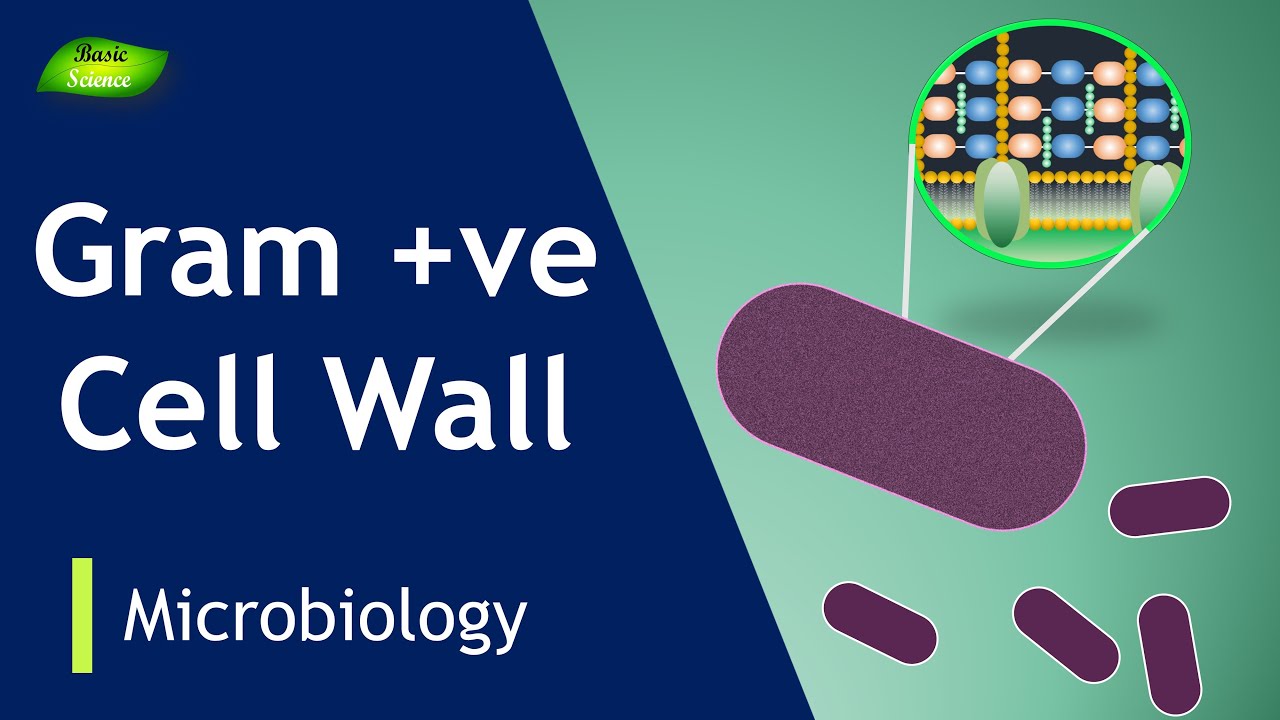
Gram-positive cell wall | Bacterial membrane | lipoteichoic acids | Basic Science Series
7.4K
Gram-positive bacteria possess a distinctive cell wall structure characterized by a thick peptidoglycan layer that is cross-linked by the enzyme DD-transpeptidase, along with teichoic acids and lipoteichoic acids that serve as chelating agents and contribute to cell wall integrity; unlike gram-negative bacteria, they have a smaller periplasmic space and typically lack capsules and flagella.
Click to watch →
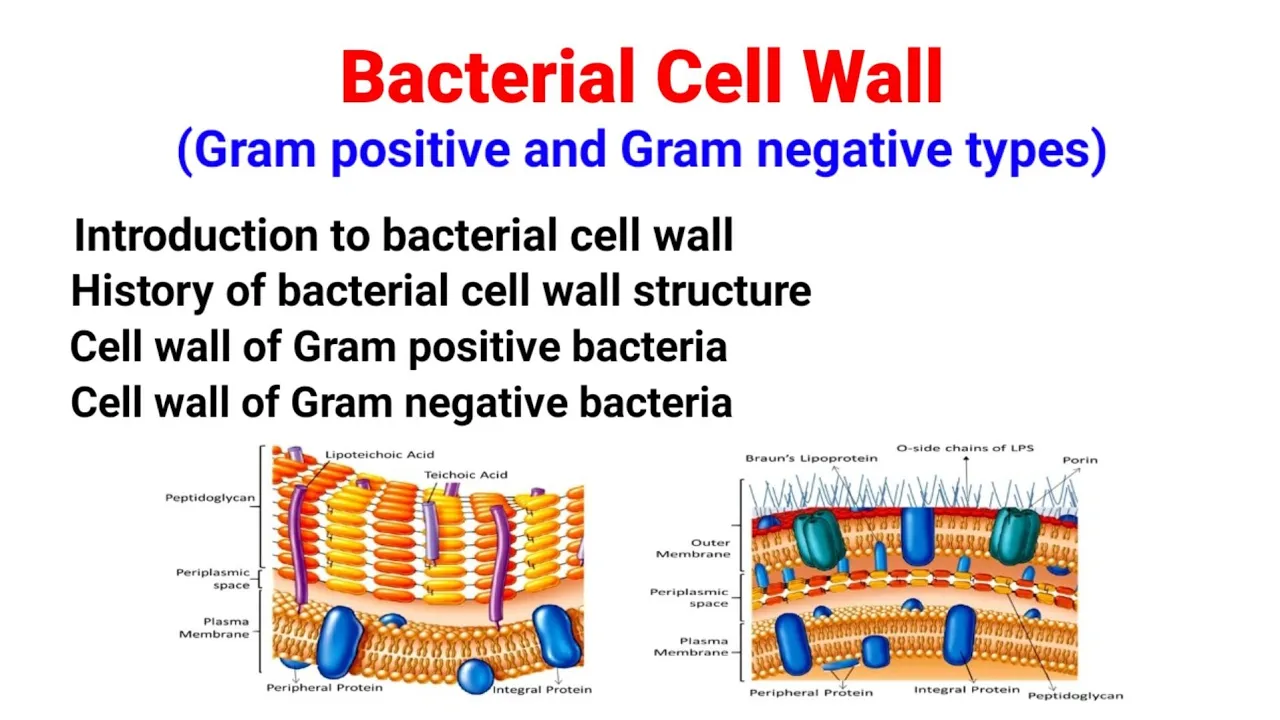
Bacterial Cell Wall | Gram positive & Gram negative bacteria cell wall| Structure|Salient features|
63.7K
The bacterial cell wall is a rigid protective layer outside the plasma membrane that determines cell shape, protects against osmotic lysis and toxic substances, and contributes to pathogenicity; it consists primarily of peptidoglycan (muramic acid and amino sugars) and differs significantly between gram-positive and gram-negative bacteria, with gram-positive bacteria having a thick peptidoglycan layer (20-80 nm) containing teichoic acids and lipoteichoic acids, while gram-negative bacteria have a thin peptidoglycan layer (2-7 nm) surrounded by an outer membrane containing lipopolysaccharides (LPS) with lipid A (endotoxin), core polysaccharide, and O-side chain, along with porin proteins that contribute to drug resistance.
Click to watch →
Deep Dive
Fundamentals of bacterial gene regulation, including the concepts of operons, promoters, and transcriptional regulators.
08 BIOL 8470 Module 2 Ch 14.1 14.3
204
Bacterial gene regulation occurs at multiple levels: transcription initiation, transcription elongation, and translation. In prokaryotes, transcription and translation are coupled, unlike eukaryotes where they are separated by the nuclear envelope. Cells classify genes into three categories: constitutive genes (housekeeping genes) expressed continuously for basic functions, inducible genes (e.g., beta-galactosidase) turned on only when substrate is available, and repressible genes (e.g., tryptophan synthesis) turned off when end product accumulates. Regulatory mechanisms include negative control (repressors bind DNA to block transcription) and positive control (activators bind DNA to promote transcription). These mechanisms ensure efficient energy and material utilization.
Click to watch →

Genetics A Conceptual Approach: Chapter 16 and Chapter 17 pt 1
1.8K
Bacterial gene regulation centers on the operon model, where multiple genes for related functions are transcribed as a single polycistronic mRNA. This system uses two types of regulatory elements: trans-acting proteins that diffuse throughout the cell and cis-acting DNA sequences that must be positioned near promoters. Four fundamental regulatory systems exist: negative inducible (repressor blocks transcription; inducer removes it), negative repressible (product feedback inhibits), positive inducible (activator requires inducer), and positive repressible (activator requires inhibitor). The Lac operon exemplifies negative inducible regulation, where the Lac repressor binds the operator and blocks transcription until lactose induces conformational change. This framework applies broadly to bacterial metabolic pathways, ensuring genes are expressed only when needed.
Click to watch →

Molecular Biology: Control of Gene Expression Part 5: Bacterial gene expresssion, Lac/Trp Operon
268
Bacteria regulate genes through operons—clusters of genes transcribed from a single promoter. Multiple genes share one promoter, meaning they are either all expressed or none. A regulatory gene produces a repressor protein that binds to the operator region, blocking RNA polymerase. This system groups genes for the same metabolic pathway together for coordinated control. Two main types exist: repressible operons (remain inactive, require signals to activate) and inducible operons (remain active, require signals to deactivate). The trp operon exemplifies repressible control where tryptophan acts as a corepressor, while the lac operon exemplifies inducible control where lactose acts as an inducer.
Click to watch →

Gene Regulation Bacteria
4.9K
Gene regulation occurs at multiple levels throughout the central dogma: DNA to RNA transcription, RNA modification, translation, and post-translational modifications. Proteins regulate gene expression through DNA-binding motifs—helix-turn-helix (bacteria), zinc fingers, and leucine zippers—that interact with DNA's major groove. Bacteria organize genes into operons where multiple genes transcribe together as single mRNA molecules, allowing coordinated regulation of metabolic pathway genes. Regulatory components include promoters (RNA polymerase binding sites) and operators (repressor binding sites), with separate genes encoding repressor and activator proteins that control transcription.
Click to watch →

Biología de Procariotas II: Operones
603
Bacteria regulate gene expression to adapt to environmental needs and conserve energy. Gene regulation occurs at three levels: replication, transcription, and translation, with transcriptional regulation being most commonly studied. Genes are classified as constitutive (continuously expressed for basic cellular functions) or adaptive (expressed only under specific conditions). An operon is a coordinated unit of structural genes regulated by control elements including the promoter (recognized by RNA polymerase), operator (recognized by regulatory proteins), and structural genes. Operons are classified as inducible (activated by substrates, catabolic processes) or repressible (activated by end products, anabolic processes), with control being positive (activators) or negative (repressors). The lac operon exemplifies inducible negative control: the repressor binds the operator in the absence of allolactose, blocking transcription; when allolactose is present, it binds the repressor, changing its conformation and allowing transcription.
Click to watch →
Deep Dive
The general mechanism of bacterial two-component signal transduction systems (sensor kinases and response regulators).

BIOL2421 Chapter 6 – Microbial Regulatory Systems
6.3K
Two-component systems are the primary signal transduction mechanism in prokaryotes, consisting of a sensor kinase and response regulator. The sensor kinase detects environmental signals, autophosphorylates on histidine, transfers phosphate to the response regulator, which then binds DNA to regulate gene expression. These systems control diverse processes including phosphate assimilation, nitrogen metabolism, and osmotic stress response.
Click to watch →

Cell Communication & Cell Signaling I CSIR NET Life Sciences | Revision | Shruti Shukla |
3.6K
The two-component phosphorylation system is a bacterial signal transduction mechanism consisting of sensor kinases and response regulators. Sensor kinases have extracellular domains that detect environmental signals and intracellular kinase domains that autophosphorylate upon signal detection. The phosphoryl group is then transferred to response regulators, which undergo conformational changes enabling DNA binding and transcriptional activation. This system allows bacteria to rapidly respond to environmental changes such as nutrient availability, pH, and osmolarity. Examples include chemotaxis systems and quorum sensing systems.
Click to watch →

BSc 1st semester and MSc 2nd year ||Bacterial two component system || Quorum sensing , chemotaxis
5.9K
Bacterial two-component systems are essential signal transduction mechanisms enabling bacteria to detect and respond to environmental changes. The system consists of two main components: sensor proteins and response regulator proteins. Sensor proteins have two domains—an input domain with sensor motifs that detect environmental signals and an output domain containing a histidine residue for phosphorylation. Response regulator proteins have a receiver domain with a conserved aspartate residue that accepts phosphate groups and an output domain that mediates cellular responses. When environmental signals bind to sensor proteins, they become activated and autophosphorylate at their histidine residues. The phosphorylated histidine then transfers the phosphate group to the aspartate residue in the response regulator protein, activating it. Phosphate transfer can occur through direct transfer or through a mediator protein (HPr). Activated response regulators perform various cellular functions including transcriptional regulation, metabolic regulation, and protein function modulation.
Click to watch →
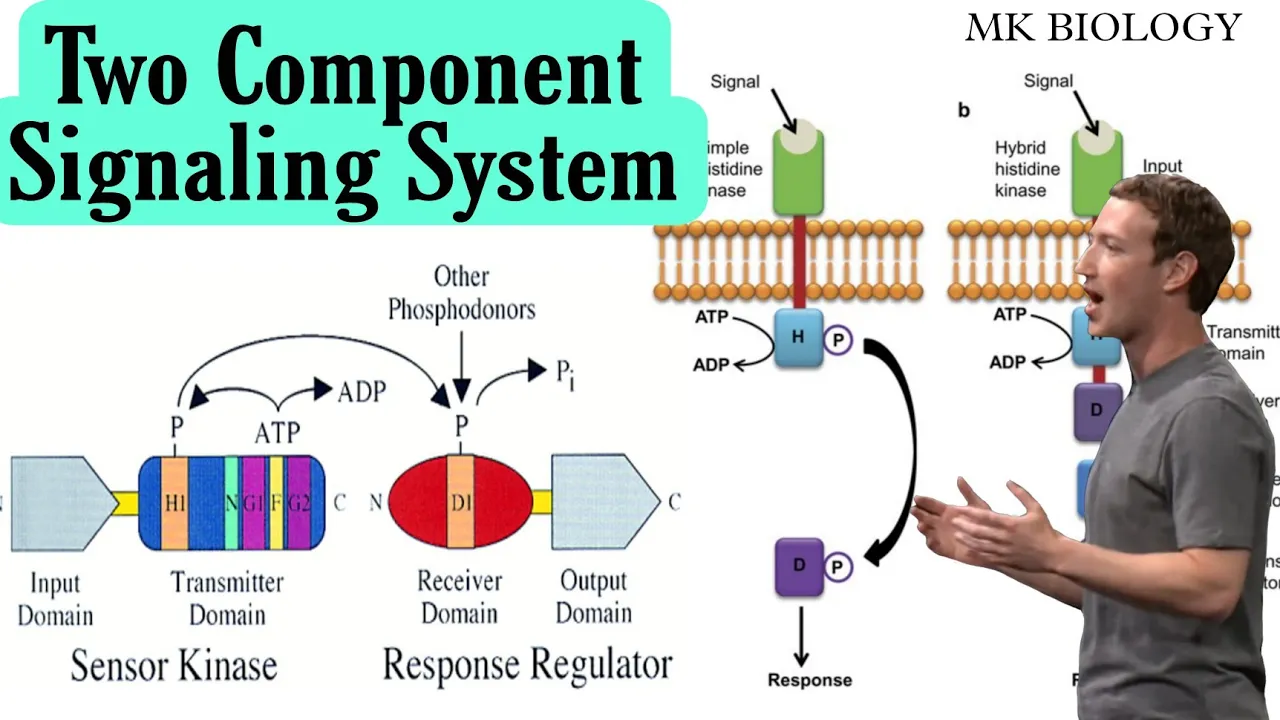
Bacterial two component signaling system | two component system in bacteria
14.8K
The bacterial two-component signaling system is a fundamental mechanism where a transmembrane sensor histidine kinase detects extracellular signals, autophosphorylates using ATP, and transfers the phosphate to a conserved aspartate residue in a response regulator's receiver domain, thereby activating the effector domain to regulate gene transcription.
Click to watch →

Bacterial signalling Two component system (Lecture-01) | GATE Life Science 2024
1.9K
The two-component system is a fundamental bacterial signaling mechanism consisting of two key components: a sensory kinase (with input and transmitter domains containing a conserved histidine) that detects environmental signals and a response regulator (with receiver and output domains containing an aspartate residue) that executes cellular responses; when a signal is detected, the sensory kinase undergoes conformational changes leading to autophosphorylation on histidine, which then transfers the phosphate group to the aspartate residue of the response regulator through either direct or indirect mechanisms, activating the output domain to regulate gene expression, metabolic enzymes, or other cellular processes for survival, growth, and reproduction.
Click to watch →
Deep Dive
The foundational concept of quorum sensing as a mechanism for bacterial communication and density-dependent behavior.

Quorum sensing in bacteria | quorum sensing mechanism | bacterial communication
4.4K
Quorum sensing is a bacterial communication mechanism where microorganisms use autoinducer molecules to detect population density and coordinate collective behaviors; when bacterial cell density increases, autoinducers accumulate outside the cells, re-enter the cytoplasm, bind to regulatory proteins like LuxR, activate gene transcription, and trigger synchronized responses such as bioluminescence in Vibrio fischeri, which benefits the squid host through camouflage during nighttime predation.
Click to watch →

The Most Relaxing Facts About the Smallest Living Organism to Fall Asleep To - Dreamy Science
118
Bacteria live together in communities but how do they coordinate? They communicate without words through chemicals—quorum sensing. Each bacterium releases signal molecules constantly—small chemicals that diffuse into the surrounding water. When few bacteria are present, signal concentration is low. When many are present, concentration is high. Bacteria have receptors that bind these signal molecules. When signal concentration reaches a threshold, the receptor activates and changes which genes are turned on. This creates group coordination. Individual bacteria respond to population density. When alone, they behave one way. When crowded, they behave differently. Vibrio fischeri use this for bioluminescence—when bacteria are few, they do not glow (no point). When crowded, quorum sensing triggers light production. All bacteria glow together, creating bright light useful to the squid. Pathogens use quorum sensing for virulence—they wait until population is large, then trigger toxin production. Biofilms depend on quorum sensing—bacterial communities stuck to surfaces, encased in slime, resistant to antibiotics.
Click to watch →

Bonnie Bassler on How Bacteria Talk and Work Together | Mindscape 361
247
Quorum sensing is a chemical communication system that allows bacteria to detect their population density and coordinate group behaviors. Bacteria release and detect signaling molecules (auto-inducers) that accumulate in proportion to cell density; when these molecules reach a threshold, bacteria collectively change their gene expression to perform synchronized tasks such as bioluminescence, pathogenesis, or biofilm formation. This mechanism enables bacteria to accomplish complex tasks as a collective that individual cells could never achieve alone, representing a fundamental form of self-organization in biological systems.
Click to watch →
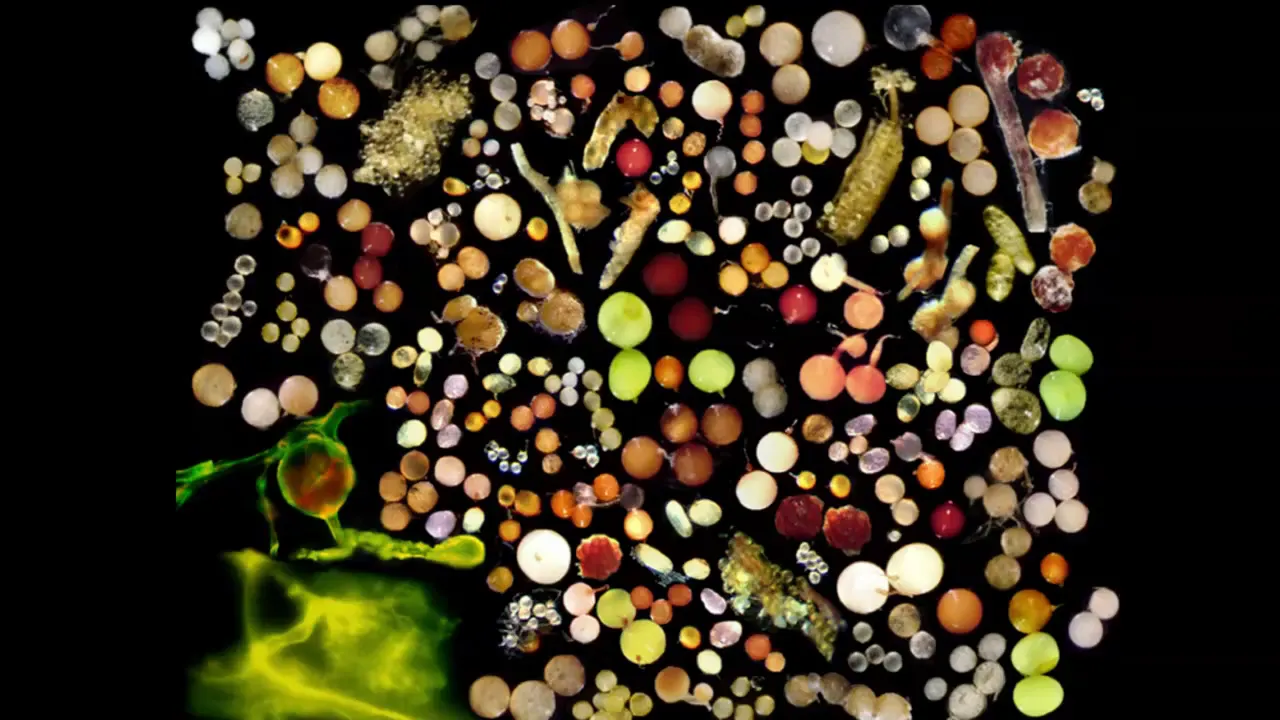
Dr. Christine Jones - Quorum Sensing In The Soil Microbiome
53K
Quorum sensing is a density-dependent behavior mechanism where microorganisms detect population density through chemical signaling and coordinate collective behaviors only when critical numbers are present. Each species produces unique autoinducer signals; when concentrations reach thresholds, microbes collectively regulate gene expression to achieve complex outcomes. Below thresholds, microbes remain inactive or perform individual tasks. This mechanism explains why simplified agricultural practices disrupt soil function—without sufficient microbial populations, coordinated behaviors like nutrient acquisition, pathogen protection, and moisture regulation cannot occur. Pathogens similarly become virulent only when reaching critical densities in hosts, demonstrating that quorum sensing governs both beneficial and harmful microbial behaviors.
Click to watch →

Hacking into the secret communication...of bacteria | Fatima AlZahra’a Alatraktchi | TEDxAarhus
89.8K
Bacteria use signaling molecules to communicate and coordinate their activities. When bacteria are few, signaling molecules disperse and cannot be detected. However, when bacteria reach sufficient numbers, signaling molecules accumulate, allowing bacteria to sense their population density. This quorum sensing mechanism enables bacteria to determine when they have enough members to initiate collective actions such as forming biofilms, producing virulence factors, or launching coordinated attacks.
Click to watch →
Prerequisite Knowledge
- Concept 01Basic cell biology of Gram-positive bacteria, including cell wall structure and membrane characteristics.
- Concept 02Fundamentals of bacterial gene regulation, including the concepts of operons, promoters, and transcriptional regulators.
- Concept 03The general mechanism of bacterial two-component signal transduction systems (sensor kinases and response regulators).
- Concept 04The foundational concept of quorum sensing as a mechanism for bacterial communication and density-dependent behavior.
Subsequent Learning
- Step 01The role of the Agr system in regulating virulence factors and biofilm formation during Staphylococcus aureus pathogenesis.
- Step 02The concept of 'quorum quenching' and the development of novel therapeutics that target Autoinducing Peptides (AIPs) to treat antibiotic-resistant infections.
- Step 03Comparative analysis of quorum sensing mechanisms: comparing Gram-positive AIP-mediated systems with Gram-negative acyl-homoserine lactone (AHL) systems.
- Step 04The evolutionary biology of quorum sensing, including cooperation, social cheating, and population dynamics in bacterial communities.
AIP & AGR Core
Diversity & Balance
AIP & AGR Core
0:00Playing Section
- 1
AIPs are signaling peptides in staphylococcal quorum sensing.
- 2
The AGR operon regulates AIP synthesis and detection.
- 3
A two-component system activates gene expression.
The Diffusion Sensing Hypothesis
While the traditional paradigm views the Staphylococcus Agr system and its Autoinducing Peptides (AIPs) as a cooperative mechanism for sensing population density (quorum sensing), the "Diffusion Sensing" hypothesis offers a compelling alternative. First proposed by Rosemary Redfield, this theory argues that bacteria secrete these signaling molecules not to count their neighbors, but to sense the physical limitations of their immediate microenvironment. Under this view, AIP secretion allows an individual bacterium to determine whether its environment is confined or subject to rapid diffusion. If diffusion is limited, secreted effector molecules (like virulent toxins) will remain nearby and be effective, justifying the metabolic cost of their production. This perspective re-evaluates "quorum sensing" as a selfish, cost-minimizing evolutionary adaptation for sensing local physical space rather than a form of social, multicellular communication.
Deep Dive
The role of the Agr system in regulating virulence factors and biofilm formation during Staphylococcus aureus pathogenesis.
Quorum Sensing; S aureus
407
The Agr quorum sensing system in Staphylococcus aureus is a sophisticated regulatory mechanism that enables bacteria to communicate and coordinate their behavior based on population density. This system consists of four genes (agrA, agrB, agrC, and agrD) encoded on a single operon. At low cell densities, baseline transcription produces components that maintain normal cellular functions. As cell density increases, autoinducing peptides accumulate extracellularly and bind to AgrC, triggering a phosphorylation cascade that activates AgrA. The activated AgrA then upregulates its own transcription and promotes the production of RNAIII, a key regulatory RNA that globally controls virulence gene expression. This system orchestrates a dramatic phenotypic transition: at high densities, S. aureus downregulates surface adhesins and biofilm formation genes while simultaneously upregulating virulence factors such as toxins, degradative enzymes, and immune evasion molecules, shifting from a colonization to an invasive pathogenic state.
Click to watch →
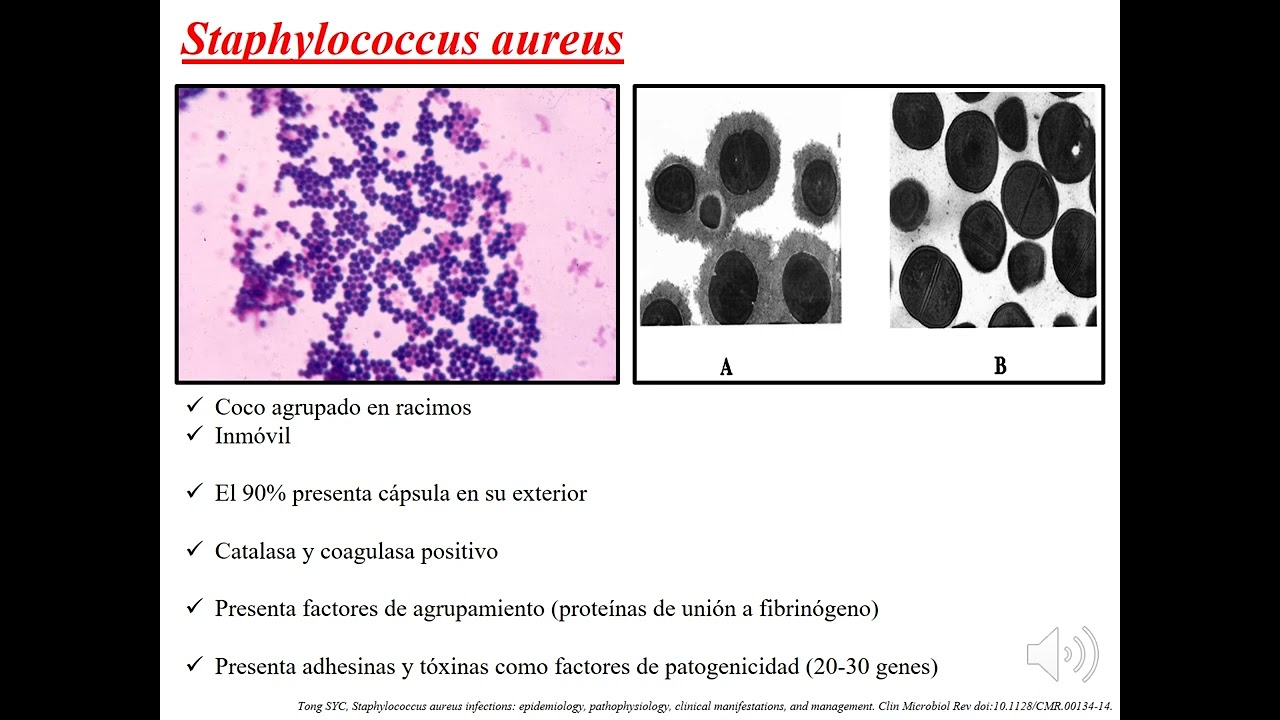
SEMINARIO 2 - Microbiología 1 Cat 2 FMed UBA
14.1K
Staphylococcus aureus is a Gram-positive coccus appearing in grape-like clusters, catalase-positive, and coagulase-positive. About 90% of strains have capsules preventing phagocytosis. Key virulence factors include adhesins (clumping factor, fibronectin-binding proteins), enzymes (catalase, coagulase, hemolysins), and exotoxins (TSST-1, enterotoxins). Superantigens activate T-cells non-specifically, causing massive cytokine release. The agr regulatory system controls virulence factor expression based on growth phase. S. aureus causes diverse infections: skin and soft tissue infections (impetigo, folliculitis, furuncles, cellulitis, erysipelas), pneumonia (10% community-acquired, 20-30% hospital-acquired), bacteremia, sepsis, endocarditis, and osteomyelitis. Risk factors include immunosuppression, indwelling devices, and colonization. The bacterium forms biofilms on devices, entering a dormant state with reduced metabolic activity that confers antibiotic resistance.
Click to watch →

3.1 Staphilococcus Streptococcus
14.7K
Staphylococcus and Streptococcus are Gram-positive cocci differing in grouping patterns: Staphylococcus forms grape-like clusters while Streptococcus forms chains. The catalase test differentiates them (Staphylococcus positive, Streptococcus negative). The coagulase test classifies Staphylococcus species, with coagulase-positive species being more virulent. Staphylococcus aureus is distributed worldwide as part of normal microbiota, with 40-50% of healthy adults carrying it. The bacterium is facultatively anaerobic, produces golden-yellow colonies with beta-hemolysis, and contains a 28-32 million base pair chromosome encoding 2,600-2,800 genes. S. aureus is a multifactorial pathogen causing disease through multiple virulence factors acting in concert. Virulence factors include somatic factors (Protein A, clumping factor, adhesins) and excreted factors (catalase, beta-lactamase, leukocidins, siderophores). The bacterium forms capsules (40 types, with types 5 and 8 most common clinically) that are anti-phagocytic and associated with chronic infection. Biofilm formation, dependent on polysaccharide intercellular adhesin (PIA), protects bacteria from antibiotics and immune responses. The agr system regulates virulence through quorum sensing: low bacterial density activates surface protein production, while high density triggers exotoxin and enzyme release for tissue invasion and bacterial escape.
Click to watch →

EXPERT LECTURE | Antibacterial Drug Development Strategy Based on Bacteriological Study
1.1K
The AGR (Accessory Gene Regulator) system is a quorum sensing mechanism in S. aureus that controls virulence factor expression based on bacterial density. Bacteria produce autoinducers (AIP) that accumulate with population density. When AIP levels exceed a threshold, AgrC auto-phosphorylates and activates AgrA, driving transcription of rna3 and virulence factors. An infant cohort study in Japan examined S. aureus colonization at 1 month, 6 months, and 1 year of age. S. aureus colonization at 1 month showed no association with atopic dermatitis (AD), but colonization at 6 months showed significantly higher odds ratio for AD. Genome sequencing of 242 strains revealed that continuous colonizers were more frequent in AD infants (98 cases) than non-AD infants (24 cases). Analysis showed that the AGR region accumulated more mutations in non-AD colonizers at 6 months. In a mouse skin infection model, AGR-deficient strains showed significantly decreased bacterial numbers and diminished inflammatory skin disease, demonstrating that AGR function is essential for S. aureus adaptation to the skin surface and AD development.
Click to watch →
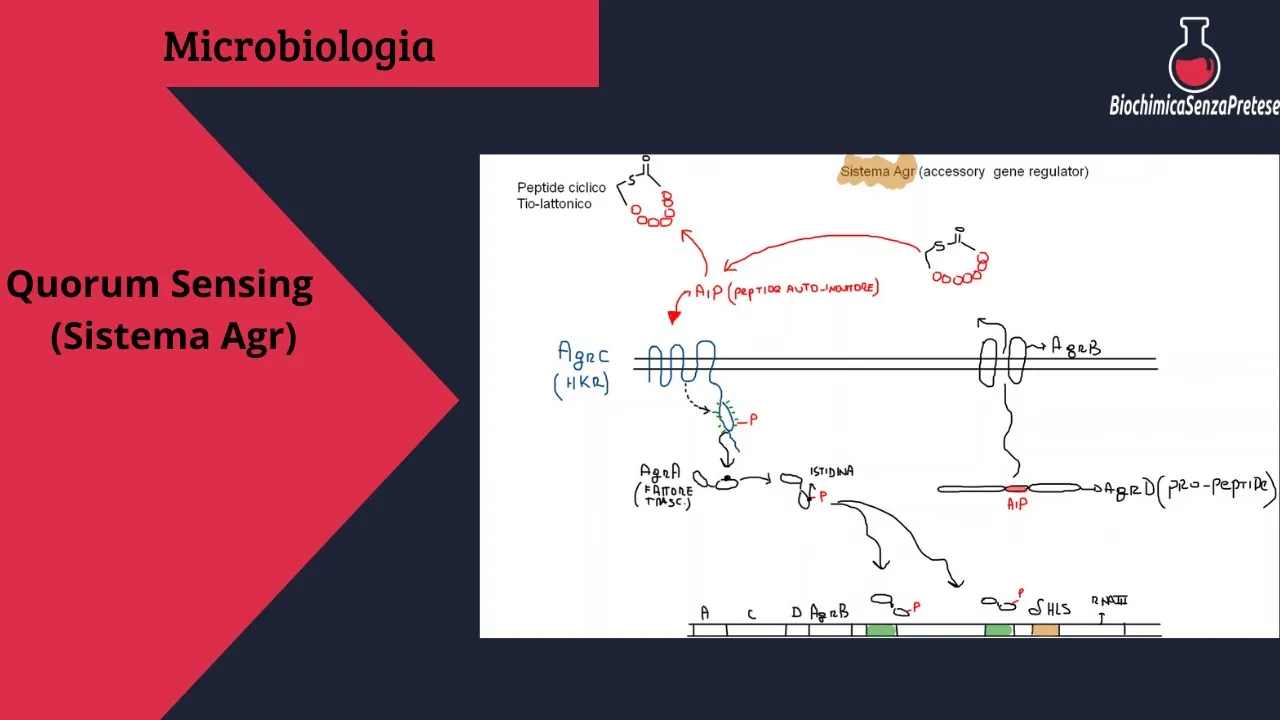
Meccanismo di Quorum Sensing: Sistema Agr (S.aureus).
1.7K
Quorum sensing is a bacterial communication system where cells release signaling molecules (autoinducers) that accumulate proportionally with population density. When these molecules reach a threshold concentration, bacteria collectively activate coordinated gene expression changes. S. aureus exhibits two distinct phenotypes regulated by bacterial density: at low density, bacteria express adhesins and protective fibrin matrix, forming microcolonies that evade immune detection; at high density, they switch to aggressive phenotype with reduced adhesins and increased virulence factors. The AGR system mediates this switch through AIP (autoinducer peptide), AgrC (histidine kinase receptor), and AgrA (transcription factor). RNA3, a regulatory RNA with 14 stem-loops, directly inhibits adhesin translation and represses Rot transcription factor to activate virulence genes. This sophisticated system enables bacteria to optimize survival strategies based on population density.
Click to watch →
Deep Dive
The concept of 'quorum quenching' and the development of novel therapeutics that target Autoinducing Peptides (AIPs) to treat antibiotic-resistant infections.

Clare Hall King Lecture 2025/26 – Professor Bonnie Bassler
234
Rather than killing bacteria (which promotes resistance), researchers are developing therapeutics that disrupt bacterial communication. Using synthetic chemistry, scientists created antagonist molecules mimicking auto-inducers but containing structural modifications that jam bacterial receptors. Experiments with Pseudomonas aeruginosa showed these inhibitors prevented biofilm formation and protected animals from lethal infection. This proof-of-concept demonstrates that modifying bacterial behavior—making them think they're alone—gives immune systems time to eliminate them. Unlike traditional antibiotics, resistant mutants face growth disadvantages, suggesting longer therapeutic effectiveness.
Click to watch →

Regulation of Metabolism - Quorum Sensing
305
In the agr system of Staphylococcus aureus, the prepropeptide encoded by agrG is transported across the cell membrane and processed into the mature autoinducing peptide (AIP). At low bacterial concentrations, AIP simply diffuses out of the environment without triggering any response. However, when bacteria accumulate in an enclosed space, AIP concentration increases. Some AIP molecules remain bound to the cell surface and are detected by the AgrC sensor kinase. This detection triggers a phosphorylation cascade that activates AgrA, which then regulates transcription of downstream genes including RNA3, initiating the quorum sensing response.
Click to watch →

BIG IDEAS @ScienceStowers featuring Bonnie Bassler, PhD
876
Scientists are developing anti-quorum sensing strategies to combat antibiotic-resistant infections. There are two approaches: narrow-spectrum (targeting species-specific systems) and broad-spectrum (targeting universal systems). For Pseudomonas aeruginosa, scientists made a synthetic inhibitor that looks like the autoinducer but has a sulfur modification making it resistant to human enzymes. This inhibitor slots into the receptor and jams it, preventing quorum sensing. In experiments, it stopped biofilm formation and reduced pyocyanin toxin production by 90%. In animal infection models, the inhibitor saved all animals that would otherwise die from Pseudomonas infection. Bacteria have a four-billion-year head start on humans. Scientists are now studying how bacteria live in natural communities, where they eat each other's autoinducers, eavesdrop, free ride, and cheat. These natural strategies have been tested over billions of years and must be highly effective. Instead of starting from scratch, scientists should let bacteria tell us which strategies work best.
Click to watch →

Matters Microbial #24: It takes a quorum to cause disease
1.7K
Strategies to interfere with quorum sensing include physically consuming quorum sensing molecules (quorum quenching) and creating competitors that bind to the same receptors. These approaches represent potential therapeutic strategies for bacterial diseases. The goal is to disrupt bacterial communication without killing the bacteria, which could reduce the development of antibiotic resistance.
Click to watch →

How Do Bacteria Communicate with Each Other and What Does That Mean for People
623
Scientists have developed molecules that interfere with quorum sensing circuits by binding to receptors and preventing autoinducers from activating them. These anti-quorum sensing molecules can shut down bacterial communication in laboratory settings. In animal studies, these molecules have successfully saved animals from bacterial infections by preventing pathogens from launching coordinated virulence attacks. These molecules are now being developed as new therapeutic strategies, though they require further refinement for clinical use.
Click to watch →
Deep Dive
Comparative analysis of quorum sensing mechanisms: comparing Gram-positive AIP-mediated systems with Gram-negative acyl-homoserine lactone (AHL) systems.

Quorum Sensing in Bacteria: Bioluminescence and Biofilms Explained
151.5K
Quorum sensing is a bacterial communication mechanism where cells coordinate group behaviors by detecting population density through autoinducer molecules; when bacterial cell densities are low, autoinducers diffuse out of cells without triggering responses, but when enough cells accumulate, autoinducers re-enter cells and bind to regulatory proteins (like LuxR) to activate gene transcription, enabling synchronized behaviors such as bioluminescence in Vibrio fischeri symbiosis with the Hawaiian bobtail squid.
Click to watch →

Quorum sensing in Gram negative and Gram positive bacteria
49.9K
Quorum sensing is a bacterial communication system where cells release signaling molecules (autoinducers) that accumulate in the environment; when cell density reaches a threshold, these molecules enter the cell and activate regulatory proteins (LuxR in Gram-negative bacteria through direct binding, or sensor kinase/response regulator systems in Gram-positive bacteria via phosphorylation), enabling coordinated group behaviors like bioluminescence.
Click to watch →

Bonnie Bassler (Princeton) Part 1: Bacterial Communication via Quorum Sensing
129.2K
Woody Hastings discovered that bioluminescent bacteria only produce light at high cell density, revealing that bacteria can detect population levels through chemical signals. This foundational observation led to understanding quorum sensing—the process where bacteria release and detect autoinducer molecules to coordinate group behaviors. Gram-negative bacteria use LuxI-LuxR systems where LuxI synthesizes acyl homoserine lactone signals with conserved cores and species-specific carbon chains creating private languages. Gram-positive bacteria use peptide-based systems where precursor proteins are processed and secreted, binding transmembrane sensors that trigger phosphorylation cascades. Pathogenic bacteria use quorum sensing to coordinate virulence factor production: Pseudomonas aeruginosa secretes proteases only at high density to avoid immune detection; Agrobacterium transfers virulence plasmids between cells; Erwinia produces antibiotics to eliminate competitors. Vibrio harveyi uniquely employs two autoinducer systems: AI-1 (species-specific) and AI-2 (universal). The LuxS gene is conserved across over 500 bacterial genomes, representing an ancient communication mechanism predating the gram-negative/gram-positive split. Autoinducer-2 originates from the S-adenosylmethionine salvage pathway, where MetK converts methionine to SAM, Pfs detoxifies SAH to produce S-ribosylhomocysteine, and LuxS cleaves this to generate the DPD precursor for autoinducer-2.
Click to watch →
No mejoras porque las BACTERIAS son RESISTENTES al Tratamiento (HAZ ESTO)
20.1K
Quorum sensing is an intelligent organizational mechanism used by bacteria and some viruses to coordinate their activities. When bacterial populations reach a critical mass, they communicate through specific signaling molecules to organize themselves into structured communities. This collective behavior allows bacteria to create coordinated responses to environmental challenges, making them significantly more difficult to eliminate than isolated bacteria.
Click to watch →

Bacteria Evolved Complex Radio Like Communication 2.7 Billion Years Ago
60.7K
Quorum sensing is a fundamental process of bacterial communication where bacteria release small molecules called autoinducers that increase in concentration as bacterial population density increases. When these molecules reach a specific threshold concentration, bacteria collectively change their behavior in unison. This mechanism allows bacteria to coordinate group actions such as turning on bioluminescence (as observed in marine cyanobacteria), building biofilms, or switching between active attack modes and passive survival states.
Click to watch →
Deep Dive
The evolutionary biology of quorum sensing, including cooperation, social cheating, and population dynamics in bacterial communities.
P. Greenberg - Quorum sensing and cooperation in bacteria..
647
Bacteria use quorum sensing to coordinate group behaviors, but social cheating (where individuals benefit from public goods without contributing) can threaten cooperative populations. However, bacteria have evolved mechanisms to restrain cheating: quorum sensing co-regulates both public goods (shared resources like proteases) and private goods (cell-associated enzymes), creating metabolic penalties for cheaters. Additionally, cooperators can 'police' cheats by producing toxins like hydrogen cyanide that harm non-cooperators. When cooperation costs increase, these mechanisms can fail, potentially causing a tragedy of the commons where cheaters overrun the population.
Click to watch →
Bonnie Bassler on How Bacteria Talk and Work Together | Mindscape 361
247
This segment explains the detailed mechanism of quorum sensing: bacteria consume nutrients, grow, and divide asexually while producing and releasing signaling molecules (auto-inducers). As the population grows, molecule concentration increases proportionally with cell density. When molecules reach a threshold, bacteria collectively change gene expression to perform coordinated group behaviors. Quorum sensing can be understood as a phase transition in biological systems. Bacteria use multiple types of signaling molecules: species-specific (indicating 'you are my twin'), family-specific (indicating 'you are my cousin'), and universal (indicating 'other'). Bacteria measure ratios of these molecules to determine not just cell density but also relatedness to neighbors. Bacteria produce 'public goods' - substances or behaviors that benefit the entire community. Biofilms are bacterial communities adhered to surfaces and embedded in protective extracellular material, covering every surface on Earth including human skin and teeth. Quorum sensing is not an anomaly but the norm in bacteria, with tens of thousands of systems throughout the bacterial kingdom. Collective behavior through quorum sensing is not unique to bacteria but applies to all organisms: human cells work together, herds hunt together, fish schools move in synchrony. Bacteria evolved these rules billions of years ago, and the same principles apply to all multicellular organisms. Bacterial communities face challenges from 'cheaters' - bacteria that benefit from collective behaviors without contributing to costs. Bacteria are ideal for studying game theory concepts like cooperation, cheating, and the tragedy of the commons. The discovery of quorum sensing began with bioluminescent bacteria in the ocean, which produce blue light visible to scientists. The luciferase enzyme catalyzes the reaction between a fatty acid substrate and oxygen, releasing photons of blue light approximately once every 20 times. This is similar to fireflies, which evolved luciferase independently (convergent evolution). Pathogenic bacteria use quorum sensing to control virulence factors - the toxins and weapons they use to infect hosts. When bacteria detect a quorum, they collectively activate genes that produce these virulence factors. Mutants that cannot perform quorum sensing are completely avirulent. Individual bacteria cannot benefit from releasing toxins because they diffuse away and are lost; the only way bacteria can benefit is through collective action. Understanding quorum sensing has practical applications: scientists can develop molecules that mimic or block quorum sensing signals to prevent pathogenic bacteria from launching coordinated attacks. The human microbiome performs essential functions including digestion of plant materials (which human cells cannot digest), vitamin production, and protection against pathogens. The microbiome also affects drug metabolism, with some people's bacteria degrading medications differently than others. Human gut cells produce molecules almost identical to bacterial quorum sensing signals, and bacteria can detect these as quorum sensing molecules, suggesting humans have evolved mechanisms to control their bacterial microbiome through chemical signals. Some bacteria undergo programmed cell death when they detect high cell density and limited resources. In these communities, older cells die and release their nutrients, which younger cells can use to survive. This altruistic behavior benefits the community as a whole and is controlled by quorum sensing. Bacteria divide asymmetrically, producing one older cell and one younger cell, which allows for the concept of 'older' and 'younger' bacteria within a population. Quorum sensing is not limited to bacteria - eukaryotic cells (including human cells) also participate in chemical conversations. Human gut cells produce molecules almost identical to bacterial quorum sensing signals, and bacteria can detect these as quorum sensing molecules. Bacterial viruses (phages) have also evolved quorum sensing receptors to eavesdrop on bacterial communication. Phages have two life cycles: lysogeny (dormancy) and lysis (replication). When viruses detect high host density through quorum sensing signals, they switch from lysogeny to lysis, killing the host and releasing new viruses to infect other cells.
Click to watch →

Meerkats and Microbes: Becoming a Professor of Evolutionary Biology - Ashleigh Griffin - WotF 2020
434
Bacteria exhibit sophisticated social behaviors through quorum sensing, a communication system where cells produce and detect signaling molecules to coordinate group activities like producing enzymes for nutrient breakdown or virulence factors for host infection. However, some bacterial cells can become 'cheaters' by mutating to stop producing cooperative substances while still benefiting from those made by others. These cheaters gain a fitness advantage because they receive all the benefits of cooperation without paying production costs, leading to their spread through populations. Experiments with Pseudomonas aeruginosa demonstrate that wild-type bacteria producing pyoverdin outcompete mutants in monocultures, but when mixed together, mutants exploit cooperators by consuming their pyoverdin without producing it themselves. High relatedness maintains cooperation, while mixing with unrelated individuals causes cooperation to decline dramatically.
Click to watch →

The social life of bacteria: collapse of a culture
1.1K
Bacterial populations exhibit social behaviors where cooperation and cheating dynamics are regulated by quorum sensing systems; while social cheaters (LASR mutants) can emerge and gain fitness advantages by avoiding the costs of producing public goods like extracellular proteases and antibiotics, cooperation is stabilized through metabolic constraints (such as quorum-sensing-controlled private goods like adenine metabolism) and policing mechanisms (where cooperators produce toxic compounds like hydrogen cyanide that harm cheaters), preventing the tragedy of the commons and maintaining stable coexistence between cooperators and cheaters in bacterial communities.
Click to watch →
Bacterial Quorum Sensing and Metabolic Incentives to Cooperate
160
Bacterial communities use quorum sensing (cell-to-cell communication via chemical signals like AHL) to coordinate production of public goods (shared enzymes/proteins) and private goods (individual metabolic enzymes). Social cheaters exploit cooperators by consuming shared resources without producing them, potentially causing a 'tragedy of the commons' where the community collapses. Research shows that adenosine metabolism, a private good controlled by quorum sensing, can suppress social cheating when present at concentrations above 0.5%, forcing cheaters to cooperate by requiring them to produce their own adenosine hydrolase enzyme. More restrictive resource environments increase social cheating, demonstrating that metabolic incentives tied to quorum sensing can maintain cooperation in bacterial populations.
Click to watch →
AIP & AGR Core
Diversity & Balance
AIP & AGR Core
0:00- 1
AIPs are signaling peptides in staphylococcal quorum sensing.
- 2
The AGR operon regulates AIP synthesis and detection.
- 3
A two-component system activates gene expression.
The Diffusion Sensing Hypothesis
While the traditional paradigm views the Staphylococcus Agr system and its Autoinducing Peptides (AIPs) as a cooperative mechanism for sensing population density (quorum sensing), the "Diffusion Sensing" hypothesis offers a compelling alternative. First proposed by Rosemary Redfield, this theory argues that bacteria secrete these signaling molecules not to count their neighbors, but to sense the physical limitations of their immediate microenvironment. Under this view, AIP secretion allows an individual bacterium to determine whether its environment is confined or subject to rapid diffusion. If diffusion is limited, secreted effector molecules (like virulent toxins) will remain nearby and be effective, justifying the metabolic cost of their production. This perspective re-evaluates "quorum sensing" as a selfish, cost-minimizing evolutionary adaptation for sensing local physical space rather than a form of social, multicellular communication.
Basic cell biology of Gram-positive bacteria, including cell wall structure and membrane characteristics.
Fundamentals of bacterial gene regulation, including the concepts of operons, promoters, and transcriptional regulators.
The general mechanism of bacterial two-component signal transduction systems (sensor kinases and response regulators).
The foundational concept of quorum sensing as a mechanism for bacterial communication and density-dependent behavior.
The role of the Agr system in regulating virulence factors and biofilm formation during Staphylococcus aureus pathogenesis.
The concept of 'quorum quenching' and the development of novel therapeutics that target Autoinducing Peptides (AIPs) to treat antibiotic-resistant infections.
Comparative analysis of quorum sensing mechanisms: comparing Gram-positive AIP-mediated systems with Gram-negative acyl-homoserine lactone (AHL) systems.
The evolutionary biology of quorum sensing, including cooperation, social cheating, and population dynamics in bacterial communities.
1.4K views34likes4:29@biologygoalOriginal Release: 2023-11-29
autoinducing peptides are the molecules of stukus Quorum sensing playing a fundamental role in its spectal communication phenomena these small peptides typically consisting of 7 to n amino acids are synthesized and released by bacterial cells into the extracellular environment as the bacterial population density increases the concentration of aips reaches a critical threshold triggering a Cascade of events that regulate gene expression within the community the synthesis of aips is tightly regulated by the accessory Gene regulator also known as AGR operon the AGR operon is a central player in stokus Quorum sensing and its structural design varies among different Stoka species contributing to the specific it of the signaling process within the operon the AGR Locus and codes the element essential for Quorum sensing namely the hisin kyese which is agrc and the response regulator which is AG a at the heart of the Quorum sensing mechanism is the two component signaling transduction system composed of agrc and AG a agrc a transmembrane hist in is functions as a sensor for extracellular aips upon binding of aips to agrc a series of Auto phosphorilation and phosphor transfer events occur resulting in the activation of AG the response regulator activated AG typically in its phosphorilated form acts as a transcription Factor modulating the expression of Target change gen these genes under the control of the AGR system encode various virence factors and Regulatory components allowing the bacterial Community to adapt Its Behavior based on the population density one fascinating aspect of stoc cokus Quorum sensing is the diversity in AIP structures and the specificity of the AGR system different stokus species produ prod distinct aips ensuring that communication is tailored within species this specificity arises from variations in the amino acid sequences of the aips and their cognit receptors diversity extends further with stokus species being classified into different AGR types based on the sequence variability within the EGR Loi each AGR type represents a unique set of aips and receptor specificities contributing to the complexity and the adaptability of stokus Quorum sensing networks within the AGR system a d balance is maintained between Auto induction and auto repression Auto induction is a positive feedback loop where aips promote their own synthesis this ensures a rapid response to changes in population density on the other hand Auto repression mechanism they exist to prevent excessive activation of the system this equilibrium is crucial for fine-tuning the quarum sensing response and avoiding uncontrolled gene expression in summary the interplay between AIP and the ARR system forms the core of staus Quorum sensing these signaling molecules and the associate regulatory elements not only enable bacterial communication but also provide a fascinating Target for understanding and potentially manipulating microbial Behavior here are few references on this topic please read these articles for further information thank you for watching this video if you like the video then please hit the like button and subscribe to basic Z series thank you
Up Next
17:00
Bacterial Quorum Sensing: LuxI, LuxR & the Lux Operon Explained
@jonathanholt2217
3.6K views•2021-01-14

50:12
Bacterial Communication: Quorum Sensing and Biofilm Formation Explained
@JHUAAP
12.6K views•2011-06-28

6:19
Biofilm Formation Stages: The City of Microbes Explained
@biologygoal
29.2K views•2019-07-28

7:08
Bacteriophages: Earth's Deadliest Killers and Future Antibiotics
@kurzgesagt
34.6M views•2018-05-13
Related Study Plans & Knowledge Roadmaps
Structured learning paths in Biology
biology
RNAi: Biogenesis, RISC & Gene Silencing
01Molecular Biology Foundations: DNA to Protein
02Introduction to RNA Interference (RNAi)
03Molecular Biogenesis of miRNA and siRNA
+ 2 more learning modules
10h5 modules
Explore Roadmap
biology
Mycorrhizae: Signaling, Biophysics & Ecology
01Foundations of Mycorrhizal Symbiosis
02Molecular Signaling and Root Colonization
03Biophysics and Bioenergetics of Nutrient Exchange
+ 1 more learning modules
11h4 modules
Explore Roadmap
biology
Circadian Clocks: TTFL, SCN & Periphery
01Foundations of Molecular Biology & Gene Expression
02Introduction to Chronobiology and Actograms
03The Core TTFL: Molecular Architecture of the Clock
+ 3 more learning modules
14h6 modules
Explore Roadmap
biology
Population Genetics: Math, Drift & Selection
01Genetic & Probability Foundations
02The Hardy-Weinberg Principle and Baseline Models
03Mathematical Modeling of Natural Selection
+ 3 more learning modules
18h6 modules
Explore Roadmap