

























Quorum sensing is a bacterial communication mechanism where cells coordinate group behaviors by detecting population density through autoinducer molecules; when bacterial cell densities are low, autoinducers diffuse out of cells without triggering responses, but when enough cells accumulate, autoinducers re-enter cells and bind to regulatory proteins (like LuxR) to activate gene transcription, enabling synchronized behaviors such as bioluminescence in Vibrio fischeri symbiosis with the Hawaiian bobtail squid.
Quorum Sensing in Bacteria: Bioluminescence and Biofilms Explained
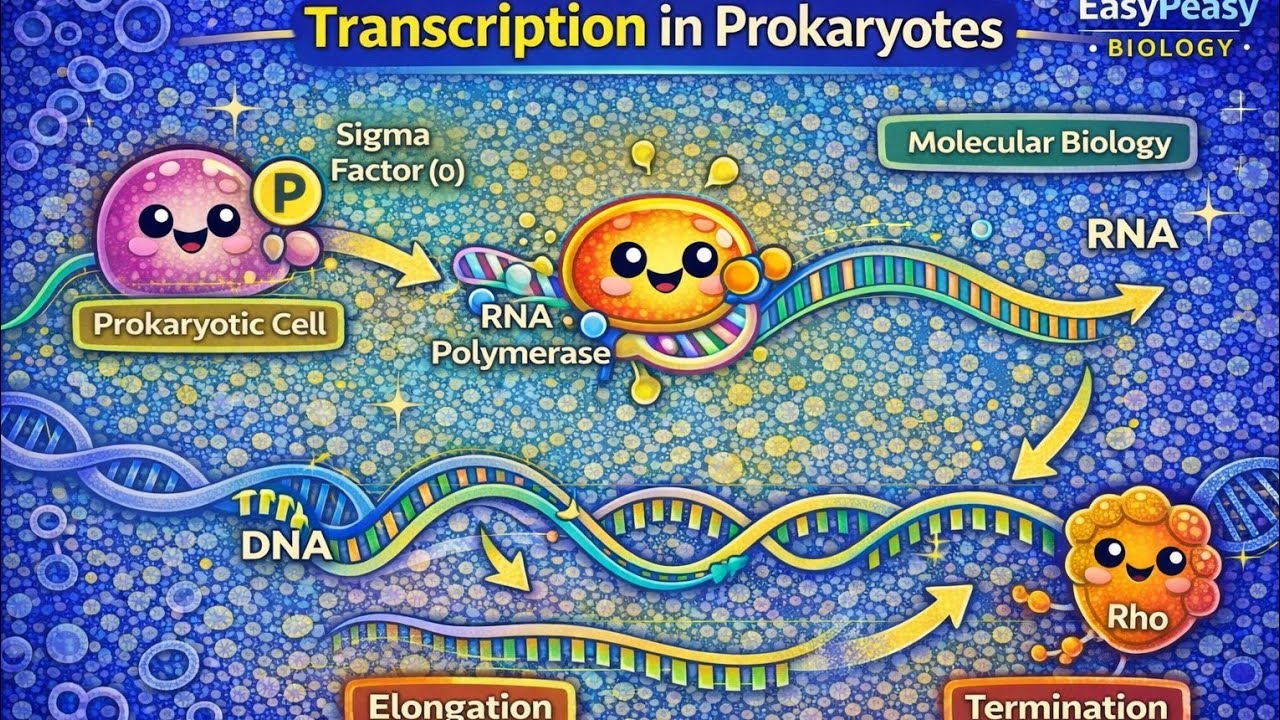
Added:Basic bacterial anatomy and gene expression, including how transcription and translation function in prokaryotic cells.
The fundamental principles of cell signaling, specifically how chemical ligands interact with cellular receptors to trigger a response.
The concept of symbiotic relationships in ecology, particularly mutualism between microbes and host organisms (like Vibrio fischeri and the bobtail squid).
The physical differences between planktonic (free-floating) bacteria and sessile (surface-attached) bacterial communities.
Quorum quenching: Exploring therapeutic strategies that disrupt bacterial communication to combat infections without driving antibiotic resistance.
The clinical and industrial implications of biofilms, including their role in chronic infections, medical device contamination, and biofouling.
Synthetic biology applications, such as engineering artificial quorum-sensing circuits for biosensors and localized drug delivery systems.
Microbial sociology and evolutionary biology, examining cooperation, public goods, and the evolution of 'cheater' phenotypes in bacterial populations.
151.5K views1.9Klikes4:48Original Release: 2017-06-27
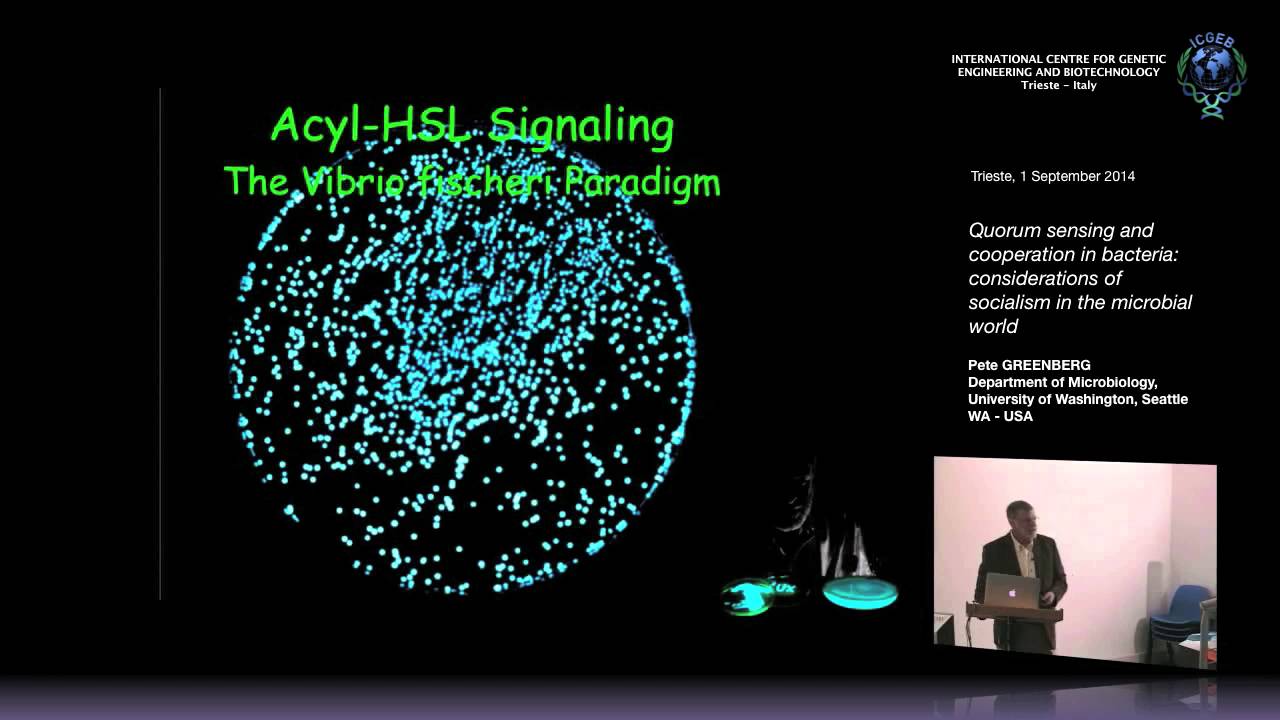
A discovery that fundamentally changed the way we think about microbes was made while studying a peculiar marine bacterium called vibrioicery. In the dark colonies of vibrioicery are bioluminescent.
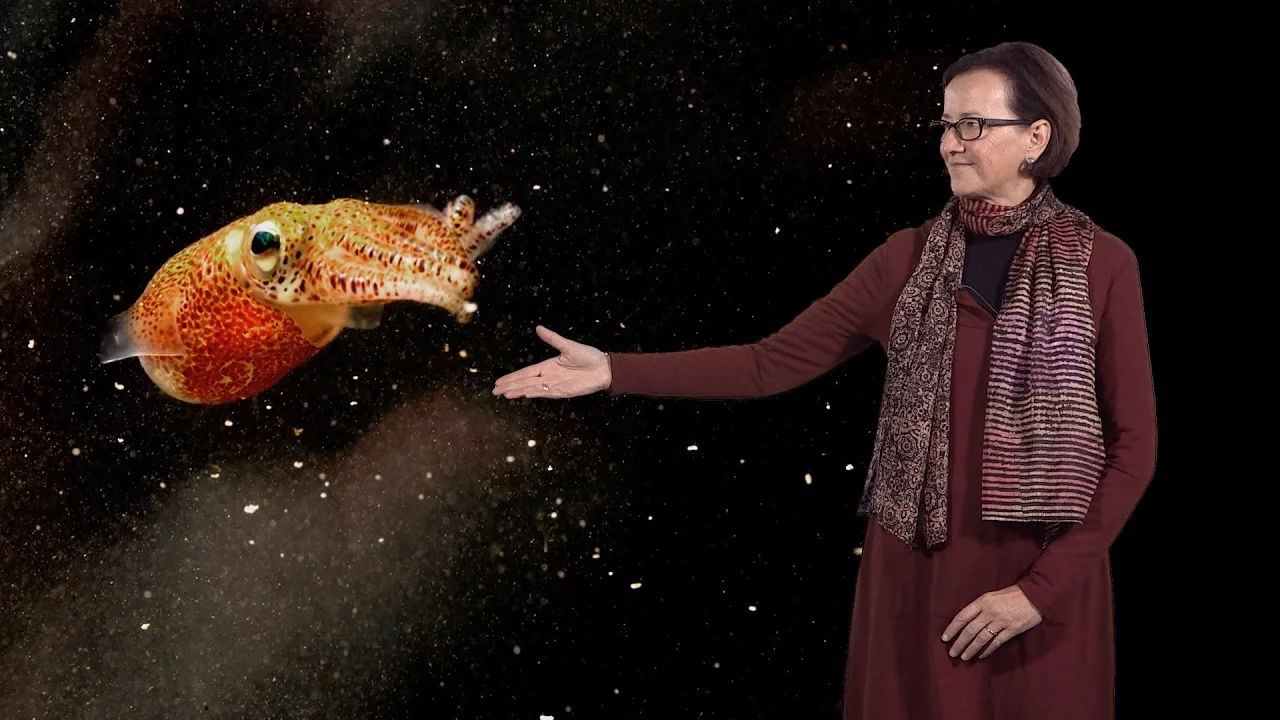
Although these bacteria can survive as planktonic forms in marine environments, vibrio fishery predominantly lives in symbiosis with certain marine animals such as the Hawaiian bobtail squid upr. The bacteria colonize and receive nutrients inside the light organ, a structure located in the squid's mantle cavity. The bacteria glow only under certain conditions. The genes needed to make light are off when bacterial cell densities are low, such as in seawater, but turn on under crowded conditions, such as in the light organ of the squid, when enough cells are together to make a visual impact. How do cells know they've achieved an adequate number of nearby individuals, that is a quorum, before turning on their luminescence genes?
It turns out that this phenomenon called quorum sensing is only loosely associated with cell numbers. Induction of a quorum sensing gene system requires the accumulation of a molecule called an autoinducer. After a cell produces an auto-inducer, the molecule rapidly diffuses out of the cell. The more cells in a given space, the faster the auto-inducer builds up and the more likely it will re-enter cells and trigger the luminescence response.
Under laboratory conditions, the artificial addition of the autoinducer to the appropriate concentration will even cause cells grown at low density to glow. The lux system of genes mediates the bacterium's bioluminescence. In this system, lux genes are initially expressed at a low basil level leading to the production of a small number of lux proteins including lux I and lux R.
Lux I synthesizes the auto-inducer which in the case of vibrioisery is a chemical called ail homoserene lactone.
The autoinducer quickly diffuses out of the cell, typically without a chance to interact further with the lux system inside the cell. However, when the autoinducer is at a high concentration outside of the cell, as in crowded conditions, a number of these molecules are likely to re-enter the cells and bind to the regulatory molecule lux R. The lux R auto auto-inducer complex binds to the operon and activates transcription enhancing the expression of the target genes. Thus more lux and more auto-inducer are produced which will ultimately further enhance the expression of this operon. The enzyme responsible for light production luciferase consists of the products of the lux A and lux B genes.
Luciferase catalyzes a redux reaction that produces oxidized and reduced chemical products as well as blue green light. Because the lux proteins, like other proteins, require energy to produce, the cells turn this system on only when appropriate, such as when they're crowded together in the light organ of the squid. How does light from vibrio fishery benefit the squid? The bacteria provide luminescence for the squid after sunset when the animal emerges from its hiding place in the sand to search for food. As the squid swims in a moonlit night, its light organ projects light downward in an apparent attempt to camouflage the squid from any predators below. Looking up, a fish would see light matched to that of the night sky instead of the dark silhouette of a squid.
Vibrioiseri is not alone in its use of quorum sensing. Although bacteria are typically thought of as unicellular in nature, many if not most bacteria form specialized surface attached communities called bofilms such as the plaque found on teeth. In biofilms, bacteria communicate with others using a variety of chemicals. The bacteria use the chemical language to assess bacterial cell density and diversity and to determine the best time to perform a behavior such as start to glow or launch a virulent attack within your body.
Up Next
5:49
Gram Positive vs Negative Bacteria Cell Walls
@BiologyProfessor
452.4K views•2014-01-16

50:12
Bacterial Communication: Quorum Sensing and Biofilm Formation Explained
@JHUAAP
12.6K views•2011-06-28

5:35
Enteric Nervous System Explained: The Gut's Brain | Neurobiology Lecture
@alumniu6029
438 views•2018-09-12
7:08
Bacteriophages: Earth's Deadliest Killers and Future Antibiotics
@kurzgesagt
34.6M views•2018-05-13
Related Study Plans & Knowledge Roadmaps
Structured learning paths in Biology
biology
RNAi: Biogenesis, RISC & Gene Silencing
01Molecular Biology Foundations: DNA to Protein
02Introduction to RNA Interference (RNAi)
03Molecular Biogenesis of miRNA and siRNA
+ 2 more learning modules
10h5 modules
Explore Roadmap
biology
Mycorrhizae: Signaling, Biophysics & Ecology
01Foundations of Mycorrhizal Symbiosis
02Molecular Signaling and Root Colonization
03Biophysics and Bioenergetics of Nutrient Exchange
+ 1 more learning modules
11h4 modules
Explore Roadmap
biology
Circadian Clocks: TTFL, SCN & Periphery
01Foundations of Molecular Biology & Gene Expression
02Introduction to Chronobiology and Actograms
03The Core TTFL: Molecular Architecture of the Clock
+ 3 more learning modules
14h6 modules
Explore Roadmap
biology
Population Genetics: Math, Drift & Selection
01Genetic & Probability Foundations
02The Hardy-Weinberg Principle and Baseline Models
03Mathematical Modeling of Natural Selection
+ 3 more learning modules
18h6 modules
Explore Roadmap