





























Latin American literature frequently employs animals as metaphors to explore complex human themes such as power dynamics, oppression, and identity; this tradition began with indigenous cultures viewing animals as divine messengers and continued through colonial periods when writers like Antonio Vieira used animal symbolism to critique slavery, and later evolved into magical realism where authors like Alejo Carpentier and Pilar Quintana used literal animal transformations and pet narratives to examine social hierarchies and human relationships.
Animals & Shapeshifters in Latin American Literature | Crash Course
Added:Familiarity with the history of European colonialism and the transatlantic slave trade in Latin America.
Understanding of foundational literary devices, particularly allegory, anthropomorphism, and zoomorphism.
Basic knowledge of key Latin American literary movements, such as the Baroque and the mid-20th-century 'Boom' period.
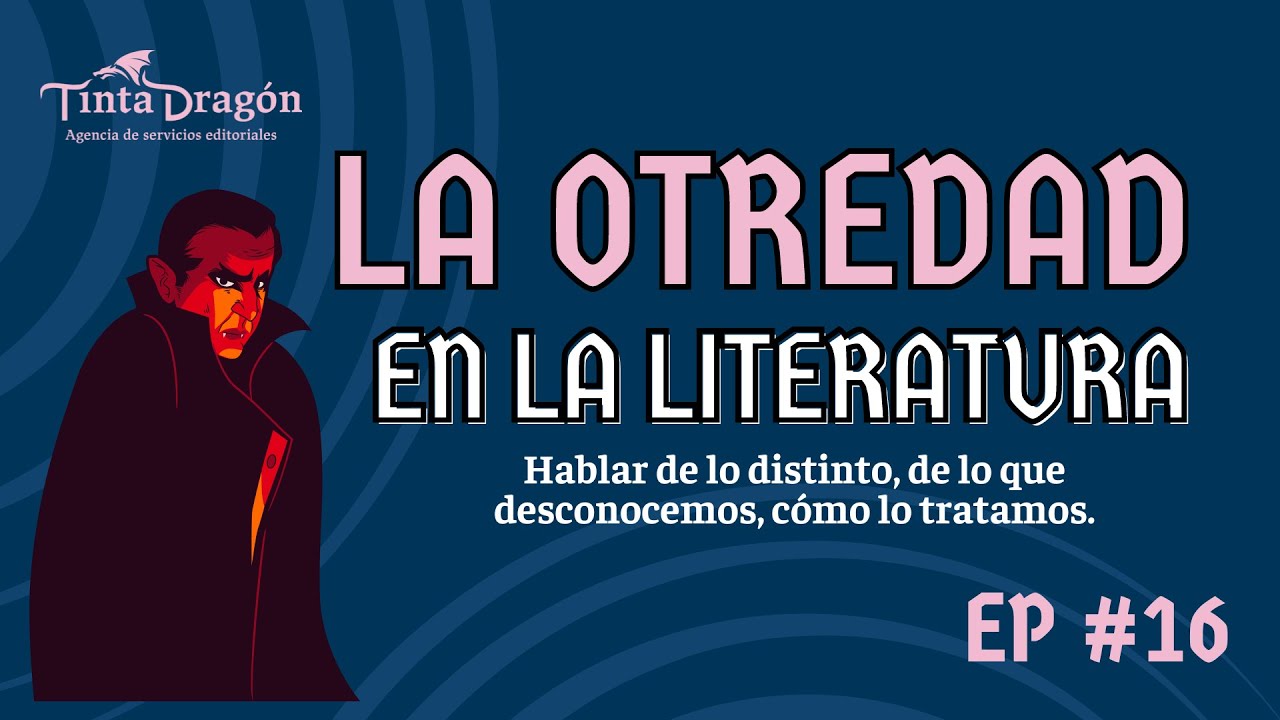
The concept of 'alterity' or 'otherness' in literary theory, which helps in analyzing how marginalized groups are represented.
In-depth analysis of Alejo Carpentier’s theory of 'lo real maravilloso' (the marvelous real) and its departure from European surrealism.
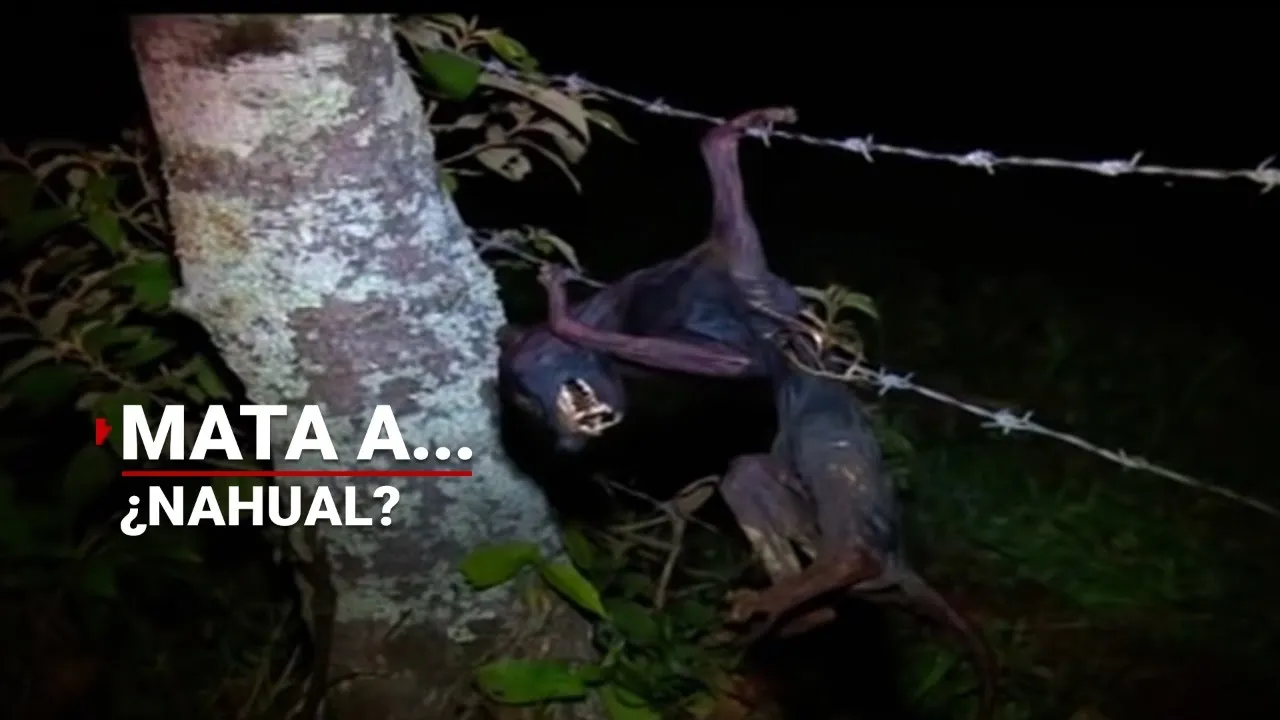
Exploration of indigenous Latin American cosmologies, such as Mesoamerican 'Nagualism' (shapeshifting), and their survival in modern text.
Advanced study in postcolonial ecocriticism, focusing on how environmental degradation and animal exploitation link to colonial history.
Comparative literary analysis of animal allegories in Latin American literature versus European fables.
21.3K views1.2Klikes9:51Original Release: 2026-01-29
birds with 10 and a half foot wingspands, fish with terrifying teeth, 500 lb anacondas, and tiny little pink armadillos. Latin America is filled with all sorts of strange and wondrous creatures. So, it makes sense that animals have figured big in Latin American culture from the beginning.
Like, the Mayan saw animals as messengers to the gods and the Aztecs worshiped Gats Kuat, a god who took the form of a feathered serpent. All of that cultural connection laid the groundwork for centuries of literature and centuries of exploring the parallels between animals and human animals. Hi, I'm Kurly Velasquez and this is Crash Course Latin American literature.
Humans and other animals have had relationships for millennia. We've got man's best friend and cat ladies. We've got chupacabas terrorizing people's livestock. And in literature, we've got animals as metaphors. Let's go back to the 17th century when one writer turned to the animal kingdom to talk about a very human subject, slavery. See, European settlers from Spain and Portugal had a record of subjugating and enslaving indigenous populations, and they weren't exactly open to constructive criticism, which meant critiques had to be subtle or masked by symbolism. Enter the Jesuit missionary Antonio Vieira. He knew the Portuguese settlers who had taken control of what's now Brazil wouldn't listen to his radical take that maybe they shouldn't be enslaving human beings. So instead of addressing them directly, he picked a different audience. Fish said Mau Desanto Antonio Alpas, the sermon of St. Anthony to the fish is one of Vieta's most famous literary works. And if you're thinking curly, since when is a sermon a work of literature, may I point you to the Gospel of Beyonce's Renaissance? Anyway, Vieta wasn't actually talking to fish. Of course, they don't speak Portuguese. In his sermon, he compares human behavior to fish behavior, describing how the big ones eat the little ones, and men with their evil and perverse desires become like fish that eat each other. See how the big fish stand in for the colonizers and the concept of devouring the smaller fish represents the enslavement of the indigenous communities. But critically to Vieta's point, even the big fish aren't safe in this ecosystem. There's always the possibility that an even bigger fish, say the Portuguese monarchy, might come swimming by and eat the colonizers up, too. Does this seem right to you fish? He asks. For this is exactly what you do. In this way, he's reminding the colonizers that they aren't at the top of the seafood chain, and he's invoking the golden rule. Treat your fellow fish how you want to be treated. Can you imagine it being so hard to convince people that slavery was a bad thing that you had to break it down like a Sesame Street shoot episode?
By couching this political message in something non-controversial that everyone understood, Vieier was able to get his point across and he actually sort of got his way. Days after delivering his sermon, he met with the biggest fish of them all, the king of Portugal himself, King Zuo IV, listened to what Vieira had to say and outlawed the forced labor of Brazil's native population. Of course, that didn't mean everything went swimmingly for Brazil's indigenous communities after that. And it didn't make Vieta a saint either. As a Jesuit, he actively worked to erase native culture and religions by converting the indigenous population to Catholicism. So, yeah, there are multiple scales on every fish. Okay. So, Vieira tapped into the animal kingdom as a metaphor to talk about human relationships. But some authors take this link even further, where the connection isn't just metaphorical, but literal. Let's get the curly notes on Cuban author Allejo Carpentier's El Reo de Mundo, Kingdom of This World.
This 1949 novel tells an alternate story of the Haitian Revolution, the most successful slave revolt in history, and it imbuss real world events with magical flourishes. Now, you might think, "Real events with some magic tossed in? Sounds like magical realism to me." And you're not far off. Carpentier's work is actually a precursor to magical realism.
And it would go on to influence authors like Gabrielle Garcia Marquez and Isabella Ende. But Carpentier called his style something else. L'Oreal Maravioso, the marvelous real. And it had one big difference. The elements that might seem magical to non-Latin American readers are pulled straight from Afroasian culture and folklore. In other words, they're a real part of Latin American culture and belief. One of the novel's most noteworthy elements of L'Oreal Maravioso is the ability of two of the main characters to shapeshift into animals. For example, the narrator The Noel is a young black man enslaved on a sugar plantation. When his friend and fellow enslaved person, Makandal loses his arm in an accident. Makandal flees to the mountains where he discovers secret herbs and plants with other worldly properties. Over time, he gains the ability to transform into different animals, and he visits nearby plantations in these guises to help the enslaved people revolt. On the surface, Makand's marvelous ability is an adaptation to escape the clutches of white enslavers. Like when he's captured and about to be executed, he transforms into an insect and disappears. But the link between human and animal also serves as a commentary on the subjugation of one group by another.
Even after the Haitians have won freedom from their white enslavers, the lighterkinned Haitians continue to perpetuate violence against their darker skinned neighbors. And when Dinoel picks up Makandal's skill and starts shapeshifting to escape this cycle, he finds the animal dynamic pretty much the same. As a goose trying to join up with other geese, he encountered sawtooth beaks and outstretched necks that kept him at a distance. Carpentier seems to be saying that whether animal or human animal, oppression and abuses of power persist. It's not pretty, but it's nature, the novel argues. And understanding nature can help us make sense of the human world we live in.
Okay, we've been talking a lot about wild animals so far. But in the 21st century, the animals most of us are familiar with are our pets.
And if my Instagram feed is anything to go on, people these days have some pretty interesting relationships with their fur babies. Though maybe no human animal relationships are stranger than the one in Colombian author Bilar Kintana's 2017 novel. We can't actually say the title here, but in both Spanish and English, it means the female dog. It tells the story of an unhappily childless woman, the Maris, who adopts an orphaned puppy. At first, the dog takes on the role of an infant in the Maris's life. Kintana writes that the Maris carried her against her bosom. The tiny dog fit in her hands, smelled of milk, and made the mice long desperately to hold her tight and cry. She christens the puppy Chidley, the name she's been saving for the human daughter she hopes to have someday. But Chidley doesn't spend long in the role of the Misa's surrogate daughter. She repeatedly escapes from the mice and on one of these ventures becomes pregnant herself.
Then Cheetil jumps pause first into another role we humans know intimately.
flawed mother. Now, this is where things go off the rails. Rather than doing on her offspring, Chidley eats one of her puppies and then abandons the other three so she can lie in the sun. And we thought Leona was bad. As Chidley rejects her own puppies, the Maurice becomes increasingly violent toward the dog. She seems angry that Chidley refuses to behave as she's expected to.
Even the title of the book speaks to this failure to comply. It might refer to Chilei, the literal female dog of the novel, but it has the double meaning of being a not so nice term for women who don't conform to societal expectations as the Maurice personifies Chilei first as an infant daughter and then as a vindictive absentee mother. Kintana casts light on the character of the Maurice. Like Cheety, she was abandoned as a baby. Like Cheety, she fails to step into the idolized role of mother.
And like Cheedley, she ends up perpetuating the cycle of abandonment when she gives a dog away. Maybe the mice doesn't see these things about herself, but she sees them in her dog, which helps us, the readers, understand the marice better and reflect more broadly on the roles of mothers and daughters in the animal and human animal kingdom. In the end, we're all just animals. Some of us are just fluffier and more self-obsessed than others. What Latin American culture has a long-standing connection to our fellow fauna and we can learn a lot from how that connection is explored in literature because the better we understand our relationship to all things fishy, feathery, and ferocious, the better we can understand ourselves.
Next time we'll look at how science and technology show up in Latin American literature. See you then. Thanks for watching this episode of Crash Course Latin American Literature, which was filmed at the Carlos Hernandez Studio in Indianapolis and was made with the help of all these human animals. If you want to help keep Crash Course free for everyone forever, you can join our community on Patreon. Oh, and if you're interested in learning about some of the topics covered in this episode, we pulled together a playlist you can dig into.
Up Next
5:06
The Latin American Boom: Key Authors and Literary Analysis
@LITTIPS
16.4K views•2019-02-22

13:43
Formalism in Literary Criticism: An Academic Lecture Overview
@mattalberhasky9952
39.1K views•2015-08-05
12:38
Frankenstein, Part 2: Romanticism and Critical Readings
@crashcourse
1.1M views•2014-04-03

15:25
1984: Orwell's Dystopian World and the Mechanisms of Totalitarianism
@AlternateHistoryHub
7M views•2017-03-04
Related Study Plans & Knowledge Roadmaps
Structured learning paths in Literature
literature
Graphic Memoirs: Visual Art, Trauma & History
01Foundations of Sequential Art and Visual Language
02Autographics and Processing Historical Trauma
03Visualizing Personal Trauma, Grief, and Graphic Medicine
+ 2 more learning modules
14h5 modules
Explore Roadmap
literature
Campus Novels: Evolution, Themes & Critique
01Introduction to the Campus Novel Genre
02Mid-Century Satire and the Post-War Academy
03Dark Academia and the Critique of Privilege
+ 2 more learning modules
14h5 modules
Explore Roadmap
literature
Theater of the Absurd: Philosophy & Plays
01Postwar Existentialism & Historical Roots
02Dismantling Narrative: Esslin & Absurdist Conventions
03Samuel Beckett and Tragicomic Existentialism
+ 2 more learning modules
12h5 modules
Explore Roadmap
literature
Revenge Tragedy: Justice, Madness & State
01Foundations of Early Modern English Theatre
02Anatomy of Revenge: Structural Conventions
03Psychological Complexity: Madness and Melancholy
+ 2 more learning modules
15h5 modules
Explore Roadmap