

























The Latin American Boom was a literary movement in the 1960s and 1970s when writers from across Latin America, including Carlos Fuentes, Mario Vargas Llosa, and Julio Cortázar, achieved international acclaim by challenging literary conventions and introducing innovative narrative techniques; while Gabriel García Márquez brought magical realism to global audiences, these three authors exemplified the movement's diversity through Fuentes' social critiques in Mexico, Vargas Llosa's examination of class divides in Peru, and Cortázar's experimental non-linear storytelling in Argentina.
The Latin American Boom: Key Authors and Literary Analysis
Added:The historical and political context of mid-20th century Latin America, including the Cuban Revolution and the Cold War's influence on the region.
Fundamental narrative techniques of modernist literature, such as non-linear timelines, multiple perspectives, and stream of consciousness.
The definition and characteristics of Magical Realism (Realismo Mágico) and how it differs from traditional fantasy.
A basic familiarity with Latin American geography and cultural history, specifically regarding Mexico, Peru, and Argentina.
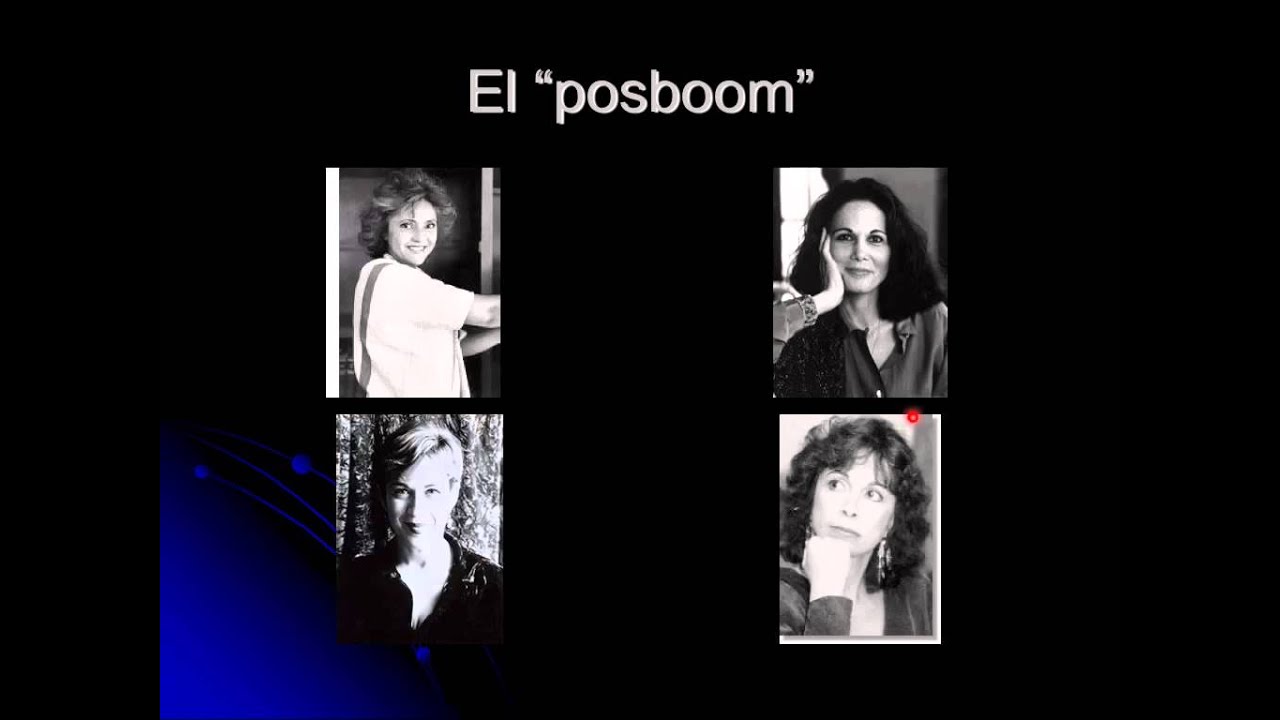
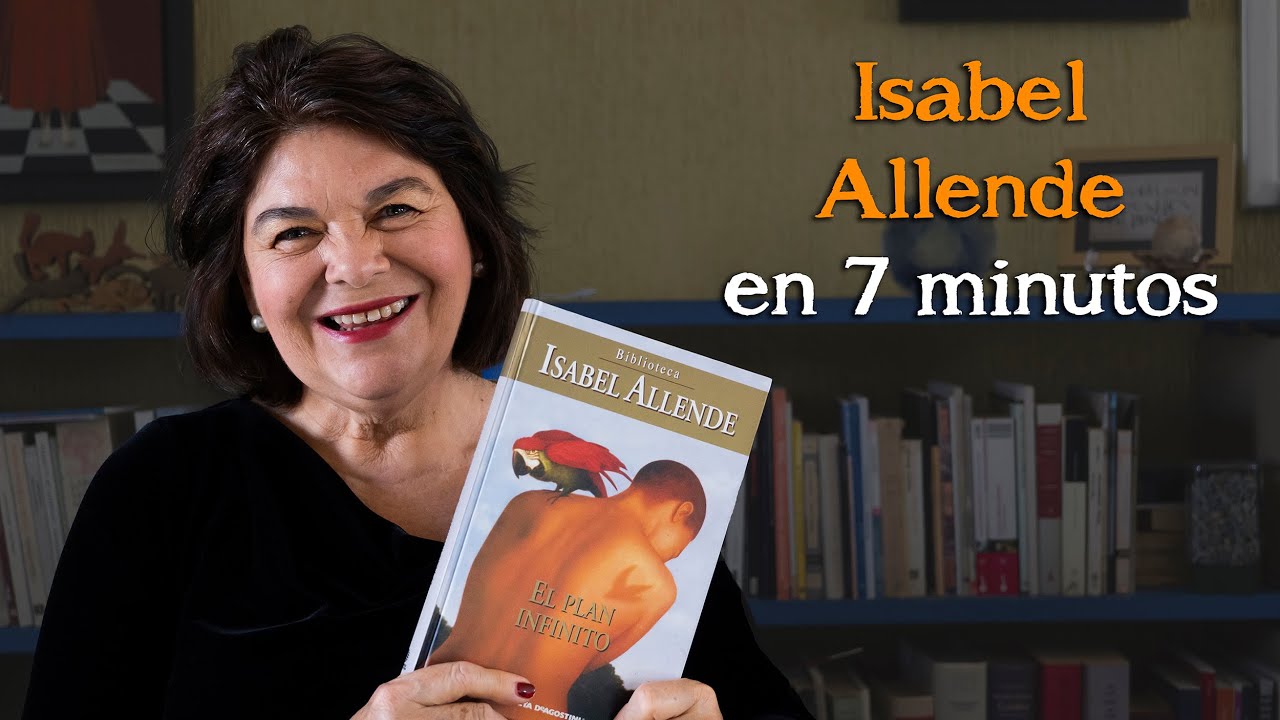
The 'Post-Boom' literary movement and how writers like Isabel Allende, Manuel Puig, and Roberto Bolaño reacted to their predecessors.
A close literary analysis of seminal works such as Julio Cortázar's 'Hopscotch' (Rayuela) and Carlos Fuentes' 'The Death of Artemio Cruz'.
The global publishing phenomenon of the Boom, examining the role of literary agents and Spanish translation in bringing Latin American literature to the world stage.
Application of postcolonial and decolonial theories to analyze identity, colonial legacy, and national politics in Boom novels.
16.4K views368likes5:06Original Release: 2019-02-22
Latin American boom primer.
When it comes to Latin American writers who have gained notoriety among non-Spanish speakers, one name stands out above all others: Gabriel Garcia Marquez.
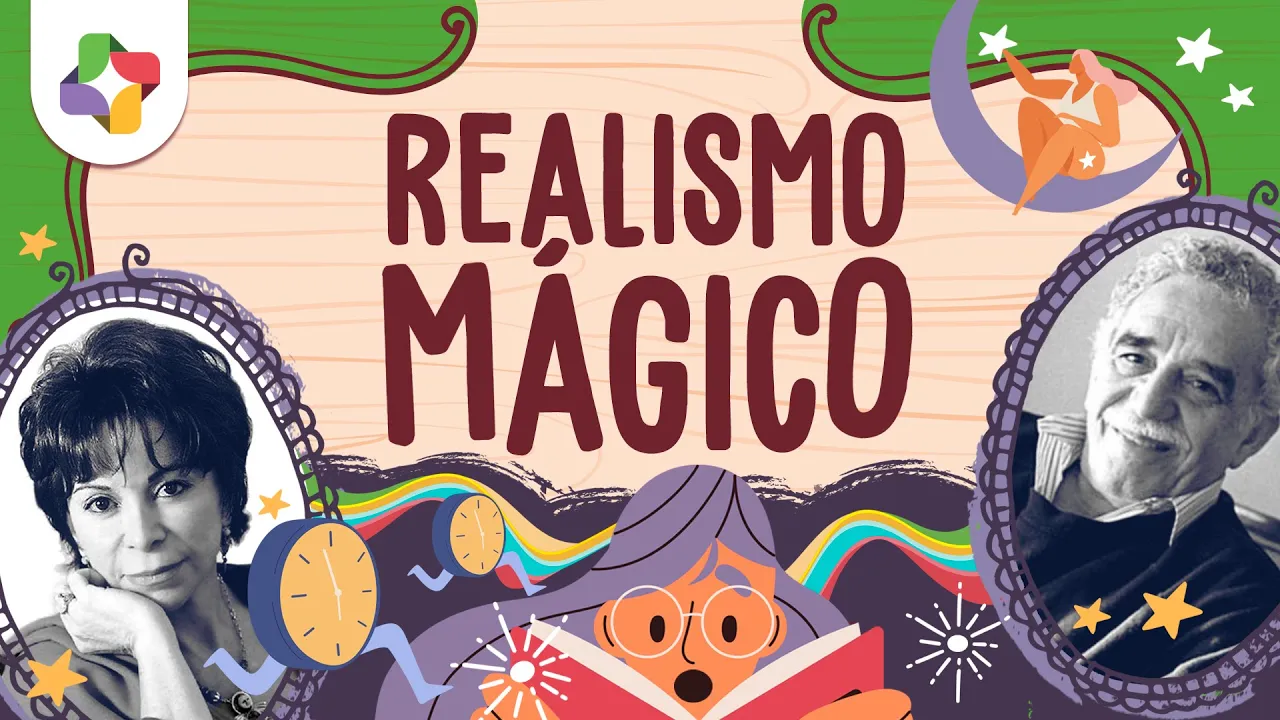
Marquez's works, which include "100 Years of Solitude" and "Love in the Time of Cholera," are dense, highly energetic epics that deal with the history and lore of his native Colombia. He is often cited as being the author responsible for bringing a particularly Latin version of magical realism to an international audience.
What many readers outside of Latin America may be unaware of, however, is that Marquez was a figure in a second movement. Throughout the 1960s and 1970s, writers from several Latin American countries found success in the United States and in Europe. The movement came to be known as the Latin American Boom.
Now please, sit back and enjoy today's edition of Lit Tips.
Novelists and poets of the Boom era never formally started the movement together, and in fact came from countries that were thousands of miles apart.
What united them was a desire to challenge the norms of literature at the time, and bring to it a sense of urgency that they felt was missing. Among their key influences were the complex, intellectual short stories of Jorge Luis Borges, and the radical experiments in form of European modernists like James Joyce.
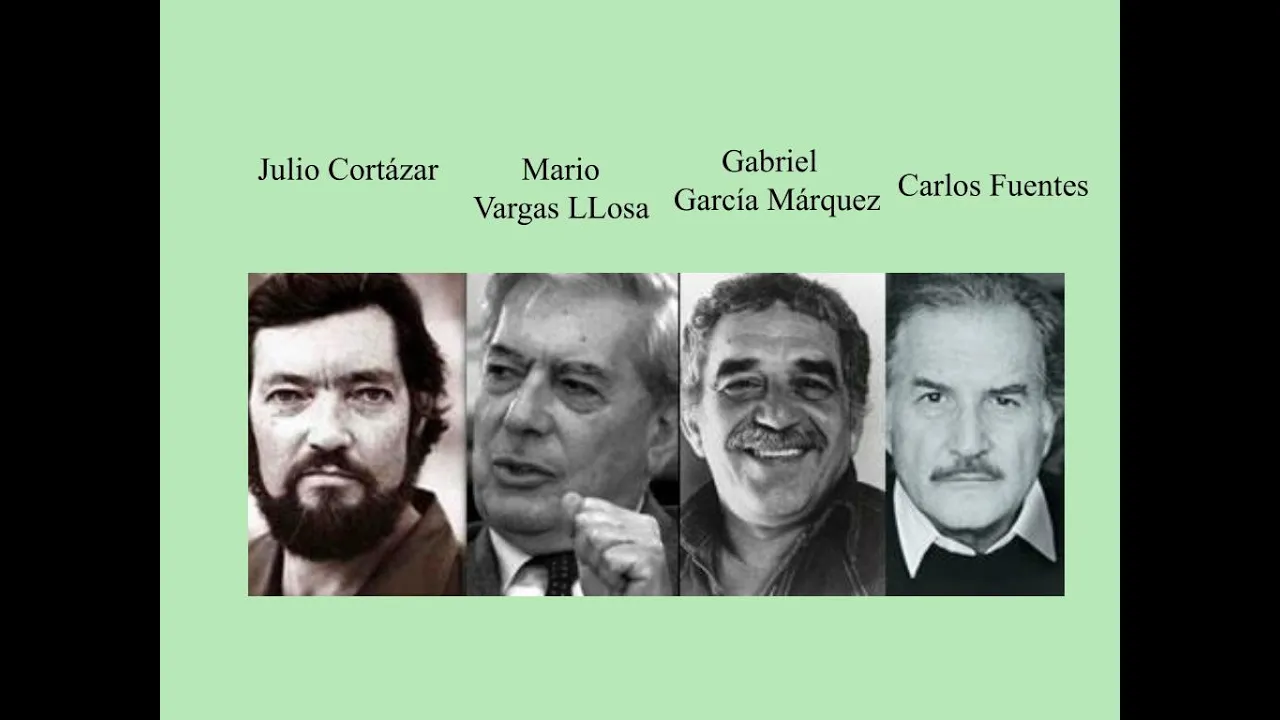
While there are countless writers deserving of attention who came out of this movement, today's video will focus on three of the most well-known, excluding Marquez. They are Mexico's Carlos Fuentes, Mario Vargas Llosa of Peru, and the Argentinian, Julio Cortázar. Each profile will also include a recommendation of where to start with each of these authors.
Carlos Fuentes is arguably Mexico's most acclaimed novelist. His work is characterized by strong critiques of the social and political inequality found in Mexican society and in the rest of Latin America at large.
His characters often start off as idealists who over time are either destroyed by the system or themselves become a part of it. A prime example of this is "The Death of Artemio Cruz." Published in 1963, The novel follows the titular character as he lies on his deathbed reflecting on his life from his childhood to his days fighting in the Mexican Revolution to his rise to become one of the country's most powerful business tycoons and a member of the controversial, all-controlling Institutional Revolutionary Party.
Using multiple narrators, flashbacks, and spanning decades, the novel is comparable to a Mexican version of Orson Welles' "Citizen Kane."
Through this nontraditional biography, Cruz comes to symbolize the Mexico of the 20th century and beyond as a country seemingly unable to escape the demons of its past no matter how many reforms and reinventions it attempts to undertake.
Mario Vargas Llosa is today Peru's only Nobel laureate in literature.
Like Fuentes, his work is often critical of both the past and present practices of his country.
1969's "Conversation in the Cathedral" is set in the 1950s and follows multiple characters living under the military dictatorship of Manuel A. Odria.
The framing device involves a young journalist and his wealthy father's former chauffeur having a chance run in after years of not seeing one another. They go to a bar, the Cathedral of the title, and lose hours catching up on old times. Their reminiscences, which get increasingly muddled as the drinks keep flowing, make up the bulk of the novel, and give Vargas Llosa the opportunity to examine the massive class divides found in Peru.
Through this examination of history that at the time of the book's publication was still fresh in readers' minds, Vargas Llosa seeks an answer to a question he poses on the first page of the novel: "At what precise moment had Peru fucked itself up?"
Julio Cortázar was highly influential on not just the literary scene of the 1960s and 1970s, but on the cinematic scene as well. In 1966, the title story of his collection "Blow-Up and Other Stories" served as the inspiration for Michelangelo Antonioni's "Blow-Up," one of the most influential films of the decade.
Cortázar's most famous work is the novel "Hopscotch," published in 1963.
Following a group of Argentinean expatriates drifting through their bohemian lives in Paris, the story is presented in a fragmented, nonlinear manner. Readers have two options for how to approach the book: the first is to read the first 56 chapters the conventional way and in these chapters is where the core plot of the novel is found. The second option is to start on the 73rd chapter and from there to jump around turning back and forth seemingly at random. Each chapter ends with a marker for which chapter to go to next. So for example, the "1" at the end of chapter 73 indicates to flip all the way back to the beginning and start there, and so on.
The novel contains ninety-nine "expendable chapters" taking the form of narrative asides, short stories, and quotations from newspapers and other novels.
It's an audacious, sometimes confusing approach, but one that puts the novel in a category all its own.
We hope that you've enjoyed this brief introduction to the writers of the Latin American Boom.
Of course, there are dozens more writers from this era which we didn't have time to cover and even more great Latin American writers who've emerged in the decades since the Boom ended. These authors we hope to explore in future videos of Lit Tips. Until then, consider subscribing to our page for more videos, leave a comment in the comment section below, and suggest any writers who you'd like to see us examine in future episodes.
Until next time, keep reading.
Up Next
13:38
Gabriel García Márquez on Writing '100 Years of Solitude'
@DemocracyNow
161.4K views•2014-04-18

13:43
Formalism in Literary Criticism: An Academic Lecture Overview
@mattalberhasky9952
39.1K views•2015-08-05

6:08
Point of View in Fiction: First Person vs. Third Person
@magicalthriftyteacher
153.8K views•2014-03-31

15:25
1984: Orwell's Dystopian World and the Mechanisms of Totalitarianism
@AlternateHistoryHub
7M views•2017-03-04
Related Study Plans & Knowledge Roadmaps
Structured learning paths in Literature
literature
Graphic Memoirs: Visual Art, Trauma & History
01Foundations of Sequential Art and Visual Language
02Autographics and Processing Historical Trauma
03Visualizing Personal Trauma, Grief, and Graphic Medicine
+ 2 more learning modules
14h5 modules
Explore Roadmap
literature
Campus Novels: Evolution, Themes & Critique
01Introduction to the Campus Novel Genre
02Mid-Century Satire and the Post-War Academy
03Dark Academia and the Critique of Privilege
+ 2 more learning modules
14h5 modules
Explore Roadmap
literature
Theater of the Absurd: Philosophy & Plays
01Postwar Existentialism & Historical Roots
02Dismantling Narrative: Esslin & Absurdist Conventions
03Samuel Beckett and Tragicomic Existentialism
+ 2 more learning modules
12h5 modules
Explore Roadmap
literature
Revenge Tragedy: Justice, Madness & State
01Foundations of Early Modern English Theatre
02Anatomy of Revenge: Structural Conventions
03Psychological Complexity: Madness and Melancholy
+ 2 more learning modules
15h5 modules
Explore Roadmap