



















![[KTV x 특허청] '지재권 분야 FTA 종합 설명회'](https://i.ytimg.com/vi/s6uVdB3GLXw/maxresdefault.jpg)







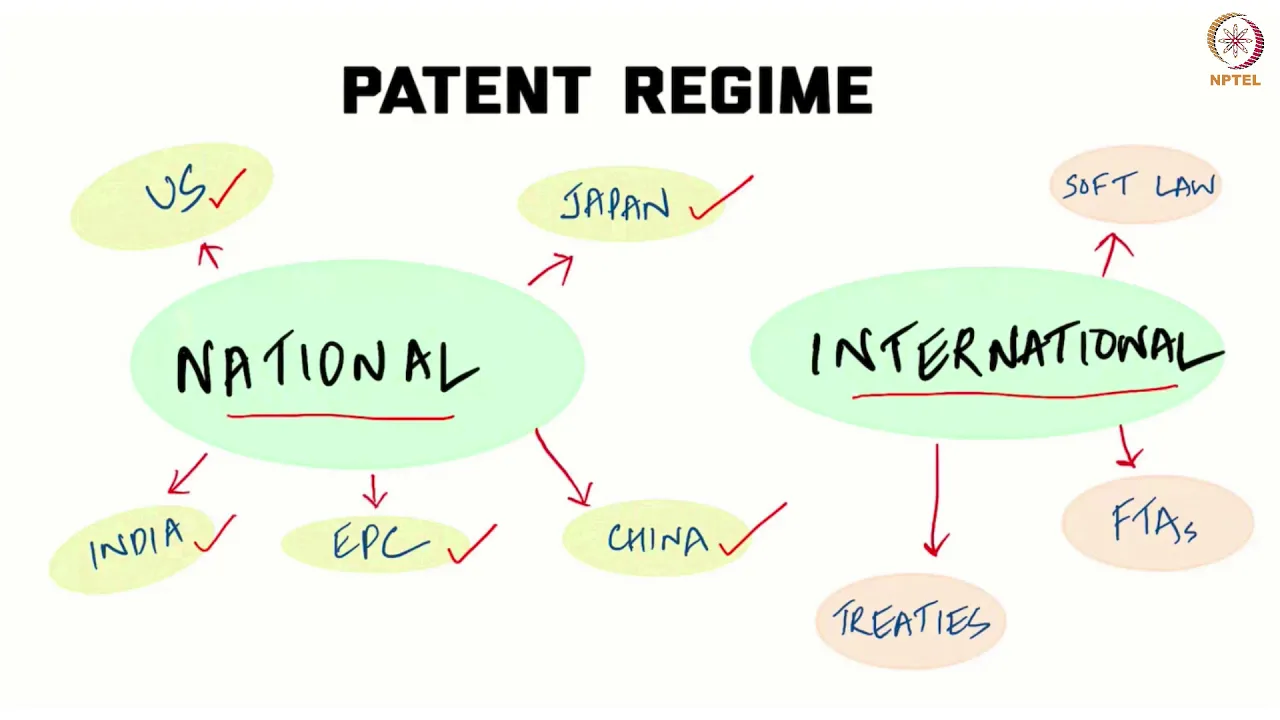
International intellectual property rights are not truly international but territorial, meaning they exist only under each country's national law; however, international treaties like the Berne Convention (copyright), Paris Convention (patents), and TRIPS Agreement establish minimum standards for IP protection across borders, requiring countries to provide at least equal protection to foreign nationals as they do to domestic citizens, while also creating complex frameworks that make IP reform challenging due to overlapping obligations.
International IP Law Explained: Berne, Paris & TRIPS
Added:Basic categories of Intellectual Property (IP) such as patents, copyrights, and trademarks, along with their primary functions.
The principle of territoriality, which dictates that intellectual property rights are traditionally granted and enforced under national laws.
Fundamental concepts of public international law, including how treaties and multilateral conventions are formed and ratified by sovereign states.
An introductory understanding of key global organizations, specifically the World Intellectual Property Organization (WIPO) and the World Trade Organization (WTO).
The mechanisms of international IP dispute resolution, particularly through the WTO's Dispute Settlement Body.
The study of 'TRIPS Flexibilities,' including compulsory licensing, and their real-world applications in public health crises (e.g., access to essential medicines).
Analysis of 'TRIPS-Plus' standards embedded in modern bilateral and regional free trade agreements (such as the USMCA or CPTPP).
Practical international filing systems used by practitioners, such as the Patent Cooperation Treaty (PCT) and the Madrid System for trademarks.
Emerging challenges in global IP governance, such as regulating artificial intelligence, cross-border digital piracy, and genetic resource protection.
235.2K views4.2Klikes10:00Original Release: 2015-06-03
Hi, I'm Stan Muller, and this is Crash Course Intellectual Property. Today, we're talking about international intellectual property law, and the first thing I'm gonna tell you is that there aren't really any international intellectual property rights. IP rights are territorial.
They're created by each country's national law, and typically apply only to conduct that takes place within that nation. So, there you have it. Thanks for watching, I'll see you next week.
Crash Course Intellectual Property is filmed in the Chad and Stacey Emig--is this really all we have today? What about the complex web of international IP treaties that establish minimum standards for IP laws in countries around the world? Can't we talk about that for eleven minutes?
[Theme Music] So all these international treaties set up ground rules for stuff like how long a copyright or patent should last, or the basic subject matter of trademarks. Countries that join these treaties can have higher protection standards, but the treaties set up a baseline of protection they must provide. The most important minimum standard set up by these treaties is the principle of national treatment, which operates something like an international IP golden rule, "Do onto other countries' authors and inventors as you would have done unto your own." Basically, each country has to give foreigners IP protection that is no less favorable than the protection granted to its own people.
These international treaties are a response to globalization. Political reforms have torn down the iron curtain, and trade with half the world that was basically off limits to the West a few years ago is now possible. China. Legal reforms have facilitated an expanded economic exchanges, and IP rights play a significant role in all channels of international trade.
Sellers of goods are more likely to sell to a country that has strong IP rights, especially for products like computer software or films, where the product is basically pure IP. Beyond this, technological advances mean that someone might be watching this right now in Antarctica and to that person I say, do you really have the bandwidth in Antarctica to watch Crash Course?
In any case, borders and distance mean less and less in the digitized world. But as we discussed in CrashCourse World History, globalization is complicated. Some argue that ratcheting up IP minimum standards, especially in a world where around 90% of all technology royalties and licensing fees are received by 5 developed countries, is not always a good thing.
Developed and developing nations often have very different attitudes toward intellectual property. Developed nations usually try to get full economic benefits from their inventions and knowledge through strong IP rights. They argue that strong IP laws are necessary to protect the significant investments of developing these products. Pharmaceuticals and feature films cost a lot to make, and the creators want a return on their investment. Rich countries also argue that strong intellectual property laws will make developing countries more attractive trade partners, because creators know their IP exports will be protected, so they're more likely to send stuff there.
Developing nations argue that they need access to advanced technology and knowledge, which are the tools they need to develop, modernize, and compete in the modern world. They often view strong IP rights as a tool used to either deny access altogether to technology and knowledge or to severely limit access via high royalties and licensing fees. So it's an open question as to who's right about this. Do you happen to know? Don't count on it. Yeah, me either.
So, we've got no answers, but let's take a look at the international frameworks for copyright, patents, and trademarks. The oldest and most important copyright treaty is the Berne Convention for the Protection of Literary and Artistic Works. The Berne Convention, as it's known, was first signed in 1886 in Berne, Switzerland, and was aimed at solving the problem of widely varying treatment of foreign authors among countries. The United States, for example, didn't grant copyrights to foreign works until 1891. In his 1842 reading tour of the United States, Charles Dickens was treated like a rock star, mostly because so many people were reading cheap, pirated editions of his books. And so the US press attacked him. To quote one outlet, "We are mortified and grieved that he should have been guilty of such great indelicacy and impropriety, asking us to do honor to his genius but to look after his purse also." So we steal this guy's copyrights and then insult him for complaining about it. Welcome to America, Dickens!
This state of affairs continued until 1878, when France convened an international literary congress with Victor Hugo, author of Les Miserables and The Hunchback of Notre Dame, as its head.
As with all things created by Victor Hugo, it was way too long. The agreement was finally signed in 1886 by ten countries. Today, there are 168 members of this treaty, which is administered by the World Intellectual Property Organization, or WIPO.
The United States didn't officially join the Berne Convention until 1989, which also happens to be the year that the cinema classic and highly lucrative intellectual property Weekend at Bernie's was released. Is that a coincidence? Mmm... maybe.
The Berne Convention adopts the aforementioned principle of national treatment and sets up certain minimum standards for the copyright laws of any country that signs on. Things like minimum copyright terms and the scope of exceptions and limitations to exclusive rights.
The treaty also largely eliminates what are called "formalities". Berne countries can't require that authors go through formalities like copyright registration or require a copyright notice or symbol to get protection. But without requirements, the owners register their works and record ownership transfers with their particular government, ownership information is often lost and authors can't be located. This creates a lot of problems.
Another problem with the Berne Convention is that it doesn't have an effective enforcement system. When a country violates the treaty, there's no effective way to punish them for it. Members do have the option of trying to settle the dispute through the International Court of Justice, but this option has been used exactly 0 times. A lot of these issues were "resolved" by the trade related aspects of intellectual property rights, or TRIPS Agreement.
Formed in 1994, this agreement incorporates most of the Berne Convention and adds a few copyright bits of its own. The TRIPS agreement is administered by the World Trade Organization, and it has a strong enforcement mechanism in place under the WTO's dispute settlement body. So if a country doesn't comply, the WTO's like, "WTF!" They then decide whether there's a violation and what kind of punishment they need to impart.
Beyond the Berne Convention and TRIPS, the World Intellectual Property Organization produced two multi-lateral treaties: the WIPO Copyright Treaty and the WIPO Performances and Phonograms Treaty.
These are referred to as the "Internet treaties" and the US implemented them in 1998 through its introduction of the Digital Millennium Copyright Act or the DMCA which you, as an Internet user, probably hate.
International copyright is enormously complex. Luckily, international patent law is dead simple.
Nah, it's enormously complex too. Let's go to the Thought Bubble.
As the industrial revolution advanced across Europe and North America, differences in countries' patent laws piqued an interest in creating international standards for patents. The International Convention for the Protection of Intellectual Property, commonly known as the Paris Convention, was signed in 1883. In Paris, France. Like the Berne Convention, the Paris Convention lacks an adequate enforcement mechanism. If a country violates the treaty, everybody's back in the International Court of Justice. But, just as with copyrights, nobody does this.
Because the Paris Convention didn't really set minimum standards, countries had great freedom to tailor their patent laws to their own needs and interests. Developing countries, for example, might exclude pharmaceutical products from patentability because they feel like health-related products and medicine should be affordable for people to buy. Many developed nations successfully sought to close this gap during negotiations of our old frenemy, the TRIPS Agreement. TRIPS incorporates parts of the Paris Convention and sets forth a number of minimum standards for patent protection. TRIPS prevents World Trade Organization members from denying patents to pharmaceuticals or biotechnology products or processes.
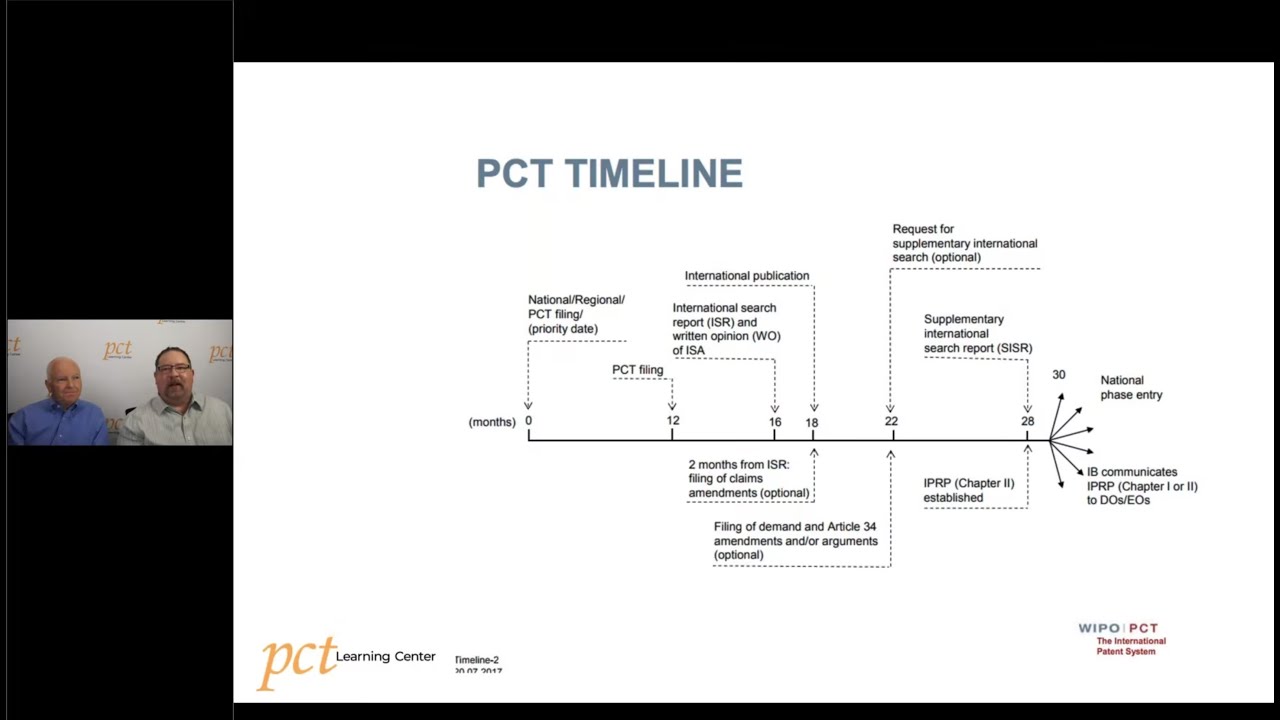
Unlike the Berne Convention, which does away with copyright formalities, the Paris Convention assumes that the inventor has to apply to his or her particular government's patent office or government. Countries that are party to the convention can't give foreign inventors a hard time. They get the same protections that apply to domestic inventors. The Patent Cooperation Treaty makes this easier. It helps coordinate procedures for filing multiple patent applications for the same invention in several countries around the world.
Thanks, Thought Bubble.
So, the Paris Convention also governs trademarks. In many ways, it treats trademarks like patents.
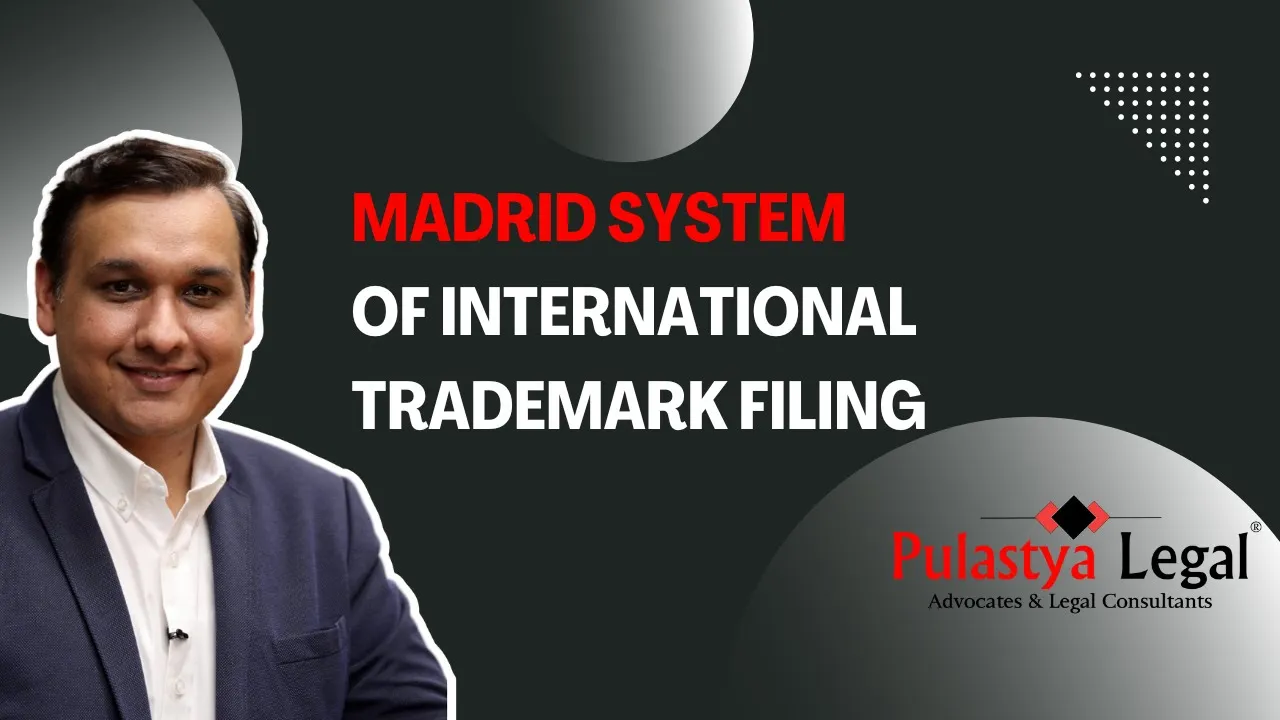
It requires countries to provide for national treatment. Because trademark law is territorial and you have to apply for protection in each country where use is planned, there are two special agreements that establish a common international registration system. These are the 1891 Madrid Agreement Concerning the International Registration of Marks and the 1989 Madrid Protocol for Relating to the Madrid Agreement.
Aside from all these European capitals and their agreements and conventions and protocols, the TRIPS Agreement extends protection to geographical indications. This means that the word "Champagne" can only be used for sparkling wine produced in France's Champagne region. It also extends to words like Bordeaux, Chablis, Parma ham, Roquefort cheese, Florida orange juice, Vermont white cheddar, all that business.
These issues have been a point of contention between the US and the EU. Europe has long pushed for greater protection of geographical indications. Every time you eat Greek yogurt or Feta cheese, every time you smoke a Cuban cigar, every time you stir up a cup of Swiss Miss hot chocolate, every time you're confounded by a Chinese finger trap, you're seeing a potential geographical indication violation.
At the end of the day, international intellectual property is all about setting minimum standards and national treatment. It's about countries treating the nationals of other countries at least as well as they treat their own.
This push for standardization has caused some problems. There are now so many IP treaties and agreements and protocols in place that it makes intellectual property reform difficult.
So, for example, changing the law to reduce the copyright term in the United States isn't just a matter of changing the US law. It's a matter of changing all of these international agreements.
Just as individual nations struggle to keep pace with our increasingly globalized world, so does the international intellectual property system. Both national and international systems are struggling to find the right balance of exclusive rights and public access to knowledge in a world where borders are traversed with a click.
Thanks for watching. We'll see you next week.
CrashCourse Intellectual Property is filmed in the Chad and Stacey Emigholz Studio in beautiful Indianapolis, Indiana, and is made by this crew of international creators. If you'd like to keep CrashCourse free for everyone forever, you can support the series at Patreon, a crowdfunding platform that allows you to support the content you love. Speaking of Patreon, we'd like to thank all of our patrons in general and we'd like specifically thank our Headmaster of Learning, Thomas Frank, and our Vice Principals, Kathy and Tim Philip and Linnea Boyev. We've got awesome rewards at our Patreon page, but the greatest reward of all is helping people learn stuff, right? Thanks for watching. We'll see you next week.
Up Next
15:29
Growth of Intellectual Property: Patents, Trademarks, Copyrights
@nptel-nociitm9240
10.4K views•2019-05-06

4:27
US Secondary Sanctions Impact on EU Businesses and Blocking Legislation
@Bureauvandijk
1.6K views•2019-03-20
11:19
Trademark Law: Consumer Protection and Source Identification
@crashcourse
318.2K views•2015-05-28

24:42
Police Interrogation Tactics: False Confessions & Legal Reform
@LastWeekTonight
7M views•2022-04-18
Related Study Plans & Knowledge Roadmaps
Structured learning paths in Law
law
Self-Defense Law: Imminence & Castle Doctrine
01Foundations of Self-Defense Law
02Imminent Threat & Reasonable Belief
03The Principle of Proportionality
+ 3 more learning modules
12h6 modules
Explore Roadmap
law
Defamation Law: First Amendment & Actual Malice
01Introduction to civil torts and the First Amendment
02Elements of Defamation: Libel and Slander
03Public Figures vs. Private Individuals
+ 2 more learning modules
8h5 modules
Explore Roadmap
law
Hearsay Rule: Trial Evidence & Exceptions
01Introduction to Trial Evidence & Courtroom Basics
02Demystifying Hearsay: The Core Definition
03Non-Hearsay: Exclusions Under FRE 801(d)
+ 3 more learning modules
14h6 modules
Explore Roadmap
law
Medical Malpractice: Law, Liability & Care
01Foundations of Tort Law and Civil Liability
02The Four Elements of Medical Malpractice
03Defining and Proving the Standard of Care
+ 2 more learning modules
12h5 modules
Explore Roadmap