













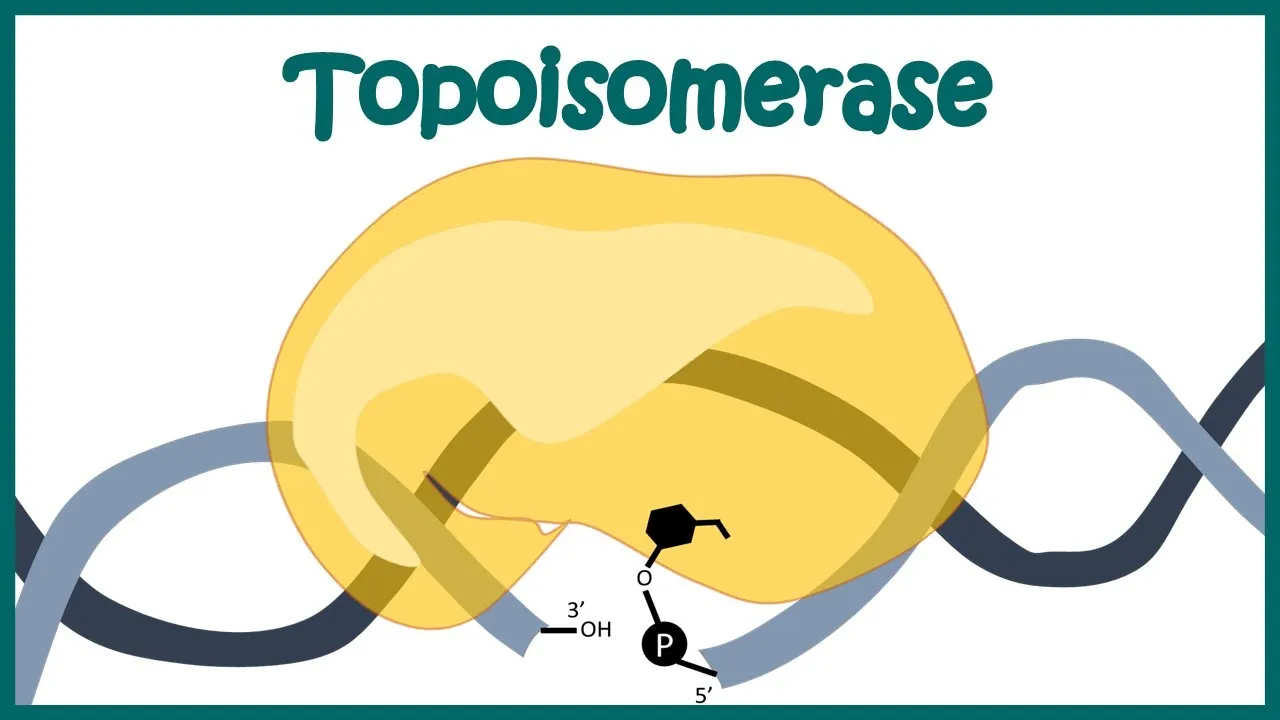





DNA supercoiling is a fundamental structural feature where the double helix coils upon itself, with positive supercoils being left-handed and overwound (making strand separation harder) and negative supercoils being right-handed and underwound (facilitating strand separation); topoisomerases are enzymes that relieve torsional stress in DNA by introducing single-strand breaks (Type I, no ATP required) or double-strand breaks (Type II, requiring ATP hydrolysis), with prokaryotic DNA gyrase specifically introducing negative supercoils to package DNA efficiently within the cell.
DNA Supercoiling & Topoisomerases Explained
Added:The double-helical structure of DNA, including complementary base pairing, antiparallel strands, and the sugar-phosphate backbone.
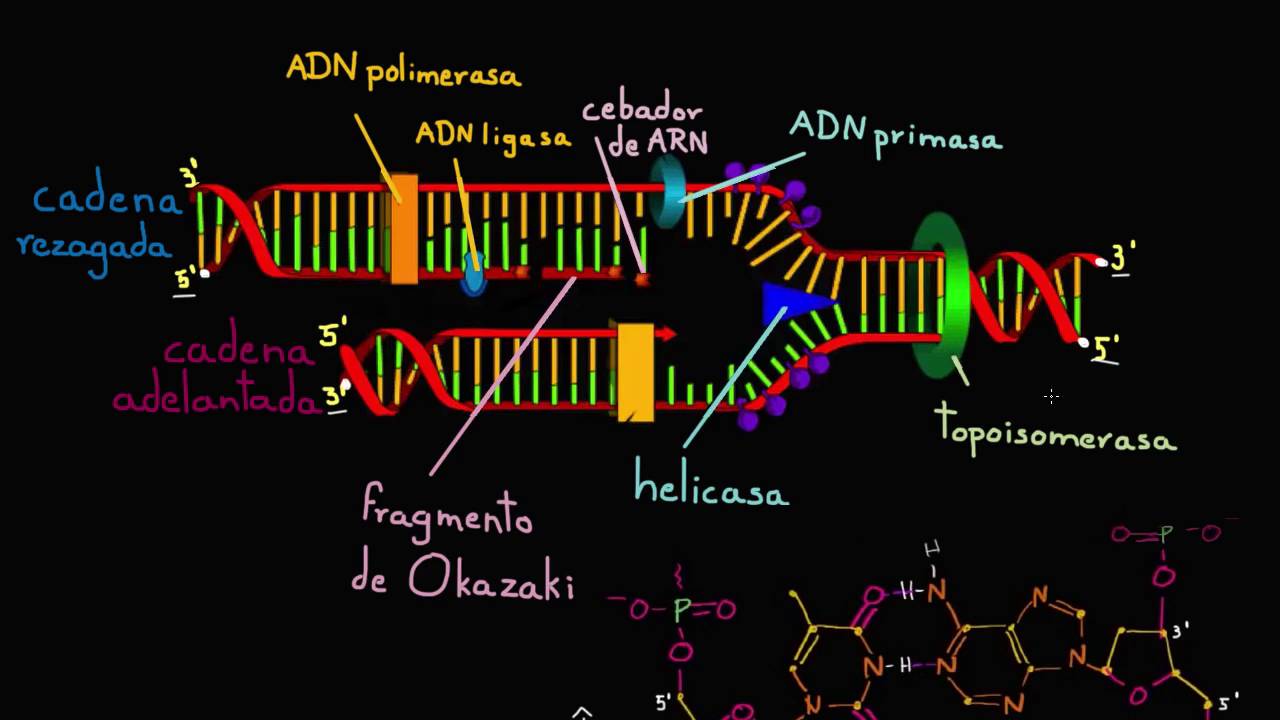
The fundamental mechanisms of DNA replication and transcription, specifically why DNA strands must temporarily separate.
The concept of phosphodiester bonds and how they are synthesized or cleaved by nucleases.
Basic physical concepts of torsional stress, tension, and mechanical strain in helical structures.
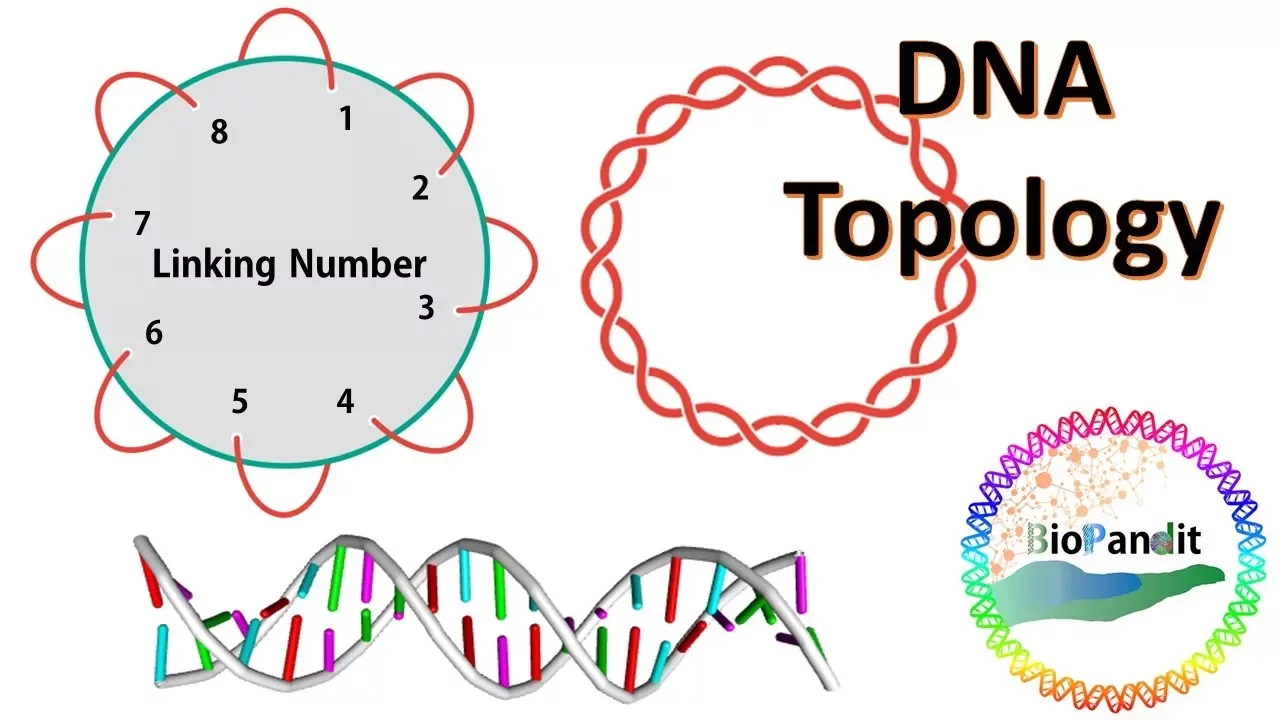
The mathematical and topological properties of DNA, specifically the relationship between Linking Number (Lk), Twist (Tw), and Writhe (Wr).
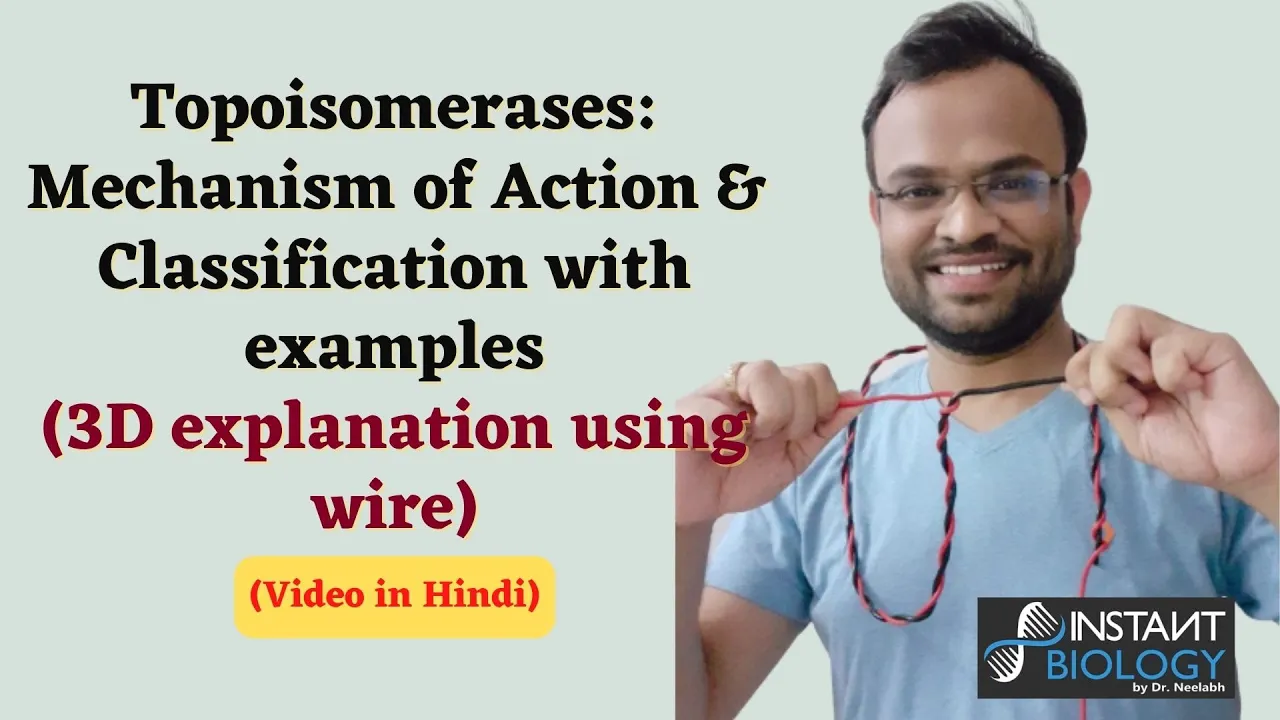
Detailed molecular mechanisms distinguishing Type I (ATP-independent) and Type II (ATP-dependent) topoisomerases.
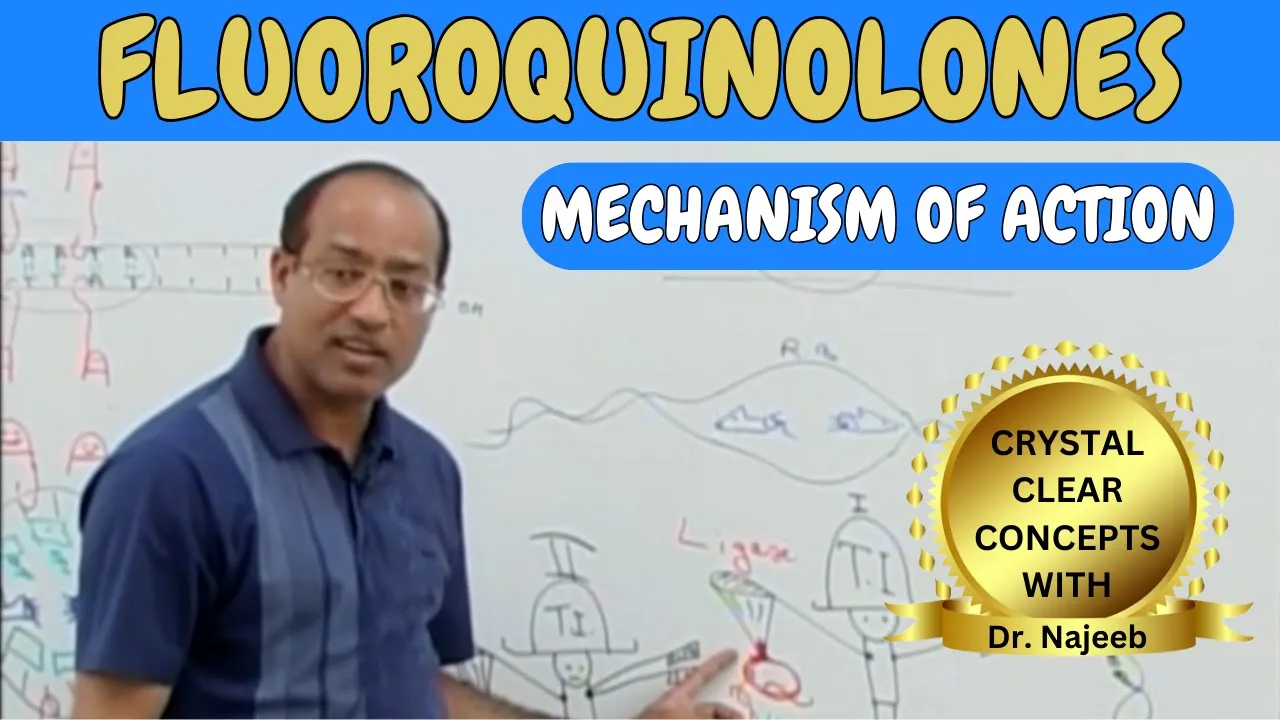
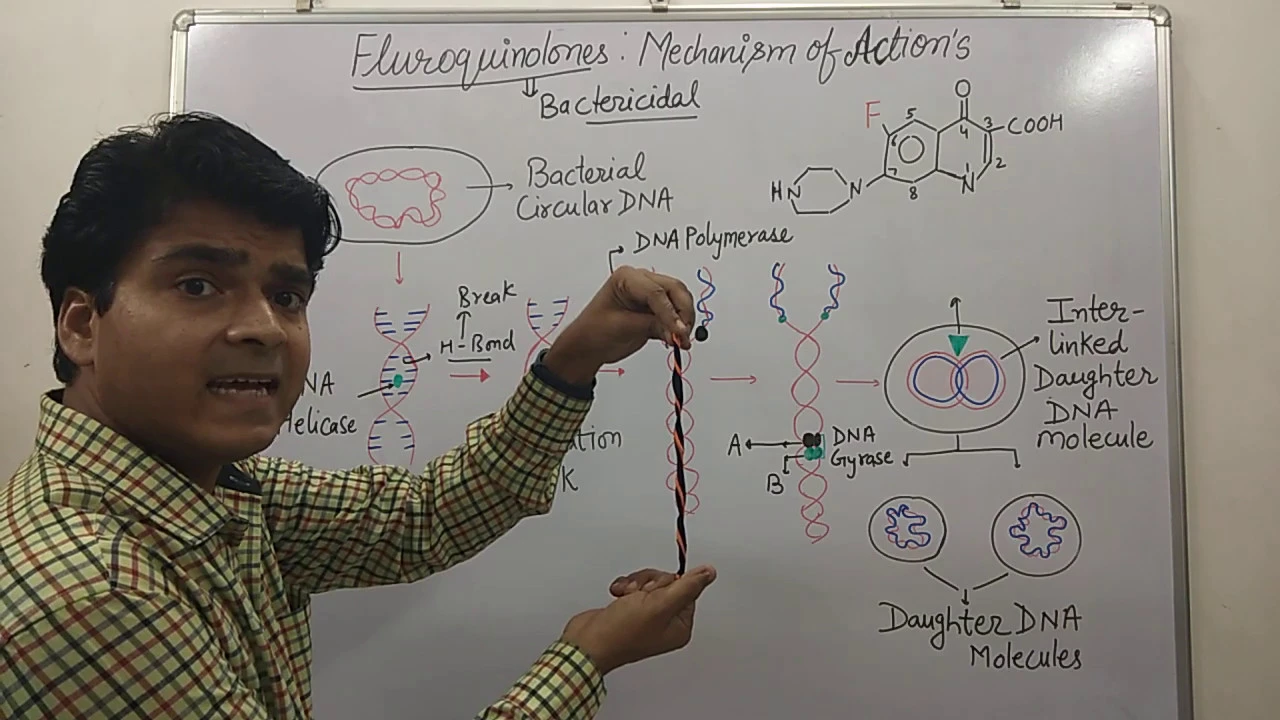
Pharmacological targeting of topoisomerases, including the mechanisms of action for antibacterial fluoroquinolones and anticancer chemotherapeutics like etoposide and irinotecan.
Higher-order chromosome organization, including how DNA supercoiling influences nucleosome positioning and chromatin remodeling.
97.6K views885likes10:37Original Release: 2014-06-12
this is our second lesson on chapter 20 DNA replication and repair and we'll be looking at DNA super coiling and topoisomerases remember the DNA molecule is quite large even in the case of eoli many times longer than the length of the cell itself and that's Illustrated on the upper right here if we lice the B the bacterial cell and allow the DNA to spill out as you can see many times 1500 times the length of the cell and so clearly the DNA has to be packaged into a smaller molecule in order to fit within the cell now remember EOL is a procariotas but it still organizes its DNA in the form of a nucleoid and that's Illustrated in the lower left here so the DNA is supercoiled we'll Define what we mean by that in just a moment but an extra level of structure on coiling the DNA and then we have anchor proteins to hold those Loops in place and that's illustrated by the green spheres here so even in an organism simple as ecoli thus there's some organization to the DNA in order to create a smaller size molecule of course in the case of the human genome it's a thousand times larger and so the degree of organization and packing has to be more sophisticated so we'll look at just the first level of packaging in this video and the higher levels of packaging in a later video so let's first Define the terms twist and R The Twist is the number of helical turns of one strand around the other in other words how many times what does one strand wrap around the other to form the double helix so that's the twist or coil so in our illustration of the top right here of this old phone cord we have the coil Illustrated here at the top that's the twist the number number of helical turns we can wrap the coil on top of itself and that's the Ry that's the super coiling the number of times the double helix crosses over itself and that's Illustrated at the lower portion of our figure here the super coil ory the number of times that the double helix wraps over or crosses over the double helix the linking numbers the sum of these two values The Twist plus the Ry and it represents the amount of tension in the molecule the more coiling the more Super coiling the more tense the DNA molecule the greater the torsional stress on the molecule so why is that of importance first of all we need to Super coil as we'll see in or to package it within the nucleus but when we start the processes of replication and transcription we need to separate those two strands and here's where the tension on the molecule comes into play CL and that's Illustrated in the lower right here so in this illustration we have two strands wrapped around one another they're being held together this would represent the twist in the molecule the coiling in the molecule as we start to separate those two strands and that's the bottom of our figure here we introduce super coils in advance of that separation Fork so we're increasing the tension the torsional stress on the molecule we can only separate those two strands so far and then the stress is too great it will not allow us to fully separate those two molecules so clearly this is going to come into play as we try to separate those DNA strands in order to replicate them or to transcribe them and so we need to be able to either introduce super coiling or relax it as the case may be well how can can we super coil the DNA well just as we saw in the unsuper coiled DNA one strand wraps around one another either in a right-handed or a left-handed Direction one twist uh for about 10 bases remember that's the number of times one strand wraps around one another and remember in our own case our DNA is a right-handed Helix well just as we can have right and left-handed Helix helices we can also super coil in One Direction or another positive super coils are super coils in the left-handed Direction in this case the winding is more frequent so the DNA molecule is overwound which means it's going to be harder to separate those two strands and that's part of our figure here at the lower portion of the screen as you can see in this illustration we can take the unsup coiled DNA molecule in the center we can wrap the coil around the the double helix over over another portion of the molecule either in One Direction or the other on the far right we have the case of positive super coiling and remember this is overwound DNA I will never give you a figure and ask you if this is positively or negatively super coiled you simply have to remember positive super coils left-handed Direction overwhel so if we super coil in the opposite direction that's the right-handed Direction that's negative super coils our DNA is negatively super coiled the easy way to remember this is we have a right-handed Helix and it super coils in the same direction in a right-handed Direction negative super coil slightly underwound which means it's going to be easier to separate those DNA strands and that makes logical sense for the purposes of replication and transcription we had an electron micrograph at the lower portion of the screen here illustrating the difference between uncoiled and supercoiled DNA so the UN unwounded DNA molecule it's a closed circular piece of DNA and you can see a very open uh and the dimensions are quite large for this DNA molecule however when we start to Super coil it so we wrap the coils on top of one another and that's at the uh an illustration an example of that is at our red arrow here it's highly super coil that makes it a smaller molecule so this is the first level of packing the DNA so that we can make it smaller so as to fit within the size of the nucleus well if we need to either introduce or relieve super coiling then we need enzymes that will allow us to do that and these enzymes are referred to as topoisomerases they're called this because they're isomerases that change the topology of the DNA and they do it in one of two ways type one topoisomerases relieve the stress caused by super coils they alter the twist the number of times the strands Wrap around one another they make a single strand break the easiest way to remember this is type one one strand break they can work on both positive and negative super coiling and in this case energy is released we don't have to put any energy in the system to make this happen so in our figure here on the left we have a a closed double stranded DNA molecule and there are five negative super coils topoisomerase one would bind to the double helix it would create a single stranded Brak it's going to move the other strand through and then reeal that uh breake and thereby create fewer loops and we have fewer negative super coiling so we've relaxed the super Rec coiling in this way type two topoisomerases make a double strand break so type two two- strand break and in this process because of the dynamic nature and the movement of the DNA molecule it requires energy in the form of ATP hydrolysis these enzymes also can relieve either both uh either positive or negative super coiling and they do this by altering the wyth or the super coiling here we have Illustrated an example from procaryotic system DNA gyas that actually introduces super coiling so the subunits involved are G A and G B they bind a double stranded DNA they create a double stranded break as you can see they remain bound to the DNA they're going to move the double helix through that break reeal the double helix the the double stranded break and we've introduced a super super coiling so this is how procaryotic systems introduce negative super coiling in their DNA molecules eukaryot introduce and maintain the negative super coiling by wrapping the DNA around nucleome proteins we'll look at this in a later video this is the extent to which we will be held responsible for information concerning topoisomerases there are some interesting videos that are included uh in the chapter web links for chapter 20 animation on the operation of these topoisomerases and you might find that instructive and helpful to understand how these processes work our K topoisomerases increase the linking number that actually results in positive super coils remember this means that the DNA is overwhel harder to unwind so why would you want to make it harder to separate the DNA strands ARA are uh procaryotic organisms that tend to live at extreme conditions either high pH or high temperature an example here in our picture is sulfolobus that's been isolated from Yellowstone their cell wall structure allows them to tolerate these extreme conditions and for that reason they're called extremophiles so you could imagine high pH high temperature would tend to melt the DNA and so it overwinds the DNA to prevent that from happening in our next video Lesson we're going to see the general model of DNA replication
Up Next
15:07
Membrane Lipids: Glycerophospholipids, Sphingolipids, Sterols & More
@SMsBiology1
3.3K views•2021-04-09
50:12
Bacterial Communication: Quorum Sensing and Biofilm Formation Explained
@JHUAAP
12.6K views•2011-06-28

10:19
ATP Synthase Mechanism & P:O Ratio | Oxidative Phosphorylation
@fundamentalsofbiochemistry9572
30.2K views•2014-06-11
7:08
Bacteriophages: Earth's Deadliest Killers and Future Antibiotics
@kurzgesagt
34.6M views•2018-05-13
Related Study Plans & Knowledge Roadmaps
Structured learning paths in Biology
biology
RNAi: Biogenesis, RISC & Gene Silencing
01Molecular Biology Foundations: DNA to Protein
02Introduction to RNA Interference (RNAi)
03Molecular Biogenesis of miRNA and siRNA
+ 2 more learning modules
10h5 modules
Explore Roadmap
biology
Mycorrhizae: Signaling, Biophysics & Ecology
01Foundations of Mycorrhizal Symbiosis
02Molecular Signaling and Root Colonization
03Biophysics and Bioenergetics of Nutrient Exchange
+ 1 more learning modules
11h4 modules
Explore Roadmap
biology
Circadian Clocks: TTFL, SCN & Periphery
01Foundations of Molecular Biology & Gene Expression
02Introduction to Chronobiology and Actograms
03The Core TTFL: Molecular Architecture of the Clock
+ 3 more learning modules
14h6 modules
Explore Roadmap
biology
Population Genetics: Math, Drift & Selection
01Genetic & Probability Foundations
02The Hardy-Weinberg Principle and Baseline Models
03Mathematical Modeling of Natural Selection
+ 3 more learning modules
18h6 modules
Explore Roadmap