
















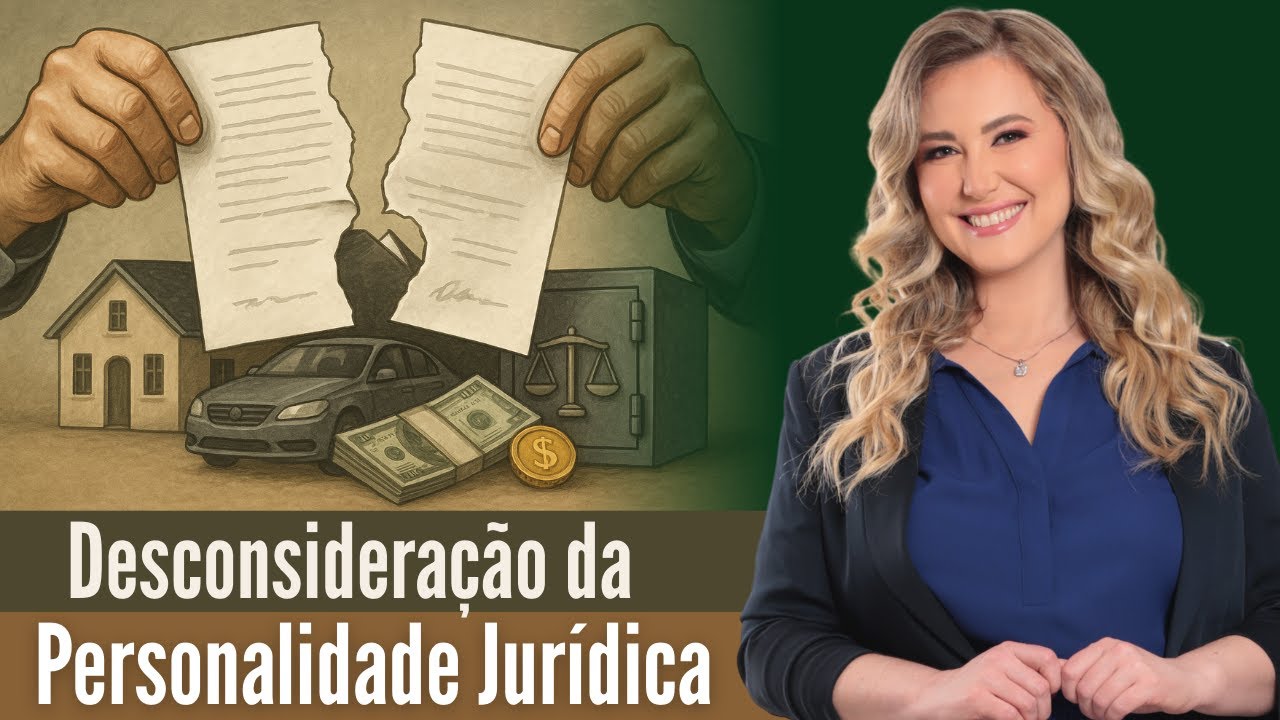

















Piercing the corporate veil is a legal doctrine that allows courts to disregard the separate legal entity status of a corporation (or other business entity like LLCs or limited partnerships) and hold owners personally liable for corporate debts when the entity was not properly maintained; courts typically apply a two-pronged test examining whether there is sufficient unity of interest between the entity and its owners (formalities prong) and whether it would be inequitable to pierce the veil (fairness prong), with key factors including undercapitalization, failure to observe corporate formalities, siphoning of funds, and whether the entity serves merely as a facade for dominant stockholders.
Piercing the Corporate Veil: Legal Doctrine Explained
Added:The concept of limited liability and how it protects the personal assets of business owners and shareholders.
The legal definition of corporate personhood, identifying a corporation as a separate legal entity distinct from its owners.
The basic organizational differences between Business Corporations, Limited Liability Companies (LLCs), and Limited Partnerships.
Standard corporate formalities and maintenance requirements, such as keeping separate bank accounts, co-mingling funds rules, and documenting meetings.
The 'Reverse Piercing' doctrine, where personal creditors of a shareholder attempt to reach the assets of the corporation.
The 'Enterprise Liability' (or Single Business Enterprise) doctrine, which treats a group of affiliated or sister corporations as one.
Advanced asset protection strategies, including the use of multi-tiered holding companies to insulate operational liabilities.
The legal distinction in court treatment between voluntary (contractual) creditors and involuntary (tort) creditors in veil-piercing litigation.
Analysis of landmark corporate law cases, such as Walkovsky v. Carlton, to study real-world application and judicial reasoning.
55.2K views670likes6:17Original Release: 2020-04-06
piercing the corporate veil one of the primary purposes of forming a corporation is to limit the liability of the firm's owners also known as the shareholders since a corporation is a separate legal entity distinct from its owners the corporation itself is liable for its debts shareholders liability is usually limited to the amounts of their investments the insulation from corporate debts is known as the corporate veil however in limited circumstances if the corporation is not properly operated the corporate veil can be pierced this presentation will discuss the origins of piercing the corporate veil as well as provide background on how the corporate veil can be pierced while the piercing the corporate veil concept originated from corporate law and has been primarily applied to corporations the concept of veil piercing has been extended to other forms of business entities such as limited liability companies and limited partnerships in determining whether to pierce the corporate veil courts typically examine a variety of factors some states have developed a two-pronged test the prongs are called the formalities prong and the fairness prong respectively one is there a sufficient unity of interest and ownership between the corporation and its owners such that the separate entity status of the corporation should be disregarded and to would it be inequitable to pierce the corporate veil that's the fairness problem an important factor taken into consideration when analyzing the formalities prong is whether the corporation is grossly undercapitalized for its purposes a corporation is undercapitalized when it does not have sufficient funds to properly operate and therefore is not really a separate entity that could stand on its own other factors used in the analysis include failure to observe corporate formalities such as holding board and shareholder meetings non-payment of dividends the insolvency of the debtor corporation at the time siphoning of funds of the corporation by the dominant stockholder non-functioning of other officers or to Peter's absence of corporate records and any indication that the corporation is merely a facade for the operations of the dominant stockholder or stockholders with respect to LLC's courts typically consider the same corporate factors in determining whether to pierce the limited liability shield offered by the LLC form for example Texas courts have cited the state's limited liability statutory provisions which provide to circumstances in which a limited liability partner will be liable for debts of the limited partnership in a recent case the Second Circuit Court of Appeals stated quote given the similar liability shields that are provided by corporations and LLC's to their respected owners emerging case law illustrates that situations that result in a piercing of the limited liability veil are similar to those that warrant piercing the corporate veil however because LLC's are not required to follow all of the same formalities that corporate statues impose somewhat less emphasis should be placed on the formalities prong in the LLC context as for limited partnerships in some cases courts have held that there is nothing in the nature of the partnership form or in the relevant statutes that would preclude application of the veil piercing doctrine to limited partnerships keep in mind that in a limited partnership only the limited partner has limited liability piercing the veil in limited partnerships typically requires evidence that the limited partner participated in the control of the limited partnerships business by taking action not within normal roles of limited partners or that limited partners dominated the limited partnership or used the limited partnership to perpetuate a fraud injustice or otherwise circumvent the law in some cases however courts have opted not to apply the veil piercing doctrine to limited partnerships instead they have focused on ordinary partnership principles to overcome the limited liability of limited partners for example Texas courts have cited the state's limited liability partnership statutory provisions which provide to circle stances in which a limited partner will be liable for debts of the limited partnership one when the limited partner is also a general partner or to the limited partner participates in the control of the business in contravention of the limited partnership statute absent these scenarios Texas courts have declined to use veil-piercing doctrines to impose liability on a limited partner courts typically note that veil-piercing is the exception rather than the rule and that limited liability should only be disregarded in extreme cases nonetheless it is dangerous to assume that mere filing of incorporation papers with the state is sufficient to hide behind the corporate veil smaller or closely held businesses are inherently at greater risk of veil-piercing because the same people are often owners and officers which makes it particularly difficult for courts to distinguish their separate roles consequently smaller businesses can follow this non exhaustive list of recommendations to prevent veil-piercing follow all formalities mandated by an applicable state's corporate law or similar statute keep proper records including all records about meetings keep business finances separate from personal finances be very explicit about instances when one is acting as an owner or as an officer register in every state where the business is operating and file a doing business as a DBA for any variations of the official business name well it's not always possible to predict with precision how a court will view a situation employing these steps can help afford the liability protection that is a key reason for choosing a business form in the first place
Up Next

3:05
Member-Managed vs Manager-Managed LLC: Key Differences Explained
@taylorlegal
117 views•2026-02-10

4:27
US Secondary Sanctions Impact on EU Businesses and Blocking Legislation
@Bureauvandijk
1.6K views•2019-03-20

15:47
Hearsay Rule in Evidence: Hearsay Fundamentals (Module 6)
@LawShelf
16.8K views•2021-07-02

24:42
Police Interrogation Tactics: False Confessions & Legal Reform
@LastWeekTonight
7M views•2022-04-18
Related Study Plans & Knowledge Roadmaps
Structured learning paths in Law
law
Self-Defense Law: Imminence & Castle Doctrine
01Foundations of Self-Defense Law
02Imminent Threat & Reasonable Belief
03The Principle of Proportionality
+ 3 more learning modules
12h6 modules
Explore Roadmap
law
Defamation Law: First Amendment & Actual Malice
01Introduction to civil torts and the First Amendment
02Elements of Defamation: Libel and Slander
03Public Figures vs. Private Individuals
+ 2 more learning modules
8h5 modules
Explore Roadmap
law
Hearsay Rule: Trial Evidence & Exceptions
01Introduction to Trial Evidence & Courtroom Basics
02Demystifying Hearsay: The Core Definition
03Non-Hearsay: Exclusions Under FRE 801(d)
+ 3 more learning modules
14h6 modules
Explore Roadmap
law
Medical Malpractice: Law, Liability & Care
01Foundations of Tort Law and Civil Liability
02The Four Elements of Medical Malpractice
03Defining and Proving the Standard of Care
+ 2 more learning modules
12h5 modules
Explore Roadmap