


![김어준의 겸손은힘들다 뉴스공장 2026년 4월 17일 금요일 [황운하, 조상호, 오중기, 여론조사, 홍사훈X오혁진X박종화X차규근, 이나영, 임희윤, 박희아, 김도헌, 금요음악회]](https://i.ytimg.com/vi/doFBgKkqXJE/maxresdefault.jpg)

![[오늘 이 뉴스] "다 망가져" 울컥한 이원모.. 판사 "당신 생각 안 궁금" (2026.05.18/MBC뉴스)](https://i.ytimg.com/vi/lPzH3g9IP6k/maxresdefault.jpg)





![The Busy Lawyer’s Guide to Hearsay Part II [Engage & Exchange Member Discussion Series]](https://i.ytimg.com/vi/Mok6EdCxqJY/maxresdefault.jpg)



![Evidence: Confrontation Clause as a Constitutional Limitation on Admissible Hearsay [LEAP Preview]](https://i.ytimg.com/vi/wGNltSitYmM/maxresdefault.jpg)

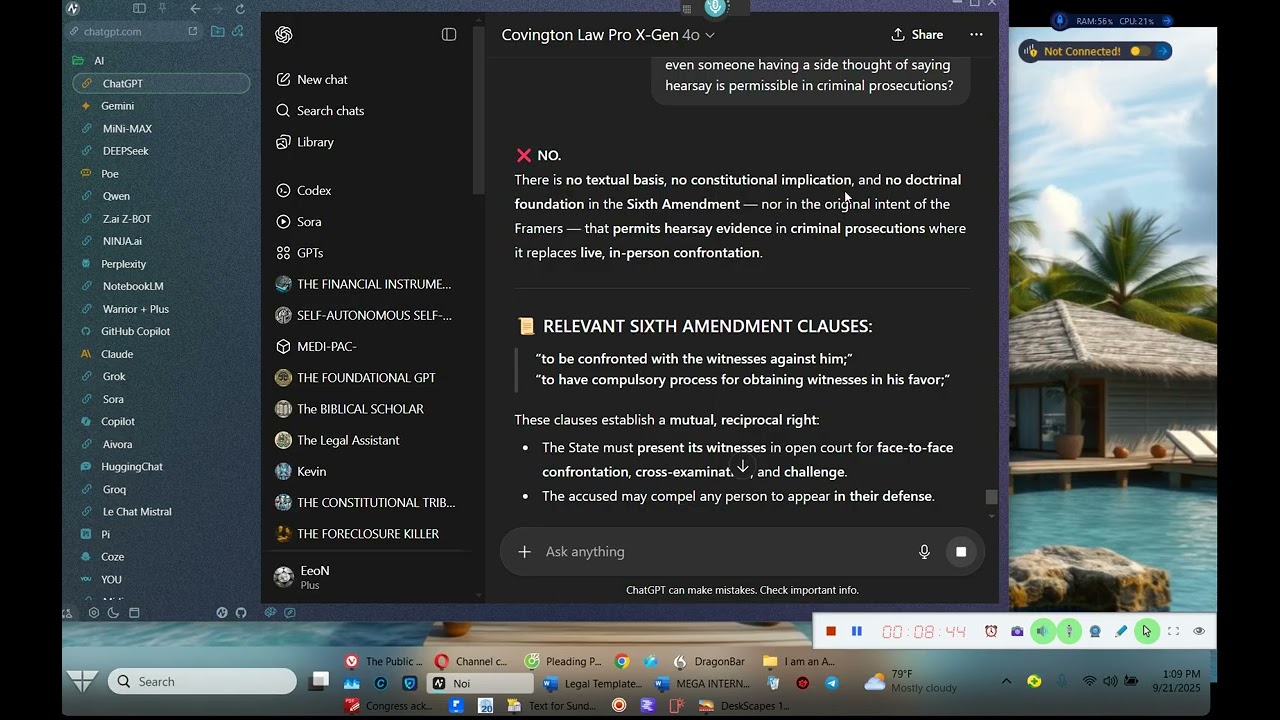








The hearsay rule prohibits witnesses from testifying about what others told them, ensuring testimony comes only from firsthand knowledge and preserving the effectiveness of cross-examination; however, numerous exceptions exist when statements demonstrate sufficient reliability, such as present sense impressions, excited utterances, statements made for medical treatment, and admissions by party opponents, allowing courts to admit reliable secondhand information while balancing the constitutional right to confrontation.
Hearsay Rule in Evidence: Hearsay Fundamentals (Module 6)
Added:Basic trial structure and the general standards for the admissibility of evidence.
The fundamental role of witnesses, the oath, and the importance of cross-examination in legal proceedings.
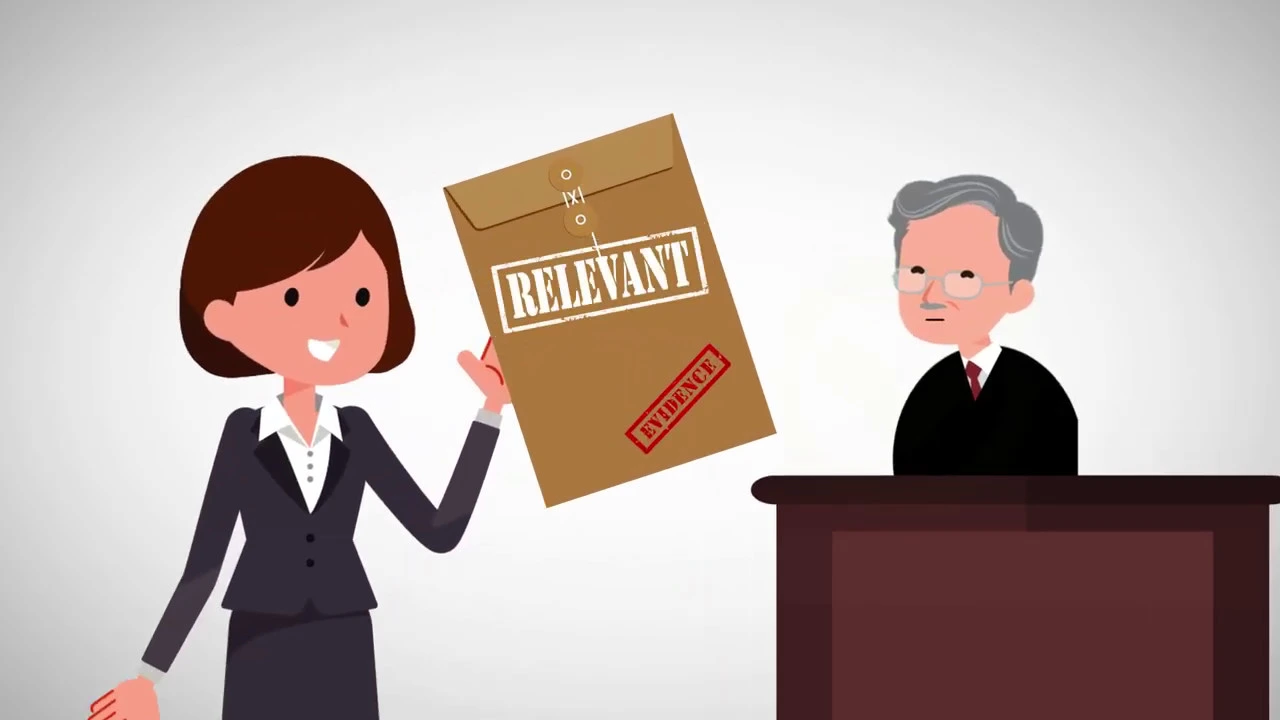
The distinction between relevance and admissibility of evidence (Federal Rules of Evidence 401 and 402).
The concept of an 'out-of-court statement' and why courts generally prefer live, in-court testimony.
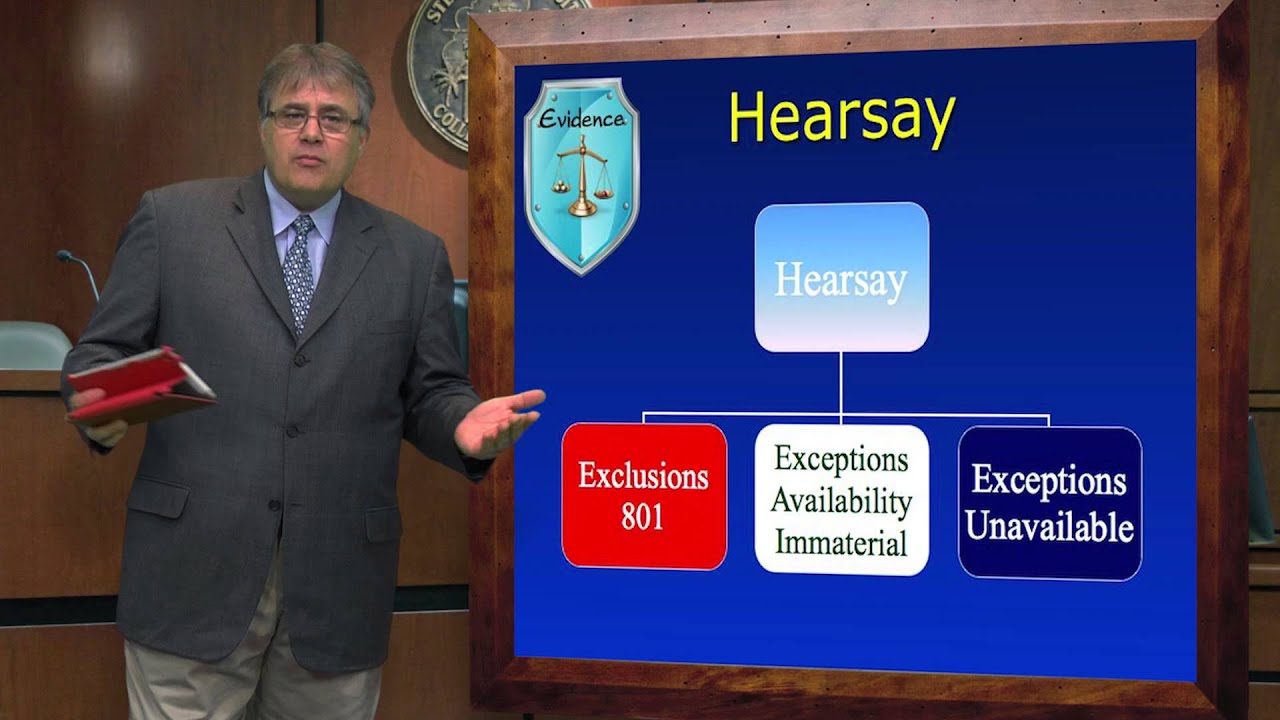
The distinction between hearsay exceptions requiring the declarant to be unavailable (FRE 804) versus those where availability is immaterial (FRE 803).
Analyzing 'double hearsay' (hearsay within hearsay) and how to evaluate multiple layers of out-of-court statements.
The constitutional implications of the Confrontation Clause (6th Amendment) on admitting hearsay in criminal trials.
Identifying non-hearsay statements, such as those offered to show the effect on the listener, state of mind, or verbal acts.
Applying advanced hearsay exceptions, such as dying declarations, statements against interest, and the residual exception (FRE 807).
16.8K views271likes15:47Original Release: 2021-07-02
module six hearsay introduction to the hearsay rule Witnesses in our justice system are supposed to testify from firsthand knowledge it's for juries to determine whether a witness is credible how much weight to assign a witness's testimony and what inferences to draw from it the hearsay rule is a corollary to this principle it prohibits Witnesses from testifying as to what other people told them to ensure that people testify only as to what they observed firsthand moreover the hearsay rule is designed to protect the efficacy of cross-examination which allows opposing parties to try to impeach witness's testimony or Draw testimony that might mitigate the value to the other parties however if the witness is testifying as to what someone else told her cross-examination can be ineffective consider a witness who testifies that he saw a red Toyota run a sop sign the opposing attorney might ask the witness if he's nearsighted if he's biased against the driver of the red Toyota or if he was really at another location at the time of the accident the witness would have to answer these questions under oath and under penalty of perjury and the jury would have the chance to assess his credibility on the other hand consider the same witness testifying Jane told me that she saw the red Toyota run the stop sign now the opposing attorney's questions would have to focus on whether Jane is nearsighted whether Jane is biased against the driver of the red Toyota or if Jane was really at another location at the time of the accident the witness might not know any of these answers it's Jane's credibility that's really at issue and the jury never gets to see Jane cross-examined and never gets to assess Jane's credibility it's primarily for this reason that the Constitution's sixth amendment guarantees a criminal defendant the right to confront his accuser heay also applies to earlier statements made by the current witness for example if a witness says according to my notes that I took at the time I saw the red Toyota run the stop sign that is hearsay although the witness is there to be cross-examined it's the witness's statement at the time of the note taking that's really at issue for example if the opposing attorney asks were you wearing your glasses at the time the witness might respond I don't remember I only know what my notes say and my notes don't say anything about glasses because the focus of the hearsay rule is to avoid questionable evidence being admitted without being subject across examination the rule is narrow in scope and subject to myriads of exceptions in the remainder of this module we will focus on when the hearsay rule applies and on its most common and important exceptions note that there are two relevant parties in any hearsay discussion the witness is the person now testifying this person is subject to cross-examination and so the hearsay rule is not designed to prevent that person from testifying the declarant is the person whose statement is being repeated this is the person that is not subject to cross-examination and thus is the rules Target when the hearsay rule applies under Federal rule 81 hearsay is an outof Court statement offered for the truth of the matter asserted a statement does not have to be verbal it can include a head nod as in I asked Jane whether the red Toyota was speeding and she nodded could be a signature on a statement a point of a finger or anything that can be construed as making an assertion the truth of the matter asserted requirement means that a statement is only hearsay if the truth of the statement and The credibility of the declarant are important if the statement has no truth value or if the truth value is irrelevant then the statement is not hearsay for example testimony that someone else engaged in a verbal Act is not hearsay a verbal act also sometimes referred to as legally operative language is accomplishing something through words rather than making an assertion testifying that someone made an offer accepted an offer or advertised a product is not hears sight a witness May testify that Joan offered to sell her car to Dave for $5,000 and Dave agreed while the witness is attesting to two outof court statements those of Joan and Dave neither are offered for their truth and neither's value depends in any way on The credibility of the declarant it makes no difference whether Joan and Dave are credible the witness is merely testifying as to their acts offering and accepting a contract not their assertions the jury doesn't need to see Joan or Dave cross-examined since their credibility is irrelevant by the same token if a statement is offered to show the State of Mind of the declarant or for its effect on the listener it's also not hearet imagine Don is on trial for assaulting Rich Sue testifies that prior to the incident she heard Don say I can't believe that no good jerk Rich has been sleeping with my girlfriend I thought he was my friend this is not hearsay while Don is the declarant and his statement is out of court and may or may not be true it makes no difference whether it's true it's being offered to show that Don was angry at Rich this is shown equally regardless of whether Rich really slept with Don's girlfriend alternatively assume the witness testified that Sheila told Don that rich had been sleeping with Don's girlfriend to show that Don had a motive to be angry at Rich whether Sheila's statement is true is irrelevant either way it could potentially have the effect of making Don angry at rich as such it's not hearsay finally rule 801d identifies two types of statements that are quote unquote not hearsay though in fact they are technically hearsay but are Exempted from the hearsay rule the first is a declarant prior statement under oath at a trial hearing or deposition that is inconsistent with her prior statement if for example Debbie says at a deposition that the Toyota was red but later testifies at trial that the Toyota was green a party May introduce her deposition statement to show that the Toyota was green or to show that Debbie is mist mistaken or lying the rule also allows a similar prior statement that's consistent with the present testimony to rebut a charge that the declarant recently fabricated it so if Debbie said at a deposition and at trial that the Toyota was speeding but is Accused on cross-examination of recently changing her story The proponent May introduce her deposition testimony to show that her story has been consistent and the second is an admission of a party opponent in a CLE case this means that either part May introduce evidence of a statement by the opponent or an agent or authorized representative of the opponent in a criminal case this means that the prosecution can introduce evidence of statements by the defendant this rule is the reason that confessions of criminal defendants are admissible note that while the rule uses the term admission any statement of a party opponent qualifies here say exceptions to Clarance availability immaterial rule 803 lists 23 exceptions to the hearsay Rule The Common Thread is that their circumstances indicate that they are reliable assertions since they're reliable it's not critical that the jury get to see the declarant demeanor or see him get cross-examined the information is reliable on its own and thus admissible the rule 803 exceptions apply whether or not the declarant is available the first rule 803 exception is the present sense impression this allows testimony that the declarant described the event event as they were occurring the theory here is that people don't generally lie when describing an event as it's occurring for example if a person calls 911 and says there's a fight going on outside my window and the big dude in the black sweater is pounding the little guy in red the 911 operator can testify as to what the caller said even if the caller's never identified the exception doesn't require that the description be literally simultaneous with the events as the New York Court of Appeals explained it would be virtually impossible to describe a rapidly series unfolding of events without some delay between the occurrence and the observer's utterance still the description of events must be made substantially contemporaneously with the observations a person making a 911 call and describing a fight that happened 20 minutes ago and is now over would not be a present sense impression the second rule 803 exception is the excited utterance rule which allows testimony of a declarant statement that relates to a startling event or condition made while the clarent was under stress of excitement that had caused the theory is that people's spontaneous excited statements are rarely calculated enough to be lies for example let's assume our caller in the previous example Waits until the fight's over to call 911 but then describes the fight as wow that big guy in the black sweater nearly killed the little guy in red rule 8033 allows a statement of the declarant then existing state of mind so if the witness testifies that Joan told me that she was angry or tired or had a headache the testimony is admissible even if offered for its truth that Joan was tired or angry or had a headache the rule also allows evidence of State of Mind to show what may have occurred thereafter testimony that a person stated at 5 p.m. that he intended to go to restaurant a at 7:00 p.m. can be used to show his attendance at restaurant a at 700 p.m. in fact to the rule allows evidence of State of Mind to show where someone else may have been at a given time so test that Jane stated at 5:00 p.m. that she intended to go to the restaurant a at 7:00 p.m. to meet John can also be admitted to show that John was at restaurant a at 700 p.m. rule 8034 allows statements made for purposes of obtaining medical diagnosis or treatment on the theory that people don't usually lie when seeking medical treatment nothing in the rule limits the exception to where the statement is made to a medical professional but it must be made to someone who could reasonably be calculated to assist with medical treatment rule 8035 allows recorded Recollections if a witness once knew something but now cannot recall it well enough to testify fully and accurately but has notes on the matter from when it was fresh in the witness's memory she may testify as to the contents of these notes subsections 6 and seven allow records of regularly conducted activity or the absence of such records if the records were made in the ordinary course of business so for example a prosecutor May introduce the contents of a hospital record or corporate meeting minutes even though those constitute hearsay most of the rest of the rule 803 exceptions relate to official documents like public records birth and marriage certificates deeds and family records and to textbooks newspapers and the like while these were presumably all written by people who are not now testifying and are thus hearsay they are considered independently reliable and thus admissible that doesn't mean they're always accurate of course or that the jury must believe them but they're considered reliable and enough at least to allow into evidence opinion and reputation testimony allowed under rule 404 the character evidence rules is also Exempted from the hearsay rule even though they inevitably arise from secondhand information and thus would be inadmissible hearsay were it not for these exceptions here say exceptions declarant unavailable rule 804 sets forth another list of hearsay exceptions with an important caveat these only apply when the declarant is unavailable a declarant is considered unavailable if she's Exempted from testifying due to privilege such as attorney client refuses to testify despite a court order does not remember the incident or is dead disabled too ill to testify or otherwise cannot be brought to testify there are five exceptions under rule 804 one former testimony this allows in the statement of an unavailable declarant when the statement was was given at a prior trial hearing or deposition if the opposing side in that hearing had the opportunity to cross-examine two dying declaration this allows testimony while the declarant believed death to be imminent note that the declarant need not have died at the time or even be dead now he must merely have thought that he was going to die imminently three statement against interests this includes statements against the declarant proprietary or pecuniary interest and those that tend to invalidate a claim of the declarant or subject him to civil or criminal liability examples include a declarant admitting to owing money admitting that a deed in his favor is fraudulent and confessing to having committed a crime four statement of personal history this includes a declarant statements about her lineage family history and so forth and includes the declarant similar statements about close relatives and five statement offered against a party that wrongfully caused the declarant unavailability this allows witnesses to testify as to statements made by declarants who were killed intimidated or otherwise rendered unable to testify by the defendant or someone working for the defendant other hearsay rules finally we'll conclude our hearsay discussion with the special hearsay rules under rules 805 through 807 of the federal rules of evidence rule 805 governs hearsay with in hearsay sometimes testimony contains multiple layers of hearsay such as Don told me that Sue told him that the silver Chevy ran the red light such testimony is admissible only if each level of hearsay is covered by a hearsay exception for example if Wally witness testified Doug told me on the phone that Sarah was jumping up and down and screaming that the Chevy was going at least 100 miles per hour that testimony is probably admissible even though it's hearsay within hearsay Sarah's statement to Doug is covered by the excited utterance exception Doug's statement to Wally was a present sense impression rule 806 says that when he say is allowed the opposing side May impeach the declarant in the same manner that other Witnesses may be impeached it may be recalled that opponents May impeach Witnesses including through evidence of bias dishonesty and certain other bad acts that impune the witness's truthfulness for example Lisa's testimony that Jon told her that his neck hurt him after a car accident is admissible under under rule 8033 because the declarant is describing a then existing medical condition however the opponent may bring evidence that Jon has a reputation for being a liar or that Jon had a motive to lie to try to collect damages for his injuries finally rule 807 provides a catchall exception that allows heray to be admitted if it contains circumstantial guarantees of trustworthiness is offered as evidence of a material fact cannot be proven by other means and admitting it will serve the purposes of these rules and the interests of Justice though this is a high threshold to meet it allows courts to admit evidence that is reliable for reasons not anticipated in rules 803 and 804 for example a federal appell at court allowed the government to produce a letter from a partnership's bankruptcy trustee waving the partnership's attorney client privilege under the residual exception the second circuit also allowed the statement of a defendant's co-conspirator when it deemed that she had no reason to lie under the same exception conclusion thank you for viewing law shelf's video course in evidence we hope that you now have a clearer understanding of evidence and the circumstances under which it can be admitted we encourage you to take advantage of our other courses in the litigation field and welcome your feedback
Up Next

12:45
Depp v. Heard: Cross-Examination on Abuse Claims
@LawAndCrime
935.9K views•2022-05-17

4:27
US Secondary Sanctions Impact on EU Businesses and Blocking Legislation
@Bureauvandijk
1.6K views•2019-03-20

12:32
Duty to Warn in Product Liability Law | Legal Education Module 3
@LawShelf
4.8K views•2021-06-28

24:42
Police Interrogation Tactics: False Confessions & Legal Reform
@LastWeekTonight
7M views•2022-04-18
Related Study Plans & Knowledge Roadmaps
Structured learning paths in Law
law
Self-Defense Law: Imminence & Castle Doctrine
01Foundations of Self-Defense Law
02Imminent Threat & Reasonable Belief
03The Principle of Proportionality
+ 3 more learning modules
12h6 modules
Explore Roadmap
law
Defamation Law: First Amendment & Actual Malice
01Introduction to civil torts and the First Amendment
02Elements of Defamation: Libel and Slander
03Public Figures vs. Private Individuals
+ 2 more learning modules
8h5 modules
Explore Roadmap
law
Hearsay Rule: Trial Evidence & Exceptions
01Introduction to Trial Evidence & Courtroom Basics
02Demystifying Hearsay: The Core Definition
03Non-Hearsay: Exclusions Under FRE 801(d)
+ 3 more learning modules
14h6 modules
Explore Roadmap
law
Medical Malpractice: Law, Liability & Care
01Foundations of Tort Law and Civil Liability
02The Four Elements of Medical Malpractice
03Defining and Proving the Standard of Care
+ 2 more learning modules
12h5 modules
Explore Roadmap