


















Hearsay is a statement made by a declarant outside of court, offered in evidence for the truth of the matter asserted, and is generally inadmissible unless it falls under specific exclusions (801(d) CAP C A PPP: co-conspirator statements, admissions by party-opponent, prior inconsistent statements under oath, prior consistent statements, and prior identification of a person) or exceptions (804 SFPD W for unavailable declarants and 803 PETS WRAP AT THE FARM for when declarant availability is immaterial). The analysis requires first determining if the statement is offered for the truth of the matter asserted, then checking for exclusions, then checking if the declarant is unavailable, and finally checking for exceptions.
Hearsay Evidence Explained: Law School & Bar Exam Guide
Added:Understanding the basic structure of the Federal Rules of Evidence (FRE) and the general process of admitting evidence during a trial.
The concept of relevance (FRE 401 and 402), as hearsay rules only apply to exclude evidence that is otherwise deemed relevant.
The distinction between a 'declarant' (the person who made the out-of-court statement) and a 'witness' testifying on the stand.
The legal definition of a 'statement', including verbal assertions, written assertions, and assertive nonverbal conduct.
In-depth mastery of FRE 803 hearsay exceptions where the declarant's availability is immaterial (e.g., excited utterances, present sense impressions, and business records).
Analysis of FRE 804 hearsay exceptions that require the declarant to be 'unavailable' to testify (e.g., dying declarations and statements against interest).
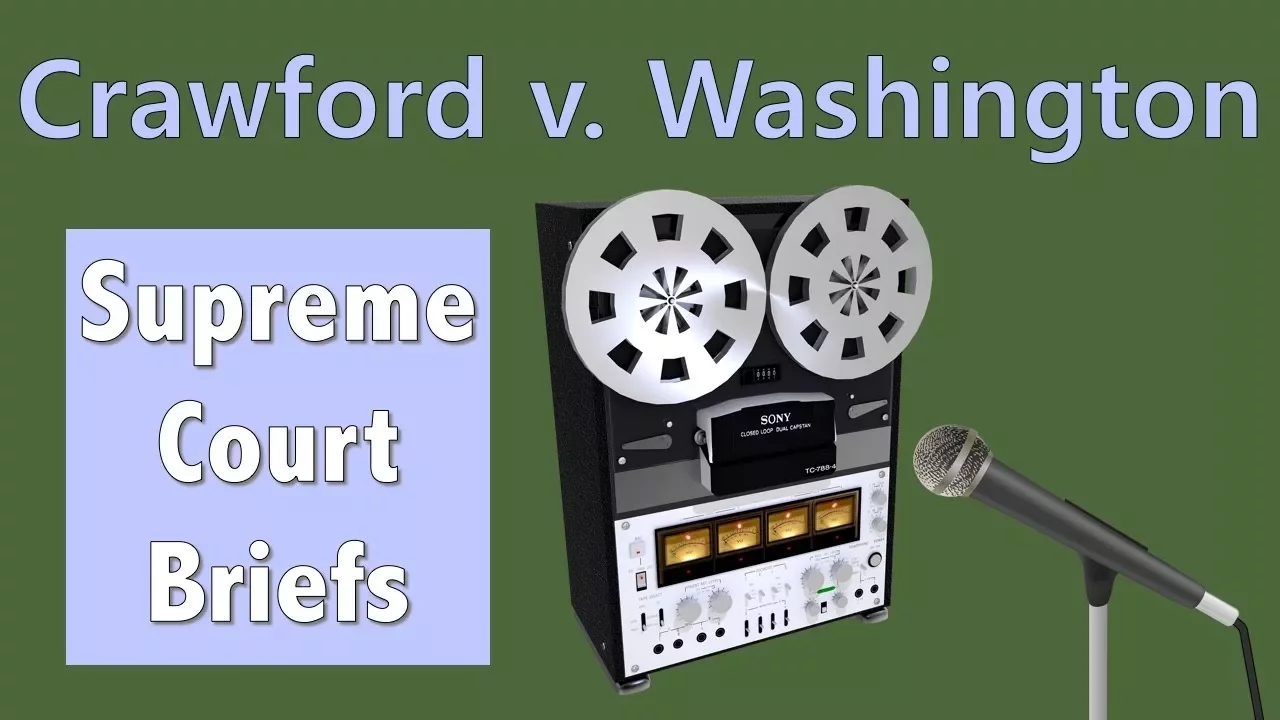
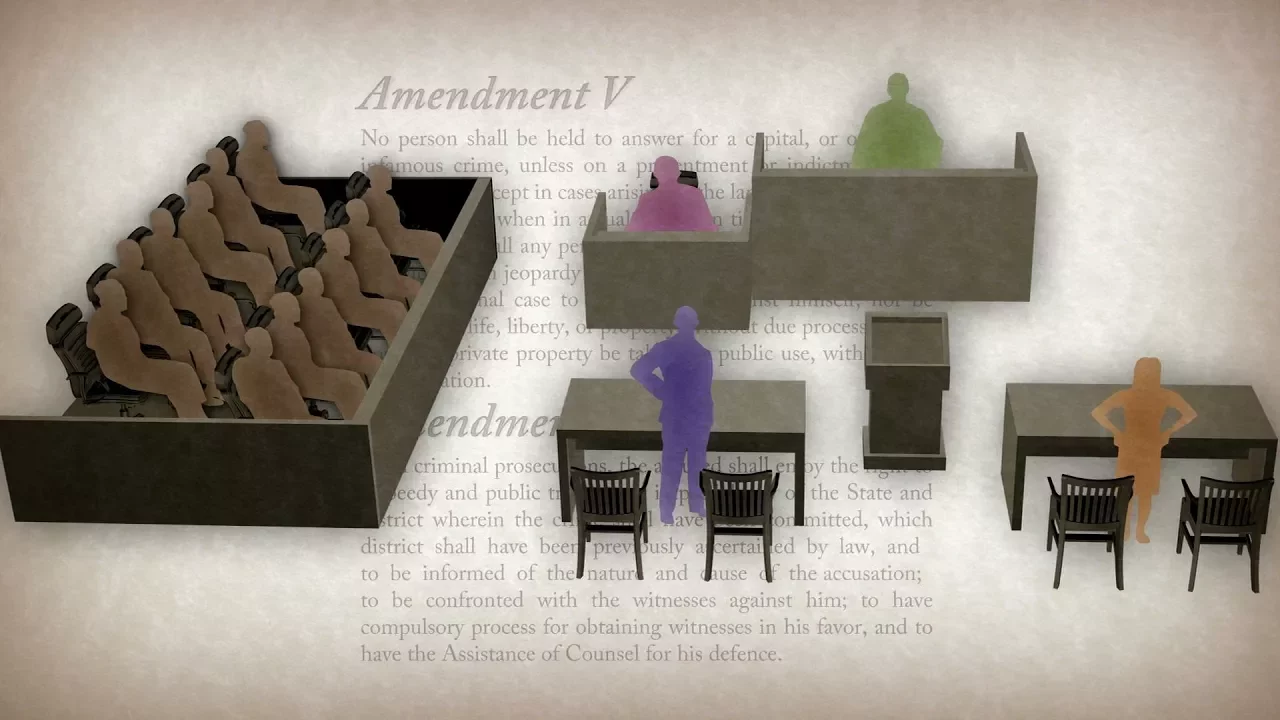
Understanding the Constitutional limitations on hearsay in criminal cases, specifically the Sixth Amendment's Confrontation Clause and the 'testimonial' standard established in Crawford v. Washington.
Learning how to tackle 'hearsay within hearsay' (multiple layers of hearsay) under FRE 805.
Developing practical trial advocacy skills, such as laying the proper foundation for hearsay exceptions and making timely courtroom objections.
625 views20likes37:52Original Release: 2018-10-24
good day my name is Hugh Reid and I'm the CEO and founder of rebar review rebar view offers law school tutoring and it offers bar review courses obviously plus tutoring for those who needed to pass the bar exam feel free to check out our website at Reed Bar review.com but today let's get right to the subject at hand which is hearsay hearsay hearsay it's probably the most important topic in evidence and it's misunderstood I mean I meet 60 year-old attorneys in in court who cannot ask a question or without violating the hearsay rule and it's also one of the most confusing topics and evidence but I'm gonna give you some structure to hearsay today so that you can address a hearsay problem and get down the law and hopefully you get the analysis correctly all right so it's it's crucial to understand what constitutes hearsay and what constitutes the exceptions to hearsay I call them exclusions and exceptions because the writers of the Federal Rules of Evidence actually build in some exclusions under federal 801 D so let me give you the overview first and then I'll get into some detail not too much because whatever your professor decides is more important or whatever the Bar Examiners decide to test on is something that you should be familiar with so here say under 801 says it's a statement other than one made by the declarant while testifying a trial or hearing offered in evidence for the truth of the matter asserted now this definition really doesn't help us a whole lot the way I envision hearsay is that we have a witness on the stand and he is testifying to something that declarant said out of court for the truth of the oh sorry so the first thing we have to identify is do we have a witness on the stand who's testifying to something that a declarant said and by the way the declarant could be the person himself or herself I told the police officer at the scene of the accident that the car went through the red light that would be hearsay because it's being offered for the truth of the matter asserted but another way of stating it is or the attorney could ask what color was the light when the car went through the intersection it was red it would not be hearsay so the prohibition of the use of hearsay is is probably the most single important rule in evidence and that's why we want to talk about it and the basic definition I've already told you we have a witness on the stand who's testifying as to what the declarant he's the person or she's the person who made this statement out of court and the gist of hearsay is that the Trier of fact can only be asked to believe those statements made by witnesses at the trial so we can cross-examine them all right in other words we cannot be the fact-finder cannot be presented with out-of-court statements and asked to believe that those statements were true the first analysis of hearsay is always to decide whether or not these statements are being offered for the truth or are they being offered for some other reason for some transactional reasons or some words that have legal consequences that's our first analysis because our first step to our analysis the first thing we ask are those words being offered by the witness introduced for the truth of the matter asserted if they're not being used for the truth of the matter asserted then we can we can perhaps introduce them into evidence so for example statements or documents or assertions under hearsay can be used can be introduced for other purposes such as verbal acts or words that have legal consequences all right so a statement so a statement which gives rise to legal consequences those statements are not hearsay so words of defamation words that have a contract for example the witness states my friend that a clarin offered to buy the car from $500 that's an offer those words have legal consequences they are not being offered for the truth of the matter asserted or statements to show the effect on the hearer or the reader so for example the declarant said his best friend is a backstabber well the words obviously show that a Clarence state of mind they are not introduced to show that he's a backstabber or words or conduct the declarant nodded his head in agreement well did the did the declarant intend to say yes or no all right so some conduct is non-assertive is an assertion that is not hearsay for example the declarant opened his umbrella well why did he open his umbrella if there's numerous interpretations then he comes in for something other than the truth was it raining was it to show that it was raining was it to show that the Sun was too hot was he shaking mud out of his umbrella all right so so if he did not intend to say it was raining in the openness umbrella then there's no hearsay violation or a sort of conduct offered for a different purpose other than the truth so look for ways to get the statement whether it's oral or written or whether it's an assertion in without being offered for the truth and of course multiple hearsay more often than not it will be tested in a police report the police report is being introduced for the truth of the matter asserted where a witness said the car ran the red light well we have two stages of hearsay here we have the police report which cannot be cross-examined and we have a statement within the police report which says the car ran the red light both are being offered for the truth of the matter asserted both statements unless they can overcome some exclusion or exception to the hearsay rule are the whole thing that's going to be thrown out as hearsay all right so that's where we are so let's talk about let's talk about some exclusions and exceptions to hearsay the first thing I ask of you is to understand is it being offered for the truth of the matter asserted all right so if it's being offered for falsity or to show how a given witness merely reacted to a statement it is not hearsay and you should disregard all analysis of hearsay a statement can be nonverbal can be assertive conduct if it was intended by the declarant to be a statement such as nodding of the head as I indicated yes or no then it could be hearsay not assertive contact is not hearsay but merely shows what the witness or heard and a statement as I said could be written or oral all right written or oral silence in the absence of words or conduct may be taken as an assertion so if a reasonable person would react to a statement such as you and I sitting on a barstool neither one of us is a police officer and you say hey Hugh I know your mom died and I know what you did it you killed her I saw you buying a bunch of acid for the past six months and points Ellie that's what she died of a reasonable person would say what the heck are you talking about I didn't kill her but if I just keep sipping my beer that could be an admission an admission if I'm trying for murder so let's talk about some of these exclusions to hearsay under 801 D first of all the analysis is isn't hearsay is it being offered for the truth of the matter asserted or can we get it in for some other purpose and that seems to be the area that most people have problems with and then I urge you that's the area that you need to practice with secondly if we decide it's being offered for the truth of the matter asserted then we say is there an exclusion to hearsay some people call it exceptions I call it an exclusion under 801 D federal of Evidence 801 D we have several exclusions and I remember them with cap C a PPP if you want to write it down vertically you can fill it out horizontally cap the seeing cap stands for conspirators statement a conspirator or co-conspirators statement made in furtherance and during the conspiracy those are admitted as an exclusion to hearsay in other words did not hearsay co-conspirators statement the a stands for an admission by party opponent who's a party opponent well it's a plaintiff or a defendant in the case party opponent anything that was said by a plaintiff or a defendant comes in as an admission to hearsay whether it's bad or whether it's good it doesn't matter it comes in as an admission if it's bad don't confuse it with a declaration against interest which we'll talk about in a bit any statement reported by a witness by a party opponent comes in as an admission by party opponent the first P in cap stands for prior inconsistent statement under oath prior inconsistent statement under oath so if there was an adequate opportunity to cross-examine someone with regard to the issues at hand and it was under oath then that prior inconsistent statement under oath comes in as an exclusion not only for impeachment purposes but also for the substance of what was said prior inconsistent statement under oath the second P is prior consistent statement prior consistent statement a prior consistent statement now offered to refute a charge of recent fabrication comes in as an exclusion to hearsay prior consistent statement now offered to refute a charge of recent fabrication comes in so for example it's at the scene of an accident a bystander turns to another bystander and says that car just went the red light now the police shows up he tells the car went through the green light or had the green light and now at trial he's reverting back to his original testimony that the car went through the red line well that comes in as an exclusion to hearsay because you know he can say I was confused when the police officer showed up I thought he was talking about the other car so prior consistent statement he could show that he made a prior consistent statement that the car went through the red light and then finally the third P is prior ID of a person prior identification of a person so prior identification of a person obviously the person who made the ID has to be in court to be cross-examined but that's an exclusion to hearsay the prior ID is generally made from a lineup or for some sort of a book that the police has with mug shots prior identification of purpose so first let's review is it hearsay is this statement by the witness of what the declarant said made for the truth of the matter asserted if it's not if it it's words of legal consequences or words that show the effect on the here or a listener or for some other reason it's never hearsay but if it is being offered for the truth then we ask ourselves well did the writers of the Federal Rules of Evidence in 1978 did they intend to exclude certain statements as non hearsay under 801 D federal 801 D cap C a PPP all right well if they didn't if we still can't get it in then we have to go to some exceptions and I urge you to go the exceptions under federal 804 first for because they're the declarant has to be unavailable he's unavailable how do you tell if a declare is unavailable I want you to write down prism vertically PRI SM and declarant is unavailable if he takes a privilege the P the R stands for refusal to testify the I stands for incapacity the S stands for subpoena powers generally a federal court there are some exceptions obviously only has subpoena powers within the Bulge rule the hundred miles of the courthouse the M stands for memory problems old people young people memory problems so how do you tell if a person is incapacitated or unavailable I'm sorry prison pris F and if he's unavailable or she's unavailable then we go to federal 804 were declarant has to be unavailable in order to get it in as an exception to hearsay I remember those instances with SFPD W SFPD W or if it helps San Francisco Police Department wagon if you can imagine a police wagon that says SFPD on it and our illustrator has imagined that it's in our handout then you can run through the exceptions where the client has to be unavailable unavailable under 804 the S stands for statements against interest statements against interest a statement against proprietary penal or Pecunia interest we can get it in if the declarant is unavailable if he meets one of the elements of prison and a statement against interest the most often tested concept is a criminal case let's say a defendant's on trial for murder he gets his good friend next door neighbor Fred to testify that defendant didn't do it Bubba did it unfortunately Bubba is unavailable well are we gonna allow Fred to testify that Bubba said he did it instead of the defendant the answer's no for criminal cases there has to be corroborating evidence other evidence to show that Bubba actually made this statement all right statement against interest the F and SFPD W stands for former testimony if there was former testimony under oath depositions trial whatever discussing the issues at hand and there was an opportunity for cross-examination then we can get that testimony in even though the declarants unavailable in fact he has to be unavailable for sf4 804 so SF P the P stands for pedigree pedigree or a statement as to family history even though the clarity is unavailable we can get a statement as to his family history into evidence at the current trial because the idea is people generally do not lie about their family history declaran said he was the Duke of Earl well we can get it in if the issue is whether or not he was the Duke of Earl even though he's unavailable d stands for dying declaration lots of action on the bar exam and on essays for dying declaration declarants unavailable how do you know he's unavailable well we said prison prison but what are the elements of a dying declaration I remember those with Cuba see you a striker see you be a see you be a a statement as to see the cause of death you declarants unavailable unavailable we know that were NATO for the be a statement a belief belief in why he's dying and finally a admissible in all civil cases but only in homicide on the criminal side so Cuba a statement as to the cause of death the guy shot me in the back I'm dying right he's unavailable now I didn't have to die he could be on the beach in Florida but he's unavailable for some of the reasons in prison he could be on a beach in Florida he's got to believe he's dying the guy shot me I know I'm dying not I think I'm dying I know I'm dying even though he didn't die and then that's admissible in all civil cases but only in criminal cases for homicide Cuba dying declaration and finally SFPD w-w-w stands for wrongful withholding of testimony so if those of you who saw I know Breaking Bad for example Heisenberg tells Jesse if you show up at my trial you're a dead man Jesse shows up but he refuses to testify claimed some religious privilege or something well can we get the investigators of the police officers who talked to Jessie to talk about what Jessie would testify to the answers yes or Al Capone tells his accountant on his tax evasion trial hey I know where you live and your family's dead if you show up the accountants not going to testify can we get the investigators or the police officers to testify what the accountant would say the answer is yes under 800 for wrongful withholding of testimony once we show there's some evidence of wrongful to withholding of testimony others can testify what the witness would have testified to so SFPD gab you all right SFPD w that's very important now is it here say well is it being offered for the truth or can we get it in for something else if it is if it is hearsay does it mean one of the exclusions to your say cap see a ppb and we still can't get it in then we decide well can we get it in under an exception to hearsay where the declarant is unavailable we know he's unavailable if we'd go through prison PR is M and then we check the exceptions to unavailability 804 Federal Rule 804 SFPD w all right we still can't get it in now we really really have to go to the exceptions under 803 there's 23 exceptions last count luckily for us they test the first few first though our lot and the others not so much so 803 says these are exception to hearsay where the declarants availability is immaterial it can be available or not and I remember them at least the most often tested exceptions with pets P ETS again write it down vertically pets wrap our our AP at 80 the farm fa RM pets wrap at the forum all right so let's go through those and try to make some sense of those pets wrap at the farm l-31 present sense impression present sense impression the idea is that anything a witness or the declarant says where it has no time to fabricate could be a present sense impression you and I are walking along I'm suing the city for not fixing the sidewalk and I say to you as I trip on the sidewalk damn it or darn it I wish they fix this sidewalk it's been you know uneven for four months if not years can you testify as to what I said yes present sense impression because there was no time to fabricate present sense impression the E in pets stands for excited utterance look for exclamation marks right I saw Bubba and he said look out you know the train is coming off the tracks that's an excited utterance or you know I mean you can think of numerous examples look for a person set it you know with an exclamation mark even excitedly on the bar exam that could come in as an excited utterance the T in pets stands for then-existing mental physical or emotional emotional condition then existing so it's always a then existing condition it could be forward-looking according to the famous Hillman case I'm going to Crooked Creek next week well that would be a then existing mental condition it's never backed word looking with one exception and that's with regard to the validity of wills wills my uncle told me he was gonna leave me the 57 Chevy alright that's obviously you're saying what the uncle told him it could come in what his uncle's intent was with regard to the validity of a will all right if there's you know if there's some sort of debate as to whether the 57 Chevy was really being left to the nephew then existing mental physical and emotional conditions S stands for statements made for purposes of medical diagnosis and these are very liberally construed I get run over by truck I go out and hire a doctor a hire lawyer first obviously but I hire a doctor's second and I say hey you know my leg hurts like hell and my back is all screwed up I want you to come testify as to what I told you he can come and testify as to what I told him it's very liberally construed statements made for purpose of a medical diagnosis and then rap RR ap if you think of rappers you know no offense to rappers but probably some of them would misspell rap and I and if you spell it RR ap then you can remember some of the exceptions to hearsay where the declarants availabilities in material the first R stands for recorded recollection under 803 five this is often confused with refreshing recollection which is and I an issue that's discussed or tested in presentment of testimony so refreshing recollection is the idea that we can show anything to a witness who may have forgotten something and refresh his or her recollection and it could be anything and then he testifies from his own memory whereas a recorded recollection is something a witness wrote years ago or months ago or adopted years or months ago and now I can't remember it could be an insurance claim what was stolen from your apartment in 1907 heck I don't know I can't remember well here's the insurance claim does that refresh your recollection not really I mean I wrote down so many things I can't remember what's on the insurance claim with the court allow the witness to read the insurance claim into the record ah yes you know this was stolen that was stolen this was stolen and it's not allowed into evidence as an exhibit unless the other side wants to allow as an exhibit but the idea is the way you distinguish between refreshing recollection and past recollection recorded is that refreshing recollection something is shown to the witness he or she testifies from his own memory past recollection recorded he reads everything into the record something that he had wrote or adopted as true shortly after it occurred the second are in pets wrap is regularly conducted activity and these are most often business records regularly conducted activity so the slip and fall record of the McDonald's manager taking statements from someone who fell in the lobby because of the wet floor that's not a regularly conducted activity because it doesn't meet the smell test or the truth test I mean the McDonald's manager is going to state everything in that in that report that's favorable to McDonald's but when he ordered buns when you ordered hamburgers when he ordered fries that is a regularly conducted activity and he doesn't have to testify to that it could be a record that's introduced as an exhibit so long as we have someone who's in the courtroom who can testify as to yeah that's how McDonald's does business it doesn't have to be the person who actually wrote the report regularly conducted activity police reports by the way for criminal cases are not regularly conducted business records so let's test it often in a civil case maybe in a criminal case never and then the a in rap is absence of records you know if you were where the records you ordering buns oh I didn't keep them for two weeks that's strange now we can introduce that that perhaps there was something wrong with the buns because there was an absence of Records the peon rep stands for public records and reports airplane accident the FAA does an investigation it writes a report it sends it over to the Justice Department for prosecution do they have any do they have any need to falsify the report no in fact their job is to make it as truthful as possible therefore it's an exception to hearsay all right public records the Act is out of sequence a bit for the Federal Rules of Evidence of what I'm telling you 801 802 8 of I'm sorry 803 one 803 to 803 for so forth the Act often tested is out of sequence the a stands for ancient documents of the 803 16 ancient documents for the Federal Rules it's 20 years or more the T stands for treatises lerna treatises under 803 18 learnin treatises test it often as an exception to hearsay also it's introduced as impeachment and for the substance of what's in that learn at treatise 803 18 and then getting back to the others farm fa RM family records 803 9 absence of records 803 10 religious organizations 803 11 marriage baptismal certificates 803 12 one other they might test you on is felony convictions 803 22 I believe it is if you've been convicted of a felony and there's a subsequent civil case remember in a felony case we have to prove things beyond a reasonable doubt civil case preponderance of the evidence or at most clear and convincing evidence then we can introduce we don't have to go through the proof again that you did this all right so we can prove up under 803 22 that you were found guilty in a criminal case all right let me summarize is it hearsay hearsay can be is a statement that was made out of court by the declarant now offered in court for the truth of the matter asserted there are certain statements that are not hearsay the most often tested are the verbal acts words that have legal consequences words that show the effect on the hearer or the reader declarant state of mind all right I stabbed mine my best friend is a backstabber non-assertive conduct assertions or assertive conduct offered for a different purpose and then remember that if the statement has multiple multiple hearsay issues each level of hearsay has to be covered by some exclusion or hearsay if not the whole statement is inadmissible finally or next we decide whether or not the statement meets an exclusion to hearsay under 801 D and I remember them with cap C a PPP if we still can't get the statement in is the declarant unavailable we ask ourselves is he unavailable under prison pris M if he's unavailable when we go to federal 804 SFPD W SFPD w if we still can't get the statement and go to 803 many exceptions where the Clarence availability is immaterial and I remember them with pets wrap at the farm that should give you some sort of checklist or step-by-step approach as to handle any hearsay issue and if you need more training in this area please go to our website and pick out a free course in evidence and get the lecture the the flashcards and anything you need to get you ready for the evidence part of the exam thank you so much and if you need any help call us 880 thank you
Up Next

65:45
Hearsay Law for the Bar Exam | Key Rules & Exceptions
@regentlawvideos
190.5K views•2014-05-05

4:27
US Secondary Sanctions Impact on EU Businesses and Blocking Legislation
@Bureauvandijk
1.6K views•2019-03-20

13:33
Torts: Strict Liability Explained | Law & Bar Exam Review
@PassYourBar
6.7K views•2018-10-03

24:42
Police Interrogation Tactics: False Confessions & Legal Reform
@LastWeekTonight
7M views•2022-04-18
Related Study Plans & Knowledge Roadmaps
Structured learning paths in Law
law
Self-Defense Law: Imminence & Castle Doctrine
01Foundations of Self-Defense Law
02Imminent Threat & Reasonable Belief
03The Principle of Proportionality
+ 3 more learning modules
12h6 modules
Explore Roadmap
law
Defamation Law: First Amendment & Actual Malice
01Introduction to civil torts and the First Amendment
02Elements of Defamation: Libel and Slander
03Public Figures vs. Private Individuals
+ 2 more learning modules
8h5 modules
Explore Roadmap
law
Hearsay Rule: Trial Evidence & Exceptions
01Introduction to Trial Evidence & Courtroom Basics
02Demystifying Hearsay: The Core Definition
03Non-Hearsay: Exclusions Under FRE 801(d)
+ 3 more learning modules
14h6 modules
Explore Roadmap
law
Medical Malpractice: Law, Liability & Care
01Foundations of Tort Law and Civil Liability
02The Four Elements of Medical Malpractice
03Defining and Proving the Standard of Care
+ 2 more learning modules
12h5 modules
Explore Roadmap