








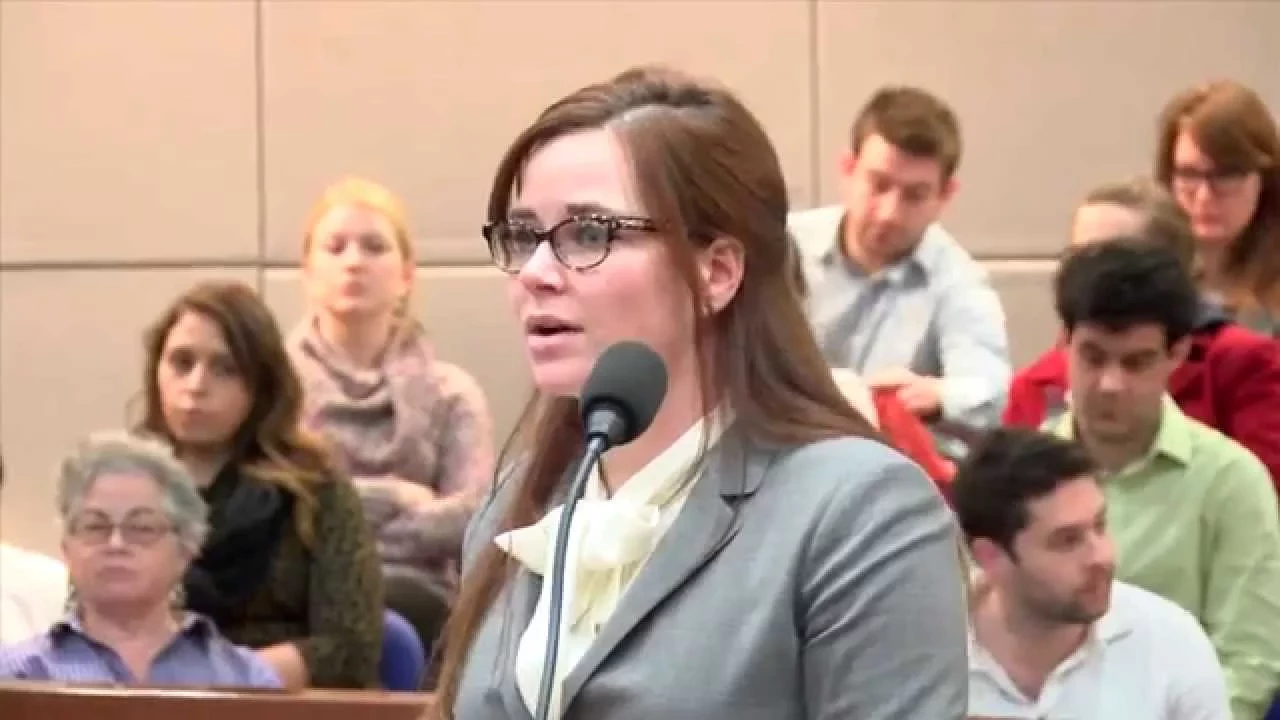




In Crawford v. Washington (2004), the U.S. Supreme Court unanimously ruled that testimonial out-of-court statements cannot be used as evidence against criminal defendants without the defendant having the opportunity to cross-examine the witness, thereby strengthening the Sixth Amendment's Confrontation Clause by overturning the Ohio v. Roberts reliability standard and making it much more difficult to admit hearsay evidence in court.
Recorded Testimony in Court: Crawford v. Washington Explained
Added:The Sixth Amendment of the U.S. Constitution, specifically the Confrontation Clause which guarantees a defendant's right to face their accusers.
The legal definition of hearsay, including why out-of-court statements are generally excluded from evidence due to concerns over reliability.
The pre-Crawford legal standard established in Ohio v. Roberts (1980), which allowed hearsay if it bore 'adequate indicia of reliability.'
Basic criminal trial procedure, including the roles of witnesses, cross-examination, and the introduction of evidence.
The distinction between 'testimonial' and 'non-testimonial' hearsay as developed in subsequent cases like Davis v. Washington and Hammon v. Indiana.
How the Crawford ruling applies to forensic evidence and laboratory reports, analyzed in cases such as Melendez-Diaz v. Massachusetts.
The doctrine of 'forfeiture by wrongdoing,' where a defendant loses Confrontation Clause protections by intentionally making a witness unavailable.
Practical implications of Crawford on modern domestic violence prosecutions, where victims may be reluctant or unable to testify in court.
68.6K views2.1Klikes5:03Original Release: 2018-01-26
Mr. Beat presents Supreme Court Briefs Olympia, Washington August 5, 1999 Sylvia Crawford tells her husband, Michael Crawford, that a man named Kenneth Lee had attempted to rape her.
Michael Crawford, who had been heavily drinking some alcohol, does not go to the police to report this.
Instead, the very angry and very drunk Crawford goes to Kenneth Lee’s apartment.
Crawford and Lee get into a fight, and the next thing you know Crawford is stabbing Lee in the stomach.
During the stabbing, Crawford’s hand also got cut.
After the police did get involved, they arrested both Michael and Sylvia Crawford and interrogated them separately.
Michael and Sylvia gave similar accounts of what happened, but there was one important difference.
Michael claimed he had stabbed Kenneth out of self-defense, but Sylvia said Kenneth did not have a weapon.
This would cause the police to question Michael’s story.
How could it be self-defense if Kenneth didn’t even have a weapon?
The State of Washington charged Michael Crawford with assault and attempted murder.
State law said people married didn’t have to testify against each other in court, so at Michael’s trial, Sylvia didn’t take the stand.
However, the police had recorded her interrogation, and the judge allowed the deputy prosecutor, Robert Lund, to use that tape as evidence that Michael was attempting murder, not acting in self-defense.
Crawford’s lawyers were like, “hold up man, you can’t use that tape!” They said Mrs. Crawford’s recorded statements couldn’t be used as evidence unless they were able to cross examine her, which, as I previously said, under state law they couldn’t.
The defense argued this went against the Confrontation Clause of the Sixth Amendment.
Crawford had a right to confront his accuser in court, and you can’t cross examine a recording of a voice.
Believe me, I have tried. I yell at my own voice recordings all the time.
But nevertheless, the recording was still used as evidence, and influential evidence at that.
The State convicted Crawford of attempted murder and assault and sentenced him to about 15 years in prison.
However, the Washington Court of Appeals overturned the decision, arguing that, due to the precedent set by the Supreme Court case Ohio v. Roberts, Sylvia Crawford’s recorded testimony was not reliable enough.
Ohio v. Roberts also dealt with the Confrontation Clause of the Sixth Amendment and set up this reliability standard.
However, the Washington Supreme Court overturned the Washington Court of Appeals decision and said that Sylvia’s recorded testimony was reliable because it complemented Michael’s testimony well.
So they reinstated his conviction.
Goodness, all these different interpretations of the same evidence. That never happens!
The Supreme Court was like, “we want in on this action,” and requested to review the case on June 9, 2003.
On November 10 that same year, they heard oral arguments.
The big question for this case was, “Does using testimony from out of the court, with no chance for cross-examination, go against the Confrontation Clause of the Sixth Amendment?” The court said “yes, why yes it does.” On March 8, 2004, the ruled in favor of Crawford, 9-0. Yep, it was unanimous.
The Court argued that Sylvia Crawford’s recorded statement from the police interrogation violated Michael Crawford’s Sixth Amendment right to confront her about it in court.
Justice Antonin Scalia gave the opinion.
He argued that any out-of court statement that is “testimonial” should not be allowed as evidence, unless this statement came from a person who had no way of testifying in court AND this person could be cross-examined by the defendant ahead of time.
Crawford v. Washington overturned Ohio v. Roberts.
It made it much more difficult to allow “hearsay” evidence to be used in court.
In other words, if a statement was made by someone involved in a criminal case out of court, it likely wasn’t going to be used as evidence anymore. The Sixth Amendment, baby!
I’ll see you for the next Supreme Court case, jury!
A big thank you to my newest Patreon supporters, Ameya, Alex, and Jessica.
You made this a fantastic week for me, so thank you so much for your support.
And a lot of you already know this, but YouTube videos seem to do better when they get a lot of interactions in the first 48 hours of being posted so a lot of likes and comments.
So if this video gets at least 120 likes in the first 48 hours I will do push ups and recite all of the Presidents of the United States of America in order at the same time.
I don't know how that is going to look yet, but I am sure it will be interesting.
Up Next
523:53
Young Thug YSL Trial: Legal Arguments on RICO Evidence and Confrontation Clause Issues in Court
@11Alive
13.7K views•2024-05-16
4:27
US Secondary Sanctions Impact on EU Businesses and Blocking Legislation
@Bureauvandijk
1.6K views•2019-03-20
5:32
Bostock v. Clayton County: Title VII & LGBT Employment Rights
@iammrbeat
177.4K views•2024-11-08

24:42
Police Interrogation Tactics: False Confessions & Legal Reform
@LastWeekTonight
7M views•2022-04-18
Related Study Plans & Knowledge Roadmaps
Structured learning paths in Law
law
Self-Defense Law: Imminence & Castle Doctrine
01Foundations of Self-Defense Law
02Imminent Threat & Reasonable Belief
03The Principle of Proportionality
+ 3 more learning modules
12h6 modules
Explore Roadmap
law
Defamation Law: First Amendment & Actual Malice
01Introduction to civil torts and the First Amendment
02Elements of Defamation: Libel and Slander
03Public Figures vs. Private Individuals
+ 2 more learning modules
8h5 modules
Explore Roadmap
law
Hearsay Rule: Trial Evidence & Exceptions
01Introduction to Trial Evidence & Courtroom Basics
02Demystifying Hearsay: The Core Definition
03Non-Hearsay: Exclusions Under FRE 801(d)
+ 3 more learning modules
14h6 modules
Explore Roadmap
law
Medical Malpractice: Law, Liability & Care
01Foundations of Tort Law and Civil Liability
02The Four Elements of Medical Malpractice
03Defining and Proving the Standard of Care
+ 2 more learning modules
12h5 modules
Explore Roadmap